


Quick Answer: Five well-researched natural alternatives to aspirin for headaches include ginger, peppermint oil, feverfew, turmeric (curcumin), and magnesium. Each works through a different mechanism, from reducing inflammation to relaxing tense muscles, and most can be used safely at home with ingredients you likely already have.
Key Takeaways
- Ginger can reduce the duration and severity of migraine attacks when taken at 500 mg/day (standardized to 5% gingerols), according to a 103-patient clinical trial [1]
- Feverfew showed a 61.62% reduction in migraine frequency and 56.2% reduction in severity in a randomized controlled trial using parthenolide extract [1]
- Peppermint oil applied to the temples is a widely used plant-based headache remedy, especially for tension headaches [2]
- Turmeric (phytosomal curcumin) at 250 mg/day for 2 months reduced migraine symptoms by targeting inflammation and oxidative stress [1]
- Magnesium is one of the most commonly recommended mineral supplements for natural headache relief [2]
- Always choose PA-free (pyrrolizidine alkaloid-free) formulations when using butterbur or similar herbs
- Natural remedies work best as part of a consistent routine, not just as one-off treatments
- If headaches are severe, sudden, or frequent, see a doctor before relying solely on home remedies
Why Look for Natural Alternatives to Aspirin in the First Place?
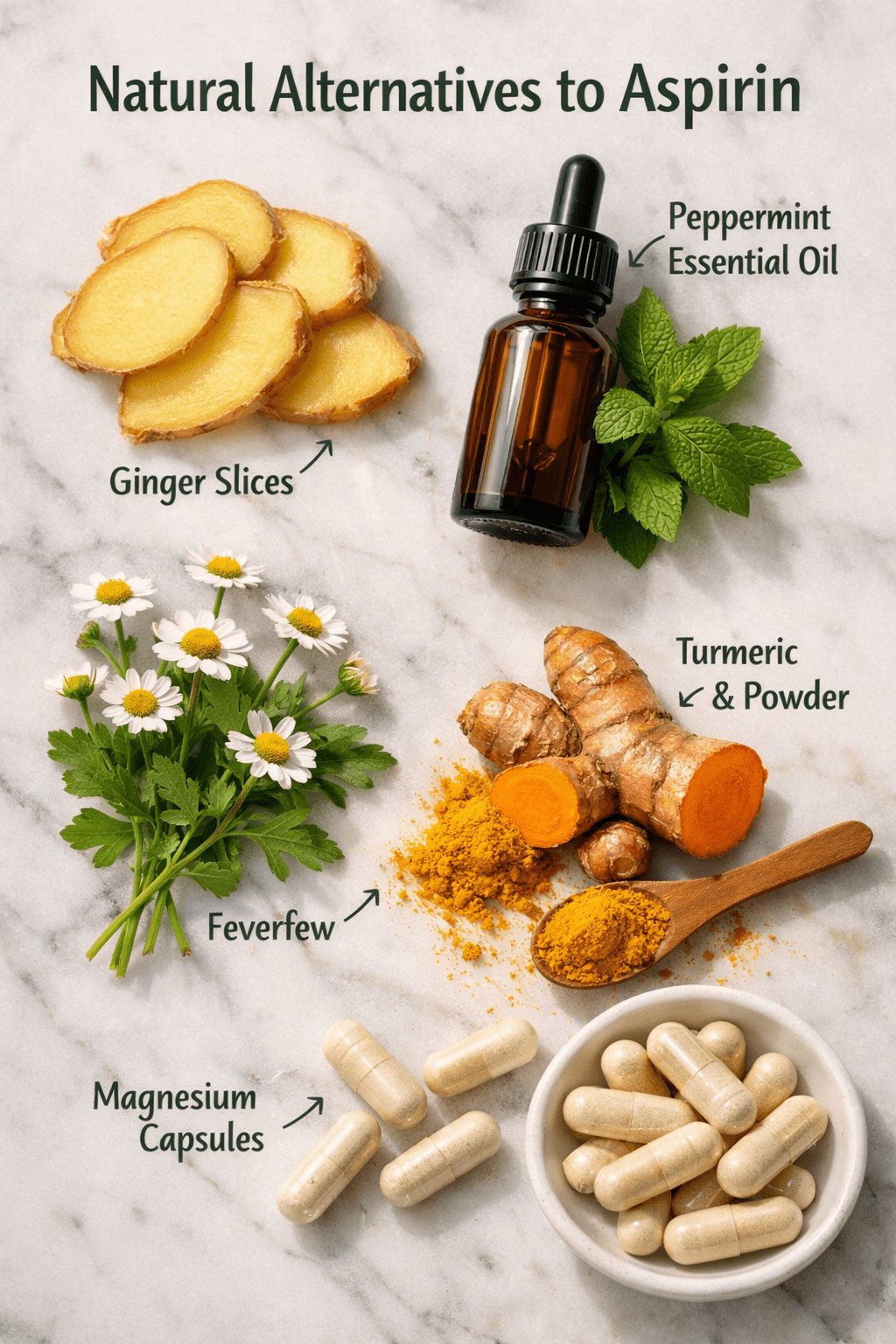
Many people reach for aspirin out of habit, but it’s not always the right fit. Aspirin can irritate the stomach lining, interact with blood thinners, and isn’t safe for children under 16 due to the risk of Reye’s syndrome. Some people simply prefer to avoid over-the-counter medications when a gentler option might do the job.
The good news is that several natural alternatives to aspirin have real clinical evidence behind them, not just folk wisdom. Herbs like feverfew and ginger have been tested in randomized controlled trials, and the results are genuinely encouraging [1].
That said, “natural” doesn’t automatically mean risk-free. Dosage, quality, and your own health history all matter. Use this guide as a starting point, not a replacement for medical advice.
If you’re just getting started with home remedies, the Natural Remedies for Beginners: Complete Guide is a great place to build your foundation.
1. Ginger: The Kitchen Staple That Eases Headache Pain
Ginger is one of the most accessible and well-studied natural headache remedies available. A 103-patient randomized controlled trial found that ginger standardized to 5% gingerols at 500 mg/day significantly reduced the duration and severity of migraine attacks compared to placebo over 3 months, though it didn’t reduce how often attacks occurred [1].
How to Use Ginger for Headaches
- Ginger tea: Steep 1–2 teaspoons of freshly grated ginger in hot water for 10 minutes. Drink at the first sign of a headache.
- Ginger capsules: Look for supplements standardized to 5% gingerols if you want the dosage used in clinical research.
- Ginger shots: A concentrated ginger and turmeric shot can deliver a quick anti-inflammatory hit. Check out these DIY Ginger and Turmeric Shots for Morning Energy for easy recipes.
Choose ginger if: your headaches tend to come with nausea (ginger addresses both), or you want a remedy you can make from scratch in under 5 minutes.
Common mistake: Using ginger ale from a bottle. Most commercial ginger ales contain very little actual ginger. Fresh root or quality supplements are far more effective.
2. Peppermint Oil: Fast-Acting Relief You Apply Directly
Peppermint oil is one of the most popular plant-based preparations for headache relief, particularly for tension headaches. Applying it topically to the temples and forehead creates a cooling sensation that can distract from pain and may help relax tight muscles [2].
How to Use Peppermint Oil
- Dilute 2–3 drops of peppermint essential oil in a teaspoon of carrier oil (coconut or almond oil work well).
- Apply to your temples, forehead, and the back of your neck.
- Massage gently in circular motions for 1–2 minutes.
- Reapply after 30 minutes if needed.
You can also make a ready-to-use headache balm at home. This DIY Headache Balm Recipe Ready in Just 5 Minutes combines peppermint with other soothing oils into a convenient stick or tin.
Choose peppermint oil if: you have a tension headache that feels like pressure around your forehead or temples, or you want something that works within minutes without swallowing anything.
Edge case: Avoid applying peppermint oil near the eyes or on broken skin. Also keep it away from young children’s faces, as the menthol can cause breathing discomfort.

3. Feverfew: The Herbal Classic for Migraine Prevention
Feverfew is one of the most researched herbal remedies specifically for migraines, and the results are hard to ignore. A randomized controlled trial using 10 drops of parthenolide extract (0.4%) daily alongside propranolol found a 61.62% reduction in migraine frequency and a 56.2% reduction in severity over 3 months [1].
Parthenolide, the active compound in feverfew, is thought to inhibit platelet aggregation and reduce inflammation, two processes involved in migraine attacks [4].
Key Facts About Feverfew
| Feature | Detail |
|---|---|
| Active compound | Parthenolide |
| Best use | Migraine prevention (not acute relief) |
| Common form | Capsules, tinctures, fresh leaves |
| Typical dose studied | 0.4% parthenolide extract, 10 drops/day |
| Time to see results | 4–12 weeks of consistent use |
Important: Feverfew is a preventive herb, not a fast-acting painkiller. Don’t expect it to stop a migraine mid-attack the way aspirin might. Think of it as a long-term strategy.
Common mistake: Stopping feverfew suddenly after long-term use. Some people experience rebound headaches when they quit abruptly. Taper off gradually if you decide to stop.
4. Turmeric (Curcumin): The Anti-Inflammatory Powerhouse
Turmeric’s active compound, curcumin, has shown real promise as a natural alternative to aspirin for headaches driven by inflammation. A 60-patient randomized controlled trial found that phytosomal curcumin at 250 mg/day for 2 months relieved migraine symptoms by reducing oxidative stress and inflammation [1].
The catch? Regular turmeric powder from your spice rack has poor bioavailability, meaning your body absorbs very little of it. Phytosomal curcumin (curcumin bound to phospholipids) absorbs significantly better, which is why the research uses this form.
How to Get More Curcumin
- Supplements: Look for “phytosomal curcumin” or “curcumin with piperine” on the label. Piperine (from black pepper) also boosts absorption.
- Golden milk: Warm turmeric milk with black pepper and a fat source (like coconut milk) is a traditional way to improve absorption.
- Topical use: Turmeric-infused balms are used in traditional medicine, though the evidence for topical use for headaches is limited.
If you enjoy making your own herbal blends, learning how to make your own herbal tea blends at home can help you create a daily anti-inflammatory tea routine.
Choose turmeric if: you have frequent headaches that seem tied to inflammation, or you’re already dealing with other inflammatory conditions and want a remedy that addresses both.

5. Magnesium: The Mineral Most Headache Sufferers Are Missing
Magnesium is one of the most widely recommended natural alternatives to aspirin for headaches, and deficiency in this mineral is surprisingly common among people who get frequent migraines. Harvard Health lists magnesium supplementation as a key natural remedy for headache relief [2].
Magnesium plays a role in nerve transmission and blood vessel function, both of which are involved in migraine and tension headaches. Low magnesium levels can make the nervous system more reactive to pain triggers.
Magnesium Options at a Glance
- Magnesium glycinate: Gentle on the stomach, good for daily use
- Magnesium citrate: Widely available, absorbs well, but can have a laxative effect at high doses
- Magnesium oxide: Common but poorly absorbed; not the best choice for headache prevention
- Food sources: Dark leafy greens, pumpkin seeds, almonds, dark chocolate, avocado
Choose magnesium if: your headaches tend to occur around your menstrual cycle, after stress, or alongside muscle tension in your neck and shoulders. These patterns often point to magnesium depletion.
Dosage note: The research on magnesium for migraines typically uses 400–600 mg/day of elemental magnesium, but start lower and increase gradually to avoid digestive side effects. Talk to your doctor before supplementing, especially if you have kidney issues.
How Do These Natural Alternatives to Aspirin Compare?
Here’s a quick side-by-side comparison to help you choose the right remedy for your situation:
| Remedy | Best For | Speed of Action | Evidence Level | DIY-Friendly? |
|---|---|---|---|---|
| Ginger | Migraine severity + nausea | Moderate (30–60 min) | Strong RCT data [1] | Yes |
| Peppermint oil | Tension headaches | Fast (10–20 min) | Moderate [2] | Yes |
| Feverfew | Migraine prevention | Slow (weeks) | Strong RCT data [1] | Moderate |
| Turmeric/Curcumin | Inflammation-driven migraines | Slow (weeks) | Good RCT data [1] | Moderate |
| Magnesium | Frequent/hormonal headaches | Slow (weeks) | Good [2] | Yes |
What About Sinus Headaches Specifically?
If your headaches come with nasal congestion, facial pressure, or post-nasal drip, you may be dealing with a sinus headache rather than a tension or migraine headache. The remedies above still help with the pain component, but you’ll also want to address the underlying congestion.
For that, check out Natural Remedies for a Sinus Headache: 5 Ways to Breathe, which covers steam inhalation, saline rinses, and other targeted approaches. You might also find relief with a Natural Sinus Chest Rub Recipe that uses eucalyptus and peppermint to open airways.
Common Mistakes to Avoid When Using Natural Headache Remedies
- Waiting too long to start. Most natural remedies work best when taken at the first sign of a headache, not after it’s fully developed.
- Inconsistent use. Preventive herbs like feverfew and supplements like magnesium need weeks of consistent use to build up. Taking them once won’t do much.
- Ignoring quality. Herbal supplements vary wildly in potency. Look for standardized extracts and third-party tested products.
- Skipping hydration. Dehydration is one of the most common headache triggers. Before reaching for any remedy, drink a full glass of water.
- Assuming natural means safe for everyone. Feverfew can interact with blood thinners. Ginger in high doses may affect clotting. Always check interactions if you’re on medication.
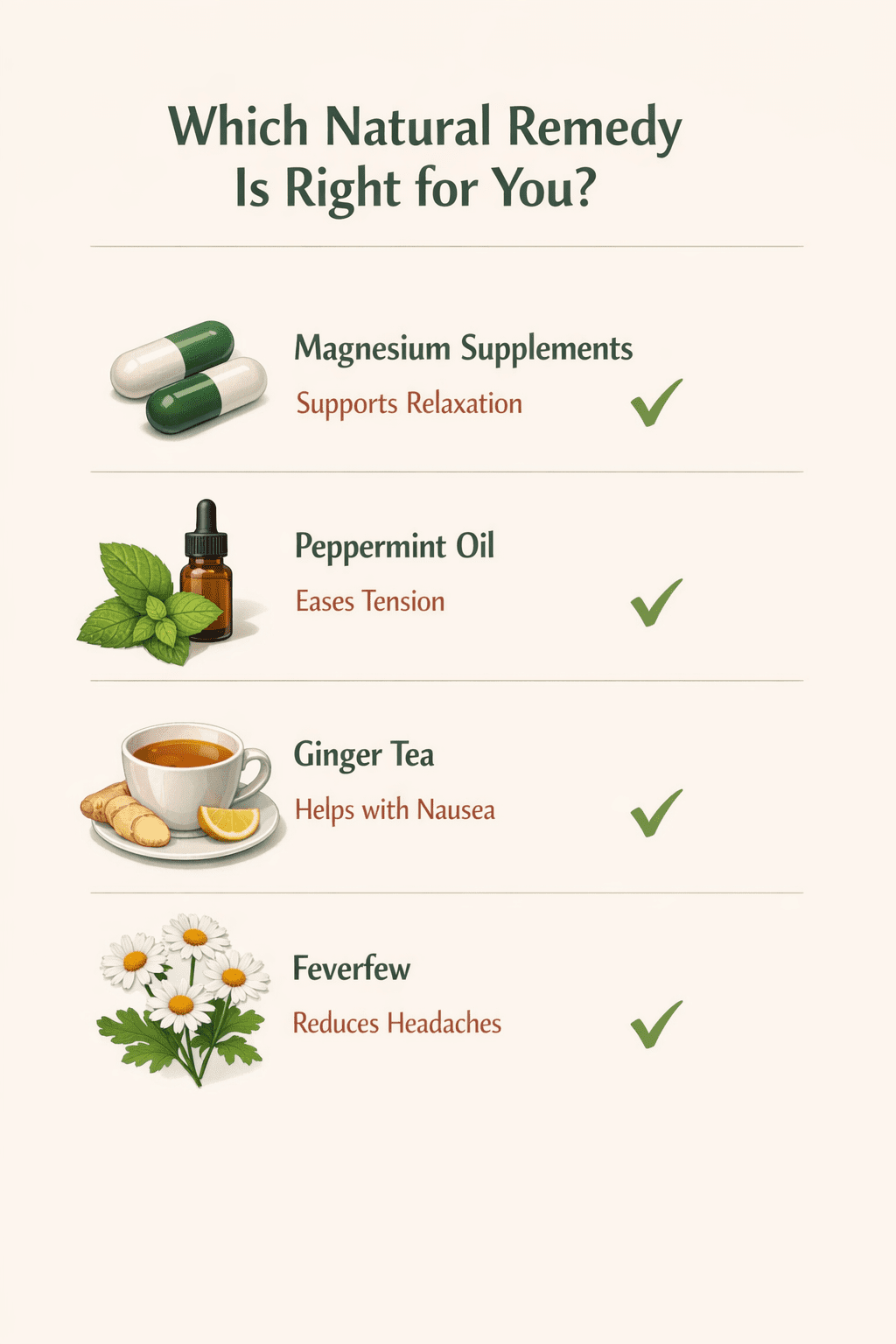
FAQ: Natural Alternatives to Aspirin for Headaches
Q: Can I use these remedies while pregnant?
Most herbal supplements, including feverfew and high-dose ginger, are not recommended during pregnancy without medical guidance. Peppermint oil applied topically is generally considered lower risk, but check with your midwife or OB first.
Q: How quickly does peppermint oil work for headaches?
Many people feel relief within 15–30 minutes of applying diluted peppermint oil to the temples. It works fastest for tension headaches and may be less effective for severe migraines.
Q: Is ginger tea as effective as ginger capsules?
Ginger tea made from fresh root provides active gingerols, but the concentration is lower and less consistent than a standardized supplement. For mild headaches, tea is fine. For clinical-level results, capsules standardized to 5% gingerols are more reliable [1].
Q: Can I combine these remedies?
Yes, in many cases. Ginger tea plus peppermint oil, for example, is a common pairing. Curcumin and magnesium together are also frequently used. Avoid combining multiple herbal supplements without checking for interactions, especially if you take prescription medications.
Q: How long does it take for feverfew to work?
Expect 4–12 weeks of consistent daily use before noticing a reduction in migraine frequency. It’s a preventive herb, not an acute pain reliever [1].
Q: Are there natural alternatives for children’s headaches?
Children should not take aspirin due to Reye’s syndrome risk, which is exactly why natural alternatives matter here. However, herbal supplements like feverfew are not well-studied in children. Peppermint oil (diluted more than for adults) and hydration are safer starting points. Always consult a pediatrician first.
Q: What’s the difference between a tension headache and a migraine?
Tension headaches feel like a band of pressure around the head and are often linked to muscle tension or stress. Migraines typically involve throbbing pain on one side, nausea, and sensitivity to light or sound. The best remedy may differ depending on which type you have.
Q: Can magnesium be taken daily long-term?
For most healthy adults, yes. Magnesium is an essential mineral and daily supplementation is generally safe at recommended doses. High doses can cause loose stools, so start with 200–300 mg and increase gradually.
Conclusion: Your Next Steps for Natural Headache Relief
Natural alternatives to aspirin for headaches are genuinely worth exploring, especially if you get frequent headaches or want to reduce your reliance on over-the-counter medications. The five remedies covered here, ginger, peppermint oil, feverfew, turmeric, and magnesium, each have real evidence behind them and can be incorporated into your daily routine without a prescription.
Here’s how to get started:
- Identify your headache type. Tension, migraine, or sinus? The right remedy depends on the cause.
- Start with one remedy at a time. This helps you figure out what actually works for you.
- Be consistent. Preventive options like feverfew and magnesium need weeks to show results.
- Keep a headache diary. Track triggers, timing, and which remedies helped. Patterns become clear quickly.
- See a doctor if headaches are severe, sudden, or worsening. Natural remedies are a complement to medical care, not a replacement.
For a hands-on way to get started, try making a DIY Headache Balm tonight. It takes 5 minutes and gives you something ready to use the next time a headache strikes.

References
[1] Pmc11858087 – https://pmc.ncbi.nlm.nih.gov/articles/PMC11858087/
[2] Headache Remedies To Help You Feel Better – https://www.health.harvard.edu/healthy-aging-and-longevity/headache-remedies-to-help-you-feel-better
[3] Natural Alternatives Migraine Headache – https://headacheaustralia.org.au/natural-alternatives-migraine-headache/
[4] Herbal Supplement Migraine – https://www.webmd.com/migraines-headaches/herbal-supplement-migraine
[5] Headaches Are Not Due To An Aspirin Deficiency – https://www.innovativehealthclinic.com/headaches-are-not-due-to-an-aspirin-deficiency/