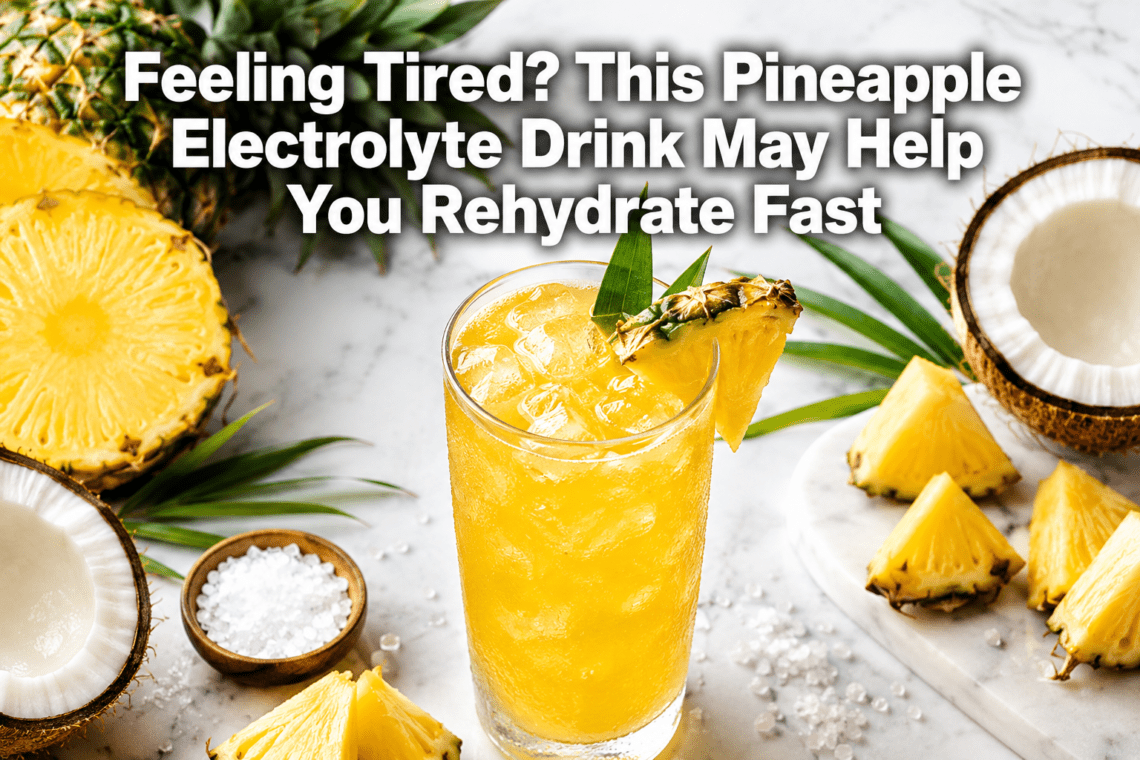
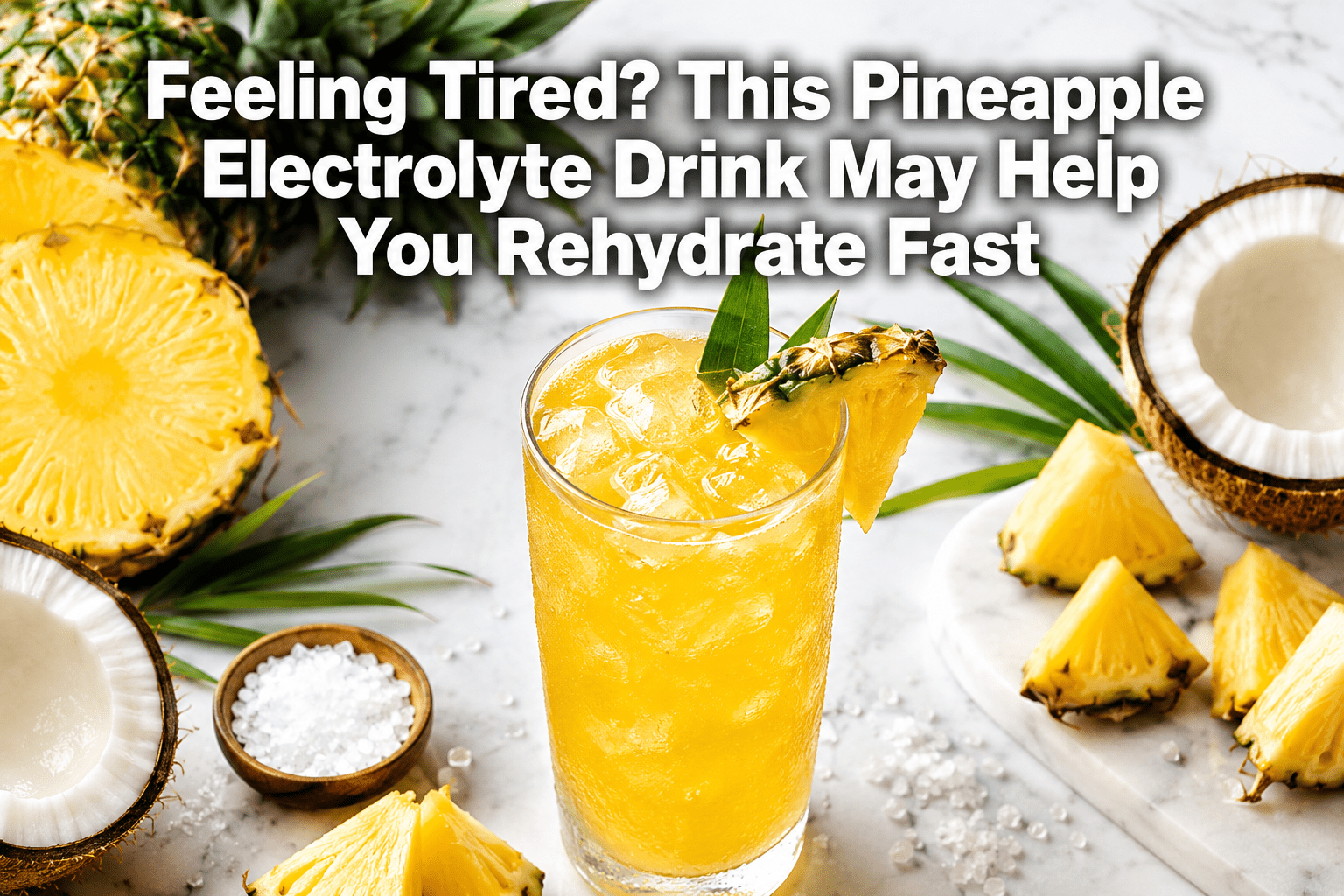
Quick Answer: A homemade electrolyte drink with pineapple combines coconut water, fresh pineapple, a pinch of salt, and a natural sweetener like honey to replace lost fluids and key minerals fast. It’s easy to make in under five minutes, free of artificial dyes, and works well after exercise, illness, or a long day in the heat.
Key Takeaways
- A homemade electrolyte drink with pineapple delivers potassium, sodium, and natural sugars to support rapid rehydration.
- Coconut water is the best base because it’s naturally rich in electrolytes and pairs well with pineapple’s flavor.
- A small pinch of salt (about ¼ teaspoon per batch) is essential — it’s what makes this a true electrolyte drink, not just juice.
- Honey or maple syrup adds quick-release carbohydrates that help your body absorb fluids more efficiently.
- Optional add-ins like aloe vera juice or pomegranate juice boost the nutritional profile without much extra effort.
- This drink is best for mild to moderate dehydration — severe dehydration needs medical attention.
- One batch (two servings) takes about five minutes to prepare with no cooking required.
- You can make it ahead and store it in the fridge for up to 24 hours.
Why Does a Homemade Electrolyte Drink with Pineapple Actually Work?
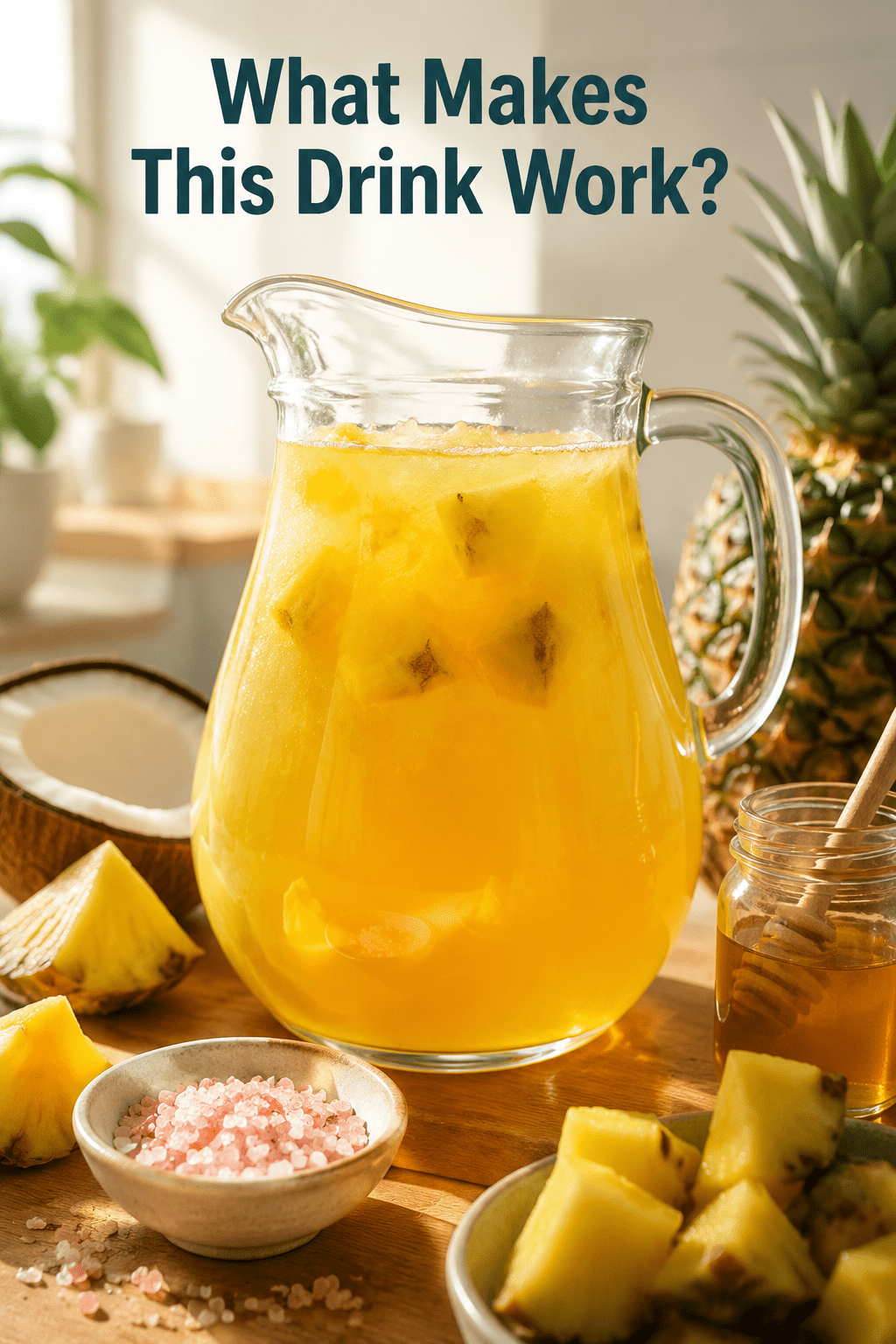
Pineapple contains natural sugars and potassium, and when you pair it with coconut water and a pinch of salt, you get a drink that genuinely supports fluid absorption. Plain water alone doesn’t replace the sodium and potassium your body loses through sweat or illness — electrolytes do.
Here’s what each ingredient brings to the glass:
| Ingredient | Key Benefit |
|---|---|
| Coconut water | Natural potassium, magnesium, and hydration base |
| Fresh pineapple | Natural sugars, vitamin C, potassium |
| Sea salt or kosher salt | Sodium to support fluid balance |
| Honey or maple syrup | Fast-release carbs to aid absorption |
| Aloe vera juice (optional) | Soothes digestion, adds trace minerals |
| Pomegranate juice (optional) | Antioxidants, flavor depth, extra potassium |
The salt is the piece most people skip — and it’s the most important. Sodium helps your intestines pull water into your bloodstream faster. Without it, you’re just drinking fancy juice.

What Ingredients Do You Need for This Recipe?
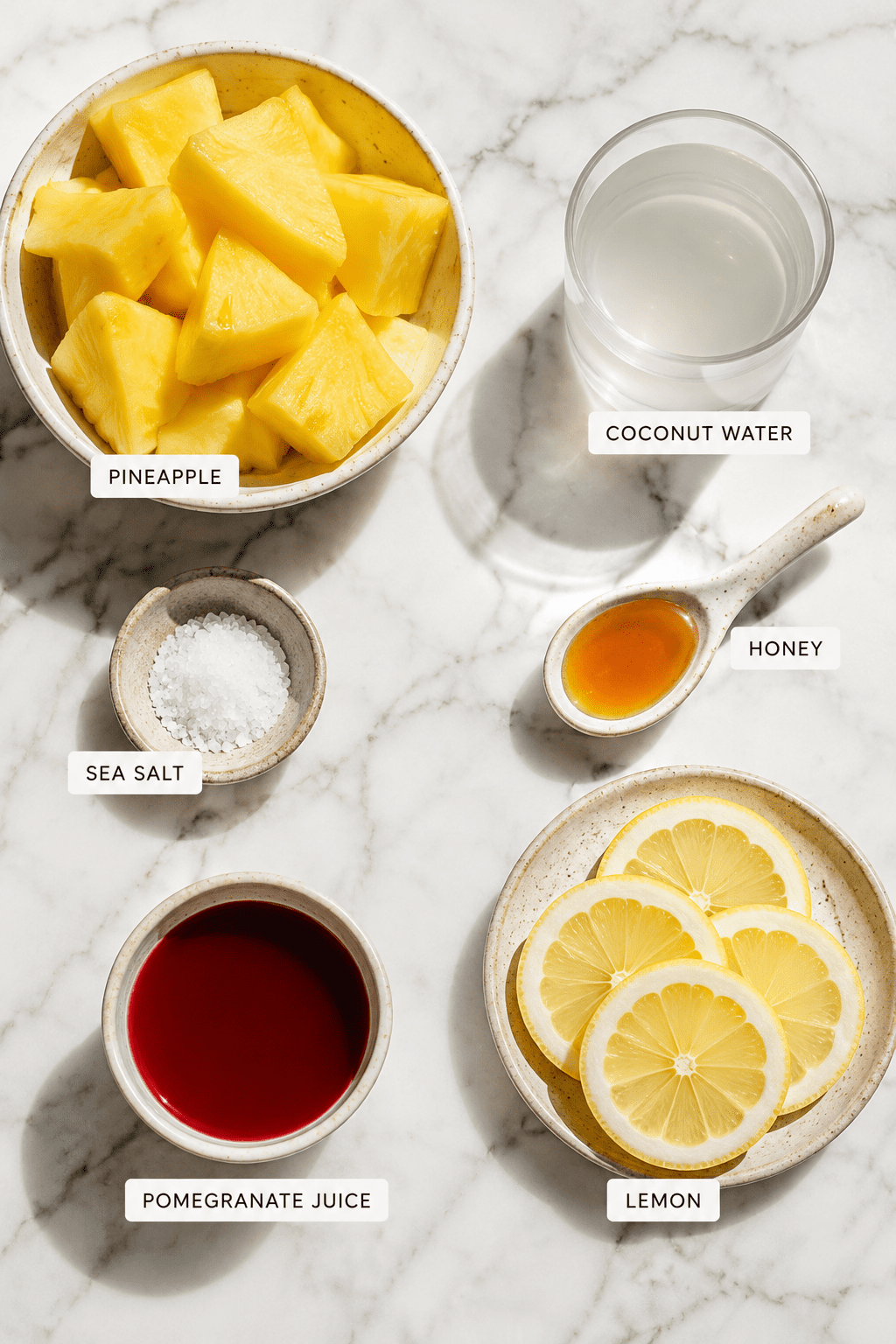
You need six simple ingredients for the base recipe, and most of them are probably already in your kitchen. [1]
Base recipe (makes 2 servings):
- 1½ cups coconut water
- ½ cup fresh or frozen pineapple chunks
- 1 cup aloe vera juice (optional but recommended)
- ½ cup pomegranate juice (optional, for extra flavor and nutrients)
- 1 tablespoon pure honey (or 3 tablespoons amber maple syrup for a vegan version) [1][2]
- ¼ teaspoon kosher salt or fine sea salt [1]
Choose this version if:
- You want the simplest version: just coconut water, pineapple, salt, and honey.
- You want more flavor and nutrients: add aloe vera juice and pomegranate juice.
- You’re vegan or dairy-free: swap honey for maple syrup. A maple syrup version provides roughly 219 mg of potassium and 239 mg of sodium per 500 ml serving, which is a solid electrolyte profile. [2]
💡 Quick tip: Use fresh pineapple when you can. Canned pineapple in syrup adds unnecessary sugar and may contain preservatives.
How to Make a Homemade Electrolyte Drink with Pineapple Step by Step
This takes about five minutes, no cooking required. Here’s the full process:
- Blend the pineapple. Add ½ cup of fresh pineapple chunks to a blender with a splash of coconut water. Blend until smooth, about 20 seconds.
- Combine the liquids. Pour the blended pineapple into a large jar or pitcher. Add the remaining coconut water, aloe vera juice (if using), and pomegranate juice (if using). [1]
- Add salt and sweetener. Stir in ¼ teaspoon of salt and 1 tablespoon of honey (or your chosen sweetener). Mix well until the honey dissolves. [1]
- Taste and adjust. If it’s too tart, add a little more honey. If it tastes flat, add another small pinch of salt.
- Serve over ice. Pour into two glasses over ice and drink within 24 hours for best flavor and freshness.
Common mistake: Skipping the salt because you’re worried about sodium. The amount used here is small — about the same as a light sprinkle on food — but it makes a real difference in how well your body absorbs the fluid.
For more creative natural drink ideas, check out these 7 DIY electrolyte drink recipes better than sports drinks or try a homemade strawberry electrolyte drink ready in 5 minutes if you want a different fruit base.
When Should You Drink This? (And When Shouldn’t You?)
This drink works best for mild to moderate dehydration caused by everyday situations. It’s not a substitute for medical treatment.
Good times to reach for this drink:
- After a workout or a long walk in the heat
- When you’re recovering from a stomach bug with vomiting or diarrhea
- After a long flight or a day of travel
- When you feel that mid-afternoon energy crash that’s often linked to low fluid intake
- On hot summer days when you’ve been sweating more than usual
When to skip it and see a doctor instead:
- You’re severely dehydrated (signs: no urination for 8+ hours, extreme dizziness, confusion)
- You have kidney disease or a condition that requires you to limit potassium or sodium
- You’re giving it to an infant — this recipe is not formulated for babies
⚠️ Edge case: If you’re on blood pressure medication or a low-sodium diet, check with your doctor before adding extra salt to your drinks, even in small amounts.
How Does This Compare to Store-Bought Sports Drinks?
A homemade electrolyte drink with pineapple has a few clear advantages over commercial options, but it’s worth knowing the trade-offs.
| Feature | Homemade Pineapple Drink | Commercial Sports Drink |
|---|---|---|
| Artificial dyes | None | Often present |
| Added preservatives | None | Usually present |
| Natural potassium | High (from coconut water + pineapple) | Variable |
| Sodium content | Controlled by you | Fixed, often high |
| Cost per serving | Low (estimate: under $1) | $1.50–$3+ per bottle |
| Shelf life | 24 hours | Months (sealed) |
| Customizable | Yes | No |
The main downside of homemade is shelf life. You need to make it fresh. But for most people who want a clean, natural option, that’s a small trade-off.
If you enjoy experimenting with natural hydration, the homemade blueberry lemon electrolyte drink recipe is another great option to rotate in. You might also enjoy this pineapple ginger detox shot as a morning complement.
Can You Customize This Homemade Electrolyte Drink with Pineapple?
Yes, and it’s easy to do without breaking the recipe’s electrolyte balance.
Simple swaps and add-ins:
- Lemon or lime juice — adds vitamin C and a bright flavor. Use 1–2 tablespoons.
- Fresh ginger — blend a small piece with the pineapple for an anti-inflammatory boost.
- Sparkling water — replace half the coconut water for a fizzy version.
- Magnesium powder — a small amount (follow package directions) adds another key electrolyte.
- Maple syrup instead of honey — works equally well and gives a slightly richer flavor. [2]
For more ideas on energizing natural drinks, browse the full natural hydration drinks collection or explore 7 drinks to flush out toxins and feel energized.
FAQ
Q: Can I use pineapple juice instead of fresh pineapple?
Yes, but use 100% pure pineapple juice with no added sugar. Start with about ¼ cup and adjust to taste, since juice is more concentrated than fresh fruit.
Q: How long does this drink last in the fridge?
Up to 24 hours in a sealed jar or bottle. After that, the flavor and freshness drop noticeably. Make it fresh each day for best results.
Q: Is this safe for kids?
Generally yes, for children over 1 year old. Reduce or omit the honey for children under 1 (honey is not safe for infants). Adjust the salt to a smaller pinch for young children.
Q: Can I make a bigger batch?
Absolutely. Scale up all ingredients proportionally. A 1-liter batch using maple syrup provides roughly 127 calories and 32g of carbohydrates per 500 ml serving, which is a reasonable energy source during activity. [2]
Q: Does this drink help with hangovers?
It can help with the dehydration component of a hangover. The electrolytes and natural sugars support fluid recovery, but it won’t address all hangover symptoms.
Q: Do I need a blender?
A blender gives the smoothest result, but you can also muddle fresh pineapple with a fork or use a fine mesh strainer to press juice from the fruit if you don’t have one.
Q: Is coconut water necessary, or can I use plain water?
You can use plain water, but you’ll lose the natural potassium and magnesium that coconut water provides. If you use plain water, consider adding a small magnesium supplement or a splash of orange juice to compensate.
Q: How much should I drink at once?
One serving (about 250–500 ml) is a good starting point. Sip it over 20–30 minutes rather than drinking it all at once for better absorption.
Conclusion
Fatigue and that heavy, sluggish feeling are often just your body asking for fluids and minerals — not caffeine. A homemade electrolyte drink with pineapple is one of the fastest, most affordable ways to answer that call without reaching for a sugar-loaded sports drink.
Your next steps:
- Grab coconut water, fresh pineapple, honey, and salt — that’s all you need for the base recipe.
- Make one batch today and drink it after your next workout or on your next hot afternoon.
- Experiment with the optional add-ins (pomegranate juice, aloe vera, ginger) to find your favorite version.
- Bookmark this page and check out the 7 DIY electrolyte drink recipes for more natural hydration ideas to rotate through the week.
Small changes to how you hydrate can make a real difference in how you feel day to day. This drink is a good place to start.
References
[1] Pineapple Pomegranate Electrolyte Drink – https://www.lundsandbyerlys.com/recipes/Pineapple_Pomegranate_Electrolyte_Drink
[2] Maple Lemon Pineapple Energy Drink – https://maplefromcanada.ca/recipes/maple-lemon-pineapple-energy-drink/