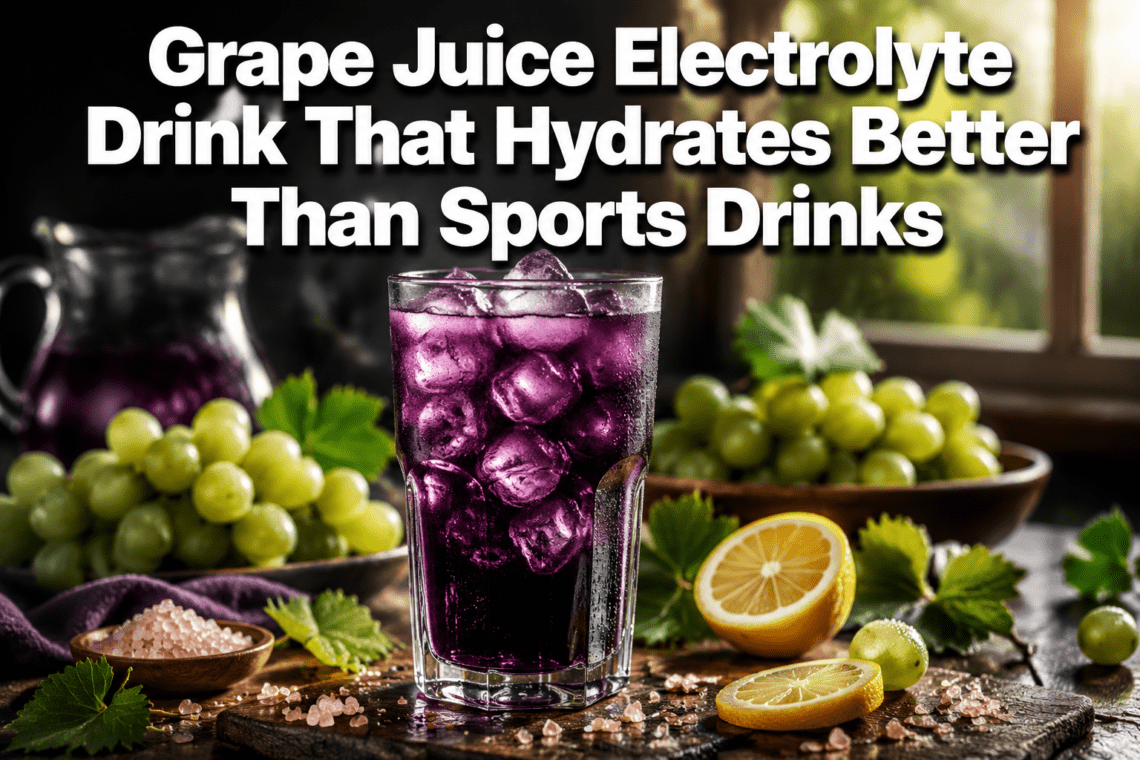
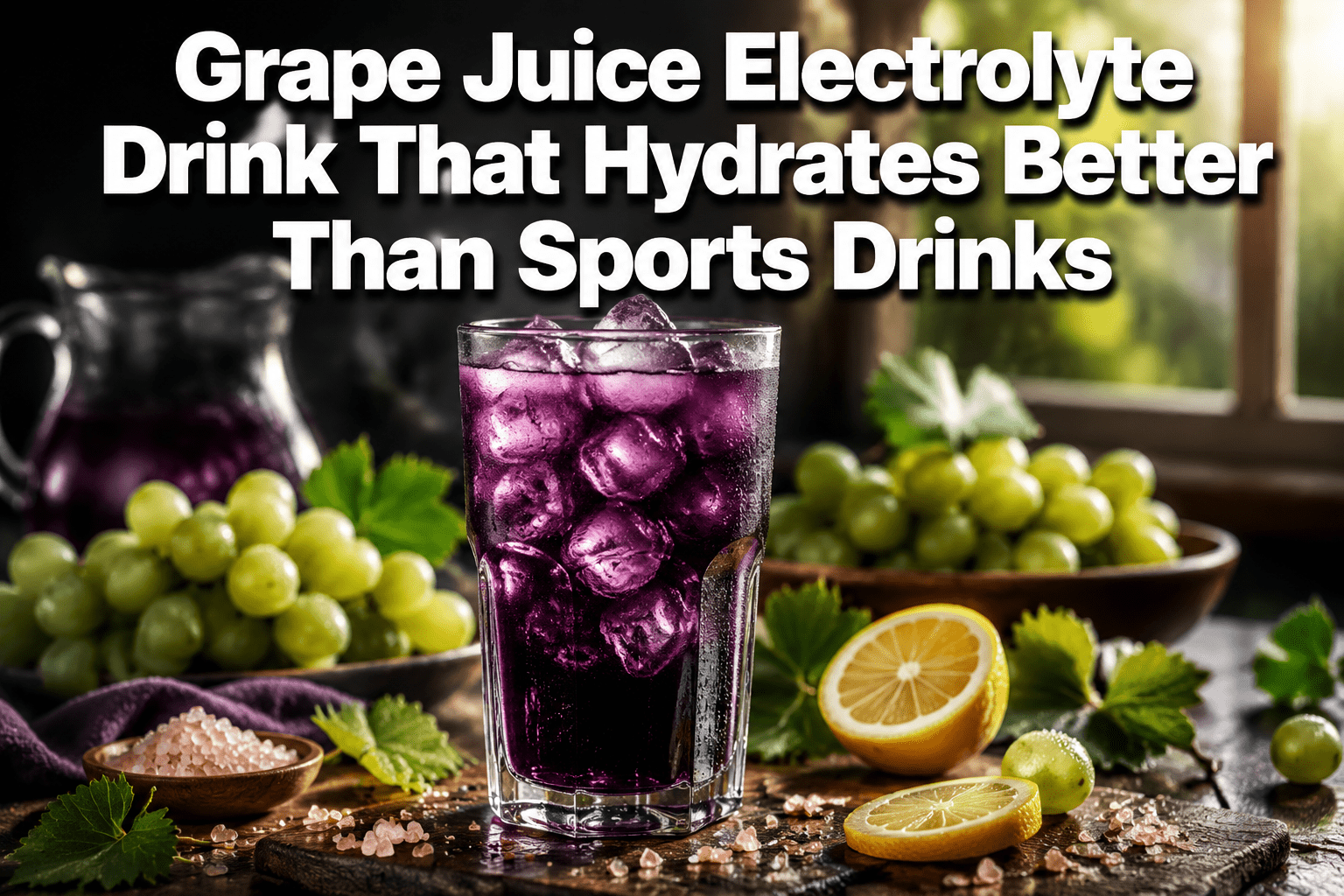
Quick Answer: A grape juice electrolyte drink combines pure grape juice, water, and a pinch of sea salt to deliver natural electrolytes, antioxidants, and cellular hydration without the artificial dyes and excess sugar found in most commercial sports drinks. Research shows grape juice-based drinks can match or outperform conventional sports drinks for fluid retention during exercise, while also providing antioxidant protection that synthetic formulas simply cannot offer [2][4].
Key Takeaways
- 🍇 A basic grape juice electrolyte drink needs only three ingredients: grape juice, water, and sea salt.
- 💜 Grape juice provides natural potassium, magnesium, and polyphenols that support both hydration and cellular repair.
- 🧪 Studies show no measurable difference in fluid retention between natural juice-based drinks and commercial sports drinks during exercise [2].
- ⚡ Runners consuming grape juice showed an 18.7% increase in time to exhaustion compared to placebo in clinical trials, with antioxidant activity rising 43.6% [1].
- 🚫 Most commercial sports drinks contain artificial colors, high-fructose corn syrup, and synthetic electrolytes that many health-conscious people prefer to avoid.
- 🔬 Grape juice concentrate is actively being researched for use in isotonic beverage development for athletic performance [4].
- 💧 Diluting grape juice 50/50 with water creates an isotonic-range drink that absorbs quickly during and after exercise.
- ✅ This drink works well for workouts under 90 minutes, post-exercise recovery, illness rehydration, and everyday hydration support.
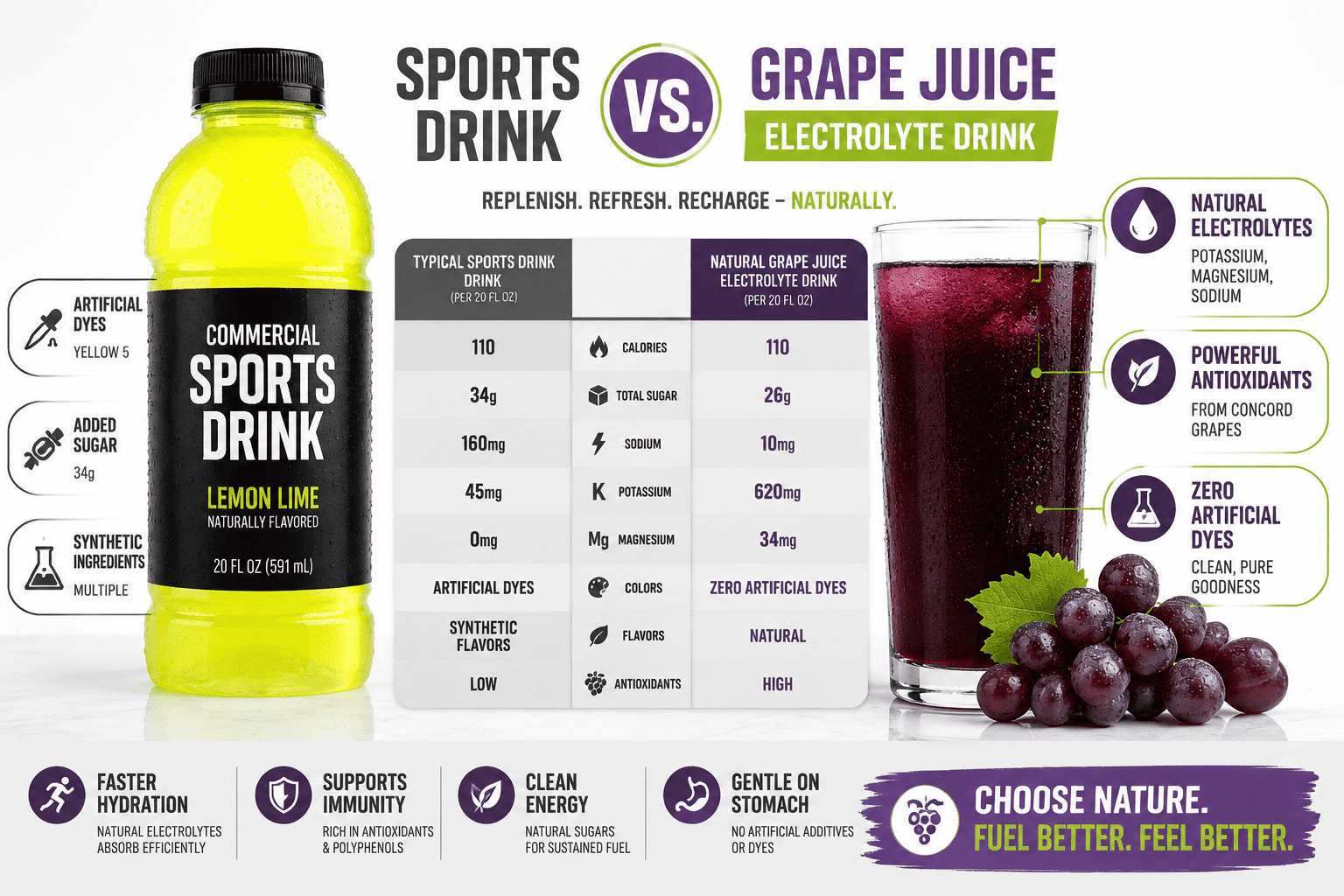
Why Does a Grape Juice Electrolyte Drink Outperform Commercial Sports Drinks?
Most commercial sports drinks hydrate you in one way: they replace fluids and electrolytes lost through sweat. A grape juice electrolyte drink does that too, but it also delivers antioxidants and natural plant compounds that support cellular repair during and after exercise [1].
Here’s the core difference:
| Feature | Grape Juice Electrolyte Drink | Typical Sports Drink (e.g., Gatorade) |
|---|---|---|
| Electrolytes | Natural (potassium, magnesium) | Synthetic (sodium, potassium chloride) |
| Antioxidants | High (polyphenols, resveratrol) | None or minimal |
| Artificial dyes | None | Often present |
| Sugar source | Natural fruit sugars | High-fructose corn syrup or sucrose |
| Sugar content | Lower when diluted | Typically higher [2] |
| Fluid retention | Equivalent to sports drinks [2] | Equivalent |
| Cost per serving | ~$0.30–$0.60 (estimate) | ~$1.50–$3.00 |
💬 “Unlike conventional sports drinks focused primarily on short-term hydration, grape juice-based electrolyte drinks provide long-term hydration combined with cellular repair and antioxidant protection.” [1]
Common mistake: Using undiluted grape juice as a sports drink. Full-strength grape juice has too high a sugar concentration to absorb quickly during exercise. Always dilute it at least 50/50 with water.
What Electrolytes Does Grape Juice Actually Contain?
Grape juice delivers real, food-based electrolytes that your body recognizes and uses efficiently. The main ones are potassium and magnesium, both of which play a direct role in muscle contraction and fluid balance.
Key natural electrolytes in grape juice (per 8 oz serving, approximate):
- Potassium: ~260–300 mg (supports muscle function and fluid balance)
- Magnesium: ~10–15 mg (supports nerve signaling and energy production)
- Calcium: ~15–20 mg (supports bone health and muscle contraction)
- Natural sugars: ~36 g (fuel source; dilute to reduce this for exercise use)

When you add a pinch of pink Himalayan sea salt to the mix, you also add sodium and trace minerals, completing the electrolyte profile your body needs during and after physical activity [2].
Choose this drink if: You exercise for 30–90 minutes, sweat moderately, or want a clean post-workout recovery drink. For extreme endurance events over 2 hours with heavy sweating, you may need a more sodium-rich formula.
For more natural hydration options, check out these 7 DIY electrolyte drink recipes better than sports drinks that use whole-food ingredients.
How to Make a Grape Juice Electrolyte Drink (Step-by-Step Recipe)
Making this drink takes about 2 minutes and requires no special equipment. Sports nutrition experts confirm that a three-ingredient formula of water, fruit juice, and sea salt is an effective homemade sports drink alternative [2].
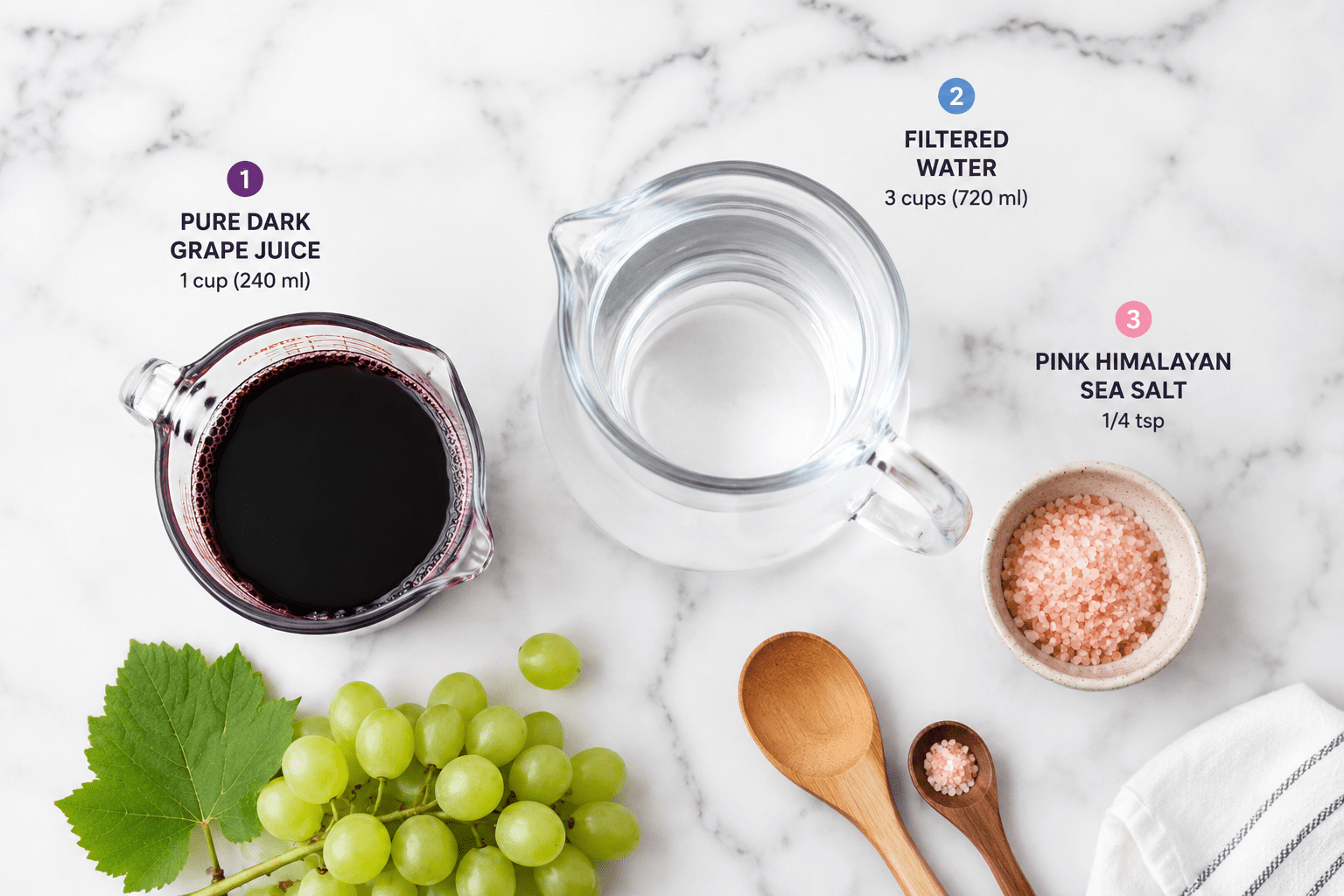
Basic Recipe (1 serving)
Ingredients:
- 1 cup (8 oz) pure, unsweetened grape juice (dark purple preferred)
- 1 cup (8 oz) filtered water
- ⅛ teaspoon pink Himalayan sea salt or fine sea salt
- Optional: juice of ½ lemon (adds vitamin C and flavor)
- Optional: 1 teaspoon raw honey (adds trace minerals and natural energy)
Instructions:
- Pour grape juice and water into a glass or bottle.
- Add the sea salt and stir or shake until fully dissolved.
- Add lemon juice and honey if using.
- Serve over ice or chilled.
- Drink within 24 hours if stored in the fridge.
Variations
- Post-workout recovery version: Add 1 teaspoon of raw honey and a squeeze of lemon for extra carbohydrates and vitamin C.
- Illness rehydration version: Use ¾ cup grape juice, 1¼ cups water, ¼ teaspoon salt, and 1 teaspoon honey to mimic an oral rehydration solution ratio.
- Sparkling version: Replace still water with sparkling water for a fizzy, refreshing option.
Edge case: If you have diabetes or are monitoring blood sugar, use a smaller ratio of grape juice (¼ cup to ¾ cup water) and skip the honey. Consult your doctor before using this as a regular exercise drink.
Is a Grape Juice Electrolyte Drink Safe for Kids and Everyday Use?
Yes, a diluted grape juice electrolyte drink is generally safe for healthy adults and children, and it’s a far cleaner option than most commercial sports drinks for everyday use. The key word is diluted: full-strength juice is high in natural sugars and not ideal for frequent consumption.
For kids: Use a 1:3 ratio (1 part grape juice to 3 parts water) with a tiny pinch of salt. This is gentler on blood sugar and still provides hydration support during active play or mild illness.
For adults: The 1:1 ratio works well for moderate exercise. For everyday hydration outside of exercise, consider reducing the juice portion to ¼ cup per 8 oz of water.
Who should be cautious:
- People with kidney disease (potassium-sensitive)
- Anyone on blood-thinning medication (grape juice can interact with some drugs)
- Those with irritable bowel syndrome (high-sugar drinks may trigger symptoms)
If you’re interested in more drinks that support overall wellness, explore these 7 hydrating drinks for clear skin that actually work for additional natural options.
How Does Grape Juice Compare to Other Homemade Electrolyte Drinks?
Grape juice holds its own against other fruit-based electrolyte drinks, and in some areas it stands out. The high polyphenol content in dark grape juice is a clear advantage over lighter juices like apple or white grape [1][4].
| Drink Base | Antioxidant Level | Potassium | Flavor Profile | Best For |
|---|---|---|---|---|
| Dark grape juice | Very high | High | Rich, sweet | Exercise + recovery |
| Pineapple juice | Moderate | Moderate | Bright, tropical | Post-workout |
| Blueberry-lemon | High | Moderate | Tart, fresh | Everyday hydration |
| Strawberry | Moderate | Low-moderate | Light, sweet | Light activity |
| Apple juice | Low | Moderate | Mild, neutral | Kids, mild activity |
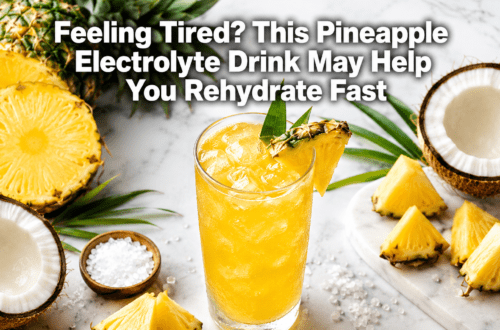
For a tropical alternative, try a homemade electrolyte drink with pineapple that rehydrates fast. Or if you prefer something tart and refreshing, a homemade blueberry lemon electrolyte drink is another excellent option.
Choose grape juice if: You want the highest antioxidant protection alongside hydration, especially after intense exercise or illness.
When Should You Drink a Grape Juice Electrolyte Drink?
Timing matters. A grape juice electrolyte drink works best in specific situations, not as a replacement for plain water throughout the entire day.
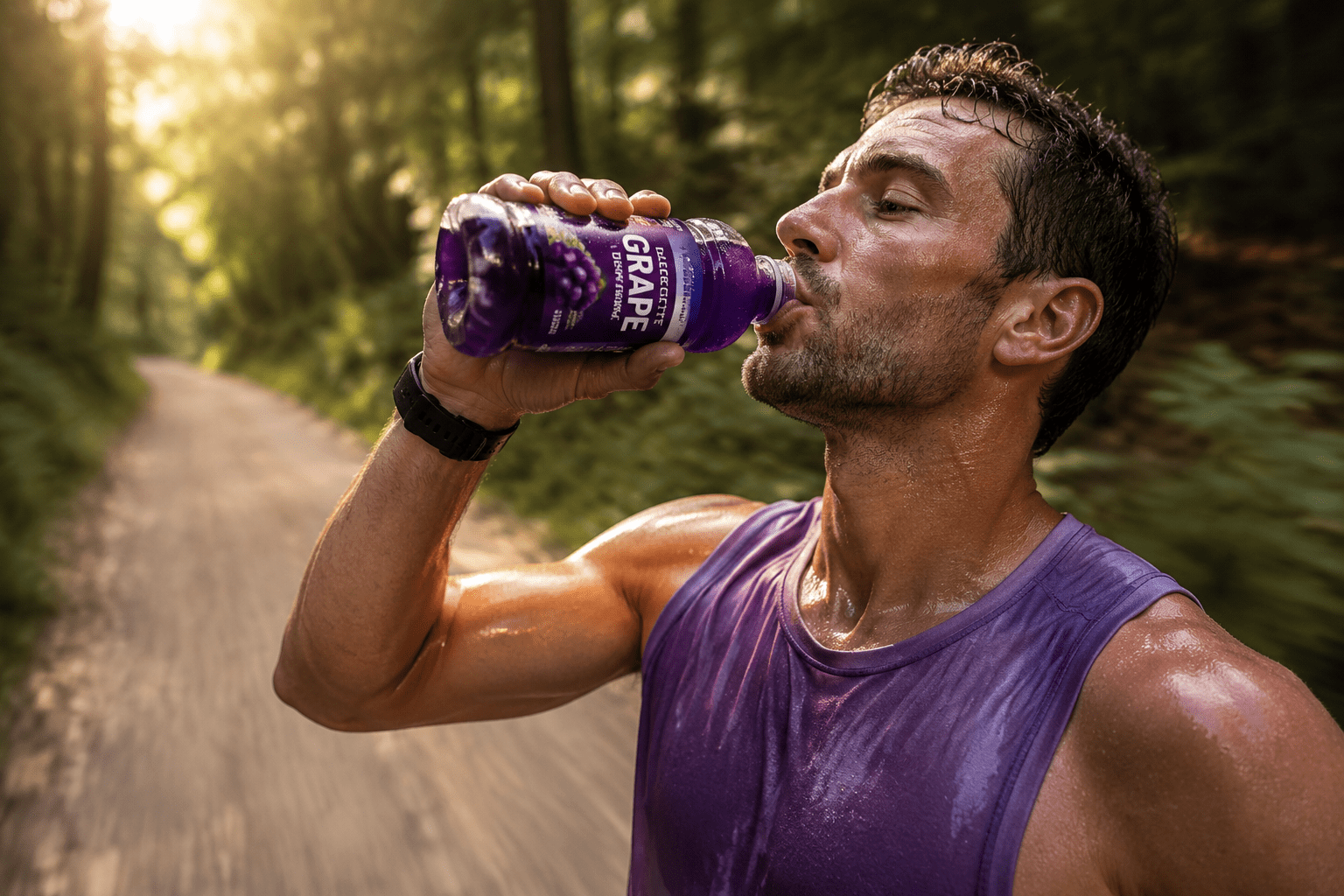
Best times to use it:
- 30 minutes before exercise: Provides quick-access carbohydrates and pre-loads electrolytes.
- During exercise (30–90 min workouts): Sip 4–6 oz every 20 minutes to maintain fluid and electrolyte balance [6].
- Immediately post-workout: Helps replace lost electrolytes and begins muscle recovery.
- During illness with vomiting or diarrhea: The salt-juice-water combination closely mimics oral rehydration solution principles [2].
- After time in heat or sun: Replaces sweat losses when plain water isn’t enough.
When plain water is better: If you’re exercising for under 30 minutes at low intensity, plain water is sufficient. The grape juice electrolyte drink adds value when sweat losses are meaningful [6].
You can also explore a homemade strawberry electrolyte drink ready in 5 minutes as a quick alternative for lighter activity days.
Frequently Asked Questions
Q: Can I use grape juice from a carton, or does it need to be fresh-pressed?
Bottled 100% pure grape juice works well and is the most practical option. Choose unsweetened, no-added-sugar varieties. Fresh-pressed is slightly higher in antioxidants but not required for effective hydration.
Q: How much sea salt should I add to a grape juice electrolyte drink?
Use ⅛ teaspoon per 16 oz of drink (the combined juice and water total). This adds roughly 290–300 mg of sodium, which is appropriate for moderate exercise without making the drink taste salty.
Q: Is grape juice too high in sugar to use as a sports drink?
Full-strength grape juice is high in sugar. Diluting it 50/50 with water cuts the sugar content roughly in half, bringing it to a range comparable to or lower than most commercial sports drinks [2].
Q: Can I make a large batch and store it?
Yes. Store in a sealed glass jar or bottle in the refrigerator for up to 3 days. Shake or stir before drinking since the salt can settle.
Q: Does the type of grape juice matter (red vs. white vs. Concord)?
Dark purple Concord grape juice has the highest polyphenol and antioxidant content. Red grape juice is second. White or green grape juice still hydrates but offers fewer antioxidant benefits.
Q: Will this drink help with muscle cramps?
The potassium and magnesium in grape juice, combined with sodium from sea salt, address the main electrolyte imbalances linked to exercise-related muscle cramps. It’s a reasonable natural option, though severe or frequent cramps should be evaluated by a doctor.
Q: Is this drink suitable during pregnancy?
Diluted grape juice with a small amount of sea salt is generally considered safe in moderation during pregnancy. However, always check with your healthcare provider about specific hydration needs during pregnancy.
Q: Can children drink this after sports?
Yes, in a more diluted form (1 part juice to 3 parts water with a tiny pinch of salt). Avoid adding honey for children under 12 months.
Conclusion
A grape juice electrolyte drink is one of the simplest, most effective natural alternatives to commercial sports drinks available in 2026. With just three ingredients, you get real electrolytes, meaningful antioxidant protection, and hydration that research shows is equivalent to synthetic sports drinks for fluid retention during exercise [2].
Your next steps:
- Start with the basic recipe: 1 cup grape juice + 1 cup water + ⅛ tsp sea salt. Try it before your next workout.
- Adjust the ratio based on your activity level. More diluted for light activity, closer to 1:1 for intense exercise.
- Experiment with add-ins like lemon juice or raw honey to find your preferred flavor and nutrition profile.
- Make a batch ahead and keep it chilled so it’s ready when you need it.
- Compare how you feel after a few weeks versus your previous sports drink routine.
For more whole-food hydration ideas, browse the full collection of natural hydration drinks to find recipes that fit your lifestyle.
References
[1] Dr Adarsha Gowda – Grape Juice Vs Gatorade What Science Says – https://www.linkedin.com/posts/dr-adarsha-gowda-38333445_grape-juice-vs-gatorade-what-science-activity-7367821005945278465-afv3
[2] TrueSport – Sports Drinks V Oral Rehydration Solutions – https://truesport.org/hydration/sports-drinks-v-oral-rehydration-solutions/
[4] PMC9209765 – Grape Juice Concentrate in Isotonic Beverage Development – https://pmc.ncbi.nlm.nih.gov/articles/PMC9209765/
[6] Gundersen Health – Water Or Electrolyte Drinks: What’s Better For Athletes – https://www.gundersenhealth.org/health-wellness/eat-move/water-or-electrolyte-drinks-whats-better-for-athletes