
Quick Answer: A DIY headache balm recipe combines peppermint, lavender, frankincense, and Roman chamomile essential oils with beeswax and a carrier oil like coconut oil. You mix everything together in about 5 minutes, pour it into a small tin, and apply it to your temples, neck, and shoulders when a headache hits. No special equipment needed.
Key Takeaways
- The core active ingredient is peppermint essential oil, which helps relax blood vessels and ease head pain [1]
- A basic recipe uses four essential oils (peppermint, lavender, frankincense, Roman chamomile) plus beeswax and coconut oil [1]
- Total hands-on time is about 5 minutes — the balm sets in roughly 20 minutes
- Apply to temples, back of the head, shoulders, and behind the ears [1]
- Roman chamomile is especially helpful for tension and stress-related headaches [1]
- Beeswax pastilles are easier to measure than blocks — use them if you can [2]
- Finished balm stores at room temperature for up to one year [2]
- This recipe works for adults; always patch-test first and keep it away from children’s faces
- A 5% essential oil dilution is appropriate for occasional adult use [1]
What Ingredients Do You Need for This DIY Headache Balm Recipe?
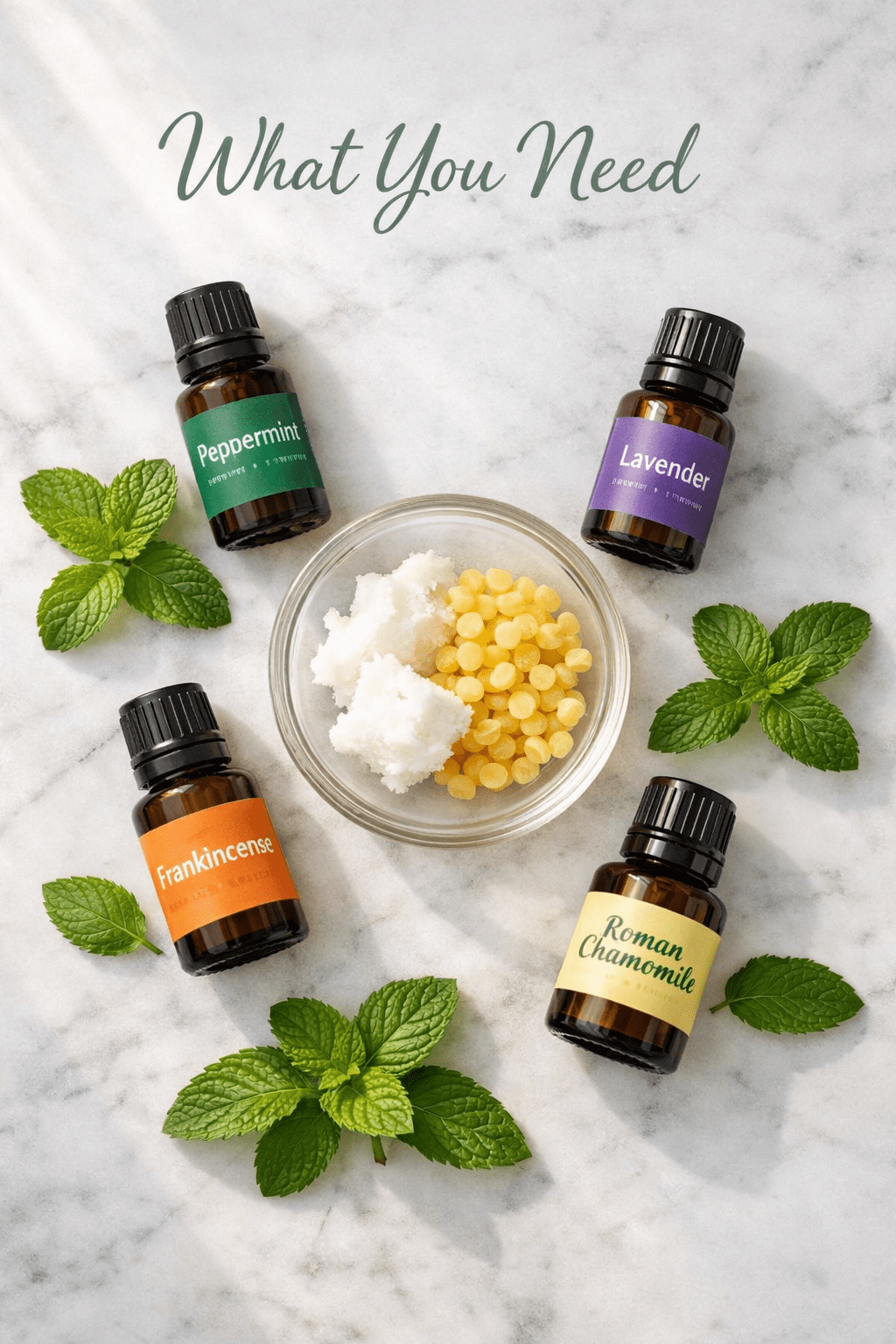
You need six ingredients total: four essential oils, beeswax, and a carrier oil. Most of these are pantry or medicine-cabinet staples if you already make DIY remedies at home.
Here’s the full ingredient list [1]:
| Ingredient | Amount | Purpose |
|---|---|---|
| Peppermint essential oil | 24 drops | Vasodilating, cooling pain relief |
| Lavender essential oil | 12 drops | Calming, anti-inflammatory |
| Frankincense essential oil | 12 drops | Grounding, tension relief |
| Roman chamomile essential oil | 12 drops | Analgesic, stress relief |
| Beeswax (pastilles preferred) | 2 tablespoons | Thickens and holds the balm |
| Coconut oil | 2 tablespoons | Carrier oil, skin-softening base |
Optional: You can swap coconut oil for olive oil or sweet almond oil if that’s what you have. The texture will be slightly softer with olive oil.
Choose Roman chamomile if your headaches tend to come from stress or tension. Its analgesic properties specifically target that tight, pressure-behind-the-eyes feeling [1].
Common mistake: Using fragrance oils instead of essential oils. Fragrance oils are synthetic and don’t carry the same therapeutic compounds. Stick with 100% pure essential oils.
How Do You Make This DIY Headache Balm Recipe Step by Step?
This takes about 5 minutes of active work. You’ll need a small saucepan or double boiler, a spoon, and a small tin or glass jar (1–2 oz works well).
Step-by-step instructions:
- Melt the beeswax. Add 2 tablespoons of beeswax pastilles to a double boiler or a heatproof bowl set over a pot of simmering water. Stir until fully melted.
- Add the coconut oil. Stir in 2 tablespoons of coconut oil until combined with the melted beeswax. Remove from heat.
- Cool slightly. Let the mixture cool for about 60 seconds — you want it warm but not scorching, so the essential oils don’t evaporate off.
- Add the essential oils. Drop in 24 drops of peppermint, then 12 drops each of lavender, frankincense, and Roman chamomile. Stir gently [1].
- Pour into your container. Carefully pour the liquid balm into a small tin or glass jar.
- Let it set. Leave it undisturbed at room temperature for 15–20 minutes until solid.
That’s it. Label it with the date and ingredients, and you’re done [2].
Quick tip: If your balm comes out too hard, melt it again and add a little more coconut oil. Too soft? Melt and add a touch more beeswax.
If you enjoy making natural pain-relief products, you might also like this DIY warming muscle rub recipe for sore muscles and tension.
How and Where Do You Apply the Headache Balm?
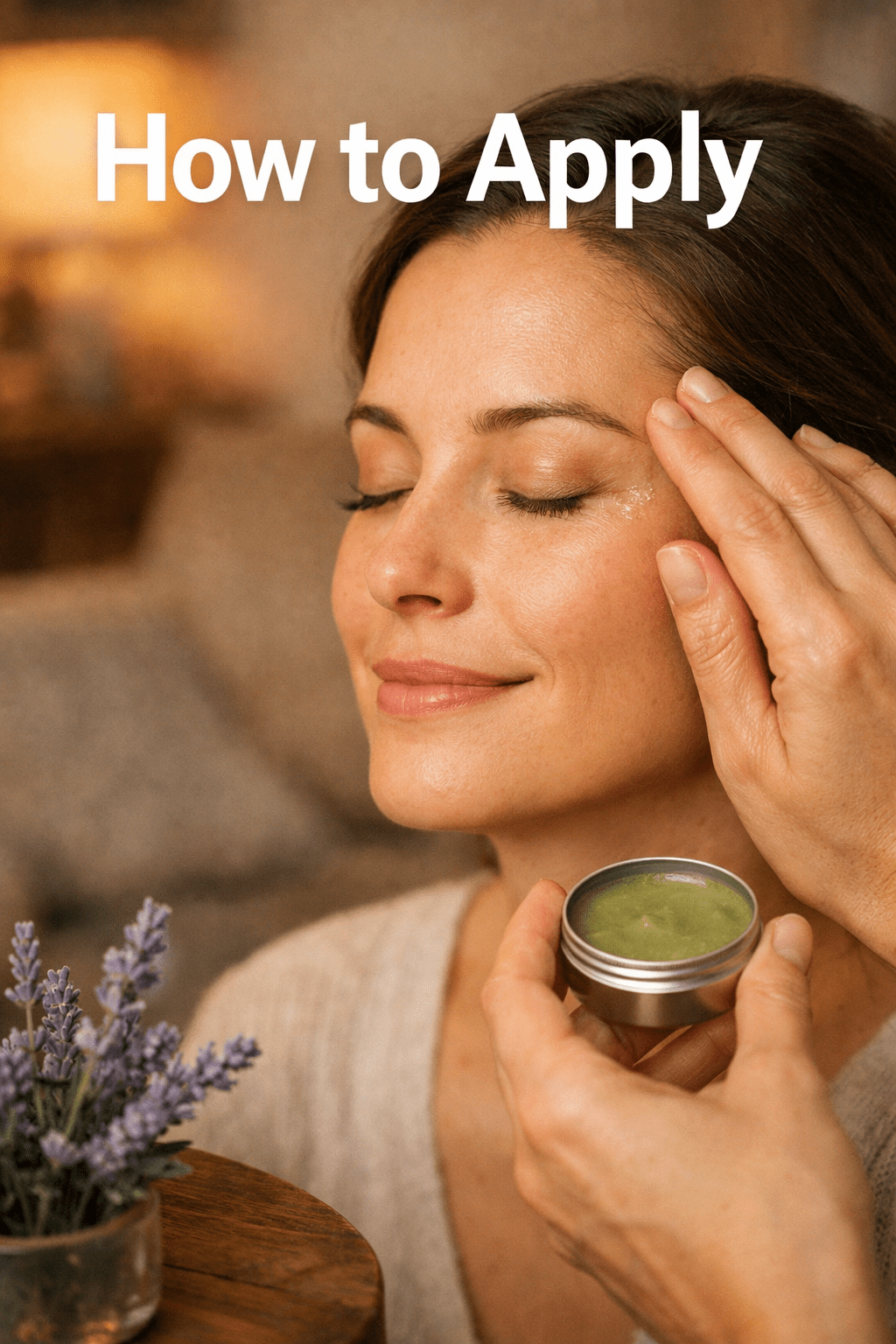
Apply a small amount of balm to your fingertips and rub it into these spots [1]:
- Temples (the soft area beside each eye)
- Back of the head at the base of the skull
- Shoulders and upper neck
- Behind the ears
After applying, take a few slow, deep breaths over the tin. Inhaling the peppermint and lavender aroma adds an extra layer of relief through aromatherapy.
How much to use: A pea-sized amount per application is plenty. More isn’t better here — the essential oils are concentrated.
Avoid: Eyes, nostrils, broken skin, and mucous membranes. Peppermint is strong and can cause irritation in sensitive areas.
Which Types of Headaches Does This Balm Work Best For?
This balm is most effective for headaches that respond to topical cooling and muscle relaxation. Based on the formulation, it’s reported to help with tension, stress, allergy-triggered, hormone-related (including PMS and menopause), sinus, and migraine headaches [1].
Best fit:
- Tension headaches from screen time or poor posture
- Stress headaches at the end of a long day
- Mild sinus pressure (pair it with our natural sinus chest rub recipe for extra relief)
Less ideal for:
- Severe migraines that require medication
- Headaches caused by dehydration (drink water first)
- Any headache with neurological symptoms — see a doctor
For sinus-specific headaches, you might also find these natural remedies for a sinus headache helpful alongside your balm.
Can You Customize or Substitute Ingredients?
Yes, and it’s pretty forgiving. Here are the most common swaps:
Essential oil alternatives:
- No Roman chamomile? Use German chamomile or add extra lavender
- No frankincense? Eucalyptus works well for sinus-type headaches
- Want a stronger cooling effect? Add 6 drops of spearmint alongside the peppermint
Carrier oil alternatives:
- Olive oil: softer balm, good for dry skin
- Sweet almond oil: light texture, absorbs quickly
- Jojoba oil: very shelf-stable, great for sensitive skin
Beeswax alternatives:
- Candelilla wax works as a vegan substitute (use about half the amount — it’s firmer)
- Carnauba wax is another vegan option
Dilution note: The recipe above represents roughly a 5% essential oil dilution, which is appropriate for occasional adult use [1]. If you have sensitive skin, drop the essential oils to 30 drops total instead of 60.
How Long Does the Balm Last and How Should You Store It?
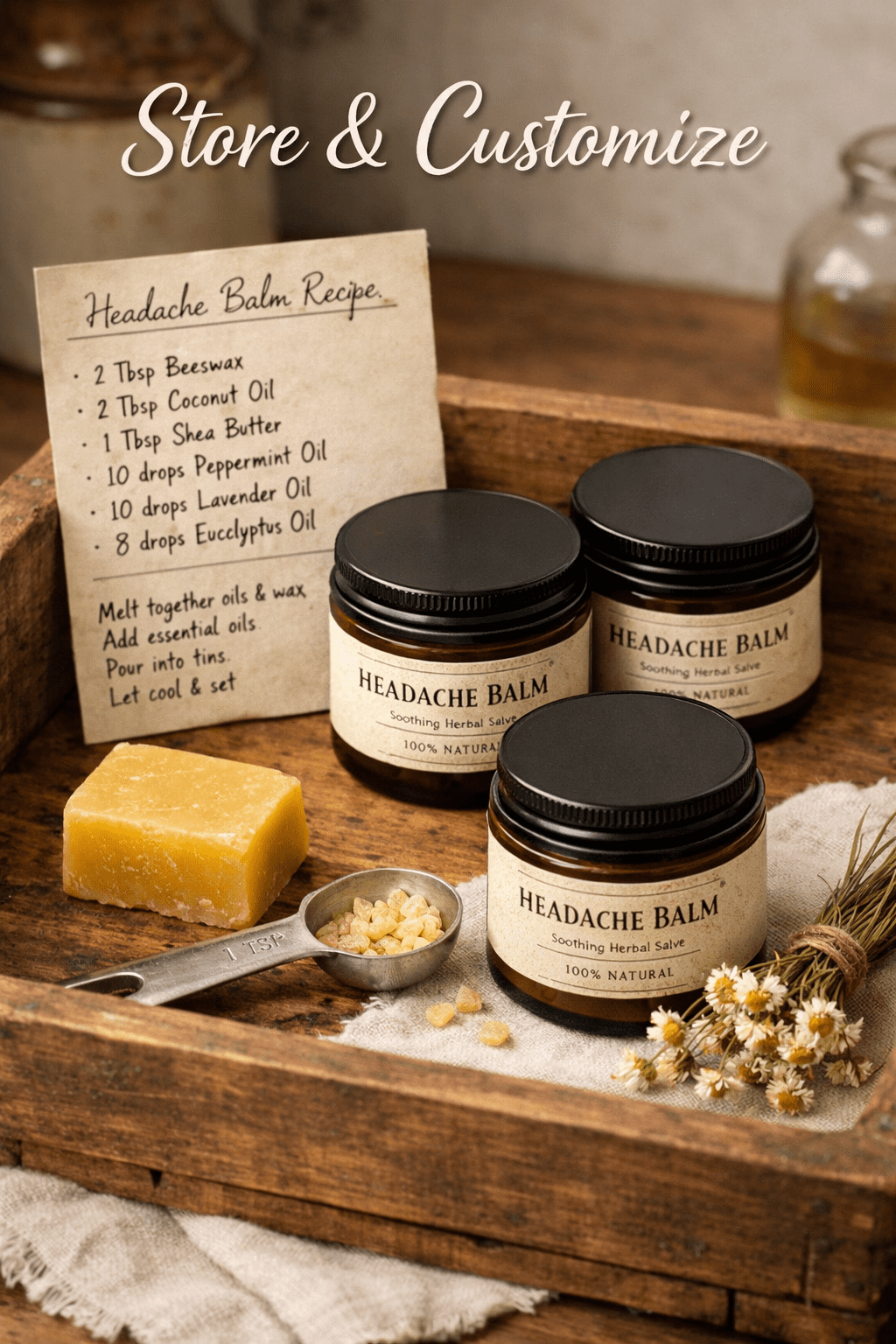
Properly made, this balm stores at room temperature for up to one year [2]. Beeswax and coconut oil are both naturally preserving, so you don’t need to refrigerate it.
Storage tips:
- Use a glass or metal tin rather than plastic (essential oils can degrade some plastics over time)
- Keep it out of direct sunlight and away from heat sources
- Label it with the date made and the ingredients — this matters if anyone else in your household might use it [2]
- If it smells “off” or changes color significantly, make a fresh batch
A 2 oz tin typically lasts one person several months of regular use.
If you love making natural home remedies like this, check out our natural remedies for beginners guide for more ideas.
What Are Common Mistakes to Avoid?
1. Adding essential oils while the base is too hot.
If the beeswax-oil mixture is still very hot when you add the essential oils, the volatile compounds evaporate. Let it cool for a minute first.
2. Using too many drops.
More essential oil doesn’t mean more relief. Overloading can irritate skin and actually make headaches worse (especially with peppermint).
3. Skipping the patch test.
Apply a tiny amount to your inner wrist and wait 24 hours before using on your face or neck, especially if you have sensitive skin.
4. Using the wrong container.
Plastic containers can react with essential oils over time. Use glass or metal.
5. Applying near the eyes.
Peppermint is intense. Even the vapor from a nearby application can make eyes water and sting.
FAQ
Q: Can I use this balm on kids?
A: Not as formulated. Peppermint essential oil is not recommended for children under 6, and should be used with caution up to age 10. For children, consult a pediatrician before using any essential oil topically.
Q: Does this balm actually work, or is it just aromatherapy?
A: Both mechanisms are at play. Peppermint applied topically has vasodilating properties that can physically affect blood flow and muscle tension [1]. The aromatherapy component also has real, documented calming effects. It’s not a placebo, but it’s also not a substitute for medication in severe cases.
Q: Can I make this without beeswax?
A: Yes. Skip the beeswax and use just coconut oil with the essential oils for a simple headache oil instead of a solid balm. It won’t be as portable, but it works.
Q: How quickly does it work?
A: Most people feel the cooling sensation within a few minutes of applying. Full relief, if it’s going to happen, usually comes within 15–30 minutes.
Q: Is this safe during pregnancy?
A: Several essential oils in this recipe — including peppermint and frankincense — are debated during pregnancy. Talk to your midwife or OB before using any essential oil remedy while pregnant.
Q: Can I use this alongside over-the-counter pain relievers?
A: Generally yes, but check with a pharmacist if you’re unsure. The balm is topical and not absorbed systemically in significant amounts.
Q: What if I only have peppermint oil?
A: A single-oil peppermint balm still works for basic tension relief. Just use 20–25 drops per 2 tablespoons of carrier oil and beeswax.
Q: Can I add other herbs to this recipe?
A: Yes. An extended version infuses dried mint leaves and pine needles in oil for about two weeks before making the salve, which adds extra herbal potency [2]. The 5-minute version skips that step and uses essential oils instead.
Q: Where do I buy beeswax pastilles?
A: Most health food stores carry them, and they’re widely available online. Pastilles are much easier to measure than blocks [2].
Q: Can I double the recipe?
A: Absolutely. Just double all quantities and pour into multiple tins. Great for gifting.
Conclusion
This DIY headache balm recipe is one of the most practical things you can make at home. It costs a fraction of store-bought options, takes 5 minutes, and uses ingredients you can keep on hand permanently. The combination of peppermint, lavender, frankincense, and Roman chamomile gives you real, multi-angle relief — cooling, calming, and tension-easing all at once [1].
Your next steps:
- Gather your ingredients (peppermint and lavender essential oils are the non-negotiables)
- Make one small batch this week so you have it ready before the next headache hits
- Label it with today’s date and store it somewhere accessible
- If you want to explore more natural relief options, check out our natural sinus chest rub recipe and the DIY warming muscle rub for a full home remedy toolkit
Having this balm ready means you’re not scrambling when a headache starts. Make it once, use it for months.
References
[1] Natural Headache Relief Balm – https://oneessentialcommunity.com/natural-headache-relief-balm/
[2] How To Get Rid Of Headaches Homemade Headache Salve – https://homesteadingfamily.com/how-to-get-rid-of-headaches-homemade-headache-salve/