


Quick Answer: A kiwi electrolyte drink combines the natural potassium, vitamin C, and magnesium found in kiwi fruit with a small amount of sodium (usually from pink salt) and water to replenish minerals lost through sweat. It’s a simple, low-sugar alternative to commercial sports drinks that you can make at home in under five minutes, and it works for most adults, active kids, and anyone dealing with summer heat fatigue.
Key Takeaways 🥝
- Kiwi fruit is naturally rich in potassium and vitamin C, making it a solid base for a homemade electrolyte drink.
- A basic recipe needs just 4–5 ingredients: kiwi, water, a pinch of pink salt, lemon juice, and an optional natural sweetener.
- Homemade kiwi electrolyte drinks typically contain far less sugar and no artificial dyes compared to most commercial sports drinks.
- Most healthy adults and children over age 2 can drink this safely; those with kidney disease or potassium-sensitivity should check with a doctor first.
- Hydration effects are gradual, not instant — expect to feel better within 20–40 minutes of consistent sipping during activity.
- Sugar-free versions are easy to make by skipping sweetener or using a small amount of stevia.
- Nutritionists generally support whole-food electrolyte sources, though they note homemade drinks may not match the precise mineral ratios of clinical rehydration solutions.
- Drinking too many electrolyte drinks — especially high-sodium ones — can cause bloating, elevated blood pressure, or mineral imbalances over time.
What Exactly Are Electrolytes and Why Do You Need Them?
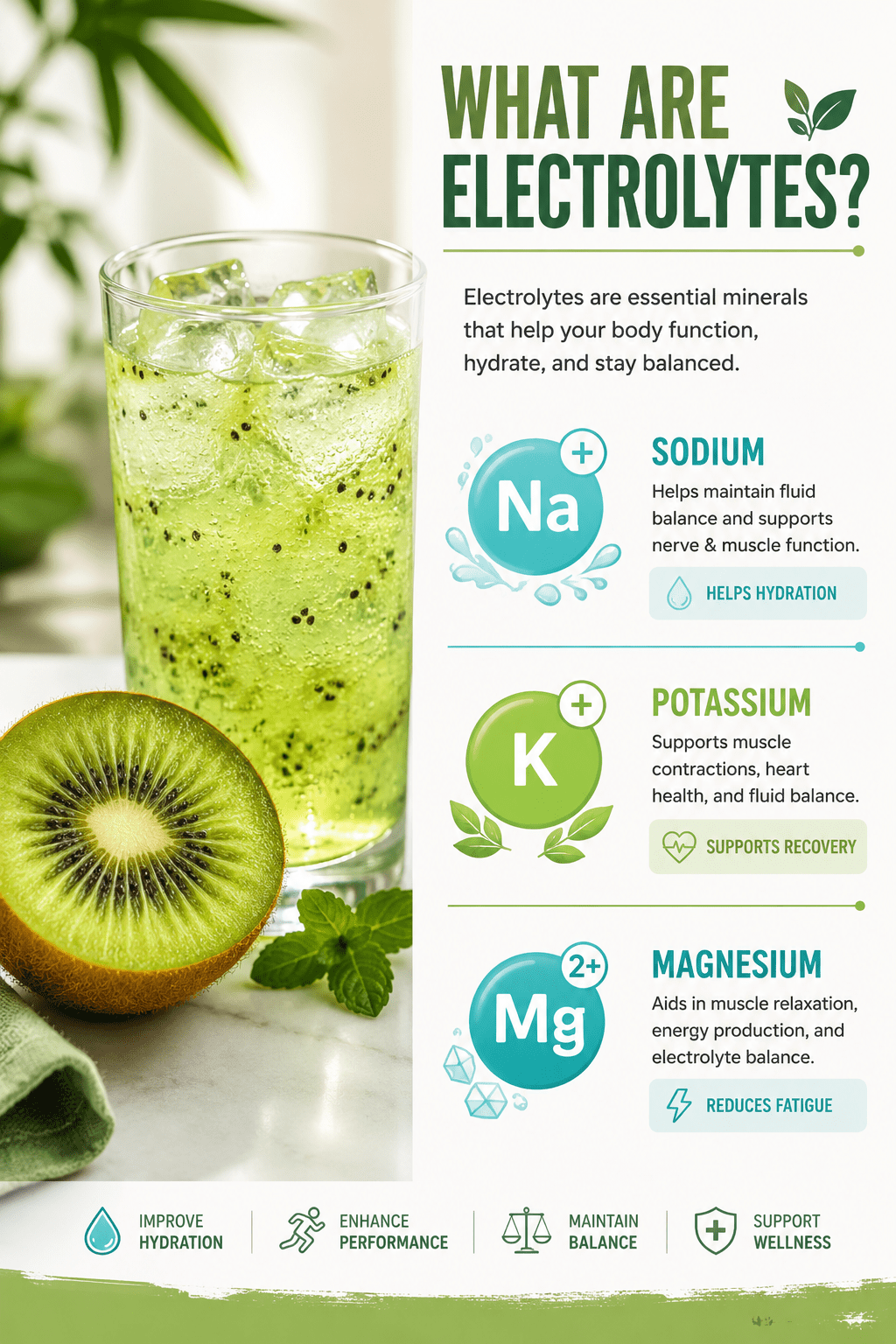
Electrolytes are minerals that carry an electrical charge when dissolved in fluid. Your body uses them to regulate nerve signals, muscle contractions, and fluid balance. The key ones are sodium, potassium, magnesium, and calcium.
When you sweat — whether from exercise, heat, or illness — you lose these minerals along with water. Drinking plain water replaces the fluid but not the minerals, which is why you can still feel sluggish, crampy, or lightheaded even after drinking a full glass.
The main electrolytes and where kiwi fits in:
| Electrolyte | Role in the Body | Found in Kiwi? |
|---|---|---|
| Potassium | Muscle function, heart rhythm | ✅ Yes (high) |
| Sodium | Fluid balance, nerve signals | ❌ Added separately |
| Magnesium | Energy production, muscle relaxation | ✅ Small amount |
| Calcium | Bone health, nerve function | ✅ Small amount |
| Vitamin C | Antioxidant, iron absorption | ✅ Very high |
A single medium kiwi provides roughly 215 mg of potassium (about 5% of the daily value), which is a meaningful contribution when combined with other ingredients in a hydration drink.
What Makes a Kiwi Electrolyte Drink Different from Regular Electrolyte Drinks?
A kiwi electrolyte drink stands apart because it uses whole fruit as the electrolyte base rather than synthetic mineral salts or artificial flavoring. Most commercial electrolyte powders and tablets use isolated potassium chloride or sodium citrate, which work but come with no additional nutritional benefit.
Kiwi brings potassium, magnesium, vitamin C, and natural enzymes all at once. That means you’re hydrating and getting antioxidant support in the same drink — something a standard sports drink doesn’t offer.
What goes into a basic homemade version:
- 2 ripe kiwis, peeled and blended
- 2 cups of filtered water or coconut water
- ¼ teaspoon pink Himalayan salt (for sodium)
- Juice of half a lemon (adds potassium and flavor)
- 1 teaspoon honey or maple syrup (optional, for a small glucose boost)
Blend, strain if preferred, serve over ice. Total prep time: under 5 minutes.
For more homemade electrolyte ideas, check out these 7 DIY electrolyte drink recipes that work better than sports drinks or try a homemade pineapple electrolyte drink for a tropical variation.

How Does a Kiwi Drink Compare to Sports Drinks Like Gatorade?
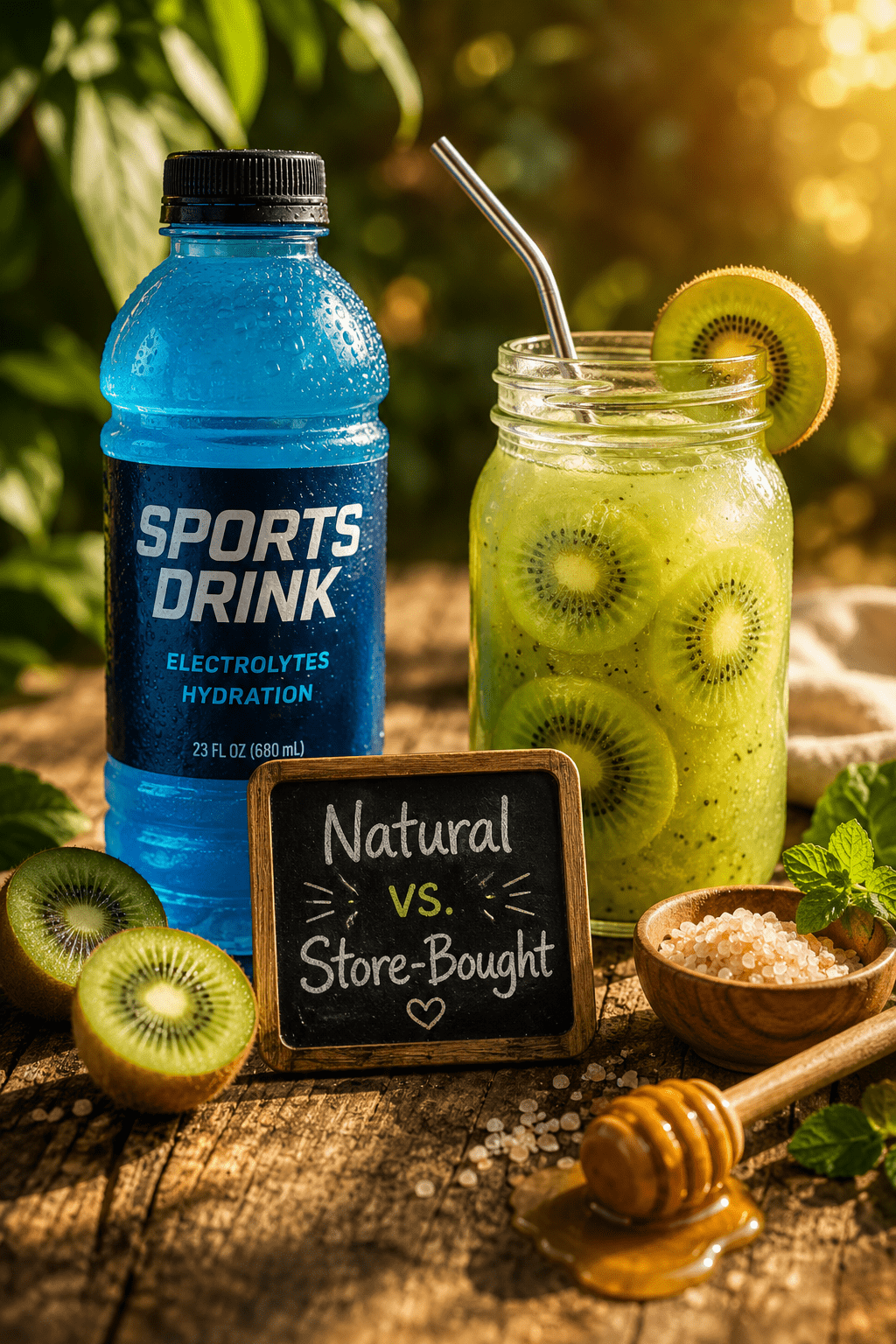
For most casual exercisers and people dealing with summer heat, a homemade kiwi electrolyte drink is a cleaner option than most commercial sports drinks. Gatorade and similar products contain effective electrolyte ratios but also include artificial dyes, high-fructose corn syrup or sucrose in large amounts, and synthetic flavoring.
Quick comparison:
| Feature | Kiwi Electrolyte Drink | Gatorade (Original) |
|---|---|---|
| Sugar per 12 oz | ~5–8g (natural) | ~21g (added) |
| Artificial dyes | None | Yes (FD&C dyes) |
| Potassium source | Whole fruit | Potassium chloride |
| Vitamin C | High | Minimal |
| Cost per serving | ~$0.50–$0.80 (estimate) | ~$1.00–$1.50 |
| Prep time | 5 minutes | Ready-made |
Choose the kiwi drink if: you want lower sugar, no artificial ingredients, and don’t mind a 5-minute prep.
Choose a commercial drink if: you need a precise, clinically-tested electrolyte ratio for intense endurance sports or medical rehydration.
You might also enjoy comparing this to a grape juice electrolyte drink or a homemade blueberry lemon electrolyte drink if you want more whole-fruit options.
How Much Does a Homemade Kiwi Electrolyte Drink Cost?
A single serving of homemade kiwi electrolyte drink costs roughly $0.50 to $1.00, depending on whether you use fresh or frozen kiwi and whether you add coconut water instead of plain water.
Estimated cost breakdown per serving (2026 U.S. prices, approximate):
- 2 kiwis: ~$0.40–$0.60
- Pink salt (pinch): negligible
- Lemon (half): ~$0.15–$0.20
- Honey (1 tsp): ~$0.05–$0.10
- Coconut water (1 cup, optional): ~$0.50–$0.75
Total: roughly $0.60–$1.65 per 16 oz serving, depending on ingredients chosen.
That’s comparable to or cheaper than most store-bought electrolyte drinks, with significantly better ingredient quality.
Is This Good for Athletes or Just Casual Exercisers?
A kiwi electrolyte drink works well for casual exercisers, people active in summer heat, and moderate-intensity athletes. For high-intensity endurance athletes (marathon runners, cyclists doing 3+ hour rides), it may not provide enough sodium to replace what’s lost in heavy sweat.
General guidance:
- Light activity or heat exposure (under 60 minutes): Kiwi electrolyte drink is sufficient and a great choice.
- Moderate exercise (60–90 minutes): Works well, especially with coconut water as the base for extra potassium and natural sugars.
- High-intensity endurance sports (90+ minutes, heavy sweating): Consider adding an extra pinch of salt or pairing with a more sodium-rich snack.
Athletes who want a natural post-workout recovery drink can also look at this homemade strawberry electrolyte drink as an alternative option.
How Quickly Does a Kiwi Electrolyte Drink Actually Hydrate You?
Hydration from any electrolyte drink is a gradual process, not an instant fix. Most people begin to notice improved energy and reduced muscle fatigue within 20 to 40 minutes of sipping an electrolyte drink during or after activity, according to general sports nutrition guidance.
The electrolytes in the drink help your intestines absorb water more efficiently than plain water alone. Sodium, in particular, activates a co-transport mechanism in the gut that pulls water into the bloodstream faster.
Common mistake: Gulping a large amount at once. Sipping steadily over 20–30 minutes is more effective than drinking a full glass in one go, because your gut can only absorb so much at a time.
How Does a Kiwi Electrolyte Drink Help with Summer Heat and Dehydration?
In summer heat, your body can lose 0.5 to 1.5 liters of sweat per hour during moderate activity (a commonly cited range in sports medicine literature). That sweat contains water and electrolytes, and replacing both is essential to avoid heat fatigue, cramps, and dizziness.
Kiwi’s natural potassium helps counteract the sodium-heavy imbalance that occurs when you sweat heavily. The vitamin C in kiwi also supports your body’s stress response to heat. Adding a pinch of pink salt restores the sodium your body needs to retain fluid properly.
Simple summer hydration schedule using this drink:
- Drink one serving (12–16 oz) 30 minutes before outdoor activity.
- Sip another serving during activity if it lasts longer than 45 minutes.
- Have a final serving within 30 minutes of finishing to support recovery.
For more natural hydration ideas that also support skin health, see these 7 hydrating drinks for clear skin.
Are There Sugar-Free or Low-Calorie Versions Available?
Yes, a sugar-free kiwi electrolyte drink is easy to make. Simply skip the honey or maple syrup and use plain water instead of coconut water. The kiwi itself contains natural sugars (about 6–9g per fruit), but the total is still far lower than commercial sports drinks.
Low-calorie version (estimated ~40–60 calories per 16 oz serving):
- 1–2 kiwis blended with 2 cups water
- ¼ tsp pink salt
- Juice of half a lemon
- A few drops of liquid stevia (optional)
This version is suitable for people managing blood sugar, those on low-carb diets, or anyone who wants hydration without extra calories.
Can Kids Drink This or Is It Just for Adults?
Children over age 2 can generally drink a diluted version of a kiwi electrolyte drink safely. It’s a much better option than commercial sports drinks for kids, which often contain high amounts of added sugar and artificial dyes.
For children, adjust the recipe:
- Use 1 kiwi instead of 2 per serving.
- Dilute with extra water (aim for a lighter flavor).
- Skip added sweeteners for children under 12 months (due to honey risk for infants).
- Serve in smaller portions: 4–6 oz for toddlers, 8 oz for school-age children.
Children with kiwi allergies (which do exist, particularly in kids with latex sensitivity) should avoid this drink. Always introduce new foods gradually and watch for any reaction.
Can I Use This If I Have Stomach Sensitivity or Allergies?
Most people with mild digestive sensitivity tolerate a kiwi electrolyte drink well because it’s low in fiber once blended and strained. However, kiwi contains actinidin, an enzyme that can cause mouth tingling or mild stomach upset in some people.
Who should be cautious:
- Kiwi allergy: Avoid entirely. Kiwi is a known allergen, especially in people with latex-fruit syndrome.
- Kidney disease: High potassium intake can be dangerous for people with impaired kidney function. Check with a doctor before using any potassium-rich drink regularly.
- IBS or FODMAP sensitivity: Kiwi is considered low-FODMAP in small amounts (one fruit per serving), but individual tolerance varies.
- Acid reflux: The citric acid from lemon juice may aggravate symptoms. Try reducing or omitting the lemon.
Edge case: If you’re recovering from vomiting or diarrhea, a homemade kiwi drink is not a substitute for oral rehydration salts (ORS), which have clinically precise sodium-glucose ratios. Use ORS for illness-related dehydration and this drink for everyday hydration.
Are There Any Side Effects from Drinking Too Many Electrolyte Drinks?
Drinking electrolyte drinks in excess can cause problems, even with natural versions. Too much potassium (hyperkalemia) can cause heart rhythm irregularities in people with kidney issues. Too much sodium can raise blood pressure and cause water retention.
Signs you may be overdoing it:
- Bloating or puffiness (excess sodium)
- Muscle weakness or heart palpitations (electrolyte imbalance)
- Nausea after drinking (too much at once)
For healthy adults, 1–3 servings per day during active summer days is a reasonable range. On rest days or in cool weather, plain water is usually sufficient and there’s no need for extra electrolytes.
What Do Nutritionists Say About This Specific Kiwi Drink?
Registered dietitians and nutrition professionals generally support whole-food electrolyte sources over synthetic supplements, and kiwi fits that profile well. The consensus is that for everyday hydration and moderate activity, a homemade fruit-based electrolyte drink is a sensible, lower-sugar alternative to commercial sports drinks.
That said, nutritionists also note that homemade drinks don’t have standardized mineral content — the potassium in a kiwi varies by ripeness and variety. For clinical rehydration (post-illness, post-surgery, or high-performance sport), a product with precise electrolyte ratios is more reliable.
💬 The practical takeaway from nutrition guidance: Use whole-food electrolyte drinks like this one for daily hydration, summer activity, and general wellness. Reach for clinical ORS or tested sports nutrition products when precision matters.
For more natural drink recipes that support overall wellness, explore these 7 drinks to flush out toxins or try this iron-boosting fruit punch for added nutritional variety.
Frequently Asked Questions
Q: Can I make a kiwi electrolyte drink the night before?
Yes. Store it in a sealed jar in the fridge for up to 24 hours. Shake or stir before drinking since natural ingredients settle.
Q: Does the kiwi skin add anything nutritionally?
Kiwi skin is edible and contains extra fiber and antioxidants, but it has a slightly bitter taste. For a drink, peeling is usually preferred for flavor. If you blend with skin, strain before serving.
Q: Can I use frozen kiwi instead of fresh?
Yes. Frozen kiwi works well and is often cheaper. Thaw slightly before blending, or blend from frozen for a slushier texture.
Q: Is coconut water better than plain water as the base?
Coconut water adds more natural potassium and a mild sweetness, making it a good upgrade if you want a richer electrolyte profile. Plain water works fine for a lighter, lower-calorie version.
Q: How is this different from just eating a kiwi and drinking water?
Eating a kiwi and drinking water separately works too, but blending them with salt and lemon creates a drink where the sodium helps your body absorb the water more efficiently — which is the core mechanism of any electrolyte drink.
Q: Can I add other fruits to this recipe?
Absolutely. Mango, pineapple, and cucumber all blend well with kiwi and add their own electrolyte contributions. Just keep the salt and lemon components in to maintain the electrolyte function.
Q: Is this safe during pregnancy?
Kiwi is generally safe during pregnancy and is a good source of folate. However, pregnant women should avoid large amounts of unpasteurized juice. Blend fresh and consume immediately, and check with a healthcare provider if you have concerns.
Q: Does blending destroy the vitamins in kiwi?
Blending causes minimal vitamin loss. Vitamin C is sensitive to heat and prolonged air exposure, so blend fresh, serve quickly, and store in a sealed container if making ahead.
Conclusion: Your Next Steps
A kiwi electrolyte drink is one of the simplest, most practical hydration upgrades you can make this summer. It takes five minutes, costs under a dollar per serving, and delivers real minerals from a whole-food source — without the artificial dyes or excessive sugar found in most commercial options.
Here’s what to do next:
- Try the basic recipe this week with 2 kiwis, water, a pinch of pink salt, and lemon juice.
- Adjust for your needs — add coconut water for more potassium, skip sweetener for a sugar-free version, or dilute for kids.
- Use it consistently on hot days and during exercise, not just when you feel thirsty (thirst is already a sign of mild dehydration).
- If you have a health condition — kidney disease, heart issues, or known kiwi allergy — check with your doctor before adding this to your routine.
For more natural hydration inspiration, browse our full collection of DIY electrolyte drink recipes and find the one that fits your taste and lifestyle best.