

Quick Answer: A homemade blueberry lemon electrolyte drink combines fresh blueberries, lemon juice, water, pink salt, and potassium to replenish minerals lost through sweat — without the artificial dyes, excess sugar, or synthetic additives found in most store-bought sports drinks. It takes about 10 minutes to make, costs a fraction of commercial options, and actually tastes better.
Key Takeaways
- A homemade blueberry lemon electrolyte drink delivers sodium, potassium, and magnesium from real food sources
- Blueberries add antioxidants that help reduce post-exercise inflammation — something no neon-colored sports drink can offer [3]
- Lemon juice provides vitamin C and natural electrolytes alongside a bright, refreshing flavor [3]
- The base recipe uses 2 cups blueberries, 4 cups water, and ½ cup lemon juice, plus mineral salts [1]
- Coconut water can replace plain water for an even richer natural electrolyte profile [2]
- Drink 2–3 cups per day with meals; physically active people can drink up to 3 cups without stomach discomfort [1]
- Prepared drink stays fresh for up to 1 day refrigerated; pre-mix dry ingredients for easy portability [2]
- Total cost per batch is typically under $3, compared to $2–$4 per single commercial sports drink bottle

Why Does Store-Bought Fall Short Compared to a Homemade Electrolyte Drink?
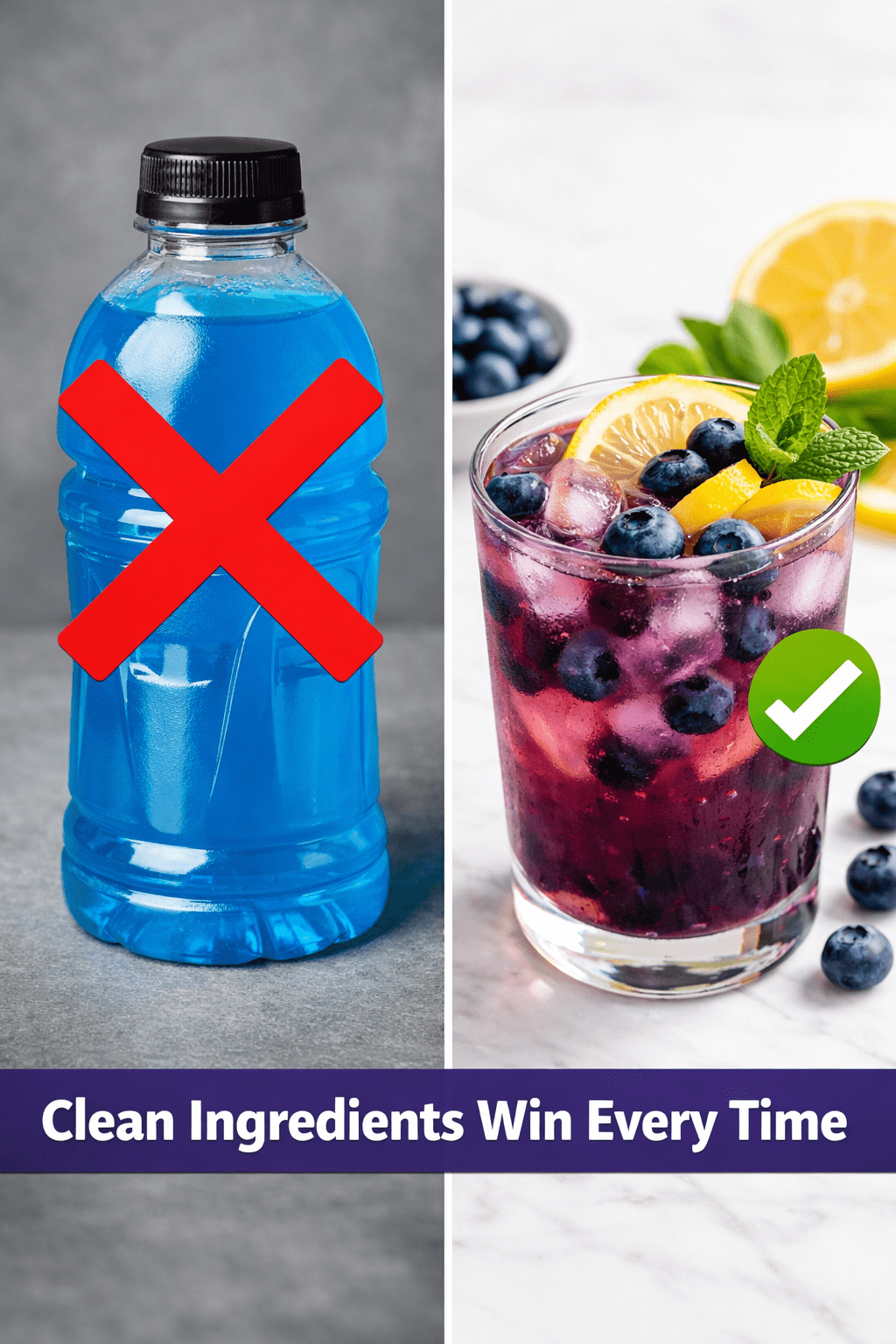
Most commercial sports drinks are built around three things: sugar, sodium, and synthetic flavoring. That formula works for basic hydration, but it skips a lot of what your body actually needs after sweating.
Here’s what you’ll typically find on a store-bought sports drink label:
- High fructose corn syrup or sucrose as the primary ingredient
- Artificial dyes (Red 40, Blue 1, Yellow 5) linked to sensitivity reactions in some people
- Minimal potassium and magnesium — often far below what exercise depletes
- No antioxidants to address inflammation from physical exertion
A homemade blueberry lemon electrolyte drink, by contrast, gets its color from actual blueberries, its tartness from real lemon juice, and its mineral content from food-grade salts and natural fruit. You control every ingredient.
💡 Common mistake: People assume “electrolyte drink” means sports drink. Electrolytes are just minerals — sodium, potassium, magnesium, calcium — and you can get them from whole foods just as effectively as from a bottle with a logo on it.

What Are the Core Ingredients and Why Does Each One Matter?
Each ingredient in this drink has a specific job. Nothing is filler.
| Ingredient | Role | Notes |
|---|---|---|
| Fresh or frozen blueberries | Antioxidants, natural flavor, trace minerals | Frozen work just as well as fresh [3] |
| Lemon juice | Vitamin C, natural electrolytes, flavor | Use fresh-squeezed for best results [3] |
| Water or coconut water | Hydration base | Coconut water adds natural potassium [2] |
| Pink Himalayan salt | Sodium replenishment | Use ¼–½ tsp per batch |
| Potassium chloride (NoSalt/NuSalt) | Potassium replenishment | Available at most grocery stores [1] |
| Magnesium citrate (optional) | Muscle recovery support | Add a small pinch; too much causes digestive upset |
| Raw honey or maple syrup | Light natural sweetener + quick energy | Optional; skip for low-sugar versions |
Choose coconut water if you want a naturally richer electrolyte base without adding potassium chloride separately. Choose plain water if you prefer a lighter flavor or are watching sugar intake carefully [2].
How Do You Make a Homemade Blueberry Lemon Electrolyte Drink Step by Step?
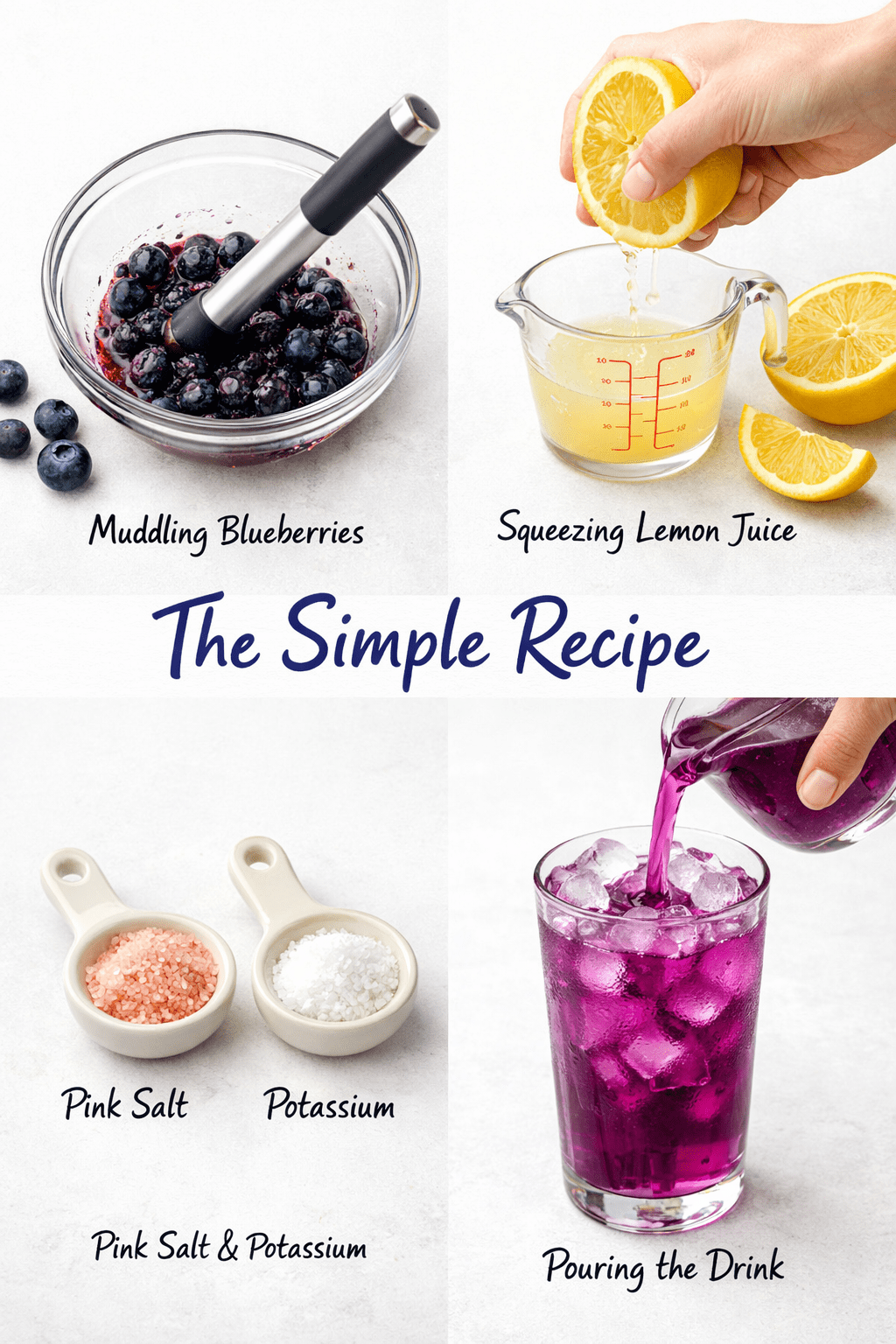
This recipe takes about 10 minutes and makes roughly 4–5 cups (enough for 2 servings).
What you need:
- 2 cups fresh or frozen blueberries
- 4 cups water (or coconut water with no added sugar)
- ½ cup fresh lemon juice (about 3–4 lemons)
- ¼ tsp pink Himalayan salt
- ¼ tsp potassium chloride (sold as “NoSalt” or “NuSalt”)
- 1–2 tsp raw honey or maple syrup (optional)
- Small pinch of magnesium citrate powder (optional)
Steps:
- Blend the blueberries with 1 cup of water until smooth. This releases the antioxidants and gives the drink its deep color.
- Strain through a fine mesh sieve into a large pitcher. Press the pulp to extract all the juice. Discard the pulp or save it for smoothies.
- Add the remaining water (or coconut water) to the pitcher.
- Squeeze in the lemon juice and stir.
- Add the salt, potassium chloride, and magnesium (if using). Stir until fully dissolved.
- Taste and sweeten with honey or maple syrup if needed.
- Chill and serve over ice. Garnish with a lemon slice or a few whole blueberries.
Prep tip: Pre-mix the dry ingredients (salt, potassium chloride, magnesium) in a small jar ahead of time. When you’re ready to make a batch, just add one scoop. This makes it portable for gym bags or travel [2].
If you enjoy making natural drinks at home, check out these 7 DIY electrolyte drink recipes better than sports drinks for more flavor variations.
What Are the Real Health Benefits of This Blueberry Lemon Electrolyte Drink?
The benefits go beyond basic hydration. Here’s what the ingredients actually do:
Blueberries:
Blueberries are one of the richest sources of anthocyanins — plant pigments that act as antioxidants. These compounds help reduce oxidative stress and inflammation that builds up during exercise [3]. That’s a meaningful advantage over any commercial sports drink, which contains zero antioxidants.
Lemon juice:
Fresh lemon juice provides vitamin C, which supports immune function and helps the body absorb iron from food [3]. It also adds a natural tartness that makes the drink satisfying without needing much sweetener.
Pink salt and potassium chloride:
Sodium and potassium are the two electrolytes lost most heavily through sweat. Replacing both together helps prevent muscle cramps, fatigue, and the lightheadedness that comes with dehydration [1].
Magnesium (optional add-in):
Magnesium supports muscle relaxation and nerve function. Many people are mildly deficient, and adding a small amount to a post-workout drink is a practical way to top up levels.
For more natural drinks that support your body from the inside, browse the natural hydration drinks collection for ideas.
How Does This Recipe Compare to Popular Store-Bought Sports Drinks?
Here’s a direct comparison using a standard 20 oz serving of a popular commercial sports drink versus one serving of this homemade blueberry lemon electrolyte drink:
| Feature | Store-Bought Sports Drink | Homemade Blueberry Lemon Electrolyte Drink |
|---|---|---|
| Sugar | 34g (added) | 4–8g (natural from fruit + optional honey) |
| Artificial dyes | Yes (multiple) | None |
| Antioxidants | None | Yes (anthocyanins from blueberries) [3] |
| Vitamin C | None | Yes (from lemon juice) [3] |
| Potassium | ~75mg | ~200–300mg (depending on coconut water use) |
| Cost per serving | $2–$4 | ~$0.75–$1.25 |
| Prep time | 0 min (ready to drink) | ~10 min |
| Shelf life (open) | Several days | Up to 1 day refrigerated [2] |
The trade-off is convenience. A store-bought drink requires zero effort. But if you’re already meal prepping or making smoothies, adding a batch of this to your routine is easy.
You might also like this homemade strawberry electrolyte drink ready in 5 minutes if you want an even faster option on busy days.
Who Should Drink This and When Is It Most Useful?
This drink works best for specific situations. It’s not something everyone needs to sip all day.
Good fit for:
- People who exercise for 45 minutes or more and sweat moderately to heavily
- Anyone recovering from illness, vomiting, or diarrhea where electrolytes are depleted
- People who work outdoors in heat
- Those avoiding artificial additives or following a clean eating approach
- Anyone looking to cut back on sugar without giving up a flavorful hydration option
Less necessary for:
- People doing light activity in cool conditions (plain water is fine)
- Those with kidney disease or conditions requiring potassium restriction (consult a doctor before adding potassium chloride)
- Children under 2 (skip the potassium chloride; use a pediatrician-approved approach instead)
Recommended intake: 2–3 cups per day with meals covers most people’s electrolyte needs. Active individuals can drink up to 3 cups without digestive issues [1].
If you’re interested in other morning wellness drinks, the pineapple ginger detox shot is another quick option worth trying.
What Are Common Mistakes to Avoid When Making This Drink?
A few small errors can affect the taste, effectiveness, or safety of your homemade electrolyte drink.
1. Adding too much potassium chloride
Potassium chloride has a slightly bitter, metallic taste in large amounts. Start with ¼ tsp per batch and adjust from there. Too much can also cause stomach discomfort.
2. Using bottled lemon juice instead of fresh
Bottled lemon juice often contains preservatives and has a flatter flavor. Fresh-squeezed makes a noticeable difference in both taste and vitamin C content.
3. Skipping the sodium entirely
Some people remove the salt to make the drink “healthier.” But sodium is the primary electrolyte lost in sweat — without it, the drink won’t effectively rehydrate you.
4. Making too large a batch
The drink stays fresh for up to 1 day refrigerated [2]. Making a week’s worth at once means most of it goes to waste. Stick to 1–2 day batches.
5. Choosing coconut water with added sugar
If you use coconut water as your base, check the label. Many brands add sugar or flavorings. Look for 100% pure coconut water with no added ingredients [2].
For more ideas on natural drinks that support your health, see 7 drinks to flush out toxins and feel energized.
Can You Customize the Homemade Blueberry Lemon Electrolyte Drink Recipe?
Yes, and it’s easy to adapt based on taste preferences, dietary needs, or what you have on hand.
Flavor variations:
- Add 5–6 fresh mint leaves for a cooling effect
- Swap half the blueberries for blackberries for a deeper, earthier flavor
- Add ½ tsp fresh grated ginger for warmth and additional anti-inflammatory support
Sweetener options:
- Raw honey (adds trace minerals)
- Pure maple syrup (vegan-friendly)
- A few drops of liquid stevia (zero sugar option)
- Skip sweetener entirely if the blueberries are ripe and naturally sweet
Base liquid swaps:
- Coconut water for extra natural potassium [2]
- Chilled herbal tea (hibiscus works beautifully with blueberry)
- Sparkling water for a fizzy version — add it just before serving
Low-carb/keto version:
Use stevia instead of honey, skip the maple syrup, and use plain water instead of coconut water. This keeps net carbs very low while maintaining the full electrolyte profile [1].
Conclusion
A homemade blueberry lemon electrolyte drink is genuinely better than most store-bought sports drinks — not just in terms of ingredients, but in real nutritional value. You get antioxidants from blueberries, vitamin C from lemon, and a balanced mineral profile from natural salts, all without artificial dyes or excess sugar.
Your next steps:
- Make one batch this week using the base recipe above. Taste it, adjust the sweetness or salt level, and find your preferred version.
- Pre-mix your dry ingredients (salt, potassium chloride, magnesium) in a small jar so future batches take under 5 minutes.
- Drink 2–3 cups on active days and 1–2 cups on rest days for general mineral support [1].
- Explore variations — try coconut water as your base or add fresh mint to keep things interesting.
Once you make this a habit, reaching for a neon bottle at the checkout counter will feel a lot less appealing. Your body — and your wallet — will notice the difference.
Frequently Asked Questions
Q: How long does a homemade blueberry lemon electrolyte drink last in the fridge?
Up to 1 day when stored in a sealed container. The fresh fruit juice degrades quickly, so make small batches and drink within 24 hours [2].
Q: Can I use frozen blueberries instead of fresh?
Yes. Frozen blueberries work just as well and are often more affordable. They blend easily and release their antioxidants just as effectively [1].
Q: Is this drink safe for kids?
The basic recipe (blueberries, lemon, water, honey) is fine for most children over 2. Skip the potassium chloride for young children and check with a pediatrician if your child has any health conditions.
Q: Can I drink this every day?
Yes, for most healthy adults. Aim for 2–3 cups on active days and 1–2 cups on lighter days. If you have kidney disease or a condition affecting potassium processing, talk to your doctor first [1].
Q: Does this replace water entirely?
No. This drink supplements your water intake — it doesn’t replace it. Continue drinking plain water throughout the day, especially in hot weather.
Q: What if I don’t have potassium chloride?
Coconut water is a good natural substitute. It contains potassium naturally, so using it as your base liquid covers that mineral without needing a separate supplement [2].
Q: Can I make this into popsicles?
Yes. Pour the finished drink into popsicle molds and freeze. They make a great post-workout treat in warm weather.
Q: Is this drink good for hangovers?
It can help. Alcohol depletes electrolytes and causes dehydration, so a blueberry lemon electrolyte drink the morning after is a practical recovery option. Add a little extra honey for quick energy.
Q: Does lemon juice damage tooth enamel?
Frequent exposure to acidic drinks can affect enamel over time. Drink through a straw and rinse your mouth with plain water afterward if this is a concern.
Q: Can I add protein powder to this drink?
You can, but it changes the texture significantly. A small scoop of unflavored or vanilla protein blends reasonably well. Avoid flavored powders that might clash with the blueberry-lemon profile.

References
[1] Keto Blueberry And Lemon Electrolyte Drink – https://ketodietapp.com/Blog/lchf/keto-blueberry-and-lemon-electrolyte-drink
[2] DIY Electrolyte Drink – https://cheerfulchoices.com/diy-electrolyte-drink/
[3] Lemon8 – Blueberry Lemon Electrolyte Drink – https://www.lemon8-app.com/@queen_peyi_a/7528756275803357710?region=us