Last updated: June 9, 2026
Quick Answer: Homemade sleep gummies combine natural sleep-supporting ingredients like tart cherry juice, melatonin, magnesium, and calming herbs into a simple gelatin base you can make in under 30 minutes. They work without requiring a full bedtime routine because the active compounds (melatonin, L-theanine, valerian) begin signaling your body toward sleep on their own. One batch typically lasts two weeks in the fridge and costs under $15 to make.
Key Takeaways
- Tart cherry juice is one of the best bases for DIY sleep gummies because it naturally contains melatonin and tryptophan
- A 2023 study found that 88% of commercial melatonin gummies contained melatonin levels more than 10% off from their label — sometimes up to 347% more [3]
- Making your own gummies gives you full control over dosage and ingredients
- Valerian root, chamomile, and L-theanine are the most evidence-backed herbs for natural sleep support
- Homemade sleep gummies are not recommended for children under 12, pregnant women, or anyone on prescription sleep medication without a doctor’s approval
- A full batch of homemade sleep gummies costs roughly $8–$15 in ingredients
- Store-bought gummies are not FDA-regulated for potency or purity [8]
- Most people notice effects within 30–60 minutes of taking a gummy
- These gummies are a short-term sleep aid, not a permanent fix for chronic insomnia [9]
What Ingredients Actually Help You Fall Asleep Faster
The most effective sleep gummy ingredients work by either boosting melatonin production, calming the nervous system, or reducing the time it takes your body to shift into sleep mode. The top three for a DIY recipe are tart cherry juice, magnesium, and L-theanine.
Here’s a breakdown of what works and why:
| Ingredient | How It Helps Sleep | Notes |
|---|---|---|
| Tart cherry juice | Natural melatonin + tryptophan source | Use unsweetened concentrate |
| Melatonin powder | Signals brain it’s time to sleep | Start with 0.5–1mg per gummy |
| Magnesium glycinate | Relaxes muscles, reduces cortisol | Gentler on digestion than oxide |
| L-theanine | Promotes calm without sedation | Pairs well with chamomile |
| Valerian root extract | Reduces sleep latency | Strong taste; use sparingly |
| Chamomile extract | Mild sedative effect via apigenin | Good for anxiety-related insomnia |
A 2026 meta-analysis found that dietary interventions including tryptophan, magnesium, zinc, and antioxidants can meaningfully improve sleep quality by reducing the time it takes to fall asleep and increasing total sleep time [7].
Choose tart cherry juice as your base if you want a melatonin source that’s already food-grade and doesn’t require measuring powder. It also adds a pleasant flavor that masks the bitterness of valerian.
Which Natural Ingredients and Herbs Work Best for Sleep Gummies
The best herbs for homemade sleep gummies are valerian root, chamomile, passionflower, and lemon balm. Each works differently, so the right choice depends on why you’re struggling to sleep.
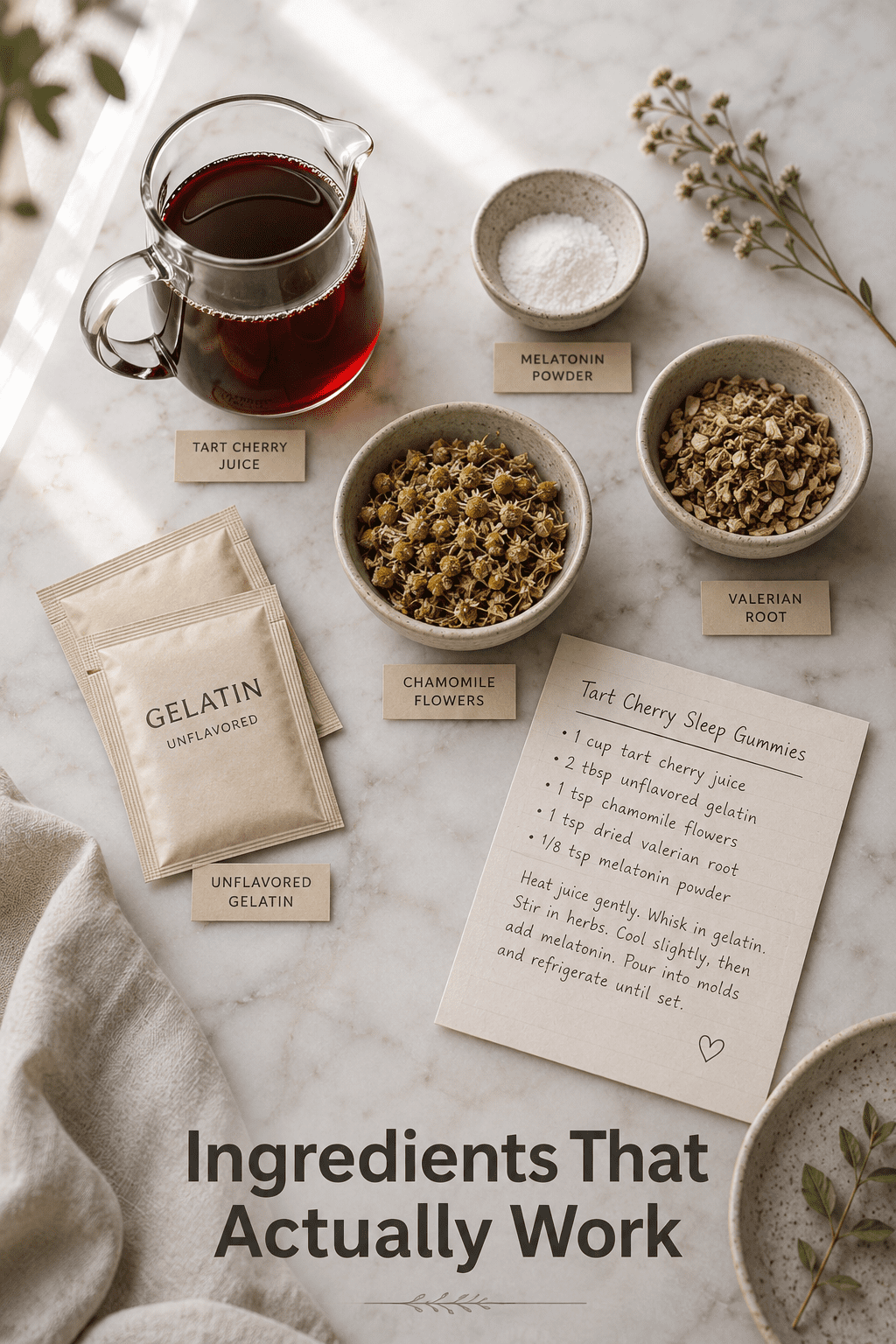
- Valerian root — Best for people who take a long time to fall asleep. It increases GABA activity in the brain, similar to how anti-anxiety medications work (but much milder).
- Chamomile — Best for general restlessness or mild anxiety before bed. The compound apigenin binds to receptors in the brain that promote relaxation.
- Passionflower — Good for racing thoughts. Some small studies suggest it may improve sleep quality comparably to low-dose sedatives.
- Lemon balm — Works well combined with valerian. It’s calming without being heavy. You can also make a DIY lavender milk for sleep using similar calming herbs if you prefer a drink format.
Common mistake: Adding too many herbs at once. Stick to one or two per batch so you can tell what’s actually working (or causing any side effects).
How Do Homemade Sleep Gummies Compare to Melatonin Pills
Homemade sleep gummies and melatonin pills both deliver melatonin, but gummies made at home give you far more control over what you’re actually getting. Commercial melatonin products have a serious accuracy problem.
A 2023 study found that 88% of melatonin gummy products on store shelves contained melatonin levels that differed by more than 10% from the label, with some containing up to 347% of the stated dose [3]. That’s a significant risk, especially if you’re sensitive to melatonin or giving it to a teenager.
Homemade vs. store-bought at a glance:
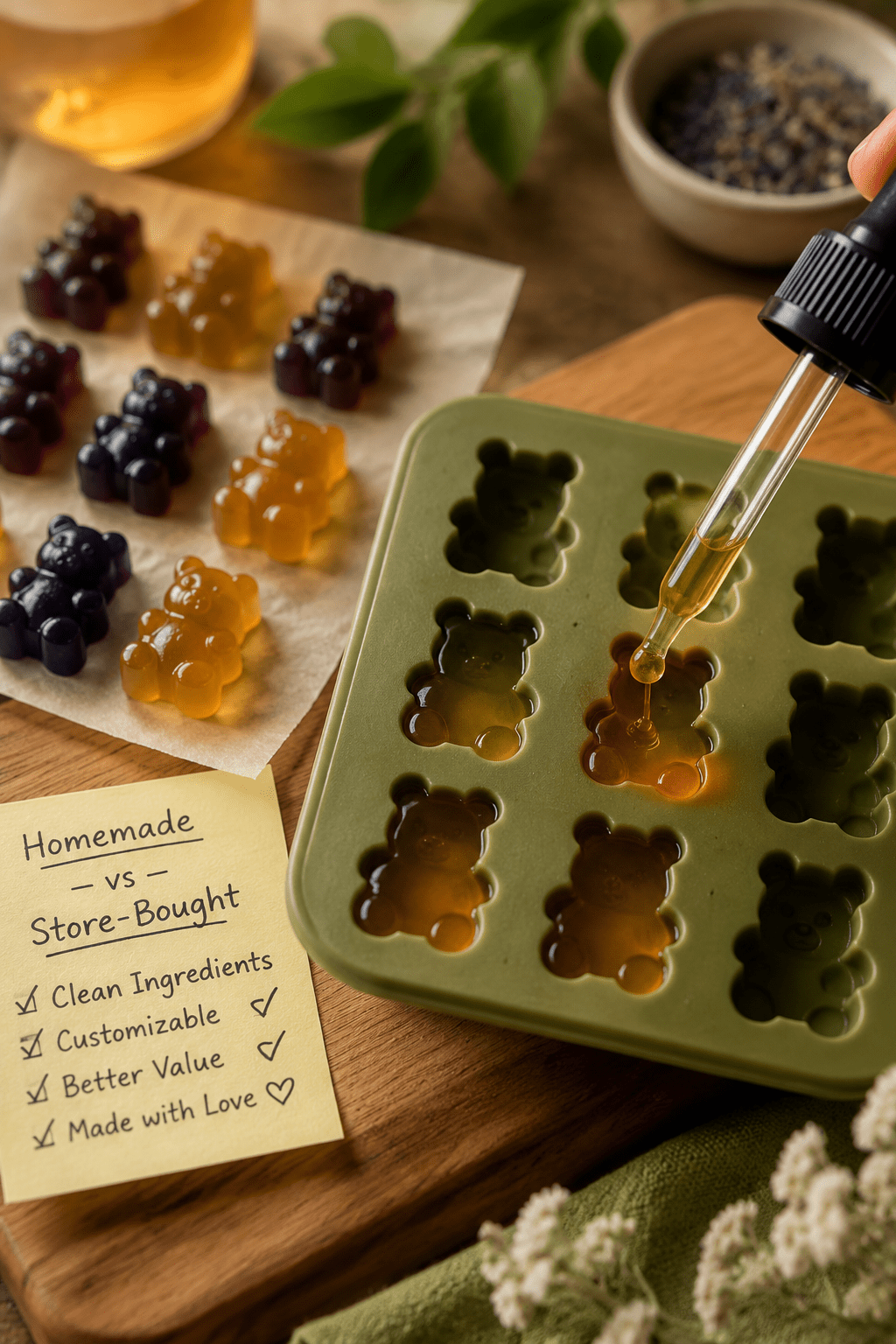
- ✅ Homemade: You control the exact dose
- ✅ Homemade: No artificial dyes, fillers, or mystery additives
- ✅ Homemade: Cheaper per serving
- ❌ Homemade: Shorter shelf life (2 weeks refrigerated vs. 1–2 years)
- ❌ Homemade: Takes 30 minutes to make
The Sleep Foundation notes that melatonin gummies can help with jet lag and short-term sleep disruptions, but they’re not a long-term solution for chronic sleep problems [2]. The same applies to homemade versions.
Step-by-Step: How to Make Homemade Sleep Gummies
Making a basic batch takes about 30 minutes plus 2 hours of chill time. This recipe makes roughly 30 gummies.
You’ll need:
- 1 cup tart cherry juice (unsweetened concentrate works best)
- 3 tablespoons unflavored gelatin powder
- 1mg melatonin powder (or 1 crushed 1mg melatonin tablet per 10 gummies)
- 1 tablespoon raw honey (optional, for sweetness)
- Silicone gummy molds
- A dropper or small squeeze bottle
Steps:
- Pour the tart cherry juice into a small saucepan over low heat. Do not boil.
- Sprinkle gelatin over the juice and whisk constantly for 3–4 minutes until fully dissolved.
- Remove from heat. Let it cool for 2 minutes (hot liquid degrades melatonin).
- Stir in melatonin powder and honey.
- Pour into silicone molds using a dropper for precision.
- Refrigerate for at least 2 hours until firm.
- Pop out and store in an airtight container in the fridge.
Want to add herbs? Steep chamomile or valerian tea first, then use that as part of your liquid base instead of plain water. If you enjoy making herbal preparations, our guide on how to make your own herbal tea blends at home is a helpful starting point.
What’s the Cheapest Way to Make Homemade Sleep Gummies
A full batch of homemade sleep gummies costs between $8 and $15 depending on what you already have in your kitchen. Here’s a rough cost breakdown:
| Item | Estimated Cost | Where to Buy |
|---|---|---|
| Tart cherry juice concentrate | $5–$8 per bottle | Grocery store or Amazon |
| Unflavored gelatin (Knox) | $3–$4 per box | Any grocery store |
| Melatonin 1mg tablets (100ct) | $5–$8 | Pharmacy or online |
| Silicone gummy molds | $7–$10 (one-time) | Amazon |
| Honey | Usually already on hand | Grocery store |
Total first-batch cost: roughly $20–$30 (including the molds). After that, each batch costs about $8–$12. Store-bought sleep gummies often run $20–$30 for a 60-count bottle, so you’ll break even by your second homemade batch.
For more DIY gummy inspiration, check out this DIY kids vitamin gummies recipe — the technique is nearly identical and the molds are interchangeable.
Are Sleep Gummies Safe for People With Anxiety
For most adults with mild to moderate anxiety, sleep gummies containing L-theanine, chamomile, or magnesium are generally considered safe and may actually help. These ingredients calm the nervous system without the dependency risk of prescription sleep aids.
That said, a few cautions apply:
- Valerian root can occasionally worsen anxiety in sensitive individuals, especially at higher doses
- Melatonin at doses above 1–2mg can cause vivid dreams or morning grogginess, which may increase anxiety for some people
- If you’re already taking SSRIs, benzodiazepines, or other anxiety medications, check with your doctor before adding any herbal supplements
Consumer Reports has flagged that natural sleep supplements, while popular, carry safety risks that are often underappreciated, and consulting a healthcare provider before use is strongly recommended [6].
Choose L-theanine + chamomile if you have anxiety-related insomnia. This combo promotes calm without heavy sedation and has a low side-effect profile.
Can Kids or Teenagers Use Homemade Sleep Gummies
Children under 12 should not use melatonin-containing sleep gummies without a pediatrician’s guidance. For teenagers (13–17), low-dose melatonin (0.5mg) may be appropriate short-term, but it’s not a substitute for addressing the root cause of poor sleep.
Key points for parents:
- Melatonin can interfere with puberty-related hormonal development if used long-term in adolescents
- Herbal versions using chamomile-only (no melatonin) are generally considered safer for older children, but still check with a doctor
- Never give valerian root to children without medical advice
- If you’re looking for a safer gummy option for kids, our DIY kids vitamin gummies guide covers age-appropriate formulations
Can I Make Sleep Gummies If I’m Sensitive to Certain Supplements
Yes, and this is actually one of the best reasons to make your own. When you’re sensitive to melatonin, valerian, or other common ingredients, DIY gummies let you start at micro-doses and build up gradually.
Sensitivity-friendly substitutions:
- Sensitive to melatonin? Use tart cherry juice as your only melatonin source (it contains natural, low-dose melatonin) and skip the powder entirely
- Sensitive to valerian? Swap it for passionflower or lemon balm, which are gentler
- Sensitive to gelatin (vegan)? Use agar-agar powder as a 1:1 substitute — it sets firmer, so use slightly less
A 2025 study found that a gummy containing pistachio extract (Prosomnial) was as effective as synthetic melatonin for improving sleep latency, duration, and quality [4]. This is a promising natural alternative for people who react poorly to synthetic melatonin.
Can I Make Sleep Gummies If I’m Already on Prescription Sleep Medication
No, you should not combine homemade sleep gummies with prescription sleep medications like zolpidem (Ambien), eszopiclone (Lunesta), or benzodiazepines without talking to your doctor first. The combination can amplify sedative effects and increase the risk of next-day drowsiness, falls, or respiratory issues.
Even “natural” ingredients like valerian root have sedative properties that can interact with prescription drugs. Banner Health advises that sleep gummies should be used short-term and that anyone on existing sleep medications should consult their healthcare provider before adding any supplement [9].
Bottom line: If you’re on prescription sleep meds, hold off on DIY gummies until you’ve cleared it with your doctor.
What Side Effects Should I Watch Out For
Most people tolerate homemade sleep gummies well at low doses, but side effects are possible, especially if you overshoot the melatonin amount.
Common side effects to watch for:
- Daytime drowsiness — most often caused by too much melatonin (above 2mg per serving)
- Vivid or unusual dreams — a known melatonin side effect [10]
- Nausea or stomach upset — usually from valerian root or taking gummies on an empty stomach
- Headache — can occur with higher melatonin doses
- Irritability — reported with high melatonin doses, especially in children [10]
How to minimize risk:
Start with one gummy (not two), take it 30–45 minutes before bed, and don’t drive after taking it. If you experience persistent side effects, reduce the dose or remove one ingredient at a time to identify the culprit.
How Long Do Homemade Sleep Gummies Actually Last
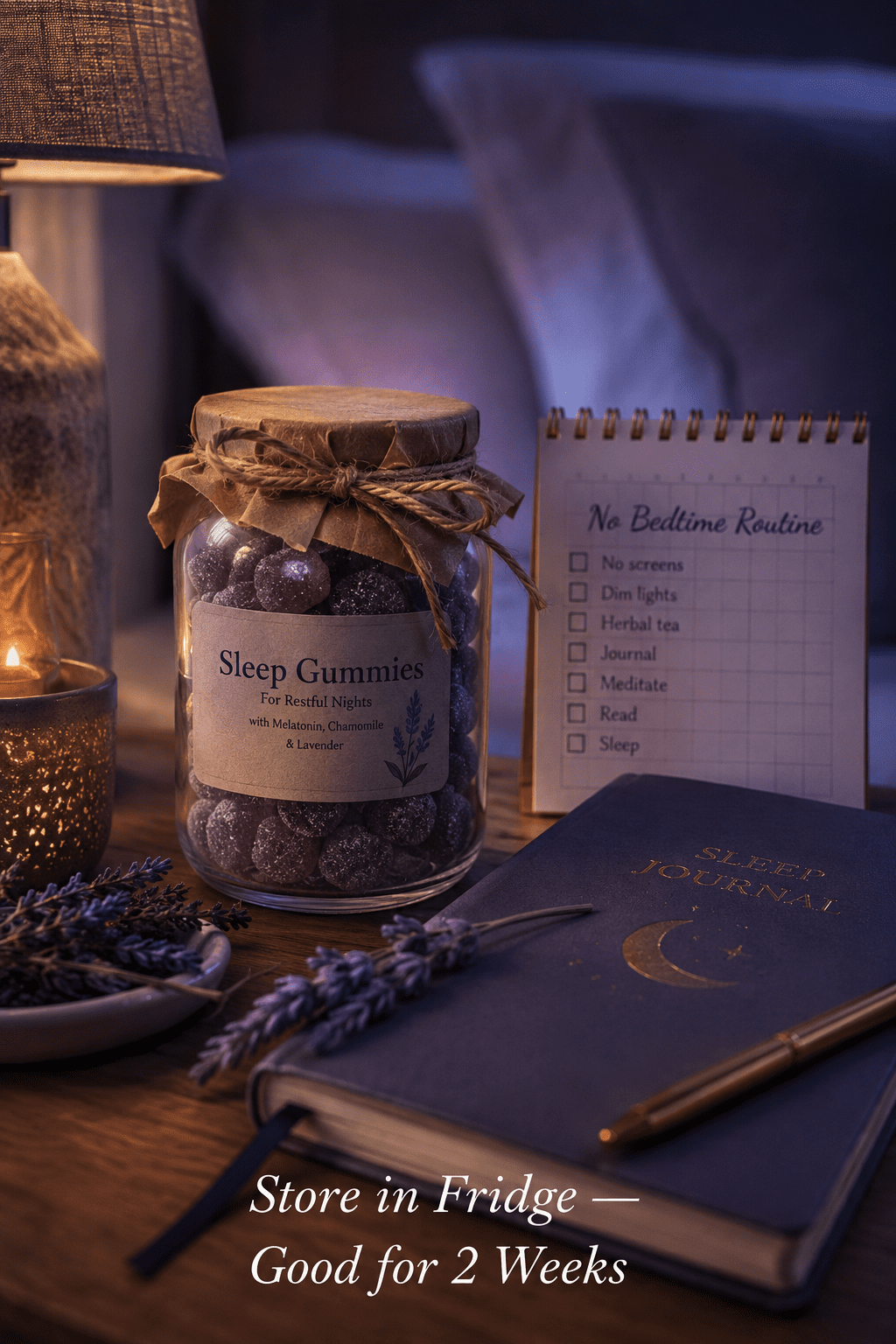
Homemade sleep gummies last about 10–14 days when stored in an airtight container in the refrigerator. They do not contain preservatives, so they degrade faster than commercial products.
Storage tips:
- Always refrigerate — room temperature speeds up bacterial growth in gelatin
- Use a clean, dry spoon each time to avoid introducing moisture
- Freeze for up to 3 months if you want to make larger batches (texture may change slightly after thawing)
- Label your container with the date you made them
Signs they’ve gone bad: off smell, visible mold, or a slimy texture. When in doubt, toss them and make a fresh batch. The ingredients are cheap enough that it’s not worth the risk.
Conclusion
Homemade sleep gummies are one of the most practical natural remedies you can make at home. You control the dose, the ingredients, and the cost — and you avoid the labeling inconsistencies that plague commercial products [3][8]. A basic batch using tart cherry juice, gelatin, and a small amount of melatonin takes under 30 minutes and costs less than $15.
Your next steps:
- Start simple — try the tart cherry juice and gelatin base first before adding herbs
- Dose low — begin with 0.5–1mg of melatonin per gummy and adjust from there
- Track your results — keep a quick sleep log for the first week to see what’s working
- Consult your doctor if you’re on any medications or have a chronic sleep disorder
If you enjoy making herbal wellness preparations at home, you might also like our guide to making your own herbal tea blends or this DIY lavender milk for sleep recipe for nights when you want something warm instead. For a broader introduction to natural remedies, the Natural Remedies for Beginners guide is a solid place to start.
Sleep gummies won’t fix a chronic sleep disorder on their own, but as a gentle, natural nudge toward better rest — especially on nights when a full bedtime routine just isn’t happening — they’re hard to beat.
FAQ
Q: How many homemade sleep gummies should I take per night?
Start with one gummy (roughly 0.5–1mg melatonin) taken 30–45 minutes before bed. Increase to two only if one has no effect after several nights. More is not better with melatonin.
Q: Can I use agar-agar instead of gelatin to make vegan sleep gummies?
Yes. Substitute agar-agar at a 1:1 ratio by weight. Agar sets firmer than gelatin, so you may want to use slightly less (about 80% of the gelatin amount) for a softer texture.
Q: Do homemade sleep gummies actually work without a bedtime routine?
They can help. The active ingredients (melatonin, L-theanine, magnesium) work independently of behavioral routines by directly influencing sleep-related brain chemistry. That said, good sleep habits still improve long-term sleep quality.
Q: What’s the best flavor for homemade sleep gummies?
Tart cherry juice gives a naturally pleasant, slightly sweet-tart flavor that masks the bitterness of valerian or chamomile. You can also use a mix of chamomile tea and a splash of grape juice for a milder taste.
Q: Can I add CBD to homemade sleep gummies?
You can, but dosing is tricky. Harvard Health notes that CBD and cannabinol (CBN) may help reduce nighttime awakenings, but the research is still early [1]. If you try it, use a lab-tested CBD oil with a known concentration and start at a very low dose.
Q: Is it safe to take homemade sleep gummies every night?
Sleep experts generally recommend using melatonin-based supplements short-term (2–4 weeks) rather than nightly long-term [9]. For ongoing sleep issues, address the underlying cause with a healthcare provider.
Q: Why does my gummy mixture not set properly?
The most common cause is adding melatonin or honey while the liquid is still too hot, which can break down the gelatin. Let the mixture cool to around 140°F (60°C) before stirring in any supplements.
Q: Are there sleep gummy ingredients I should avoid?
Avoid kava in DIY recipes — it has liver toxicity risks at higher doses. Also skip combining valerian root with alcohol or prescription sedatives.
References
[1] Sweet Dreams Can Cbd Gummies Help You Sleep – https://www.health.harvard.edu/sleep/sweet-dreams-can-cbd-gummies-help-you-sleep?utm_source=openai
[2] Do Melatonin Gummies Work – https://www.sleepfoundation.org/melatonin/do-melatonin-gummies-work?utm_source=openai
[3] Crazy Variability Of Melatonin In Sleep Aid Gummies May Keep You Up At Night – https://arstechnica.com/science/2023/04/crazy-variability-of-melatonin-in-sleep-aid-gummies-may-keep-you-up-at-night/?utm_source=openai
[4] Prosomnial Pistachio Extract Gummy As Effective As Synthetic Melatonin – https://www.nutraingredients.com/Article/2025/10/14/prosomnial-pistachio-extract-gummy-as-effective-as-synthetic-melatonin/?utm_source=openai
[5] How To Make Homemade Sleep Gummies – https://levooil.com/blogs/recipes/how-to-make-homemade-sleep-gummies?utm_source=openai
[6] Natural Sleep Supplements Serious Safety Concerns – https://www.consumerreports.org/dietary-supplements/natural-sleep-supplements-serious-safety-concerns/?utm_source=openai
[7] Dietary Interventions and Sleep Quality Meta-Analysis – https://pmc.ncbi.nlm.nih.gov/articles/PMC12736316/?utm_source=openai
[8] Melatonin Gummies Dont Always Contain What You Think – https://www.consumerreports.org/health/supplements/melatonin-gummies-dont-always-contain-what-you-think-a5597934129/?utm_source=openai
[9] Do Sleep Gummies Work 5 Things To Know – https://www.bannerhealth.com/healthcareblog/advise-me/do-sleep-gummies-work-5-things-to-know?utm_source=openai
[10] Do Sleep Gummies Work – https://www.menshealth.com/nutrition/a43260393/do-sleep-gummies-work/?utm_source=openai