


Last updated: June 17, 2026
Quick Answer: A homemade fire cider recipe is a raw apple cider vinegar tonic infused with horseradish, ginger, garlic, hot peppers, and honey, steeped for 3-4 weeks. It’s used as a daily immune-support shot during cold and flu season. Making it at home costs roughly $8-10 per large batch, compared to $12+ for a small store-bought bottle.
Key Takeaways
- 🌿 Fire cider is a traditional herbal tonic made from ACV, horseradish, garlic, ginger, onion, and hot peppers
- 🍯 Honey is added after straining to balance the heat and add antimicrobial properties
- ⏱️ It takes 3-4 weeks to steep, so start your batch in early fall for peak cold season readiness
- 💰 Homemade batches cost a fraction of store-bought versions
- 🧄 Raw apple cider vinegar (with the “mother”) works best – regular white vinegar won’t cut it
- ⚠️ People with acid reflux, on blood thinners, or who are pregnant should check with a doctor first
- 🥃 A standard dose is about 1.5 oz (one shot) per day as a preventive tonic [2]
- 🧊 Once strained, store in the fridge and use within 2-3 weeks [2]
- 🌱 Vegan versions skip honey and use maple syrup instead
- 🍋 You can also use fire cider as a salad dressing or marinade – not just a shot
What Exactly Is Fire Cider and Why Do People Drink It?
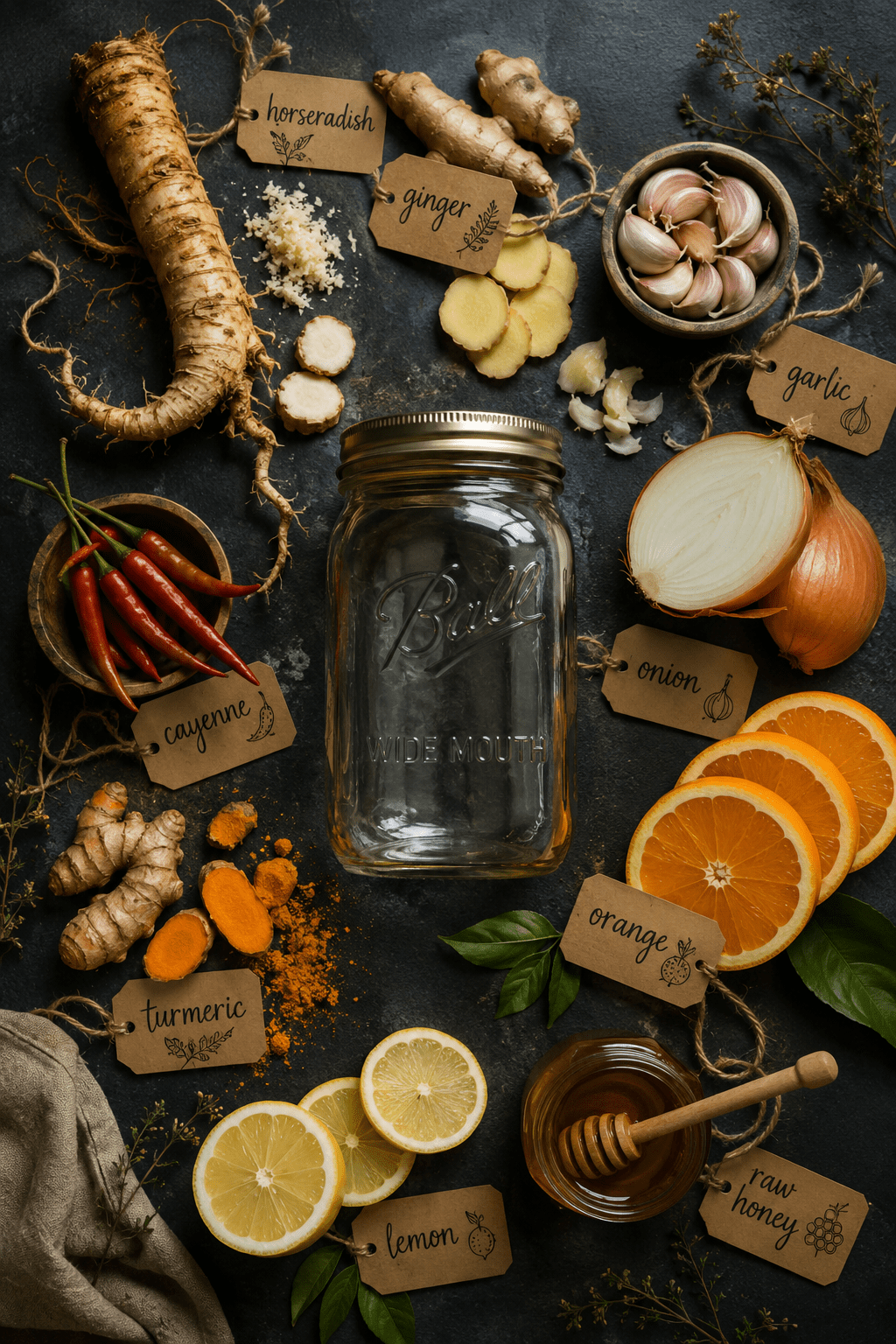
Fire cider is a spicy, pungent herbal vinegar tonic that’s been used in folk medicine for generations. It combines raw apple cider vinegar with pungent roots and vegetables, then gets sweetened with honey after straining. People drink it as a warming, immune-supporting shot – especially when the weather turns cold.
The name says it all. The “fire” comes from the heat of horseradish, ginger, and hot peppers. The “cider” is the raw apple cider vinegar base. Together, they create a tonic that makes your sinuses tingle and your chest feel warm within seconds of drinking it.
Herbalist Rosemary Gladstar is widely credited with popularizing the modern fire cider recipe in the 1970s and 80s, though vinegar-based herbal tonics have roots going back centuries in traditional Western herbalism [4]. Today, it’s one of the most popular DIY remedies in the natural health community – and for good reason. It’s cheap, satisfying to make, and genuinely useful to have on hand when everyone around you is sniffling.
How Does Fire Cider Help Boost Immunity During Cold Season?
Fire cider contains several ingredients that have individually shown immune-supporting properties in research, though the tonic itself hasn’t been studied as a whole formula. The combination of garlic, ginger, horseradish, and ACV creates a potent mix that many herbalists consider greater than the sum of its parts.
Here’s what the key ingredients bring to the table:
- Garlic – Contains allicin, a compound with known antimicrobial properties
- Ginger – Has anti-inflammatory and antioxidant effects, and may help with nausea
- Horseradish – Acts as a natural decongestant, opening up the sinuses fast
- Apple cider vinegar – Supports gut health and has mild antimicrobial properties
- Hot peppers – Capsaicin can help clear mucus and has anti-inflammatory effects
- Honey – Raw honey has well-documented antimicrobial properties
“Proponents suggest fire cider supports immune health, aids digestion, and reduces inflammation. However, scientific evidence supporting these claims is limited.” [2]
That’s an honest caveat worth keeping in mind. Fire cider isn’t a cure, and it won’t replace a flu shot. But as a daily tonic during cold season, many people – myself included – find it genuinely useful. I started making a jar every September three years ago, and I’ve noticed I reach for it the moment I feel a scratchy throat coming on. Whether it’s the herbs or just the ritual, something about it works.
If you want to complement your fire cider routine with other quick immune options, check out these immunity shots for cold that come together in just five minutes.
Best Ingredients to Use in a Traditional Homemade Fire Cider Recipe
The core ingredients for a classic homemade fire cider recipe are non-negotiable. Everything else is optional customization [1].
Core ingredients (don’t skip these):
| Ingredient | Amount | Why It’s In There |
|---|---|---|
| Raw apple cider vinegar | 2-3 cups | The base – extracts and preserves all other ingredients |
| Fresh horseradish root | 1/4 cup grated | Heat, sinus-clearing, antimicrobial |
| Fresh ginger root | 1/4 cup grated | Anti-inflammatory, warming, digestive |
| Garlic cloves | 8-10 cloves, minced | Immune support, antimicrobial |
| White or yellow onion | 1/4 cup diced | Quercetin, antimicrobial |
| Hot peppers | 1-2 whole or sliced | Capsaicin, circulation, decongestant |
| Raw honey | 2-4 tbsp (added after) | Antimicrobial, sweetens the heat |
Popular add-ins that work well:
- Turmeric root or powder (anti-inflammatory)
- Lemon or orange zest and juice (vitamin C, brightness)
- Black pepper (activates turmeric’s curcumin)
- Rosemary or thyme sprigs (antimicrobial herbs)
- Cinnamon stick (warming, blood sugar support)
If you enjoy working with herbs in the kitchen, you might also love learning how to make your own herbal tea blends at home for another layer of cold-season support.
Step-by-Step: How to Make Your Homemade Fire Cider Recipe
Making a homemade fire cider recipe is genuinely simple. The hardest part is waiting for it to steep [1].
What you’ll need:
- 1 quart (32 oz) wide-mouth mason jar with lid
- Grater or food processor
- Fine mesh strainer or cheesecloth
- A second clean jar for storing the finished tonic
Instructions:
- Prep your ingredients – Grate the horseradish and ginger, mince the garlic, dice the onion, and slice the peppers. You don’t need to peel everything perfectly; just get them into rough pieces.
- Pack the jar – Add all your prepped ingredients to the mason jar. Fill it about halfway to two-thirds full.
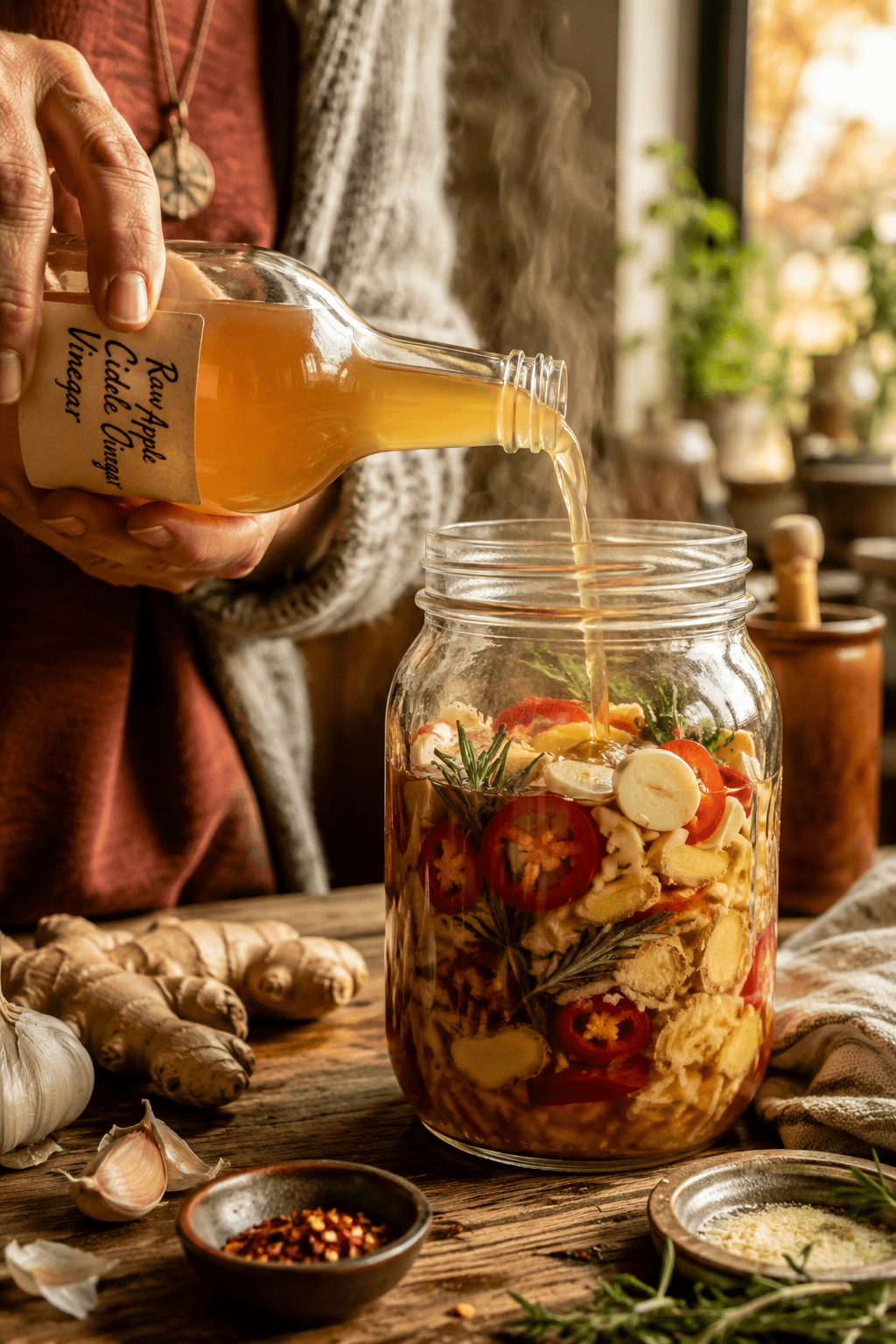
- Pour in the ACV – Cover the ingredients completely with raw apple cider vinegar. Leave about an inch of headspace at the top.
- Seal and shake – Put the lid on and give it a good shake. If using a metal lid, place a piece of parchment paper between the jar and lid to prevent corrosion from the vinegar.
- Steep for 3-4 weeks – Store in a cool, dark place and shake it once a day. The longer it steeps, the more potent it gets.
- Strain and sweeten – After steeping, strain through cheesecloth into a clean jar, squeezing out every last drop. Add raw honey to taste – start with 2 tablespoons and adjust.
- Refrigerate – Store your finished fire cider in the fridge.
Apple Cider Vinegar vs Regular Vinegar for Fire Cider
Always use raw, unfiltered apple cider vinegar with the “mother” for fire cider – not white vinegar, not distilled ACV, and not apple cider vinegar that’s been filtered clear.
The “mother” is the cloudy, stringy culture of beneficial bacteria and enzymes that forms during fermentation. It’s what gives raw ACV its gut-health benefits and its mild probiotic quality. White vinegar is just acetic acid in water – it will extract the flavors from your herbs, but it adds nothing nutritionally and tastes harsh.
Choose raw ACV if: you want the full traditional tonic with gut-health benefits.
Skip regular vinegar: it works as a last resort but misses the point of the recipe.
Popular brands like Bragg’s or any organic raw ACV from your local store will work perfectly.
How Much Does It Cost to Make Fire Cider at Home vs Buying It?
Making fire cider at home costs roughly $8-12 for a full quart batch. Buying a comparable store-bought version typically runs $12-18 for just 8-12 ounces. The savings are significant, especially if you make a batch every fall.
Here’s a rough cost breakdown for a homemade batch:
- Raw ACV (32 oz): ~$4-5
- Fresh horseradish: ~$1-2
- Ginger root: ~$1
- Garlic, onion, peppers: ~$2
- Raw honey: ~$1-2
- Total: ~$9-12 for 24-28 oz of finished tonic
A store-bought 8 oz bottle of a popular brand like Shire City’s Fire Cider runs around $12-15. You’d need three bottles to match a homemade quart batch – that’s $36-45 vs. $10. The math makes home brewing the obvious choice.
Can Fire Cider Really Help Prevent Getting Sick?
Fire cider may support your immune system, but it won’t guarantee you won’t get sick. The honest answer is that the individual ingredients have some evidence behind them, but fire cider as a complete formula hasn’t been studied in clinical trials [2].
What it can realistically do:
- Provide a daily dose of antimicrobial compounds (garlic, honey, ACV)
- Act as a warming decongestant when you feel congestion coming on
- Support gut health, which is closely tied to immune function
- Give you a consistent daily wellness ritual that keeps you mindful of your health
Think of it as a supportive tonic, not a pharmaceutical. Pair it with good sleep, hydration, and a nutrient-dense diet for best results. For more warming cold-season remedies, a hot toddy recipe for colds is another comforting option worth keeping in your rotation.
Who Shouldn’t Drink Fire Cider – Any Health Warnings?
Fire cider is generally safe for most healthy adults, but certain groups should be cautious or avoid it entirely [2].
Talk to your doctor first if you:
- Are pregnant or breastfeeding
- Take blood thinners (garlic can affect clotting)
- Have acid reflux, GERD, or ulcers (high acidity may worsen symptoms)
- Take diabetes medications (ACV can lower blood sugar)
- Have a known allergy to any of the ingredients
Side effects to watch for:
- Burning sensation in the mouth or throat (normal, but intense for some)
- Tooth enamel erosion with long-term daily use – rinse your mouth with water after each shot
- Digestive upset if taken on an empty stomach
A simple fix: always drink your fire cider shot with or after food, and rinse your mouth with water afterward.
How Long Does Homemade Fire Cider Last in the Refrigerator?
Once strained and stored in a sealed jar in the refrigerator, homemade fire cider lasts about 2-3 weeks [2]. The high acidity of the ACV acts as a natural preservative, but it won’t keep indefinitely once it’s been strained and honey has been added.
The un-strained, still-steeping batch can sit at room temperature for the full 3-4 week steep period. Once you strain it and add honey, move it to the fridge immediately.
Signs it’s gone bad: off smell, visible mold, or a significant change in color. If in doubt, toss it and make a fresh batch.
Common Mistakes People Make When First Brewing Fire Cider
Most first-time fire cider makers run into the same few issues. Here’s what to watch for:
- Using filtered ACV – Always use raw, unfiltered ACV with the mother. Filtered ACV misses the point.
- Not shaking daily – Skipping daily shaking lets ingredients settle and steep unevenly.
- Using a metal lid directly on the jar – Vinegar corrodes metal. Use a plastic lid or put parchment paper between the jar and metal lid.
- Adding honey before straining – Honey goes in after straining, not before. Adding it during steeping can cause fermentation issues.
- Not steeping long enough – Three weeks is the minimum. Four weeks gives you a noticeably more potent tonic.
- Skipping the horseradish – It’s the hardest ingredient to find, but it’s the backbone of the recipe. Don’t substitute it out.
Does Fire Cider Actually Taste Good or Is It Just Medicinal?
Fire cider tastes sharp, spicy, and pungent – but with honey added, it’s surprisingly drinkable. It’s not a pleasant sip like juice, but it’s not punishment either. Most people describe it as intensely warming with a vinegary kick that fades into a mild sweetness.
The taste genuinely grows on you. By week two of daily shots, most people stop grimacing and start looking forward to that morning kick. You can also mix it into other things to make it more palatable:
- Stir into warm water with extra honey (like a fire cider tea)
- Use as a salad dressing base with olive oil
- Add to marinades for chicken or vegetables
- Mix into Bloody Mary cocktails or mocktails [2]
Which Herbs Work Best for Fighting Winter Infections?
Several herbs pair exceptionally well with the base fire cider recipe and have a track record in traditional herbalism for respiratory and immune support [3].
Top herbs to add to your fire cider:
- Thyme – Strong antimicrobial, especially for respiratory infections
- Rosemary – Antioxidant-rich, supports circulation
- Oregano – Contains carvacrol, a potent antimicrobial compound
- Echinacea root – Widely used for immune support in herbal medicine
- Elderberry – Anti-viral properties, pairs beautifully with the ACV base
- Black pepper – Enhances absorption of other compounds, especially turmeric
Add 1-2 sprigs of fresh herbs or 1 teaspoon of dried herbs per quart jar. Don’t overload the jar – the ACV needs room to circulate around the ingredients.
For more on using powerful herbs medicinally, our guide on 15 powerful herbs for homemade antibiotics goes deep on what works and why.
Vegetarian and Vegan Fire Cider Recipe Alternatives
The standard homemade fire cider recipe is already vegetarian. The only non-vegan ingredient is honey, and swapping it out is simple.
Vegan sweetener substitutes (use after straining):
- Maple syrup (1:1 swap, slightly different flavor but works well)
- Agave nectar (milder sweetness, neutral flavor)
- Date syrup (rich and earthy, pairs nicely with the spice)
Use the same amount as you would honey – start with 2 tablespoons and taste as you go. Maple syrup is the most popular swap and honestly tastes great in fire cider. It adds a subtle warmth that complements the ginger and cinnamon nicely.
How Often Should You Drink Fire Cider During Cold and Flu Season?
The standard recommendation is one shot (about 1.5 oz or 45 mL) per day as a daily preventive tonic during cold and flu season [2]. Most people take it in the morning, either straight or mixed into warm water.
General dosing guide:
- Daily prevention: 1 shot (1.5 oz) each morning
- At first sign of illness: 2-3 shots spread throughout the day
- As a food ingredient: No specific dose – use freely in cooking
Don’t exceed 3 shots per day. More isn’t better with fire cider – the high acidity can irritate your digestive tract and tooth enamel if overdone.
If you enjoy other morning wellness rituals, you might also like these 5 DIY ginger and turmeric shots for morning energy as a companion routine.

FAQ
Q: Can I use dried herbs instead of fresh in fire cider?
Fresh ingredients are always preferred because they contain more volatile oils and enzymes. Dried herbs work in a pinch but will produce a less potent tonic. If using dried, use half the amount called for in fresh.
Q: Do I need to refrigerate fire cider while it’s steeping?
No. During the 3-4 week steep, store the jar at room temperature in a cool, dark place – like a pantry or cabinet. Refrigerate only after straining.
Q: Can kids drink fire cider?
Not recommended for young children due to the high acidity and intense heat. For older kids (10+), dilute a small amount in warm water with extra honey. Always check with a pediatrician first.
Q: What’s the best jar size to use?
A wide-mouth quart (32 oz) mason jar is ideal. The wide mouth makes it easy to pack in the ingredients and strain them out later.
Q: Can I reuse the strained solids?
Yes! The strained-out solids still have flavor and some potency. You can add them to soups, stir-fries, or blend them into a spicy condiment paste.
Q: My fire cider isn’t very spicy. What went wrong?
You probably didn’t use enough horseradish or hot peppers, or you didn’t steep it long enough. Try adding more peppers and giving it another week.
Q: Can I make a smaller test batch first?
Absolutely. Scale everything down by half and use a pint (16 oz) jar. It’s a great way to test the flavor before committing to a full quart.
Q: Is fire cider the same as shrub?
No. A shrub is a drinking vinegar made with fruit and sugar, used mainly as a cocktail mixer. Fire cider is a medicinal herbal tonic with a completely different ingredient profile and purpose.
Q: Can I add elderberry to fire cider?
Yes, and it’s a great addition. Add 1/4 cup of dried elderberries to your jar before steeping. They’ll add antiviral properties and a mild berry flavor that balances the heat nicely.
Q: What if I can’t find fresh horseradish root?
Check the refrigerated section of well-stocked grocery stores or farmers markets in fall. Prepared horseradish (the jarred kind) can work in a pinch – use 2 tablespoons, but make sure it has no added cream or sugar.
Conclusion
Making a homemade fire cider recipe every fall is one of the simplest, most satisfying things you can do for your cold-season wellness routine. It costs less than $12 for a full quart, uses ingredients you can find at any grocery store, and takes about 20 minutes of active prep time. The rest is just waiting.
Your next steps:
- This week: Gather your ingredients – horseradish, ginger, garlic, onion, hot peppers, and raw ACV
- This weekend: Spend 20 minutes prepping and packing your jar
- For the next 3-4 weeks: Shake it daily and let it do its thing
- Once strained: Take your daily shot every morning through cold season
If you want to build out a fuller natural medicine cabinet, explore our guide to getting started with natural remedies for a broader foundation. And for a quick immune boost while your fire cider is still steeping, these homemade blueberry ginger immunity shots are ready in minutes.
Start your batch now. By the time the first cold hits your household, you’ll have a jar of liquid fire waiting in the fridge.
References
[1] How Make Fire Cider – https://www.almanac.com/how-make-fire-cider?utm_source=openai
[2] Fire Cider Benefits – https://www.healthline.com/nutrition/fire-cider-benefits?utm_source=openai
[3] Homemade Fire Cider – https://theherbalacademy.com/blog/homemade-fire-cider/?utm_source=openai
[4] Fire Cider Recipe – https://www.littlehomeinthemaking.com/fire-cider-recipe/?utm_source=openai