
Quick Answer: A DIY rosemary scalp scrub combines rosemary essential oil, a carrier oil, and a gentle exfoliant like sugar to remove product buildup, unclog hair follicles, and stimulate blood flow to the scalp. You can make one at home in under 10 minutes using pantry staples. Use it once or twice a week before shampooing for best results, and expect noticeable improvements in scalp health within 4 to 8 weeks of consistent use.
Key Takeaways
- A DIY rosemary scalp scrub needs just 3 to 4 ingredients: rosemary essential oil, a carrier oil (like coconut or jojoba), granulated sugar, and optionally fresh rosemary powder.
- Sugar acts as a gentle physical exfoliant that lifts dead skin cells and product buildup without irritating the scalp. [1]
- Rosemary contains rosmarinic acid and carnosic acid, which have anti-inflammatory and antimicrobial properties that support a balanced scalp environment. [2]
- A 2015 clinical trial published in SKINmed found rosemary oil performed comparably to minoxidil for hair regrowth, with fewer side effects like scalp irritation. [2]
- Research cited in 2025 found participants using rosemary oil saw an average 18.9% increase in hair count, close to the 21.2% seen with minoxidil. [3]
- Results from consistent rosemary oil use typically become visible after 90 days of daily application. [3]
- Always do a patch test before your first use, especially if you have a sensitive scalp.
- Avoid using this scrub on broken skin, open sores, or an actively inflamed scalp.
- Pair your scrub routine with a DIY rosemary water rinse for added hair growth support.
Why Does Rosemary Work So Well for Scalp Health?
Rosemary is one of the most well-researched herbs for scalp and hair health. It works on multiple levels: stimulating circulation, fighting bacteria and fungi, and reducing inflammation at the follicle level.
Here’s what the research actually shows:
- Rosmarinic acid and carnosic acid in rosemary have demonstrated anti-inflammatory activity, which can calm an irritated, itchy scalp. [2]
- Rosemary has natural antifungal and antibacterial properties that help control dandruff and keep the scalp microbiome balanced. [2]
- It has been shown to inhibit DHT (dihydrotestosterone), a hormone that shrinks hair follicles and contributes to hair loss. [2]
- A study published in Phytotherapy Research found that rosemary oil increased dermal papilla cell activity, meaning it directly supports the cells responsible for hair follicle development. [3]
“Rosemary oil performed comparably to minoxidil for hair regrowth after six months, but with fewer adverse effects like dryness, irritation, or flaking.” — Based on a peer-reviewed study cited in SKINmed, 2015 [2]
This makes rosemary a smart choice for anyone who wants to support hair growth naturally, especially those with a sensitive scalp who find pharmaceutical treatments too harsh.
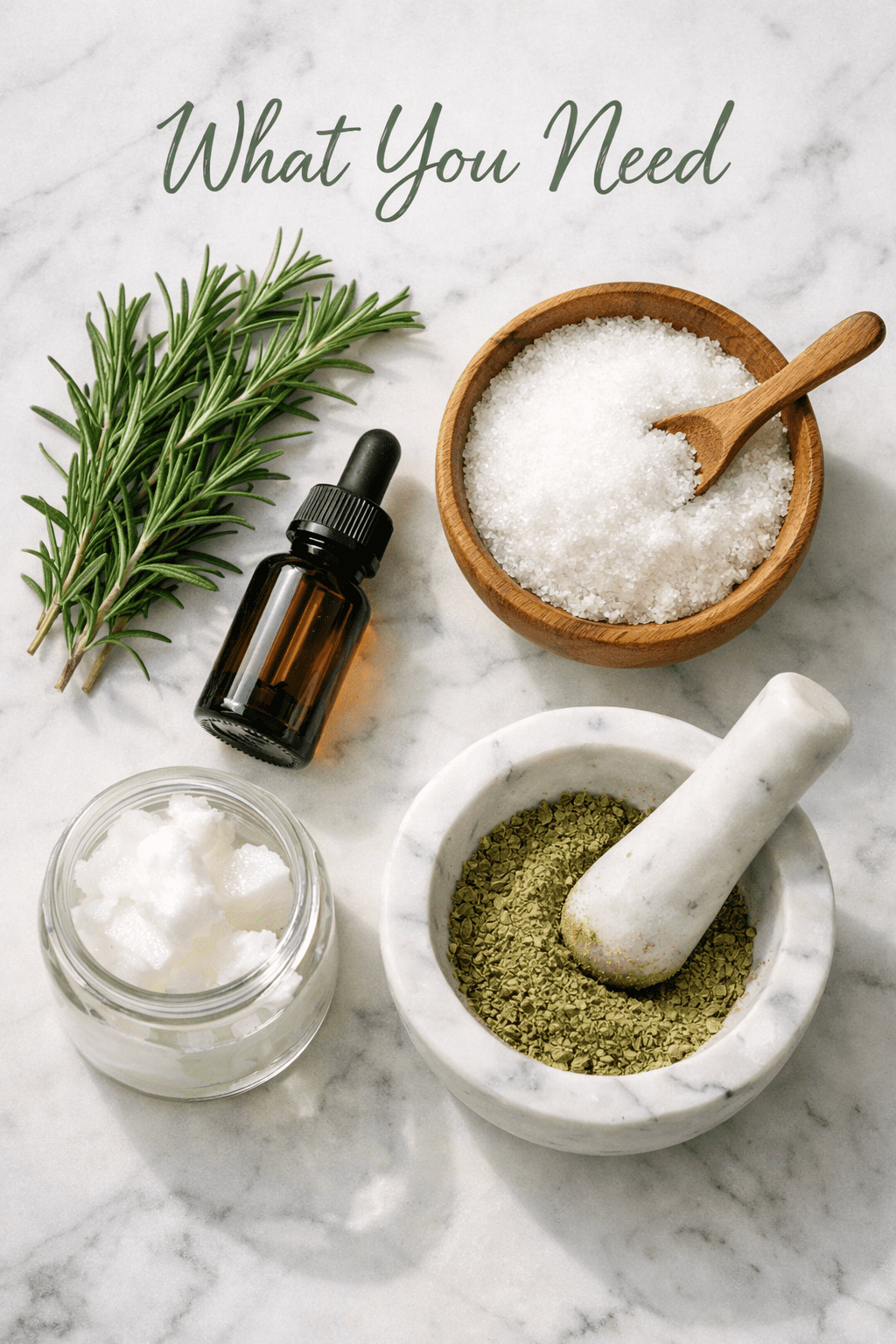
What Ingredients Do You Need for a DIY Rosemary Scalp Scrub?
You only need a handful of ingredients, most of which you probably already have at home. Here’s the full breakdown:
| Ingredient | Amount | Purpose |
|---|---|---|
| Granulated white or brown sugar | 3 tablespoons | Gentle physical exfoliant |
| Coconut oil or jojoba oil | 2 tablespoons | Carrier oil, moisturizes scalp |
| Rosemary essential oil | 5 to 8 drops | Stimulates circulation, antimicrobial |
| Fresh rosemary (optional) | 1 teaspoon, ground | Extra botanical potency |
| Peppermint essential oil (optional) | 2 drops | Cooling sensation, added circulation boost |
A few notes on ingredient choices:
- Sugar vs. salt: Sugar is softer and dissolves more easily, making it gentler on the scalp. Salt can work but may sting if you have any micro-abrasions. [1]
- Coconut oil vs. jojoba oil: Coconut oil is more occlusive and great for dry scalps. Jojoba oil is lighter and better for oily or acne-prone scalps.
- Fresh rosemary: If you grind fresh rosemary into a fine powder using a mortar and pestle or coffee grinder, it adds extra phytochemicals to the scrub. [1]
Choose coconut oil if your scalp feels dry or tight. Choose jojoba oil if your scalp tends to get greasy quickly.
How Do You Make a DIY Rosemary Scalp Scrub at Home?
Making this scrub takes less than 10 minutes. The process is straightforward: mix your oils first, then fold in the sugar and any dry ingredients.
Step-by-step instructions:
- Melt your carrier oil if it’s solid (coconut oil solidifies below 76°F). Use a double boiler or microwave in 10-second intervals.
- Add your essential oils to the carrier oil and stir well. This ensures even distribution before the sugar goes in.
- If using fresh rosemary, grind it into a fine powder using a mortar and pestle or coffee grinder. Coarse pieces can scratch the scalp.
- Add the sugar to the oil mixture and stir until fully combined. The texture should be like a wet, grainy paste.
- Add ground rosemary if using, and stir again.
- Transfer to a clean, airtight glass jar. Avoid plastic containers, as essential oils can degrade some plastics over time.
Storage: Keep in a cool, dry place. Use within 2 to 3 weeks if you used fresh rosemary, or up to 6 weeks if using only essential oil. [1]
How Do You Apply a DIY Rosemary Scalp Scrub Correctly?
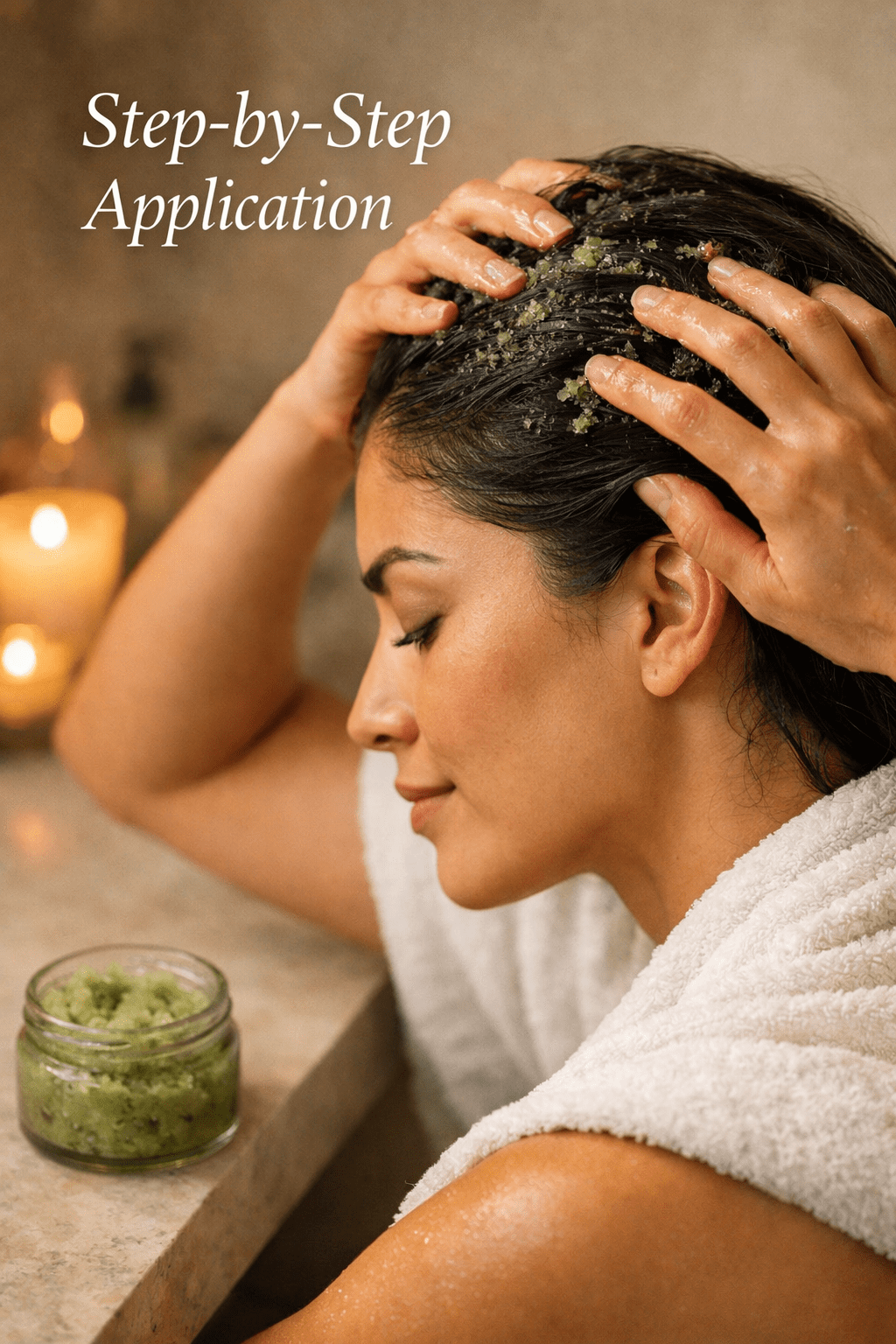
Apply the scrub to a wet scalp before shampooing. Wet hair makes the scrub easier to distribute and reduces friction during massage.
Application steps:
- Wet your scalp thoroughly in the shower or over a sink.
- Section your hair into 4 to 6 parts so you can reach the scalp easily.
- Scoop a small amount (about a teaspoon per section) and apply directly to the scalp, not the hair strands.
- Massage in soft circular motions using your fingertip pads, not your nails. Work through each section for 1 to 2 minutes. [1]
- Let it sit for 3 to 5 minutes so the rosemary compounds can absorb.
- Rinse thoroughly with warm water until all sugar and oil are removed.
- Shampoo and condition as normal.
Common mistake: Scrubbing too hard or using your nails. This can cause micro-tears in the scalp and worsen irritation. Gentle pressure is all you need.
For more DIY scalp care ideas, check out these 7 DIY scalp scrub recipes for buildup and dandruff that cover a range of natural ingredients.
How Often Should You Use a DIY Rosemary Scalp Scrub?
Use the scrub once or twice a week for most scalp types. More frequent use can strip the scalp’s natural oils and cause dryness.
Frequency guide by scalp type:
- Oily scalp: Up to twice a week
- Normal scalp: Once a week
- Dry or sensitive scalp: Once every 10 to 14 days
- Flaky scalp / mild dandruff: Once a week, followed by a gentle moisturizing conditioner
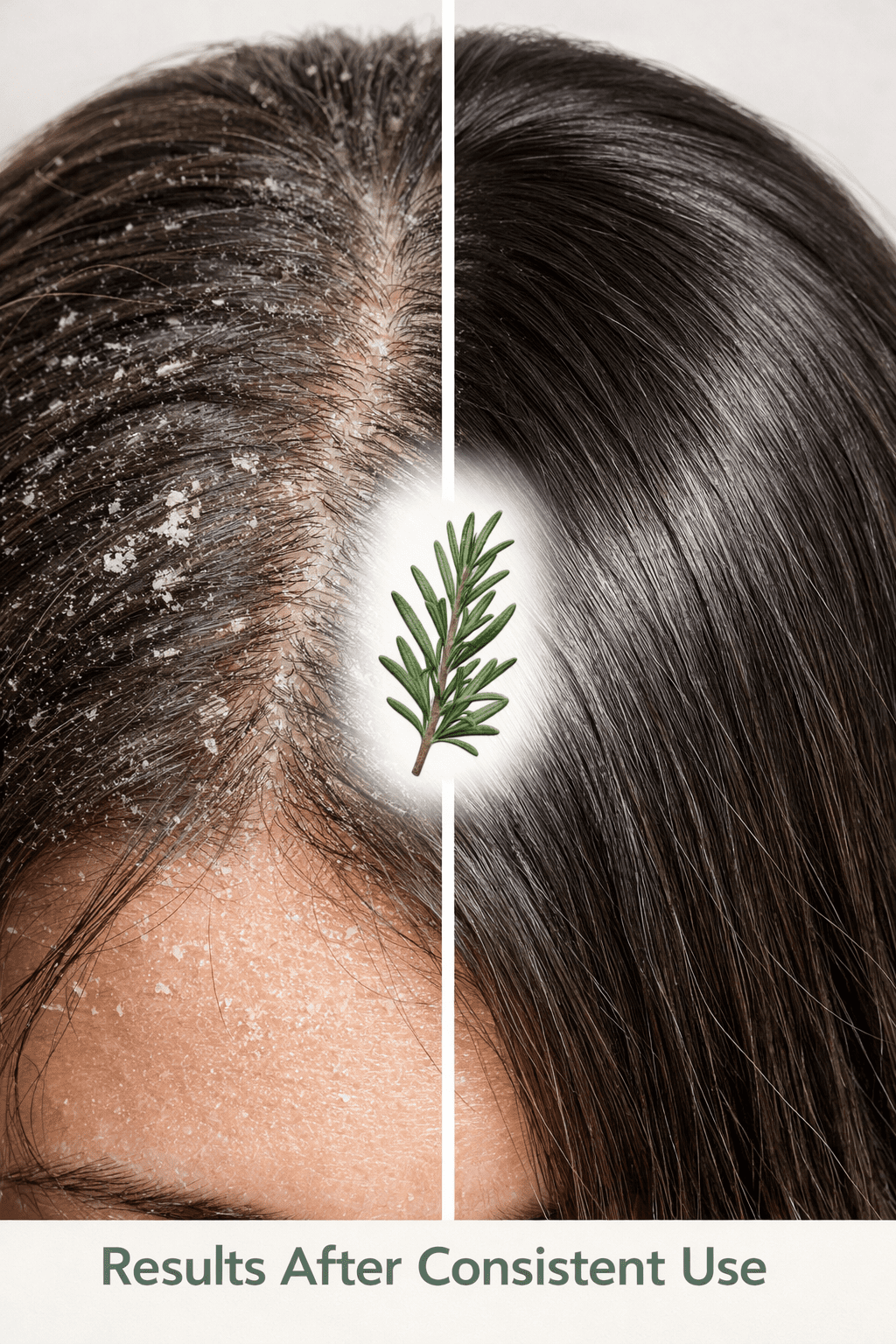
Timeline for results: Most users notice a cleaner, less itchy scalp within 2 to 4 weeks. Hair growth improvements, supported by the research, typically become visible after 90 days of consistent use. [3]
If you want to build a fuller hair care ritual, the 7-day hair growth challenge pairs well with this scrub routine.
What Are the Real Benefits of a DIY Rosemary Scalp Scrub?
The benefits go beyond just a clean scalp. Here’s what consistent use can realistically deliver:
- Removes product buildup and dead skin cells, unclogging hair follicles so new growth isn’t blocked. [1]
- Stimulates blood circulation to the scalp, which delivers more oxygen and nutrients to hair follicles. [4]
- Reduces dandruff and scalp itching through rosemary’s antifungal and antibacterial action. [2]
- Supports hair thickness and scalp coverage, with users reporting visibly fuller strands after consistent use. [3]
- Gentler than pharmaceutical alternatives: Rosemary oil users in clinical studies experienced fewer adverse effects than those using minoxidil. [3]
A case study noted in 2025 research described a 28-year-old male who used a rosemary oil and coconut oil scalp blend daily and experienced denser coverage along his frontal hairline after 5 months. [3] Results like this aren’t guaranteed, but they show what’s possible with consistency.
You can also complement your scrub routine with a DIY hair mist for dry hair to keep strands hydrated between wash days.
Who Should Avoid a DIY Rosemary Scalp Scrub?
This scrub is safe for most people, but it’s not right for everyone.
Avoid or consult a doctor first if you:
- Have an open wound, active scalp infection, or severe psoriasis
- Are pregnant (rosemary essential oil is not recommended in high concentrations during pregnancy)
- Have a known allergy to rosemary or any other ingredient in the recipe
- Have eczema or seborrheic dermatitis in an active flare
Always do a patch test first: Apply a small amount of the scrub to the inside of your wrist or behind your ear. Wait 24 hours. If you notice redness, swelling, or itching, don’t use it on your scalp.
FAQ: DIY Rosemary Scalp Scrub
Can I use dried rosemary instead of fresh?
Yes. Dried rosemary works fine. Grind it into a fine powder first so it doesn’t scratch the scalp. Fresh rosemary has slightly more volatile oils, but dried is a practical substitute.
Can I leave the scrub on overnight?
No. This scrub is a rinse-off treatment. Leaving sugar on the scalp overnight can attract bacteria and cause irritation. Rinse after 5 minutes maximum.
Does the scrub work for hair loss?
It may help with hair loss related to poor circulation, product buildup, or DHT-related thinning. It’s not a treatment for medical hair loss conditions like alopecia areata. See a dermatologist for those.
Can I use this scrub on colored or chemically treated hair?
Yes, but be gentle. The scrub goes on the scalp, not the hair strands, so it’s unlikely to affect color. Avoid using it right after a chemical treatment when the scalp may be sensitive.
What if my scalp feels oily after the scrub?
You may have used too much carrier oil. Try reducing the oil by half a tablespoon and shampooing twice after rinsing.
Can I substitute sugar with brown sugar?
Yes. Brown sugar has slightly smaller crystals and is even gentler than white sugar. It’s a good option for sensitive scalps.
How long does a batch of scrub last?
Without fresh rosemary: up to 6 weeks stored in a sealed glass jar. With fresh rosemary: 2 to 3 weeks. Keep it away from water to prevent contamination.
Can I use rosemary oil from cooking instead of essential oil?
No. Culinary rosemary oil is infused oil meant for food. Essential oil is a concentrated extract. They’re not interchangeable for topical use.
Will this scrub help with dandruff?
It can help with mild dandruff caused by product buildup or a dry, flaky scalp. For persistent dandruff caused by fungal overgrowth, you may need an antifungal shampoo alongside this routine.
What carrier oil is best for hair growth?
Jojoba oil most closely mimics the scalp’s natural sebum. Castor oil is another popular choice for thickness. Coconut oil is great for moisture but can feel heavy on fine hair.
Conclusion: Start Your DIY Rosemary Scalp Scrub Routine This Week
A DIY rosemary scalp scrub is one of the simplest, most affordable ways to take your scalp health seriously. It takes under 10 minutes to make, uses ingredients you likely already own, and is backed by real research showing rosemary’s ability to support hair growth, reduce scalp irritation, and fight dandruff.
Your action plan:
- Gather your ingredients: sugar, carrier oil, and rosemary essential oil.
- Make your first batch using the recipe above.
- Do a patch test 24 hours before your first scalp application.
- Apply once a week after washing your hair, and track how your scalp feels over the next 4 weeks.
- Pair it with a DIY rosemary water rinse for a complete at-home hair growth ritual.
Consistency is what makes the difference. Give it 90 days, and you’ll have a much better sense of what this simple herb can do for your scalp.
For more natural hair and scalp care ideas, explore our full natural remedies library or learn how to make your own natural shampoo at home to complete your routine.
References
[1] DIY Rosemary Scalp Scrub – https://kateable.com/diy-rosemary-scalp-scrub/
[2] The Science-Backed Benefits of Rosemary for Healthy, Stronger Hair – https://bakecosmetics.com/blogs/skincare/the-science-backed-benefits-of-rosemary-for-healthy-stronger-hair
[3] Rosemary Oil for Hair Growth: 2025 Study Results, Before and After Photos, and DIY Tips – https://vocal.media/writers/rosemary-oil-for-hair-growth-2025-study-results-before-and-after-photos-and-diy-tips
[4] Rosemary Oil for Hair Growth – https://osmiaskincare.com/blogs/blog/rosemary-oil-for-hair-growth