


I’ll be honest—when I first heard about DIY rosemary water for hair growth, I thought it was just another beauty trend that would fade away. But after making my own batch in less time than it takes to brew coffee, I understood why millions of people swear by this simple herbal remedy. Making rosemary water at home takes just five minutes, costs pennies per bottle, and delivers real results backed by clinical research showing effectiveness comparable to popular hair growth treatments.
Key Takeaways
- Quick preparation: DIY rosemary water for hair growth takes only 5 minutes to make using fresh or dried rosemary and hot water
- Clinical backing: Studies show rosemary oil demonstrated similar hair count increases to 2% minoxidil at six months, with fewer side effects[1]
- Measurable results: Recent trials reported nearly 70% increase in hair thickness and approximately 32% improvement in density with rosemary-based formulations[2]
- Daily use recommended: Apply rosemary water as a scalp mist 3-5 times weekly for best results, combined with twice-weekly rosemary oil treatments
- Cost-effective solution: One batch costs under $2 and lasts up to one week when refrigerated
- Patience required: Neither rosemary water nor minoxidil showed significant improvements at three months—sustained use for 6+ months is essential[3]
- Not a miracle cure: Rosemary water works best for early-stage hair thinning and overall scalp health, not advanced hair loss
- Safe alternative: Participants reported significantly less scalp itching and irritation compared to minoxidil users[1]
Quick Answer
DIY rosemary water for hair growth is a lightweight herbal infusion you can make in five minutes by steeping fresh or dried rosemary in hot water, then straining and transferring to a spray bottle. This simple preparation improves scalp circulation, reduces inflammation, and may help extend the hair growth phase through active compounds like carnosic acid and rosmarinic acid. Apply it to your scalp 3-5 times weekly, and expect to wait at least six months before seeing measurable results—clinical trials show rosemary’s effectiveness matches 2% minoxidil with fewer side effects.
What Exactly Is DIY Rosemary Water for Hair Growth?
DIY rosemary water for hair growth is a diluted herbal infusion made by steeping rosemary leaves in hot water, creating a lightweight scalp treatment you can use daily. Unlike concentrated rosemary essential oil (which requires carrier oils and careful dilution), rosemary water is gentle enough to spray directly onto your scalp without causing irritation.
The key difference between rosemary water and rosemary oil matters for your hair type and routine. Rosemary water works as a daily scalp mist suited for fine or oily hair, while concentrated rosemary oil penetrates deeply and remains active longer[1]. I recommend using rosemary water as your everyday treatment combined with rosemary oil applied twice weekly for maximum benefit.
What makes rosemary water effective:
- Carnosic acid and rosmarinic acid: These compounds improve microcirculation to hair follicles and reduce oxidative stress[3]
- Anti-inflammatory effects: May help follicles stay in the growth phase longer by reducing chronic scalp inflammation[3]
- Vasodilatory properties: Widens blood vessels to increase nutrient delivery to hair roots
- Lightweight consistency: Won’t weigh down fine hair or make oily scalps greasier
Choose rosemary water if you have fine, oily, or normal hair and want a daily treatment. Choose rosemary oil (diluted in a carrier) if you have thick, dry hair or want deeper penetration for more intensive treatment.
How Do You Make DIY Rosemary Water for Hair Growth in 5 Minutes?
Making DIY rosemary water for hair growth takes exactly five minutes using either fresh rosemary sprigs or dried rosemary leaves. The process is simple: steep rosemary in hot water, let it cool, strain, and transfer to a spray bottle.
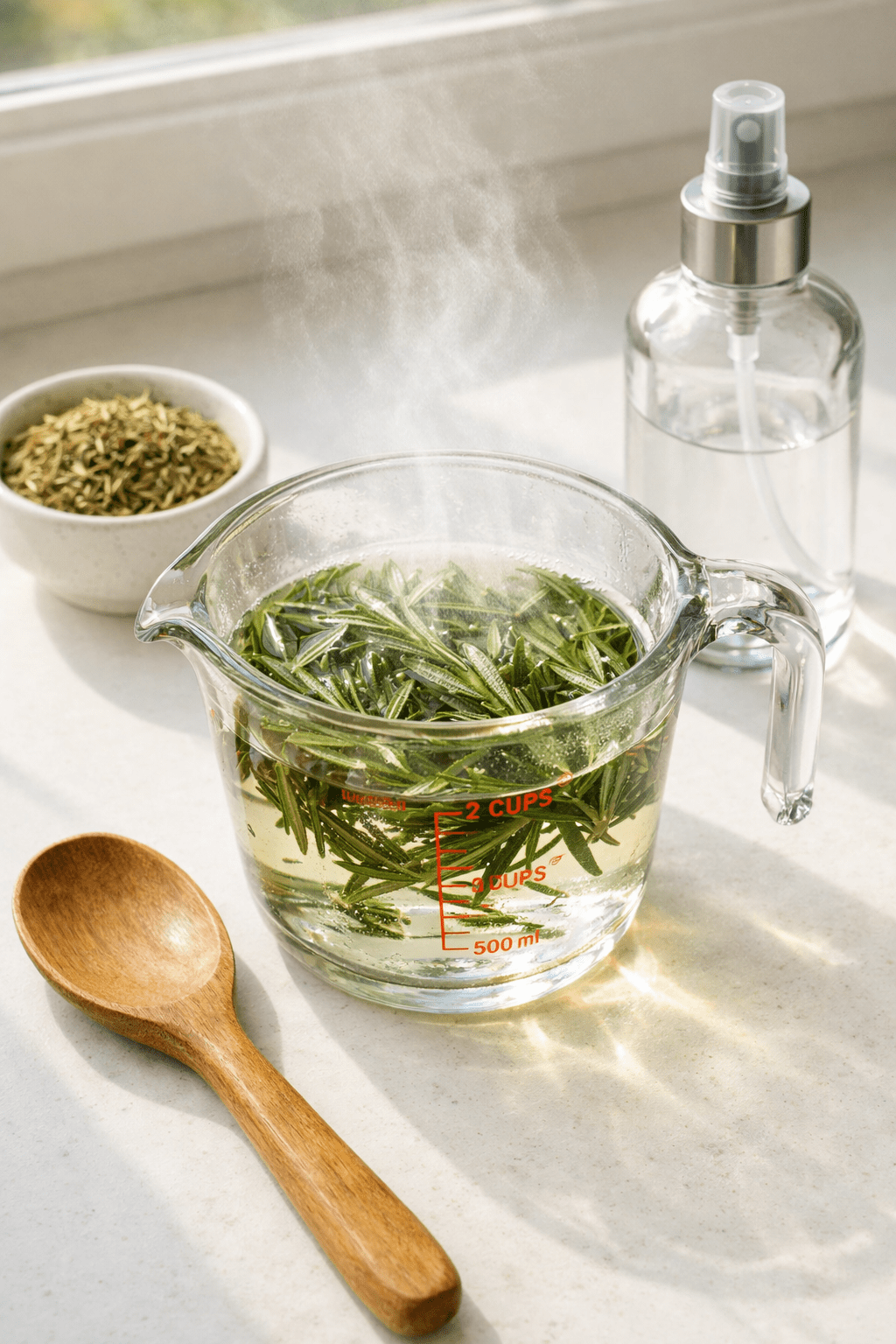
Step-by-step instructions:
- Boil 2 cups of filtered water in a kettle or pot
- Add 2-3 fresh rosemary sprigs (about 1/4 cup) or 2 tablespoons dried rosemary to a heat-safe glass container
- Pour hot water over rosemary and cover the container
- Steep for 3-5 minutes (longer steeping doesn’t significantly increase potency and may make the water too strong)
- Strain out rosemary pieces using a fine-mesh strainer or cheesecloth
- Let cool completely before transferring to a clean spray bottle
- Label with the date so you know when to make a fresh batch
Common mistake to avoid: Don’t use boiling water directly on rosemary in a plastic container—the heat can leach chemicals. Always use glass or stainless steel for steeping.
Quick tip: Make a double batch and store the extra in the refrigerator for up to one week. The water should smell fresh and herbal; if it develops an off odor, discard it and make a new batch.
For more natural DIY beauty recipes with similar simplicity, check out our DIY face toner with witch hazel and rose water guide.
How Should You Apply Rosemary Water to Your Scalp?
Apply DIY rosemary water for hair growth directly to your scalp 3-5 times per week, focusing on areas where you want to improve thickness or slow thinning. The application takes less than two minutes and works best on clean, damp hair when your scalp pores are open and receptive.

Best application method:
- Shake the bottle to distribute any settled particles
- Part your hair in sections (4-6 sections work well for thorough coverage)
- Spray directly onto your scalp 2-3 times per section, not your hair strands
- Massage gently with your fingertips for 1-2 minutes to improve absorption and circulation
- Leave in—don’t rinse (rosemary water is lightweight and won’t leave residue)
- Style as usual once your hair dries
When to apply: Best times are after washing your hair (on damp scalp), in the morning before styling, or at night before bed. Evening application lets the rosemary water work overnight without interference from heat styling or products.
How much to use: 10-15 sprays total should cover your entire scalp. More isn’t better—saturating your scalp wastes product and can make fine hair look greasy.
Choose morning application if you have oily hair (so any excess dries during the day). Choose evening application if you have dry hair or want to maximize absorption time without worrying about styling.
What Results Can You Expect from DIY Rosemary Water for Hair Growth?
You can expect to wait at least six months before seeing measurable results from DIY rosemary water for hair growth, based on clinical trials showing neither rosemary nor minoxidil produced significant improvements at the three-month mark[3]. At the six-month point, rosemary oil showed statistically similar hair count increases compared to 2% minoxidil, with no meaningful difference between groups[1].
Realistic timeline and expectations:
- Weeks 1-4: No visible changes; focus on establishing consistent application routine
- Months 2-3: Possible reduction in hair shedding; scalp may feel healthier
- Months 4-6: Early signs of new growth, improved hair texture, reduced breakage
- Months 6+: Measurable increases in hair count, thickness, and density
Recent studies using rosemary-lavender combinations demonstrated 57.73% growth rate improvement, while rosemary-castor oil showed 47.59% improvement when measured with objective imaging technology[2]. Other trials reported nearly 70% increase in hair thickness and approximately 32% improvement in density[2].
What won’t change: Rosemary water is unlikely to reverse advanced hair loss independently or override genetic and hormonal drivers of hair loss[3]. It works best for early-stage thinning, overall scalp health improvement, and slowing progression rather than dramatic regrowth.
Important limitation: The foundational 2015 rosemary study involved only 50 men, excluded women entirely, and compared against 2% minoxidil rather than the 5% solution typically used for male pattern hair loss[4]. Scientific research on rosemary water specifically (not concentrated oil) remains limited in scope[4].
How Do You Store DIY Rosemary Water and How Long Does It Last?
Store DIY rosemary water for hair growth in the refrigerator in a clean glass or plastic spray bottle for up to one week. The cool temperature slows bacterial growth and preserves the active compounds, but rosemary water lacks preservatives found in commercial products, so it has a shorter shelf life.
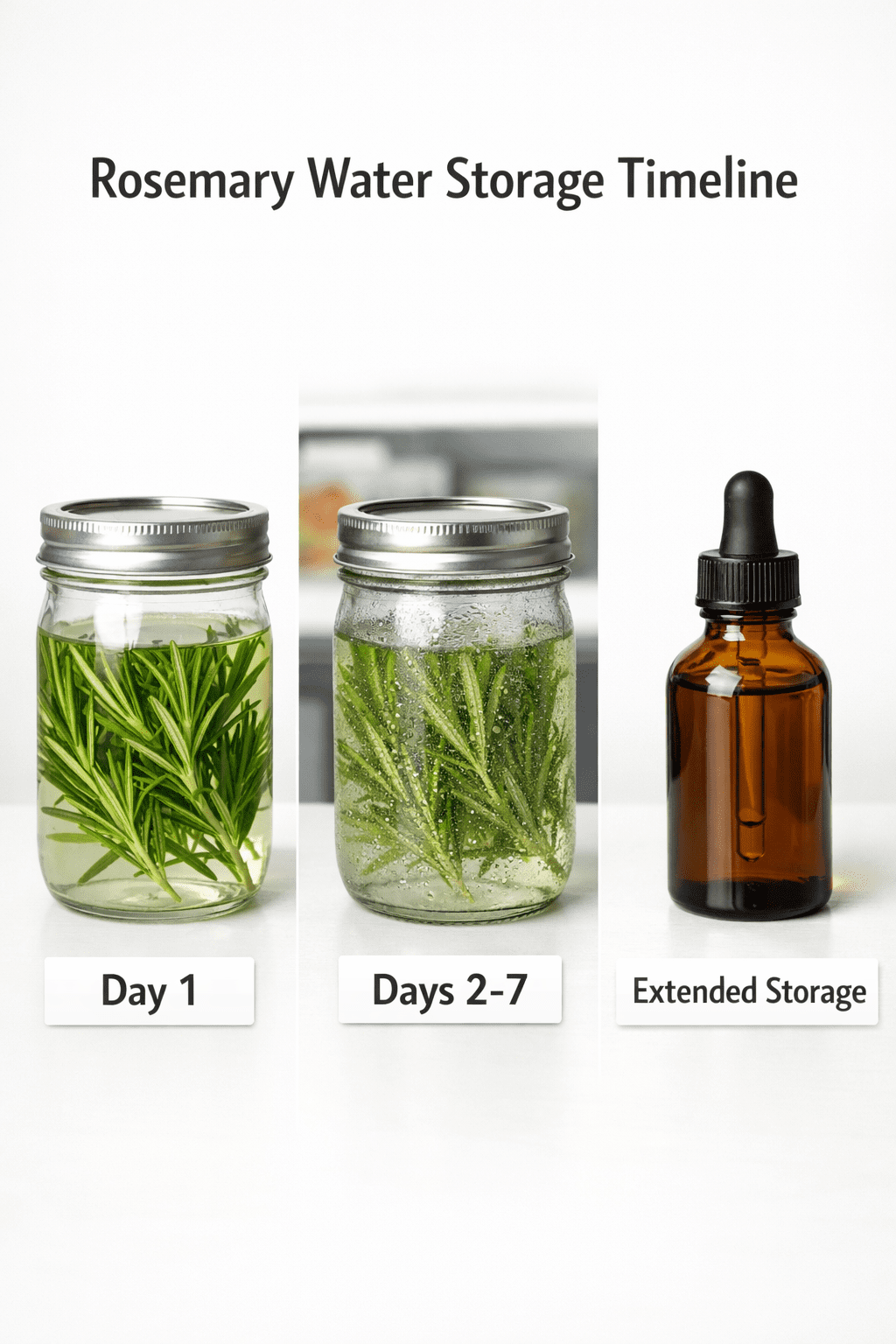
Storage guidelines:
- Refrigerate immediately after the water cools to room temperature
- Use within 7 days for maximum freshness and effectiveness
- Check for spoilage before each use (cloudy appearance, off smell, or mold means discard immediately)
- Keep in a dark bottle if possible to protect from light degradation
- Label with preparation date so you know when to make a fresh batch
Extending shelf life options:
- Add 1 teaspoon of vodka or witch hazel as a natural preservative (extends life to 2 weeks)
- Freeze rosemary water in ice cube trays and thaw one cube at a time as needed
- Make smaller batches (1 cup instead of 2) if you won’t use it within a week
Room temperature storage: If refrigeration isn’t possible, rosemary water lasts only 2-3 days at room temperature. The warm environment encourages bacterial growth, especially since you’re applying it to your scalp where natural oils and dead skin cells can contaminate the spray bottle opening.
Choose refrigerated storage for weekly batches. Choose freezing if you want to prep multiple weeks’ worth at once. Choose room temperature only if you’ll use the entire batch within 48 hours.
For more DIY beauty storage tips, see our guide on homemade eye cream for dark circles.
Can You Combine DIY Rosemary Water with Other Hair Growth Treatments?
Yes, you can safely combine DIY rosemary water for hair growth with other natural and conventional treatments, and doing so may improve overall results. Rosemary water works through improved scalp circulation and anti-inflammatory effects, so it complements treatments that work through different mechanisms.
Safe combinations:
- Rosemary water + rosemary oil: Use water daily as a scalp mist, apply diluted rosemary oil twice weekly for deeper penetration[1]
- Rosemary water + castor oil: Studies show rosemary-castor combinations achieved 47.59% growth rate improvement[2]
- Rosemary water + biotin supplements: Different mechanisms (topical vs. internal nutrition) don’t interfere
- Rosemary water + scalp massage: Enhances circulation benefits of both treatments
- Rosemary water + minoxidil: No known interactions, though clinical trials tested them separately
Combinations requiring caution:
- Multiple essential oils: Don’t combine rosemary water with other potent herbal infusions on the same day (risk of scalp irritation)
- Chemical treatments: Wait 48 hours after coloring, perming, or relaxing before applying rosemary water
- Prescription medications: Consult your dermatologist before combining rosemary with finasteride or other prescription hair loss treatments
Layering order matters: Apply lightweight rosemary water first, let it absorb for 5-10 minutes, then apply heavier oils or serums. This prevents the water from sitting on top of oil barriers where it can’t penetrate.
Choose rosemary water + oil combination if you want maximum rosemary benefits. Choose rosemary water + castor oil if you prefer research-backed formulations. Choose rosemary water alone if you have sensitive skin or want to test tolerance first.
Who Should and Shouldn’t Use DIY Rosemary Water for Hair Growth?
DIY rosemary water for hair growth works best for people experiencing early-stage hair thinning, reduced hair density, or slow growth due to poor scalp circulation. It’s particularly suitable for those seeking a natural, low-cost alternative to chemical treatments who can commit to consistent use for at least six months.
Best candidates:
- People with androgenetic alopecia (pattern hair loss) in early stages
- Those experiencing hair thinning from stress, poor nutrition, or scalp inflammation
- Anyone wanting to improve overall scalp health and hair quality
- People who experienced scalp irritation from minoxidil[1]
- Those with fine or oily hair who need lightweight daily treatments
Not ideal for:
- People with advanced hair loss or significant bald patches (rosemary is unlikely to reverse this independently)[3]
- Those allergic to plants in the mint family (Lamiaceae)
- Anyone expecting dramatic results in under three months
- People unwilling to maintain consistent application 3-5 times weekly
- Those with open scalp wounds, severe dermatitis, or active infections
Special considerations for women: The landmark rosemary study excluded women entirely, and female hair loss is multifactorial (hormones, iron levels, thyroid function)[4]. Women can still benefit from rosemary water, but should address underlying causes simultaneously rather than relying on topical treatment alone.
Patch test requirement: Before first use, spray a small amount on your inner forearm and wait 24 hours. If redness, itching, or irritation develops, don’t use rosemary water on your scalp.
Choose rosemary water if you’re in the early intervention stage. Choose medical treatment (dermatologist consultation) if you have rapid hair loss, bald patches, or hair loss accompanied by scalp pain or unusual symptoms.
FAQ
How long does it take for DIY rosemary water to show hair growth results?
Expect to wait at least six months before seeing measurable hair growth results from rosemary water. Clinical trials found neither rosemary nor minoxidil produced significant improvements at three months, with meaningful results appearing only at the six-month mark[1][3].
Can I use rosemary water on my hair every day?
Yes, you can use rosemary water daily, but 3-5 times per week is sufficient for most people. Daily application works well for those with oily scalps or fine hair since rosemary water is lightweight and won’t cause buildup.
Is fresh or dried rosemary better for making hair growth water?
Both work equally well for DIY rosemary water. Fresh rosemary may smell slightly stronger and more aromatic, while dried rosemary is more convenient and shelf-stable. Use whichever you have available—the active compounds are present in both forms.
Does rosemary water work as well as rosemary oil for hair growth?
Rosemary water is more diluted than rosemary essential oil, so it’s gentler but potentially less potent. For best results, use rosemary water as a daily scalp mist and add concentrated rosemary oil (diluted in a carrier oil) twice weekly for deeper penetration[1].
Will rosemary water make my hair greasy or heavy?
No, properly made rosemary water is lightweight and won’t make hair greasy. It’s just an herbal infusion in water with no oils. If your hair feels heavy, you’re likely using too much—10-15 sprays on the scalp (not hair strands) is sufficient.
Can rosemary water cause hair loss or damage?
Rosemary water is generally safe and doesn’t cause hair loss when used properly. However, if you’re allergic to rosemary or use contaminated water (spoiled batch), you could experience scalp irritation. Always patch test first and discard batches older than one week.
Should I rinse rosemary water out after applying it?
No, leave rosemary water in your hair after application. It’s designed as a leave-in treatment that continues working on your scalp throughout the day. Rinsing it out eliminates the benefits of the active compounds.
Can I add other ingredients to my DIY rosemary water?
Yes, you can add complementary herbs like lavender (for scent and additional growth benefits) or a teaspoon of aloe vera juice (for extra scalp soothing). Avoid adding oils to the water itself—they won’t mix properly and can clog your spray bottle.
Does rosemary water help with dandruff or itchy scalp?
Yes, rosemary water’s anti-inflammatory properties may help reduce scalp itching and irritation. Studies found rosemary users reported significantly less scalp itching compared to minoxidil users[1]. However, if you have severe dandruff or seborrheic dermatitis, consult a dermatologist for proper treatment.
Can men and women both use rosemary water for hair growth?
Yes, both men and women can use rosemary water, though the primary clinical study tested only men[4]. Women should note that female hair loss often involves hormonal factors that topical treatments alone won’t fully address—combine rosemary water with appropriate medical care if needed.
How much does it cost to make DIY rosemary water at home?
DIY rosemary water costs approximately $1-2 per batch. Fresh rosemary costs $2-3 per bunch (makes 3-4 batches), dried rosemary costs $4-6 per jar (makes 15-20 batches), and filtered water is pennies per gallon. This is significantly cheaper than commercial rosemary hair products.
Can I use rosemary water if I’m pregnant or breastfeeding?
Rosemary water applied topically to the scalp is generally considered safe during pregnancy and breastfeeding since absorption is minimal. However, consult your healthcare provider before starting any new treatment during pregnancy, especially if you plan to use concentrated rosemary oil alongside the water.
Conclusion
Making DIY rosemary water for hair growth at home takes just five minutes and costs less than your morning coffee, but the real investment is patience and consistency. Clinical research shows rosemary delivers results comparable to minoxidil at the six-month mark, with fewer side effects and a gentler approach to scalp health[1]. While it won’t reverse advanced hair loss overnight, this simple herbal infusion improves circulation, reduces inflammation, and may help extend your hair’s growth phase through active compounds backed by measurable research[2][3].
Your next steps:
- Make your first batch today using the five-minute method above
- Set a reminder to apply rosemary water 3-5 times weekly (consistency matters more than daily use)
- Take progress photos now and at three-month intervals to track subtle changes you might not notice day-to-day
- Commit to six months before evaluating results—early quitting is the most common reason people miss out on benefits
- Consider combining with rosemary oil twice weekly for enhanced results if you don’t have sensitive skin
Remember that rosemary water works best as part of a holistic approach to hair health. Address nutrition, stress management, and underlying medical issues simultaneously rather than expecting a topical treatment to compensate for other problems. If you experience rapid hair loss, unusual patterns, or scalp pain, consult a dermatologist before relying solely on home remedies.
For more natural DIY beauty solutions you can make at home, explore our guides on DIY face masks for glowing skin and natural remedies for beginners.
References
[1] Rosemary Oil Vs Minoxidil 2026 – https://carebyscience.com/rosemary-oil-vs-minoxidil-2026/
[2] Rosemary Essential Oil For Hair Growth – https://emrahcinik.com/rosemary-essential-oil-for-hair-growth/
[3] Rosemary Oil For Hair Growth – https://osmiaskincare.com/blogs/blog/rosemary-oil-for-hair-growth
[4] Rosemary Water Hair Growth – https://www.elle.com/uk/beauty/hair/a63839969/rosemary-water-hair-growth/