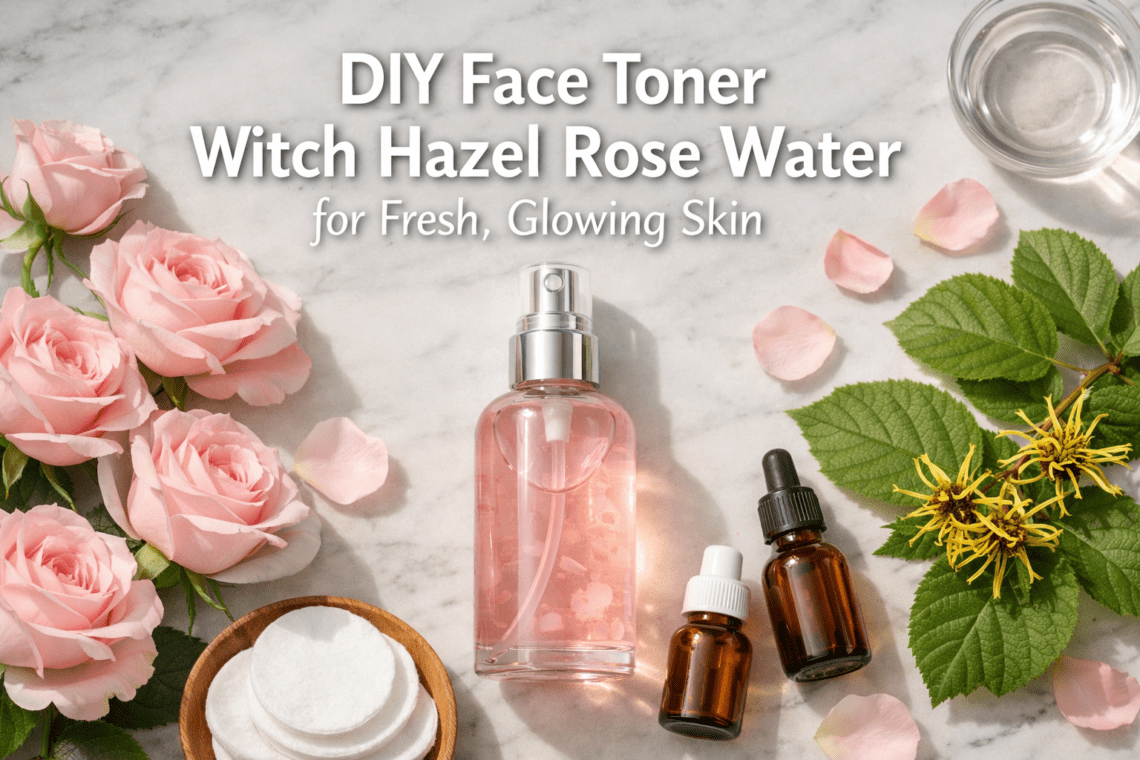
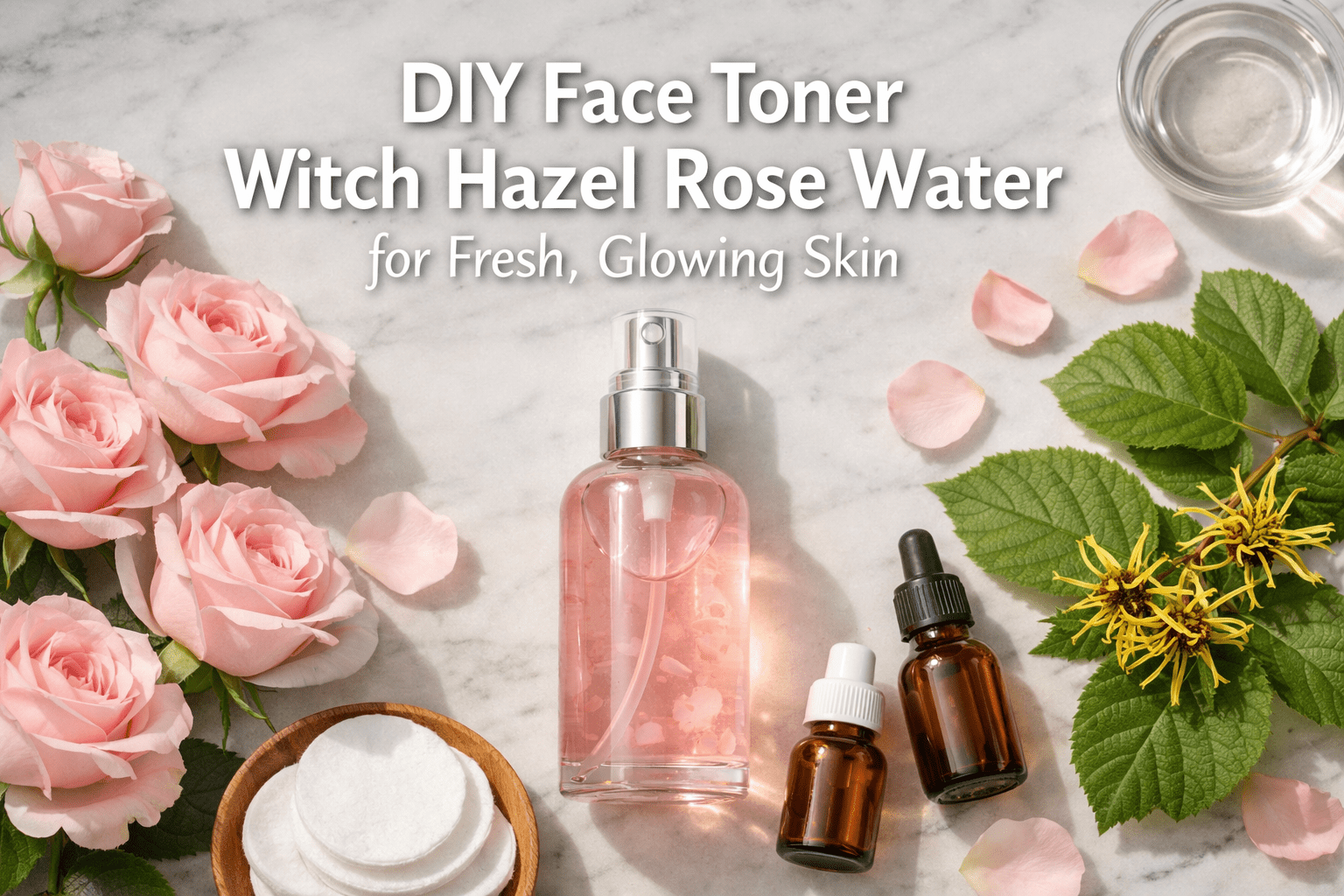
Making your own DIY face toner with witch hazel and rose water takes just three minutes and combines two powerful natural ingredients that work together to refresh, balance, and brighten your skin. This simple 1:1 ratio formula costs a fraction of store-bought toners and contains no harsh chemicals or unnecessary additives.
I’ve been making this toner for years, and it’s become my go-to solution for keeping my skin balanced and glowing without spending a fortune on commercial products. The best part? You probably only need two ingredients that you can find at any drugstore.
Key Takeaways
- Simple 1:1 ratio: Mix equal parts alcohol-free witch hazel and rose water for a basic toner that works for most skin types
- Ready in 3 minutes: No cooking, steeping, or complicated steps required
- Multi-benefit formula: Witch hazel tightens pores and controls oil while rose water soothes and hydrates
- Cost-effective: A batch costs $3-5 and lasts 4-6 weeks with daily use
- Customizable: Add glycerin for extra moisture or use rose water alone for sensitive skin
- Proper storage matters: Keep in a dark glass bottle away from direct sunlight to maintain potency for up to 6 weeks
- Works for all skin types: Adjust the ratio based on whether your skin is oily, dry, or combination
Quick Answer
DIY face toner with witch hazel and rose water combines equal parts of each ingredient in a clean spray bottle or jar. Apply it to freshly cleansed skin using a cotton pad or spray directly onto your face, then follow with moisturizer. This alcohol-free formula balances skin pH, tightens pores, and provides antioxidant benefits without the harsh chemicals found in many commercial toners.
What Makes DIY Face Toner Witch Hazel Rose Water So Effective?
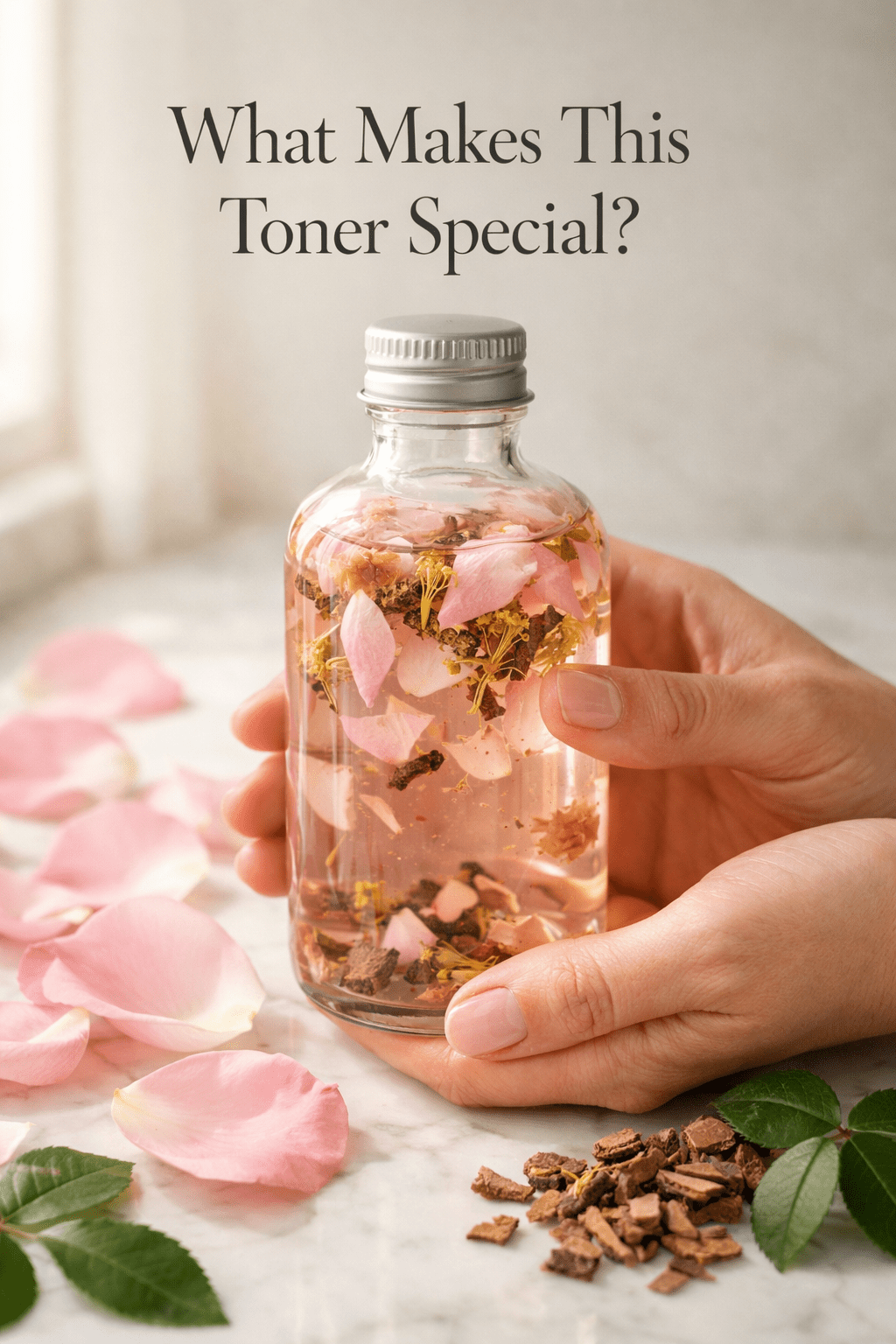
This two-ingredient toner works because witch hazel and rose water complement each other perfectly. Witch hazel, derived from Hamamelis virginiana leaves and bark, acts as a natural astringent that tightens pores and removes excess oil[7]. Rose water brings antibacterial and anti-inflammatory properties, along with vitamin C antioxidants that help brighten skin[1].
The combination addresses multiple skin concerns at once:
- Pore refinement: Witch hazel helps tighten pores and control shine, making them appear smaller and more refined[2]
- pH balance: Rose water helps restore skin’s natural pH after cleansing, which prevents breakouts[6]
- Hydration: Unlike alcohol-based toners that strip moisture, rose water acts as a natural moisturizer[1]
- Inflammation control: Both ingredients reduce redness and calm irritated skin
- Oil control: The astringent properties manage excess sebum without over-drying
Choose this toner if you want a gentle, effective formula that works for daily use. Skip it if you prefer a toner with active exfoliating ingredients like glycolic acid, since this formula focuses on balancing and refreshing rather than chemical exfoliation.
For more natural skincare solutions, check out our complete guide to DIY skincare.
How Do You Make the Basic DIY Face Toner Witch Hazel Rose Water Recipe?
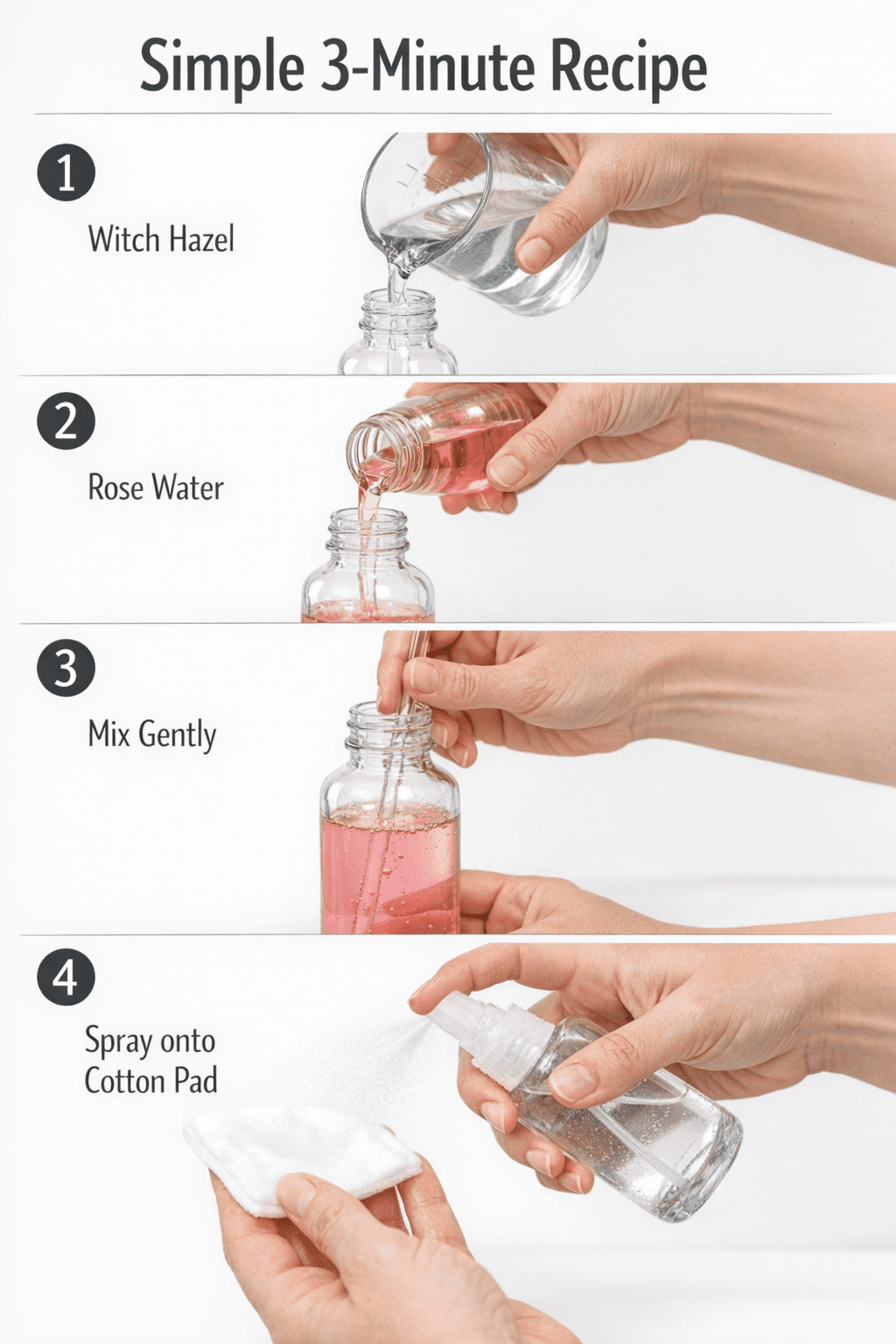
Mix equal parts alcohol-free witch hazel and pure rose water in a clean glass bottle or spray container. That’s it—no heating, no steeping, no waiting required[3][7].
What you need:
- 1/4 cup alcohol-free witch hazel
- 1/4 cup pure rose water (not rose-scented water)
- Clean 4-ounce glass spray bottle or jar
- Small funnel (optional, makes pouring easier)
Step-by-step instructions:
- Clean your container: Wash the bottle with hot soapy water and let it air dry completely
- Combine ingredients: Pour witch hazel into the bottle first, then add rose water
- Mix gently: Cap the bottle and shake for 10-15 seconds to blend
- Label and date: Write the contents and date on the bottle so you know when to replace it
Common mistake to avoid: Don’t use witch hazel that contains alcohol (check the ingredient list). Alcohol-based versions can dry out your skin and cause irritation[2]. Look for “alcohol-free” or “distilled witch hazel” on the label.
The 1:1 ratio works for most people, but you can adjust based on your skin type. If you have very oily skin, try a 2:1 ratio (more witch hazel). For dry or sensitive skin, flip it to 1:2 (more rose water) or use rose water alone[6].
What Ingredients Should You Use for the Best Results?
Choose alcohol-free witch hazel as your base to avoid unnecessary drying. The ingredient list should show witch hazel extract or Hamamelis virginiana water as the first ingredient, not isopropyl alcohol[2].
Witch hazel selection criteria:
- Alcohol-free formulation: Prevents irritation and dryness
- Pure extract: Avoid versions with added fragrances or colors
- Reputable brands: Look for products specifically labeled for skincare use
Rose water quality markers:
- 100% pure: Should contain only rose water or rose distillate, not “rose-scented water”
- Food-grade or cosmetic-grade: Both work well and indicate purity
- No added ingredients: Skip versions with preservatives, alcohol, or synthetic fragrances
- Organic when possible: Reduces exposure to pesticide residues
Optional additions for enhanced benefits:
| Ingredient | Amount | Benefit | Best For |
|---|---|---|---|
| Vegetable glycerin | 1/2 teaspoon per 4 oz | Draws moisture into skin[5] | Dry or mature skin |
| Aloe vera gel | 1 teaspoon per 4 oz | Extra soothing properties | Sensitive or sunburned skin |
| Vitamin E oil | 2-3 drops per 4 oz | Antioxidant boost | Anti-aging focus |
| Tea tree oil | 1-2 drops per 4 oz | Antibacterial for acne | Oily or acne-prone skin |
When to choose what: If your skin feels tight after cleansing, add glycerin. If you deal with frequent breakouts, consider adding a drop of tea tree oil. For sensitive skin that reacts to witch hazel, use pure rose water alone—it still provides anti-inflammatory and hydrating benefits[6].
Similar to our DIY face masks for glowing skin, quality ingredients make all the difference in results.
How Do You Apply DIY Face Toner Witch Hazel Rose Water Correctly?
Apply your toner immediately after cleansing while your skin is still slightly damp. This helps lock in moisture and prepares your skin to absorb serums and moisturizers more effectively.
Application methods:
Cotton pad method (best for targeted application):
- Cleanse your face and pat dry with a clean towel
- Shake the toner bottle to mix ingredients
- Pour a small amount (about the size of a quarter) onto a cotton pad
- Gently sweep the pad across your face in upward motions
- Don’t forget your neck and décolletage
- Let it air dry for 30-60 seconds before applying moisturizer
Spray method (best for quick refresh):
- Close your eyes and hold the bottle 6-8 inches from your face
- Spray 2-3 pumps in a sweeping motion across your face
- Gently pat with clean fingertips to help absorption
- Wait 30 seconds, then follow with your regular skincare routine
When to use it:
- Morning: After cleansing, before moisturizer and sunscreen
- Evening: After cleansing and before night cream or serums
- Midday refresh: Over makeup to revive tired-looking skin (spray method only)
- Post-workout: To remove sweat and refresh without a full cleanse
How much to use: A little goes a long way. You only need enough to lightly dampen your skin, not soak it. Using too much wastes product and doesn’t provide extra benefits.
Edge case: If you have extremely sensitive skin, test the toner on your inner wrist first. Wait 24 hours to check for any reaction before applying to your face.
Can You Customize This Toner for Different Skin Types?
Yes, you can adjust the witch hazel to rose water ratio or add specific ingredients based on your skin’s needs. The basic 1:1 formula works as a starting point, but customization makes it more effective for your unique concerns.
For oily or acne-prone skin:
- Use a 2:1 ratio (more witch hazel to rose water)
- Add 1-2 drops of tea tree essential oil per 4 ounces
- Consider adding 1/4 teaspoon of apple cider vinegar for extra oil control
- Apply twice daily, focusing on T-zone areas
For dry or mature skin:
- Use a 1:2 ratio (less witch hazel, more rose water)
- Add 1/2 teaspoon vegetable glycerin for humectant properties[5]
- Include 2-3 drops of vitamin E oil
- Apply once daily in the evening to avoid over-drying
For sensitive or reactive skin:
- Skip witch hazel entirely and use pure rose water alone[6]
- Add 1 teaspoon of aloe vera gel for extra soothing
- Avoid essential oils that might trigger reactions
- Patch test any new formula before full face application
For combination skin:
- Stick with the standard 1:1 ratio
- Apply more liberally to oily areas (forehead, nose, chin)
- Use a lighter hand on dry patches (cheeks)
- Consider making two versions—one for each zone
Choose the right approach: If you’re unsure about your skin type, start with the basic 1:1 formula and observe how your skin responds over two weeks. Adjust from there based on whether you notice dryness (add more rose water) or excess oil (add more witch hazel).
For more targeted treatments, explore our calendula recipes for dry skin relief.
How Should You Store Your Homemade Toner and How Long Does It Last?
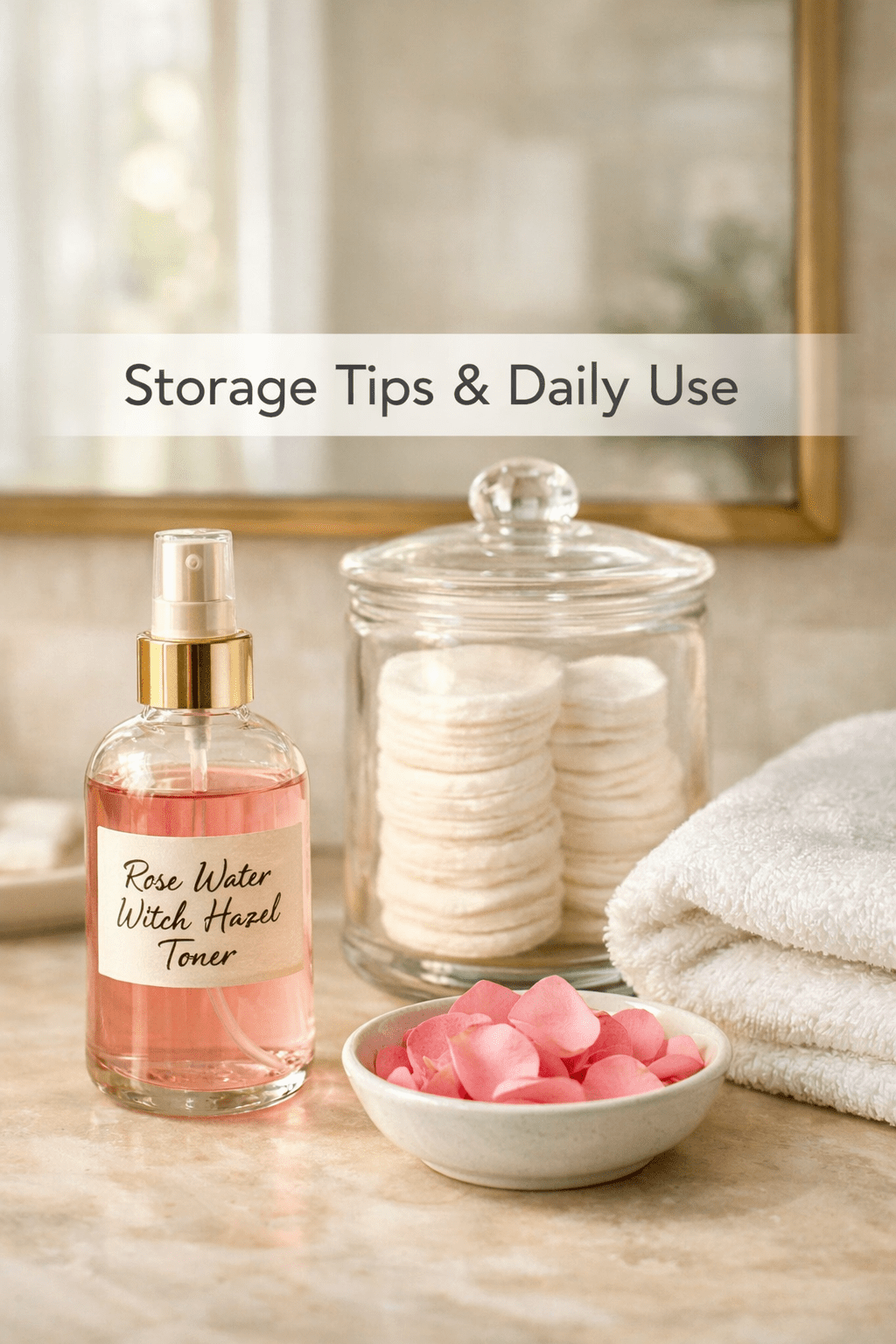
Store your DIY face toner in a dark glass bottle away from direct sunlight and heat to maintain ingredient potency for up to 6 weeks. Proper storage prevents bacterial growth and keeps the beneficial properties of both witch hazel and rose water intact.
Storage best practices:
Container selection:
- Dark glass bottles (amber or cobalt blue) protect ingredients from light degradation
- Spray bottles make application easier and reduce contamination from fingers
- 4-ounce size ensures you use it up while it’s fresh
- Sterilized containers prevent bacterial growth from the start
Storage location:
- Keep in a cool, dark cabinet away from bathroom humidity
- Avoid windowsills or counters with direct sunlight exposure
- Don’t store in the shower where steam and heat accelerate breakdown
- Refrigeration extends shelf life to 8 weeks and feels refreshing on skin
Shelf life indicators:
| Sign | What It Means | Action |
|---|---|---|
| Cloudy appearance | Possible bacterial growth | Discard immediately |
| Off smell | Ingredients have degraded | Make a fresh batch |
| Changed color | Oxidation has occurred | Replace the toner |
| Separation that won’t remix | Formula has broken down | Time for a new batch |
How to extend freshness:
- Make small batches (4 ounces or less) that you’ll use within a month
- Always use clean hands or cotton pads when applying
- Don’t dip used cotton pads back into the bottle
- Add 5-10 drops of grapefruit seed extract as a natural preservative (optional)
Common mistake: Making huge batches to “save time” actually wastes product because the toner degrades before you can use it all. Stick to 4-ounce batches that last 3-4 weeks with daily use.
What Are the Benefits and Potential Drawbacks?
This DIY toner offers multiple skin benefits at a fraction of the cost of commercial products, but it’s not the right choice for everyone. Understanding both sides helps you decide if it fits your skincare routine.
Benefits:
For your skin:
- Balances pH levels after cleansing to prevent breakouts[6]
- Tightens pores and reduces their appearance[2]
- Provides antioxidant protection from vitamin C in rose water[1]
- Soothes inflammation and redness naturally
- Removes residual dirt and makeup that cleansing missed
- Prepares skin to better absorb serums and moisturizers
For your wallet and values:
- Costs $3-5 per batch versus $15-40 for commercial toners
- Contains only ingredients you recognize and can pronounce
- No synthetic fragrances, parabens, or harsh preservatives
- Customizable to your exact skin needs
- Cruelty-free and typically vegan-friendly
- Reduces plastic waste when using refillable glass bottles
Potential drawbacks:
Practical considerations:
- Shorter shelf life (6 weeks) compared to commercial toners (1-2 years)
- Requires making fresh batches regularly
- No active exfoliating ingredients like AHAs or BHAs
- Results may be subtler than clinical-strength products
- Needs proper storage to prevent spoilage
Skin compatibility issues:
- Some people find witch hazel drying even in alcohol-free formulas
- Rose allergies, though rare, can cause reactions
- Doesn’t address specific concerns like hyperpigmentation or deep wrinkles
- May not provide enough oil control for very oily skin types
When to skip this formula: If you need targeted treatment for severe acne, significant hyperpigmentation, or deep wrinkles, this gentle toner works best as a complement to stronger treatments rather than a replacement. Consider it a healthy daily maintenance product, not a corrective treatment.
For more intensive treatments, try our DIY aloe vera face mask for overnight glow.
What Common Mistakes Should You Avoid?
Using witch hazel that contains alcohol is the most common mistake that leads to dry, irritated skin. Always check the ingredient label and choose alcohol-free formulations[2].
Top mistakes and how to avoid them:
Using the wrong witch hazel:
- The mistake: Buying regular witch hazel with isopropyl alcohol
- Why it matters: Alcohol strips natural oils and disrupts skin barrier
- The fix: Look specifically for “alcohol-free” or “distilled witch hazel” labels
Skipping the patch test:
- The mistake: Applying new toner to your entire face immediately
- Why it matters: Even natural ingredients can cause reactions
- The fix: Test on your inner wrist for 24 hours before facial use
Making too much at once:
- The mistake: Preparing large batches to “save time”
- Why it matters: Homemade toners lack preservatives and degrade quickly
- The fix: Make 4-ounce batches that last 3-4 weeks maximum
Storing in clear containers:
- The mistake: Using clear glass or plastic bottles
- Why it matters: Light degrades beneficial compounds in both ingredients
- The fix: Use amber or cobalt blue glass bottles
Over-applying the product:
- The mistake: Soaking skin with excessive toner
- Why it matters: Doesn’t improve results and wastes product
- The fix: Use just enough to lightly dampen skin
Using rose-scented water instead of pure rose water:
- The mistake: Buying artificially scented products labeled “rose water”
- Why it matters: Synthetic fragrances can irritate skin and lack benefits
- The fix: Check ingredients—should list only rose water or rose distillate
Not adjusting for your skin type:
- The mistake: Using the same 1:1 ratio regardless of skin needs
- Why it matters: Dry skin needs more rose water; oily skin needs more witch hazel
- The fix: Customize the ratio after observing your skin’s response
Edge case: If you notice increased dryness or irritation after a week of use, reduce the witch hazel ratio or switch to pure rose water only. Some skin types simply don’t tolerate witch hazel well, even in alcohol-free forms.
FAQ
How often should I use DIY face toner with witch hazel and rose water?
Use the toner twice daily—once in the morning after cleansing and once at night before bed. If your skin feels dry, reduce to once daily in the evening until your skin adjusts.
Can I use this toner if I have sensitive skin?
Yes, but use pure rose water alone without witch hazel if your skin is very sensitive or reactive[6]. Rose water provides anti-inflammatory and hydrating benefits without the astringent properties that might irritate delicate skin.
Does this toner help with acne?
The antibacterial properties of rose water and the pore-tightening effects of witch hazel can help prevent breakouts[1], but this toner works best for mild acne or prevention. For active severe acne, combine it with targeted treatments like our honey and cinnamon face mask.
Can I add essential oils to this recipe?
Yes, but use them sparingly—1-2 drops per 4 ounces maximum. Tea tree oil works for acne-prone skin, lavender for calming, and frankincense for anti-aging. Always dilute properly and patch test first.
Why does my toner look cloudy?
Cloudiness usually indicates bacterial growth or contamination. Discard the batch immediately and make a fresh one, ensuring your container is properly sterilized before mixing ingredients.
Can I make rose water at home instead of buying it?
Yes, you can simmer fresh or dried rose petals in distilled water, strain, and cool. However, store-bought pure rose water is inexpensive and more consistent in quality, making it the easier choice for most people.
Will this toner remove my makeup?
It removes light residue but isn’t designed as a makeup remover. Always use a proper cleanser first, then follow with this toner to remove any remaining traces and balance your skin’s pH.
Can I use this toner during pregnancy?
Both witch hazel and rose water are generally considered safe during pregnancy when used topically. However, consult your healthcare provider before adding any new skincare products to your routine.
Does refrigerating the toner make it more effective?
Refrigeration extends shelf life to about 8 weeks and feels refreshing on skin, but it doesn’t increase the effectiveness of the ingredients. It’s a personal preference based on whether you enjoy the cooling sensation.
Can men use this toner?
Absolutely. This toner works for all genders and helps with common concerns like razor burn, enlarged pores, and post-shave irritation. The formula is gentle enough for daily use after shaving.
How long until I see results?
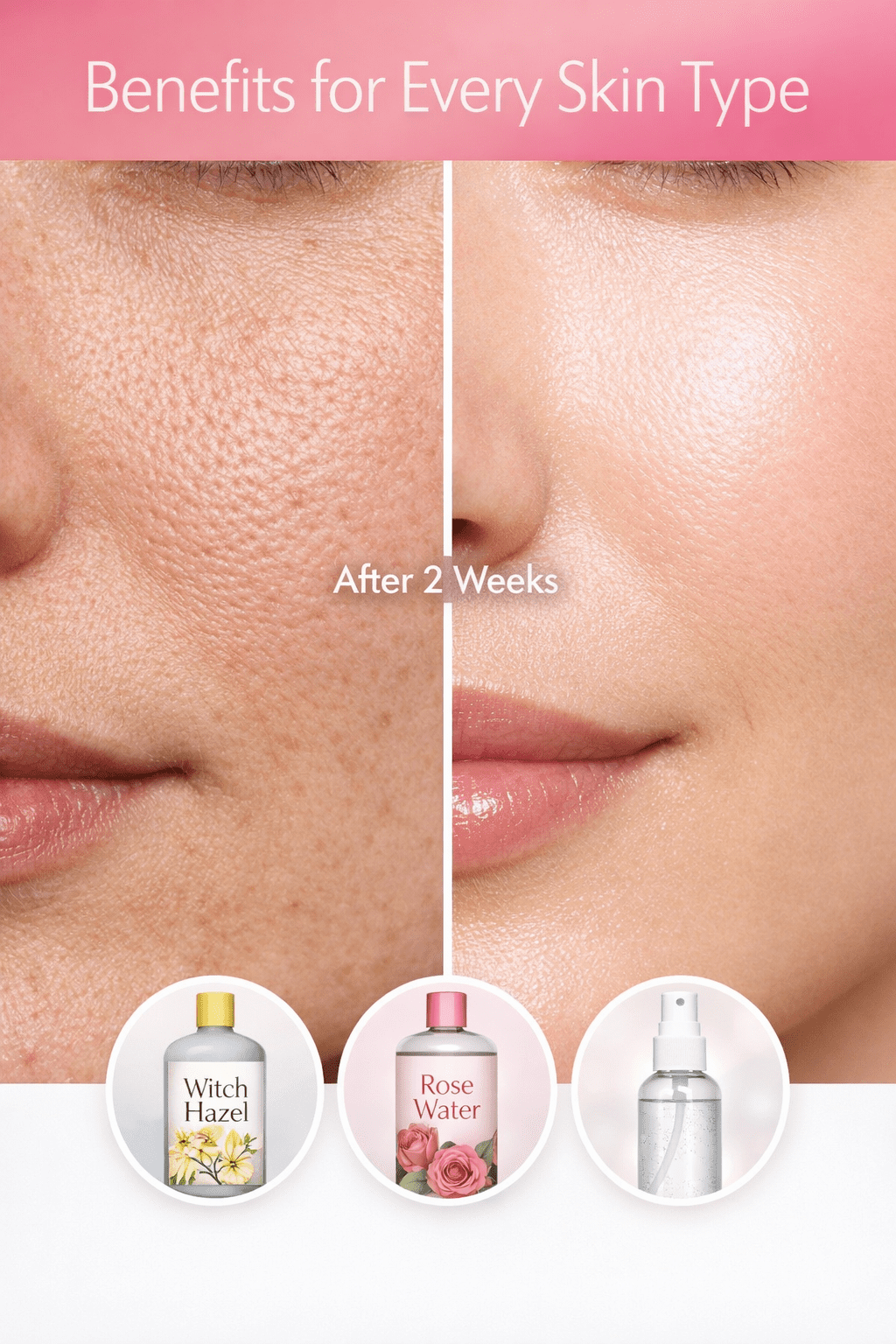
Most people notice fresher, more balanced skin within 3-5 days of consistent use. Visible pore refinement and improved texture typically appear after 2-3 weeks of twice-daily application.
Can I use this toner with other skincare products?
Yes, apply it after cleansing and before serums, treatments, or moisturizers. It actually helps those products absorb better by balancing your skin’s pH and prepping the surface.
Conclusion
Making your own DIY face toner with witch hazel and rose water gives you a fresh, effective skincare product in just three minutes. This simple 1:1 formula combines the pore-tightening power of alcohol-free witch hazel with the soothing, antioxidant-rich benefits of pure rose water to leave your skin balanced and glowing.
Start with the basic recipe—equal parts of each ingredient in a dark glass bottle—and adjust based on how your skin responds. If you have oily skin, add more witch hazel. If you’re dealing with dryness, increase the rose water or add a bit of glycerin. For sensitive skin, use rose water alone.
Your next steps:
- Purchase alcohol-free witch hazel and pure rose water (about $8-10 total)
- Mix equal parts in a clean 4-ounce spray bottle
- Apply twice daily after cleansing for two weeks
- Observe your skin’s response and adjust the formula if needed
- Store in a cool, dark place and replace every 4-6 weeks
This toner won’t replace targeted treatments for specific skin concerns, but it provides an excellent foundation for healthy, balanced skin without harsh chemicals or a hefty price tag. Give it a try—your skin (and wallet) will thank you.
For more natural skincare recipes and tips, explore our DIY skincare collection and discover other ways to create effective products at home.
References
[1] Comment Page 3 – https://bodyunburdened.com/diy-all-natural-pore-perfecting-rose-facial-toner/comment-page-3/
[2] Rose Water Toner – https://draxe.com/beauty/rose-water-toner/
[3] How To Make Rosewater And Rosewater Toner – https://livesimply.me/how-to-make-rosewater-and-rosewater-toner/
[5] Diy Rosewater Facial Mist – https://beautifuleatsandthings.com/2025/12/18/diy-rosewater-facial-mist/
[6] How To Make Rose Water Toner – https://www.goingzerowaste.com/blog/how-to-make-rose-water-toner/
[7] Easy Diy Rose Toner – https://gardentherapy.ca/easy-diy-rose-toner/