Quick Answer: You can make natural sunscreen at home using non-nano zinc oxide as the active UV-blocking ingredient, combined with carrier oils and butters like shea and coconut oil. The estimated SPF depends on how much zinc oxide you use — roughly 1% provides about SPF 2, so most DIY recipes use 15–25% zinc oxide to reach an estimated SPF 25–35. Always wear gloves when handling zinc oxide powder, and understand that homemade sunscreen has real limitations compared to lab-tested commercial products.
Key Takeaways
- Non-nano zinc oxide is the only ingredient in a DIY sunscreen that meaningfully blocks UV rays.
- Natural oils like coconut oil (SPF 4–7) and carrot seed oil (SPF 35–40 estimated) add minor protection but should not replace zinc oxide [3].
- A basic recipe takes about 20–30 minutes using a double-boiler method.
- Always wear gloves and a dust mask when measuring zinc oxide powder — inhaling it is a health risk.
- Homemade sunscreen is not lab-tested, so the SPF is always an estimate, not a guarantee [7][9].
- Store your finished sunscreen in a cool, dark place and use it within 6–12 months.
- If you’re spending long hours in direct sun, especially near water or snow, a commercial broad-spectrum SPF 30+ sunscreen is the safer choice [7].
- This recipe works well for everyday, moderate sun exposure for adults who prefer to avoid synthetic chemicals.
What Ingredients Do You Actually Need?
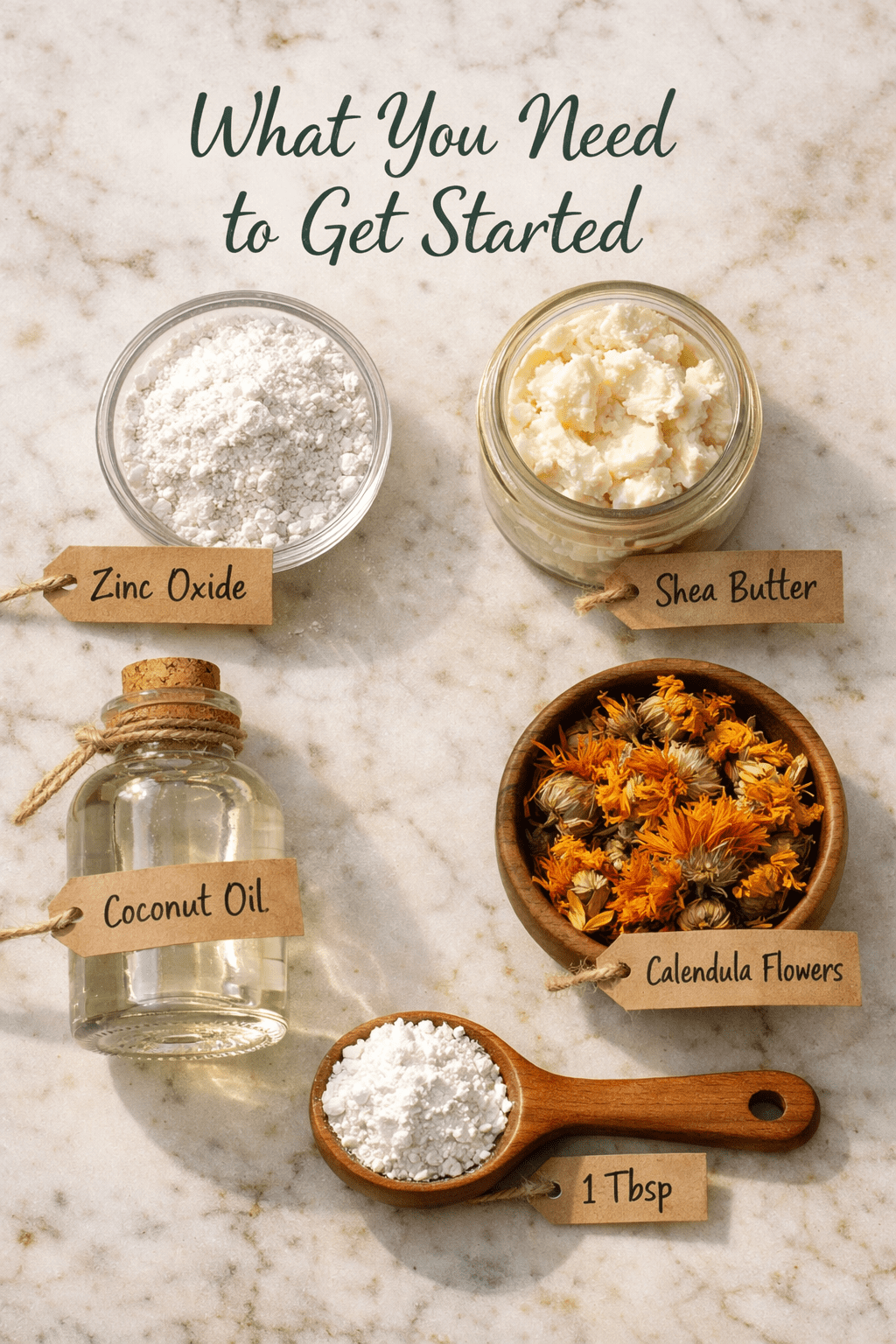
You need non-nano zinc oxide, a carrier oil, a butter (like shea or cocoa butter), and optionally a thickener like beeswax. These four components form the base of almost every reliable DIY mineral sunscreen recipe.
Here’s a breakdown of the core ingredients and what each one does:
| Ingredient | Role | Notes |
|---|---|---|
| Non-nano zinc oxide | UV blocker (UVA + UVB) | Must be non-nano; ~20% = est. SPF 25–30 [1] |
| Shea butter | Base, moisturizer | Adds creaminess and skin nourishment |
| Coconut oil | Carrier oil, mild SPF | Estimated SPF 4–7 [3] |
| Beeswax | Thickener, water resistance | Helps the sunscreen stay on longer |
| Carrot seed oil | Antioxidant, minor SPF boost | Estimated SPF 35–40 (unverified in lab tests) [3] |
| Vitamin E oil | Preservative, antioxidant | Extends shelf life naturally |
Choose non-nano zinc oxide specifically. Regular nano-sized zinc oxide particles can potentially penetrate the skin barrier, which is why most natural DIY recipes specifically call for the non-nano version [1].
💡 Where to buy it: Non-nano zinc oxide is available at most natural health stores and online. Look for cosmetic-grade, uncoated zinc oxide powder.
What Are the Real Limitations of Homemade Sunscreen?
Homemade sunscreen is not lab-tested, so any SPF number you calculate is an estimate, not a certified rating. This is the most important thing to understand before you start.
Both Penn State Health News [7] and Cancer Australia [9] have raised concerns about DIY sunscreen recipes, noting that without proper testing, you can’t confirm the actual SPF or whether the protection is consistent across your skin.
That said, many people use homemade sunscreen successfully for:
- Short outdoor activities (a walk, gardening, a quick errand)
- Everyday use on days with moderate sun exposure
- Situations where they want to avoid synthetic chemical filters
Avoid relying on DIY sunscreen if you:
- Have a history of skin cancer or are at high risk
- Plan to be in intense sun for hours (beach, hiking, skiing)
- Are applying it to young children without consulting a pediatrician
If you’re just getting started with natural personal care, our Natural Remedies for Beginners: Complete Guide is a great place to build your foundation.
How to Make Natural Sunscreen at Home: Basic Recipe (Step-by-Step)
This beginner-friendly recipe takes about 25 minutes and produces roughly 4 oz of natural sunscreen with an estimated SPF of 25–30. [2][4]
What You’ll Need
- ¼ cup shea butter
- 2 tablespoons coconut oil
- 1 tablespoon beeswax pellets
- 2 tablespoons non-nano zinc oxide powder (about 20% of total)
- 1 teaspoon carrot seed oil (optional)
- 1 teaspoon vitamin E oil
- A few drops of lavender essential oil (optional, for scent)
Equipment
- Double boiler (or a glass bowl over a pot of water)
- Stick blender or whisk
- Gloves and a dust mask
- Small glass jars for storage
Steps
- Set up your double boiler. Add a few inches of water to a pot and place a glass bowl on top. Keep heat on low.
- Melt the base. Add shea butter, coconut oil, and beeswax to the bowl. Stir gently until fully melted.
- Remove from heat. Let the mixture cool slightly — it should still be liquid but not steaming.
- Put on your gloves and mask. This step is non-negotiable before handling zinc oxide.
- Add zinc oxide slowly. Sprinkle it in while stirring constantly. Use a stick blender for a smoother, more even mix [2].
- Add remaining oils. Stir in carrot seed oil, vitamin E oil, and any essential oils.
- Pour into jars. Work quickly before the mixture sets.
- Let it cool completely before sealing. Store in a cool, dark spot.
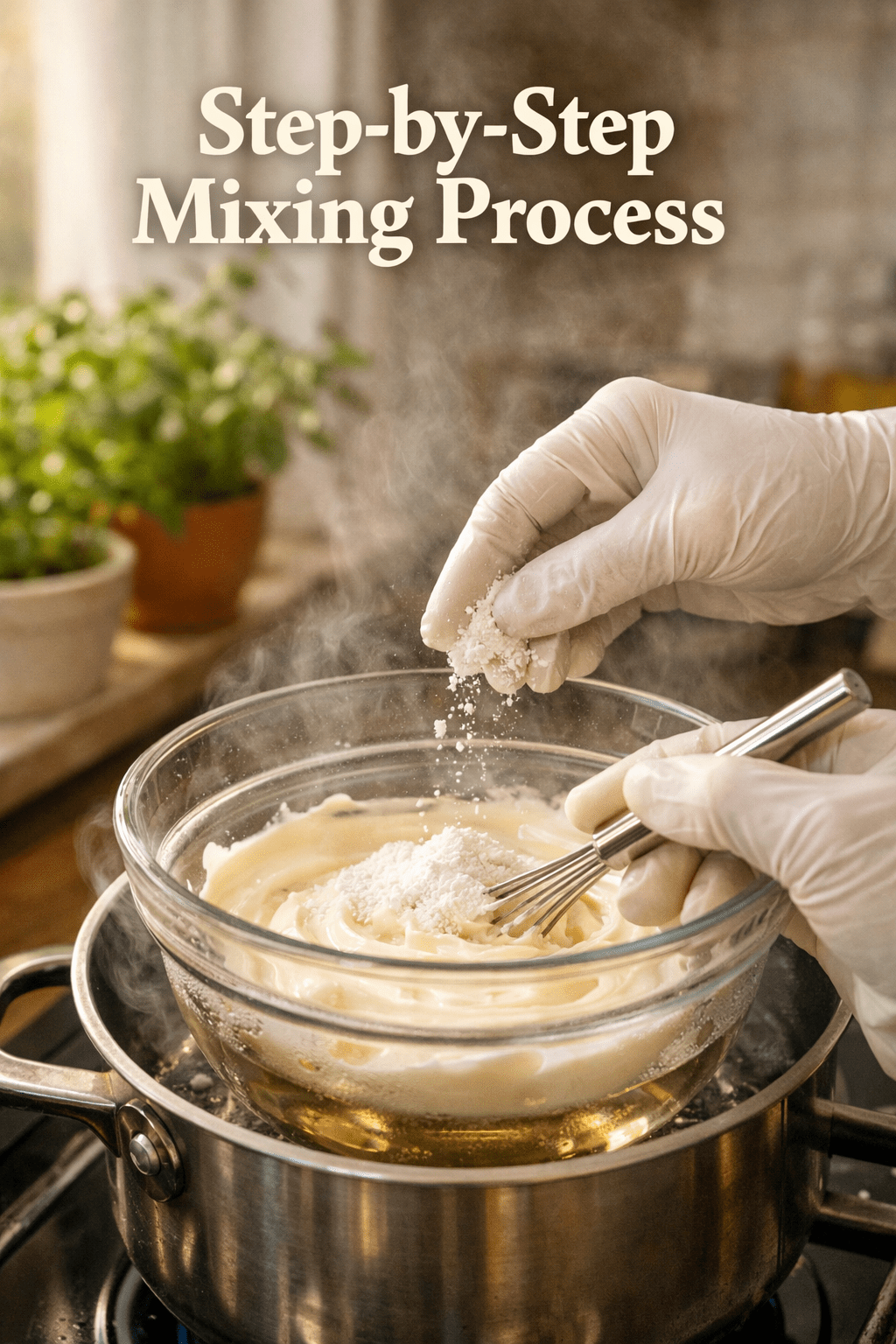
⚠️ Safety note: Never inhale zinc oxide powder. It can irritate your lungs. Always mix in a well-ventilated area with a dust mask on [1].
How to Make Natural Sunscreen at Home That Actually Stays On
The biggest reason DIY sunscreen fails is that it wipes or sweats off too quickly. Beeswax is your best friend here — it creates a water-resistant barrier that helps the sunscreen cling to skin longer.
Here are a few tips to improve staying power:
- Increase beeswax slightly (up to 1.5 tablespoons) for a firmer, more water-resistant formula.
- Apply generously and rub it in thoroughly — thin layers don’t protect well.
- Reapply every 80 minutes when sweating or swimming, just as you would with commercial sunscreen [5].
- Let it absorb for 15–20 minutes before sun exposure.
- Avoid applying over moisturizer — it dilutes the zinc oxide concentration.
One common mistake beginners make is using too much liquid oil and not enough beeswax. The result is a greasy, runny product that slides right off. If your batch turns out too oily, gently re-melt it and add a bit more beeswax.
Which Natural Oils Boost Sun Protection?
Certain carrier oils have naturally occurring SPF properties, though none are strong enough to use alone. They work best as supporting ingredients alongside zinc oxide.
Here’s what the research suggests [3]:
- Coconut oil: Estimated SPF 4–7
- Sweet almond oil: Estimated SPF 4.7–5
- Red raspberry seed oil: Estimated SPF 25–50 (this figure is widely cited but has not been independently verified in peer-reviewed studies — treat it as a rough estimate)
- Carrot seed oil: Estimated SPF 35–40 (same caveat applies)
🔍 Important: These oil SPF estimates come from limited studies and should not be treated as reliable standalone protection. They add a small boost when combined with zinc oxide, but they are not substitutes for it [9].
If you enjoy making natural skin care products, you might also love this DIY Face Moisturizer with Aloe Vera for Sensitive Skin — it pairs well with your homemade sunscreen routine.
How Do You Store Homemade Sunscreen So It Lasts?
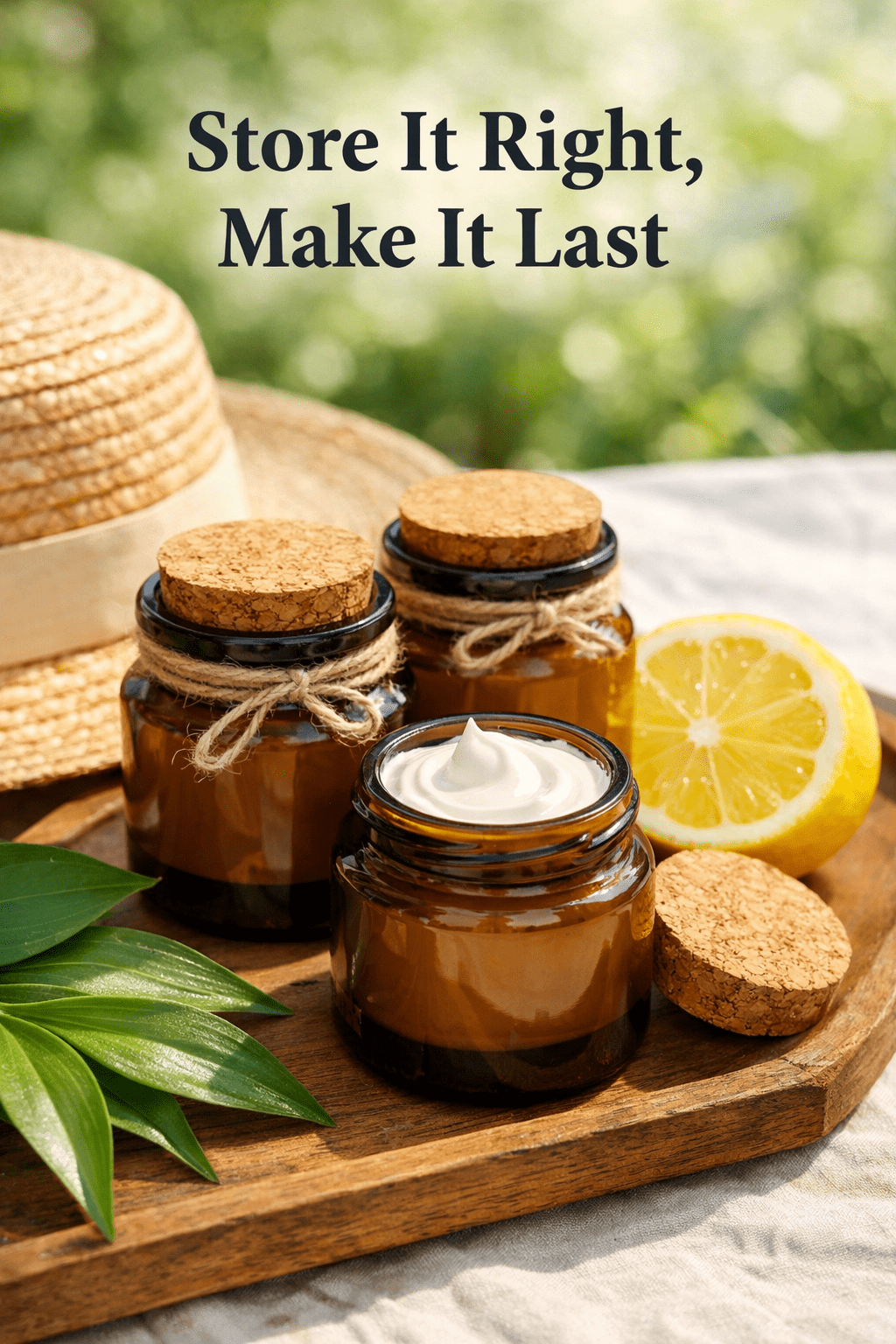
Store your natural sunscreen in a sealed glass jar, away from heat and direct sunlight, and it should stay good for 6–12 months. [5]
A few storage tips:
- Glass over plastic — oils can degrade certain plastics over time.
- Keep it in a cool drawer or cabinet, not the bathroom (humidity speeds up spoilage).
- Add vitamin E oil as a natural preservative — it slows oxidation.
- Label your jars with the date you made them.
- Check for rancid smell before each use. If it smells off, discard it.
If you travel with it, keep it in a small insulated bag. Heat causes the beeswax to melt and the oils to separate, which changes the texture and may affect how well the zinc oxide stays evenly distributed.
What Are Common Mistakes Beginners Make?
The most common mistake is adding zinc oxide to a mixture that’s too hot, which can cause clumping and uneven distribution. Let the melted base cool to just above room temperature before adding the powder.
Other mistakes to avoid:
- Skipping the mask and gloves — zinc oxide dust is a real inhalation hazard.
- Using nano zinc oxide — non-nano is safer for skin and the environment [1].
- Measuring by volume instead of weight — zinc oxide is dense; weight measurements are more accurate.
- Not blending thoroughly — patchy mixing means patchy protection.
- Assuming it’s waterproof — no DIY sunscreen is fully waterproof. Reapply after swimming.
For more natural DIY skin care ideas, check out our guide on 7 Calendula Recipes for Skin Care — calendula extract is also a lovely addition to homemade sunscreen for sensitive skin.
Is DIY Natural Sunscreen Safe for Kids and Sensitive Skin?
For most adults with sensitive skin, a zinc oxide-based DIY sunscreen is gentle and well-tolerated. For children, especially under age 2, consult a pediatrician before using any homemade product.
Zinc oxide is actually the same active ingredient used in many commercial baby sunscreens because it’s gentle and sits on top of the skin rather than absorbing into it [6]. However, the difference is that commercial products are tested for consistency and safety.
For sensitive skin, consider:
- Leaving out essential oils, which can cause irritation
- Using unrefined shea butter as the base (it’s naturally anti-inflammatory)
- Adding a small amount of aloe vera gel for extra soothing properties
- Doing a patch test on your inner arm 24 hours before full application
If you’re interested in more natural skin care recipes for sensitive skin, our 5 DIY Face Masks for Glowing Skin guide has some great gentle options.
FAQ
Q: What SPF does homemade sunscreen actually have?
A: It depends on the percentage of zinc oxide. Roughly 1% zinc oxide provides about SPF 2, so a 20% concentration gives an estimated SPF of 25–30. These are estimates, not lab-certified values [1].
Q: Can I use coconut oil alone as sunscreen?
A: No. Coconut oil has an estimated SPF of only 4–7, which is far too low for meaningful sun protection. It should only be used as a carrier oil alongside zinc oxide [3].
Q: How long does homemade sunscreen last on the skin?
A: Reapply every 80 minutes during outdoor activity, or immediately after swimming or heavy sweating — the same rule as commercial sunscreen [5].
Q: Is non-nano zinc oxide safe?
A: Yes, non-nano zinc oxide is considered safe for topical use. It sits on the skin surface and does not penetrate the skin barrier the way nano-sized particles might [1].
Q: Can I add fragrance or essential oils to my DIY sunscreen?
A: You can, but keep it minimal. Essential oils like lavender are popular choices. Avoid citrus oils (like lemon or bergamot) as they can increase photosensitivity.
Q: Why does my homemade sunscreen look white on my skin?
A: Zinc oxide naturally leaves a white cast. You can reduce this slightly by using a smaller amount of zinc oxide, but lowering it too much reduces protection. Some people blend in a tiny amount of iron oxide pigment to offset the white cast.
Q: How much does it cost to make homemade sunscreen?
A: A basic batch costs roughly $10–$20 in ingredients and makes about 4 oz. The main upfront cost is non-nano zinc oxide powder, which is reusable across multiple batches.
Q: Should I wear homemade sunscreen to the beach?
A: For extended beach days with intense sun exposure, a lab-tested commercial SPF 30+ broad-spectrum sunscreen is the safer choice. DIY sunscreen is better suited for everyday, moderate sun exposure [7][9].
Conclusion
Learning how to make natural sunscreen at home is genuinely achievable for beginners, and it gives you real control over what goes on your skin. The key is using non-nano zinc oxide as your active ingredient, blending it thoroughly into a beeswax-and-butter base, and being honest about the limitations.
Your next steps:
- Order non-nano zinc oxide powder (cosmetic grade) from a trusted supplier.
- Gather your base ingredients: shea butter, coconut oil, and beeswax pellets.
- Follow the step-by-step recipe above and do a patch test before full use.
- Label your batch with the date and reapply every 80 minutes outdoors.
- Keep a commercial SPF 30+ sunscreen on hand for high-intensity sun days.
For more natural DIY body care recipes, explore our DIY Natural Stretch Mark Cream Recipe and the Fluffy DIY Whipped Body Butter Recipe — both use similar ingredients and techniques.
References
[1] How To Make DIY Mineral Based Sunscreen – https://www.theoceanpreneur.com/impact/how-to-make-diy-mineral-based-sunscreen/
[2] Natural Sunscreen A Simple Homemade Recipe – https://ouramyablefarmhouse.com/natural-sunscreen-a-simple-homemade-recipe/
[3] Natural Mineral Sunscreen For Summer – https://www.heinens.com/stories/natural-mineral-sunscreen-for-summer/
[4] Homemade Zinc Sunscreen Recipe – https://www.brexpeditions.com/homemade-zinc-sunscreen-recipe/
[5] Homemade Sunscreen – https://wellnessmama.com/beauty/homemade-sunscreen/
[6] Homemade Sunscreen – https://www.healthline.com/health/homemade-sunscreen
[7] The Medical Minute: Don’t Make Your Own Sunscreen – https://pennstatehealthnews.org/2019/06/the-medical-minute-dont-make-your-own-sunscreen/
[9] I Heard Of A Recipe For Natural Homemade Sunscreen Do These Work – https://www.cancer.org.au/iheard/i-heard-of-a-recipe-for-natural-homemade-sunscreen-do-these-work/