


Quick Answer: Lemon balm tea does not directly burn fat or boost metabolism. However, it can support weight management indirectly by lowering stress hormones, improving sleep quality, and soothing digestion — all of which make it easier to stick to healthy habits. Think of it as a helpful daily ritual, not a fat-loss shortcut.
Key Takeaways 🌿
- Lemon balm tea for fat loss works indirectly, not directly — there is no credible human evidence it burns fat on its own.
- Chronic stress raises cortisol, which signals your body to store fat around the belly. Lemon balm may help reduce that stress response.
- A 2024 research review found lemon balm can lower anxiety and improve sleep, both of which support healthier body weight over time. [6]
- The active compound rosmarinic acid may help regulate blood sugar and reduce liver fat accumulation, though effects are modest. [4]
- Lemon balm will not increase your metabolic rate or calorie burn the way green tea’s caffeine and catechins can. [2]
- It does soothe bloating and digestive discomfort, which can help you feel better after meals. [1]
- Animal studies showed impressive results (40% less body weight gain), but human trials show negligible BMI changes when lemon balm is the only intervention. [2]
- The real value: replacing high-calorie, sugary drinks with lemon balm tea cuts calories without you noticing.
Does Lemon Balm Tea for Fat Loss Actually Work?
The short answer is: not directly. No high-quality human study has shown that drinking lemon balm tea causes measurable fat loss on its own. [1] That said, it supports several body processes that make weight management easier.
Here’s what the research actually shows:
| Claim | What Science Says | Verdict |
|---|---|---|
| Burns fat directly | No human evidence | ❌ False |
| Boosts metabolism | No credible human data | ❌ False |
| Suppresses appetite | Early lab studies only, no human trials | ⚠️ Unproven |
| Lowers stress/cortisol | Multiple studies confirm calming effect | ✅ Supported |
| Improves sleep | Mild sedative effects confirmed | ✅ Supported |
| Reduces bloating | Traditional use supported by research | ✅ Supported |
| Regulates blood sugar | Rosmarinic acid shows modest effects | ⚠️ Minor |
Bottom line: Lemon balm tea is a genuinely useful wellness drink. It just won’t replace a caloric deficit or exercise.
Why Stress Is the Hidden Driver of Belly Fat (And How Lemon Balm Helps)
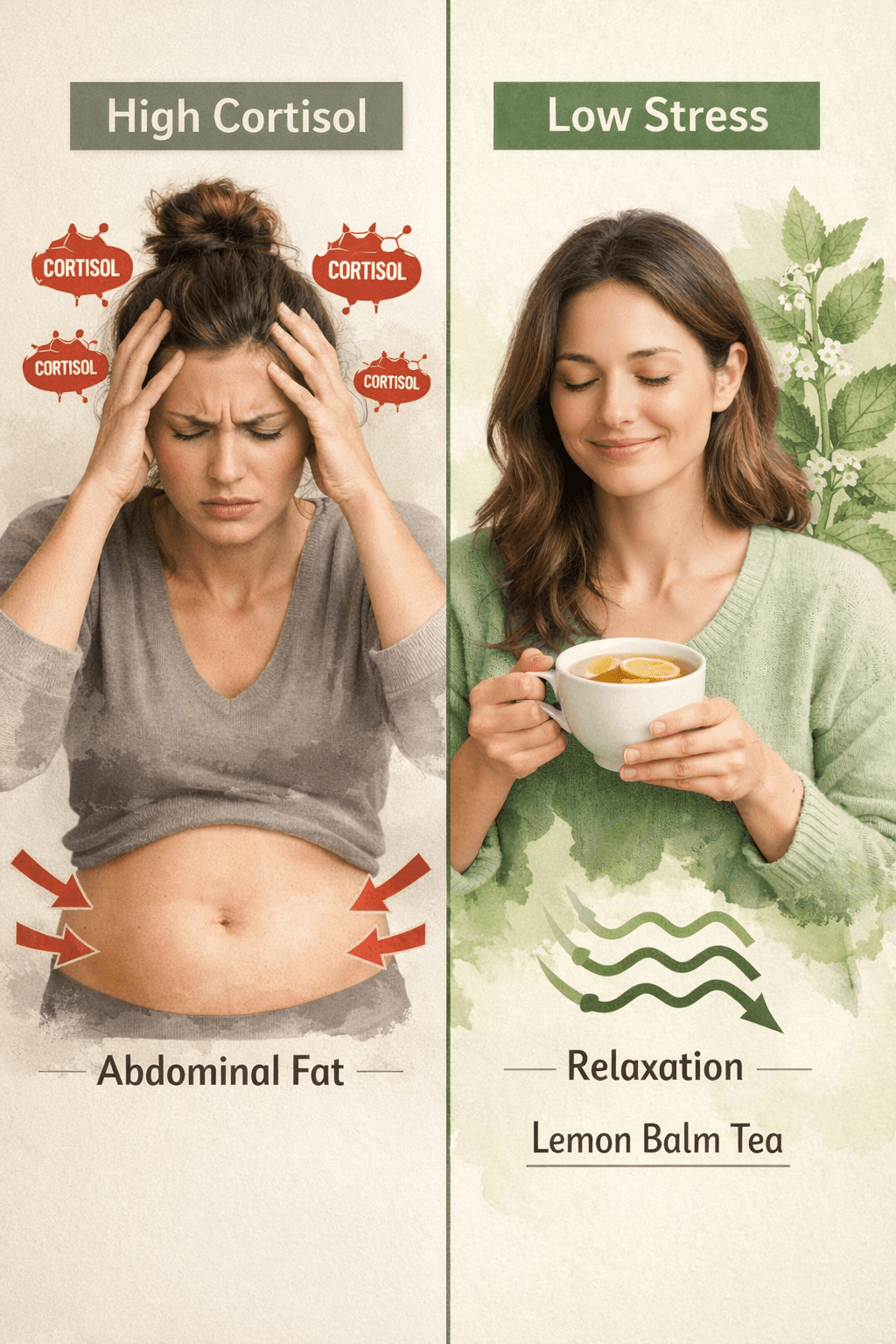
Chronic stress is one of the most underrated reasons people struggle to lose weight. When you’re stressed, your body releases cortisol — a hormone that tells your body to store fat, especially around the abdomen. [4] Lemon balm tea directly targets this pathway.
Here’s the chain reaction:
- Stress triggers cortisol release → cortisol promotes visceral fat storage
- Cortisol also increases cravings for high-sugar, high-fat comfort foods
- Poor sleep from stress disrupts leptin and ghrelin (the hormones that control hunger and fullness)
- Lemon balm calms the nervous system → lower cortisol → less stress eating and less abdominal fat accumulation [1]
A 2024 research review confirmed that lemon balm can reduce anxiety and improve sleep quality, both of which indirectly support healthier body weight. [6] This is the most honest case for using lemon balm tea for fat loss — it removes a major roadblock, rather than burning fat itself.
💬 “Lowering stress may help prevent new visceral fat accumulation — and that’s a meaningful benefit most people overlook.”
If you’re interested in other calming herbal drinks that support wellness, check out these herbal teas for immunity and wellness that pair well with a stress-reduction routine.
What Rosmarinic Acid Actually Does in Your Body
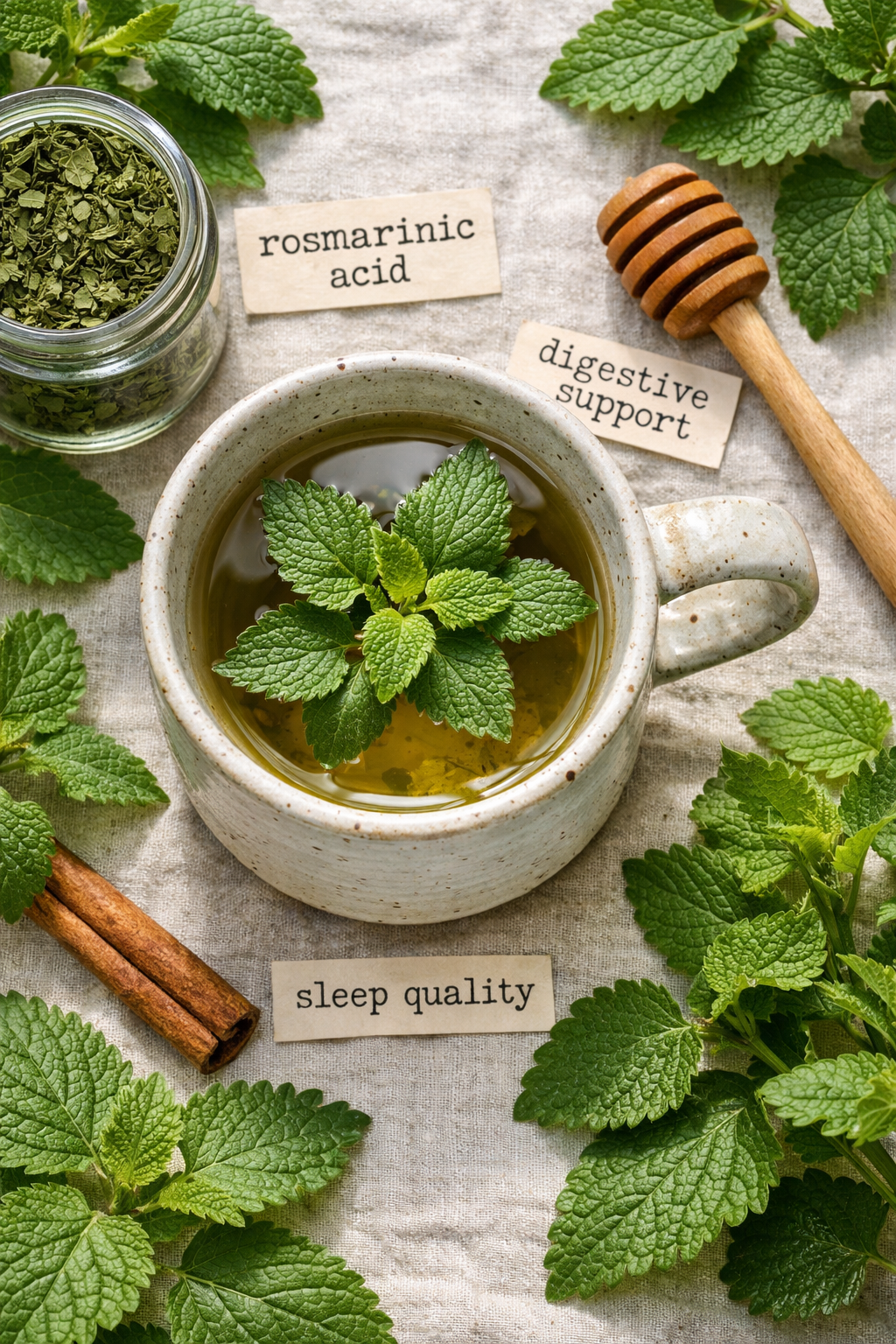
Rosmarinic acid is the key active compound in lemon balm, and it has some genuinely interesting effects on metabolism — though they’re modest. [4]
Here’s what the research shows about rosmarinic acid:
- Blood sugar regulation: It may help moderate blood glucose spikes after meals, which can reduce fat storage triggered by insulin surges. [4]
- Liver fat reduction: Some evidence suggests it may reduce lipid accumulation in the liver, which matters for metabolic health. [4]
- Anti-inflammatory effects: Chronic low-grade inflammation is linked to obesity and insulin resistance; rosmarinic acid has anti-inflammatory properties. [7]
Important caveat: These glucose-modulating effects are minor and cannot offset a diet high in processed sugars and trans fats. [4] Rosmarinic acid is a helpful compound, but it’s not a metabolic switch you can flip with a cup of tea.
Animal studies are more dramatic — one lemon balm extract (ALS-L1023) decreased body weight gain by 40% and visceral fat mass by 32% in obese mice on a high-fat diet. [3] But mouse studies rarely translate directly to humans, and in human clinical trials, BMI changes were generally negligible when lemon balm was the only intervention. [2]
How Lemon Balm Tea Supports Better Sleep (Which Supports Fat Loss)
Poor sleep is directly linked to weight gain, and lemon balm tea may help you sleep better. Research shows lemon balm has mild sedative effects that can help you fall asleep faster and stay asleep longer. [6]
Why does sleep matter for fat loss?
- Ghrelin (the hunger hormone) rises when you’re sleep-deprived, making you feel hungrier the next day.
- Leptin (the fullness hormone) drops with poor sleep, so you feel less satisfied after eating.
- Cortisol stays elevated when you don’t sleep enough, promoting fat storage.
Drinking lemon balm tea 30–60 minutes before bed can be a simple, low-effort way to wind down. If you enjoy bedtime herbal rituals, you might also like this DIY lavender milk for sleep recipe, which works on similar calming pathways.
Choose lemon balm tea at night if: you struggle with racing thoughts, light anxiety before bed, or you tend to eat late due to stress.
Does Lemon Balm Tea Reduce Bloating and Improve Digestion?
Yes — this is one of the most well-supported benefits of lemon balm, and it’s backed by its traditional use across centuries. Research confirms lemon balm soothes the stomach and helps with mild digestive discomfort like gas and bloating. [1]
To be clear: reduced bloating is not the same as fat loss. But feeling physically comfortable after meals has a real practical benefit — it makes it easier to stay consistent with healthy eating habits rather than feeling sluggish or uncomfortable. [1]
Common digestive benefits reported with lemon balm tea:
- Reduced gas and cramping
- Less bloating after meals
- Calmer gut motility (helpful for IBS-type symptoms)
- Mild relief from nausea
If you’re building a broader gut-friendly drink routine, these 7 drinks to flush out toxins and feel energized are worth exploring alongside lemon balm tea.
How to Make Lemon Balm Tea for Fat Loss (Simple Daily Recipe)
Making lemon balm tea takes about 12 minutes and requires just one main ingredient. Here’s how to do it properly to get the most out of the active compounds.
Basic Lemon Balm Tea Recipe
You’ll need:
- 1–2 teaspoons dried lemon balm leaves (or 4–6 fresh leaves)
- 8 oz (240ml) hot water (not boiling — around 185°F/85°C)
- Optional: raw honey, lemon slice, or a pinch of ginger
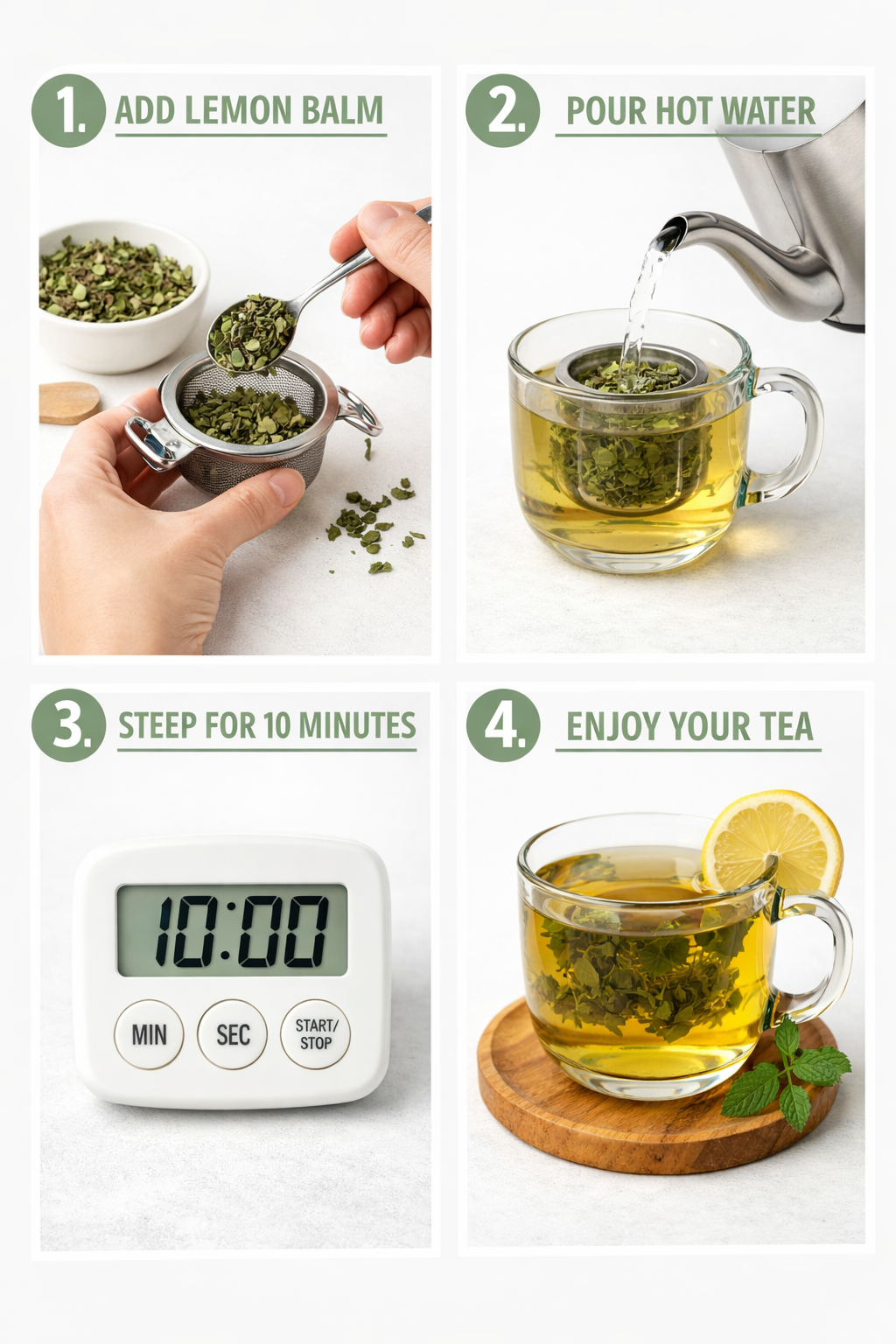
Steps:
- Place lemon balm leaves in a tea infuser or strainer.
- Pour hot water over the leaves.
- Steep for 8–10 minutes (longer steeping = stronger calming effect).
- Remove leaves, add optional honey or lemon.
- Drink warm, ideally in the evening or after a stressful moment.
When to drink it:
- Evening: Best for sleep support and cortisol reduction
- After meals: Best for digestive comfort and bloating relief
- Mid-afternoon: A good swap for a second coffee if stress is high
Common mistake: Using boiling water. Temperatures above 200°F can degrade delicate volatile compounds in lemon balm. Keep it just below boiling.
You can also blend lemon balm with other herbs. For ideas on creating your own blends, see how to make your own herbal tea blends at home.
Who Should (and Shouldn’t) Drink Lemon Balm Tea
Lemon balm tea is safe for most healthy adults, but there are a few situations where you should be cautious.
Good fit for:
- People who stress-eat or experience emotional eating
- Anyone with poor sleep quality affecting their weight
- Those who want to replace sugary drinks with a calorie-free option
- People with mild digestive discomfort or bloating
Use with caution if you:
- Take sedative medications (lemon balm can amplify their effects) [8]
- Have thyroid conditions (some evidence suggests lemon balm may affect thyroid hormone activity) [8]
- Are pregnant or breastfeeding (consult your doctor first)
- Take medications for anxiety or depression
Edge case: If you’re already drinking multiple herbal teas daily, adding lemon balm on top is generally fine. But if you’re on any prescription medication, check with a healthcare provider first. You can also review our medical disclaimer for more context on herbal remedies and safety.
Lemon Balm Tea vs. Other Weight Loss Teas: How Does It Compare?
Lemon balm tea is not the strongest option if your only goal is fat loss, but it fills a unique niche that other teas don’t. Here’s a quick comparison:
| Tea | Fat Loss Mechanism | Stress Relief | Sleep Support | Caffeine |
|---|---|---|---|---|
| Lemon Balm | Indirect (stress/sleep) | ✅ Strong | ✅ Yes | ❌ None |
| Green Tea | Mild thermogenesis (catechins + caffeine) | ❌ No | ❌ No | ✅ Yes |
| Oolong Tea | Mild metabolism boost | ❌ No | ❌ No | ✅ Yes |
| Ginger Tea | Digestive support | ❌ No | ❌ No | ❌ None |
| Peppermint Tea | Appetite signaling (minor) | ❌ No | ❌ No | ❌ None |
Choose lemon balm if: stress and poor sleep are your main obstacles to weight loss.
Choose green tea if: you want a mild metabolic boost and don’t mind caffeine.
Combine both if: you want stress relief in the evening and a gentle metabolism nudge in the morning.
For more ideas on energy-supporting herbal drinks, see how to make loaded teas at home for energy and weight loss.
FAQ: Lemon Balm Tea for Fat Loss
Q: Can lemon balm tea burn belly fat?
No. There is no human evidence that lemon balm tea directly burns belly fat. It may reduce cortisol, which can help prevent new visceral fat from accumulating, but it won’t melt existing fat. [1]
Q: How many cups of lemon balm tea should I drink per day?
One to two cups daily is a reasonable amount for most adults. Drinking it in the evening maximizes its calming and sleep-supporting effects.
Q: Does lemon balm tea speed up metabolism?
No. Unlike green tea, lemon balm contains no caffeine and no compounds proven to increase calorie burn or thermogenesis in humans. [2]
Q: How long before I see results?
You won’t see dramatic weight loss results from lemon balm tea alone. However, if stress and poor sleep are driving your weight gain, you may notice improvements in mood, sleep quality, and cravings within 2–4 weeks of consistent use.
Q: Is lemon balm tea safe to drink every day?
Yes, for most healthy adults. Daily use is generally considered safe at normal tea quantities. Avoid it if you take sedative medications or have a thyroid condition. [8]
Q: Can I drink lemon balm tea while on a diet?
Absolutely. It’s calorie-free (without added sweeteners), supports stress management, and helps with digestion — all useful when you’re changing your eating habits.
Q: Does lemon balm tea suppress appetite?
Early lab studies suggest lemon balm’s compounds may influence brain chemicals linked to appetite, but no high-quality human trials confirm it reduces calorie intake or hunger hormones. [1]
Q: Can I mix lemon balm with other herbs for better fat loss results?
Yes. Combining lemon balm with ginger (for digestion) or green tea (for mild thermogenesis) can create a more well-rounded blend. Just avoid mixing with other sedative herbs in large amounts.
Conclusion: What to Do With This Information
Lemon balm tea for fat loss is not magic — but it’s also not useless. The honest story is this: it won’t torch calories or rev up your metabolism, but it addresses two of the most common hidden obstacles to weight loss: chronic stress and poor sleep.
Here are your actionable next steps:
- Start with one cup in the evening for 2–4 weeks and notice how your stress, sleep, and late-night cravings change.
- Replace a sugary drink with lemon balm tea once a day — that simple swap alone can cut meaningful calories.
- Pair it with a caloric deficit and movement — the tea supports the process, but those two things do the actual work.
- Track your sleep quality alongside your tea habit. If sleep improves, hunger hormones will follow.
- Don’t expect miracles. Treat lemon balm tea as one calm, consistent tool in a broader healthy lifestyle.
The best weight loss drink is the one you’ll actually drink every day. And a warm, gentle cup of lemon balm tea at the end of a stressful day? That’s a habit worth keeping. 🌿
References
[1] Lemon Balm Tea For Weight Loss – https://www.noom.com/blog/weight-management/lemon-balm-tea-for-weight-loss/
[2] What To Expect When Using Lemon Balm Tea For Weight Management In 2026 – https://blogs.oregonstate.edu/wander/what-to-expect-when-using-lemon-balm-tea-for-weight-management-in-2026/
[3] Lemon Balm And Weight Loss – https://www.performancelab.com/blogs/sleep/lemon-balm-and-weight-loss
[4] What Happens To Your Metabolism When You Drink Lemon Balm Tea Daily – https://blogs.oregonstate.edu/wander/what-happens-to-your-metabolism-when-you-drink-lemon-balm-tea-daily/
[5] PMC7352304 – https://pmc.ncbi.nlm.nih.gov/articles/PMC7352304/
[6] Lemon Balm For Weight Loss – https://www.healthline.com/health/lemon-balm-for-weight-loss
[7] PMC8698494 – https://pmc.ncbi.nlm.nih.gov/articles/PMC8698494/
[8] Health Benefits Lemon Balm – https://www.webmd.com/diet/health-benefits-lemon-balm