


When a persistent cough keeps you awake at night or disrupts your daily routine, you don’t always need to reach for over-the-counter medications. Natural remedies for cough have been used for centuries, and modern research now confirms that many of these traditional approaches work remarkably well. In fact, some natural options perform as effectively as conventional cough suppressants, offering relief without unwanted side effects.
This content is for informational purposes only and is not medical advice. Always consult a healthcare professional before trying any remedy.
Key Takeaways
- Honey outperforms many cough syrups for nighttime cough relief in children over 1 year old, with clinical evidence showing superior results to standard care[2]
- Ginger helps relax airway muscles and reduces the muscle tension that triggers coughing fits[1]
- Thyme and ivy combinations show clinical improvement in bronchitis symptoms with minimal side effects[2]
- Steam therapy with essential oils alleviates respiratory congestion and throat irritation naturally[1]
- Elderberry supplementation reduces duration and severity of cold symptoms in controlled trials[1]
- Proper hydration and humidity support mucus clearance and soothe irritated airways
- Never give honey to infants under 1 year due to serious botulism risk[3]
- Natural remedies work best for acute coughs from colds and mild respiratory infections
- See a doctor if cough persists beyond 3 weeks or includes blood, high fever, or breathing difficulty
- The global market for cough remedies reached $13.04 billion in 2026, reflecting growing demand for both conventional and natural options[5]
Quick Answer
Natural remedies for cough that actually help include honey (proven superior to many cough syrups), ginger tea, thyme and ivy combinations, steam inhalation, warm fluids, elderberry, saltwater gargling, proper hydration, humidified air, and turmeric milk. Clinical research confirms honey works as well as dextromethorphan for suppressing coughs, while ginger relaxes airway muscles and thyme-ivy combinations improve bronchitis symptoms[1][2]. These remedies work best for acute coughs from upper respiratory infections and provide relief without the side effects common in over-the-counter medications.
What Makes Natural Remedies for Cough Effective?
Natural remedies for cough work through multiple mechanisms that address the root causes of coughing rather than just suppressing symptoms. They soothe irritated throat tissues, reduce inflammation in airways, thin mucus for easier clearance, and relax the muscles that trigger cough reflexes.
The effectiveness comes from active compounds in natural ingredients:
- Antimicrobial properties in honey and ginger fight infection-causing bacteria and viruses
- Anti-inflammatory compounds in turmeric and thyme reduce airway swelling
- Mucus-thinning effects from steam and warm fluids help clear congestion
- Antioxidants in elderberry and ginger support immune function
- Soothing agents that coat and protect irritated throat tissues
Choose natural remedies if: You have an acute cough from a cold or mild respiratory infection, prefer to avoid medication side effects, or are looking for safe options for children over 1 year old. They work particularly well for dry, tickling coughs and nighttime cough relief.
Common mistake: Expecting instant results. Natural remedies typically provide gradual relief over hours rather than immediate suppression. For best results, use them consistently throughout the day.
1. Honey: The Gold Standard for Cough Relief
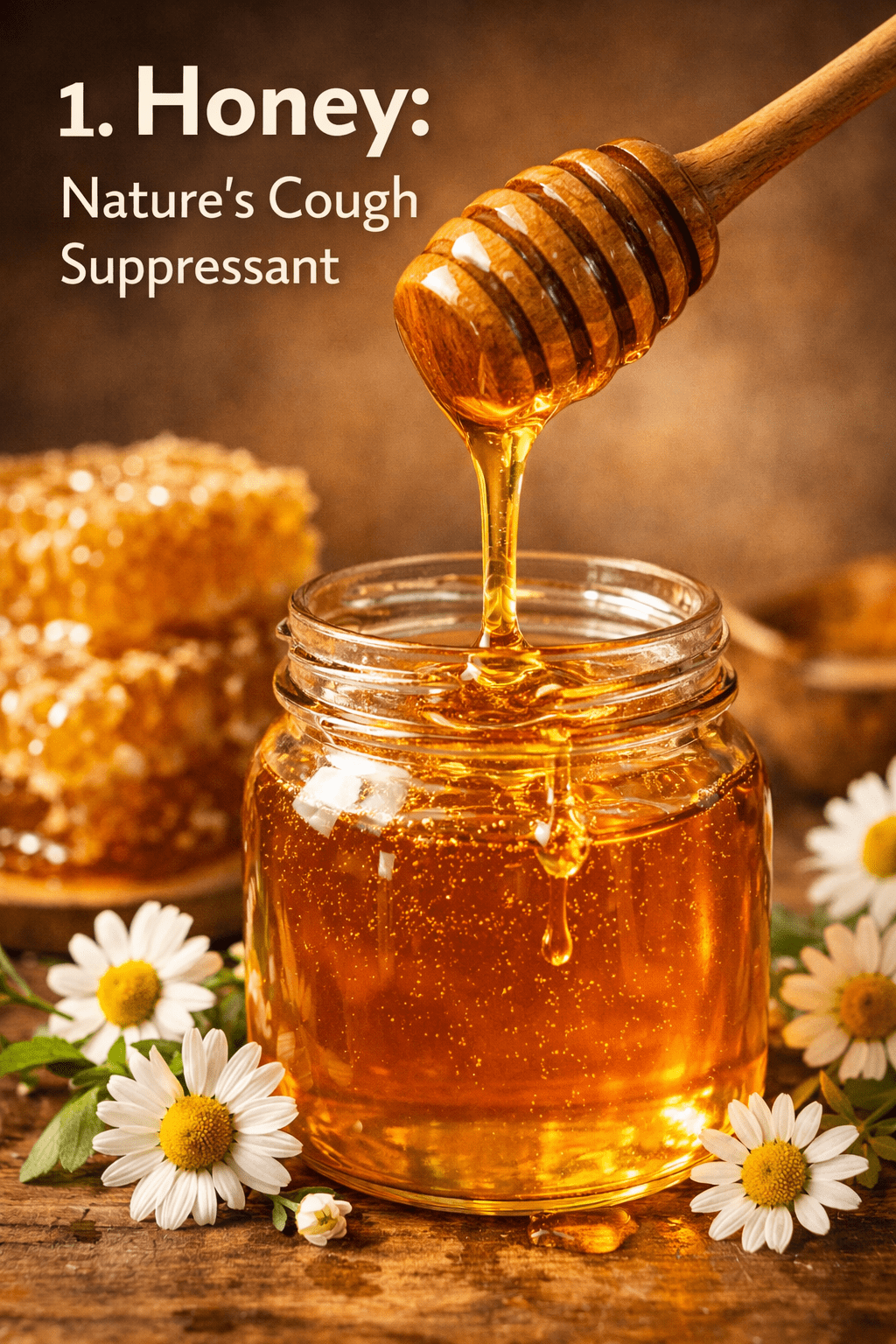
Honey stands out as the most researched and effective natural cough remedy available. Clinical studies show honey is superior to usual care in suppressing coughs from upper respiratory infections and reducing the need for antibiotics[2]. It performs comparably to dextromethorphan, the active ingredient in many commercial cough suppressants[2].
How to use honey for cough relief:
- Give ½ to 1 teaspoon to children ages 1 year and older before bedtime[4]
- Adults can take 1 to 2 teaspoons as needed
- Mix with warm water or herbal tea for added soothing effects
- Take straight from the spoon for maximum throat coating
Why it works: Honey’s thick consistency coats the throat, reducing irritation. Its antimicrobial properties fight infection, while antioxidants support healing. The sweet taste also triggers saliva production, which naturally soothes the throat.
Critical safety warning: Never give honey to infants under 1 year old due to the risk of botulism, a serious and potentially fatal illness[3].
Choose honey if: You need nighttime cough relief, prefer a pleasant-tasting remedy, or want an option backed by solid clinical evidence. Research consistently shows honey works better than cough syrups for reducing nighttime coughing in children[4].
2. Ginger: Natural Airway Relaxant
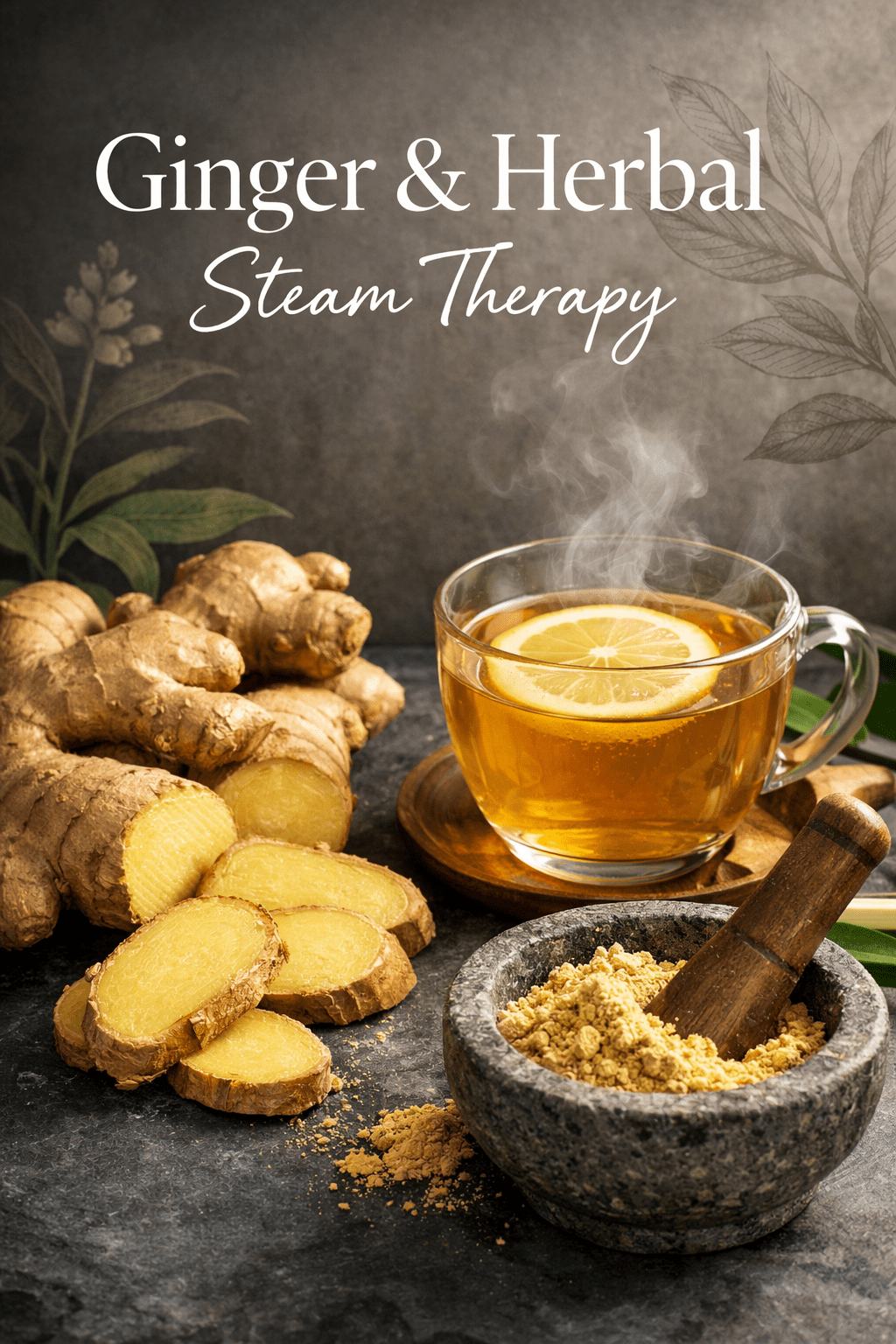
Ginger provides powerful cough relief by addressing the underlying muscle tension that triggers coughing. Research published in the American Journal of Respiratory Cell and Molecular Biology shows ginger helps relax airway smooth muscles and regulate calcium levels, reducing muscle tension and coughing[1].
Effective ways to use ginger:
- Fresh ginger tea: Slice 1-inch piece of fresh ginger, steep in boiling water for 10 minutes, add honey and lemon
- Ginger steam: Add grated ginger to hot water and inhale the vapors
- Ginger syrup: Combine ginger juice with honey for a homemade cough syrup
- Drink 2-3 cups of ginger tea throughout the day for best results
Ginger significantly improves chronic cough associated with allergic rhinitis, according to research in the American Journal of Rhinology and Allergy[1]. This makes it particularly useful for coughs triggered by allergies or post-nasal drip.
Edge case: Some people experience mild heartburn from ginger. If you have acid reflux, start with small amounts or choose a different remedy.
3. Thyme and Ivy: The Clinical Combination
The combination of thyme and ivy has earned recognition in clinical research for treating productive coughs and bronchitis. A 2021 clinical study found that thyme and ivy combination drops showed improvement in bronchitis symptoms, cough frequency, and overall quality of life with few side effects[2].
How this combination works:
- Thyme contains compounds that relax bronchial muscles and have antimicrobial properties
- Ivy leaf extract helps thin mucus and reduce airway inflammation
- Together they address both the cough reflex and underlying congestion
Research published in Drug Research demonstrated that fluid extract cough syrup combining ivy and thyme showed promising results in relieving acute bronchitis with productive cough[1].
You can find thyme-ivy combinations in:
- Commercial herbal cough syrups (look for standardized extracts)
- Homemade thyme tea (steep 2 teaspoons dried thyme in hot water for 10 minutes)
- Herbal lozenges containing both ingredients
Choose thyme-ivy if: You have a productive cough with mucus, bronchitis symptoms, or want an option with clinical trial backing. This combination works particularly well for “wet” coughs rather than dry, tickling coughs.
4. Steam Therapy: Simple and Effective
Steam inhalation alleviates respiratory congestion and throat irritation through direct moisture delivery to airways. The effectiveness is enhanced by adding eucalyptus or peppermint essential oils, which contain compounds that open airways and reduce inflammation[1].
Proper steam therapy technique:
- Boil water and pour into a large bowl
- Add 2-3 drops of eucalyptus or peppermint essential oil (optional)
- Drape a towel over your head and the bowl
- Inhale the steam for 5-10 minutes, keeping face 8-10 inches from water
- Repeat 2-3 times daily as needed
Safety considerations:
- Keep children at a safe distance to prevent burns
- Test temperature before leaning over bowl
- Don’t add too many essential oil drops (can irritate airways)
- Stop if you feel dizzy or uncomfortable
Alternative approach: Run a hot shower and sit in the steamy bathroom for 10-15 minutes. This provides gentler, safer steam exposure, especially for children.
5. Elderberry: Immune-Supporting Berry
Elderberry has gained attention for its ability to reduce cold duration and severity. A randomized, double-blind, placebo-controlled trial published in Nutrients found that elderberry supplementation reduced the duration and severity of cold symptoms in air travelers[1].
Using elderberry for cough relief:
- Elderberry syrup: Take 1 tablespoon 3-4 times daily at first sign of cold
- Elderberry tea: Steep dried elderberries in hot water for 15 minutes
- Commercial supplements: Follow package directions for standardized extracts
- Start at the first sign of symptoms for best results
Elderberry works by supporting immune function and may help prevent viral replication. The antioxidants in elderberries also reduce inflammation in respiratory tissues.
Important note: Choose commercially prepared elderberry products. Raw elderberries can cause nausea and should be cooked before consumption.
6. Warm Fluids and Proper Hydration
Staying well-hydrated ranks among the simplest yet most effective natural remedies for cough. Warm fluids thin mucus, soothe irritated throats, and help your body clear respiratory passages naturally.
Best warm fluids for cough relief:
- Herbal teas (chamomile, peppermint, licorice root)
- Warm water with honey and lemon
- Clear broths and soups
- Warm apple juice or cider (for children who won’t drink tea)
Hydration guidelines:
- Drink at least 8-10 glasses of fluids daily when you have a cough
- Sip warm fluids throughout the day rather than drinking large amounts at once
- Avoid caffeinated beverages, which can be dehydrating
- Monitor urine color (pale yellow indicates good hydration)
Choose warm fluids if: You have thick mucus, a dry throat, or need a gentle remedy that works for all ages. This approach combines well with other natural remedies for enhanced effectiveness.
7. Saltwater Gargling and Nasal Rinses
Saltwater gargling reduces throat inflammation and clears mucus, while nasal rinses address post-nasal drip that often triggers coughing.
Proper gargling technique:
- Mix ¼ to ½ teaspoon salt in 8 ounces warm water
- Gargle for 30 seconds, then spit out
- Repeat 3-4 times daily
- Use after meals for best results
Nasal rinse method:
- Use a neti pot or saline spray bottle
- Mix ¼ teaspoon salt and ¼ teaspoon baking soda in 8 ounces distilled or previously boiled water
- Rinse each nostril 1-2 times daily
- Always use sterile water to prevent infection
This combination addresses coughs triggered by post-nasal drip and throat irritation. Many people notice improvement within 24 hours of consistent use.
8. Humidified Air for Respiratory Comfort
Dry air irritates airways and worsens coughing, especially during winter months when indoor heating reduces humidity. Adding moisture to the air helps soothe irritated respiratory tissues and thin mucus.
Effective humidification strategies:
- Run a cool-mist humidifier in your bedroom at night
- Aim for 40-50% relative humidity (use a hygrometer to measure)
- Clean humidifiers every 3 days to prevent mold and bacteria growth
- Place humidifier 3-4 feet from your bed for optimal moisture distribution
Quick humidity boost: Place bowls of water near heat sources or hang wet towels in your room. While less effective than humidifiers, these methods add some moisture to dry air.
Common mistake: Over-humidifying can promote mold growth and dust mites. Keep humidity between 40-50% and ensure good ventilation.
9. Turmeric Milk: Anti-Inflammatory Golden Remedy
Turmeric contains curcumin, a powerful anti-inflammatory compound that reduces airway inflammation and soothes coughs. Combined with warm milk, it creates a soothing bedtime drink.
Golden milk recipe for cough:
- Heat 1 cup milk (dairy or plant-based)
- Add ½ teaspoon turmeric powder
- Add pinch of black pepper (increases curcumin absorption)
- Sweeten with honey to taste
- Drink warm before bedtime
The combination of anti-inflammatory properties, warm liquid, and honey creates multiple mechanisms for cough relief. Black pepper is essential because it increases curcumin bioavailability by up to 2000%.
Choose turmeric milk if: You have nighttime coughing, inflammation-related respiratory issues, or prefer a warming, comforting remedy before bed.
10. Proper Rest and Elevated Sleeping Position
While not a “remedy” in the traditional sense, adequate rest and proper sleeping position significantly impact cough recovery. Your immune system works most effectively during sleep, and positioning can reduce nighttime coughing.
Sleep optimization for cough relief:
- Elevate your head with extra pillows (reduces post-nasal drip)
- Sleep on your side rather than your back
- Maintain consistent sleep schedule to support immune function
- Use a humidifier in your bedroom
- Take honey or warm tea 30 minutes before bed
Elevation angle: Raise your head 6-8 inches above your body. Too much elevation can strain your neck, while too little won’t prevent mucus drainage.
Combining proper rest with other natural remedies creates the optimal environment for healing. Most acute coughs from colds resolve within 7-10 days with adequate rest and supportive care.
Comparison: Natural Remedies Effectiveness
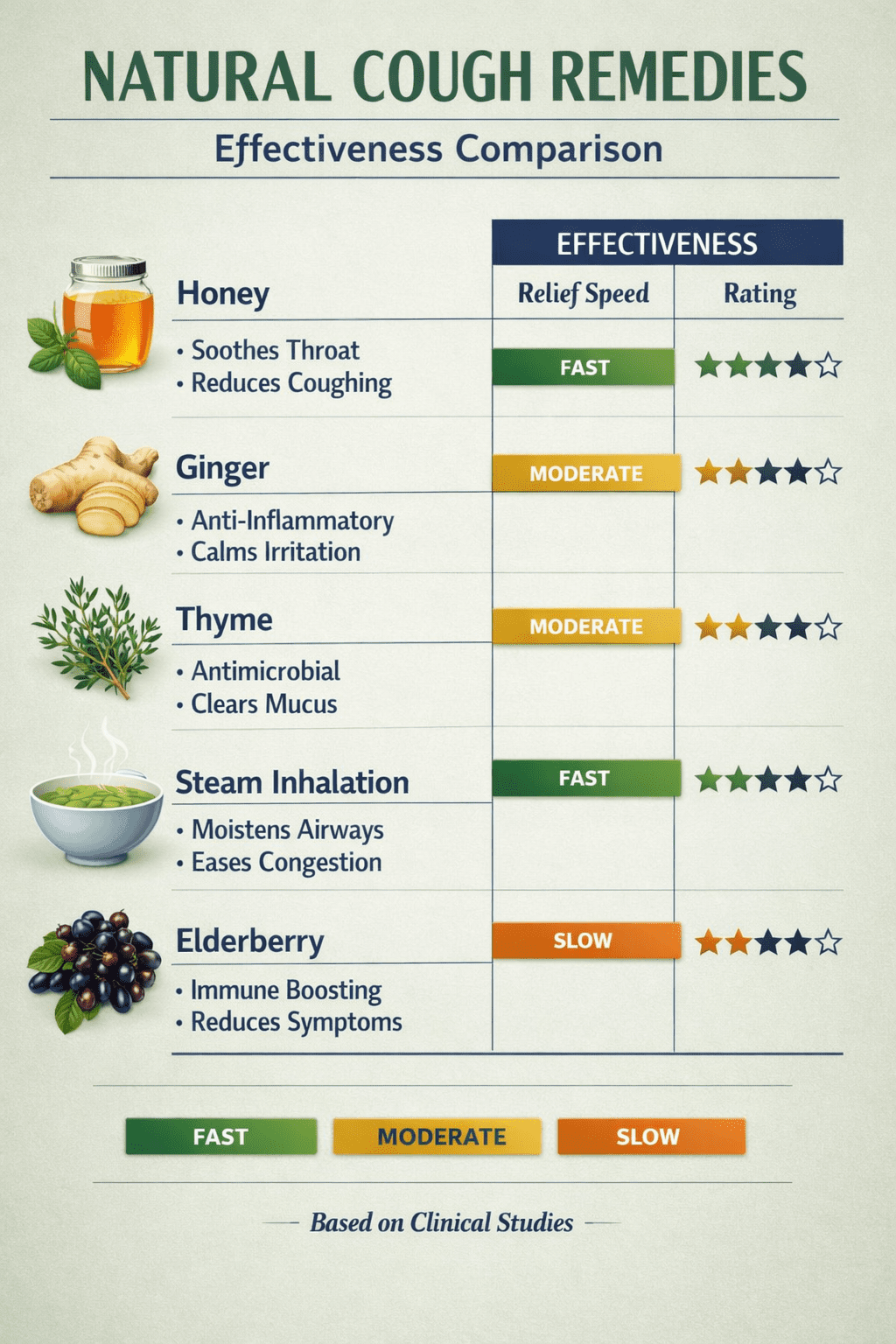
| Remedy | Best For | Speed of Relief | Evidence Level | Age Safety |
|---|---|---|---|---|
| Honey | Nighttime cough, dry throat | 1-2 hours | Strong clinical evidence[2] | 1 year+ only |
| Ginger | Airway relaxation, allergic cough | 2-4 hours | Moderate clinical evidence[1] | All ages |
| Thyme-Ivy | Productive cough, bronchitis | 24-48 hours | Strong clinical evidence[2] | All ages |
| Steam | Congestion, throat irritation | 10-30 minutes | Traditional use | All ages (with supervision) |
| Elderberry | Cold-related cough | 24-72 hours | Moderate clinical evidence[1] | 1 year+ |
| Warm Fluids | Hydration, mucus thinning | 1-2 hours | Strong traditional use | All ages |
| Saltwater | Throat irritation, post-nasal drip | 30 minutes | Traditional use | 6 years+ |
| Humidifier | Dry cough, nighttime relief | Ongoing | Traditional use | All ages |
| Turmeric | Inflammation, nighttime cough | 2-4 hours | Moderate evidence | All ages |
| Rest/Elevation | Overall recovery, nighttime cough | Ongoing | Strong evidence | All ages |
When Natural Remedies for Cough Aren’t Enough
Natural remedies work well for most acute coughs from colds and mild respiratory infections, but some situations require medical attention. Knowing when to see a doctor prevents complications and ensures appropriate treatment.
See a healthcare provider if you experience:
- Cough lasting more than 3 weeks
- Coughing up blood or pink-tinged mucus
- High fever (above 103°F/39.4°C) lasting more than 3 days
- Difficulty breathing or shortness of breath
- Chest pain when coughing or breathing
- Thick, green, or foul-smelling mucus
- Wheezing or whistling sounds when breathing
- Unexplained weight loss with chronic cough
- Night sweats accompanying cough
- Cough that worsens instead of improving after 5-7 days
Special populations needing earlier medical evaluation:
- Infants under 3 months with any cough
- People with asthma, COPD, or other chronic lung conditions
- Individuals with weakened immune systems
- Smokers with new or changing cough patterns
- Anyone with heart disease experiencing new cough
Natural remedies complement medical treatment but shouldn’t replace professional evaluation when symptoms suggest serious conditions like pneumonia, whooping cough, or other complications.
For more information about safe herbal practices, visit our Medical Disclaimer page.
Combining Natural Remedies for Maximum Effectiveness
You don’t have to choose just one natural remedy. Combining approaches often provides better relief than single interventions alone.
Effective combination strategies:
For nighttime cough:
- Take 1 teaspoon honey 30 minutes before bed
- Use humidifier in bedroom
- Elevate head with extra pillows
- Drink warm ginger tea before bedtime
For productive cough with congestion:
- Steam therapy with eucalyptus oil 2-3 times daily
- Thyme tea between steam sessions
- Maintain high fluid intake throughout day
- Use nasal rinse to reduce post-nasal drip
For dry, irritating cough:
- Honey as needed for throat coating
- Warm fluids throughout the day
- Humidified air continuously
- Saltwater gargling 3-4 times daily
Layering principle: Start with hydration and humidity as your foundation, then add specific remedies targeting your symptoms. This approach addresses multiple cough triggers simultaneously.
Common Mistakes to Avoid with Natural Cough Remedies

Even natural remedies can be ineffective or potentially harmful if used incorrectly. Avoiding these common mistakes ensures safe, effective treatment.
Mistakes that reduce effectiveness:
- Using honey for infants under 1 year – Serious botulism risk[3]
- Expecting immediate results – Most natural remedies need consistent use over hours or days
- Insufficient hydration – Dehydration undermines all other remedies
- Over-humidifying – Humidity above 50% promotes mold growth
- Using too many essential oils – Can irritate rather than soothe airways
- Stopping remedies too soon – Continue for 1-2 days after symptoms improve
- Ignoring underlying conditions – Natural remedies don’t treat bacterial infections requiring antibiotics
- Using contaminated humidifiers – Can spread bacteria and worsen respiratory issues
Quality matters: Choose raw, unpasteurized honey for maximum benefits. Select organic ginger and herbs when possible. Use distilled or previously boiled water for nasal rinses to prevent infection.
Dosage precision: More isn’t better. Follow recommended amounts, especially for children. Excessive amounts of even natural substances can cause side effects.
The Growing Market for Natural Cough Solutions
Consumer interest in natural remedies continues to grow alongside conventional treatments. The global cough remedies market reached $13.04 billion in 2026, representing approximately 8.6% annual growth from the previous year[5]. The market is projected to reach $22.65 billion by 2031[7].
This growth reflects several trends:
- Increasing consumer preference for natural, plant-based options
- Growing awareness of antibiotic resistance and medication side effects
- Rising healthcare costs driving interest in home remedies
- Expanding research validating traditional natural approaches
The market includes both conventional medications and natural products, with many consumers using combinations of both approaches. This validates what traditional medicine has known for centuries: natural remedies for cough deserve a place in comprehensive respiratory care.
For more natural health approaches, explore additional resources at The Herbal Handbook.
Conclusion
Natural remedies for cough offer effective, evidence-based alternatives or complements to conventional medications. Honey stands out with the strongest clinical evidence, performing as well as common cough suppressants while offering antimicrobial benefits[2]. Ginger, thyme-ivy combinations, steam therapy, and elderberry all show promising results in research studies[1][2].
The key to success with natural remedies lies in choosing the right approach for your specific symptoms, using them consistently, and combining multiple strategies for enhanced effectiveness. Start with the foundation of proper hydration and humidified air, then add targeted remedies like honey for nighttime relief or ginger for airway relaxation.
Your action plan:
- Identify your primary symptom (dry cough, productive cough, nighttime cough, congestion)
- Choose 2-3 remedies from this guide that target your symptoms
- Use consistently for at least 2-3 days before evaluating effectiveness
- Maintain proper hydration and humidity as your foundation
- Monitor symptoms and seek medical care if cough persists beyond 3 weeks or worsens
Remember that natural remedies work best for acute coughs from colds and mild respiratory infections. They provide relief without the side effects common in over-the-counter medications, making them excellent first-line options for most people. However, they complement rather than replace medical care when serious conditions require professional treatment.
Before starting any new remedy regimen, review our Medical Disclaimer for important safety information.
FAQ
How quickly do natural remedies for cough work?
Most natural remedies provide relief within 1-4 hours, though some work faster than others. Honey and steam therapy often work within 30 minutes to 2 hours, while thyme-ivy combinations may take 24-48 hours to show full effects. Consistent use over several days typically provides the best results.
Can I give honey to my baby for cough?
Never give honey to infants under 1 year old due to the risk of botulism, a serious and potentially fatal illness[3]. For babies under 1 year, use a cool-mist humidifier and consult your pediatrician for safe cough relief options.
Which natural remedy works best for nighttime cough?
Honey is the most effective natural remedy for nighttime cough, with research showing it works better than cough syrups for reducing nighttime coughing[4]. Take ½ to 1 teaspoon 30 minutes before bed, use a humidifier in your bedroom, and elevate your head with extra pillows.
Are natural cough remedies safe to use with medications?
Most natural remedies like honey, ginger tea, and steam therapy are safe to use alongside over-the-counter or prescription medications. However, some herbs can interact with medications, so consult your healthcare provider if you take prescription drugs or have chronic health conditions.
How long should I try natural remedies before seeing a doctor?
Try natural remedies for 7-10 days for acute coughs from colds. See a doctor sooner if you experience high fever above 103°F, difficulty breathing, chest pain, blood in mucus, or if symptoms worsen instead of improving. Coughs lasting more than 3 weeks always warrant medical evaluation.
Do natural remedies work for all types of coughs?
Natural remedies work best for acute coughs from colds, flu, and mild respiratory infections. They’re less effective for coughs caused by bacterial infections (which need antibiotics), chronic conditions like COPD, or serious illnesses like pneumonia. Match the remedy to your specific symptoms for best results.
Can I use multiple natural remedies together?
Yes, combining natural remedies often provides better relief than using one alone. For example, you can use honey before bed, drink ginger tea during the day, run a humidifier at night, and do steam therapy twice daily. This layered approach addresses multiple cough triggers simultaneously.
What’s the difference between remedies for dry versus productive coughs?
Dry coughs respond best to throat-coating remedies like honey, warm fluids, and humidified air. Productive coughs with mucus benefit more from steam therapy, thyme-ivy combinations, and hydration to thin mucus. Ginger works well for both types by relaxing airway muscles.
Are natural cough remedies effective for children?
Natural remedies work well for children over 1 year old. Honey is particularly effective and research shows it works better than cough syrups for children[4]. Always supervise children with steam therapy to prevent burns, and adjust dosages based on age and weight.
How much does it cost to treat a cough with natural remedies?
Natural remedies are typically inexpensive, costing $5-20 for supplies that last through an illness. A jar of honey costs $5-10, fresh ginger costs $2-3, and herbal teas cost $3-8 per box. This compares favorably to over-the-counter cough medications at $8-15 per bottle.
Can natural remedies prevent coughs from developing?
Some natural approaches may help prevent coughs by supporting immune function. Elderberry supplementation reduced cold duration and severity in clinical trials[1]. Maintaining good hydration, using a humidifier during dry months, and consuming immune-supporting foods like ginger and honey may reduce your risk of developing respiratory infections.
What’s the best natural remedy for cough caused by allergies?
Ginger significantly improves chronic cough associated with allergic rhinitis[1], making it the top choice for allergy-related coughs. Combine ginger tea with nasal rinses to reduce post-nasal drip, use a humidifier to prevent airway dryness, and consider local honey which may help with seasonal allergies.
References
[1] Natural Cough Remedies – https://thehealthdispensary.co.uk/natural-cough-remedies/
[2] medicalnewstoday – https://www.medicalnewstoday.com/articles/322394
[3] Colds Flu And Complementary Health Approaches – https://www.nccih.nih.gov/health/colds-flu-and-complementary-health-approaches
[4] Coughs Meds Or Home Remedies – https://www.seattlechildrens.org/conditions/a-z/coughs-meds-or-home-remedies/
[5] Cough Remedies Global Market Report – https://www.thebusinessresearchcompany.com/report/cough-remedies-global-market-report
[7] Cough Remedies Market – https://www.mordorintelligence.com/industry-reports/cough-remedies-market