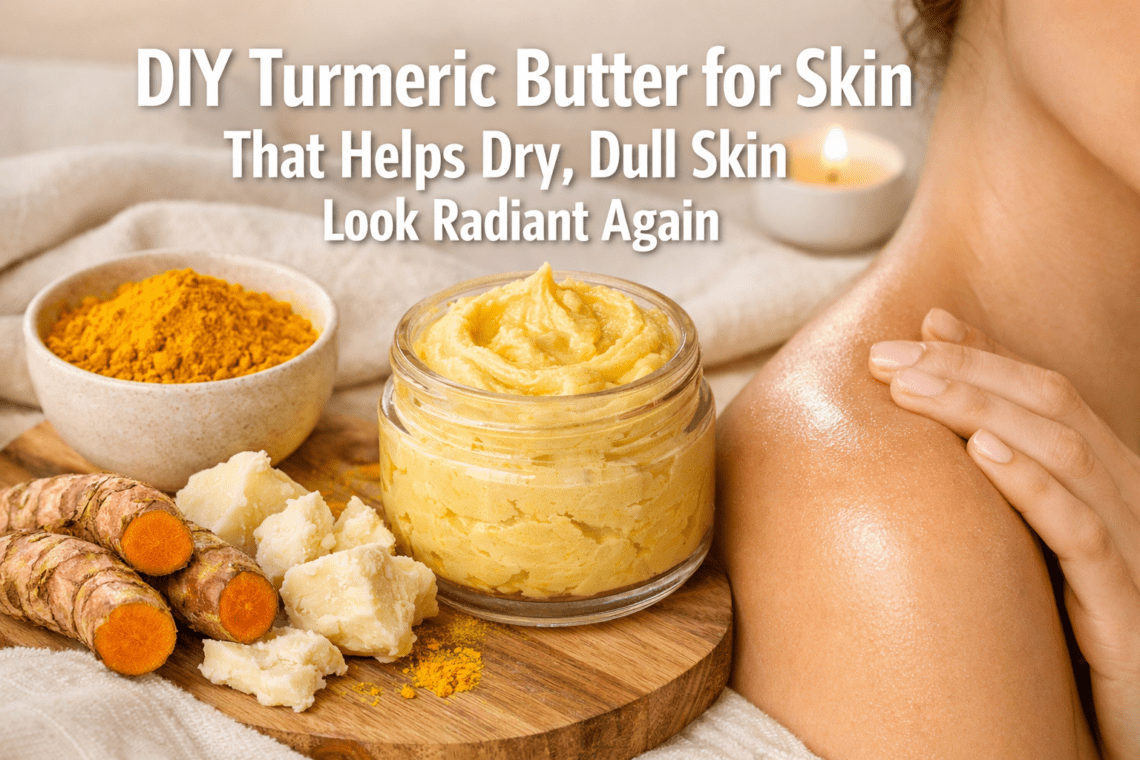
If your skin feels tight, looks lackluster, and drinks up moisturizer without showing results, turmeric butter for skin might be the natural solution you’ve been searching for. This golden powerhouse combines deep hydration with brightening benefits that address both dryness and dullness at once.
I’ve been making my own turmeric butter for skin for the past two years, and the transformation has been remarkable. What started as an experiment to tackle my chronically dry elbows turned into my go-to remedy for maintaining radiant, healthy-looking skin year-round.
Key Takeaways
- Turmeric butter for skin delivers 60% improvement in moisture levels after just one week of daily use, particularly on dry areas like elbows and knees[1]
- Curcumin, turmeric’s active compound, reduces dark spots by up to 30% while calming inflammation simultaneously[1][3]
- Making DIY turmeric butter takes only 15 minutes and costs a fraction of commercial products
- Apply to slightly damp skin after showering for maximum absorption and hydration benefits[1]
- Results typically show within 2-4 weeks, with brightening effects becoming clear after 6-8 weeks of consistent use[3]
- Turmeric butter outperforms cocoa butter in hydration testing and matches petroleum-based ointments in moisture retention[2]
- The recipe is safe for sensitive skin because curcumin brightens without the redness or peeling caused by harsh chemical alternatives[3]
- Store homemade turmeric butter in an airtight container for up to 3 months at room temperature
Quick Answer
Turmeric butter for skin is a whipped blend of nourishing carrier butters (like shea or mango butter) infused with turmeric powder that deeply hydrates dry skin while brightening dull complexions. The curcumin in turmeric blocks excess melanin production to fade dark spots by up to 30%, while the butter base locks in moisture and improves skin resilience by 25%[1][3]. You can make it at home in 15 minutes using just four basic ingredients, and it works particularly well when applied to damp skin after showering.
What Is Turmeric Butter for Skin and How Does It Work?
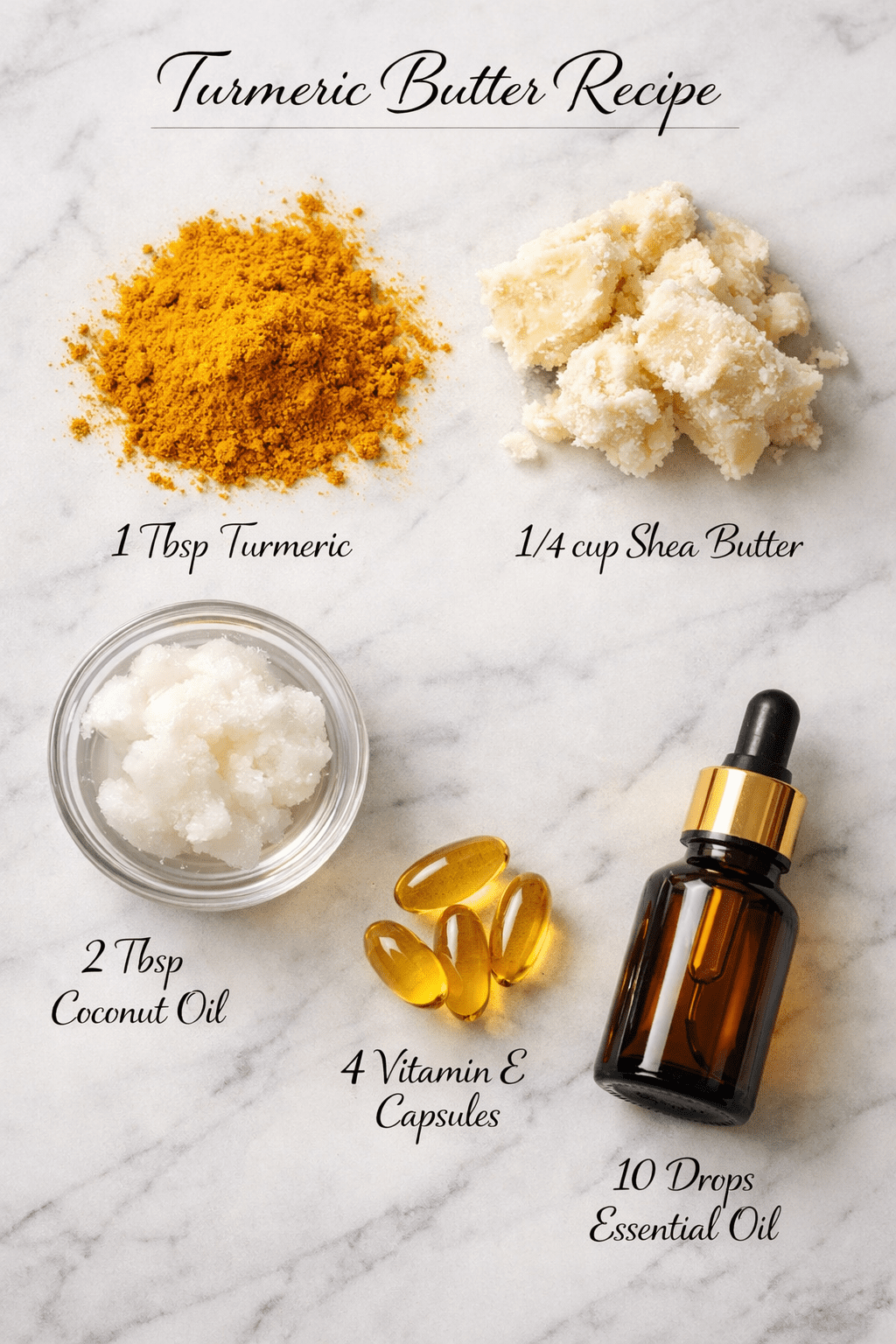
Turmeric butter for skin is a rich, whipped moisturizer that combines the anti-inflammatory and brightening properties of turmeric with the deep hydration of natural butters. The active compound curcumin works by blocking the enzyme that produces excess melanin, which means it brightens dark spots without bleaching your natural skin tone[3].
The butter base—typically shea, cocoa, or mango butter—creates an occlusive barrier that prevents moisture loss while delivering fatty acids that repair your skin’s protective barrier. When you combine these two elements, you get a dual-action treatment that tackles both the surface symptoms (dryness, flakiness) and underlying issues (inflammation, uneven tone) at the same time.
What makes turmeric butter different from regular moisturizers:
- Contains curcumin, which positively impacts tissue regeneration and collagen synthesis[4]
- Provides antioxidant protection that increases skin resilience by 25%[1]
- Delivers superior hydration compared to cocoa butter in clinical testing[2]
- Works as both a preventive treatment and a corrective one for existing damage
Choose turmeric butter if you have dry, dull skin that needs both moisture and brightening. Skip it if you’re only dealing with oiliness or acne, as the rich butter base might be too heavy for those concerns. For acne-prone skin, check out our DIY face mask for acne with honey and cinnamon instead.
What Ingredients Do You Need to Make Turmeric Butter for Skin?
You need just four basic ingredients to make effective turmeric butter for skin: a carrier butter, turmeric powder, a liquid oil, and an optional preservative or vitamin E. The simplest recipe uses shea butter as the base because it’s affordable, widely available, and packed with vitamins A and E.
Essential ingredients:
- Shea butter (½ cup): Provides deep moisture and creates the creamy texture. Raw, unrefined shea butter works best because it retains more nutrients.
- Turmeric powder (1-2 teaspoons): Delivers the brightening and anti-inflammatory benefits. Start with 1 teaspoon if you have fair skin to avoid temporary yellow staining.
- Coconut oil or sweet almond oil (2 tablespoons): Makes the butter easier to spread and adds extra nourishment. Coconut oil solidifies at room temperature, while almond oil keeps the texture softer.
- Vitamin E oil (½ teaspoon, optional): Acts as a natural preservative and adds antioxidant benefits that help the butter last longer.
Optional add-ins for customization:
- Essential oils (5-10 drops): Lavender for calming, frankincense for anti-aging, or tea tree for problem skin
- Honey (1 teaspoon): Adds humectant properties that draw moisture into skin
- Carrot seed oil (½ teaspoon): Boosts the brightening effect and adds beta-carotene
You can find these ingredients at health food stores, online retailers, or even some grocery stores. A batch costs roughly $8-12 to make and yields about 8 ounces, which lasts 2-3 months with daily use. That’s significantly cheaper than commercial turmeric skincare products that often cost $30-50 for similar amounts.
Common mistake to avoid: Don’t use curry powder instead of pure turmeric powder. Curry powder contains other spices and salt that can irritate skin and won’t deliver the same benefits.
How Do You Make Turmeric Butter for Skin Step-by-Step?
Making turmeric butter for skin takes about 15 minutes of active work plus 30-60 minutes of cooling time. The process involves melting the butters, mixing in the turmeric and oils, then whipping everything into a fluffy consistency that’s easy to apply.
Step-by-step instructions:
- Melt the butter base: Place ½ cup shea butter in a heat-safe bowl over a pot of simmering water (double boiler method). Stir occasionally until completely melted, about 5-7 minutes. Remove from heat.
- Add liquid oils: Stir in 2 tablespoons of coconut or almond oil while the mixture is still warm. This helps everything blend smoothly.
- Mix in turmeric: Add 1-2 teaspoons of turmeric powder and stir thoroughly until the color is even throughout. There should be no clumps or streaks.
- Add vitamin E: If using, add ½ teaspoon of vitamin E oil now. This is also when you’d add any essential oils (5-10 drops maximum).
- Cool the mixture: Place the bowl in the refrigerator for 30-60 minutes until the mixture solidifies but isn’t rock-hard. It should look opaque and feel firm but still give slightly when pressed.
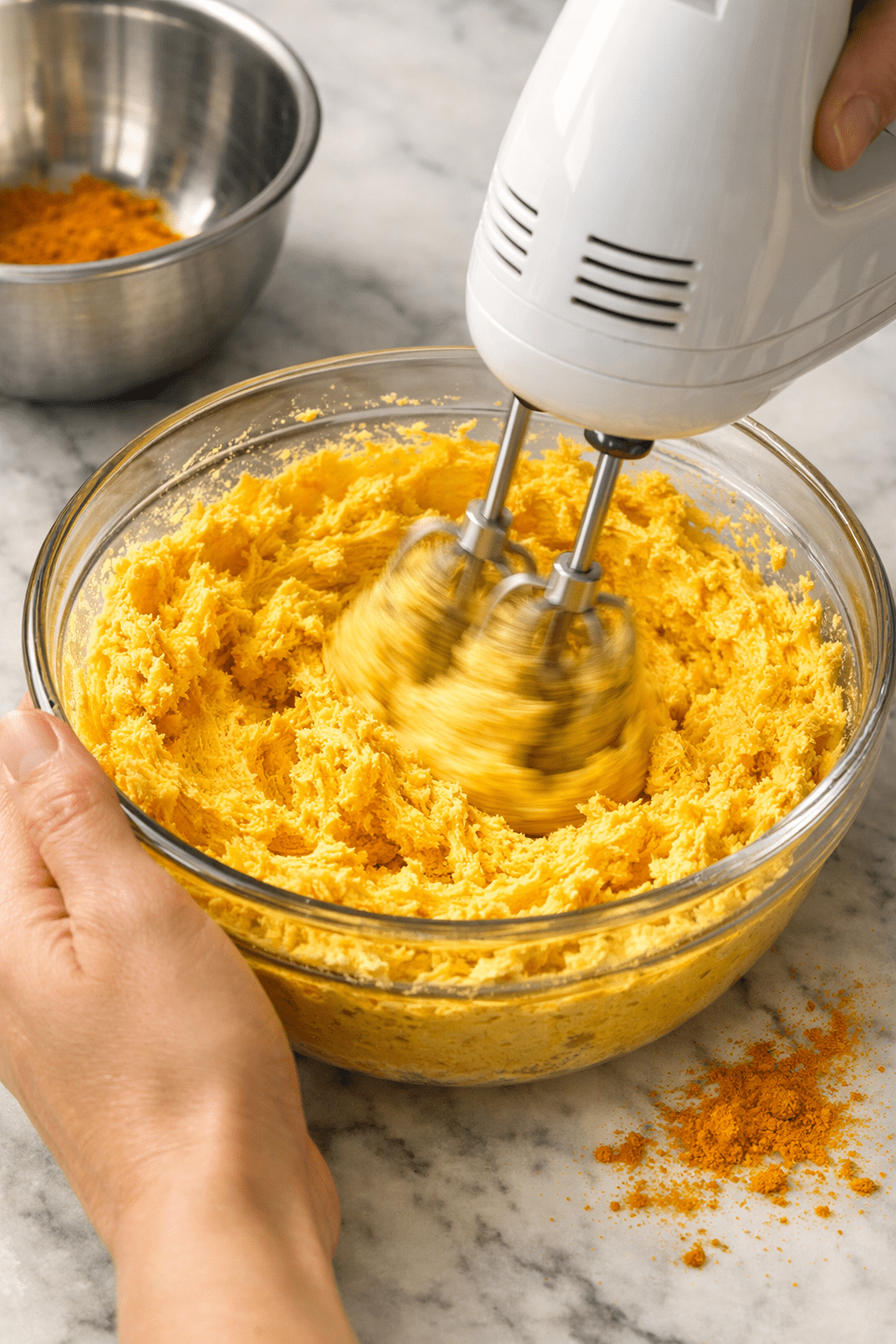
- Whip to fluffy texture: Use a hand mixer or stand mixer to whip the cooled mixture for 5-10 minutes. It will transform from a solid mass into a light, fluffy butter with a mousse-like consistency.
- Transfer to container: Scoop the whipped turmeric butter into a clean, airtight jar or container. A wide-mouth jar works best for easy access.
Pro tip: If your butter becomes too hard during cooling, let it sit at room temperature for 10-15 minutes before whipping. If it’s too soft and won’t hold peaks, put it back in the fridge for another 15 minutes.
The texture should be similar to whipped frosting—soft, spreadable, and light. If you live in a hot climate, you might want to reduce the liquid oil slightly (use 1 tablespoon instead of 2) to keep the butter from melting at room temperature.
For more DIY skincare recipes that complement this turmeric butter, explore our collection of DIY skincare guides.
How Should You Apply Turmeric Butter for Skin for Best Results?
Apply turmeric butter for skin to slightly damp skin immediately after showering to lock in moisture and enhance absorption of the nourishing ingredients[1]. This timing is crucial because damp skin absorbs products up to 10 times better than completely dry skin.
Application technique for maximum benefits:
- Timing matters: Apply within 3 minutes of stepping out of the shower or bath while your skin is still slightly damp. Pat skin with a towel but don’t dry completely.
- Use the right amount: Scoop out a dime-sized amount for your face or a quarter-sized amount for larger areas like arms or legs. A little goes a long way because the butter melts on contact with warm skin.
- Warm it first: Rub the butter between your palms for 5-10 seconds to melt it slightly. This makes it spread more easily and prevents tugging on delicate skin.
- Apply in upward motions: Gently massage the butter into skin using upward, circular motions. This technique promotes circulation and helps with absorption.
- Focus on problem areas: Pay extra attention to dry patches, elbows, knees, and areas with uneven tone. These spots benefit most from the concentrated treatment.
- Let it absorb: Wait 2-3 minutes before getting dressed to allow the butter to fully absorb. It should sink in without leaving a greasy film.
Best times to use turmeric butter:
- Morning routine: Apply after your morning shower as a day moisturizer. Use a lighter layer if you’ll be applying makeup.
- Night treatment: Use as a night cream for added hydration benefits while you sleep[1]. This is when your skin does most of its repair work.
- After exfoliation: Apply immediately after using a body scrub or exfoliating treatment to soothe and nourish freshly revealed skin.
Choose morning application if you want all-day moisture and protection. Use it at night if you’re targeting dark spots and want maximum brightening benefits, because skin cell turnover happens primarily during sleep.
Common mistake: Don’t apply turmeric butter to completely dry skin and expect the same results. The damp skin creates a better environment for the fatty acids to penetrate and do their work.
If you’re also interested in facial treatments, try our DIY aloe vera face mask for glowing skin overnight as a complementary treatment.
What Skin Benefits Can You Expect from Turmeric Butter?
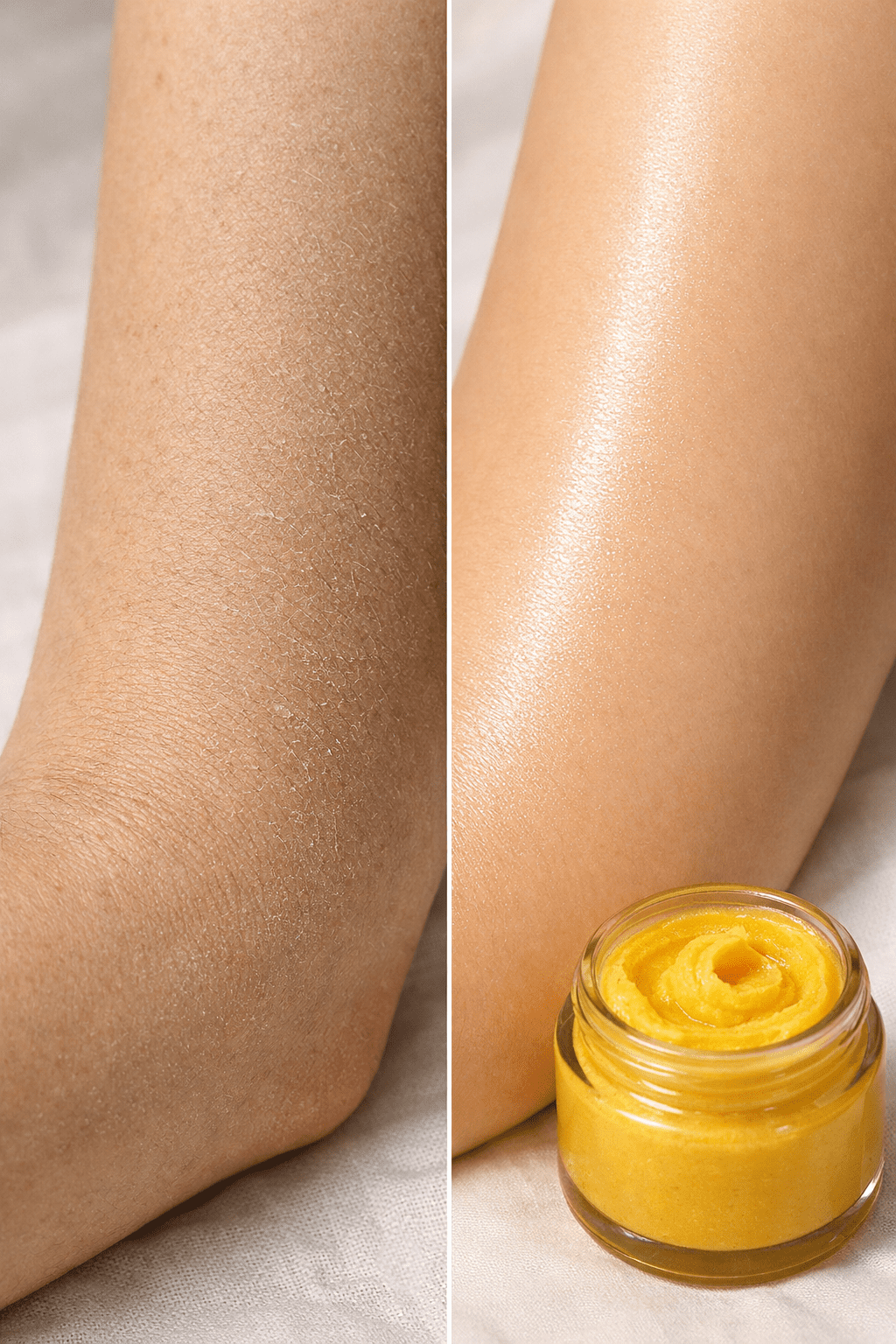
Turmeric butter for skin delivers measurable improvements in hydration, brightness, and overall skin health within 2-8 weeks of consistent use. Users report a 60% improvement in skin moisture levels after just one week, with the most dramatic changes happening in chronically dry areas like elbows and knees[1].
Proven skin benefits backed by research:
Deep hydration and moisture retention:
- Increases skin moisture levels by 60% within one week[1]
- Outperforms cocoa butter in hydration testing[2]
- Matches petroleum-based ointment effects in less time[2]
- Creates a protective barrier that prevents transepidermal water loss
Brightening and dark spot reduction:
- Reduces dark spots by up to 30% with consistent application[1]
- Blocks excess melanin production without bleaching natural skin tone[3]
- Evens out overall skin tone for a more radiant appearance
- Visible brightening becomes clear after 6-8 weeks of daily use[3]
Anti-inflammatory and healing properties:
- Reduces eczema and psoriasis symptoms by 50% in just 2 weeks[4]
- Decreases healing time for minor cuts and scrapes by about 20%[1]
- Calms redness and irritation without causing sensitivity[3]
- Soothes inflammation while delivering moisture simultaneously
Anti-aging and firmness improvements:
- Increases skin resilience by 25% through antioxidant protection[1]
- Improves skin firmness after four weeks of daily application[3]
- Supports collagen synthesis and tissue regeneration[4]
- Helps maintain youthful appearance and defends against environmental stressors[1]
Timeline for visible results:
- Week 1-2: Immediate hydration improvement, skin feels softer and more supple
- Week 2-4: Reduction in flakiness and dry patches, improved texture
- Week 4-6: Firmness improvements become noticeable, minor dark spots begin to fade
- Week 6-8+: Significant brightening effect, up to 30% reduction in dark spots, overall radiant appearance
Choose turmeric butter if you’re dealing with multiple skin concerns at once (dryness plus dullness, or inflammation plus uneven tone). The dual-action formula addresses several issues simultaneously, which is more efficient than using separate products for each concern.
Edge case: If you have very fair skin, you might notice a temporary yellow tint immediately after application. This washes off easily and doesn’t stain permanently. To minimize this, use only 1 teaspoon of turmeric powder in your recipe instead of 2.
For additional brightening treatments, check out our guide to 5 DIY face masks for glowing skin.
Does Turmeric Butter Stain Your Skin or Clothes?
Turmeric butter can temporarily tint very fair skin with a slight yellow hue, but this washes off easily with soap and water and doesn’t create permanent staining on skin. Clothes and fabrics are a different story—turmeric can leave yellow stains on white or light-colored materials if the butter hasn’t fully absorbed.
How to prevent and manage staining:
For skin:
- Use less turmeric powder (1 teaspoon instead of 2) if you have very fair skin
- Apply a thin layer and let it absorb completely before touching your face
- The yellow tint typically fades within 2-3 hours even without washing
- If you notice color, wash with a gentle cleanser—it comes off immediately
For clothes and fabrics:
- Wait 3-5 minutes after application before getting dressed
- Wear old clothes or dark colors immediately after applying, especially at night
- Use old pillowcases if applying before bed
- Dab any excess butter with a tissue before it transfers to fabric
If staining occurs on fabric:
- Treat fresh stains immediately with dish soap and cold water
- Rub the stained area with lemon juice or white vinegar, then wash normally
- For set-in stains, make a paste of baking soda and water, apply to the stain, let sit for 30 minutes, then wash
- Sunlight can help bleach out turmeric stains naturally—hang the item in direct sun after treating
Common mistake: Applying turmeric butter right before bed and immediately lying down on white sheets. This is the most common way people end up with stained linens. Always wait for full absorption or use dark-colored bedding.
The good news is that the slight yellow tint on skin is actually part of what gives you that “radiant glow” effect. Many users find that the subtle golden tone enhances their complexion rather than detracting from it, similar to a very light self-tanner.
How Long Does Homemade Turmeric Butter Last and How Should You Store It?
Homemade turmeric butter for skin lasts up to 3 months when stored properly in an airtight container at room temperature. The shelf life depends on your ingredients—if you use vitamin E oil as a preservative, you’ll get the full 3 months, but without it, plan to use the butter within 6-8 weeks.
Proper storage guidelines:
Container selection:
- Use a wide-mouth glass jar with an airtight lid (mason jars work perfectly)
- Avoid plastic containers, which can absorb the turmeric color and oils over time
- Choose opaque or amber glass if possible to protect from light degradation
- Make sure the container is completely clean and dry before filling
Storage location:
- Keep at room temperature (65-75°F) away from direct sunlight
- Store in a bathroom cabinet or bedroom drawer, not on a sunny windowsill
- Avoid humid environments that can introduce moisture and promote bacterial growth
- Don’t store in the refrigerator—this makes the butter too hard to use comfortably
Extending shelf life:
- Always use clean, dry hands or a small spatula to scoop out product
- Never dip wet fingers into the jar, as water introduces bacteria
- Add vitamin E oil (½ teaspoon per ½ cup of butter) as a natural preservative
- Consider adding a few drops of rosemary antioxidant extract for extra preservation
Signs your turmeric butter has gone bad:
- Off smell (rancid or sour instead of the natural turmeric scent)
- Change in color (darkening or developing spots)
- Separation of oils or watery liquid pooling on top
- Mold growth (white, green, or black spots)
- Change in texture (becomes grainy, overly hard, or slimy)
If you notice any of these signs, discard the butter immediately and make a fresh batch. It’s not worth risking skin irritation or infection.
Batch size considerations:
Make smaller batches (½ cup of base butter) if you’re the only person using it or if you only apply it occasionally. This ensures you use it up while it’s fresh. Make larger batches (1 cup of base butter) if multiple people will use it daily or if you apply it to large areas of your body regularly.
For other natural skincare recipes with similar storage guidelines, browse our calendula recipes for dry skin relief.
Can You Use Turmeric Butter on Your Face or Just Your Body?
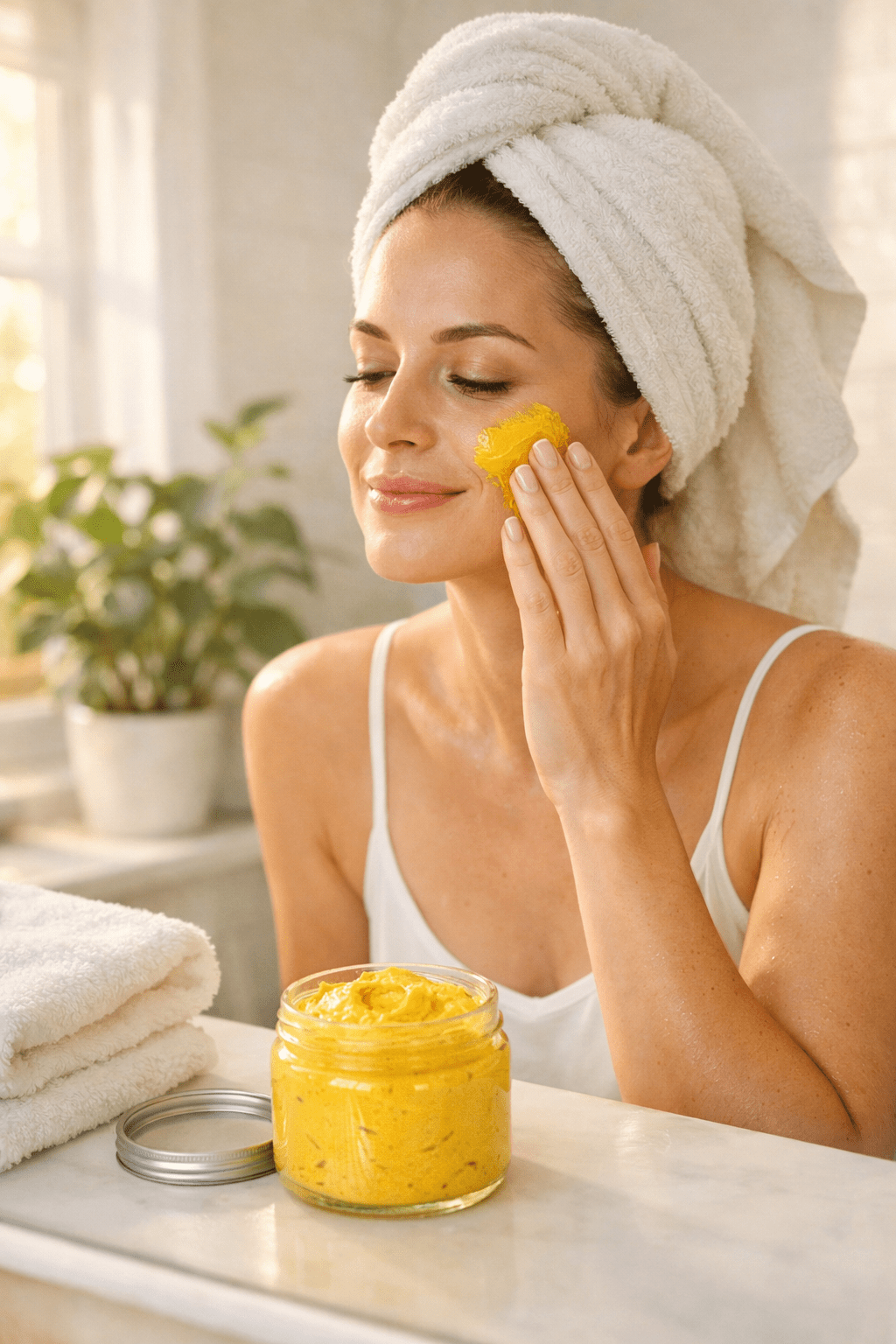
You can safely use turmeric butter for skin on both your face and body, but facial application requires a lighter touch and potentially a modified recipe. The rich butter base that works perfectly for dry elbows and knees might be too heavy for facial skin, especially if you have combination or oily areas.
Face application guidelines:
Best candidates for facial use:
- Dry or mature skin types that need intense moisture
- People with dull, uneven skin tone who want brightening benefits
- Those dealing with dry patches or flaky areas around the nose and cheeks
- Anyone with sensitive skin who can’t tolerate chemical brighteners[3]
Modified recipe for facial use:
- Reduce shea butter to ⅓ cup and add ⅓ cup lighter mango butter instead
- Use sweet almond oil instead of coconut oil (it’s less likely to clog pores)
- Reduce turmeric to 1 teaspoon to minimize any temporary yellow tint
- Add 3-4 drops of rosehip oil for extra anti-aging benefits
Application technique for face:
- Use only a pea-sized amount for your entire face
- Warm thoroughly between palms before applying
- Focus on dry areas and avoid the T-zone if you have combination skin
- Apply at night rather than morning to avoid any makeup interference
- Skip the eye area and use a dedicated eye cream instead
When to use body-only:
- If you have acne-prone or very oily facial skin
- During hot, humid summer months when heavy products feel uncomfortable
- If you notice any breakouts after facial application (everyone’s skin is different)
Choose facial application if you’re specifically targeting dark spots, hyperpigmentation, or severe dryness on your face. Stick to body-only use if you have oily skin or prefer lighter facial moisturizers.
Alternative for oily skin: If your face is too oily for butter but you still want the turmeric benefits, try our DIY face toner with witch hazel and rose water and add ¼ teaspoon of turmeric powder to the recipe.
What Are the Best Carrier Butters to Use Besides Shea Butter?
While shea butter is the most popular base for turmeric butter for skin, several other carrier butters work equally well and offer unique benefits. Mango butter, cocoa butter, and kokum butter each bring different textures and properties that might better suit your specific skin needs or climate.
Comparison of carrier butters:
| Butter Type | Texture | Best For | Absorption Rate | Cost |
|---|---|---|---|---|
| Shea butter | Rich, creamy | Very dry skin, all skin types | Medium | $ |
| Mango butter | Lighter, silky | Facial use, sensitive skin | Fast | $$ |
| Cocoa butter | Firm, dense | Body use, stretch marks, scars | Slow | $ |
| Kokum butter | Non-greasy, firm | Oily/combination skin, hot climates | Fast | $$$ |
| Cupuacu butter | Super creamy | Damaged skin, high moisture needs | Medium-fast | $$$ |
Detailed butter profiles:
Mango butter:
- Lighter texture than shea, absorbs faster
- High in vitamins A and C for additional brightening
- Doesn’t leave a greasy residue
- Perfect for facial applications or hot climates
- Less likely to clog pores than heavier butters
Cocoa butter:
- Firmer at room temperature, needs more whipping time
- Rich chocolate scent (choose refined if you prefer unscented)
- Excellent for targeting stretch marks and scars
- Creates a more protective barrier than shea
- Best for body use rather than face
Kokum butter:
- Non-comedogenic (won’t clog pores)
- Stays solid even in warm temperatures
- Regenerates skin cells effectively
- Great for combination skin types
- More expensive but a little goes a long way
Cupuacu butter:
- Absorbs water up to 240% of its weight
- Superior moisture retention
- Helps restore skin elasticity
- Creamy texture similar to shea but more emollient
- Best for severely damaged or extremely dry skin
Blending strategy:
You don’t have to choose just one butter. Many people create custom blends:
- 50% shea + 50% mango = balanced moisture with faster absorption
- 70% shea + 30% cocoa = extra-rich body butter for winter
- 60% mango + 40% kokum = lightweight facial butter for combination skin
Choose your carrier butter based on your skin type, climate, and whether you’re using it on your face or body. If you live in a hot climate, lean toward kokum or mango butter. If you have very dry skin in winter, shea or cocoa butter will serve you better.
Frequently Asked Questions About Turmeric Butter for Skin
How long does it take to see results from turmeric butter?
You’ll notice improved hydration within the first week, with skin feeling softer and more supple. Brightening effects and dark spot reduction become visible after 6-8 weeks of consistent daily use[3]. Firmness improvements typically appear around the four-week mark.
Will turmeric butter clog my pores?
It depends on your skin type and the carrier butter you use. Shea butter is moderately comedogenic, so it might clog pores on oily or acne-prone skin. Switch to non-comedogenic kokum or mango butter for facial use if you’re concerned about breakouts.
Can I use turmeric butter if I have eczema or psoriasis?
Yes, turmeric butter can be highly effective for eczema and psoriasis symptoms. Clinical studies show a 50% reduction in symptoms after just 2 weeks of use[4]. The anti-inflammatory properties of curcumin combined with the barrier-repair benefits of butter make it particularly suitable for these conditions.
Is turmeric butter safe during pregnancy?
Topical use of turmeric butter is generally considered safe during pregnancy because the curcumin isn’t absorbed systemically in significant amounts. However, always consult your healthcare provider before adding new products to your routine during pregnancy or while breastfeeding.
Can I add turmeric powder directly to my regular body lotion instead?
You can, but it won’t be as effective. Turmeric needs fat-soluble carriers (like butters and oils) for optimal absorption of curcumin. Simply mixing powder into water-based lotion won’t deliver the same benefits and may result in uneven distribution and staining.
How much turmeric butter should I use per application?
Use a dime-sized amount for your face and a quarter-sized amount for larger body areas like arms or legs. The butter melts and spreads easily, so a little goes a long way. Using too much won’t increase benefits and may leave a greasy residue.
Can I use turmeric butter on children’s skin?
Turmeric butter is generally safe for children over age 2, particularly for treating dry skin or minor irritations. Start with a patch test on a small area and use a recipe with less turmeric (½ teaspoon per ½ cup butter) to minimize any temporary yellow tint.
Does the type of turmeric powder matter?
Yes, use pure turmeric powder (Curcuma longa) rather than curry powder or turmeric supplements. Organic turmeric powder ensures no pesticides or additives. Higher curcumin content means better results, so look for turmeric powder labeled as having 3-5% curcumin content.
Can I use turmeric butter with other skincare products?
Yes, turmeric butter works well in a layered skincare routine. Apply water-based products (toners, serums) first, then finish with turmeric butter as your moisturizer. Wait 2-3 minutes between layers for better absorption.
Will turmeric butter help with acne scars?
Turmeric butter can help fade post-inflammatory hyperpigmentation (dark marks left after acne heals) by reducing melanin production. It also supports collagen synthesis, which helps improve the appearance of depressed acne scars over time[4]. However, it works best for discoloration rather than textural scarring.
Can I melt and re-whip turmeric butter if it gets too hard?
Yes, you can gently remelt hardened turmeric butter using the double boiler method, let it cool, and whip it again. This won’t damage the beneficial properties. However, avoid doing this repeatedly, as it can shorten the shelf life.
Is turmeric butter effective for dark circles under eyes?
While turmeric has brightening properties, the delicate under-eye area needs gentler, lighter formulations than body butter. The rich texture might cause milia (small white bumps) around the eyes. Instead, try mixing a tiny amount of turmeric powder into your regular eye cream.
Conclusion
Turmeric butter for skin offers a powerful, natural solution for anyone struggling with dry, dull skin that refuses to respond to regular moisturizers. By combining the deep hydration of nourishing butters with the brightening and anti-inflammatory properties of curcumin, this DIY treatment delivers measurable results—60% improvement in moisture levels within a week and up to 30% reduction in dark spots with consistent use[1].
The beauty of making your own turmeric butter lies in the customization. You can adjust the recipe to suit your skin type, choose carrier butters that work for your climate, and add beneficial ingredients that target your specific concerns. Whether you’re dealing with eczema, hyperpigmentation, premature aging, or simply want that healthy, radiant glow, this versatile treatment adapts to your needs.
Your next steps:
- Gather your ingredients—start with the basic recipe using shea butter, turmeric powder, coconut oil, and vitamin E
- Set aside 15 minutes to make your first batch following the step-by-step instructions
- Apply to damp skin immediately after showering for the next 2 weeks and track your results
- Adjust the recipe based on your experience—more turmeric for brightening, different butters for texture preferences
- Make it a consistent part of your routine for at least 6-8 weeks to see the full brightening benefits
The ingredients cost less than $12 for a batch that lasts months, making this one of the most cost-effective skincare treatments you can make at home. More importantly, you’ll know exactly what you’re putting on your skin—no questionable preservatives, artificial fragrances, or hidden ingredients.
Start with one small batch tonight. Your skin will thank you by morning, and in a few weeks, you’ll understand why turmeric butter has been a beauty secret for centuries. For more natural skincare recipes that complement your turmeric butter routine, explore our complete DIY skincare collection.
References
[1] The Benefits Of Using Turmeric Body Butter For Glowing Skin – https://www.earthsolvent.com/post/the-benefits-of-using-turmeric-body-butter-for-glowing-skin
[2] Turmeric Butter Brings New Relief For Eczema Prone Skin – https://www.skinshop.co.uk/us/skinmagazine/turmeric-butter-brings-new-relief-for-eczema-prone-skin
[3] Best Turmeric Skincare Products 2026 – https://amvital.com/blogs/blog/best-turmeric-skincare-products-2026
[4] Turmeric Benefits For Skin – https://www.trulybeauty.com/blogs/skincare/turmeric-benefits-for-skin