


Quick Answer
You can get real DIY natural cough relief using ingredients already in your kitchen — honey, ginger, lemon, garlic, thyme, apple cider vinegar, and black pepper are among the most effective. These work by coating the throat, reducing inflammation, loosening mucus, or suppressing the cough reflex. Most remedies take under 10 minutes to make and are safe for adults and older children.
Key Takeaways
- Honey is the most versatile cough ingredient — it coats the throat, suppresses coughing, and has antimicrobial properties [8][10]
- Ginger relaxes airways and helps clear mucus from the lungs, making it great for both dry and productive coughs [10]
- Lemon juice adds vitamin C and helps thin mucus when combined with honey or ginger [2][6]
- Thyme is one of the few herbs with documented expectorant and anti-inflammatory properties for respiratory relief [4][5]
- Garlic and onion work best for productive (wet) coughs because they dilute secretions and make phlegm easier to clear [1]
- Apple cider vinegar with honey and cayenne is a potent throat-clearing remedy used widely in home remedy circles [3]
- Children under 4 should not receive conventional cough medicine — honey-based natural remedies are a safer alternative (note: never give honey to infants under 1 year) [6]
- Most of these remedies cost under $2 per batch to make at home
- Always see a doctor if a cough lasts more than 3 weeks, produces blood, or comes with a high fever
Why Do Kitchen Ingredients Work for Cough Relief?
Many common kitchen ingredients contain compounds that directly affect the throat, airways, and mucus. Honey coats and soothes irritated throat tissue. Ginger contains anti-inflammatory compounds that relax bronchial muscles. Lemon provides acidity that can thin mucus and support immune function [10][8].
The key is matching the remedy to your cough type:
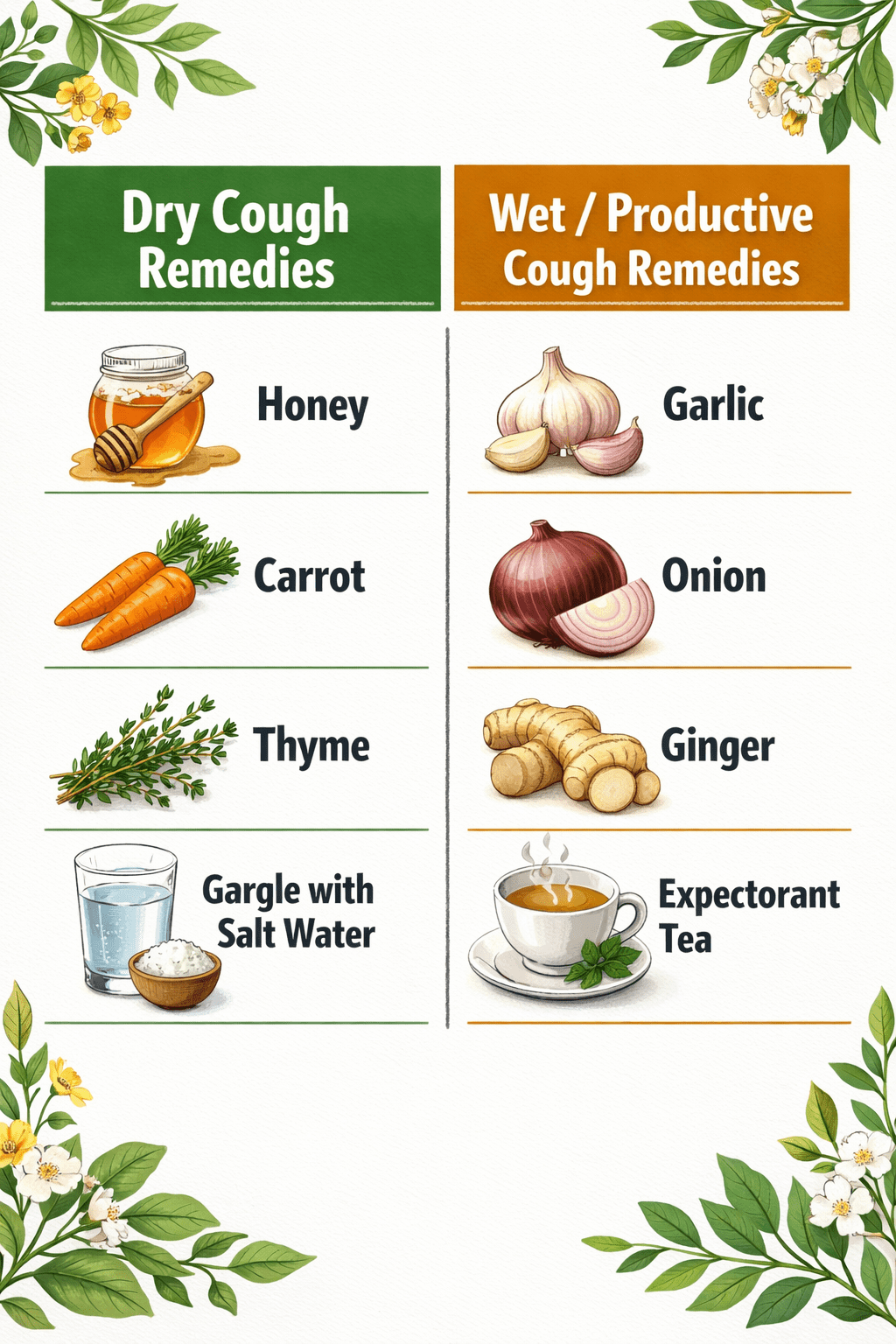
- Dry cough (no mucus, scratchy throat): You need a demulcent — something that coats and soothes. Honey, carrot syrup, and oregano work well here [1]
- Productive cough (with mucus): You need an expectorant — something that loosens phlegm. Garlic, onion, thyme, and ginger are better choices [1][4]
“The best natural cough remedy is the one matched to your symptoms — a soothing syrup for a dry cough, an expectorant blend for a chesty one.”

7 DIY Natural Cough Relief Remedies You Can Make Right Now
Here are seven remedies you can prepare at home, each using ingredients most people already have. I’ve organized them from simplest to slightly more involved.
1. 🍯 Honey, Lemon, and Ginger Syrup
This is the classic DIY natural cough relief recipe, and for good reason. It combines three of the most effective natural cough fighters into one easy syrup [2][6].
How to make it:
- Warm (don’t boil) ½ cup of water in a small saucepan
- Stir in 2 tablespoons of raw honey
- Add 1 tablespoon of fresh lemon juice
- Grate or slice 1 teaspoon of fresh ginger and add it in
- Let it steep for 5 minutes, then strain and sip
Dose: 1 tablespoon every 2–3 hours as needed. Works for both adults and children over 1 year old [6].
You can also turn this into long-lasting lozenges — check out this homemade honey lemon ginger cough drops recipe for a step-by-step guide.
2. 🧄 Garlic and Honey Syrup (Best for Wet Coughs)
Garlic is a natural expectorant and antimicrobial agent. Combined with honey, it becomes a simple but powerful remedy for productive coughs [1][8].
How to make it:
- Crush 3–4 garlic cloves and let them sit for 10 minutes (this activates allicin, the active compound)
- Mix with 3 tablespoons of raw honey
- Let it infuse for at least 30 minutes before using
- Take 1 teaspoon every few hours
Choose this if: Your cough is chesty and you’re bringing up mucus. The garlic helps dilute secretions and makes them easier to clear [1].
3. 🌿 Thyme Tea
Thyme has well-documented expectorant and anti-inflammatory properties that relax the respiratory tract [4][5]. It’s one of the most evidence-backed herbs for cough, especially when a cold is involved.
How to make it:
- Add 2 tablespoons of fresh thyme (or 1 tablespoon dried) to a cup of boiling water
- Cover and steep for 10 minutes
- Strain, add honey to taste, and sip slowly
Common mistake: Using too little thyme. You need a strong infusion for it to be effective — don’t be shy with the herb.
For more ways to build immune-supporting herbal drinks, see our guide on herbal teas for immunity and wellness.
4. 🍎 Apple Cider Vinegar, Honey, and Cayenne Tonic
This combination works especially well for throat congestion and stubborn coughs. The cayenne pepper contains capsaicin, which can temporarily desensitize the cough reflex, while apple cider vinegar helps break up mucus [3].
How to make it:
- Mix 2 tablespoons of apple cider vinegar with 2 tablespoons of raw honey
- Add a pinch of cayenne pepper (start small — ⅛ teaspoon)
- Stir into ¼ cup of warm water
- Drink slowly, 1–2 times per day
Edge case: If you have acid reflux or a sensitive stomach, skip this one. The vinegar can aggravate those conditions.

5. 🥕 Carrot and Honey Syrup (Great for Dry Coughs)
Carrot juice combined with honey is a traditional remedy for dry, irritating coughs. It lubricates the throat and has natural soothing properties [1].
How to make it:
- Juice or blend 2–3 medium carrots and strain to get ½ cup of juice
- Warm gently (don’t boil)
- Stir in 2 tablespoons of raw honey
- Add a squeeze of lemon if you have it
- Drink ¼ cup, 3–4 times a day
Why it works: Carrots are rich in beta-carotene and antioxidants that support respiratory tissue. Honey does the coating and soothing work [1][8].
6. 🫚 Ginger, Black Pepper, and Honey Tea
Black pepper is a natural expectorant that stimulates circulation and loosens mucus. Paired with ginger’s anti-inflammatory action, this tea is particularly good for early-stage coughs and congestion [8][10].
How to make it:
- Simmer 1 cup of water with 5–6 black peppercorns and 3–4 slices of fresh ginger for 10 minutes
- Strain into a mug
- Add 1 tablespoon of honey and stir well
- Sip while warm
This pairs well with a natural sinus chest rub if you’re also dealing with chest congestion.
7. 🌱 Oregano Cough Syrup
Oregano contains antitussive compounds that help reduce the cough reflex and lubricate the throat, making it especially useful for dry, persistent coughs [1].
How to make it:
- Steep 2 tablespoons of fresh oregano (or 1 tablespoon dried) in 1 cup of boiling water for 10 minutes
- Strain and let cool slightly
- Add 1–2 tablespoons of honey
- Take 1 tablespoon every 3–4 hours
Tip: Dried oregano works fine here — no need to buy fresh if you don’t have it.
Quick Comparison: Which Remedy for Which Cough?
| Remedy | Best For | Key Benefit | Time to Make |
|---|---|---|---|
| Honey, Lemon & Ginger Syrup | Dry or wet cough | All-rounder, soothes and loosens | 10 min |
| Garlic & Honey Syrup | Wet/productive cough | Expectorant, antimicrobial | 40 min (infuse) |
| Thyme Tea | Cold-related cough | Anti-inflammatory, expectorant | 15 min |
| ACV, Honey & Cayenne Tonic | Congested throat | Clears mucus, numbs cough reflex | 5 min |
| Carrot & Honey Syrup | Dry cough | Lubricates, soothes throat | 10 min |
| Ginger, Pepper & Honey Tea | Early cough/congestion | Stimulates circulation, loosens mucus | 15 min |
| Oregano Syrup | Dry, persistent cough | Reduces cough reflex | 15 min |
Are These Remedies Safe for Children?
For children under 4, natural remedies are often the recommended option because conventional cough medicines are not approved for this age group [6]. Honey, lemon, and ginger are all considered safe alternatives for children over 1 year old.
Important rules for kids:
- Never give honey to infants under 12 months — risk of botulism
- Avoid cayenne pepper for children under 6
- Reduce doses to ½ teaspoon for toddlers and young children
- Always check with your pediatrician if symptoms are severe or don’t improve in a few days
For adults dealing with a cough alongside a cold, a hot toddy recipe is another time-tested option worth trying.

Common Mistakes to Avoid With Natural Cough Remedies
Even simple remedies can fall flat if you make a few key errors:
- Boiling honey: Heat above 40°C (104°F) destroys its beneficial enzymes. Always add honey to warm, not boiling, liquid [8]
- Using the wrong remedy for your cough type: A soothing syrup won’t help a chesty cough much. Match the remedy to the symptom
- Skipping consistency: One dose won’t cut it. Most remedies need to be taken every 2–4 hours for a day or two to make a real difference
- Ignoring red flags: Natural remedies support recovery — they don’t replace medical care. See a doctor if your cough comes with difficulty breathing, high fever, or lasts more than 3 weeks
If you’re also dealing with throat mucus alongside your cough, these DIY remedies for throat mucus can help address both issues at once.
FAQ: DIY Natural Cough Relief
Q: What is the fastest natural cough remedy?
The fastest option is raw honey taken straight — 1 teaspoon coats the throat immediately and can reduce coughing within minutes. Adding lemon juice and warm water makes it more effective for sustained relief [8][2].
Q: Can I use dried herbs instead of fresh?
Yes. Use roughly half the amount of dried herb compared to fresh, since dried herbs are more concentrated. Dried thyme and oregano work well in teas and syrups.
Q: How long do homemade cough syrups last?
Most honey-based syrups last 2–3 weeks in the refrigerator. Syrups with fresh garlic or ginger are best used within 1 week. Always store in a sealed glass jar.
Q: Is honey or lemon better for a cough?
Honey is more effective on its own because it directly coats and soothes the throat. Lemon adds vitamin C and helps thin mucus, so combining both gives better results than either alone [2][8].
Q: Can I give ginger tea to a toddler?
Yes, in small amounts. A weak ginger tea with honey (for children over 1 year) is generally considered safe. Use ½ teaspoon of honey and very mild ginger — no more than a small slice steeped briefly.
Q: What kitchen ingredient helps with a cough at night?
Honey is the best option for nighttime cough. A teaspoon of raw honey before bed can reduce nighttime coughing, especially in children, according to several studies referenced by pediatric health sources [6].
Q: Does apple cider vinegar really help a cough?
It can help by breaking up mucus and creating an environment less hospitable to bacteria. It works best combined with honey and a pinch of cayenne rather than taken alone [3].
Q: Are these remedies safe during pregnancy?
Honey, lemon, and ginger in food amounts are generally considered safe during pregnancy. However, large amounts of ginger or cayenne should be avoided. Always check with your healthcare provider first.
Q: What’s the difference between a cough suppressant and an expectorant?
A suppressant reduces the urge to cough (good for dry coughs). An expectorant loosens and thins mucus so it’s easier to cough up (good for wet coughs). Honey and oregano act more as suppressants; garlic, thyme, and ginger act more as expectorants [1][4].
Q: Can I combine multiple remedies?
Yes — many of the most effective recipes combine several ingredients. Honey, ginger, lemon, and thyme together, for example, cover both soothing and expectorant needs in one drink [5][9].
Conclusion
DIY natural cough relief doesn’t require a trip to the pharmacy or a complicated recipe. The seven remedies above use ingredients most people already have — honey, ginger, lemon, garlic, thyme, apple cider vinegar, and oregano — and each one takes less than 15 minutes to prepare.
Your next steps:
- Identify your cough type first (dry vs. productive) and choose the matching remedy from the table above
- Start with the honey-lemon-ginger syrup if you’re unsure — it works for both types
- Take your chosen remedy every 2–4 hours consistently, not just once
- Keep a small batch in the fridge so it’s ready when you need it
- See a doctor if your cough doesn’t improve in 5–7 days or if you develop new symptoms
For a broader look at what works, our guide on 10 natural remedies for cough that actually work is a great next read. And if you’re new to making things at home, the beginner’s guide to natural remedies walks you through everything you need to know.
Your kitchen is more of a medicine cabinet than you might think.
References
[1] Homemade Cough Syrup – https://www.tuasaude.com/en/homemade-cough-syrup/
[2] Honey Cough Syrup – https://honey.com/recipe/honey-cough-syrup
[3] Homemade Cough Remedy – https://barefeetinthekitchen.com/homemade-cough-remedy/
[4] Natural Cough Expectorants Cough – https://www.healthline.com/health/natural-cough-expectorants-cough
[5] Slideshow Natural Cough Remedies – https://www.webmd.com/cold-and-flu/ss/slideshow-natural-cough-remedies
[6] Homemade Cough Suppressant Safe For Kids – https://www.goodrx.com/conditions/cold-symptoms/homemade-cough-suppressant-safe-for-kids
[8] Best Natural Cough Remedies – https://stellarbiotics.com/blogs/recipes/best-natural-cough-remedies
[9] Instant Pot Cough Syrup – https://traditionalcookingschool.com/food-preparation/instant-pot-cough-syrup/
[10] Homemade Cough Drops Recipe – https://homesteadandchill.com/homemade-cough-drops-recipe/