
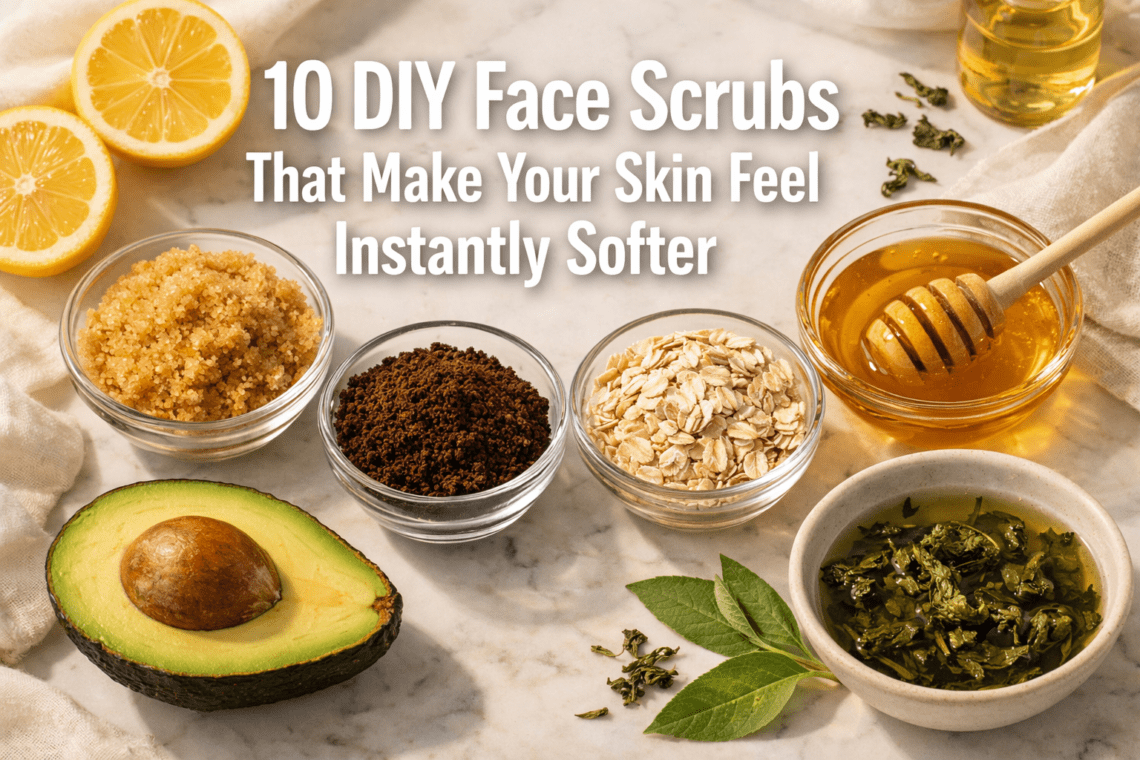
Quick Answer: The best DIY face scrubs combine a gentle abrasive (like sugar, oats, or coffee grounds) with a nourishing base (like honey, coconut oil, or yogurt) to remove dead skin cells and leave your face noticeably softer in a single use. Most recipes take under five minutes to mix from ingredients already in your kitchen, cost almost nothing, and work across all skin types when you match the formula to your skin’s needs.
Key Takeaways
- Brown sugar and fine-ground oats are the gentlest exfoliants for sensitive or mature skin; sea salt and coarse coffee are better for oily or resilient skin.
- Honey is a superstar base ingredient because it moisturizes, has natural antibacterial properties, and works in almost every DIY scrub formula.
- Most homemade face scrubs should be used 1-2 times per week to avoid over-exfoliating.
- Always patch-test any new scrub on your inner wrist before applying to your face, especially if your skin is reactive.
- Lemon juice and turmeric both deliver real brightening benefits but need careful use: lemon can irritate, and turmeric can temporarily stain skin.
- Coffee-based scrubs are excellent for dull, tired skin because coffee is rich in antioxidants and may support circulation.
- Avocado, jojoba oil, and aloe vera are the best add-ins for dry skin because they deliver moisture while you exfoliate.
- Tea tree oil (2-3 drops only) transforms a basic sugar scrub into an effective option for acne-prone skin.
- Store any leftover scrub in a sealed jar in the fridge and use within 5-7 days.
- After every scrub, follow with a good moisturizer to lock in softness.
What Makes DIY Face Scrubs Actually Work?
A good face scrub does two things at once: it physically removes dead skin cells sitting on the surface, and it delivers nourishing ingredients directly to freshly revealed skin. That combination is why your face feels so noticeably softer right after you rinse one off.
The key variables in any homemade face scrub are:
- The exfoliant (what does the scrubbing)
- The base or carrier (what holds it together and adds moisture)
- Optional actives (ingredients that target specific concerns like acne, dullness, or redness)
Here’s a quick reference for matching your skin type to the right exfoliant:
| Skin Type | Best Exfoliant | Avoid |
|---|---|---|
| Sensitive / Mature | Finely ground oats, brown sugar | Sea salt, coarse coffee |
| Dry | Brown sugar, rice flour | Harsh salt scrubs |
| Oily | Fine sea salt, coffee grounds | Heavy oil bases |
| Acne-prone | Fine sugar, ground oats | Walnut shell, coarse salt |
| Normal / Combination | Any of the above | Nothing specific |
Quick rule: If your skin stings, turns red, or feels raw after a scrub, the exfoliant is too coarse or you’re pressing too hard. Switch to a finer grain and use light, circular pressure.
The 10 Best DIY Face Scrubs (Recipes + Instructions)
These ten recipes are organized from gentlest to more targeted, so you can find your match quickly. Each one uses common kitchen ingredients and takes about five minutes to make.
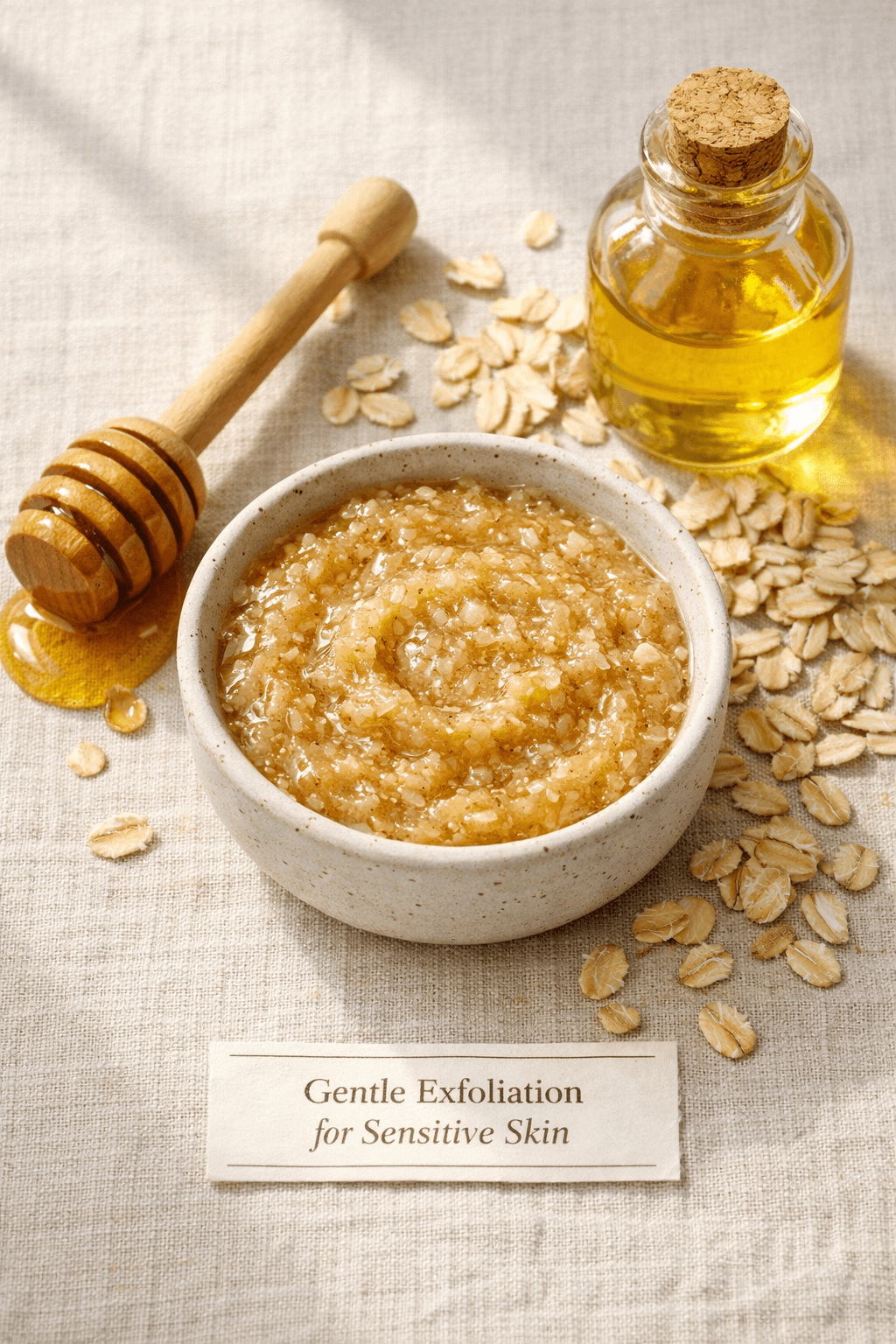
1. 🍯 Honey and Oatmeal Scrub (Best for Dry or Mature Skin)
This is the go-to gentle exfoliation formula for anyone with dry, mature, or reactive skin. Ground oats are the mildest exfoliant available, and honey adds moisture while it works [1].
Ingredients:
- 2 tablespoons finely ground oats (blend rolled oats for 30 seconds)
- 1 tablespoon raw honey
- 1 teaspoon sweet almond oil or olive oil
How to make it: Mix all three ingredients in a small bowl until you get a paste. Apply to damp skin using gentle circular motions for 60 seconds, then rinse with warm water.
Why it works: Ground oatmeal is identified as the gentlest exfoliation option for reactive and sensitive skin types, preferred over harsher alternatives like sea salt [2].
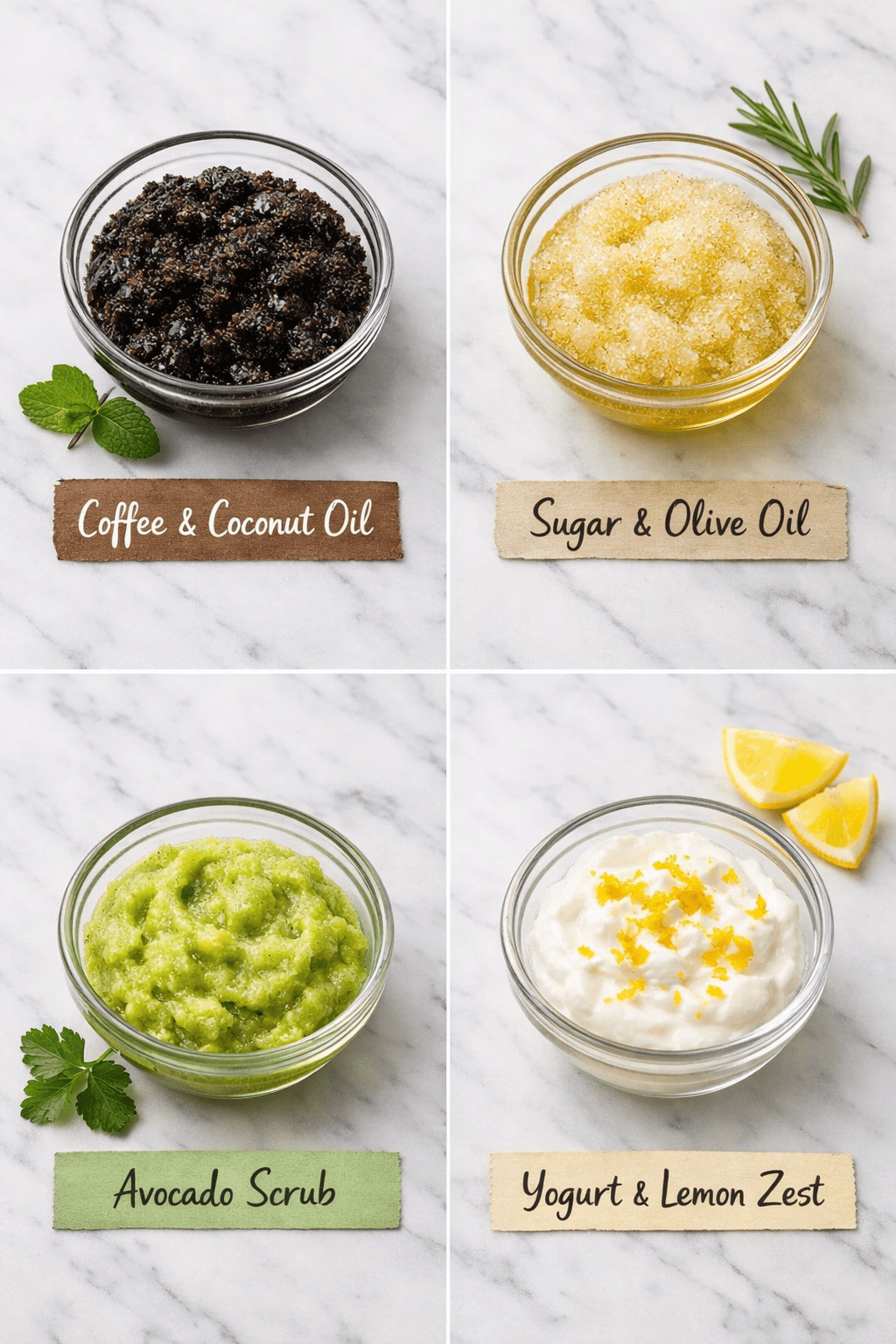
2. ☕ Coffee and Coconut Oil Scrub (Best for Dull, Tired Skin)
Coffee-based scrubs are recommended specifically for dull, tired skin because coffee is rich in antioxidants and may help refresh skin appearance [1].
Ingredients:
- 2 tablespoons finely ground coffee (used or fresh)
- 1 tablespoon coconut oil (melted)
- 1 teaspoon fine sugar
How to make it: Stir together and apply to damp skin. Massage gently for 1-2 minutes, focusing on any dull patches. Rinse thoroughly, as coffee can stain towels.
Common mistake: Using coarse espresso grounds instead of fine-ground coffee. Coarse grounds are too rough for facial skin and can cause micro-tears.
3. 🍋 Lemon and Yogurt Brightening Scrub (Best for Winter Dullness)
Plain yogurt contains lactic acid, a gentle chemical exfoliant that works alongside the physical scrubbing to brighten skin. The lemon juice adds a small brightening boost but should be used sparingly to avoid irritation [1].
Ingredients:
- 2 tablespoons plain full-fat yogurt
- 1 teaspoon fresh lemon juice (no more)
- 1 tablespoon fine sugar or rice flour
How to make it: Mix well and apply to clean, damp skin. Leave for 2 minutes, then gently massage and rinse. Do not use this one if you have open breakouts or very sensitive skin.
Edge case: Skip the lemon entirely if your skin is reactive and just use yogurt with sugar. You’ll still get the lactic acid benefit without the citrus risk.
4. 🥑 Avocado and Brown Sugar Scrub (Best for Very Dry Skin)
This scrub addresses dry skin concerns with a rich combination of healthy fats and gentle exfoliation. Avocado is packed with vitamins E and C, and brown sugar is softer than white sugar, adding a touch of moisture as it exfoliates [1][2].
Ingredients:
- ¼ ripe avocado, mashed
- 1 tablespoon brown sugar
- 1 teaspoon jojoba oil or argan oil
How to make it: Mash the avocado until smooth, then mix in the sugar and oil. Apply to damp skin, massage for 60 seconds, and rinse well. Use immediately because avocado oxidizes quickly.
For more nourishing skin recipes, check out this DIY turmeric butter for a radiant glow — it pairs beautifully as an after-scrub treatment.
5. 🍬 Classic Sugar, Honey, and Olive Oil Scrub (Best for All Skin Types)
This is the most universally useful recipe in the list. It works across all skin types without any specialized ingredients [2].
Ingredients:
- 2 tablespoons fine white or brown sugar
- 1 tablespoon raw honey
- 1 teaspoon olive oil
How to make it: Combine and apply to damp skin in gentle circles. Rinse after 1-2 minutes. That’s it. This is also a great starter scrub if you’ve never made one before.
For a more detailed version of this classic formula, see the DIY vanilla sugar scrub recipe for soft, glowy skin — adding vanilla extract takes it to another level of scent and skin feel.
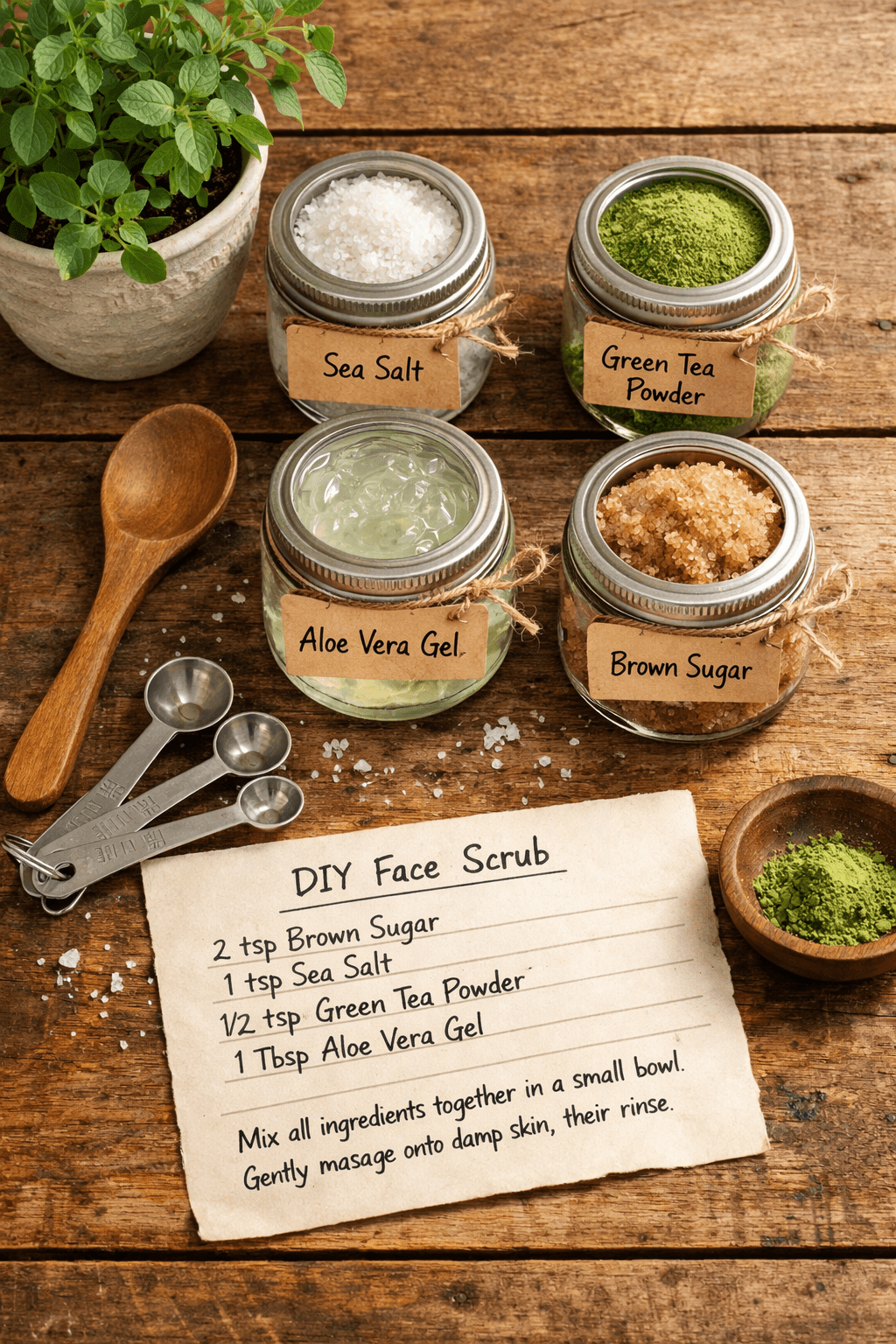
6. 🌿 Green Tea and Aloe Vera Soothing Scrub (Best for Redness or Irritated Skin)
Green tea and aloe vera together provide a calming, anti-inflammatory effect that makes this scrub ideal for skin that’s easily irritated or prone to redness [1].
Ingredients:
- 1 tablespoon brewed green tea (cooled)
- 1 tablespoon aloe vera gel (fresh or store-bought)
- 1 tablespoon honey
- 1 tablespoon fine sugar
How to make it: Steep green tea for 5 minutes, let it cool completely, then mix all ingredients. Massage onto damp skin for 1 minute with light pressure. Rinse with cool water.
You might also enjoy this DIY aloe vera face mask for glowing skin overnight as a follow-up treatment after scrubbing.
7. 🌊 Sea Salt and Clay Scrub (Best for Oily Skin)
Sea salt formulations work well for oily skin because they help balance excess oil without completely stripping the skin’s natural moisture barrier [2].
Ingredients:
- 2 tablespoons fine sea salt
- 1 tablespoon kaolin clay powder
- Enough water to form a paste (roughly 1-2 teaspoons)
How to make it: Mix the salt and clay, then add water slowly until you get a spreadable paste. Apply to damp skin, massage briefly (30-45 seconds only — salt is more abrasive), and rinse well.
Important: Do not use sea salt scrubs on broken skin, active breakouts, or sensitive areas. This formula is for resilient, oily skin only.
8. 🌼 Turmeric and Honey Glow Scrub (Best for Uneven Skin Tone)
Turmeric is increasingly used in DIY skincare for its anti-inflammatory properties and the natural glow it can add to skin. The one real drawback: it can temporarily tint skin yellow, especially on very fair complexions [2].
Ingredients:
- 2 tablespoons fine sugar
- 1 tablespoon honey
- ½ teaspoon turmeric powder
- 1 teaspoon coconut oil
How to make it: Mix thoroughly. Apply to damp skin and massage for 60 seconds. Rinse well with warm water and follow with a gentle cleanser to remove any yellow residue.
Pro tip: Do this scrub at night so any faint yellow tint fades by morning.
9. 🌱 Tea Tree and Jojoba Acne-Clearing Scrub (Best for Acne-Prone Skin)
Tea tree oil scrubs target acne-prone skin by clearing pores without over-drying, which is the main problem with many commercial acne products [2].
Ingredients:
- 2 tablespoons fine sugar
- 1 tablespoon jojoba oil
- 2-3 drops tea tree essential oil (no more)
How to make it: Mix the sugar and jojoba oil first, then add the tea tree drops and stir. Apply to damp skin, massage gently for 60 seconds, and rinse. Jojoba oil is non-comedogenic, meaning it won’t clog pores.
Edge case: If you’re allergic to tea tree oil, substitute with 2 drops of lavender essential oil for a gentler antibacterial effect.
For more targeted acne support, this DIY face mask with honey and cinnamon works well as a follow-up treatment.
10. 🍚 Rice Flour and Milk Brightening Scrub (Best for Sensitive, Dull Skin)
Rice flour is finely textured and much gentler than sugar or salt, making it a great option for anyone who wants exfoliation without any real abrasion. Milk adds lactic acid for extra brightening.
Ingredients:
- 2 tablespoons rice flour
- 1 tablespoon whole milk or coconut milk
- 1 teaspoon honey
How to make it: Stir into a smooth paste. Apply to damp skin and massage in small circles for 60-90 seconds. Rinse with cool water. This one is safe to use up to three times a week because it’s so mild.
For a body version of this concept, see the DIY rice powder body scrub for dry, dull skin — the same principle scaled up for full-body use.
How to Apply Any DIY Face Scrub Correctly
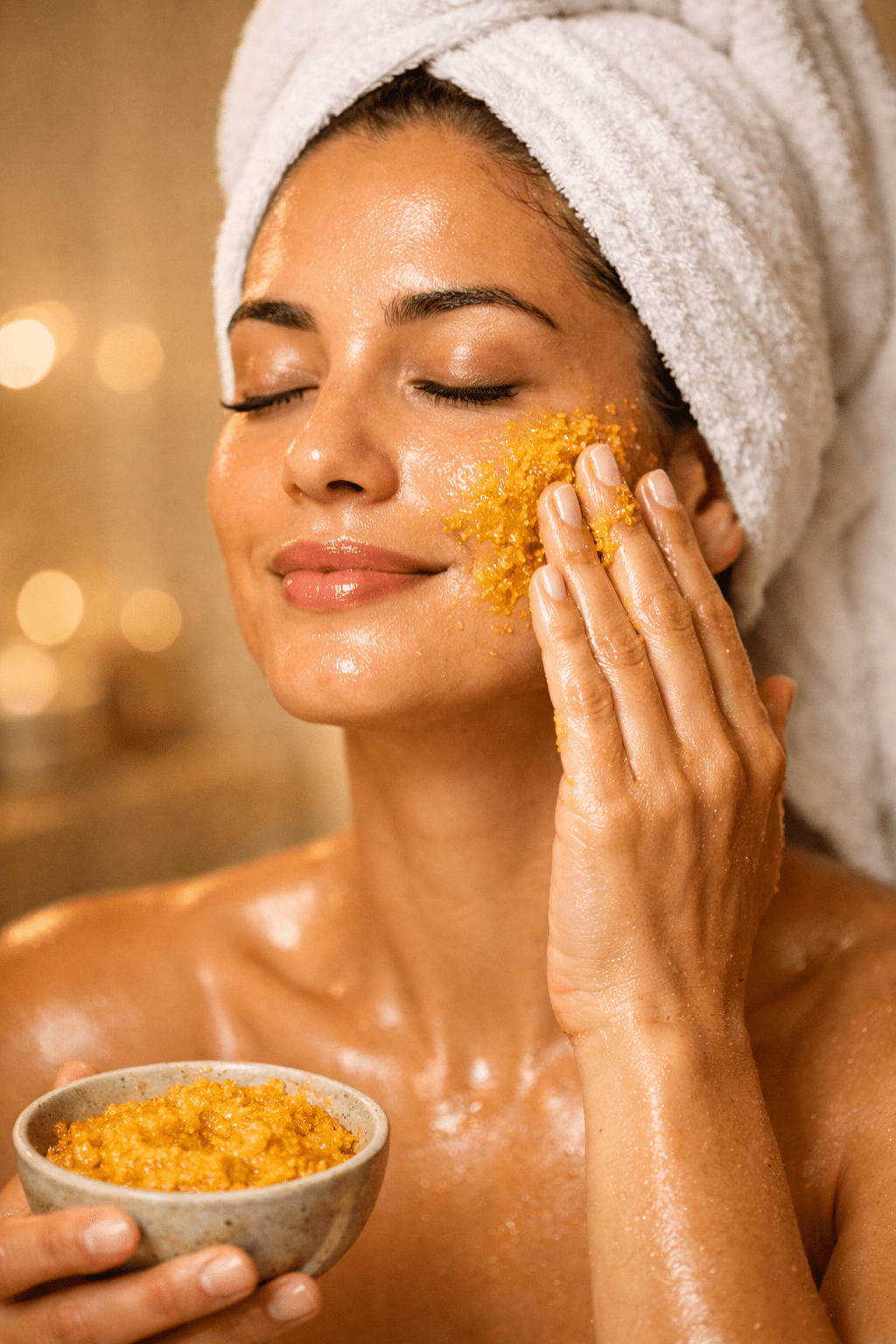
Getting the technique right matters as much as the recipe. Even the gentlest scrub can irritate skin if applied too aggressively.
Step-by-step application:
- Cleanse first. Wash your face with a gentle cleanser and leave skin damp (not dripping).
- Apply a small amount. A tablespoon-sized portion is enough for your whole face.
- Use light, circular motions. Work outward from the center of your face. Never scrub back and forth.
- Avoid the eye area. The skin around your eyes is too thin for any physical exfoliant.
- Keep it to 60-90 seconds. Longer isn’t better. More time just means more irritation.
- Rinse with warm water. Then splash with cool water to close pores.
- Pat dry and moisturize immediately. Freshly exfoliated skin absorbs moisturizer better than at any other time.
How often should you use a DIY face scrub? For most skin types, 1-2 times per week is ideal. Sensitive or mature skin does better with once a week. Oily skin can handle twice a week. Daily exfoliation is too much for almost everyone.
Common Mistakes That Ruin Homemade Face Scrubs
Even simple recipes can go wrong. Here are the most frequent issues and how to fix them:
- Using ingredients that are too coarse. Crushed walnut shells, coarse sea salt, and large sugar crystals are too rough for facial skin. Always use fine-ground versions.
- Skipping the patch test. Apply a small amount to your inner wrist and wait 24 hours before using any new scrub on your face.
- Over-scrubbing. Pressing hard or scrubbing for too long strips the skin barrier and causes redness. Light pressure, short time.
- Using citrus on broken skin. Lemon juice in any scrub will sting and irritate skin that has active breakouts, cuts, or eczema patches.
- Storing scrubs too long. Homemade scrubs with fresh ingredients like avocado, yogurt, or milk should be made fresh or stored in the fridge for no more than 5-7 days.
- Skipping moisturizer after. Exfoliation removes the top layer of dead cells, leaving skin temporarily more vulnerable to moisture loss. Always follow with a moisturizer.
If you want to complement your scrub routine with a full natural skincare approach, this DIY face moisturizer with aloe vera for sensitive skin is a great post-scrub option.
FAQ: DIY Face Scrubs
Q: Can I use a DIY face scrub every day?
No. Daily exfoliation disrupts your skin barrier and causes irritation, redness, and increased sensitivity. Stick to 1-2 times per week for most skin types.
Q: Are homemade face scrubs as effective as store-bought ones?
For basic exfoliation and softening, yes. DIY scrubs using sugar, oats, or coffee can remove dead skin cells just as effectively as many commercial products. They lack preservatives and some specialized actives, but for general skin softening they work very well.
Q: Can I use a body scrub recipe on my face?
Usually not. Body scrubs are typically coarser because body skin is thicker. Always use finer exfoliants on your face. The DIY rice powder body scrub is formulated for body skin, not the face.
Q: What’s the best DIY face scrub for acne?
The tea tree and jojoba scrub (recipe #9) is the most targeted option. It clears pores without over-drying. Avoid scrubs with heavy oils like coconut oil if you’re acne-prone.
Q: Will a DIY face scrub help with dark spots?
Exfoliation can improve the appearance of surface-level dark spots over time by removing pigmented dead cells. The lemon-yogurt scrub and the turmeric-honey scrub are the best options from this list for that goal. Results take weeks, not days.
Q: Can I use these scrubs if I have rosacea?
Rosacea-prone skin is very reactive. Physical exfoliation is generally not recommended during a flare. If your skin is calm, the green tea and aloe vera scrub is the gentlest option, but always consult a dermatologist first.
Q: How long do homemade face scrubs last?
Scrubs with only dry ingredients (sugar + oil) can last up to 2 weeks in a sealed jar. Scrubs with fresh ingredients like yogurt, avocado, or lemon juice should be used within 24-48 hours or stored in the fridge for no more than 5 days.
Q: Do I need to use oil in a DIY face scrub?
No, but oil helps. It acts as a carrier, makes the scrub easier to apply, and adds moisture. If you have very oily skin, you can reduce or skip the oil and use a water-based ingredient like aloe vera gel instead.
Q: Is brown sugar better than white sugar for face scrubs?
Brown sugar is slightly softer than white sugar and adds a small amount of moisture, making it a gentler choice for dry or sensitive skin [2]. White sugar works fine for normal or oily skin types.
Q: Can I add essential oils to any of these recipes?
Yes, but use them sparingly (2-3 drops maximum) and always diluted in a carrier oil. Lavender, tea tree, and frankincense are the most skin-friendly options. Never apply undiluted essential oils directly to your face.
Conclusion: Start With One Scrub This Week
You don’t need to make all ten of these at once. Pick the one that matches your skin type right now and try it this week. If you have dry or sensitive skin, start with the honey and oatmeal scrub. If your skin looks dull and tired, go straight to the coffee and coconut oil version. If you’re dealing with breakouts, the tea tree and jojoba scrub is your best first step.
Your action plan:
- Check your kitchen for the ingredients in your chosen recipe.
- Make a small batch (enough for one or two uses).
- Patch test on your inner wrist first.
- Use on damp skin with light circular pressure for 60-90 seconds.
- Follow immediately with a moisturizer.
- Note how your skin feels and adjust the recipe if needed.
The best part about DIY face scrubs is that you can tweak them endlessly. Too gritty? Use less exfoliant. Skin feels dry after? Add more oil. Too thick? Add a few drops of water. Once you get comfortable with one recipe, you’ll have the confidence to experiment with the rest.
For even more natural skincare inspiration, browse the full DIY skincare collection at The Herbal Handbook — there’s a natural recipe for almost every skin concern you can think of.
References
[1] The 5 Best Winter Homemade Face Scrubs For Mature Skin 2026 – https://fieracosmetics.com/blogs/news/the-5-best-winter-homemade-face-scrubs-for-mature-skin-2026
[2] How To Make Face Scrub DIY Natural Glow Guide – https://smytten.com/blogs/skincare/how-to-make-face-scrub-diy-natural-glow-guide
[3] Los 6 Mejores Exfoliantes Faciales Para Empezar 2026 Con La Mejor Cara – https://laconicum.com/en/blogs/ultrabrab/los-6-mejores-exfoliantes-faciales-para-empezar-2026-con-la-mejor-cara