
I still remember the first time I brewed chamomile tea to calm my racing mind before a big presentation. That simple act opened a door to natural remedies that changed how I approach everyday health concerns. If you’re curious about natural remedies for beginners but don’t know where to start, you’re not alone. With the global herbal medicine market projected to reach $328.72 billion by 2030 and approximately 80% of the world’s population using herbal medicine for primary healthcare, more people than ever are turning to plant-based solutions.[4]
This content is for informational purposes only and is not medical advice. Always consult a healthcare professional before trying any remedy.
Key Takeaways
- Natural remedies for beginners should start with five foundational herbs: chamomile, ginger, turmeric, peppermint, and garlic, which offer proven benefits with minimal risk
- Begin with simple preparations like teas and fresh herbs before advancing to tinctures or concentrated extracts
- Always consult healthcare providers before starting herbal remedies, especially if you take prescription medications or have chronic conditions
- Quality matters—choose organic, third-party tested products from reputable suppliers to ensure safety and effectiveness
- Start with low doses and track your response in a health journal to identify what works for your body
- Natural remedies work best as part of a holistic approach that includes proper nutrition, sleep, and stress management
- The U.S. natural products industry reached $343 billion in 2025, with cough and cold remedies showing 24.8% value growth[3][2]
- Common mistakes include expecting immediate results, using poor-quality herbs, and not researching herb-drug interactions
- Build your knowledge gradually through credible sources and consider working with trained herbalists or naturopathic practitioners
Quick Answer
Natural remedies for beginners are plant-based treatments that address common health concerns using herbs, botanicals, and traditional preparations like teas, infusions, and topical applications. Start with five proven herbs (chamomile, ginger, turmeric, peppermint, and garlic), learn basic preparation methods, consult healthcare providers about potential interactions, and source high-quality organic products. Most beginners see results within 2-4 weeks when using remedies consistently for appropriate conditions, though some acute issues like digestive upset may respond within hours.
What Are Natural Remedies and Why Should Beginners Consider Them?
Natural remedies are therapeutic substances derived from plants, minerals, or other natural sources that support health and address specific conditions without synthetic pharmaceutical ingredients. For beginners, they offer an accessible entry point into complementary healthcare that can work alongside conventional medicine.
Approximately 24% of U.S. adults reported using herbal medicines, supplements, or teas to treat health problems as of 2021, reflecting growing interest in natural approaches.[8] Natural remedies appeal to beginners because they often have fewer side effects than pharmaceutical drugs, cost less, and empower people to take active roles in their health.
Key benefits for beginners include:
- Gentler action: Many herbs work gradually with the body’s natural processes rather than forcing immediate biochemical changes
- Multiple benefits: Single herbs often address several related symptoms (ginger helps nausea, inflammation, and circulation)
- Accessibility: You can grow many medicinal herbs at home or find them in grocery stores
- Cultural heritage: Natural remedies connect you to thousands of years of traditional healing wisdom
- Lower cost: Dried herbs and basic preparations typically cost less than prescription medications
Important considerations:
Natural doesn’t automatically mean safe. Some herbs interact with medications, cause allergic reactions, or aren’t appropriate during pregnancy. Beginners should approach natural remedies with the same respect they’d give any medical intervention—research thoroughly, start cautiously, and consult qualified practitioners.
Choose natural remedies if you want to address mild to moderate symptoms, support overall wellness, or complement conventional treatments. They’re not appropriate as sole treatments for serious conditions like cancer, heart disease, or acute infections that require immediate medical intervention.
How Do I Choose the Right Natural Remedies for Beginners?
Start by identifying your specific health goals and matching them to herbs with established safety profiles and research backing. The best natural remedies for beginners target common, non-emergency conditions like occasional digestive upset, mild anxiety, minor inflammation, or immune support during cold season.
Selection criteria for beginners:
- Safety profile: Choose herbs recognized as generally safe (GRAS status) with minimal side effects
- Research support: Look for herbs with clinical studies or traditional use spanning centuries
- Availability: Select remedies you can easily source from reputable suppliers
- Simplicity: Start with single herbs rather than complex formulas so you can track effects
- Personal relevance: Match remedies to your actual health concerns, not theoretical benefits
Decision framework:
- Choose chamomile if you experience occasional anxiety, digestive upset, or sleep difficulties
- Choose ginger if you deal with nausea, motion sickness, or inflammatory joint pain
- Choose turmeric if you want anti-inflammatory support for joints or general wellness
- Choose peppermint if you have digestive issues, tension headaches, or need mental clarity
- Choose garlic if you want cardiovascular support or immune system strengthening
Common beginner mistake: Trying too many remedies at once. This makes it impossible to identify which herb helps, which causes side effects, and which does nothing for you. Introduce one new remedy every 2-3 weeks and track your response.
Evidence-based guidance recommends that beginners start small and simple when introducing herbal remedies, especially for those new to phytotherapy and botanical medicine.[1] This approach reduces risk and builds knowledge systematically.
What Are the Five Essential Herbs Every Beginner Should Know?
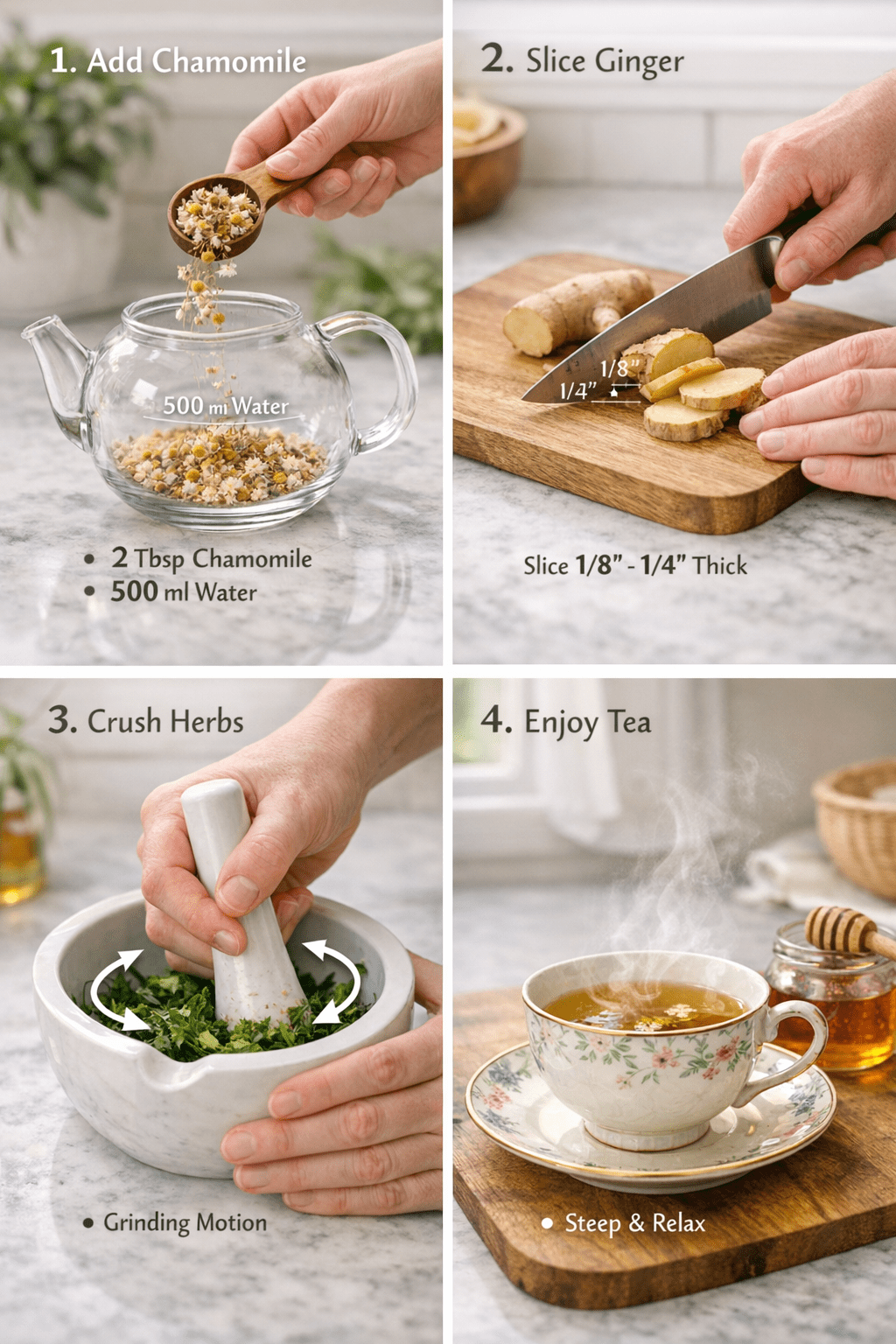
Five foundational herbs offer the broadest range of benefits with the highest safety margins for people new to natural remedies. These herbs have extensive traditional use, modern research validation, and multiple preparation options.
1. Chamomile (Matricaria chamomilla)
Chamomile offers gentle calming effects for both digestive and nervous systems. It works well as a nighttime tea for better sleep or a daytime remedy for upset stomach.
Primary uses:
- Mild anxiety and stress relief
- Digestive upset, gas, and bloating
- Sleep support without morning grogginess
- Skin inflammation when applied topically
Beginner dosage: 1-2 teaspoons dried flowers steeped in 8 oz hot water for 5-10 minutes, up to 3 times daily
Caution: Avoid if you’re allergic to ragweed, chrysanthemums, or other plants in the Asteraceae family
2. Ginger (Zingiber officinale)
Named the medicinal plant of 2026, ginger has newly recognized applications for joint pain and colds beyond its traditional use for nausea.[9] This versatile root works quickly for acute symptoms and provides anti-inflammatory benefits with regular use.
Primary uses:
- Nausea from motion sickness, pregnancy, or chemotherapy
- Joint pain and osteoarthritis
- Cold and flu symptoms
- Digestive stimulation and circulation
Beginner dosage: 1-2 grams fresh ginger (about 1/4 inch slice) in tea, or 250-500 mg dried ginger capsules up to 3 times daily
Caution: May increase bleeding risk if you take blood thinners; reduce dose if you experience heartburn
3. Turmeric (Curcuma longa)
Turmeric delivers powerful anti-inflammatory compounds called curcuminoids, particularly curcumin. It works best for chronic inflammation rather than acute pain relief.
Primary uses:
- Chronic inflammation and joint pain
- Digestive health and liver support
- Antioxidant protection
- Mood support
Beginner dosage: 1/2 to 1 teaspoon ground turmeric in food daily, or 400-600 mg standardized extract (95% curcuminoids) 2-3 times daily with black pepper to enhance absorption
Caution: May interact with blood thinners and diabetes medications; high doses can cause digestive upset
4. Peppermint (Mentha piperita)
Peppermint provides fast-acting relief for digestive complaints and mental clarity. The essential oil offers concentrated benefits but requires more caution than the leaf.
Primary uses:
- Irritable bowel syndrome (IBS) symptoms
- Indigestion and gas
- Tension headaches
- Mental alertness and focus
Beginner dosage: 1-2 teaspoons dried leaves in tea 2-3 times daily, or 1-2 drops food-grade essential oil in water (not undiluted)
Caution: Avoid if you have GERD or hiatal hernia, as it can relax the esophageal sphincter; don’t give to infants or young children
5. Garlic (Allium sativum)
Garlic supports cardiovascular and immune health when used consistently. Fresh garlic provides more benefits than aged or cooked preparations because heat destroys some active compounds.
Primary uses:
- Cardiovascular health and blood pressure support
- Immune system strengthening
- Antimicrobial effects for colds and infections
- Cholesterol management
Beginner dosage: 1-2 fresh cloves daily in food, or 600-900 mg aged garlic extract in supplement form
Caution: Increases bleeding risk; stop use 1-2 weeks before surgery; may cause digestive upset or body odor
These five herbs form a solid foundation for natural remedies for beginners because they address the most common health concerns, have established safety records, and are readily available in multiple forms.[1]
How Do I Prepare and Use Natural Remedies Safely?
Proper preparation maximizes the therapeutic benefits of herbs while minimizing risks. Different preparation methods extract different compounds, so matching the method to your herb and intended use matters.
Basic preparation methods for beginners:
Herbal Teas (Infusions)
Best for leaves, flowers, and delicate plant parts. Pour boiling water over herbs, cover, and steep 5-15 minutes.
Steps:
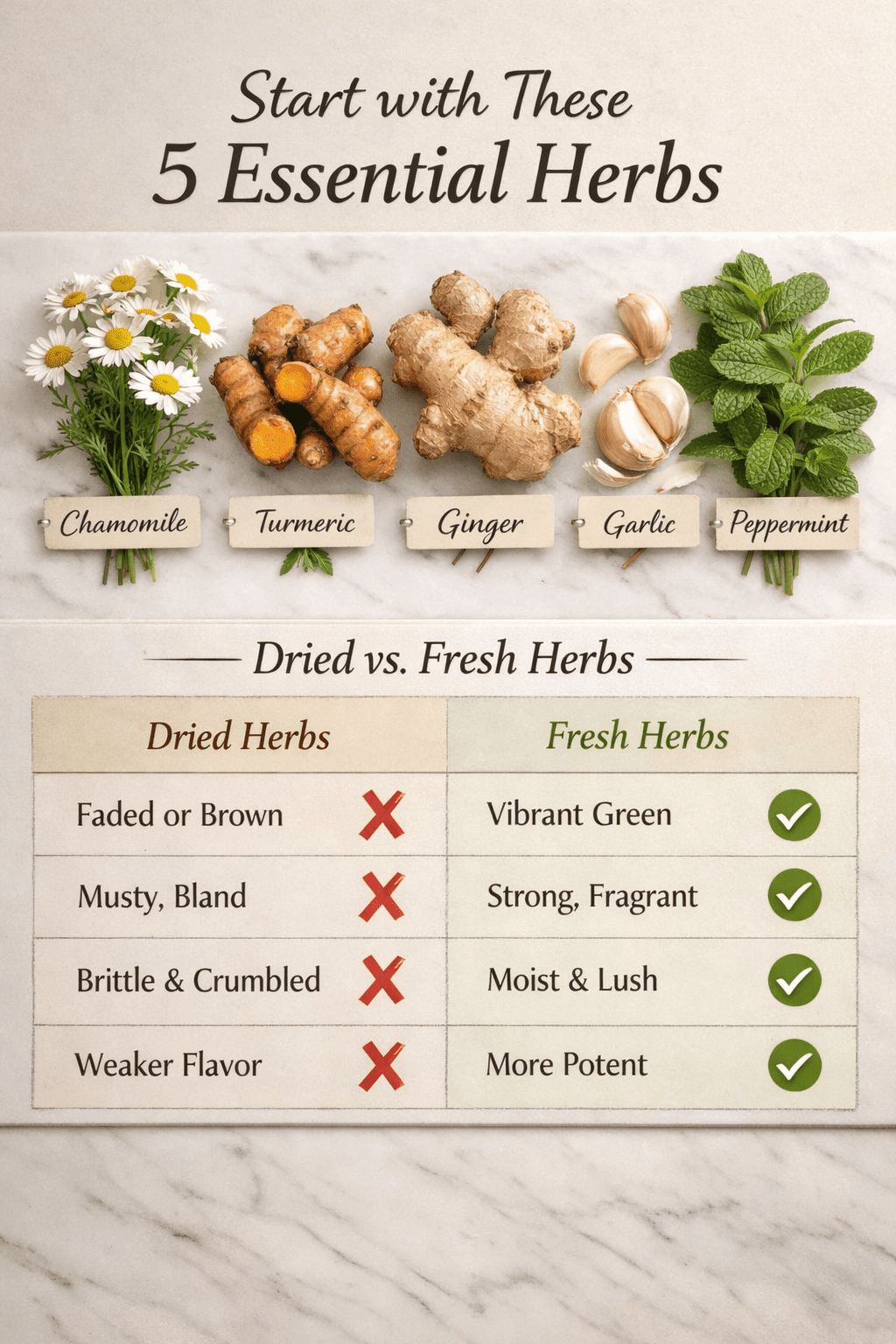
- Use 1-2 teaspoons dried herb per 8 oz water (or 2-3 teaspoons fresh)
- Boil water and let cool 30 seconds (around 200°F for most herbs)
- Pour over herbs in covered container
- Steep 5-10 minutes for mild effects, 10-15 for stronger
- Strain and drink within 24 hours
Decoctions
Best for roots, bark, and hard plant materials that need simmering to release compounds.
Steps:
- Use 1 tablespoon dried root or bark per 8 oz water
- Place herbs in pot with cold water
- Bring to boil, then reduce to gentle simmer
- Simmer covered for 20-45 minutes
- Strain and drink within 48 hours if refrigerated
Fresh Herb Use
Incorporate fresh herbs directly into food for gentle, ongoing benefits.
Examples:
- Add fresh ginger to stir-fries or smoothies
- Include turmeric in curries, soups, or golden milk
- Use fresh garlic in cooking (crush and let sit 10 minutes before heating to activate compounds)
- Garnish dishes with fresh peppermint or add to salads
Topical Applications
Some herbs work well applied directly to skin for localized effects.
Methods:
- Compress: Soak cloth in strong tea, apply to affected area
- Poultice: Crush fresh herbs or mix dried herbs with water to form paste, apply directly
- Salve: Infuse herbs in oil, then mix with beeswax for shelf-stable topical treatment
Safety guidelines for preparation:
- Water quality matters: Use filtered or spring water, not tap water with chlorine
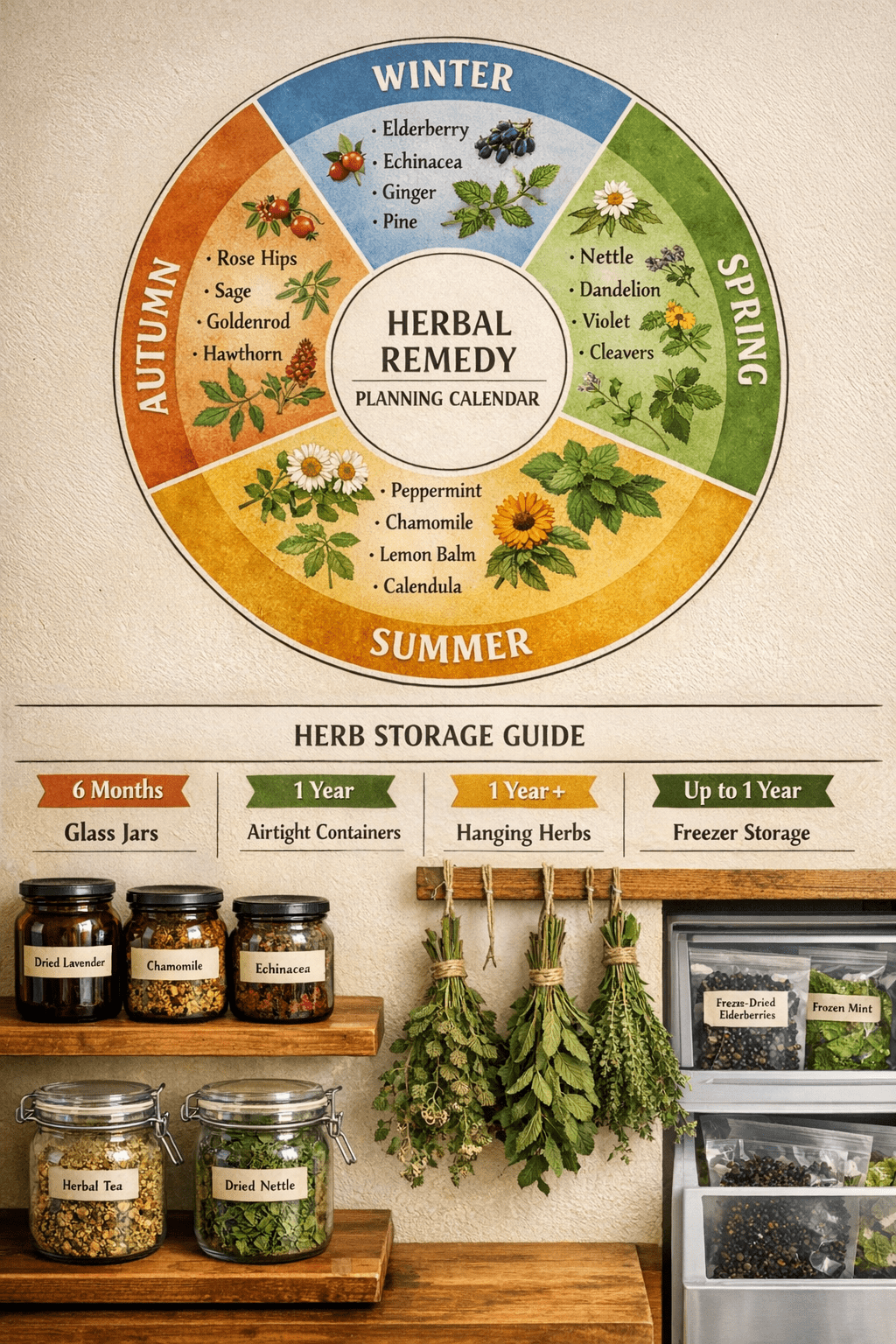
- Storage: Keep dried herbs in airtight containers away from light and heat; use within 1 year
- Dosage: Start with the lowest recommended dose and increase gradually
- Timing: Take most herbs with food to prevent stomach upset unless directed otherwise
- Consistency: Use remedies regularly for 2-4 weeks before evaluating effectiveness
- Documentation: Keep a health journal tracking what you take, when, and effects noticed
Common preparation mistakes:
- Using boiling water on delicate flowers (destroys volatile oils)
- Steeping too long (creates bitter, potentially irritating tea)
- Storing prepared teas for more than 24-48 hours (bacterial growth risk)
- Mixing multiple new herbs at once (can’t identify individual effects or reactions)
Choose infusions for daily wellness support, decoctions when you need stronger extraction from tough plant materials, and fresh herbs when you want gentle, food-based medicine. Reserve topical applications for skin issues, muscle pain, or localized inflammation.
What Health Conditions Can Natural Remedies for Beginners Address?
Natural remedies work best for common, self-limiting conditions and ongoing wellness support rather than acute medical emergencies or serious chronic diseases. Understanding appropriate applications helps beginners use herbs effectively and safely.
Conditions well-suited for beginner natural remedies:
Digestive Issues
Naturals are performing well in digestive health with 9.3% growth in this category.[2] Herbs excel at addressing functional digestive complaints.
- Occasional indigestion: Peppermint, ginger, chamomile
- Bloating and gas: Fennel, peppermint, chamomile
- Nausea: Ginger (especially effective for motion sickness and pregnancy-related nausea)
- Mild constipation: Psyllium husk, flaxseed, dandelion root
Use if: Symptoms are occasional and mild. Don’t use if: You have severe pain, blood in stool, or symptoms lasting more than a few days.
Immune Support and Cold/Flu
Cough and cold remedies show 24.8% value growth in the natural products category.[2] Several herbs may reduce the frequency and severity of respiratory infections.
- Prevention: Echinacea, elderberry, garlic, green tea
- Active infection: Elderberry, ginger, thyme, honey
- Cough: Thyme, licorice root, marshmallow root
- Sore throat: Sage, slippery elm, honey
Echinacea, elderberry, green tea catechins, and ginseng may reduce the frequency and severity of colds or flu, especially when used strategically in high-risk seasons or populations.[1]
Use if: You want to strengthen immunity during cold season or shorten duration of mild infections. Don’t use if: You have high fever (>103°F), difficulty breathing, or symptoms worsening after 3-4 days.
Mild Anxiety and Stress
- Occasional anxiety: Chamomile, lavender, lemon balm
- Stress response: Ashwagandha, holy basil (tulsi), rhodiola
- Sleep support: Chamomile, valerian, passionflower
- Mental clarity: Peppermint, rosemary, gotu kola
Use if: You experience situational stress or mild anxiety. Don’t use if: You have diagnosed anxiety disorders requiring medication, or experience panic attacks (seek professional help).
Inflammation and Pain
- Joint pain: Turmeric, ginger, boswellia
- Headaches: Peppermint (topical), feverfew, ginger
- Muscle soreness: Arnica (topical), ginger, turmeric
- General inflammation: Turmeric, green tea, omega-3 fatty acids
Standardized botanical medicines such as pyrrolizidine alkaloid-free butterbur (Petadolex) or feverfew have shown moderate efficacy for reducing migraine attack frequency, with careful attention required to sourcing and dosing.[1]
Use if: Pain is mild to moderate and not from injury requiring medical evaluation. Don’t use if: You have severe pain, pain from unknown causes, or pain that interferes with daily function.
Skin Conditions
Natural products show 8.5% growth in skin treatment categories.[2]
- Minor wounds: Calendula, aloe vera, tea tree oil
- Eczema/dry skin: Chamomile, calendula, oat baths
- Acne: Tea tree oil, witch hazel, green tea
- Burns (minor): Aloe vera, lavender
Use if: Conditions are minor and localized. Don’t use if: You have signs of infection (increasing redness, warmth, pus), deep wounds, or extensive skin involvement.
Conditions NOT appropriate for beginner self-treatment:
- Cancer, heart disease, diabetes, autoimmune conditions (require professional oversight)
- Acute infections requiring antibiotics
- Mental health conditions requiring medication
- Any condition your doctor is actively treating
- Emergency situations (chest pain, difficulty breathing, severe bleeding)
For chronic conditions, natural remedies can complement conventional treatment but shouldn’t replace it. Research shows that multidisciplinary teams—including nutritionists, physiotherapists, and herbal specialists—can enhance patient outcomes by blending expertise from both traditional and conventional medicine approaches.[1]
How Do I Avoid Dangerous Herb-Drug Interactions?
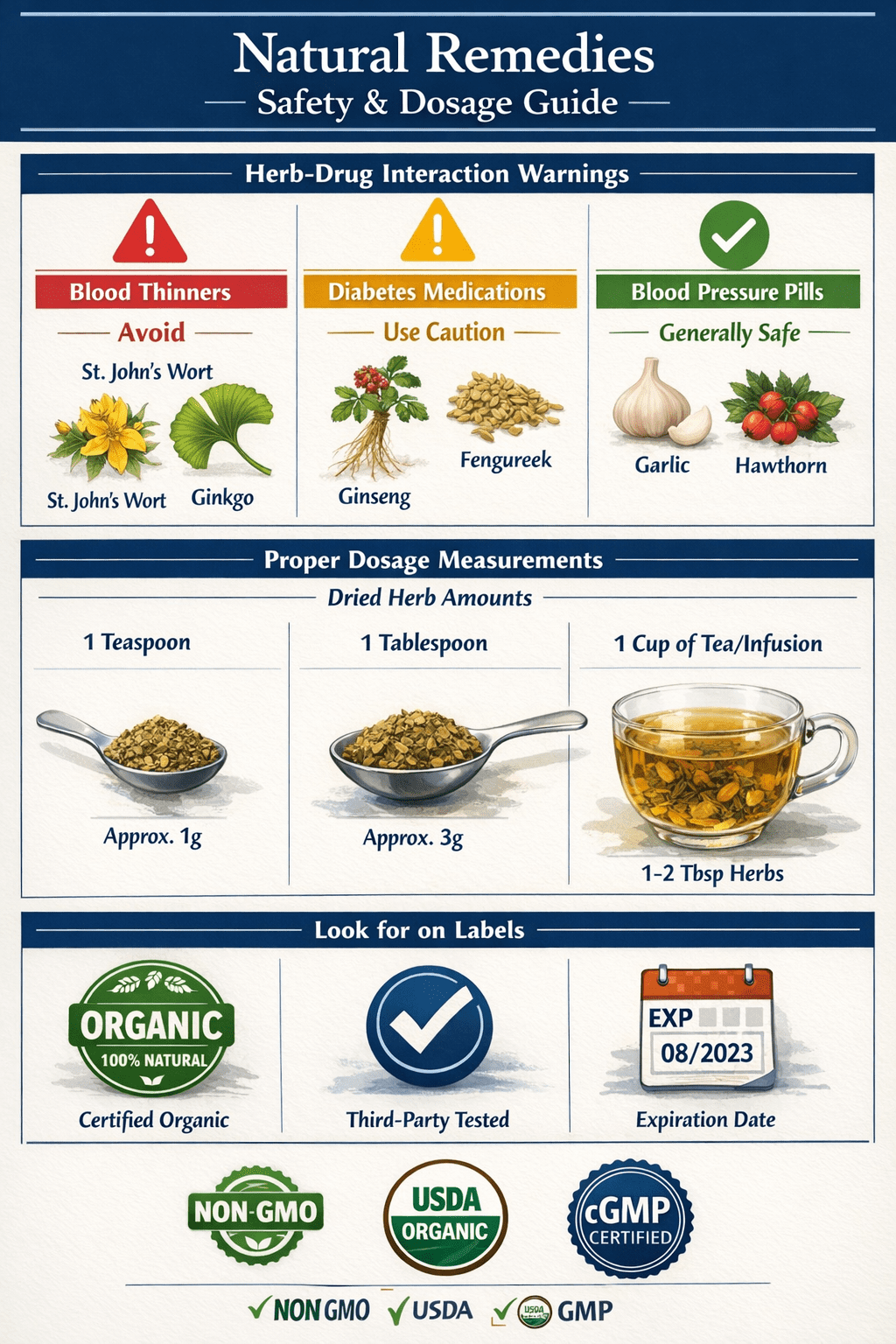
Herb-drug interactions occur when natural remedies alter how your body processes medications, potentially reducing effectiveness or increasing side effects. For beginners, understanding common interactions prevents serious complications.
High-risk medication categories:
Blood Thinners (Warfarin, Aspirin, Clopidogrel)
Many herbs affect blood clotting and shouldn’t be combined with anticoagulants.
Herbs to avoid:
- Garlic (high doses)
- Ginger (high doses)
- Turmeric/curcumin
- Ginkgo biloba
- Feverfew
- Dong quai
Risk: Increased bleeding, bruising, or dangerous hemorrhage
Diabetes Medications
Some herbs lower blood sugar and can cause dangerous hypoglycemia when combined with diabetes drugs.
Herbs to use cautiously:
- Cinnamon
- Fenugreek
- Ginseng
- Bitter melon
Risk: Blood sugar dropping too low (shakiness, confusion, loss of consciousness)
Blood Pressure Medications
Certain herbs affect blood pressure and may create dangerous interactions.
Herbs to use cautiously:
- Licorice root (raises blood pressure)
- Hawthorn (lowers blood pressure)
- Garlic (lowers blood pressure)
Risk: Blood pressure too high or too low, dizziness, fainting
Antidepressants and Anti-Anxiety Medications
Some herbs affect neurotransmitters and shouldn’t be combined with psychiatric medications.
Herbs to avoid with SSRIs:
- St. John’s Wort (major interaction—reduces effectiveness of many drugs)
- 5-HTP
- SAMe
Risk: Serotonin syndrome (dangerous condition with confusion, rapid heart rate, high blood pressure) or reduced medication effectiveness
Immunosuppressants
If you take medications to suppress immune function (after transplant or for autoimmune conditions), avoid immune-stimulating herbs.
Herbs to avoid:
- Echinacea
- Astragalus
- Elderberry
Risk: Reduced effectiveness of immunosuppressant drugs, organ rejection, or disease flare
Interaction prevention strategies:
- Disclose everything: Tell your doctor and pharmacist about all herbs, supplements, and natural remedies you use
- Research before starting: Look up potential interactions before trying new herbs
- Timing matters: Some interactions can be minimized by taking herbs and medications at different times (2-3 hours apart)
- Monitor closely: Watch for unusual symptoms when starting new remedies
- Professional guidance: Work with practitioners trained in both conventional and herbal medicine
Reliable interaction checkers:
- National Institutes of Health Herb-Drug Interaction database
- Natural Medicines Database (subscription required)
- Your pharmacist (free and personalized)
Providers and consumers should stay current with natural medicine research, including data on efficacy, pharmacokinetics, and safety monitoring protocols.[1] Training programs supported by organizations like WHO and the International Society of Pharmacovigilance (ISoP) help build competence in navigating herb-drug interactions and quality control.
Common mistake: Assuming “natural” means “safe to combine with anything.” Natural remedies are biologically active substances that interact with medications just like pharmaceutical drugs do.
Choose to work with healthcare providers who respect both conventional and natural medicine approaches. If your doctor dismisses all natural remedies without discussion, consider seeking a second opinion from an integrative medicine physician or naturopathic doctor.
Where Should I Buy Natural Remedies and What Quality Standards Matter?
Quality varies dramatically among herbal products, affecting both safety and effectiveness. Poor-quality herbs may contain contaminants, incorrect plant species, or insufficient active compounds.
Quality indicators to look for:
Third-Party Testing Certifications
Independent verification ensures products contain what labels claim without harmful contaminants.
Look for these seals:
- USP Verified: United States Pharmacopeia testing for identity, strength, purity
- NSF Certified: Independent testing for contents and contaminants
- ConsumerLab Approved: Third-party testing for quality and label accuracy
- USDA Organic: Certified organic growing and processing standards
What testing verifies:
- Correct plant species (DNA testing)
- Active compound levels meet label claims
- Absence of heavy metals (lead, mercury, arsenic, cadmium)
- No microbial contamination (bacteria, mold, yeast)
- No pesticide residues
- No adulterants or fillers
Reputable Supplier Characteristics
Buy from suppliers who:
- Provide detailed sourcing information (where herbs were grown)
- List botanical names (Latin names) not just common names
- Include harvest dates and expiration dates
- Offer transparent manufacturing processes
- Have knowledgeable staff who can answer questions
- Provide certificates of analysis on request
Avoid suppliers who:
- Make exaggerated health claims (“cures cancer,” “miracle remedy”)
- Don’t list ingredients clearly
- Have no contact information or physical address
- Sell products significantly cheaper than competitors (may indicate poor quality)
- Can’t provide information about testing or sourcing
Form and Preparation Quality
Different forms offer different advantages for beginners.
| Form | Advantages | Disadvantages | Best For |
|---|---|---|---|
| Dried whole herbs | Affordable, versatile, long shelf life | Requires preparation knowledge | Teas, decoctions, cooking |
| Tea bags | Convenient, pre-measured | Often lower quality, less potent | Quick daily use |
| Capsules/tablets | Standardized dose, convenient, no taste | Can’t verify contents visually | Consistent dosing, travel |
| Tinctures (alcohol extracts) | Concentrated, long shelf life, fast absorption | Alcohol content, strong taste | Quick effects, precise dosing |
| Glycerites (glycerin extracts) | Alcohol-free, sweet taste | Less potent than tinctures | Children, alcohol-sensitive people |
| Fresh herbs | Maximum potency, culinary use | Short shelf life, seasonal availability | Food-based medicine, immediate use |
Storage and shelf life:
- Dried herbs: 1 year in airtight containers away from light and heat
- Tinctures: 3-5 years in dark glass bottles
- Capsules: Check expiration dates, usually 2-3 years
- Fresh herbs: 1 week refrigerated, or freeze for longer storage
Where to buy:
Good options for beginners:
- Local health food stores with knowledgeable staff
- Reputable online retailers (Mountain Rose Herbs, Starwest Botanicals, Gaia Herbs)
- Co-ops and natural grocers
- Certified herbalists and naturopathic clinics
- Farmer’s markets (for fresh culinary herbs)
Approach with caution:
- General supplement stores with sales-focused staff
- Amazon and eBay (quality varies widely, harder to verify sourcing)
- MLM companies (often overpriced, pressure to buy)
- Gas stations and convenience stores
Price guidelines:
Quality herbs cost more than low-grade products, but you don’t need to buy the most expensive options. Expect to pay:
- Dried bulk herbs: $8-20 per ounce depending on herb
- Quality tea bags: $6-12 for 16-20 bags
- Standardized capsules: $15-30 for month’s supply
- Tinctures: $10-25 for 1-2 oz bottle
If prices seem too good to be true, quality is likely compromised. If prices are double the market average without clear justification (organic certification, rare herbs, etc.), you’re probably overpaying.
How Long Does It Take for Natural Remedies to Work?
Realistic expectations about timing prevent disappointment and help beginners stay consistent long enough to see results. Natural remedies generally work more slowly than pharmaceutical drugs but offer gentler, more sustained effects.
Timeline by condition type:
Acute Symptoms (Hours to Days)
Some natural remedies work quickly for immediate symptoms.
Fast-acting applications:
- Nausea relief (ginger): 30 minutes to 2 hours
- Digestive upset (peppermint): 30 minutes to 1 hour
- Headache (peppermint oil topically): 15-30 minutes
- Sleep support (chamomile): 30-60 minutes before bed
- Cough relief (honey, thyme): Within hours
Use for: Situational symptoms that need quick relief
Subacute Conditions (Days to 2 Weeks)
Many common health concerns respond within the first week or two.
Typical timeline:
- Cold/flu duration: 1-3 days shorter with elderberry or echinacea
- Minor skin issues: 3-7 days for visible improvement
- Stress response: 3-7 days for noticeable calming effects
- Digestive pattern changes: 5-10 days of consistent use
Use for: Short-term health issues that resolve naturally
Chronic Conditions (2-8 Weeks)
Long-standing issues require patience and consistent use.
Typical timeline:
- Joint pain (turmeric): 4-8 weeks for significant improvement
- Anxiety support: 2-4 weeks for mood stabilization
- Immune strengthening: 4-6 weeks of consistent use
- Cardiovascular support (garlic): 8-12 weeks for measurable changes
- Migraine prevention (feverfew): 4-6 weeks to reduce frequency
Use for: Ongoing health optimization and chronic symptom management
Factors affecting response time:
- Severity: Mild symptoms respond faster than severe ones
- Individual variation: Metabolism, genetics, and overall health affect processing
- Quality: Higher-quality herbs with standardized compounds work more predictably
- Dosage: Therapeutic doses work faster than sub-therapeutic amounts
- Consistency: Daily use produces results faster than sporadic use
- Root causes: Addressing underlying issues (diet, stress, sleep) accelerates results
Evaluation schedule for beginners:
- Week 1: Monitor for any adverse reactions or sensitivities
- Week 2: Note any early positive changes, adjust dosage if needed
- Week 4: Evaluate whether remedy is helping; continue if seeing benefits
- Week 8: Reassess whether to continue, adjust, or discontinue
Common mistake: Stopping too soon. Many beginners quit after a few days when they don’t see dramatic results. Natural remedies typically require 2-4 weeks of consistent use for chronic conditions.
When to expect results:
- Choose herbs for acute relief if you need symptom management within hours to days
- Choose herbs for chronic support if you’re willing to commit to 4-8 weeks of consistent use
- Discontinue if you see no improvement after 8 weeks, or if symptoms worsen at any point
Track your progress in a health journal, noting symptoms, dosages, and changes. This documentation helps you identify patterns and make informed decisions about continuing or adjusting your approach.
What Are the Most Common Mistakes Beginners Make with Natural Remedies?
Learning from common pitfalls helps beginners avoid frustration, wasted money, and potential health risks. These mistakes appear repeatedly among people new to herbal medicine.
Mistake 1: Expecting Pharmaceutical-Speed Results
The problem: Assuming natural remedies work as quickly as drugs, then quitting when they don’t.
The solution: Understand that herbs generally work more slowly but with fewer side effects. Commit to 2-4 weeks for chronic conditions, and use pharmaceutical options when you need fast relief for acute issues.
Mistake 2: Using Poor-Quality Products
The problem: Buying the cheapest herbs without checking quality, leading to ineffective or contaminated products.
The solution: Invest in third-party tested, organic herbs from reputable suppliers. The small price difference pays off in effectiveness and safety.
Mistake 3: Ignoring Herb-Drug Interactions
The problem: Not researching interactions before combining herbs with prescription medications.
The solution: Always check for interactions before starting new herbs, especially if you take blood thinners, diabetes medications, or antidepressants. Consult your pharmacist or doctor.
Mistake 4: Taking Too Much Too Soon
The problem: Starting with maximum doses or multiple herbs simultaneously, making it impossible to identify what helps or causes problems.
The solution: Start with one herb at the lowest recommended dose. Increase gradually after 3-5 days if needed. Add new herbs one at a time with 2-week intervals.
Mistake 5: Not Addressing Root Causes
The problem: Using herbs to mask symptoms while continuing habits that cause the problem (poor diet, inadequate sleep, chronic stress).
The solution: View natural remedies as part of a holistic approach. Address lifestyle factors alongside herbal support for lasting results.
Mistake 6: Believing Everything You Read Online
The problem: Following advice from unqualified sources, social media influencers, or websites selling products.
The solution: Verify information through credible sources like the National Center for Complementary and Integrative Health, peer-reviewed research, or qualified practitioners. Be skeptical of miracle cure claims.
Mistake 7: Using Herbs During Pregnancy Without Professional Guidance
The problem: Assuming natural means safe during pregnancy, when many herbs can cause complications.
The solution: Consult with a qualified midwife, naturopathic doctor, or obstetrician before using any herbs during pregnancy or breastfeeding. Some are safe, many aren’t.
Mistake 8: Not Tracking Results
The problem: Failing to document what you take and how you respond, making it impossible to evaluate effectiveness.
The solution: Keep a simple health journal noting the herb, dose, time taken, and any effects (positive or negative). Review weekly to identify patterns.
Mistake 9: Substituting Natural Remedies for Necessary Medical Care
The problem: Using herbs for serious conditions that require professional diagnosis and treatment.
The solution: Use natural remedies for minor, self-limiting conditions. Seek medical care for severe symptoms, worsening conditions, or anything that concerns you. Natural remedies can complement medical treatment but rarely replace it for serious issues.
Mistake 10: Giving Up After One Failed Attempt
The problem: Trying one herb that doesn’t work and concluding that all natural remedies are ineffective.
The solution: Understand that individual responses vary. What works for someone else might not work for you, and vice versa. Try different herbs for the same condition, adjust doses, or consult an herbalist for personalized recommendations.
Edge case awareness:
Some people are “non-responders” to certain herbs due to genetic variations in metabolism. For example, about 20-30% of people don’t respond well to valerian for sleep. If one herb doesn’t work after adequate trial, try alternatives rather than abandoning natural remedies entirely.
How Can I Build My Natural Remedies Knowledge and Skills?
Developing competence with natural remedies for beginners requires ongoing learning from credible sources and, ideally, guidance from experienced practitioners. The field is vast, so strategic learning prevents overwhelm.
Learning pathway for beginners:
Stage 1: Foundation (Months 1-3)
Focus: Master 5-7 essential herbs and basic preparation methods.
Resources:
- Read beginner-friendly books like “The Herbal Medicine-Maker’s Handbook” by James Green or “Rosemary Gladstar’s Medicinal Herbs: A Beginner’s Guide”
- Take an introductory online course from reputable herbalists
- Visit The Herbal Handbook for evidence-based guidance
- Follow credible organizations like the American Herbalists Guild
Skills to develop:
- Identifying quality herbs
- Making basic teas and infusions
- Understanding dosing principles
- Recognizing when to use herbs vs. seek medical care
Stage 2: Expansion (Months 4-8)
Focus: Expand your herbal repertoire and learn intermediate preparations.
Resources:
- Join local herb walks or foraging classes (with experienced guides)
- Attend workshops at natural health stores or herb schools
- Study herb monographs (detailed profiles of individual plants)
- Connect with online communities focused on evidence-based herbalism
Skills to develop:
- Making tinctures and glycerites
- Creating herbal salves and oils
- Understanding energetics (warming/cooling, drying/moistening properties)
- Identifying fresh herbs in nature
Stage 3: Specialization (Months 9-12+)
Focus: Develop expertise in areas matching your interests and health needs.
Resources:
- Consider certificate programs from schools like the American Herbalists Guild-approved institutions
- Study with clinical herbalists or naturopathic doctors
- Read scientific research on herbs that interest you
- Experiment with growing your own medicinal herbs
Skills to develop:
- Formulating custom blends for specific conditions
- Understanding constituent chemistry (what makes herbs work)
- Advanced preparation methods
- Developing clinical assessment skills
Credible information sources:
Government and research institutions:
- National Center for Complementary and Integrative Health (NCCIH)
- World Health Organization Traditional Medicine resources
- PubMed for peer-reviewed research
Professional organizations:
- American Herbalists Guild
- American Botanical Council
- United Plant Savers
Quality educational platforms:
- The Herbal Academy
- Commonwealth Center for Holistic Herbalism
- Chestnut School of Herbal Medicine
What to avoid:
- Social media influencers without credentials
- Websites selling products as their primary business
- Sources making extreme claims without scientific backing
- Outdated books (pre-1990s) that may contain unsafe recommendations
Working with practitioners:
Consider consulting with qualified professionals, especially when starting out or dealing with complex health issues.
Practitioner types:
- Clinical herbalists: Specialized training in herbal medicine (look for AHG membership)
- Naturopathic doctors (ND): Four-year medical school focusing on natural therapies
- Integrative medicine physicians (MD): Conventional doctors with additional natural medicine training
- Traditional Chinese Medicine practitioners: Specialized in Chinese herbal formulas
- Ayurvedic practitioners: Experts in Indian herbal medicine traditions
Finding qualified practitioners:
- American Herbalists Guild practitioner directory
- American Association of Naturopathic Physicians directory
- Academy of Integrative Health & Medicine
- Ask for credentials, training, and experience with your specific concerns
Cost considerations:
Initial consultations with herbalists or naturopathic doctors typically range from $100-250, with follow-ups at $50-150. While not covered by most insurance, the personalized guidance can save money by preventing trial-and-error with ineffective products.
Growing your own herbs:
Starting a small medicinal herb garden provides fresh, high-quality remedies at minimal cost.
Easy herbs for beginners to grow:
- Chamomile (annual, grows from seed)
- Peppermint (perennial, spreads vigorously)
- Lemon balm (perennial, easy to grow)
- Calendula (annual, beautiful and medicinal)
- Thyme (perennial, drought-tolerant)
Growing your own herbs connects you to plant medicine in a deeper way and ensures you know exactly how your remedies were grown.
Frequently Asked Questions About Natural Remedies for Beginners
Are natural remedies safe for everyone?
No, natural remedies aren’t universally safe. While many herbs have excellent safety profiles for most people, some can cause allergic reactions, interact with medications, or aren’t appropriate during pregnancy, breastfeeding, or for children. Always research specific herbs for your situation and consult healthcare providers if you have chronic conditions or take prescription medications.
Can I use natural remedies instead of prescription medications?
Natural remedies should complement, not replace, necessary prescription medications without professional guidance. Some conditions require pharmaceutical intervention for safety and effectiveness. Work with qualified practitioners who can help you integrate natural and conventional approaches safely, and never discontinue prescribed medications without your doctor’s approval.
How do I know if a natural remedy is working?
Track your symptoms in a health journal before starting and throughout use. For acute issues, you should notice improvement within hours to days. For chronic conditions, evaluate after 2-4 weeks of consistent use. If you see no change after 8 weeks, the remedy may not work for you, or you may need professional guidance to adjust your approach.
What’s the difference between herbal supplements and whole herbs?
Whole herbs contain the complete plant material with all naturally occurring compounds working together. Supplements often contain standardized extracts with specific active compounds isolated and concentrated. Beginners often do better with whole herbs in tea or food form, as they’re gentler and more forgiving of dosing variations.
Can children use natural remedies?
Some natural remedies are safe for children, but dosing differs significantly from adults and many herbs aren’t appropriate for young children. Chamomile tea, ginger for nausea, and honey for coughs (over age 1) are generally safe. Always consult a pediatrician or qualified herbalist before giving herbs to children, especially infants and toddlers.
How much do natural remedies cost compared to medications?
Natural remedies often cost less than prescription medications. Dried bulk herbs typically run $8-20 per ounce (providing many doses), quality supplements cost $15-30 monthly, and growing your own herbs costs almost nothing after initial setup. However, working with specialized practitioners may add costs not covered by insurance.
Do I need to tell my doctor about natural remedies I’m using?
Yes, absolutely. Your doctor needs complete information about everything you take to provide safe care, prescribe appropriate medications, and watch for interactions. Many doctors are now open to natural remedies, especially integrative medicine physicians. If your doctor dismisses your interest without discussion, consider seeking a second opinion.
Can I take multiple natural remedies at the same time?
Start with one remedy at a time so you can identify individual effects and reactions. Once you know how you respond to single herbs, you can carefully combine remedies that address different systems (like chamomile for sleep and turmeric for inflammation). Avoid combining multiple herbs targeting the same function, as effects may be too strong.
What should I do if I have a negative reaction to a natural remedy?
Stop taking the herb immediately. For mild reactions (digestive upset, headache), symptoms usually resolve within 24 hours. Drink plenty of water and rest. For severe reactions (difficulty breathing, severe rash, swelling, chest pain), seek emergency medical care. Document what you took and your reaction to share with healthcare providers and avoid the herb in the future.
Where can I find reliable information about specific herbs?
The National Center for Complementary and Integrative Health offers evidence-based herb profiles. The American Botanical Council provides detailed monographs. PubMed contains peer-reviewed research. Books by respected herbalists like Rosemary Gladstar, David Hoffmann, or Matthew Wood offer reliable guidance. Check The Herbal Handbook for beginner-friendly, research-based information.
How do I store natural remedies properly?
Store dried herbs in airtight glass or metal containers away from light, heat, and moisture. Keep them in a cool, dark cupboard (not above the stove). Tinctures stay potent in dark glass bottles for 3-5 years. Capsules should be kept in their original containers with desiccant packets. Label everything with the herb name and date, and use dried herbs within one year for best potency.
Can I use natural remedies if I’m pregnant or breastfeeding?
Some herbs are safe during pregnancy and breastfeeding, but many aren’t. Ginger for morning sickness and red raspberry leaf tea in late pregnancy are commonly used, but herbs like chamomile, peppermint, and many others require professional guidance. Always consult your midwife, obstetrician, or qualified herbalist before using any natural remedies during pregnancy or while nursing.
Conclusion
Starting your journey with natural remedies for beginners opens doors to time-tested healing traditions that complement modern healthcare. The five foundational herbs—chamomile, ginger, turmeric, peppermint, and garlic—provide a solid starting point for addressing common health concerns safely and effectively. With the global herbal medicine market growing rapidly and approximately 80% of the world’s population using plant-based medicine, you’re joining a worldwide community embracing natural approaches to wellness.[4]
Success with natural remedies requires patience, quality products, and realistic expectations. Start with one or two herbs that address your specific needs, source them from reputable suppliers with third-party testing, and give them adequate time to work (typically 2-4 weeks for chronic conditions). Always research potential herb-drug interactions, especially if you take prescription medications, and consult qualified healthcare providers when needed.
Remember that natural remedies work best as part of a holistic lifestyle that includes nutritious food, adequate sleep, stress management, and regular movement. They’re tools for supporting your body’s natural healing capacity, not magic bullets that override poor health habits.
Your next steps:
- Choose one health concern you’d like to address naturally
- Select one appropriate herb from the foundational five that matches your need
- Source high-quality organic product with third-party testing certification
- Start a health journal to track your herb, dosage, and response
- Commit to 2-4 weeks of consistent use before evaluating effectiveness
- Expand gradually by adding one new herb every few weeks as you build knowledge
- Continue learning through credible resources and consider working with qualified practitioners
Visit The Herbal Handbook for ongoing guidance as you develop your natural remedies practice. Review our medical disclaimer to understand the appropriate use of herbal information, and check our about page to learn more about our evidence-based approach to botanical medicine.
The path to herbal competence is a journey, not a destination. Each herb you learn, each tea you brew, and each successful remedy builds your confidence and connection to plant medicine. Start small, stay curious, and trust the process. Your body has remarkable healing capacity when supported with the right natural remedies and healthy lifestyle choices.
References
[1] Herbal Remedies Best Practices – https://www.indwes.edu/articles/2025/08/herbal-remedies-best-practices
[2] Strategic Evaluating Natural Products For Business Opportunities – https://www.iqvia.com/blogs/2024/01/strategic-evaluating-natural-products-for-business-opportunities
[3] 10 Natural Product Trends Taking Over Shelves In 2026 – https://www.newhope.com/natural-product-trends/10-natural-product-trends-taking-over-shelves-in-2026
[4] Herbal Medicine Market Report – https://www.grandviewresearch.com/industry-analysis/herbal-medicine-market-report
[8] Us Adults Who Used Select Alternative Medicine Treatments – https://www.statista.com/statistics/1341758/us-adults-who-used-select-alternative-medicine-treatments/
[9] How Healthy Is Ginger The Medicinal Plant Of The Year 2026 – https://premiummedicalcircle.com/en/artikel/how-healthy-is-ginger-the-medicinal-plant-of-the-year-2026