
A DIY Vitamin C Spray for Face gives you fresh, bright skin without the high cost of store-bought serums. You can make a simple, effective vitamin C spray at home using just two ingredients: L-ascorbic acid powder and distilled water. This quick-absorbing mist brightens skin, fades dark spots, and protects against environmental damage when applied each morning.
Key Takeaways
- DIY vitamin C spray requires only L-ascorbic acid powder (5-20%) and distilled water
- Fresh batches last about 2 weeks when refrigerated in amber glass bottles
- Apply to clean skin every morning before moisturizer for best results
- Start with 5% concentration if you have sensitive skin, gradually increase to 10-20%
- Costs under $5 per batch compared to $30-80 for commercial vitamin C products
- Must be stored in dark, cool conditions because vitamin C oxidizes quickly when exposed to light and air
- Mix small batches frequently rather than large quantities to maintain potency
- pH should be between 2.5-3.5 for optimal skin absorption
Quick Answer
DIY Vitamin C Spray for Face is a simple two-ingredient skincare solution you make by dissolving L-ascorbic acid powder in distilled water at 5-20% concentration. You spray it on clean skin each morning to brighten complexion, fade hyperpigmentation, and boost collagen production. The spray format makes application quick and mess-free, perfect for busy mornings when you want glowing skin without complicated routines.
What Is a DIY Vitamin C Spray for Face and Why Make One?
A DIY Vitamin C Spray for Face is a homemade facial mist containing L-ascorbic acid (pure vitamin C) dissolved in water. Unlike thick serums, the spray format delivers vitamin C in a fine mist that absorbs quickly and works well for all skin types, including oily and combination skin.
Making your own vitamin C spray gives you control over concentration, freshness, and ingredients. Commercial vitamin C products often contain stabilizers, preservatives, and fragrances that some skin types don’t tolerate well. When you make your own spray, you know exactly what goes on your face.
Key benefits of DIY vitamin C spray:
- Freshness: You make small batches and use them within 2 weeks, ensuring maximum potency
- Cost: Homemade spray costs about $0.30-0.50 per ounce versus $10-30 per ounce for commercial products
- Customization: Adjust concentration based on your skin’s tolerance and needs
- Simplicity: Just two ingredients mean less chance of irritation or allergic reactions
- Quick application: Spray format takes seconds to apply, perfect for morning routines
Choose DIY vitamin C spray if you want effective brightening and anti-aging benefits without paying premium prices for fancy packaging. Skip it if you prefer the convenience of pre-made products or don’t want to mix fresh batches every two weeks.
What Ingredients Do You Need for DIY Vitamin C Spray?
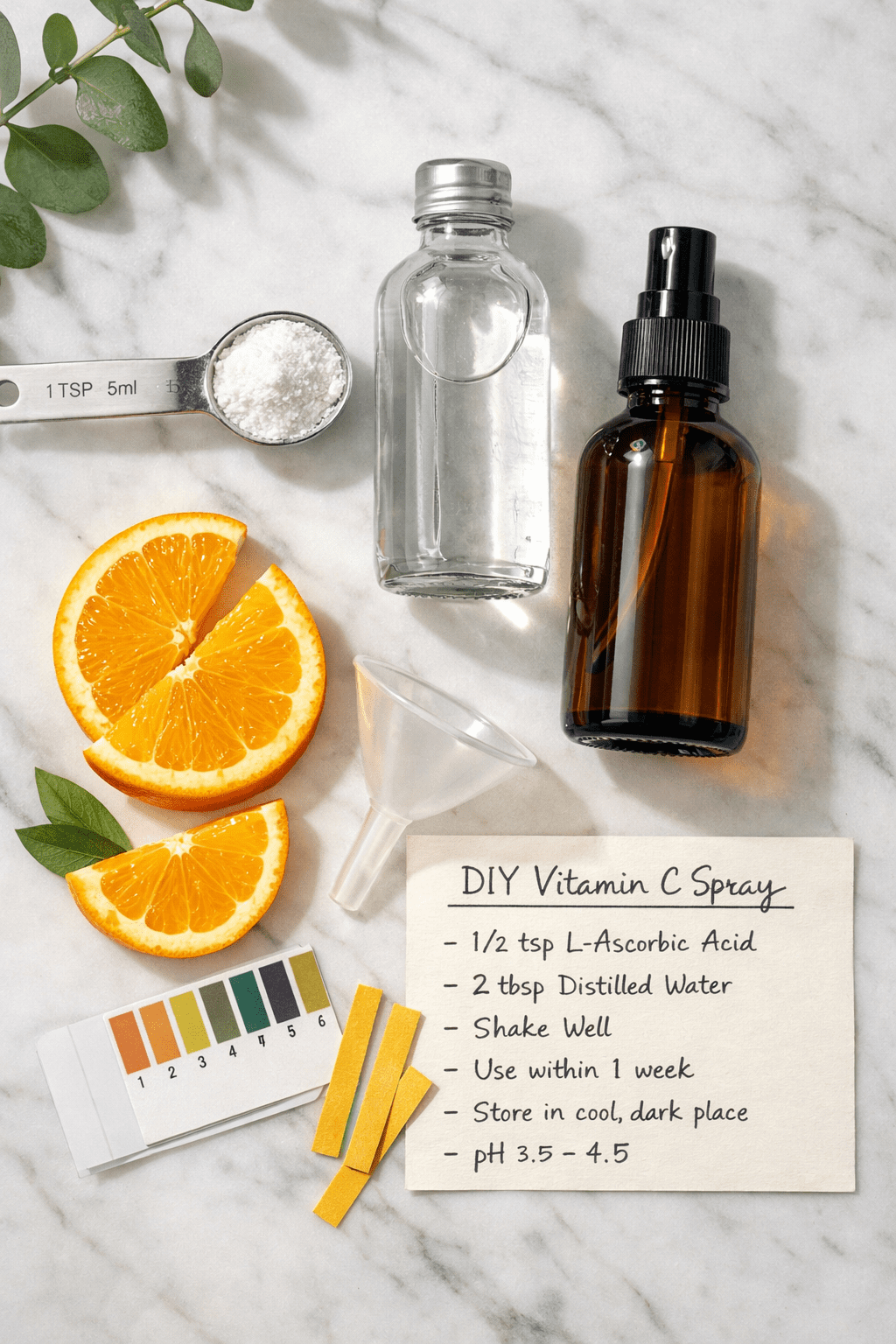
You need only two essential ingredients to make an effective DIY Vitamin C Spray for Face: L-ascorbic acid powder and distilled water.
Required ingredients:
- L-ascorbic acid powder (pharmaceutical or cosmetic grade)
- Start with 5% concentration for sensitive skin
- Use 10-15% for normal skin
- Try 15-20% for experienced users or stubborn hyperpigmentation
- Distilled water (not tap water)
- Tap water contains minerals and chlorine that destabilize vitamin C
- Distilled water extends shelf life and maintains potency
Optional additions (if you want to experiment after mastering the basic recipe):
- Vegetable glycerin (1-2%): adds moisture and helps vitamin C penetrate skin
- Ferulic acid (0.5%): stabilizes vitamin C and boosts effectiveness
- Vitamin E oil (1%): adds antioxidant protection
Equipment needed:
- Small amber or cobalt blue glass spray bottle (2-4 oz)
- Mini funnel
- Measuring spoons or small digital scale
- pH test strips (optional but helpful)
I recommend starting with just L-ascorbic acid and distilled water for your first batch. This simple formula works well and helps you understand how your skin responds to vitamin C before adding other ingredients. You can explore more complex formulations once you’re comfortable with the basics, similar to how you might progress with other DIY skincare recipes.
Common mistake: Using tap water or regular drinking water instead of distilled water. The minerals in regular water cause vitamin C to oxidize faster, turning your spray yellow or brown within days instead of weeks.
How Do You Make DIY Vitamin C Spray for Face Step-by-Step?
Making a DIY Vitamin C Spray for Face takes about 5 minutes. Start with a 10% concentration formula, which works well for most skin types and provides noticeable brightening without irritation.
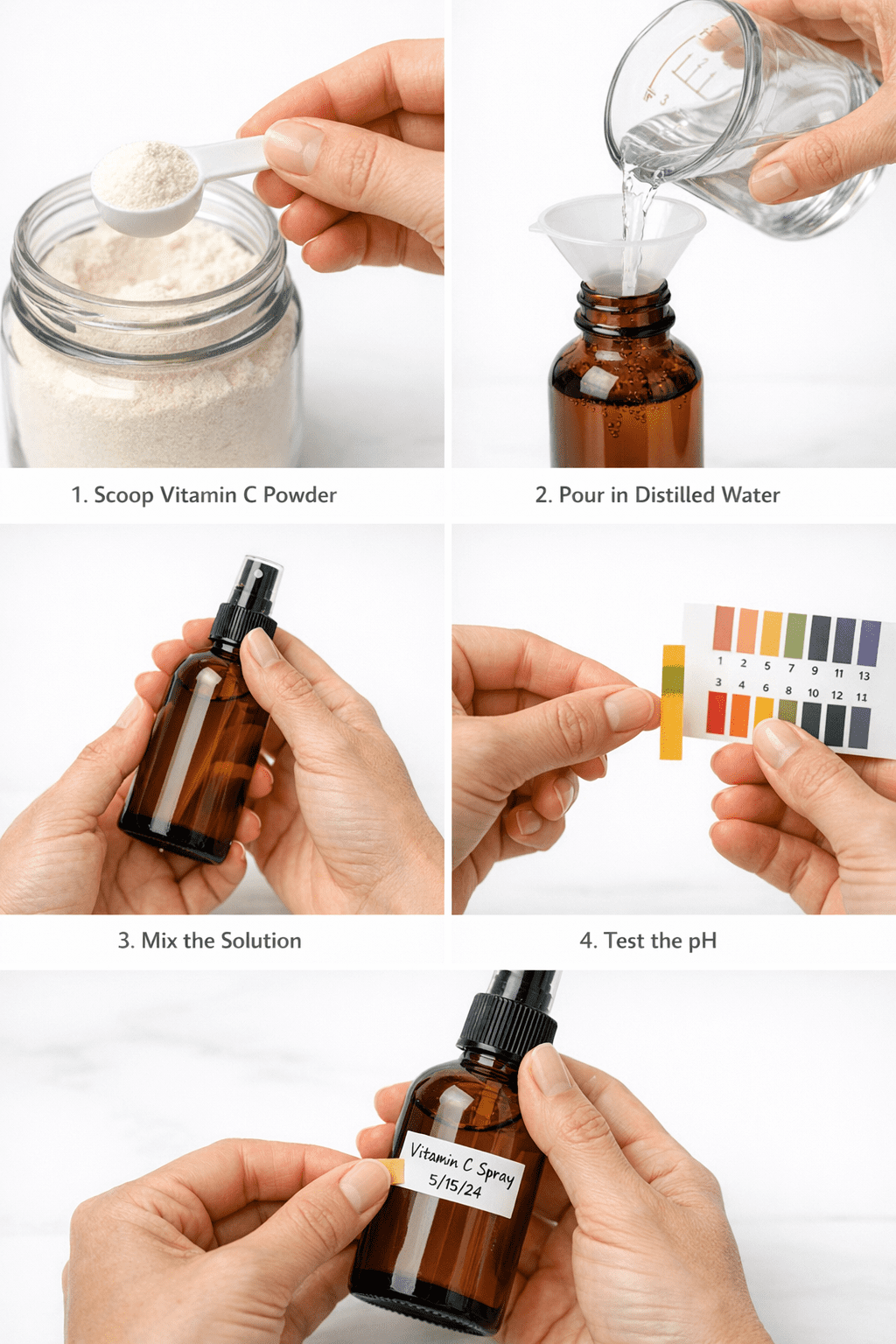
Basic 10% Vitamin C Spray Recipe:
Ingredients:
- 1 gram L-ascorbic acid powder
- 9 grams (about 9 ml) distilled water
- Makes approximately 10ml (enough for 2 weeks)
Step-by-step instructions:
- Sanitize your equipment: Wash spray bottle, funnel, and measuring tools with hot soapy water, then rinse with distilled water and let air dry completely
- Measure the vitamin C powder: Use a small digital scale to measure exactly 1 gram of L-ascorbic acid powder (or use 1/4 teaspoon if you don’t have a scale)
- Add distilled water: Pour 9ml of distilled water into your spray bottle using the funnel
- Add vitamin C powder: Carefully pour the measured L-ascorbic acid into the bottle
- Shake vigorously: Cap the bottle and shake for 30-60 seconds until the powder completely dissolves and the solution is clear
- Test pH (optional): Dip a pH strip into the solution. It should read between 2.5-3.5 for optimal absorption. If pH is too high (above 3.5), add a tiny pinch more vitamin C powder
- Label your bottle: Write the date you made it and the concentration (10%) on the bottle
Important timing note: Use your spray within 2 weeks of making it. Vitamin C oxidizes quickly, and you’ll notice the solution turning yellow or brown when it’s no longer effective.
Concentration adjustments:
- 5% spray (sensitive skin): 0.5g vitamin C + 9.5g distilled water
- 15% spray (experienced users): 1.5g vitamin C + 8.5g distilled water
- 20% spray (maximum strength): 2g vitamin C + 8g distilled water
Choose 5% if you have sensitive skin, rosacea, or are new to vitamin C. Choose 15-20% if you’ve used vitamin C products before and want stronger anti-aging and brightening effects.
How Do You Apply DIY Vitamin C Spray for Best Results?
Apply your DIY Vitamin C Spray for Face every morning on clean skin before moisturizer and sunscreen. The spray format makes application quick and even, and morning use gives you antioxidant protection throughout the day.
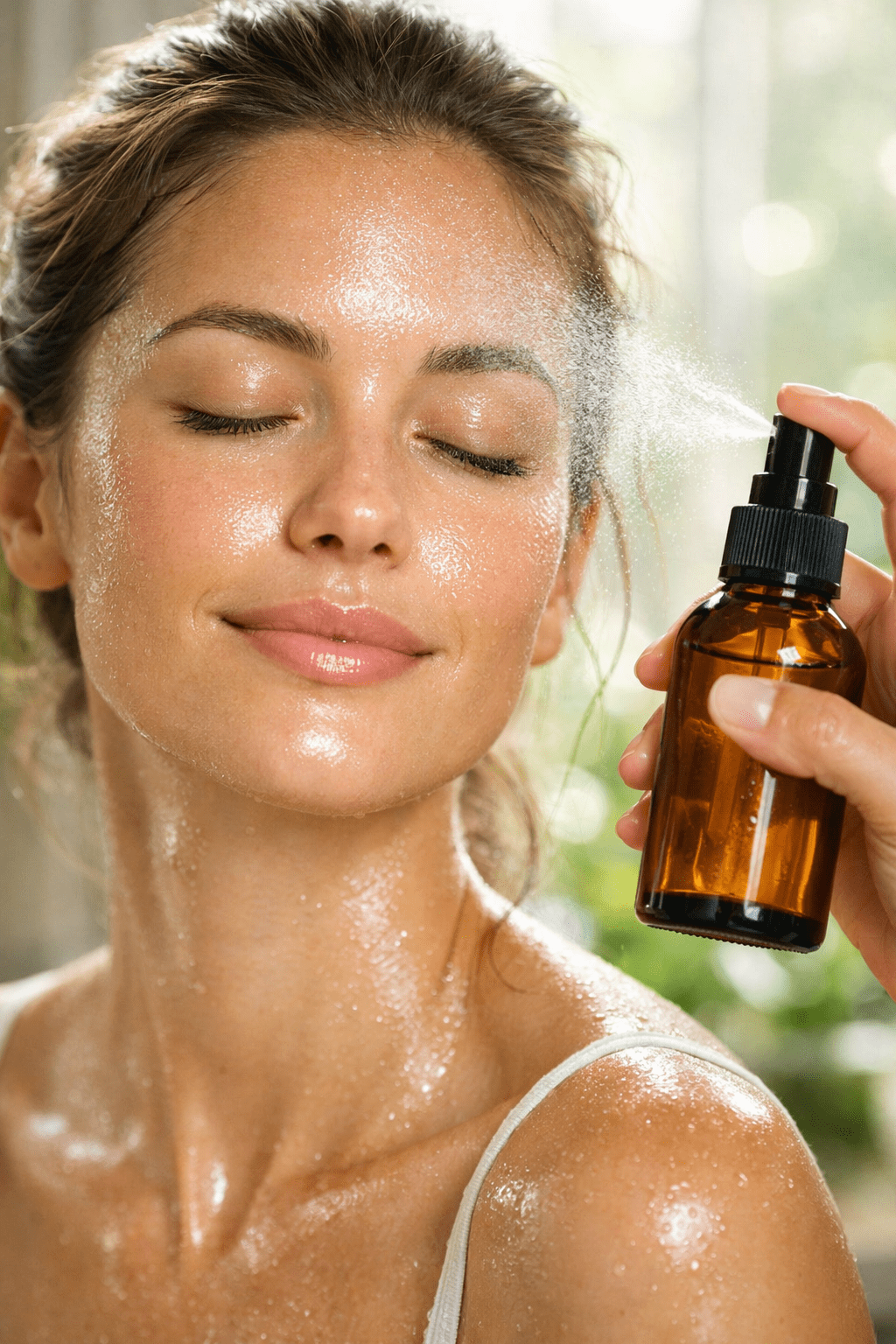
Application routine:
- Cleanse your face: Wash with your regular cleanser and pat dry
- Shake the bottle: Vitamin C can settle, so shake before each use
- Close your eyes: Hold the bottle 6-8 inches from your face
- Spray 2-3 times: Mist your entire face and neck with light, even coverage
- Pat gently: Use clean fingertips to pat the spray into your skin
- Wait 1-2 minutes: Let the vitamin C absorb before applying other products
- Follow with moisturizer: Apply your regular face cream or oil
- Apply sunscreen: Always use SPF 30+ after vitamin C (vitamin C makes skin more sun-sensitive)
Timing and frequency:
- Apply once daily in the morning for most people
- Advanced users can apply twice daily (morning and night)
- Wait at least 1 minute before applying other products
- Use consistently for 4-6 weeks to see noticeable brightening
What to expect:
- Week 1-2: Skin may feel slightly tingly (normal for vitamin C)
- Week 3-4: Brighter, more even skin tone becomes visible
- Week 6-8: Dark spots and hyperpigmentation start fading
- Week 12+: Improved skin texture and reduced fine lines
Common mistake: Applying vitamin C spray over moisturizer or makeup. Vitamin C needs direct contact with clean skin to work effectively. If you apply it over other products, it won’t penetrate properly and you’ll waste your spray.
For additional morning glow, you might also enjoy using a DIY face toner with witch hazel and rose water before your vitamin C spray.
How Should You Store DIY Vitamin C Spray and How Long Does It Last?
Store your DIY Vitamin C Spray for Face in the refrigerator in an amber or cobalt blue glass bottle. Proper storage keeps vitamin C stable for up to 2 weeks, while poor storage causes oxidation within days.
Storage requirements:
- Container: Amber glass or cobalt blue glass spray bottle (blocks light)
- Location: Refrigerator door or main compartment (not freezer)
- Temperature: 35-45°F (2-7°C) is ideal
- Light exposure: Keep in dark place when not refrigerated
Shelf life indicators:
- Fresh spray: Clear, colorless liquid
- Starting to oxidize: Slight yellow tint (still usable but less potent)
- Oxidized/expired: Dark yellow, orange, or brown color (throw it out)
How long it lasts:
- Refrigerated in dark glass: 2 weeks maximum
- Room temperature in dark glass: 5-7 days
- Clear glass bottle: 3-5 days regardless of temperature
- Exposed to light: 1-3 days
Best practices for maximum freshness:
- Make small batches (10-15ml) that you’ll use within 2 weeks
- Keep the bottle in the fridge except when applying
- Don’t leave the bottle on your bathroom counter between uses
- Shake before each use to redistribute any settled particles
- Mark the bottle with the date you made it
- Discard immediately if you notice color change or strange smell
When to make a fresh batch:
- Every 2 weeks on a set schedule (like every other Monday)
- Immediately when you notice yellow or brown color
- If the spray develops a strange or metallic smell
- When the bottle is empty (don’t try to stretch it longer)
Choose to make smaller, more frequent batches rather than large batches that might oxidize before you finish them. A 10ml bottle used twice daily lasts about 10-14 days, which matches the optimal freshness window.
If you enjoy making fresh skincare products regularly, you might also like trying DIY face masks for glowing skin as part of your weekly routine.
What Skin Types and Concerns Does DIY Vitamin C Spray Help?
DIY Vitamin C Spray for Face works for all skin types when you adjust the concentration properly. Vitamin C addresses multiple skin concerns including dullness, dark spots, fine lines, and uneven texture.
Best for these skin concerns:
- Hyperpigmentation and dark spots: Vitamin C inhibits melanin production and fades existing discoloration
- Dull, tired-looking skin: Brightens complexion and adds radiance
- Fine lines and wrinkles: Boosts collagen production to improve skin firmness
- Sun damage: Provides antioxidant protection and repairs existing damage
- Uneven skin tone: Evens out redness and creates more uniform color
- Acne scars: Helps fade post-inflammatory hyperpigmentation
Concentration by skin type:
| Skin Type | Recommended Concentration | Notes |
|---|---|---|
| Sensitive, reactive | 5% | Start here and increase slowly |
| Normal, combination | 10-15% | Sweet spot for most people |
| Oily, resilient | 15-20% | Can handle higher concentrations |
| Mature, sun-damaged | 15-20% | Benefits from stronger formula |
| Acne-prone | 10-15% | Helps with scarring but may sting on active breakouts |
Who should be cautious:
- People with active rosacea (start with 5% and test on small area)
- Those using tretinoin or retinol (alternate days to avoid irritation)
- Anyone with open wounds or active acne (vitamin C stings on broken skin)
- People allergic to citrus (rare, but possible cross-reaction)
Who should skip it:
- Anyone allergic to ascorbic acid (extremely rare)
- People who can’t commit to refrigerating and making fresh batches
- Those who prefer the convenience of stable, pre-made products
Common mistake: Using the same 20% concentration that works for your friend’s oily skin when you have sensitive skin. Start with 5-10% regardless of what others recommend, then increase gradually if your skin tolerates it well.
For acne-prone skin, you might also benefit from a DIY honey and cinnamon face mask used 1-2 times weekly alongside your vitamin C spray.
What Are Common Mistakes When Making DIY Vitamin C Spray?
The most common mistake when making DIY Vitamin C Spray for Face is using tap water instead of distilled water, which causes rapid oxidation and shortens shelf life to just a few days.
Top mistakes and how to avoid them:
- Using tap water
- Problem: Minerals and chlorine destabilize vitamin C
- Solution: Always use distilled water (costs about $1 per gallon)
- Making too much at once
- Problem: Vitamin C oxidizes before you can use it all
- Solution: Make 10-15ml batches that last exactly 2 weeks
- Storing in clear glass or plastic bottles
- Problem: Light exposure breaks down vitamin C rapidly
- Solution: Use only amber or cobalt blue glass bottles
- Starting with too high concentration
- Problem: Causes redness, irritation, and discourages continued use
- Solution: Start with 5-10% and increase gradually over weeks
- Skipping sunscreen after application
- Problem: Vitamin C increases sun sensitivity, risking more damage
- Solution: Always apply SPF 30+ after vitamin C spray
- Not refrigerating the spray
- Problem: Room temperature accelerates oxidation
- Solution: Keep bottle in refrigerator at all times when not using
- Continuing to use oxidized (yellow/brown) spray
- Problem: Oxidized vitamin C doesn’t provide benefits and may irritate skin
- Solution: Discard immediately when color changes
- Applying over moisturizer or makeup
- Problem: Vitamin C can’t penetrate to reach skin cells
- Solution: Apply to freshly cleansed, bare skin only
Edge case to watch for: If you live in a very humid climate, your vitamin C powder may clump or absorb moisture from the air. Store the powder container with a silica gel packet and keep it tightly sealed between uses.
Can You Add Other Ingredients to DIY Vitamin C Spray?
You can add other beneficial ingredients to your DIY Vitamin C Spray for Face once you’ve mastered the basic formula, but start simple and add one ingredient at a time to monitor how your skin responds.
Safe additions that enhance effectiveness:
Ferulic acid (0.5-1%)
- Stabilizes vitamin C and extends shelf life
- Boosts antioxidant protection
- Add after dissolving vitamin C in water
Vitamin E (1%)
- Adds moisturizing properties
- Works synergistically with vitamin C for better antioxidant protection
- Use tocopherol (liquid vitamin E), not capsules with fillers
Vegetable glycerin (1-2%)
- Helps vitamin C penetrate skin better
- Adds light moisture without heaviness
- Particularly good for dry skin types
Hyaluronic acid powder (0.5-1%)
- Adds hydration and plumping effect
- Dissolve separately in warm distilled water before mixing with vitamin C
- Creates slightly thicker spray consistency
Niacinamide (2-5%)
- Brightens and reduces pore appearance
- Works well with vitamin C despite old myths about incompatibility
- Adds extra anti-aging benefits
Modified recipe with additions (intermediate level):
- 1g L-ascorbic acid powder (10%)
- 0.1g ferulic acid powder (1%)
- 0.1g vitamin E oil (1%)
- 8.8g distilled water
Mix the same way as basic recipe, adding ferulic acid and vitamin E after the vitamin C has dissolved.
What NOT to add:
- Essential oils (can irritate skin and don’t mix well with water)
- Retinol (too unstable in water-based formula)
- AHAs/BHAs (may destabilize vitamin C and over-exfoliate)
- Preservatives (unnecessary for 2-week batches kept refrigerated)
Decision rule: Add other ingredients only if you’ve used the basic vitamin C spray for at least 2-4 weeks and want to enhance specific benefits. If you’re getting good results with the simple formula, there’s no need to complicate it.
For those interested in other anti-aging DIY skincare, check out this DIY anti-age face mask that complements vitamin C spray nicely.
FAQ
How long does DIY vitamin C spray take to show results?
Most people notice brighter, more radiant skin within 2-3 weeks of daily use. Dark spots and hyperpigmentation take 6-8 weeks to fade noticeably. Fine lines and texture improvements appear after 8-12 weeks of consistent application.
Can I use DIY vitamin C spray if I have sensitive skin?
Yes, but start with a 5% concentration and test on a small area first. Apply every other day for the first week, then increase to daily if your skin tolerates it well. Sensitive skin may experience mild tingling, which is normal, but discontinue if you develop redness or burning.
Why did my vitamin C spray turn yellow?
Yellow or brown color means the vitamin C has oxidized and lost its effectiveness. This happens when exposed to light, air, or warm temperatures. Discard the oxidized spray and make a fresh batch. Store new batches in amber glass bottles in the refrigerator to prevent oxidation.
Can I make a large batch of vitamin C spray to save time?
No, vitamin C oxidizes within 2 weeks even with perfect storage. Making large batches wastes product because you’ll have to throw out oxidized spray. Stick to 10-15ml batches that you’ll finish within 2 weeks for maximum effectiveness.
Should I apply vitamin C spray morning or night?
Morning application is best because vitamin C provides antioxidant protection against environmental damage and UV exposure throughout the day. You can apply twice daily (morning and night) if your skin tolerates it, but morning application is more important.
Can I use DIY vitamin C spray with retinol?
Yes, but apply them at different times. Use vitamin C spray in the morning and retinol at night to avoid potential irritation from combining active ingredients. Both work well together in an anti-aging routine when properly spaced.
Does DIY vitamin C spray need a preservative?
No, vitamin C spray made with just L-ascorbic acid and distilled water doesn’t need preservatives when stored in the refrigerator and used within 2 weeks. The low pH (2.5-3.5) and cold storage prevent bacterial growth during this short timeframe.
Can I spray vitamin C directly on my eyes?
No, avoid spraying directly on closed eyelids or getting spray in your eyes. The low pH can sting and irritate the delicate eye area. Spray on your face, then use clean fingertips to gently pat any remaining product around the orbital bone.
Will vitamin C spray help with acne?
Vitamin C helps fade post-acne dark spots and scars but doesn’t treat active acne. It may sting on open pimples or broken skin. For active acne, use targeted treatments first, then add vitamin C spray once breakouts heal to prevent scarring.
How much does it cost to make DIY vitamin C spray?
A 10ml batch costs approximately $0.30-0.50 depending on where you buy L-ascorbic acid powder. A 100g container of L-ascorbic acid powder ($8-15) makes about 100 batches, while distilled water costs about $1 per gallon. This is significantly cheaper than commercial vitamin C products at $30-80 per ounce.
Can pregnant or breastfeeding women use vitamin C spray?
Topical vitamin C is generally considered safe during pregnancy and breastfeeding because it’s a water-soluble vitamin that doesn’t penetrate deeply into the bloodstream. However, consult your healthcare provider before starting any new skincare products during pregnancy.
What’s the difference between DIY vitamin C spray and serum?
Spray is lighter, absorbs faster, and works well for oily or combination skin. Serum is thicker, more concentrated, and often includes oils or additional ingredients. Spray format is easier to apply and less messy, while serum may feel more luxurious and moisturizing for dry skin types.
Conclusion
Making your own DIY Vitamin C Spray for Face gives you fresh, potent skincare at a fraction of the cost of commercial products. With just two ingredients—L-ascorbic acid powder and distilled water—you can create an effective brightening spray that delivers glowing skin every morning.
Start with a simple 10% concentration formula, store it properly in an amber glass bottle in your refrigerator, and apply it to clean skin each morning before moisturizer and sunscreen. Make small batches every 2 weeks to ensure maximum freshness and effectiveness.
Your next steps:
- Order L-ascorbic acid powder and an amber glass spray bottle
- Make your first 10ml batch using the recipe in this guide
- Apply daily for at least 4 weeks to see brightening results
- Adjust concentration up or down based on your skin’s response
- Make fresh batches every 2 weeks and discard any oxidized spray
Remember that consistency matters more than concentration. A 5% vitamin C spray used daily for 8 weeks delivers better results than a 20% spray used sporadically. Start simple, stay consistent, and enjoy your fresh, glowing skin.
For more natural skincare recipes that complement your vitamin C routine, explore our collection of DIY skincare guides including aloe vera face masks and turmeric butter for radiant skin.