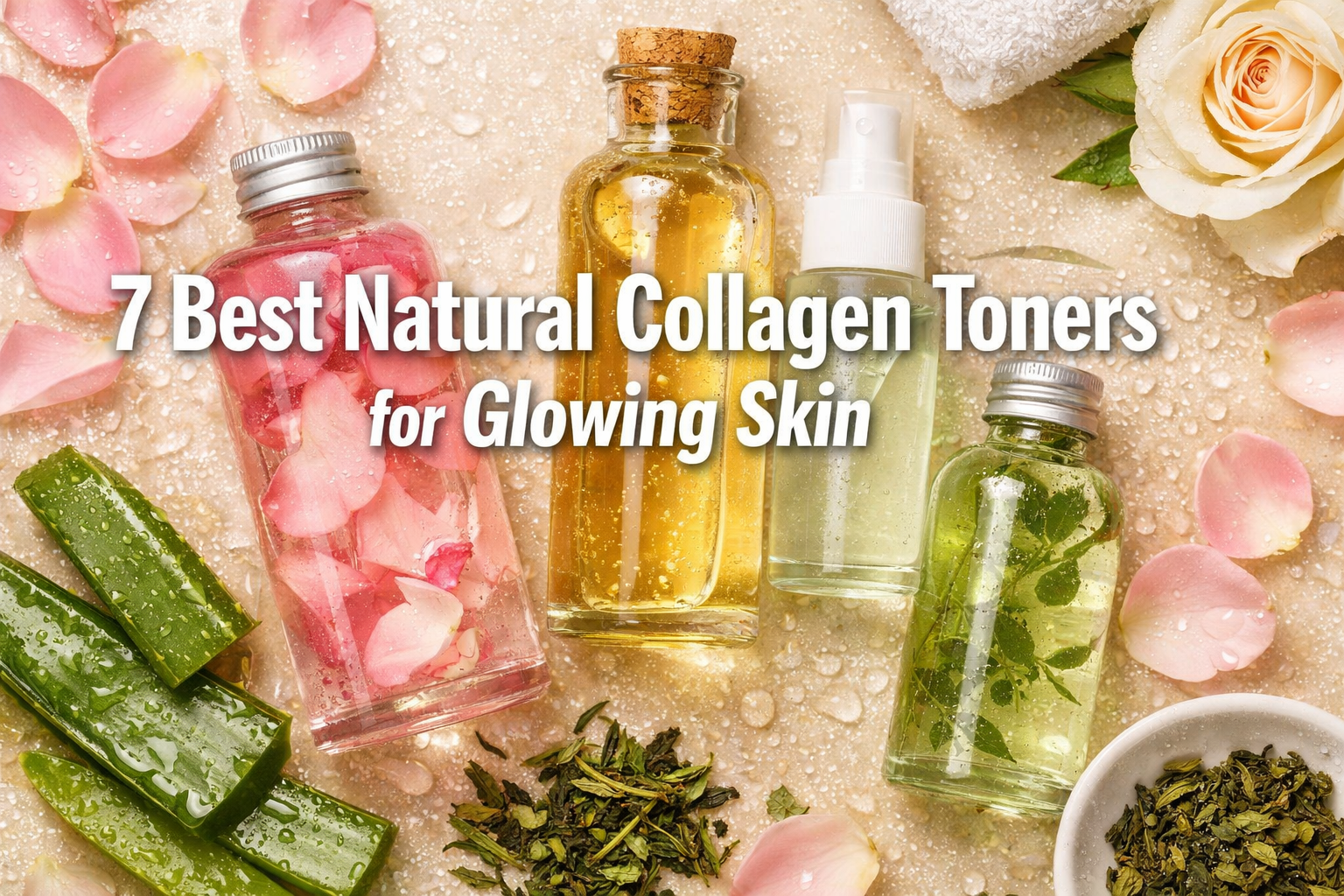
Quick Answer: The best natural collagen toners combine humectant-rich ingredients like aloe vera and hyaluronic acid with antioxidant botanicals like green tea and rose water to visibly plump, brighten, and firm skin. They work best at a pH of 4.5–5.5 to protect your skin’s acid mantle. You don’t need to spend a fortune — several of the top options can be made at home or found for under $35.
Key Takeaways
- Natural collagen toners don’t contain actual collagen molecules (they’re too large to penetrate skin), but they stimulate your skin’s own collagen production through peptides, vitamin C, and antioxidants.
- The ideal toner pH is 4.5–5.5 to keep your skin barrier healthy [1].
- Fermented rice water, green tea, aloe vera, and rose water are among the most effective natural collagen-supporting ingredients.
- Apply toner immediately after cleansing on damp skin for maximum absorption.
- DIY toners can be just as effective as store-bought ones when formulated correctly.
- Avoid toners with alcohol, synthetic fragrance, or parabens if you have sensitive or dry skin.
- Consistency matters more than any single product — daily use over 4–8 weeks shows the most visible results.
- Pair your toner with a good moisturizer and SPF for full glass-skin effect.
What Actually Makes a Toner “Collagen-Boosting”?
A toner earns the “collagen-boosting” label when it contains ingredients that either stimulate collagen synthesis in the skin or protect existing collagen from breaking down. No toner can deliver intact collagen molecules into your skin — the molecules are simply too large to pass through the skin barrier. What the best natural collagen toners can do is feed your skin the building blocks it needs.
The three main mechanisms:
- Antioxidant protection: Ingredients like green tea, vitamin C, and rose hip oil neutralize free radicals that degrade collagen. [1]
- Collagen synthesis stimulation: Peptides, vitamin C, and niacinamide signal skin cells to produce more collagen naturally.
- Hydration and plumping: Humectants like aloe vera, glycerin, and hyaluronic acid draw water into the skin, making it look fuller and more elastic. [1]
“The best natural toners don’t replace collagen — they create the conditions your skin needs to make more of its own.”
Choose this approach if: You want long-term skin improvement rather than a temporary glow. Collagen-supporting toners work gradually, so give them at least 4–6 weeks before judging results.
The 7 Best Natural Collagen Toners for Glowing Skin
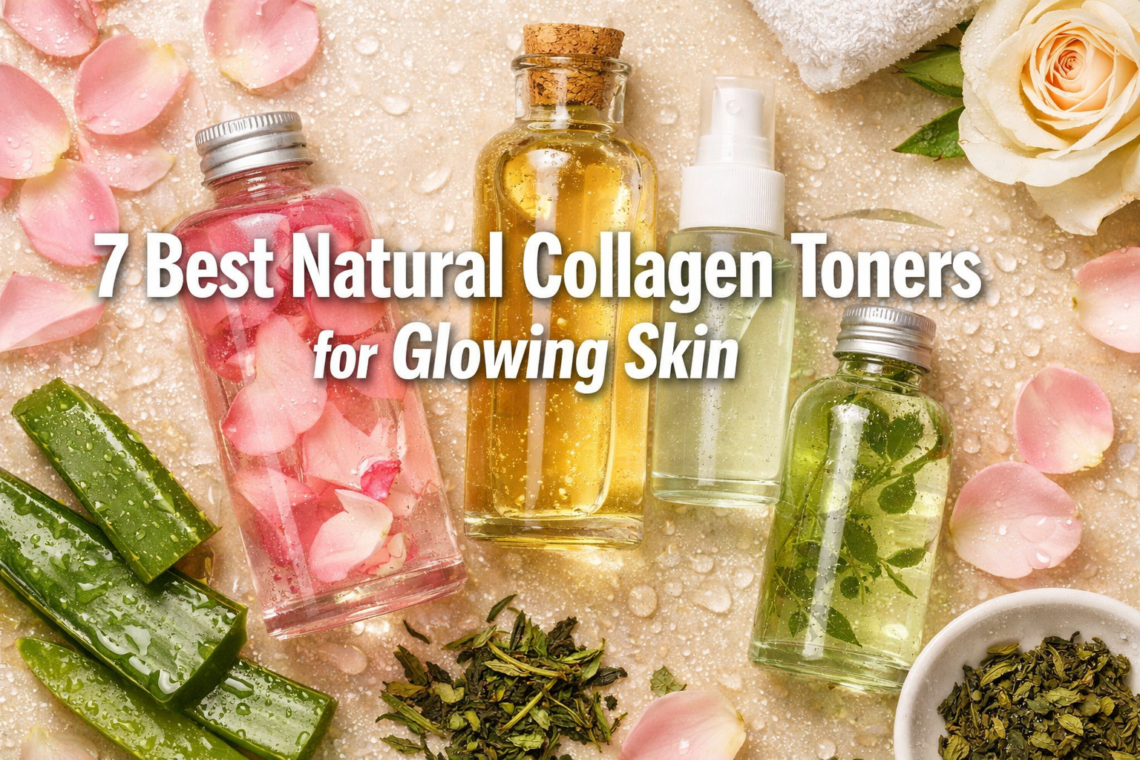
Here are seven toners — a mix of DIY recipes and clean store-bought options — that genuinely support collagen and deliver that glass-skin finish. Each one is chosen for ingredient quality, skin type suitability, and real-world effectiveness.
1. 🌿 Fermented Rice Water Toner
Best for: All skin types, especially dull or uneven skin tone.
Fermented rice water is one of the most time-tested natural toners in Korean and Japanese skincare. The fermentation process increases the concentration of amino acids, vitamins B and E, and antioxidants that support skin texture and brightness. [1]
DIY Recipe:
- Soak ½ cup of organic white rice in 2 cups of filtered water for 24–48 hours at room temperature.
- Strain the liquid, then dilute it 1:1 with plain water before applying.
- Store in a glass bottle in the fridge for up to one week.
How to use: Apply with a cotton pad or press directly into skin with clean hands after cleansing.
Common mistake: Using undiluted fermented rice water. It can be too acidic and cause irritation, especially for sensitive skin.
2. 🍵 Green Tea and Aloe Vera Toner
Best for: Oily, acne-prone, or combination skin.
Green tea is loaded with EGCG (epigallocatechin gallate), a potent antioxidant that helps protect collagen from UV-induced breakdown. Paired with aloe vera’s soothing, hydrating properties, this toner calms redness while keeping skin plump. [1]
DIY Recipe:
- Brew 1 cup of strong green tea and let it cool completely.
- Mix with 2 tablespoons of pure aloe vera gel.
- Add 3 drops of vitamin E oil for extra antioxidant support.
- Pour into a spray bottle and refrigerate.
Shelf life: Up to 5 days refrigerated. For a longer-lasting version, add 1 teaspoon of vegetable glycerin.
If you love DIY skincare, our DIY aloe vera face mask for glowing skin pairs perfectly with this toner routine.
3. 🌹 Rose Water and Vitamin C Toner
Best for: Dry, mature, or sensitive skin.
Rose water is a gentle astringent that tones pores and delivers anti-inflammatory benefits. Vitamin C is one of the most studied collagen-synthesis boosters available — it’s essential for the hydroxylation step in collagen production. Together, they brighten and firm skin over time. [2]
DIY Recipe:
- Combine ½ cup of pure rose water with 1 teaspoon of vitamin C powder (L-ascorbic acid).
- Add 1 tablespoon of glycerin.
- Mix well until fully dissolved and store in a dark glass bottle.
Edge case: Vitamin C oxidizes quickly. If your toner turns yellow or orange, discard it and make a fresh batch. Keep it away from light and heat.
For a similar brightening DIY, check out this DIY vitamin C spray for face recipe.
4. 🌾 Hyaluronic Acid and Chamomile Toner
Best for: Dehydrated, sensitive, or mature skin.
Hyaluronic acid (HA) can hold up to 1,000 times its weight in water, making it one of the most effective humectants for plumping skin. Chamomile adds anti-inflammatory and antioxidant support, making this combo ideal for anyone whose skin feels tight or reactive. [1]
Store-bought option to look for: Clean formulas that are EWG Verified and free from parabens and synthetic fillers. Look for labels listing sodium hyaluronate (the more skin-penetrating form of HA) as a top ingredient. [2]
DIY Recipe:
- Mix 1 cup of chamomile tea (cooled) with ½ teaspoon of hyaluronic acid powder.
- Add 1 teaspoon of vegetable glycerin.
- Shake well before each use.
5. 🍊 Papaya Enzyme and Honey Toner
Best for: Dull skin needing gentle exfoliation and glow.
Papaya contains papain, a natural enzyme that gently dissolves dead skin cells without harsh scrubbing. This reveals fresher skin underneath and helps other collagen-supporting ingredients absorb more effectively. Raw honey adds antimicrobial and humectant benefits.
DIY Recipe:
- Blend 2 tablespoons of ripe papaya into a smooth puree.
- Mix with 1 tablespoon of raw honey and 3 tablespoons of filtered water.
- Strain through a fine mesh to get a liquid toner.
- Apply, leave for 2–3 minutes, then rinse off.
Note: This is a rinse-off toner, not a leave-on formula. Use it 2–3 times per week, not daily, as the enzymes can be sensitizing with overuse.
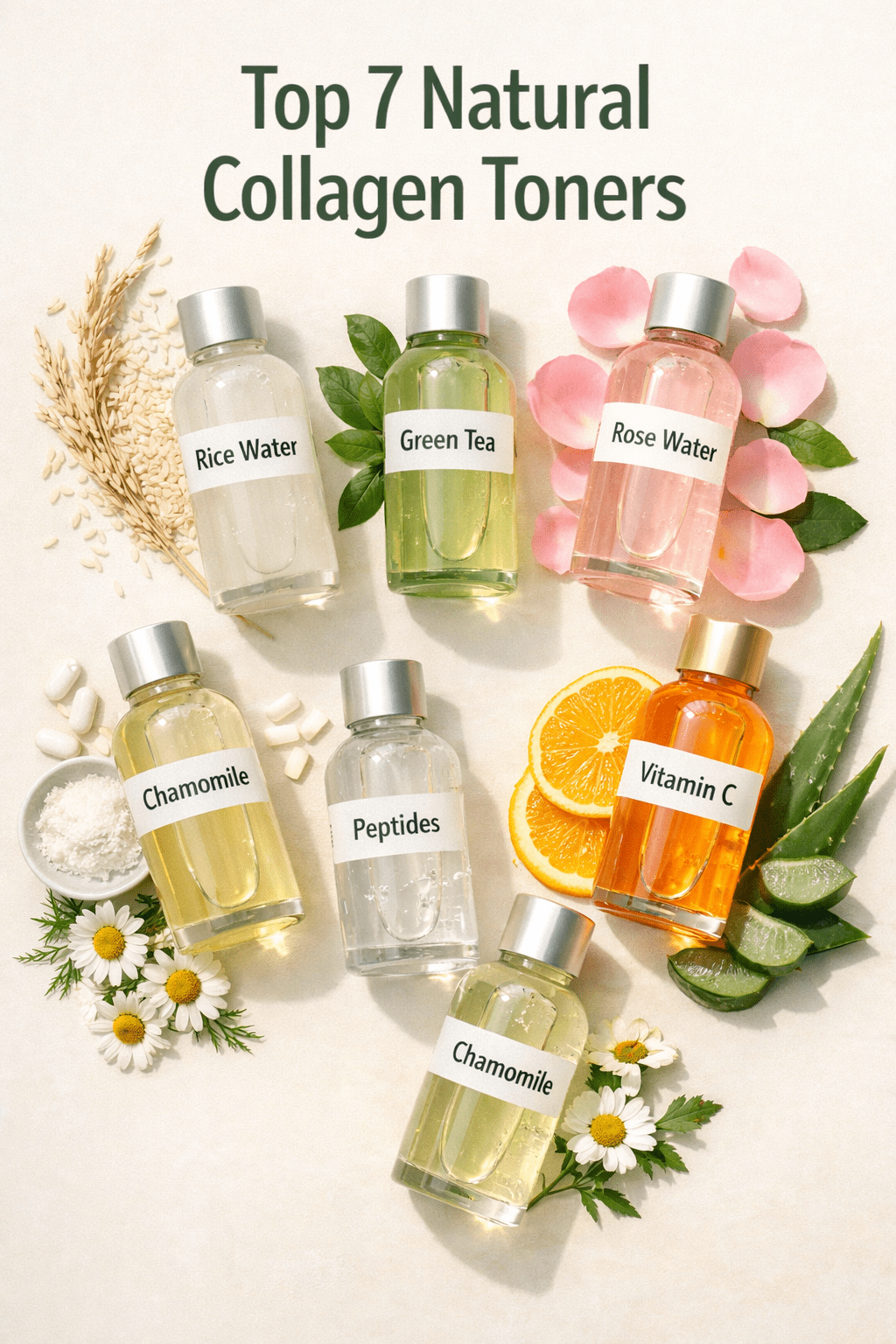
6. 🌿 Witch Hazel and Peptide Toner
Best for: Combination to oily skin, large pores.
Witch hazel is a natural astringent that tightens pores and controls excess oil without stripping the skin. When combined with a peptide complex, it becomes a genuine collagen-support toner. Peptides are short amino acid chains that signal skin to produce more collagen and elastin. [2]
Store-bought pick: Look for alcohol-free witch hazel formulas with added peptides (like Matrixyl or copper peptides). Avoid any witch hazel toner that lists alcohol as a top ingredient — it will dry out your skin and damage the barrier.
For a simple witch hazel DIY, our DIY face toner with witch hazel and rose water is a great starting point.
Also worth noting: if you’re dealing with visible pores, these pore-tightening home remedies for oily skin work well alongside a toner routine.
7. 🌿 Collagen Retinol Boosting Pad (Clean Store-Bought Option)
Best for: Those who want a no-fuss, pre-soaked option.
For days when DIY isn’t practical, pre-soaked collagen toner pads are a solid option. The SUNGBOON EDITOR Deep Collagen Retinol Power Boosting Pad is one example, priced at $32.00 with a 4 out of 5 star rating. [3] It combines retinol with collagen-supporting peptides in a convenient single-use format.
What to look for in any store-bought collagen pad:
- Retinol or bakuchiol (the natural retinol alternative)
- Peptides listed in the top half of the ingredient list
- No synthetic fragrance or alcohol denat.
- pH between 4.5 and 5.5 [1]
How to Use Natural Collagen Toners Correctly
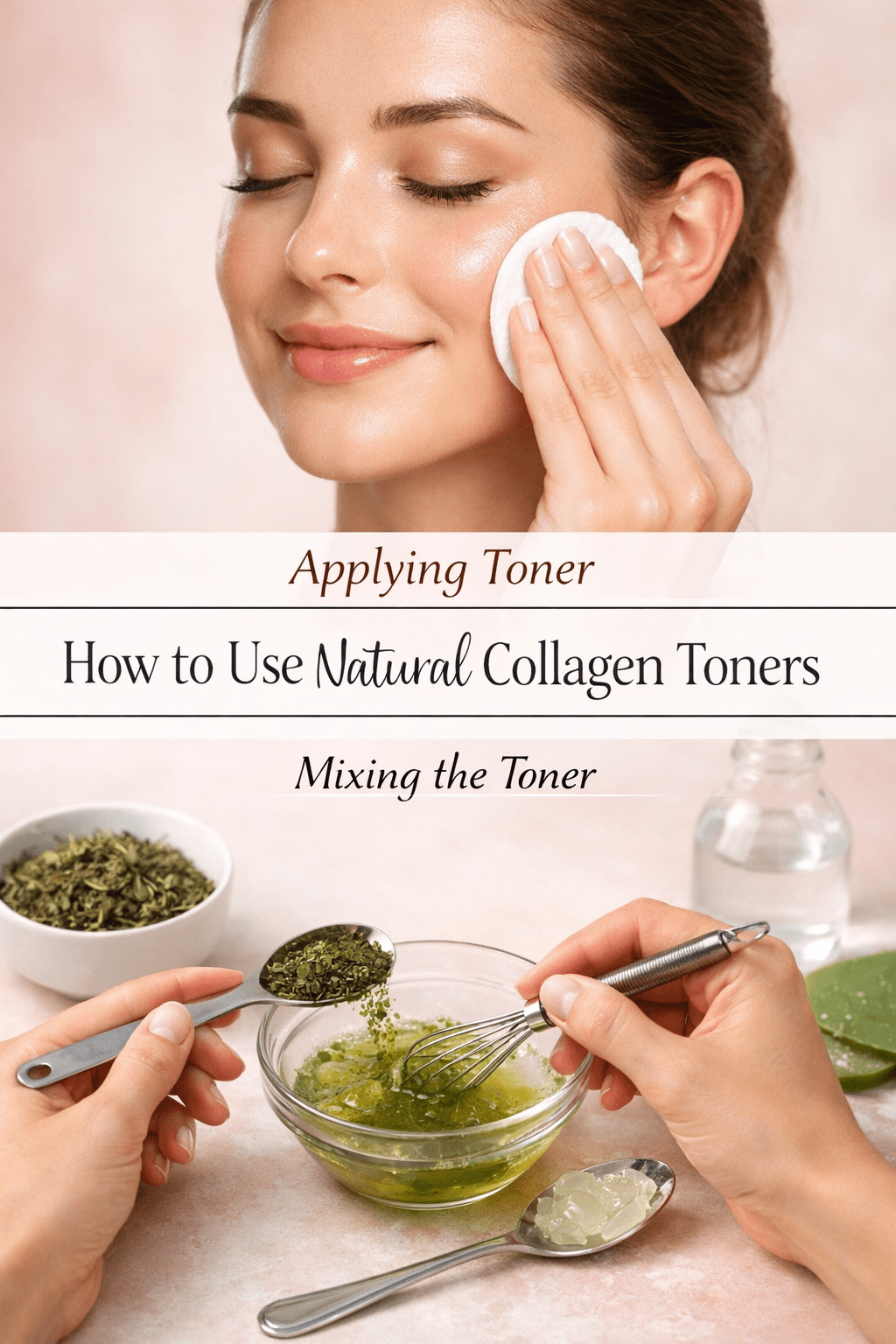
Using the best natural collagen toners the right way makes a real difference in results. The application method matters almost as much as the formula itself.
Step-by-step routine:
- Cleanse your face with a gentle, pH-balanced cleanser.
- Pat skin until slightly damp — don’t dry it completely.
- Apply toner immediately while skin is still moist.
- Use clean hands to press the toner into skin (the “7-skin method”) or apply with a soft cotton pad.
- Follow with a serum or moisturizer within 60 seconds to lock in hydration.
- Apply SPF in the morning — especially important when using vitamin C or enzyme toners.
Common mistakes to avoid:
| Mistake | Why It’s a Problem | Fix |
|---|---|---|
| Applying to completely dry skin | Reduces absorption of humectants | Apply to slightly damp skin |
| Using alcohol-based toners | Strips barrier, degrades collagen | Choose alcohol-free formulas |
| Skipping SPF after vitamin C toner | Vitamin C increases UV sensitivity | Always follow with SPF 30+ |
| Expecting overnight results | Collagen remodeling takes weeks | Commit to 4–8 weeks of consistent use |
| Storing DIY toners too long | Bacterial growth without preservatives | Refrigerate and use within 5–7 days |
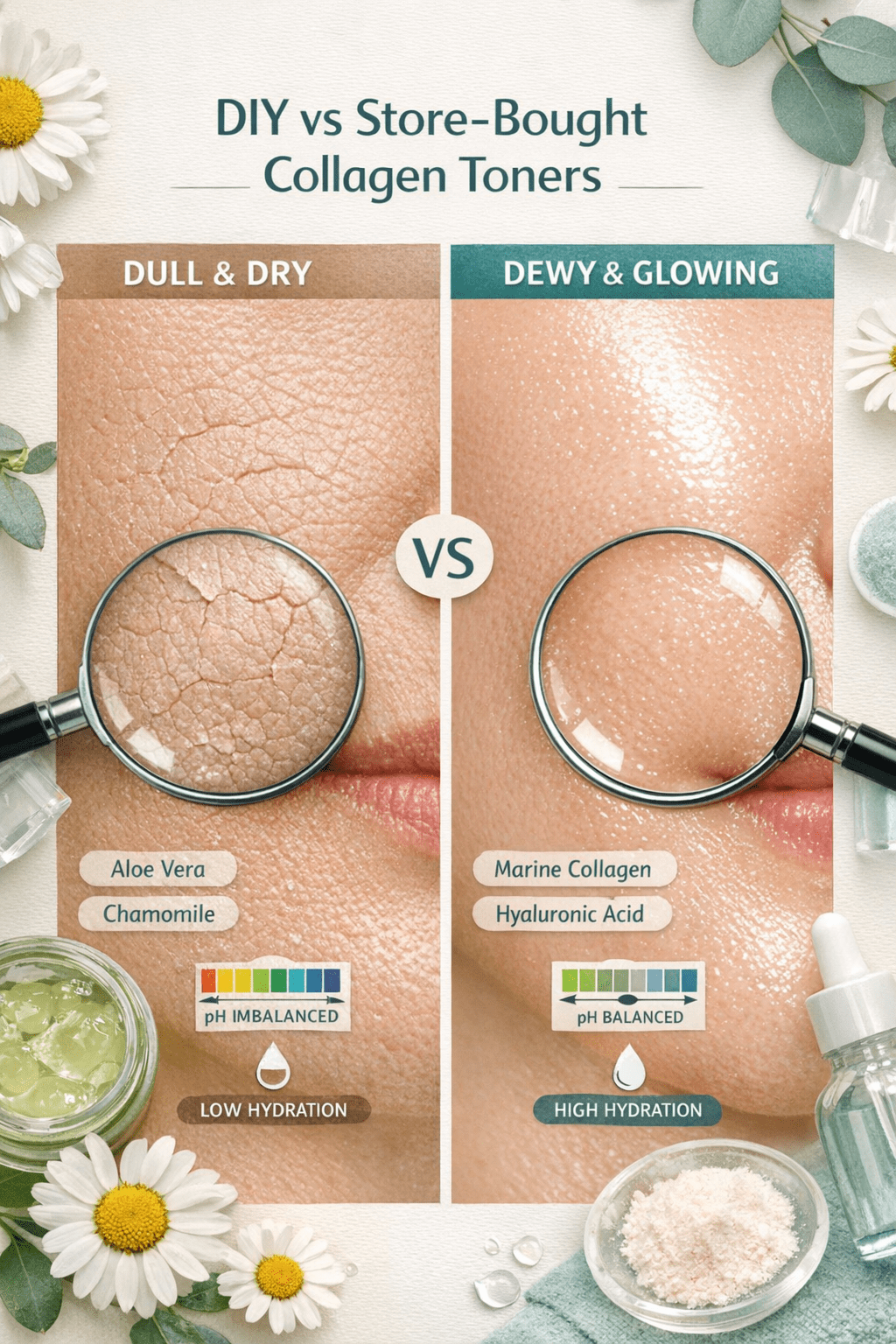
DIY vs. Store-Bought: Which Natural Collagen Toner Is Better?
Both options work well when chosen carefully. The right choice depends on your lifestyle, budget, and skin sensitivity.
Choose DIY if:
- You want full control over every ingredient.
- You have sensitive skin and react to common preservatives.
- You enjoy making your own skincare (it’s genuinely fun).
- Budget is a priority — most DIY toners cost under $5 per batch.
Choose store-bought if:
- You travel frequently or need a shelf-stable formula.
- You want clinically studied peptide concentrations that are hard to replicate at home. [2]
- You prefer the convenience of a tested, consistent product.
For more DIY skincare inspiration, browse the full DIY skincare collection at The Herbal Handbook.
What Ingredients Should You Avoid in Natural Collagen Toners?
Not every “natural” label means skin-safe. Some ingredients marketed as natural can still cause irritation or long-term barrier damage.
Avoid or use with caution:
- Alcohol denat. / ethanol: Dries out skin and breaks down the lipid barrier over time.
- Synthetic fragrance: A common irritant and allergen, even in “natural” products.
- Parabens: Preservatives linked to hormonal disruption in some studies. [2]
- Undiluted essential oils: Lavender, citrus, and peppermint oils can cause contact dermatitis at high concentrations.
- High-pH formulas (above 7): Disrupt the acid mantle and reduce effectiveness of other skincare steps. [1]
Quick rule: If you can’t pronounce more than half the ingredients and none of them are botanicals or recognized actives, put it back on the shelf.
FAQ: Best Natural Collagen Toners
Q: Can a toner actually boost collagen production?
A toner can’t deliver collagen directly, but ingredients like vitamin C, peptides, and antioxidants signal your skin to produce more collagen on its own. Results build over weeks of consistent use.
Q: How often should I use a natural collagen toner?
Most natural toners are safe for twice-daily use (morning and night). Enzyme-based toners like papaya should be limited to 2–3 times per week.
Q: What’s the best natural collagen toner for dry skin?
Rose water with vitamin C or a hyaluronic acid and chamomile formula works best for dry skin. Both add hydration while supporting collagen synthesis.
Q: Do natural toners work for mature skin?
Yes. Mature skin benefits most from peptide-rich and antioxidant-heavy toners. Green tea, vitamin C, and fermented rice water are particularly effective for fine lines and loss of firmness.
Q: How long before I see results from a natural collagen toner?
Most people notice improved hydration within a few days. Visible firming and brightness typically take 4–8 weeks of daily use.
Q: Can I use a natural toner if I have acne-prone skin?
Yes. Green tea and aloe vera toners are especially good for acne-prone skin because they reduce inflammation without clogging pores. Avoid honey-based toners if you’re very oily.
Q: Is fermented rice water safe for sensitive skin?
Yes, when diluted properly (1:1 with water). Undiluted fermented rice water can be too acidic for sensitive skin types.
Q: What pH should a natural collagen toner have?
The ideal pH is 4.5–5.5, which matches your skin’s natural acid mantle and supports barrier function. [1]
Q: Can I layer a natural toner with a serum?
Absolutely. Apply toner first, wait 30–60 seconds, then apply serum. This layering approach maximizes absorption of both products.
Q: Are store-bought natural collagen toners worth the price?
It depends on the formula. Look for EWG Verified products with peptides and botanical actives listed prominently. Formulas with clinically studied peptide concentrations offer benefits that are hard to replicate at home. [2]
Conclusion: Your Next Steps to Glass Skin
The best natural collagen toners work not because they flood your skin with collagen, but because they give your skin exactly what it needs to build and protect its own. Whether you start with a simple fermented rice water toner you make this weekend or pick up a clean peptide formula from a trusted brand, the key is consistency.
Your action plan:
- Start simple. Try the green tea and aloe vera toner first — it’s easy, affordable, and works for most skin types.
- Check your current toner’s pH if you already use one. Anything above 6 is working against you.
- Commit to 6 weeks. Take a photo before you start and compare at the 6-week mark.
- Layer smart. Always follow your toner with a moisturizer and SPF in the morning.
- Go deeper with DIY. Once you’re comfortable with toners, explore our DIY collagen balm for dry, dull skin and 5 DIY face masks for glowing skin to build a full natural routine.
Glass skin isn’t a filter — it’s what happens when your skin is genuinely healthy, hydrated, and well-supported. These toners are a great place to start.
References
[1] Best Natural Face Toners For Firm Youthful Hydrated Skin – https://www.kyomiskin.com/blogs/natural-skincare-edit/best-natural-face-toners-for-firm-youthful-hydrated-skin
[2] Top Providers Concentrated Collagen Boosters – https://www.naturalorganicskincare.com/blogs/category/top-providers-concentrated-collagen-boosters
[3] Best Toner For Face – https://www.ulta.com/discover/skin/best-toner-for-face