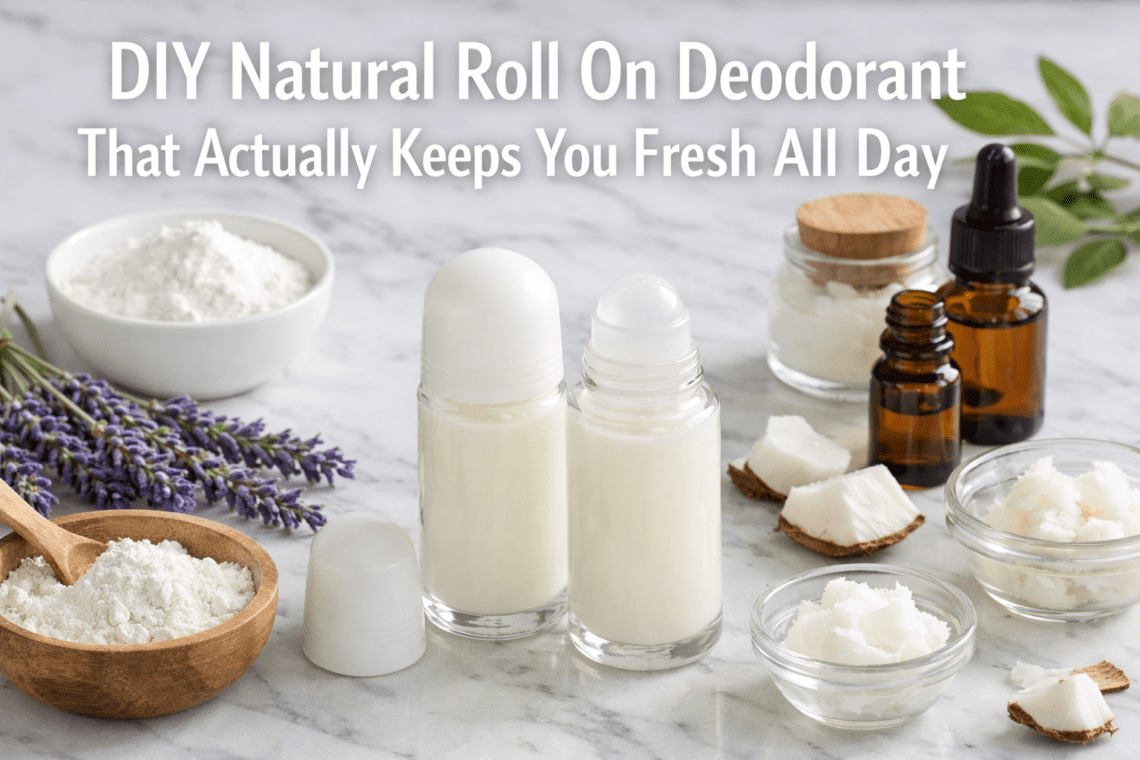
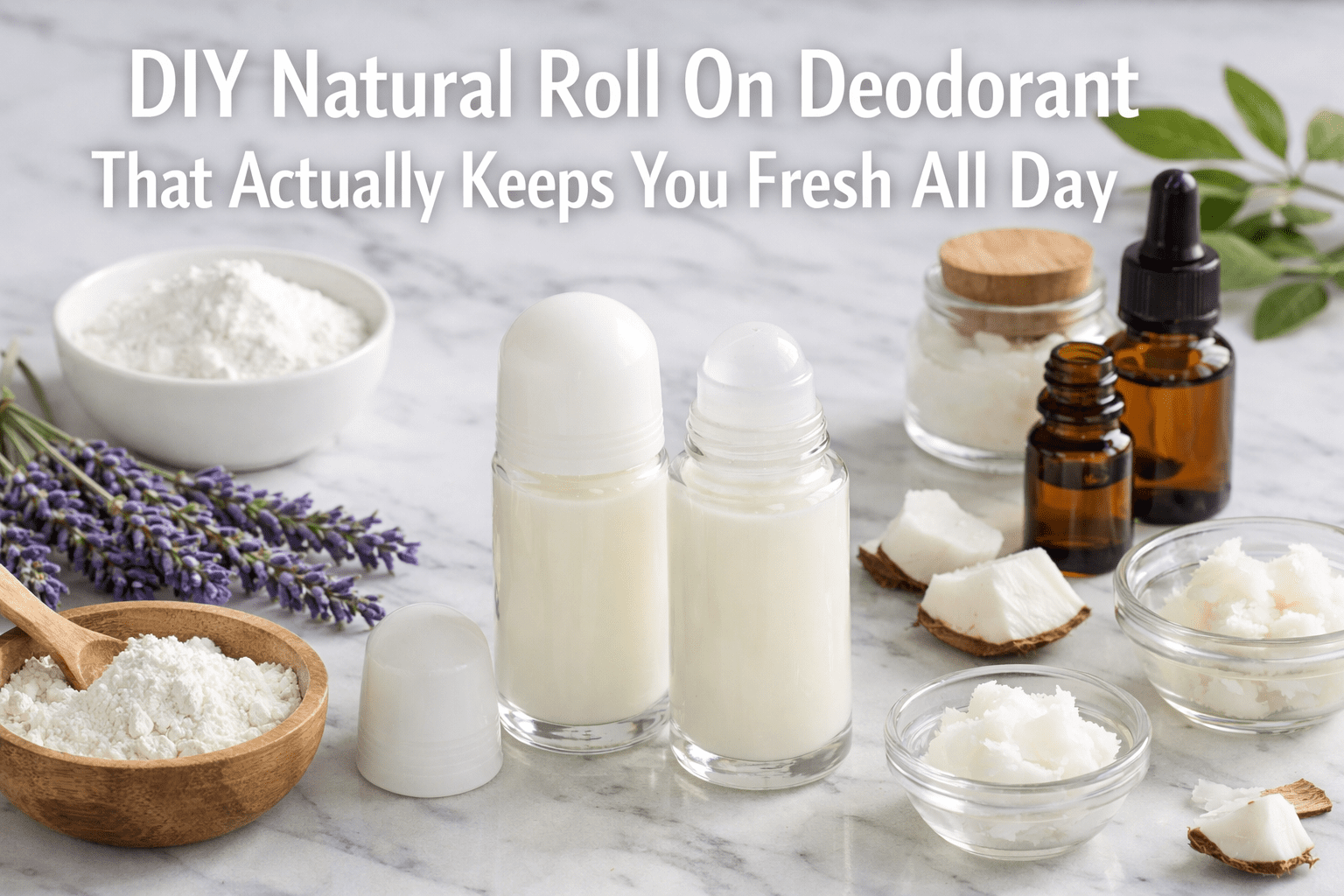
Making your own DIY natural roll on deodorant gives you complete control over what touches your skin while delivering genuine all-day freshness. Unlike many natural deodorants that fail by midday, a properly formulated homemade roll-on uses zinc compounds, quality emulsifiers, and skin-nourishing ingredients to keep you odor-free for 8-12 hours without aluminum, parabens, or synthetic fragrances.
Key Takeaways
- Zinc oxide paired with zinc ricinoleate provides the most effective natural odor control without causing clothing stains or skin irritation
- Quality emulsifiers like BTMS or Montanov 68 are essential for creating smooth, stable formulations that glide on easily
- Water-based roll-on deodorants require preservatives (Leucidal or Cosgard) to prevent bacterial and mold growth
- Adding 1-1.5 grams of zinc PCA significantly extends protection throughout the entire day
- A basic recipe yields about 100ml and costs a fraction of store-bought natural deodorants
- Witch hazel-based formulas offer a non-greasy, oil-free alternative that won’t stain clothes
- Baking soda works effectively but can irritate sensitive skin; arrowroot powder serves as a gentler substitute
Quick Answer
A DIY natural roll on deodorant combines water, oils, emulsifiers, and odor-fighting zinc compounds to create an effective alternative to commercial products. The key to all-day freshness lies in using zinc oxide with zinc ricinoleate for odor control, quality emulsifiers for smooth application, and preservatives to maintain product safety. Most formulations provide 8-12 hours of protection and cost less than $5 per batch.
What Makes a DIY Natural Roll On Deodorant Actually Work All Day?
The secret to long-lasting natural deodorant effectiveness comes from combining zinc compounds that neutralize odor-causing bacteria with ingredients that keep you dry without blocking sweat glands.
Zinc oxide paired with zinc ricinoleate creates the most effective deodorizing combination because zinc oxide provides antimicrobial protection while zinc ricinoleate specifically traps and neutralizes odor molecules [1]. This dual approach tackles body odor from two angles without relying on aluminum-based antiperspirants.
Key effectiveness factors include:
- Emulsifier quality – BTMS or Montanov 68 (derived from coconut oil and yucca) blend water and oil phases into smooth, stable formulas that roll on evenly [1]
- Zinc PCA addition – Adding 1-1.5 grams extends protection through the full day, preventing the midday effectiveness drop common in simpler recipes [1]
- Moisture absorption – Arrowroot powder or cornstarch keeps underarms dry without irritation
- pH balance – Proper pH levels (typically 5-6) support skin health and preservative effectiveness
Common mistake: Many DIY recipes skip emulsifiers or use inadequate amounts, resulting in separated, greasy formulas that don’t roll on smoothly. Without proper emulsification, oils float separately and the product feels unpleasant on skin.
Choose oil-free formulas if you wear delicate fabrics or need guaranteed stain-free application. Witch hazel-based recipes eliminate oil entirely while maintaining effectiveness [2].
What Ingredients Do You Need for DIY Natural Roll On Deodorant?
A basic effective formula requires about 8-10 ingredients, most of which you can find at health food stores or online natural ingredient suppliers.
Essential base ingredients:
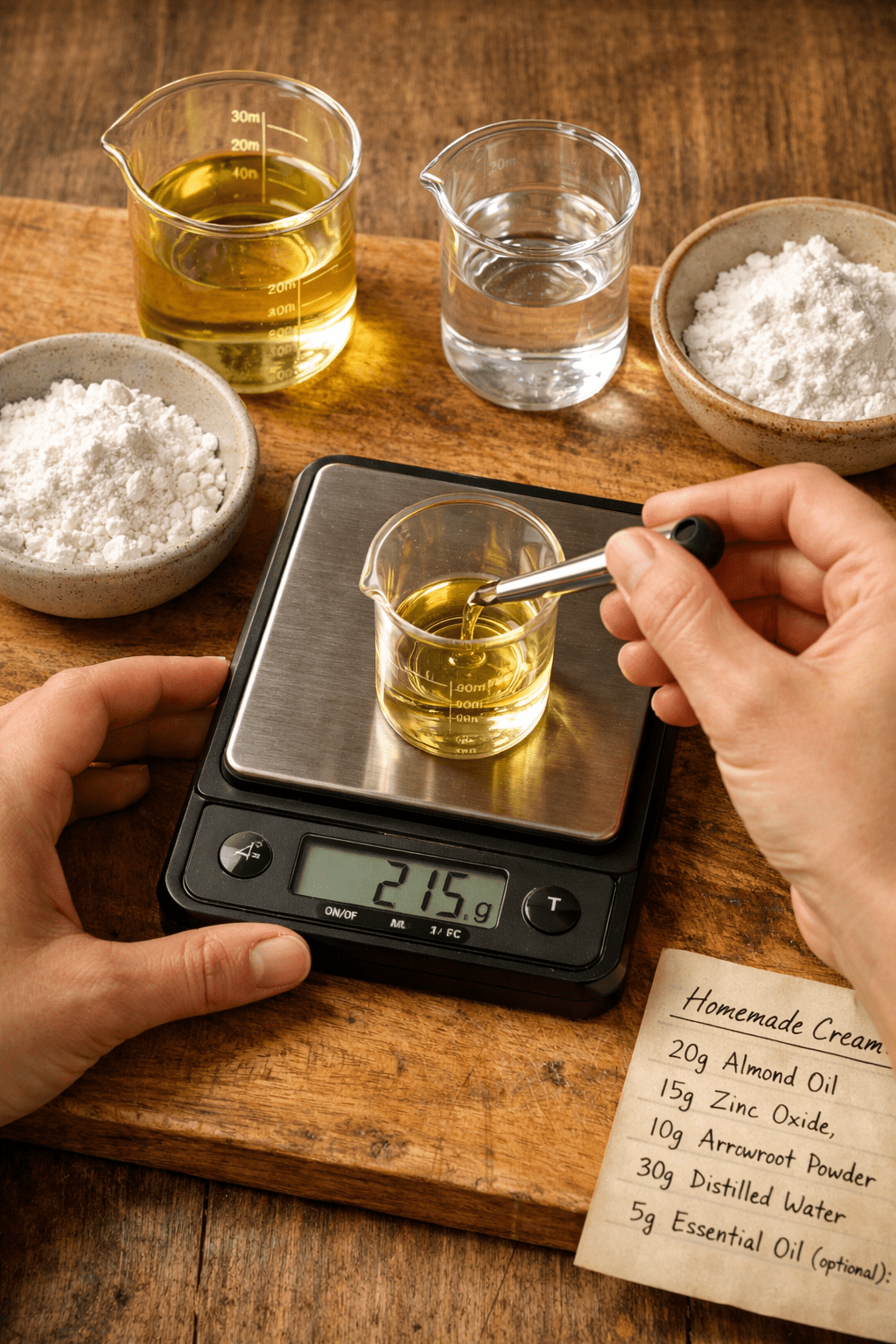
- 70g distilled water – provides the liquid base
- 15g almond oil or fractionated coconut oil – nourishes skin and helps ingredients blend
- 5g vegetable glycerin – acts as a humectant to prevent drying
- 5g emulsifier (BTMS or Montanov 68) – combines water and oil phases smoothly
- 2g zinc ricinoleate – neutralizes odor molecules
- 1-2g zinc oxide – provides antimicrobial protection [1]
Performance boosters:
- 1-1.5g zinc PCA – extends all-day effectiveness [1]
- 10-15 drops essential oils – adds natural fragrance (lavender, rosemary, or citrus work well)
- Preservative (Leucidal or Cosgard at recommended dosage) – prevents microbial growth in water-based formulas [1][2]
Oil-free alternative ingredients:
- Witch hazel (replaces water and oils)
- Arrowroot powder (absorbs moisture)
- Aloe vera gel (soothes skin)
- Baking soda or magnesium hydroxide (odor control) [2]
This basic recipe yields approximately 100ml of product, enough to fill 2-3 standard roll-on bottles [1]. If you’re new to making natural homemade deodorant, start with a smaller batch to test the formula on your skin.
Ingredient sourcing tip: Purchase from reputable suppliers that provide ingredient specifications and safety data sheets. Quality matters significantly for emulsifiers and preservatives.
How Do You Make DIY Natural Roll On Deodorant Step-by-Step?
Making roll-on deodorant involves a simple heating and mixing process that takes about 30 minutes from start to finish.
Preparation phase:
- Sanitize equipment – Wash all utensils, containers, and roll-on bottles with hot soapy water, then rinse with rubbing alcohol [1]
- Measure ingredients – Use a digital scale for accuracy; weight measurements work better than volume for consistency
- Set up double boiler – Fill a pot with 2 inches of water and place a heat-safe bowl on top
Heating and emulsifying:
- Combine water phase – Add distilled water and glycerin to the double boiler bowl
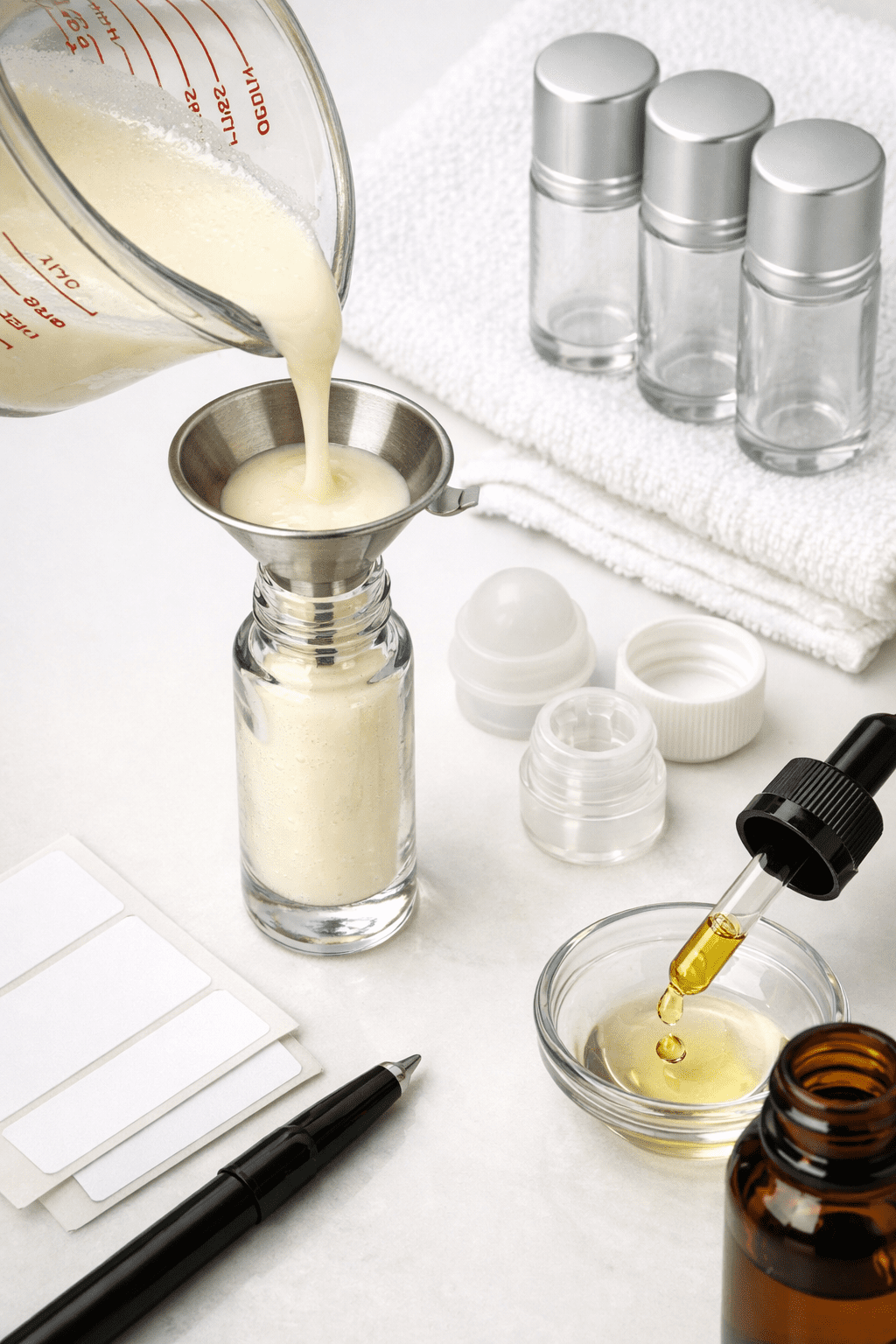
- Heat to 160-170°F – Use a thermometer to monitor temperature
- Add oil phase – Stir in almond oil and emulsifier once water reaches temperature
- Whisk continuously – Blend for 2-3 minutes until mixture becomes creamy and uniform [1]
Cooling and finishing:
- Cool to 120°F – Remove from heat and let temperature drop while stirring occasionally
- Add active ingredients – Stir in zinc ricinoleate, zinc oxide, and zinc PCA
- Add preservative – Mix in preservative according to manufacturer’s recommended percentage
- Add essential oils – Stir in 10-15 drops once mixture cools below 100°F
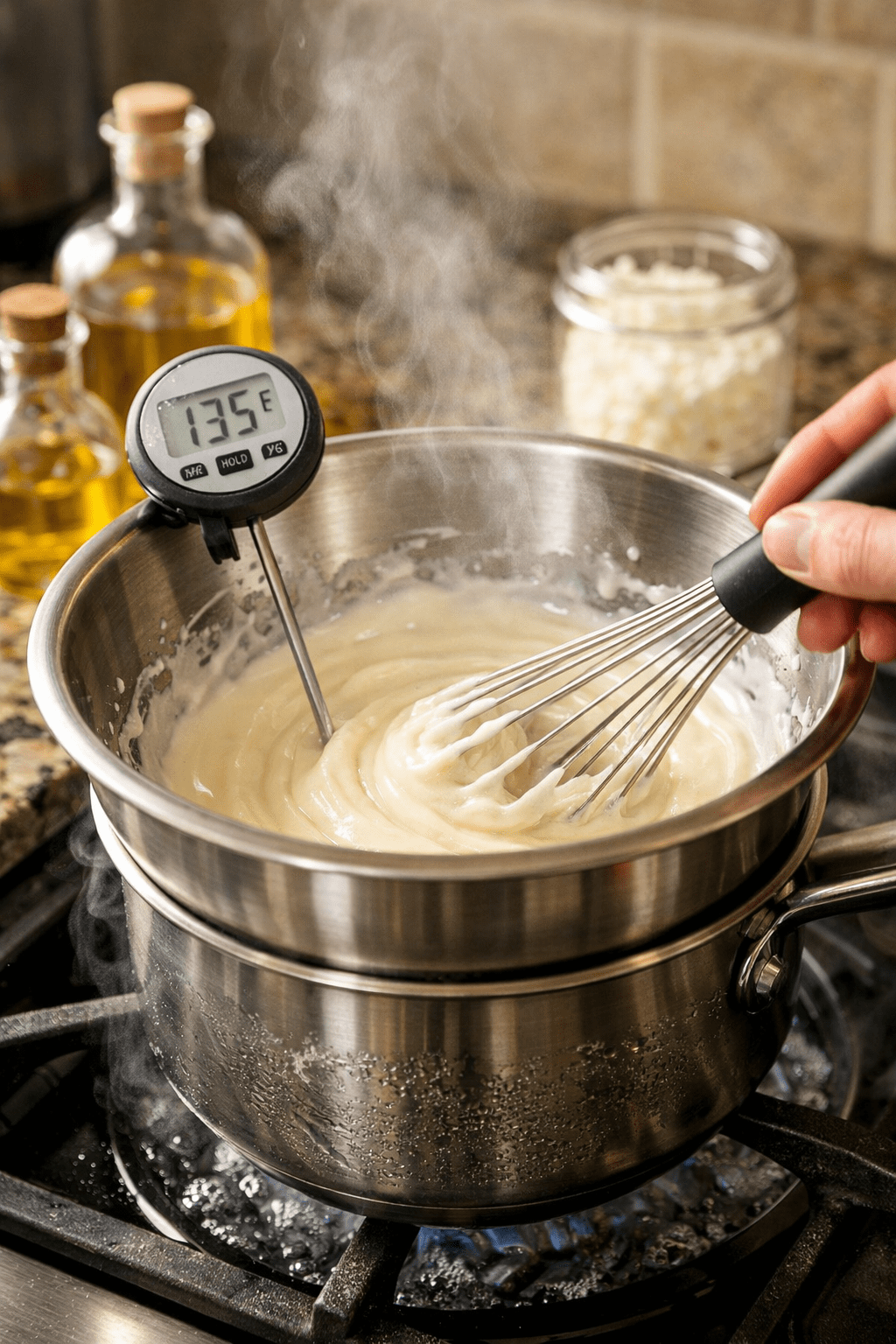
- Fill bottles – Use a small funnel to transfer into sanitized roll-on containers [1]
Critical timing note: Add preservatives and essential oils only after the mixture cools below 100°F to maintain their effectiveness. Heat degrades many natural preservatives and evaporates essential oils.
Troubleshooting: If your mixture separates, the emulsifier ratio may be off or the temperature wasn’t high enough. Reheat to 160°F and whisk vigorously for 3-4 minutes.
For those interested in other DIY skincare projects, the emulsification technique used here applies to many natural beauty products.
How Do You Store and Use Your Homemade Roll On Deodorant?
Proper storage extends shelf life to 3-6 months while maintaining effectiveness and preventing contamination.
Storage best practices:
- Keep in cool, dark place – Store away from direct sunlight and heat sources
- Room temperature is ideal – Refrigeration isn’t necessary and can make oils solidify
- Use within 6 months – Water-based formulas have limited shelf life even with preservatives
- Watch for changes – Discard if you notice off smells, color changes, or mold growth
Application tips for best results:
Apply to clean, dry underarms using 2-3 upward rolls per side. The deodorant works best when applied to freshly washed skin because it can neutralize odor-causing bacteria before they multiply.
First-time use adjustment period:
Your body may need 1-2 weeks to adjust when switching from conventional antiperspirants. During this transition, you might experience increased sweating as your body detoxifies from aluminum compounds. This is normal and temporary.
For sensitive skin: If you experience irritation, reduce or eliminate baking soda from the formula. Arrowroot powder provides similar moisture absorption without the alkalinity that can irritate delicate underarm skin [2].
Reapplication: Most users find one morning application sufficient for all-day protection. If you exercise heavily or work in hot conditions, you may need to reapply once midday.
Similar to other natural remedies, consistency matters more than quantity when using homemade deodorant.
What Are Common Mistakes to Avoid When Making DIY Natural Roll On Deodorant?
Even experienced DIY enthusiasts make errors that compromise effectiveness or safety.
Top formulation mistakes:
- Skipping preservatives – Water-based formulas without preservatives grow bacteria and mold within days, creating health risks [1][2]
- Using too much baking soda – Excessive amounts cause skin irritation and pH imbalance; stick to recommended percentages
- Inadequate emulsifier – Insufficient emulsifier creates separated, greasy products that don’t roll on smoothly
- Adding essential oils too early – Heat degrades aromatic compounds; always add after cooling below 100°F
- Ignoring pH testing – Some preservatives require specific pH ranges to work effectively [1]
Application and storage errors:
- Applying to broken skin – Wait until any nicks or irritation heal before using deodorant containing baking soda or essential oils
- Not sanitizing containers – Dirty bottles introduce contaminants that overwhelm preservatives
- Storing in bathroom – Humidity and temperature fluctuations reduce shelf life
- Expecting antiperspirant results – Natural deodorants control odor but don’t stop sweating; they’re deodorants, not antiperspirants
Ingredient substitution pitfalls:
Don’t substitute regular coconut oil for fractionated coconut oil in warm climates. Regular coconut oil solidifies below 76°F, making the roll-on difficult to apply. Fractionated coconut oil stays liquid at all temperatures.
Edge case: If you live in very hot climates (above 85°F consistently), increase emulsifier by 1-2 grams to prevent separation.
How Does DIY Natural Roll On Deodorant Compare to Store-Bought Options?
Homemade versions offer significant cost savings and customization but require more time and attention to detail than buying ready-made products.
| Factor | DIY Natural Roll On | Store-Bought Natural | Conventional |
|---|---|---|---|
| Cost per 100ml | $3-5 | $8-15 | $4-8 |
| Ingredient control | Complete | Limited | None |
| Effectiveness | 8-12 hours (if formulated correctly) | 8-12 hours | 12-24 hours |
| Customization | Full scent and ingredient choice | Limited options | No customization |
| Time investment | 30 minutes per batch | None | None |
| Shelf life | 3-6 months | 12-24 months | 24+ months |
| Aluminum-free | Yes | Yes | Usually no |
| Stain risk | Low (if formulated properly) | Low to moderate | Low |
Choose DIY if: You have sensitive skin requiring specific ingredient exclusions, want complete control over scents and textures, or make multiple personal care products regularly.
Choose store-bought if: You lack time for DIY projects, travel frequently and need longer shelf life, or prefer the convenience of ready-made products.
Cost breakdown for one batch (100ml):
- Distilled water: $0.10
- Almond oil: $0.75
- Emulsifier: $0.80
- Zinc compounds: $1.50
- Preservative: $0.40
- Essential oils: $0.50
- Total: ~$4.05
The same amount of quality store-bought natural deodorant typically costs $10-15, making DIY about 60-70% cheaper.
If you enjoy making your own personal care items, you might also appreciate creating homemade mouthwash or natural face toner.
What Scent Combinations Work Best for Natural Roll On Deodorant?
Essential oil selection affects both fragrance appeal and deodorant effectiveness, since some oils provide additional antimicrobial benefits.
Most effective scent combinations:
Fresh and clean:
- 8 drops lavender + 4 drops lemon + 3 drops tea tree
- Provides antimicrobial boost while smelling fresh and gender-neutral
Herbal and earthy:
- 7 drops rosemary + 5 drops sage + 3 drops cedarwood
- Strong odor-fighting properties with woodsy appeal [1][2]
Floral and light:
- 10 drops lavender + 5 drops geranium
- Gentle, traditionally feminine scent with skin-soothing properties
Citrus energizing:
- 6 drops grapefruit + 4 drops bergamot + 3 drops lime
- Uplifting scent; avoid if applying before sun exposure as citrus oils are photosensitive [1][2]
Masculine and warm:
- 7 drops sandalwood + 4 drops frankincense + 2 drops patchouli
- Deep, complex scent profile
Essential oil safety considerations:
- Maximum dilution: Keep total essential oils at 1-2% of final formula (10-20 drops per 100ml)
- Patch test: Test new scent combinations on inner arm before full application
- Pregnancy caution: Avoid rosemary, sage, and clary sage during pregnancy
- Photosensitivity: Skip citrus oils if you’ll have sun exposure within 12 hours [2]
Unscented option: Simply omit essential oils entirely. The base formula works effectively without added fragrance, making it ideal for those with scent sensitivities or who prefer fragrance-free products.
Can You Make Oil-Free DIY Natural Roll On Deodorant?
Yes, witch hazel-based formulas eliminate oils entirely while maintaining effectiveness and preventing clothing stains.
Oil-free formula ingredients:
- 60ml witch hazel – provides astringent base that tightens pores
- 30ml aloe vera gel – soothes and moisturizes (note: may cause initial dampness that resolves within a week) [2]
- 2 tablespoons arrowroot powder – absorbs moisture without greasiness
- 1 tablespoon baking soda or magnesium hydroxide – neutralizes odor
- 10-15 drops essential oils – adds fragrance and antimicrobial properties
- Preservative – necessary for any water-containing formula [2]
Preparation method:
- Combine witch hazel and aloe vera in a bowl
- Whisk in arrowroot powder until fully dissolved with no clumps
- Add baking soda or magnesium hydroxide and mix thoroughly
- Stir in preservative according to package directions
- Add essential oils last
- Pour into roll-on bottles using a funnel
Texture differences: Oil-free formulas feel lighter and dry faster than oil-based versions. They’re particularly good for hot, humid climates where oils might feel heavy or greasy.
Baking soda sensitivity: If baking soda irritates your skin, substitute with magnesium hydroxide at the same ratio. Magnesium hydroxide provides similar odor control with less alkalinity [2].
Aloe vera note: The aloe vera gel acts as a humectant, drawing moisture from the air. Your underarms may feel slightly damp initially, but this typically adjusts within one week as your skin adapts [2]. If you can’t use aloe vera, substitute with vegetable glycerin diluted 50/50 with distilled water.
Conclusion
Making your own DIY natural roll on deodorant empowers you to control exactly what touches your skin while saving money and reducing exposure to synthetic chemicals. The key to all-day effectiveness lies in using proven odor-fighting ingredients like zinc oxide and zinc ricinoleate, quality emulsifiers for smooth application, and proper preservatives to ensure product safety.
Start with the basic formula provided here, then customize scents and adjust ingredients based on your skin’s response. Remember that your body needs 1-2 weeks to transition from conventional antiperspirants, so give your homemade deodorant a fair trial period before making adjustments.
Your next steps:
- Gather ingredients and sanitize your equipment
- Make a small test batch (half the recipe) to perfect your technique
- Apply consistently for two weeks to allow your body to adjust
- Experiment with scent combinations to find your favorite
- Share your successful formula with friends interested in natural remedies for beginners
The satisfaction of creating an effective, personalized deodorant that actually works all day makes the small time investment worthwhile. Plus, you’ll never worry about running out at an inconvenient time since you can whip up a fresh batch in under 30 minutes.
FAQ
How long does homemade roll on deodorant last?
Water-based DIY roll on deodorant lasts 3-6 months when stored properly in a cool, dark place with adequate preservatives. Discard if you notice any off smells, color changes, or visible mold growth.
Can I skip the preservative in my DIY deodorant?
No, water-containing formulas require preservatives to prevent dangerous bacterial and mold growth. Without preservatives, your deodorant can develop harmful microorganisms within days [1][2].
Why does my natural deodorant make me sweat more?
Natural deodorants don’t contain aluminum compounds that block sweat glands, so you’ll sweat normally. This is healthy and natural; the deodorant controls odor, not perspiration. Your body may also detoxify from conventional products for 1-2 weeks.
Will DIY roll on deodorant stain my clothes?
Properly formulated deodorants using zinc oxide and zinc ricinoleate won’t stain clothes. Oil-free witch hazel formulas provide extra stain protection. Avoid excessive baking soda, which can leave white marks [1][2].
Can I use regular coconut oil instead of fractionated?
Regular coconut oil solidifies below 76°F, making roll-on application difficult in cooler temperatures. Fractionated coconut oil or almond oil stays liquid at all temperatures and works better in roll-on formulas.
What if the deodorant irritates my underarms?
Reduce or eliminate baking soda, which commonly causes irritation on sensitive skin. Switch to arrowroot powder for moisture absorption and magnesium hydroxide for odor control [2]. Always apply to unbroken skin.
How much does it cost to make DIY roll on deodorant?
One 100ml batch costs approximately $3-5 in ingredients, compared to $10-15 for equivalent store-bought natural deodorant. Initial ingredient purchases require more investment but yield multiple batches.
Can I make this deodorant without emulsifiers?
Emulsifiers are essential for combining water and oil phases into smooth, stable formulas. Without them, ingredients separate and the product feels greasy and applies unevenly [1].
Is zinc oxide safe for underarm use?
Yes, zinc oxide is skin-safe and provides gentle antimicrobial protection without irritation. It’s commonly used in diaper creams and sunscreens, making it suitable for sensitive underarm skin [1].
How do I know if my deodorant has gone bad?
Signs of spoilage include off or sour smells, visible mold growth, color changes, or separation that doesn’t remix with shaking. Always discard deodorant showing any of these signs.
Can pregnant women use DIY natural roll on deodorant?
Yes, but avoid essential oils like rosemary, sage, and clary sage during pregnancy. Stick to gentle options like lavender or make an unscented version by omitting essential oils entirely.
Why does my roll on deodorant feel watery?
Insufficient emulsifier or incorrect heating temperature causes separation and watery texture. Reheat to 160°F and whisk vigorously, or increase emulsifier by 1-2 grams in your next batch [1].
References
[1] Natural Homemade Roll On Deodorant That Works – https://thethingswellmake.com/natural-homemade-roll-on-deodorant-that-works/
[2] Homemade Roll On Deodorant – https://diynatural.com/homemade-roll-on-deodorant/
[3] Best Natural Deodorants – https://anthroevolve.com/blogs/best-bathroom-buys/best-natural-deodorants