Quick Answer: A DIY lip lightening balm combines natural ingredients like beeswax, shea butter, coconut oil, and brightening agents such as lemon juice, turmeric, or vitamin E to gently fade dark or uneven lip pigmentation over time. You can make a basic batch in under 15 minutes using kitchen staples, and consistent daily use is what actually moves the needle. This guide covers the best ingredients, a step-by-step recipe, and honest tips on what to expect.
Key Takeaways 🌿
- Dark lips are often caused by sun exposure, dehydration, smoking, or hormonal changes — and most cases respond well to consistent natural care.
- A solid DIY lip lightening balm base uses beeswax, shea butter, and coconut oil for moisture and protection. [1]
- Brightening boosters like lemon juice, turmeric, vitamin E, and honey work best when used regularly over several weeks. [2]
- Lemon juice contains citric acid that gently exfoliates and may reduce melanin production, but avoid it on cracked or broken lips. [2]
- Turmeric contains curcumin, which research suggests may help reduce melanin production when applied topically. [2]
- Honey and glycerine together moisturize while supporting a lighter, more even lip tone over time. [2]
- Beetroot juice mixed with honey creates a natural tinted balm that also conditions lips overnight. [3]
- SPF protection matters: sun exposure worsens lip darkening, so a balm with zinc oxide or daily SPF lip product use helps prevent setbacks. [2]
- Patch test every new ingredient before applying to lips, especially citrus and essential oils.
- Results take time — most people see a noticeable difference after 4 to 6 weeks of daily use.
Why Are My Lips Dark, and Can a DIY Lip Lightening Balm Actually Help?
Dark or uneven lip pigmentation is extremely common, and yes, a consistent natural balm routine can genuinely help. The key is understanding what’s causing the darkness in the first place, because that shapes which ingredients will work best for you.
Common causes of dark lips include:
- Sun exposure — UV rays trigger melanin production in lip skin, which is thinner and more vulnerable than facial skin. [2]
- Dehydration — Lips that don’t get enough moisture become dry, flaky, and dull-looking.
- Smoking — Nicotine and heat both darken lip tissue over time.
- Hormonal changes — Pregnancy, thyroid issues, or hormonal fluctuations can shift pigmentation.
- Licking lips frequently — Saliva breaks down the delicate lip barrier.
- Low-quality lip products — Some lipsticks and glosses contain ingredients that cause contact dermatitis or staining.
A well-formulated DIY lip lightening balm works on two levels: it treats existing pigmentation with brightening agents and protects the lip barrier so darkening doesn’t keep getting worse. That combination is what makes it more effective than just applying lemon juice and hoping for the best.
“Consistent moisturization and sun protection are just as important as the brightening ingredient itself — one without the other slows your results significantly.” [2]
What Ingredients Actually Work in a DIY Lip Lightening Balm?
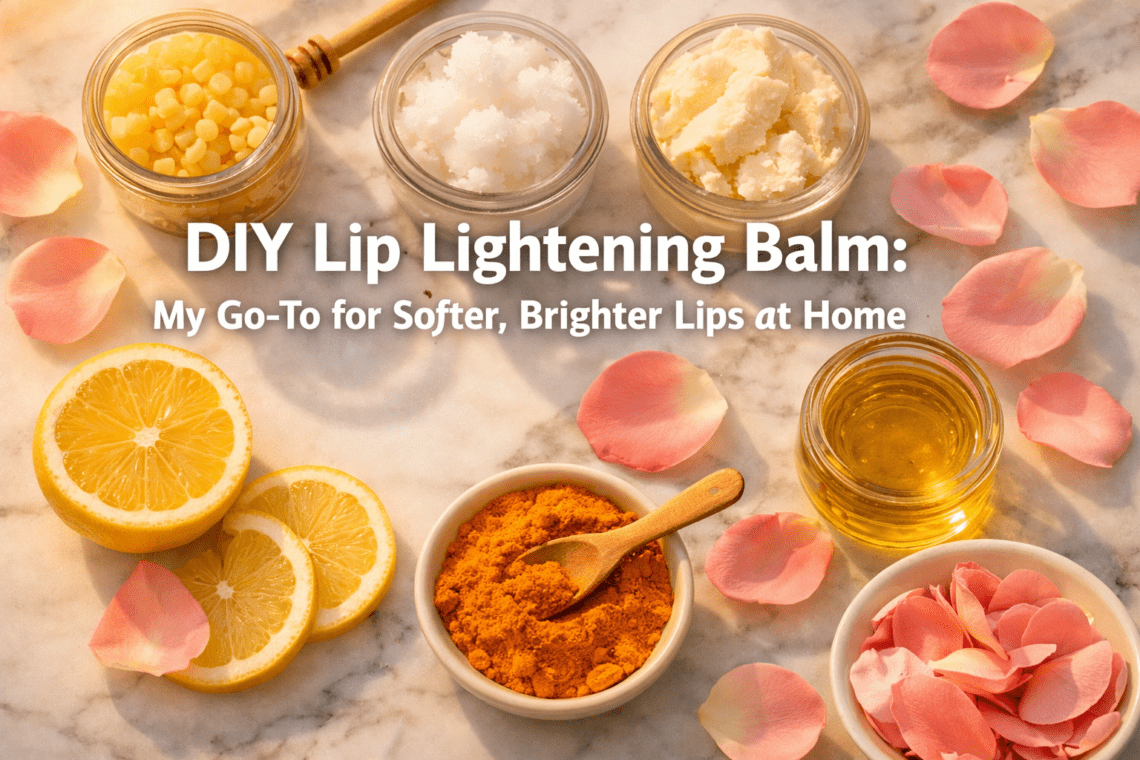
The most effective natural lip lightening ingredients are lemon juice (citric acid), turmeric, honey, vitamin E, and beetroot — each supported by traditional use and some emerging research. Here’s a practical breakdown:
| Ingredient | What It Does | Best Used As |
|---|---|---|
| Beeswax | Forms protective barrier, seals in moisture | Balm base |
| Shea butter | Deep conditioning, anti-inflammatory | Balm base |
| Coconut oil | Moisturizes, mild antimicrobial | Balm base |
| Lemon juice / citric acid | Exfoliates, may reduce melanin | Brightening booster |
| Turmeric (curcumin) | May inhibit melanin production | Brightening booster |
| Honey | Moisturizes, mild brightening | Overnight treatment |
| Glycerine | Humectant, draws moisture to lips | Add-in |
| Vitamin E oil | Antioxidant, supports skin repair | Add-in |
| Beetroot juice | Natural tint, antioxidant-rich | Overnight balm |
| Pomegranate | Antioxidant, may support skin lightening | Mask ingredient |
Lemon juice is one of the most-cited natural brighteners. Its citric acid content exfoliates dead skin and may reduce melanin production with consistent use. That said, it should never go on cracked or irritated lips, and it’s best rinsed off after 10 to 15 minutes rather than left on indefinitely. [2]
Turmeric paste (mixed with a small amount of milk or honey) contains curcumin, which has shown melanin-inhibiting properties in topical applications. Leave it on for 5 to 10 minutes, then rinse. [2]
For a nourishing overnight option, a mix of 1 tablespoon lime juice, 1 teaspoon glycerine, and 1 teaspoon honey applied before bed can lighten lips while keeping them soft. [2] You might also enjoy this guide to healing chapped lips naturally overnight for more overnight treatment ideas.
Step-by-Step: How to Make Your DIY Lip Lightening Balm at Home
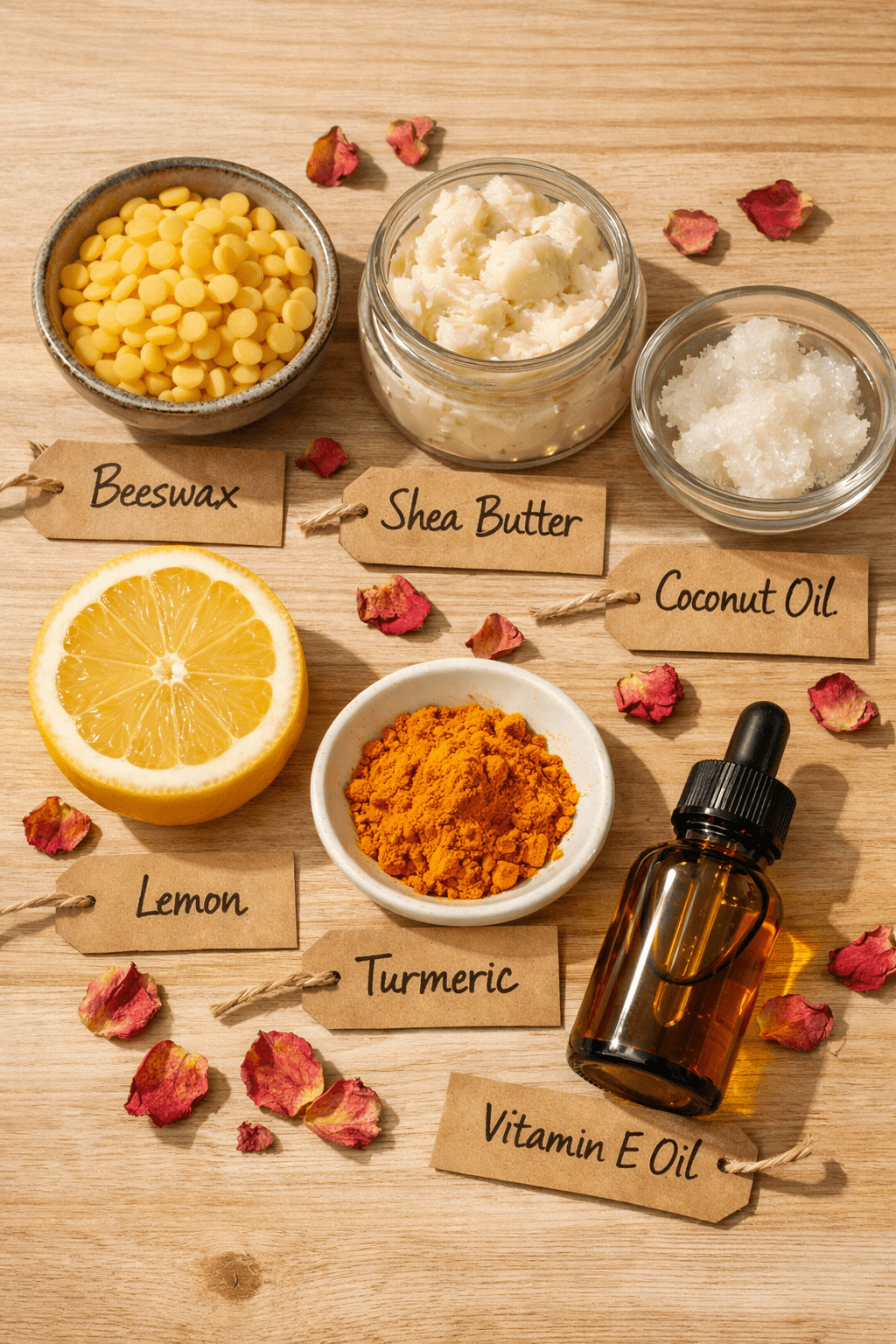
This base recipe takes about 11 to 15 minutes from start to finish and makes enough to fill 4 to 6 small lip balm tubes or one small jar. [1]
What You’ll Need
Base ingredients:
- 2 tablespoons coconut oil
- 1 tablespoon beeswax pellets
- 1 tablespoon shea butter
Brightening add-ins (choose 1 to 2):
- ½ teaspoon vitamin E oil
- ½ teaspoon turmeric powder (use sparingly — it stains)
- 1 teaspoon beetroot juice (for a natural pink tint and brightening effect)
- A few drops of lemon essential oil (NOT fresh lemon juice in the balm — it’s too acidic and unstable in a balm formula)
Optional extras:
- 2 to 3 drops peppermint essential oil (for a plumping tingle)
- ½ teaspoon honey (add after removing from heat)
Step-by-Step Instructions
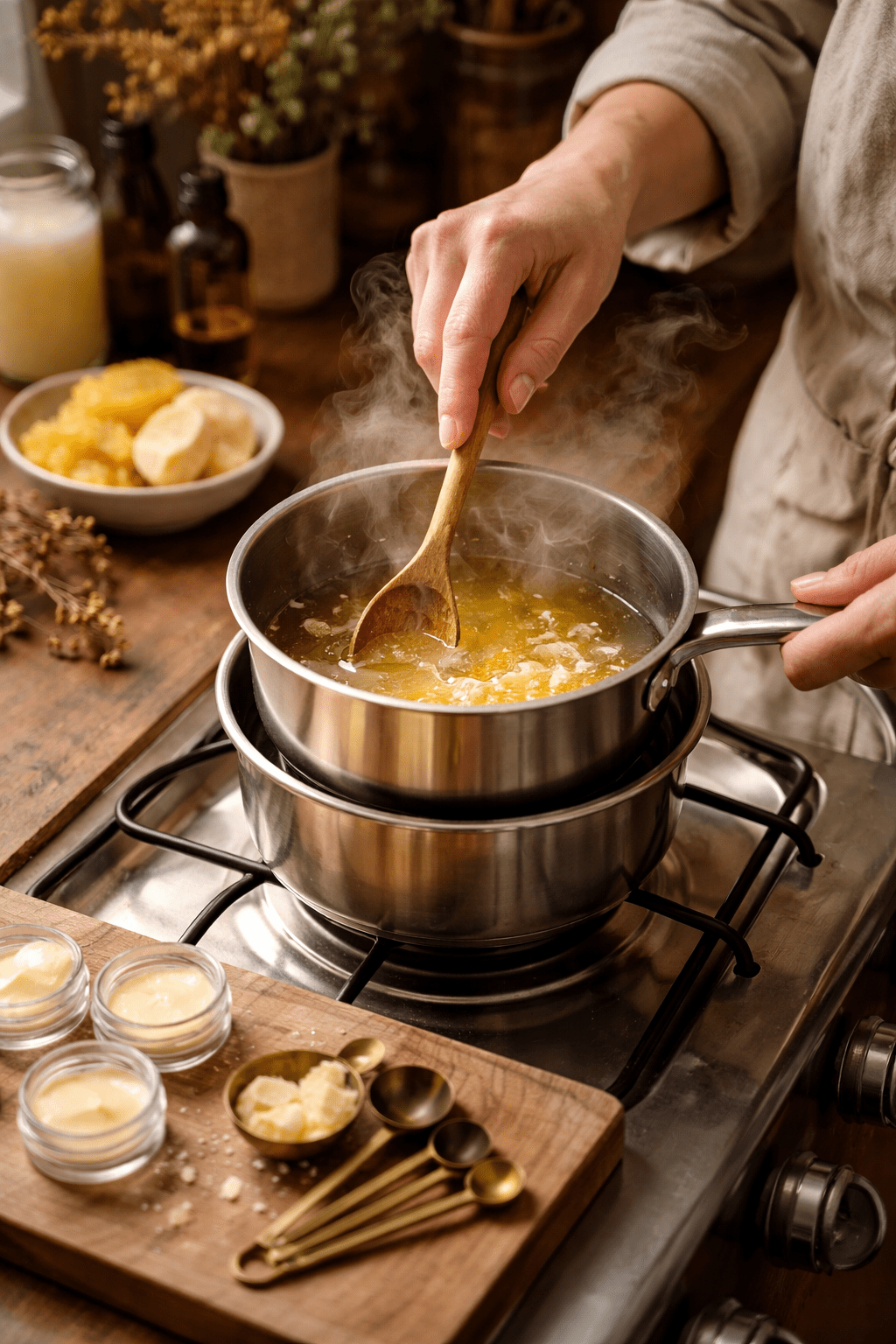
- Set up a double boiler. Place a small glass bowl over a saucepan with 1 to 2 inches of simmering water. Don’t let the bowl touch the water.
- Melt the beeswax first. Add beeswax pellets to the bowl and stir gently until fully melted. This takes about 3 to 4 minutes.
- Add coconut oil and shea butter. Stir until everything is smooth and combined.
- Remove from heat. Take the bowl off the double boiler and let it cool for 1 to 2 minutes.
- Stir in your brightening add-ins. Add vitamin E oil, beetroot juice, or lemon essential oil now. If using honey, add it here too and stir well.
- Pour into containers. Carefully pour into lip balm tubes or a small glass jar. Work quickly — it sets fast.
- Let it cool completely. Leave at room temperature for 20 to 30 minutes before capping.
Yield: Approximately 4 to 6 lip balm tubes or one 30ml jar.
Shelf life: Up to 3 months at room temperature. Store away from direct sunlight.
Common mistake: Adding lemon juice directly to a hot balm formula. Fresh juice contains water, which causes the balm to separate and can introduce bacteria. Use lemon essential oil in the balm, and save fresh lemon juice for separate spot treatments.
If you enjoy making your own natural skincare, you’ll also love this DIY collagen balm recipe for dry, dull skin — it uses a similar base with different active ingredients.
How to Use Your DIY Lip Lightening Balm for Best Results
Apply the balm consistently — that’s the single biggest factor in seeing results. Sporadic use won’t move the needle.
Daily routine that works:
- Morning: Apply balm after brushing teeth. If you’re going outside, layer a lip product with SPF on top. [2]
- Midday: Reapply as needed, especially after eating or drinking.
- Night: Apply a slightly thicker layer before bed. This is when your skin repairs itself, so overnight application is especially effective.
Supplement with weekly treatments:
- Once or twice a week, apply a turmeric and honey paste to your lips for 5 to 10 minutes before rinsing. [2]
- Try a gentle lip scrub before applying your balm to remove dead skin and help the brightening ingredients absorb better. This DIY lemon sugar scrub works well as a pre-balm prep step.
Realistic timeline:
Most people notice softer, more hydrated lips within the first week. Visible lightening typically takes 4 to 6 weeks of consistent daily use. If you’re dealing with deeper pigmentation from years of sun exposure or smoking, give it 8 to 12 weeks.
Who Should (and Shouldn’t) Use a Natural Lip Lightening Balm
This type of balm is a good fit for most people, but there are a few situations where you should adjust or skip certain ingredients.
Good candidates:
- People with naturally darker lips who want a softer, more even tone
- Anyone with dry, chapped, or dull lips looking for a natural daily moisturizer
- Those who prefer to avoid synthetic chemicals in their beauty routine
Use caution or avoid if:
- Your lips are cracked, bleeding, or actively irritated — skip citrus ingredients until healed
- You have a citrus allergy — lemon essential oil and lemon juice are off the table
- You’re pregnant — check with your doctor before using essential oils topically
- You have a known beeswax allergy — substitute candelilla wax (vegan option)
For anyone dealing with persistent dark patches that don’t respond to home care after 3 months, it’s worth seeing a dermatologist to rule out conditions like melasma or post-inflammatory hyperpigmentation that may need targeted treatment.
Also check out the Herbal Handbook’s DIY skincare category for more natural recipes that pair well with this balm routine.
Bonus: Quick Overnight Treatments to Boost Your Results
These simple overnight masks work alongside your balm to speed up brightening. Use one two to three times per week.
1. Honey and Glycerine Overnight Mask
Mix 1 tablespoon lime juice, 1 teaspoon glycerine, and 1 teaspoon honey. Apply before bed and rinse in the morning. This combo moisturizes deeply while the lime juice works on pigmentation. [2]
2. Beetroot and Honey Balm
Mix 1 teaspoon beetroot juice with ½ teaspoon honey and a tiny drop of ghee or coconut oil. Apply before sleep. Beetroot gives a natural rosy tint while conditioning overnight. [3]
3. Pomegranate and Rose Water Mask
Combine 1 tablespoon crushed pomegranate seeds with 1 teaspoon rose water and 1 tablespoon fresh cream. Apply for 10 to 15 minutes, then rinse. Pomegranate contains antioxidants that may support skin brightening. [2]
4. Strawberry and Baking Soda Paste
Blend a few strawberries with a pinch of baking soda into a smooth paste. Apply before sleep and rinse in the morning. Strawberries contain vitamin C and natural acids that gently exfoliate. [2]
For more ideas on natural skin brightening at home, the DIY turmeric butter for skin recipe uses similar brightening principles and works well as a companion treatment for your face.
Frequently Asked Questions
Q: How long does it take to see results from a DIY lip lightening balm?
Most people notice softer, more hydrated lips within 3 to 7 days. Visible lightening of pigmentation typically takes 4 to 6 weeks of consistent daily use.
Q: Can I use fresh lemon juice directly in my balm recipe?
No. Fresh lemon juice contains water, which causes oil-based balms to separate and can introduce bacteria. Use lemon essential oil in the balm formula instead, and apply fresh lemon juice as a separate short-contact treatment. [2]
Q: Is this balm safe for everyday use?
Yes, the base recipe (beeswax, shea butter, coconut oil, vitamin E) is gentle enough for daily use. If you add turmeric or citrus, those are best used in short-contact treatments rather than left on all day.
Q: Will turmeric stain my lips yellow?
It can, temporarily. Use a very small amount (no more than ¼ teaspoon per batch), and rinse off any turmeric-based treatment thoroughly. The staining fades quickly.
Q: Can I make a vegan version of this balm?
Yes. Substitute beeswax with candelilla wax (use about half the amount, as it’s firmer) and skip honey. The rest of the recipe stays the same.
Q: Does SPF matter for lip lightening?
Absolutely. Sun exposure is one of the main causes of lip darkening, so protecting your lips from UV rays prevents new pigmentation from forming while your balm works on existing darkness. [2]
Q: Can I use this balm on my kids?
Stick to the plain base (beeswax, shea butter, coconut oil) without essential oils or citrus for children. Always check with a pediatrician if you’re unsure.
Q: How do I store my homemade lip balm?
Store in a cool, dry place away from direct sunlight. A small amber glass jar works well. Shelf life is up to 3 months.
Q: What if my balm is too hard or too soft?
Too hard: reduce the beeswax by ½ teaspoon next time. Too soft: add an extra ½ teaspoon of beeswax. Climate matters too — balms soften in warm weather.
Q: Can I use this balm if I have cold sores?
Avoid applying any balm to active cold sores. Once healed, the moisturizing base is fine to use. Don’t double-dip your finger into the jar if you have an active breakout — use a clean spatula instead.
Conclusion: Start Simple, Stay Consistent
A DIY lip lightening balm is one of the most practical natural beauty projects you can add to your routine. The base recipe is affordable, takes less than 15 minutes to make, and uses ingredients you likely already have at home. The brightening add-ins — lemon essential oil, turmeric, beetroot, vitamin E — each bring something useful to the formula, and the overnight treatments give you an extra boost on the days you want to go deeper.
Your actionable next steps:
- Make the base balm this week using beeswax, shea butter, and coconut oil. Get comfortable with the process before adding brightening agents.
- Choose one brightening booster based on what you have available — beetroot for a natural tint, turmeric for melanin support, or vitamin E for antioxidant repair.
- Apply morning and night, every day. Consistency is the ingredient that most people skip.
- Add a weekly exfoliating scrub to prep your lips and help the balm absorb better.
- Protect your lips from the sun daily — even on cloudy days.
For more natural DIY skincare ideas that pair well with this routine, explore the full DIY skincare collection at The Herbal Handbook.
Please note: This article is for informational purposes only and does not constitute medical advice. See our medical disclaimer for full details.
References
[1] Tinted Lip Balm Recipe – https://wellnessmama.com/beauty/tinted-lip-balm-recipe/
[2] How To Lighten Dark Lips – https://skinkraft.com/blogs/articles/how-to-lighten-dark-lips
[3] Get Pink Lips Naturally – https://www.forestessentialsindia.com/blog/get-pink-lips-naturally.html