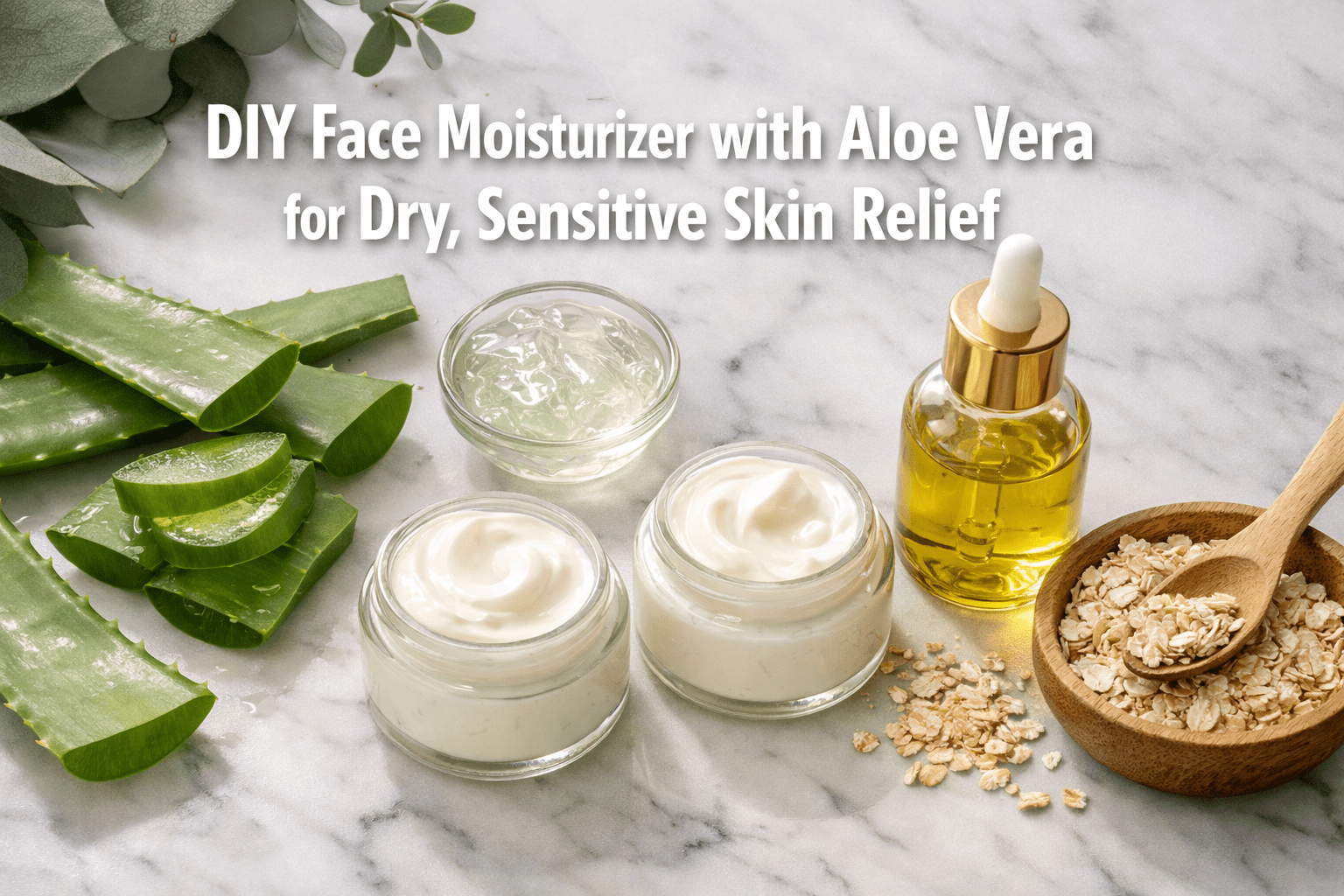
Quick Answer: A DIY face moisturizer with aloe vera combines aloe gel (a natural humectant) with a skin-nourishing oil like jojoba or coconut oil to hydrate dry, sensitive skin without harsh chemicals. The simplest version uses equal parts aloe vera gel and jojoba oil, takes under five minutes to make, and can be used daily. Always patch test for 3–4 days before applying to your full face.
Key Takeaways
- Aloe vera gel works as a humectant, drawing moisture into the skin, making it ideal for dry and sensitive skin types.
- The simplest recipe is just two ingredients: aloe vera gel and a carrier oil (jojoba or sweet almond oil work well). [1]
- Adding beeswax creates an occlusive layer that locks in moisture and gives the moisturizer a cream-like texture. [2]
- Undiluted aloe vera used daily can cause over-exfoliation, so always mix it with a carrier oil. [1]
- Essential oils should be kept to 1–2 drops for facial use, or skipped entirely for very sensitive skin. [3]
- A vitamin E capsule added to your recipe acts as a natural preservative and antioxidant. [4]
- Patch test any new formula on your inner wrist or behind your ear for 3–4 consecutive days before full use. [2]
- Homemade moisturizers have no commercial preservatives, so store them in the fridge and use within 1–2 weeks.
- This content is for informational purposes only and is not medical advice. Always consult a healthcare professional before trying any remedy.
What Makes Aloe Vera So Good for Dry, Sensitive Skin?
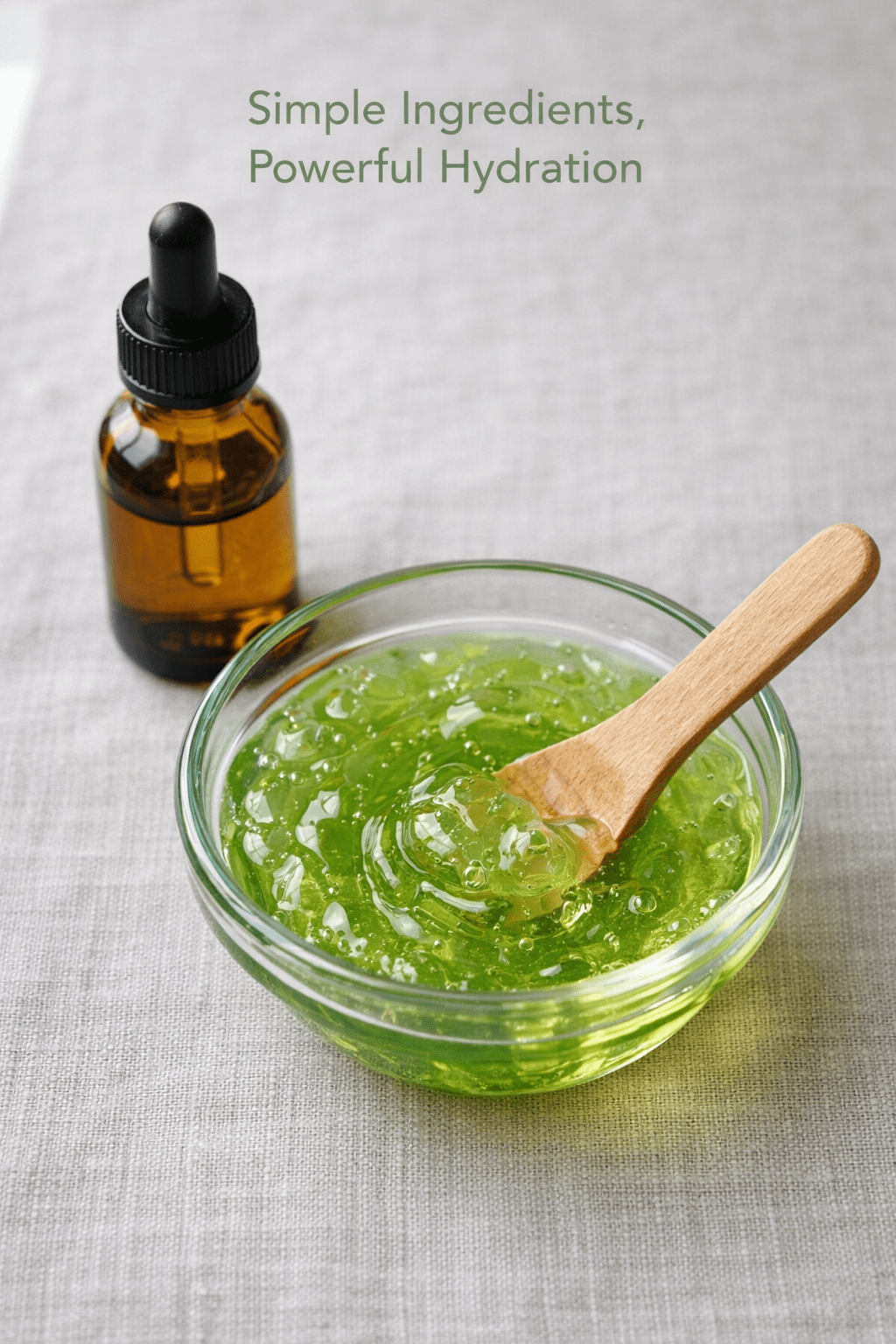
Aloe vera gel is a natural humectant, which means it pulls moisture from the air and holds it against your skin. It’s gentle enough for dry, sensitive, acne-prone, and aging skin types, which is why it’s a go-to ingredient in so many natural skincare recipes. [1]
Here’s what makes it work so well:
- Humectant action: Aloe draws water to the skin’s surface and helps it stay there.
- Soothing compounds: Aloe contains polysaccharides and antioxidants that calm redness and irritation.
- Lightweight texture: Unlike heavy creams, aloe absorbs quickly without clogging pores.
- Compatibility: It pairs well with oils, beeswax, honey, and oatmeal to build a complete moisturizer.
One thing to know: Using pure aloe vera gel on its own every day can actually cause mild over-exfoliation, which may trigger excess oil production and breakouts. Mixing it with a carrier oil solves this problem. [1]
Which Ingredients Work Best in a DIY Face Moisturizer with Aloe Vera?
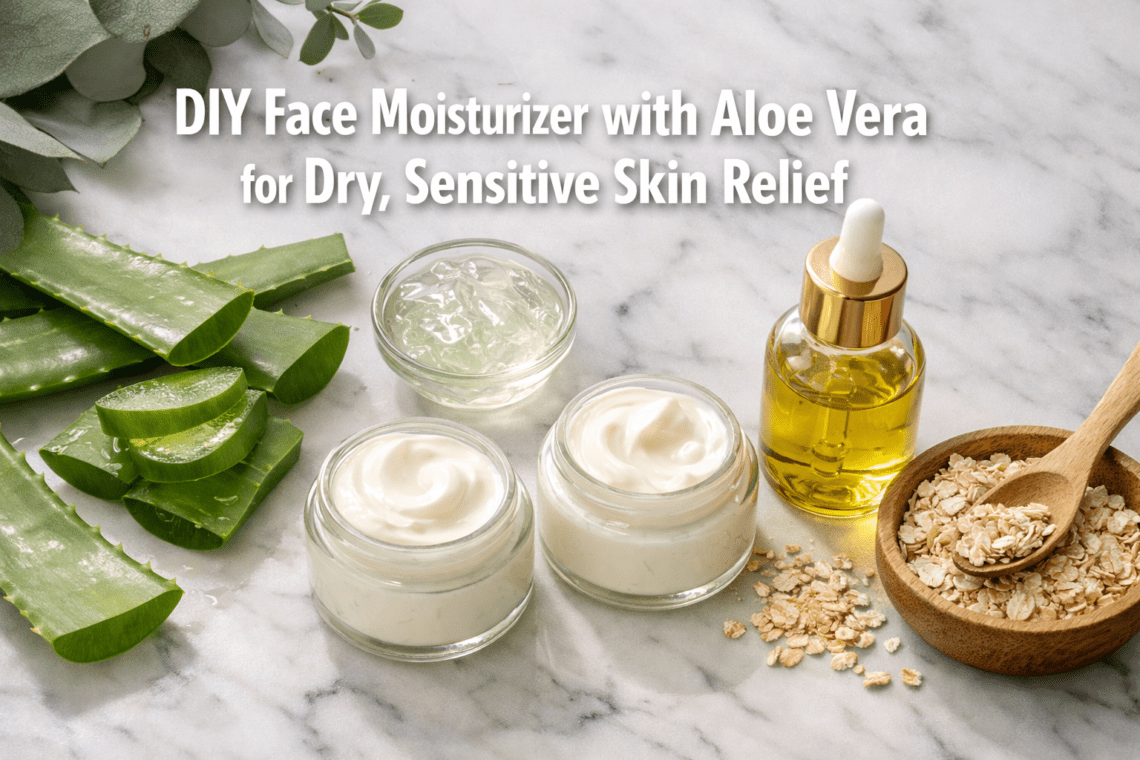
The most effective aloe-based moisturizers combine three types of ingredients: a humectant (aloe), an emollient (carrier oil), and an occlusive (beeswax or shea butter). Each one does a different job, and together they address dry skin from multiple angles. [2]
| Ingredient | Type | What It Does |
|---|---|---|
| Aloe vera gel | Humectant | Draws and holds moisture |
| Jojoba oil | Emollient | Softens and smooths skin |
| Coconut oil | Emollient + Occlusive | Hydrates, strengthens skin barrier |
| Beeswax | Occlusive | Seals in moisture, adds cream texture |
| Vitamin E capsule | Antioxidant/Preservative | Extends shelf life, fights free radicals |
| Raw honey | Humectant | Adds extra hydration, antibacterial |
| Oatmeal (finely ground) | Soothing | Calms redness and irritation |
Choose your oil based on your skin:
- Jojoba oil if your skin is oily or combination (it mimics skin’s natural sebum).
- Sweet almond oil if your skin is normal to dry.
- Coconut oil if your skin is very dry and not acne-prone.
Studies show coconut oil significantly improves skin dryness and supports the skin’s lipid barrier function, making it a strong choice for very dry skin. [2]
How to Make a Simple 2-Ingredient DIY Face Moisturizer with Aloe Vera
This is the easiest place to start. It takes about five minutes, uses two ingredients, and works for most skin types. [1]
What you need:
- 2 tablespoons aloe vera gel (fresh or store-bought, pure)
- 2 tablespoons jojoba oil (or sweet almond oil)
- Small glass jar with a lid
Steps:
- Add both ingredients to a small bowl.
- Whisk or stir well until fully combined.
- Transfer to a clean glass jar.
- Apply a small amount to your face after cleansing, morning or night.
- Store in the fridge and use within 1–2 weeks.
“Equal parts aloe vera gel and a skin-nourishing oil creates a gentle moisturizer suitable for daily use across all skin types.” [1]
Common mistake: Using aloe straight from the plant without straining it. Fresh aloe can contain aloin (a yellow latex layer just under the skin), which irritates sensitive skin. If you’re using a fresh leaf, rinse the gel thoroughly before use.
For more DIY skincare ideas, browse the full DIY skincare recipe collection on The Herbal Handbook.
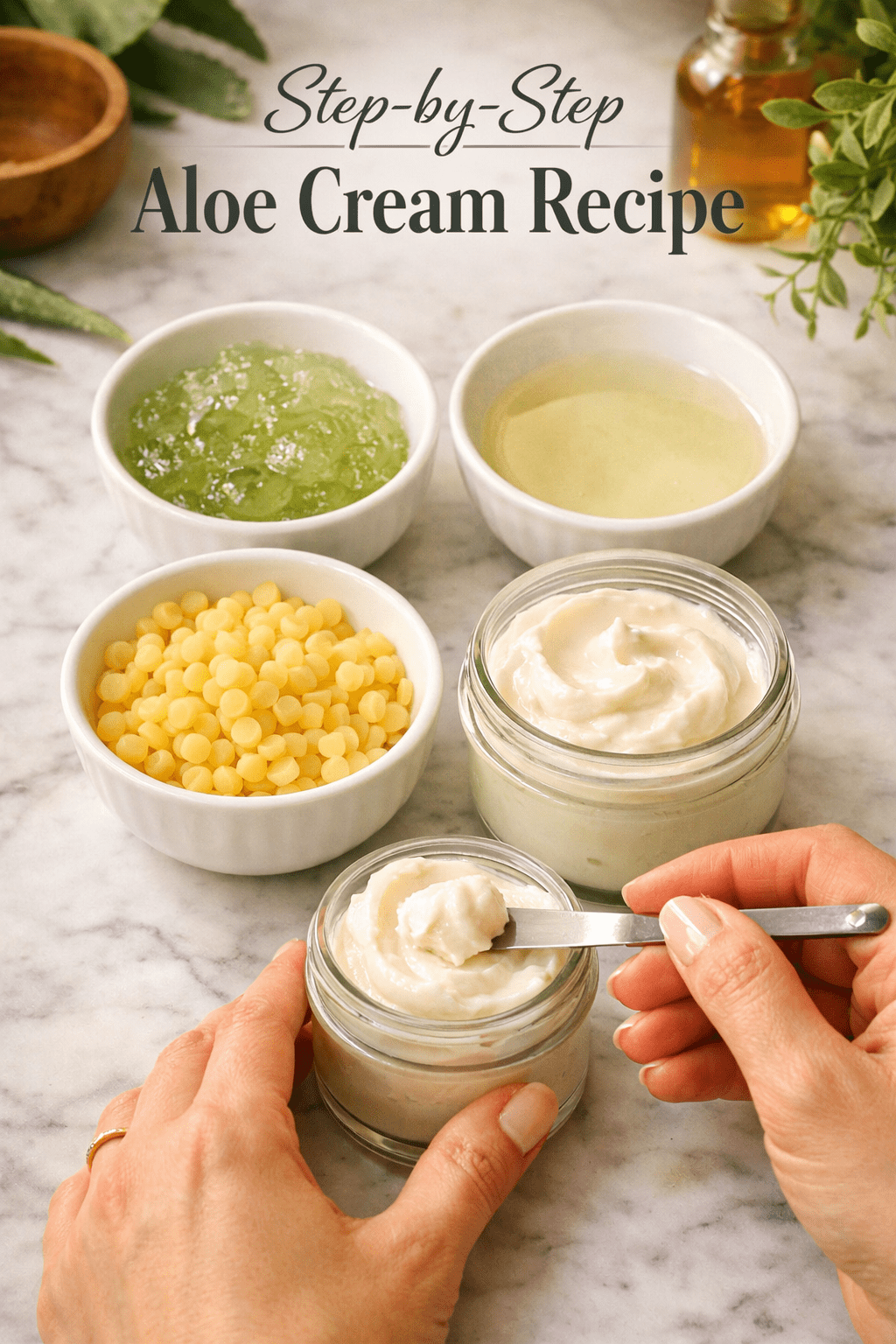
How to Make a Richer Aloe Vera Face Cream (Full Recipe)
If you want something closer to a real cream, adding beeswax gives you that thicker, lotion-like consistency. This recipe is great for nighttime use or for anyone with very dry skin. [2]
Ingredients:
- 1 cup aloe vera gel
- ½ cup coconut oil
- 2 tablespoons jojoba oil
- 1.5 tablespoons beeswax pastilles
- Optional: 1–2 drops lavender essential oil (skip for very sensitive skin) [3]
Steps:
- Melt beeswax and coconut oil together in a double boiler over low heat. Stir until fully melted.
- Remove from heat and let cool for about 5 minutes.
- Pour the aloe vera gel into a blender or mixing bowl.
- Slowly drizzle in the melted oil and beeswax mixture while blending or whisking continuously. This step creates the emulsion.
- Add jojoba oil and any optional essential oil. Mix well.
- Pour into a clean glass jar while still slightly warm.
- Let it cool completely before sealing. Store in a cool, dark place or the fridge.
Shelf life: About 2 weeks at room temperature, up to 4 weeks refrigerated.
Edge case: If your cream separates, it means the emulsion didn’t hold. This can happen if the oils were too hot when added to the aloe. Reheat gently and re-blend.
You might also enjoy this DIY collagen balm for dry, dull skin as a complementary treatment.
What Are Some Quick Aloe Vera Variations for Sensitive Skin?
Beyond the main recipes, a few simple combinations target specific sensitive skin concerns without requiring many ingredients.
Aloe + Honey Pack (for extra dryness):
Mix 2 parts aloe vera gel with 1 part raw honey. Apply to clean skin for 15–20 minutes, then rinse. Both ingredients are humectants, so this combination gives an intense hydration boost. [5]
Aloe + Oatmeal Mask (for redness and irritation):
Combine 2 tablespoons aloe vera gel with 1 tablespoon finely ground oatmeal. Apply for 10 minutes, then rinse gently. Oatmeal is well-known for soothing reactive skin and reducing visible redness. [5]
Aloe + Vitamin E (minimal preservative-free option):
Blend ½ cup aloe vera gel with the contents of one vitamin E capsule. This keeps things simple while adding antioxidant protection and extending the mixture’s freshness. [4]
For a complementary step in your routine, try this DIY face toner with witch hazel and rose water before applying your moisturizer.
If you enjoy overnight treatments, the DIY aloe vera face mask for glowing skin overnight is worth bookmarking too.
How Do You Patch Test and Use This Moisturizer Safely?
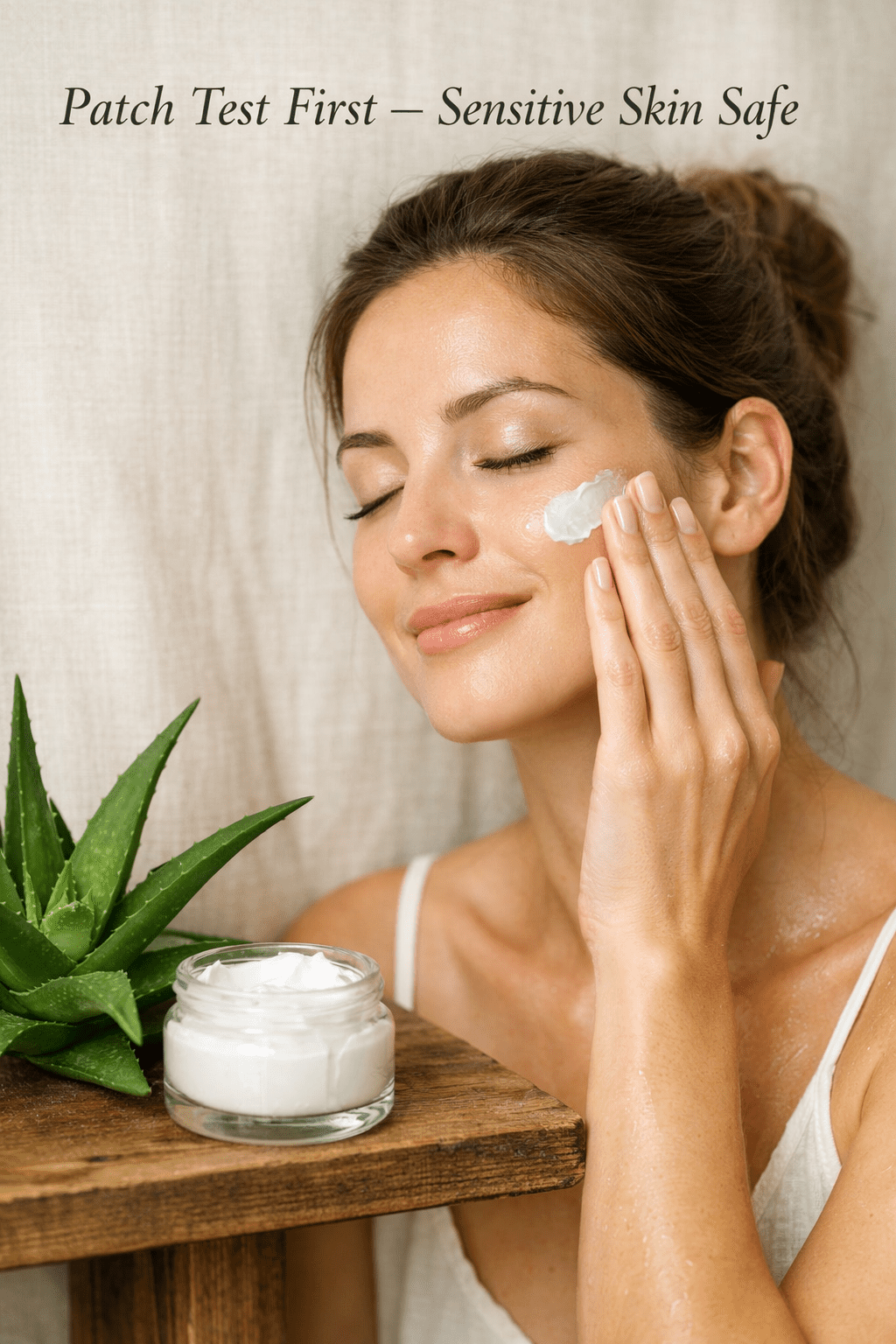
Before applying any new homemade product to your full face, patch testing is essential, especially for sensitive skin. [2]
How to patch test:
- Apply a small amount of the moisturizer to your inner wrist or behind your ear.
- Leave it on for 24 hours without washing.
- Repeat for 3–4 consecutive days.
- If you notice redness, itching, or swelling, stop use immediately.
Daily use tips:
- Apply to slightly damp skin after cleansing for better absorption.
- Use morning and/or night, depending on your skin’s needs.
- A pea-sized amount is usually enough for the full face.
- If you add essential oils, keep them to 1–2 drops maximum per batch, or leave them out entirely for very sensitive skin. [3]
Conclusion
Making a DIY face moisturizer with aloe vera is genuinely one of the easiest ways to give dry, sensitive skin some natural relief. You don’t need many ingredients, and you can start with just two (aloe gel and jojoba oil) and build from there as you get comfortable.
Your action steps:
- Pick your recipe: start with the 2-ingredient version if you’re new to DIY skincare.
- Gather your ingredients (pure aloe vera gel, a carrier oil, and optionally beeswax or vitamin E).
- Make a small batch, patch test for 3–4 days, then add it to your regular routine.
- Store your moisturizer in the fridge and refresh your batch every 1–2 weeks.
For more natural skincare inspiration, explore the 5 DIY face masks for glowing skin or check out these 7 calendula recipes for dry skin relief to round out your routine.
Disclaimer: This content is for informational purposes only and is not medical advice. Always consult a healthcare professional before trying any remedy, especially if you have a skin condition or known allergies.
Frequently Asked Questions
Can I use aloe vera gel directly from the plant as a face moisturizer?
Yes, but rinse the fresh gel well first to remove aloin, the yellow latex layer that can irritate skin. For daily use, mix it with a carrier oil to avoid over-exfoliation. [1]
How long does homemade aloe vera moisturizer last?
Without commercial preservatives, most homemade aloe moisturizers last 1–2 weeks at room temperature and up to 4 weeks in the fridge. Adding a vitamin E capsule can extend freshness slightly. [4]
Is aloe vera moisturizer good for acne-prone skin?
Aloe vera is generally well-tolerated by acne-prone skin because it’s lightweight and non-comedogenic. Choose jojoba oil over coconut oil if you’re prone to breakouts, as coconut oil can clog pores for some people. [1]
Can I use this moisturizer every day?
Yes, once you’ve patch tested and confirmed no reaction, it’s safe for daily use. Apply morning and/or night after cleansing. [1]
What if my cream separates?
Separation happens when the oil and water (aloe) phases don’t emulsify properly. Reheat gently and re-blend. Adding beeswax helps stabilize the emulsion. [2]
Is this safe for children or very young skin?
Skip essential oils entirely for children’s skin. Stick to the basic aloe and oil combination, and always do a patch test first. Consult a pediatrician if your child has eczema or a diagnosed skin condition.
Can I add vitamin C to my aloe moisturizer?
You can, but vitamin C is unstable and can oxidize quickly in homemade formulas. If you want vitamin C benefits, consider a separate DIY vitamin C spray for your face used before your moisturizer.
What’s the difference between using aloe as a moisturizer vs. a face mask?
A moisturizer is left on the skin all day or overnight for ongoing hydration. A face mask is applied for 10–20 minutes and rinsed off for a more intensive treatment. Both have their place in a routine.
References
[1] 2 Ingredient Aloe Facial Moisturizer – https://livesimply.me/2-ingredient-aloe-facial-moisturizer/
[2] Aloe Face Cream Recipe – https://www.theprairiehomestead.com/2016/01/aloe-face-cream-recipe.html
[3] Handmade Zero Waste Aloe Vera Cream – https://bottegazerowaste.com/blogs/zerowasteliving/handmade-zero-waste-aloe-vera-cream
[4] Watch – https://www.youtube.com/watch?v=UAS7gmmwHhY
[5] How To Make Aloe Vera Gel At Home – https://www.lorealparis.co.in/beauty-magazine/skin-care-blogs/how-to-make-aloe-vera-gel-at-home