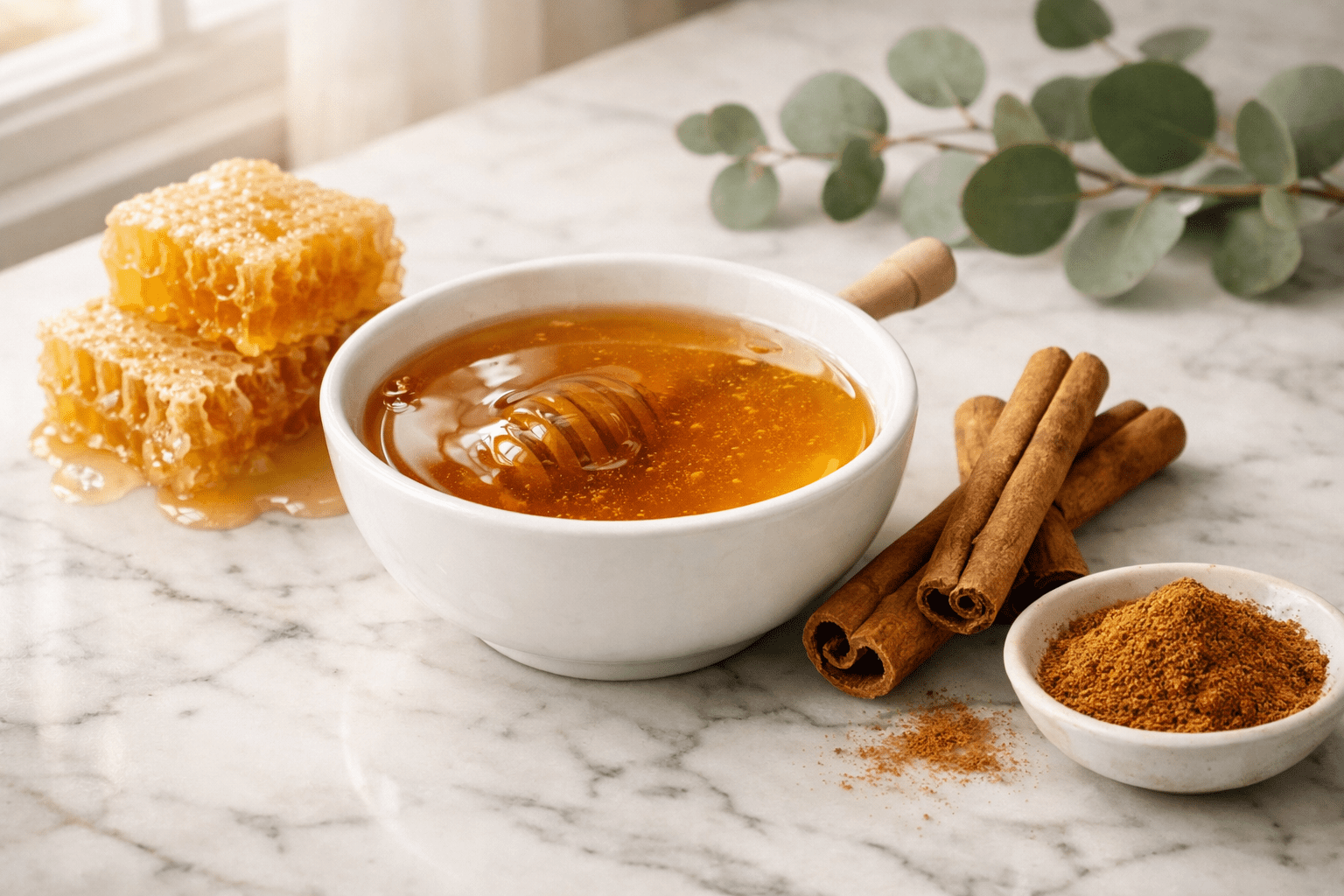
If you’ve been battling stubborn breakouts and want a simple kitchen remedy, a DIY Face Mask for Acne Honey and Cinnamon might offer gentle relief. I’ve tested this classic combination myself, and while it won’t replace medical treatment for severe acne, it can help calm mild inflammation and reduce redness when used correctly. The key is understanding what these ingredients actually do and how to apply them safely.
Key Takeaways
- Honey and cinnamon face masks target acne-causing bacteria and reduce inflammation, though research on the combination is limited
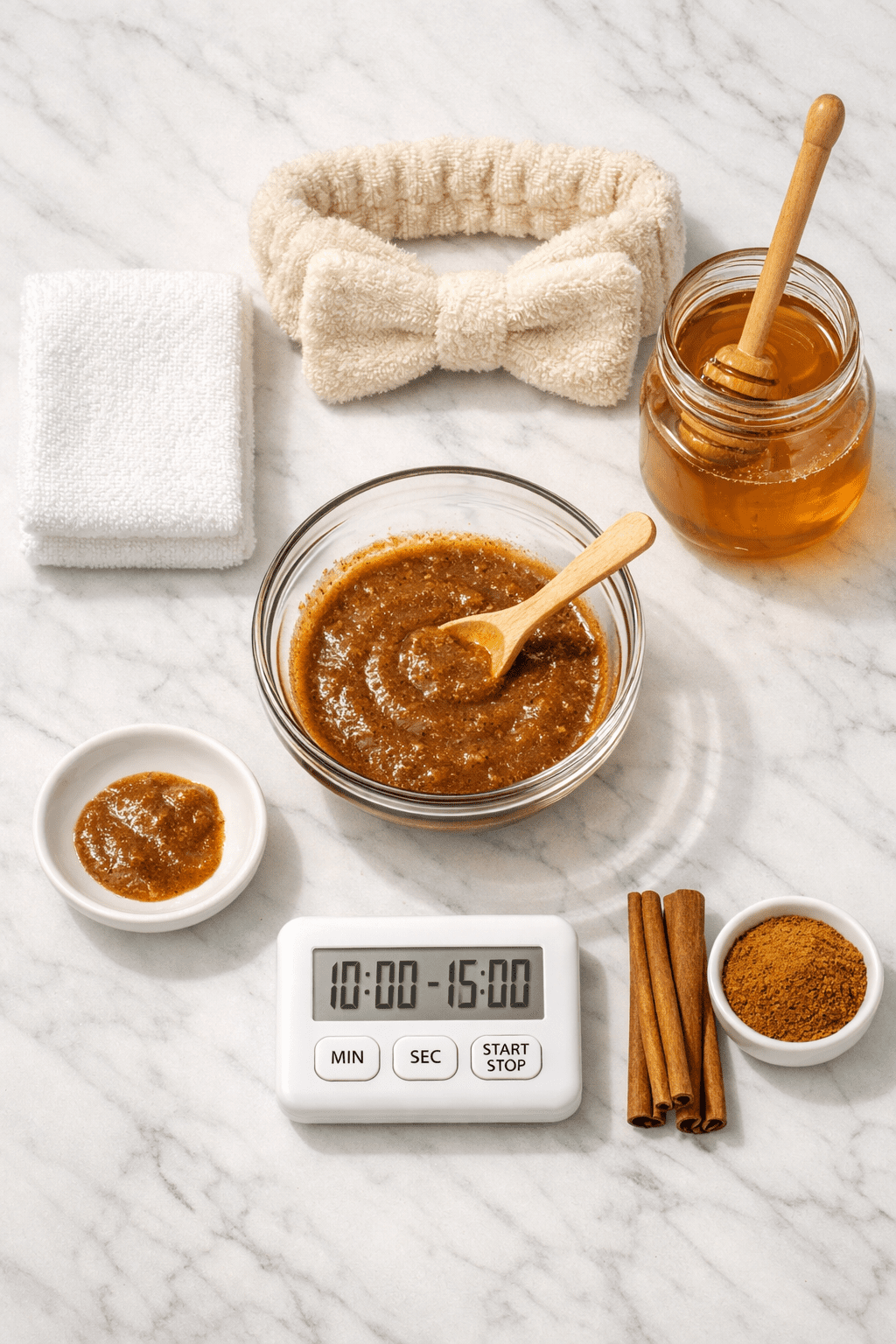
- The basic recipe is simple: 2 tablespoons raw honey mixed with 1 teaspoon ground cinnamon, applied for 10-15 minutes
- Always patch test first on the back of your hand for at least 10 minutes to check for allergic reactions or irritation
- Use raw or Manuka honey for best antibacterial properties; avoid processed honey with additives
- Apply once weekly for average skin sensitivity to avoid over-irritation from cinnamon
- Cinnamon can irritate sensitive skin with redness or burning; reduce the amount if you experience discomfort
- Clinical evidence is modest: one study showed only 7.5% improvement when honey treatment was added to standard care
- This mask works best for mild breakouts and inflammatory acne, not cystic or severe cases
Quick Answer
A DIY Face Mask for Acne Honey and Cinnamon combines raw honey’s antibacterial and anti-inflammatory properties with cinnamon’s antimicrobial effects to help calm mild breakouts. Mix 2 tablespoons honey with 1 teaspoon ground cinnamon, apply to clean skin for 10-15 minutes, then rinse. While separate studies suggest potential benefits from each ingredient, research on this specific combination is limited, and clinical results show modest improvement rates around 7.5% when added to standard acne care.[4]
What Makes Honey and Cinnamon Work Against Acne?
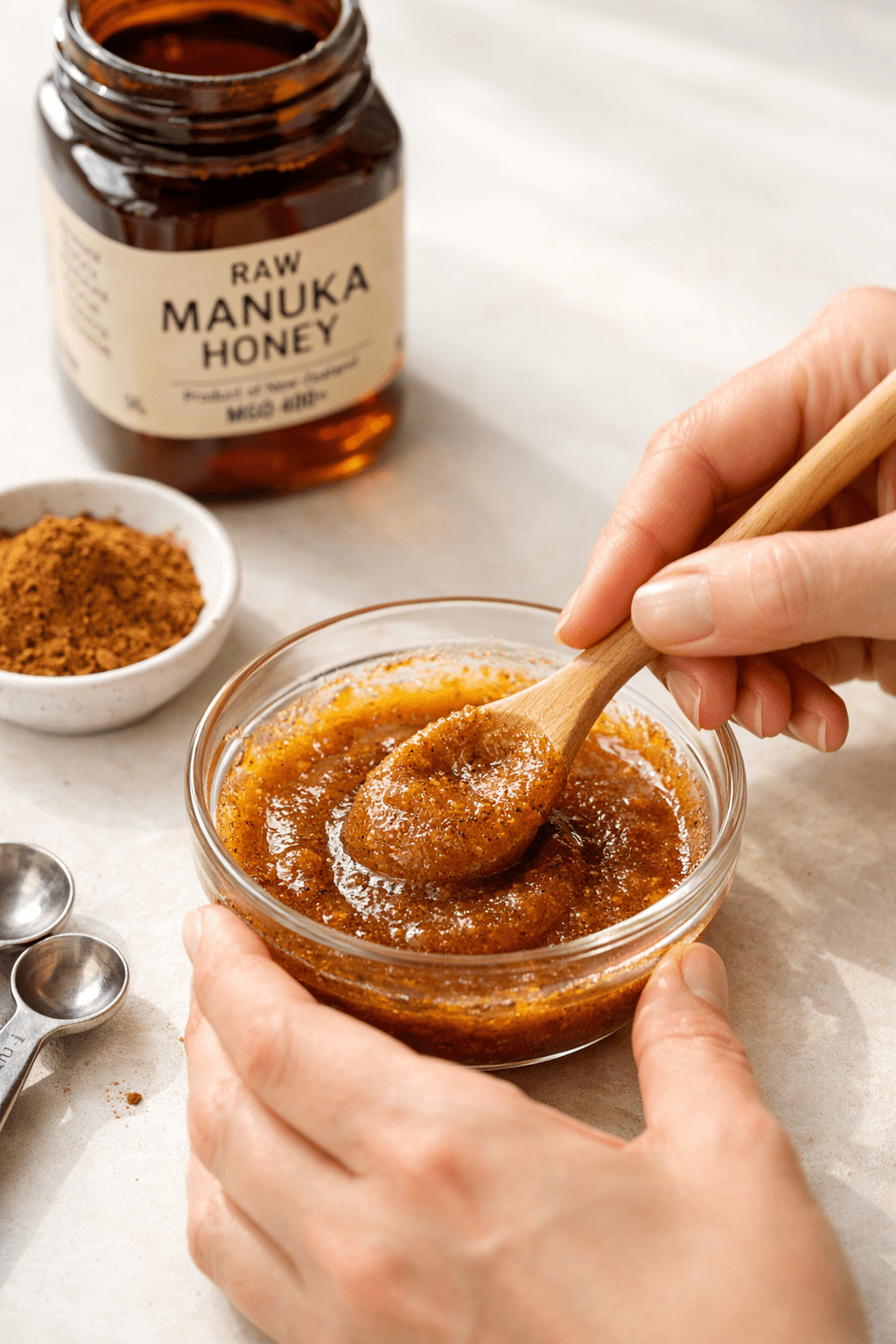
Honey and cinnamon target different aspects of acne formation. Raw or Manuka honey contains antibacterial, anti-inflammatory, and antioxidant compounds that fight Propionibacterium acnes (P. acnes)—the bacteria living in inflamed pimples that feed on sebum and clog pores.[4] Darker honey varieties like Manuka and Buckwheat have particularly potent antibacterial properties.[1]
Cinnamon brings antimicrobial, anti-inflammatory, and astringent effects to the mix. It helps kill acne-causing bacteria, reduces redness, improves circulation to the skin, and can help shrink enlarged pores.[1][7]
How they work together:
- Honey acts as a humectant, drawing moisture into skin while fighting bacteria
- Cinnamon provides astringent action to tighten pores and reduce oil
- Both ingredients reduce inflammation that causes red, swollen breakouts
- Honey supports wound healing and may help fade acne scars over time[1][4]
Important limitation: Medical News Today notes that “research on honey and cinnamon as a combined treatment for acne is limited, although separate studies suggest potential benefits.”[4] A BMJ Open study found that adding medical-grade kanuka honey (90%) and glycerine treatment improved acne in only 4 out of 53 patients—a 7.5% improvement rate—when compared to using antibacterial soap alone.[4]
Choose this mask if you have mild to moderate inflammatory acne with red, swollen pimples. Skip it if you have severe cystic acne that requires medical treatment.
How to Make a DIY Face Mask for Acne Honey and Cinnamon
Creating this mask takes less than five minutes with ingredients you probably already have. The standard recipe uses a 2:1 ratio of honey to cinnamon, which balances effectiveness with safety for most skin types.[2][9]
Basic recipe:
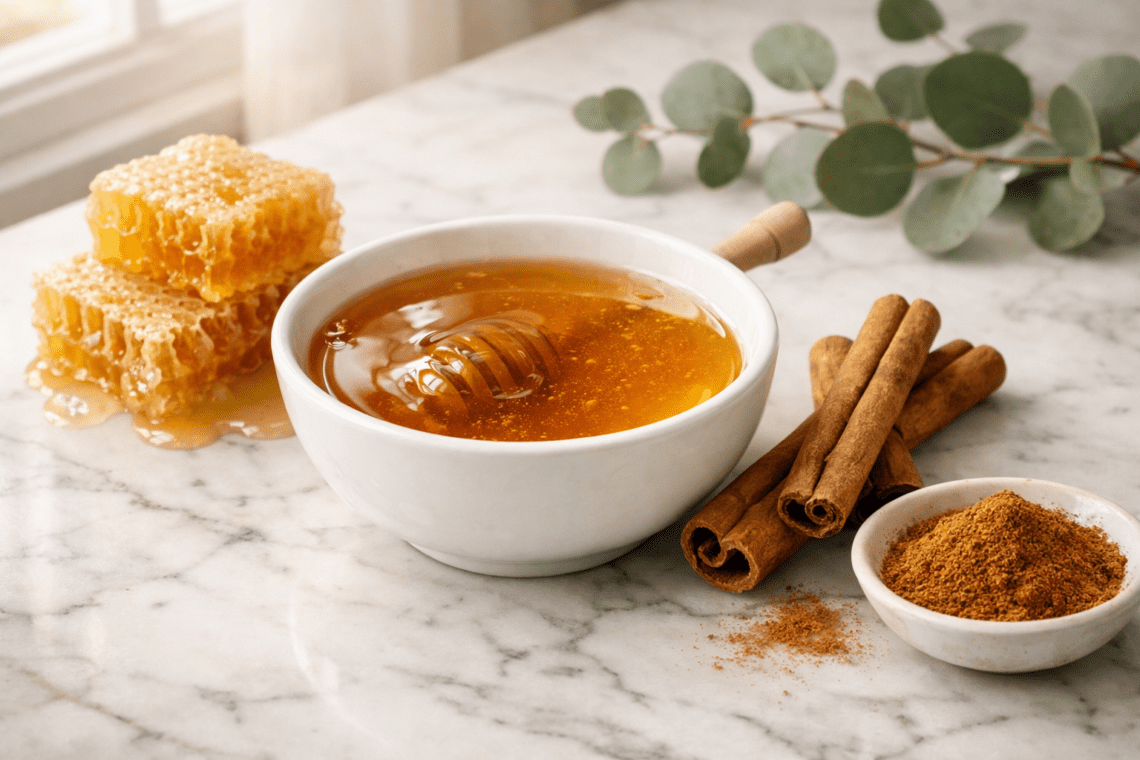
- Measure 2 tablespoons raw honey into a small glass or ceramic bowl
- Add 1 teaspoon ground cinnamon (not cinnamon oil, which is too concentrated)
- Mix thoroughly with a wooden or plastic spoon until you have a smooth, thick paste
- Check consistency: the mixture should be spreadable but not runny
Ingredient selection matters:
- Use medicinal-grade, raw, or local honey from health food stores—these are purified and free of additives[4]
- Choose ground cinnamon powder, not cinnamon essential oil
- Avoid processed honey with added sugars or corn syrup
Optional additions:
- Nutmeg (1/4 teaspoon): adds gentle exfoliation and anti-inflammatory benefits[3][6]
- Coconut oil (1/2 teaspoon): provides extra hydration and antimicrobial properties[5]
- Lemon essential oil (1-2 drops): adds vitamin C and brightening effects, but may increase sun sensitivity[3]
Common mistake: Using too much cinnamon thinking it will work faster. This actually increases irritation risk without improving results. Stick to the 2:1 ratio for your first few applications.
For more natural skincare recipes, check out our 5 DIY Face Masks for Glowing Skin.
How to Apply Your DIY Face Mask for Acne Honey and Cinnamon Safely
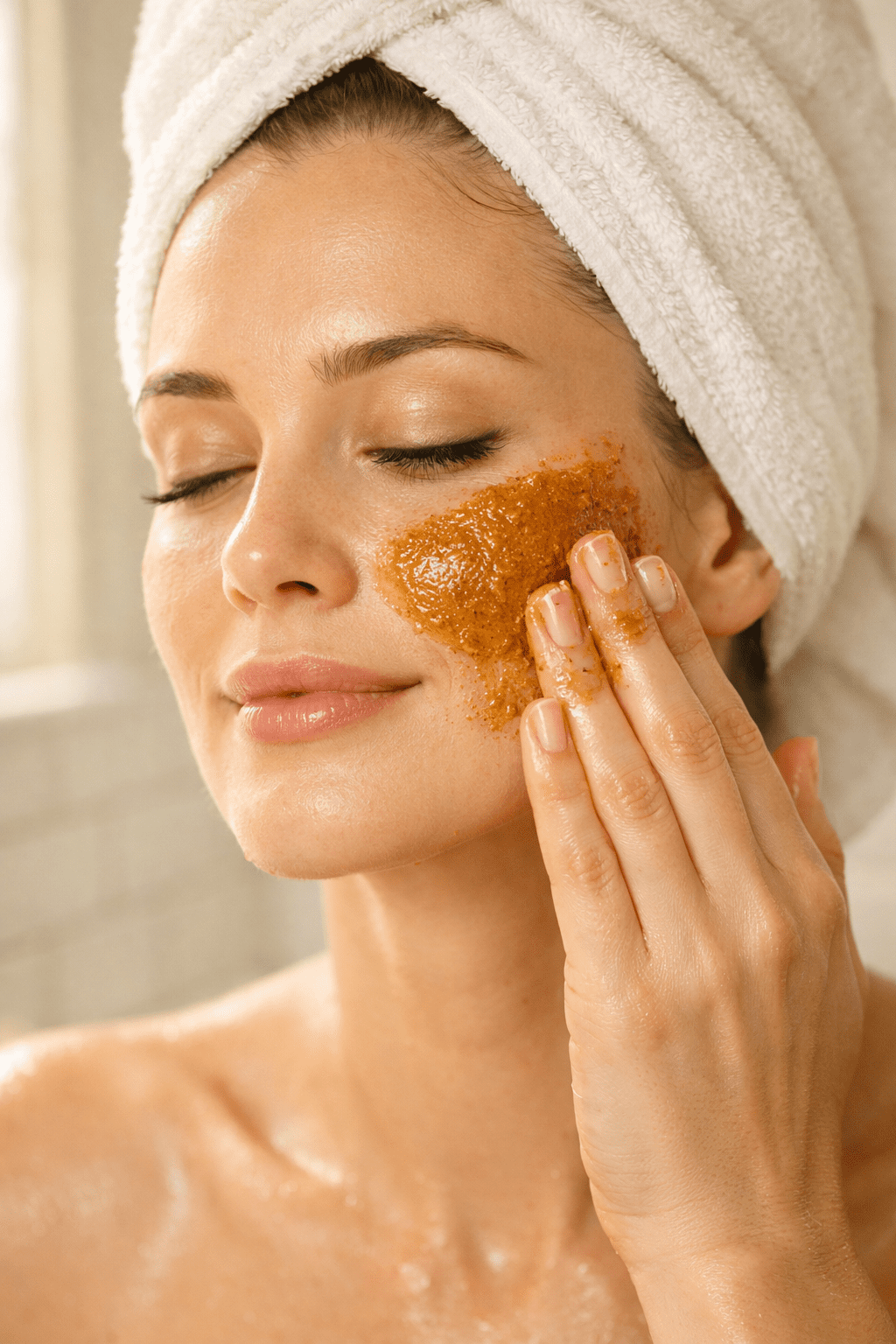
Proper application technique makes the difference between helpful treatment and skin irritation. Always start with a patch test, especially if you have sensitive skin or have never used cinnamon topically before.
Step-by-step application:
- Patch test first: Apply a small amount to the back of your hand and wait at least 10 minutes (preferably 30 minutes) to check for redness, burning, or itching[4][7]
- Cleanse your face with your regular gentle cleanser and pat dry
- Apply the mask using clean fingers or a brush, spreading an even layer over problem areas or your entire face
- Avoid the eye area where skin is most delicate
- Leave on for 10-15 minutes—no longer, especially for first-time use
- Rinse thoroughly with warm water, using gentle circular motions
- Pat dry and follow with your regular moisturizer
Timing and frequency:
- For average skin sensitivity, apply once weekly at the standard 2:1 ratio[9]
- Start with 10 minutes for your first application
- If you experience no irritation, you can extend to 15 minutes in future sessions
- Wait at least 5-7 days between applications
Warning signs to stop immediately:
- Burning sensation that intensifies rather than fades
- Bright red patches or hives
- Swelling or extreme tightness
- Itching that doesn’t resolve after rinsing
Cinnamon can cause a temporary blood rush to the skin’s surface, creating mild warmth or slight redness.[1][6][7] This is different from an allergic reaction. If you’re unsure, rinse the mask off and reduce the cinnamon amount next time.
Similar to our DIY Aloe Vera Face Mask for Glowing Skin Overnight, consistency matters more than duration.
Who Should (and Shouldn’t) Use This Mask?
This DIY Face Mask for Acne Honey and Cinnamon works best for specific skin types and acne conditions. Knowing whether it fits your situation saves time and prevents potential irritation.
Best candidates:
- People with mild to moderate inflammatory acne (red, swollen pimples)
- Those looking for a gentle, natural complement to their existing routine
- Anyone with normal to oily skin who tolerates spices well
- People treating occasional breakouts rather than chronic severe acne
Not recommended for:
- Anyone allergic to honey, bee products, or cinnamon[7]
- People with severe cystic acne requiring medical treatment
- Those with very sensitive skin or rosacea (cinnamon may worsen redness)
- Anyone with open wounds or severely broken skin
- People taking photosensitizing medications if adding lemon oil
Skin sensitivity considerations:
| Skin Type | Recommended Approach |
|---|---|
| Normal | Standard 2:1 ratio, 15 minutes |
| Oily | Standard ratio, can use twice weekly |
| Sensitive | Reduce cinnamon to 1/2 teaspoon, 10 minutes max |
| Dry | Add 1/2 teaspoon coconut oil to recipe |
| Combination | Apply only to oily/breakout-prone zones |
Choose a different treatment if you have severe acne with deep, painful cysts. In those cases, consult a dermatologist for prescription options that target the root causes more effectively.
For anti-aging concerns alongside acne, explore our DIY Anti-Age Face Mask: Kitchen Ingredients Guide.
What Results Can You Realistically Expect?
Setting realistic expectations helps you evaluate whether this DIY Face Mask for Acne Honey and Cinnamon is working for your skin. Based on available research and anecdotal evidence, results are modest and gradual.
Realistic timeline:
- Immediate (same day): Reduced redness and inflammation in existing pimples
- 1-2 weeks: Slightly calmer skin with less frequent new breakouts
- 4-6 weeks: Modest improvement in overall acne severity if used consistently
What this mask can do:
- Calm active inflammation in red, swollen pimples
- Reduce bacteria on the skin’s surface
- Provide gentle antibacterial action between breakouts
- Support healing of minor acne lesions
- Add moisture without clogging pores (honey is non-comedogenic)
What this mask cannot do:
- Cure severe or cystic acne
- Replace prescription treatments for chronic acne
- Work as quickly as benzoyl peroxide or salicylic acid
- Prevent all future breakouts
- Eliminate deep acne scars (though honey may help fade minor marks over time)[1][4]
Remember that clinical evidence shows modest results. The BMJ Open study found only a 7.5% improvement rate when medical-grade honey treatment was added to standard antibacterial soap care.[4] This suggests the mask works best as a complementary treatment, not a standalone solution.
Common mistake: Expecting overnight transformation. Acne treatments—natural or conventional—require consistent use over weeks to show meaningful results.
Troubleshooting Common Issues and Side Effects
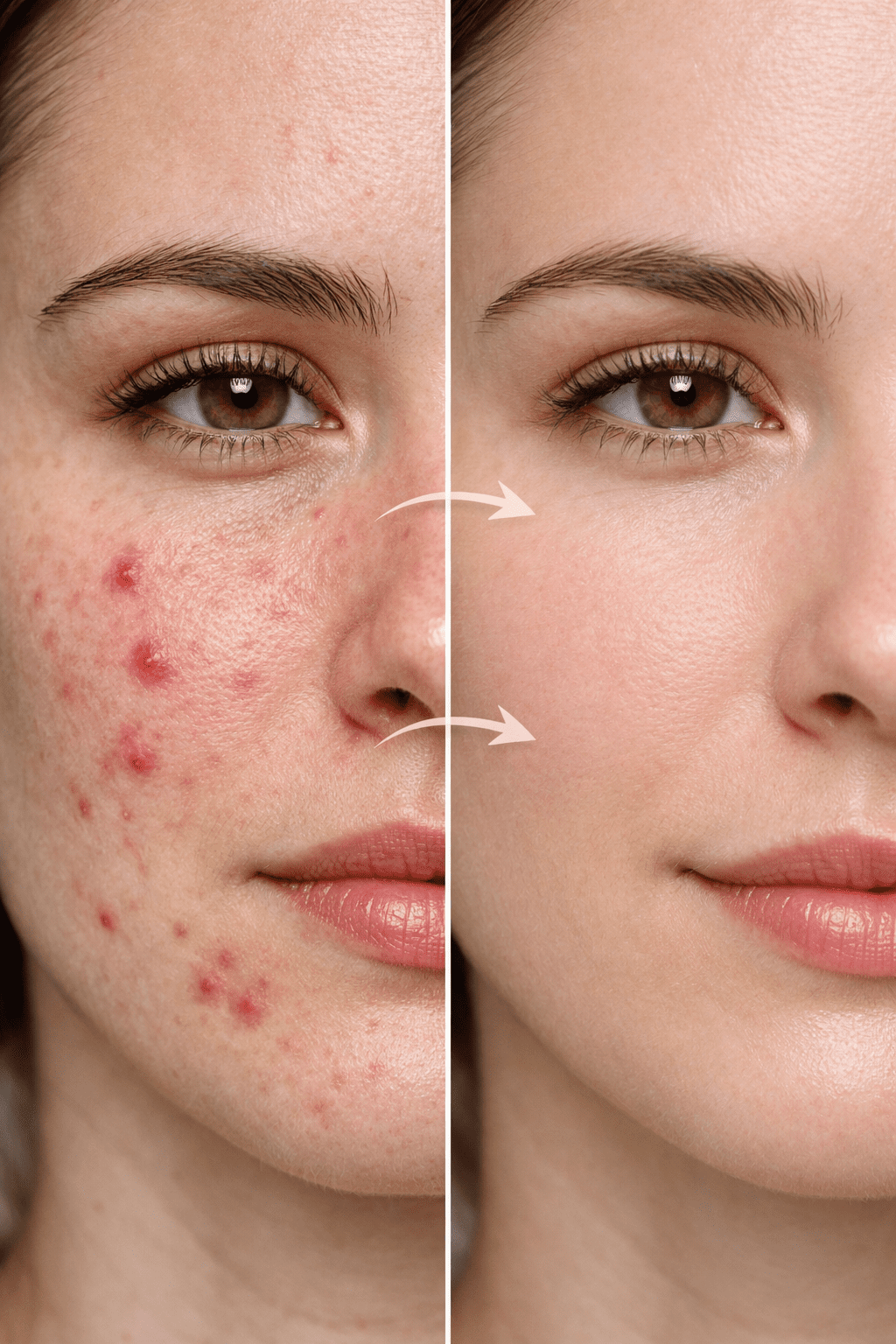
Even with careful application, you might encounter some challenges when using a honey and cinnamon face mask. Here’s how to address the most common problems.
Issue: Skin feels hot or tingly
- Cause: Cinnamon increases blood flow to the skin surface[1][6]
- Solution: Mild warmth is normal; intense burning is not. Rinse immediately if uncomfortable, and reduce cinnamon to 1/2 teaspoon next time
- Prevention: Always patch test and start with shorter application times
Issue: Redness after removing the mask
- Cause: Cinnamon’s astringent properties or mild allergic reaction
- Solution: Apply a cool, damp cloth for 5 minutes. Use a gentle, fragrance-free moisturizer
- When to worry: If redness lasts more than 2 hours or develops into hives, discontinue use
Issue: Mask is too runny or won’t stick
- Cause: Honey is too warm or ratio is off
- Solution: Add more cinnamon in small amounts (1/4 teaspoon at a time) or refrigerate the mixture for 5 minutes to thicken
Issue: No visible improvement after 3-4 weeks
- Cause: Your acne type may not respond to topical antibacterial treatments
- Solution: Consider whether your breakouts are hormonal, cystic, or caused by factors this mask doesn’t address. Consult a dermatologist for persistent acne
Allergic reaction symptoms to watch for:
- Hives or welts
- Swelling beyond mild puffiness
- Difficulty breathing (rare but serious—seek immediate medical help)
- Intense itching that doesn’t resolve after rinsing[7]
Storage and hygiene tips:
- Make fresh batches each time rather than storing premixed mask
- Use clean utensils and bowls to prevent bacterial contamination
- Wash hands thoroughly before application
- Don’t dip fingers back into the mask bowl after touching your face
If you experience persistent irritation, try our gentler DIY Aloe Vera Face Mask instead.
Alternatives and Complementary Treatments
While a DIY Face Mask for Acne Honey and Cinnamon can help with mild breakouts, combining it with other treatments or trying alternatives may give you better results depending on your skin’s needs.
Effective complementary treatments:
- Salicylic acid cleanser: Use on non-mask days to exfoliate pores and prevent clogging
- Benzoyl peroxide spot treatment: Apply to individual pimples for faster bacterial kill
- Niacinamide serum: Reduces inflammation and regulates oil production
- Regular gentle cleansing: Twice daily with a pH-balanced cleanser
Natural alternatives to try:
- Turmeric and yogurt mask: Anti-inflammatory with gentle exfoliation
- Tea tree oil spot treatment: Strong antibacterial for individual pimples (always dilute)
- Green tea toner: Antioxidant and anti-inflammatory properties
- Aloe vera gel: Soothing and healing for inflamed skin
When to upgrade to stronger treatments:
- Acne persists after 6-8 weeks of consistent home care
- You develop painful cystic lesions
- Breakouts are spreading or worsening
- Acne is causing significant scarring
Lifestyle factors that enhance results:
- Change pillowcases twice weekly to reduce bacteria transfer
- Avoid touching your face throughout the day
- Remove makeup thoroughly before bed
- Stay hydrated and manage stress (both affect skin health)
Choose honey and cinnamon if you prefer gentle, natural ingredients and have mild inflammatory acne. Choose conventional treatments like benzoyl peroxide or salicylic acid if you need faster, more aggressive bacterial control or have moderate to severe acne.
For more natural remedy options, browse our DIY Skincare category.
Conclusion
A DIY Face Mask for Acne Honey and Cinnamon offers a simple, affordable option for calming mild breakouts using ingredients you likely have in your kitchen. While clinical evidence shows modest results—around 7.5% improvement when added to standard care—many people find it helpful for reducing inflammation and redness in occasional pimples.[4]
The key to success is realistic expectations and safe application. Always patch test first, stick to the 2:1 honey-to-cinnamon ratio, and apply no more than once weekly for 10-15 minutes. This mask works best as a complementary treatment for mild inflammatory acne, not as a replacement for medical care in severe cases.
Your next steps:
- Gather raw or Manuka honey and ground cinnamon
- Perform a patch test on your hand and wait 10-30 minutes
- If no irritation occurs, mix your first batch and apply to clean skin
- Track your results over 4-6 weeks to evaluate effectiveness
- Consult a dermatologist if acne persists or worsens
Remember that consistent, gentle care beats aggressive, sporadic treatments. Whether you stick with this honey and cinnamon mask or explore other options in our 5 DIY Face Masks for Glowing Skin, patience and proper technique will give you the best results.
FAQ
How long does it take for honey and cinnamon to work on acne?
You may notice reduced redness and inflammation within hours of a single application, but meaningful improvement in overall acne severity typically requires 4-6 weeks of consistent weekly use. Clinical studies show modest results, so patience is essential.
Can I use this mask every day?
No, daily use increases irritation risk from cinnamon’s astringent properties. For average skin sensitivity, apply once weekly. Oily skin may tolerate twice weekly, but sensitive skin should start with once every 10 days and monitor for reactions.[9]
What type of honey works best for acne?
Raw, Manuka, or Buckwheat honey provides the strongest antibacterial properties for acne treatment. Avoid processed honey with added sugars or corn syrup, as these lack the beneficial enzymes and compounds found in raw varieties.[1][4]
Is it normal for my face to feel warm during application?
Yes, mild warmth or tingling is normal because cinnamon increases blood flow to the skin’s surface. However, intense burning, sharp pain, or increasing discomfort signals irritation—rinse immediately if this occurs.[1][6]
Can I leave the mask on overnight?
No, leaving cinnamon on skin for extended periods significantly increases irritation risk. Stick to 10-15 minutes maximum. Honey alone can be left on longer, but the cinnamon component requires shorter contact time for safety.
Will this mask help with acne scars?
Honey may help fade minor acne marks over time due to its wound-healing properties and ability to support skin regeneration, but it won’t eliminate deep, pitted scars. For significant scarring, consult a dermatologist about treatments like chemical peels or microneedling.[1][4]
Can I use cinnamon essential oil instead of ground cinnamon?
No, cinnamon essential oil is far too concentrated and will cause severe skin irritation or burns. Always use ground cinnamon powder mixed with honey to dilute its potency to safe levels for topical use.
What should I do if I have an allergic reaction?
Rinse the mask off immediately with cool water, apply a cold compress to reduce inflammation, and take an oral antihistamine if you develop hives. Seek medical attention if you experience swelling, difficulty breathing, or symptoms that worsen after rinsing.[7]
Can I use this mask if I have sensitive skin?
Yes, but reduce the cinnamon to 1/2 teaspoon (instead of 1 teaspoon) and limit application time to 10 minutes. Always patch test first and wait 30 minutes to check for delayed reactions. If you have rosacea, consult a dermatologist before trying this mask.
Does this work for cystic acne?
No, this gentle topical mask cannot penetrate deeply enough to treat cystic acne, which forms below the skin’s surface. Cystic acne typically requires prescription treatments like oral antibiotics, retinoids, or hormonal therapy from a dermatologist.
Can I add other ingredients to boost effectiveness?
Yes, nutmeg (1/4 teaspoon) adds gentle exfoliation, coconut oil (1/2 teaspoon) provides extra moisture, and a drop of tea tree oil increases antibacterial action. Avoid adding lemon juice if you have sensitive skin or will be in the sun soon.[3][5][6]
How do I know if the mask is working?
Look for reduced redness and swelling in existing pimples within 24 hours, fewer new breakouts after 2-3 weeks, and calmer overall skin texture after 4-6 weeks. If you see no change after 6 weeks of consistent weekly use, this treatment may not suit your acne type.
References
[1] Honey Cinnamon Face Mask – https://beeinspiredgoods.com/blogs/honey-skincare/honey-cinnamon-face-mask
[2] Honey Face Mask Recipes Expert Tips – https://sweetbeenaturals.com/blogs/news/honey-face-mask-recipes-expert-tips
[3] Best Homemade Face Masks For Acne – https://banish.com/blogs/article/best-homemade-face-masks-for-acne
[4] medicalnewstoday – https://www.medicalnewstoday.com/articles/315877
[5] Diy Honey Cinnamon Face Mask – https://www.simplyquinoa.com/diy-honey-cinnamon-face-mask/
[6] Diy Honey Cinnamon And Nutmeg Face Mask – https://www.marianos.com/blog/diy/diy-honey-cinnamon-and-nutmeg-face-mask
[7] Diy Face Mask Honey Cinnamon – https://inspiredepicurean.com/diy-face-mask-honey-cinnamon/
[9] Honey Cinnamon Face Mask Realistic Guide – https://wellness.alibaba.com/self-care/honey-cinnamon-face-mask-realistic-guide