
Quick Answer: Tea tree oil for warts and skin tags is a popular natural remedy backed by limited but promising evidence for warts, and mostly anecdotal support for skin tags. For warts, you dilute tea tree oil with a carrier oil, apply it to the affected area daily, and cover it overnight. For skin tags, there is currently no scientific evidence confirming it works, though many people try it anyway. Always dilute before use, and see a doctor if you’re unsure about any skin growth.
Key Takeaways
- Tea tree oil contains terpinen-4-ol, a compound with antiviral, antibacterial, and antifungal properties that may help fight the HPV virus behind warts [4]
- A 2023 meta-analysis found complete wart clearance in all participants who self-treated with tea tree oil, though the sample size was very small [2]
- Tea tree oil showed results comparable to salicylic acid in one 2023 study [3]
- One case report documented full wart clearance by day 21 using diluted daily application [3]
- For skin tags, no clinical studies confirm tea tree oil works — evidence is entirely anecdotal [5]
- Always dilute tea tree oil with a carrier oil (such as coconut oil) before applying to skin [1]
- Never ingest tea tree oil — it is toxic when swallowed [7]
- Stop use immediately if you notice redness, rash, or increased irritation [1]
- If a skin growth changes shape, color, or bleeds, see a doctor before trying any home remedy [6]
- Results for warts typically take several weeks of consistent daily application [1]
What Is Tea Tree Oil and Why Do People Use It for Skin?
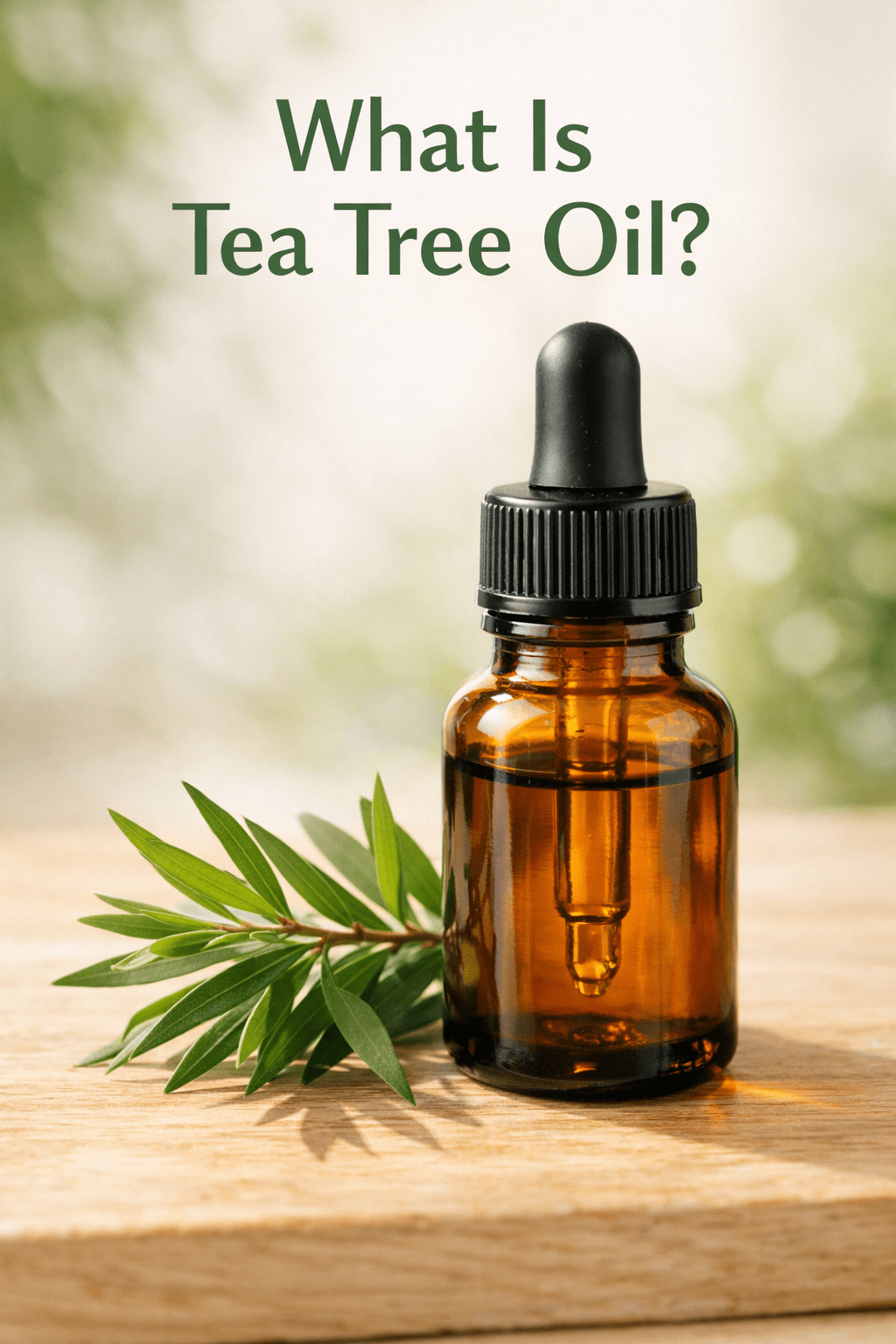
Tea tree oil is an essential oil distilled from the leaves of Melaleuca alternifolia, a plant native to Australia. It has been used for centuries as a topical antiseptic, and modern research has confirmed several of its active properties.
The key compound in tea tree oil is terpinen-4-ol, which gives the oil its antibacterial, antiviral, and antifungal effects [4]. Because warts are caused by the human papillomavirus (HPV), the antiviral action of tea tree oil is what makes it a candidate for wart treatment [2].
For skin tags, the reasoning is different. Skin tags are benign skin growths caused by friction, not a virus. The idea is that tea tree oil may gradually dry out the tag’s tissue — but as of 2026, no clinical studies have tested this directly [5].
If you’re new to using plant-based treatments on your skin, our Natural Remedies for Beginners: Complete Guide is a great place to start before diving into any specific remedy.
Does Tea Tree Oil Actually Work for Warts and Skin Tags?
For warts, the early evidence is encouraging but limited. For skin tags, the evidence is essentially nonexistent beyond personal stories.
Here’s what the research actually says:
| Condition | Evidence Level | Key Finding |
|---|---|---|
| Warts | Low-moderate | Complete clearance reported in all self-treated participants in a 2023 meta-analysis [2] |
| Warts | Low-moderate | Comparable results to salicylic acid in a 2023 study [3] |
| Warts | Case report | Full clearance by day 21 with diluted daily application, no scarring [3] |
| Skin tags | None | No clinical studies exist; all claims are anecdotal [5] |
“Tea tree oil possesses potent anti-inflammatory and antiviral properties that enable it to treat HPV infections that cause warts.” [2]
The honest takeaway: tea tree oil may work for warts, and the early signs are positive. But the studies are small, and we need more research before making strong claims. For skin tags, you’re essentially experimenting based on word-of-mouth.
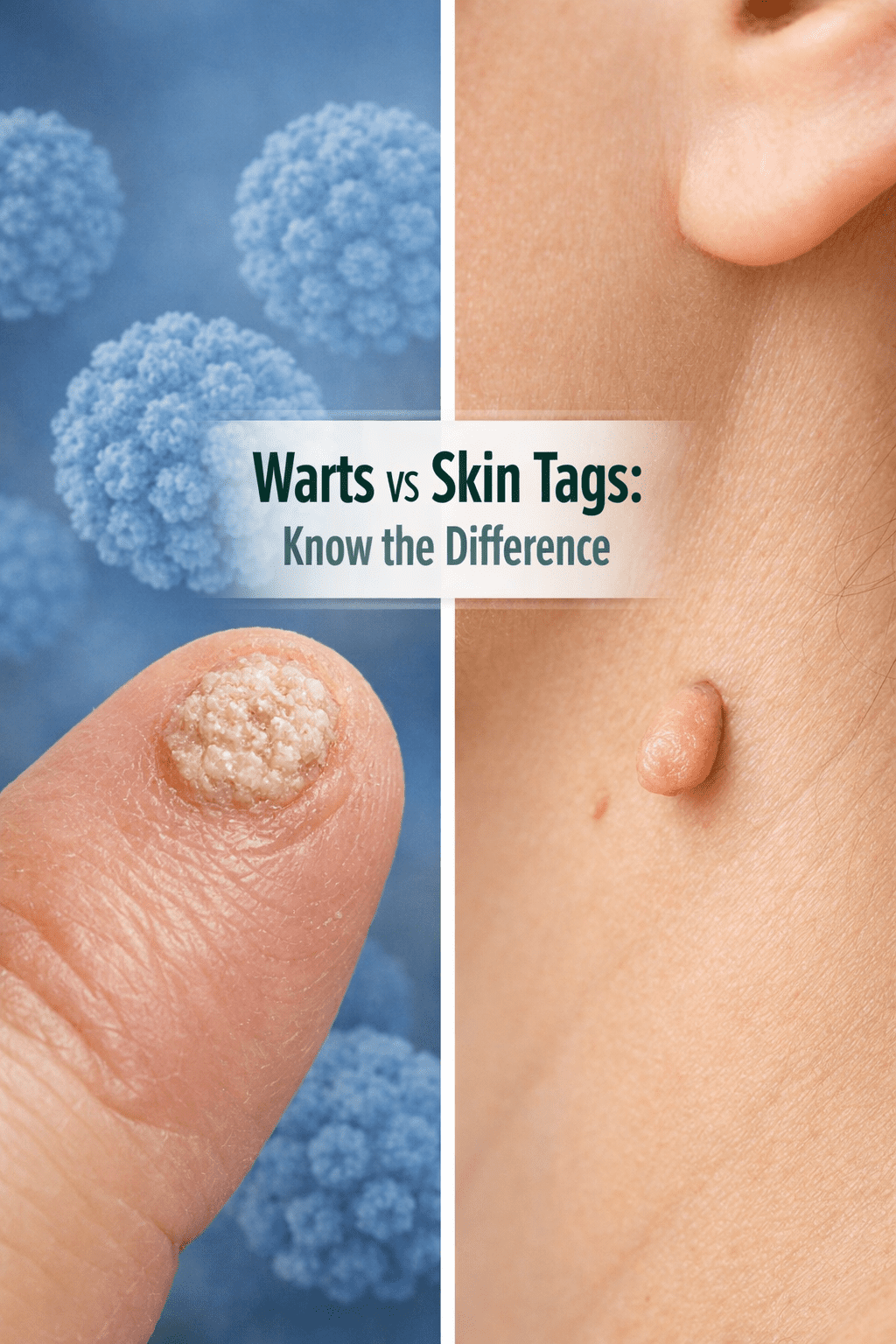
How to Tell the Difference Between a Wart and a Skin Tag
Before you start any treatment, make sure you know what you’re dealing with. Treating the wrong growth the wrong way won’t help — and could delay proper care.
Warts:
- Rough, raised bumps with a cauliflower-like texture
- Often appear on hands, fingers, feet (plantar warts), or face
- Caused by HPV (human papillomavirus)
- May have tiny black dots (clotted blood vessels) inside
- Can spread to other parts of the body or to other people
Skin Tags:
- Soft, smooth, flesh-colored flaps of skin
- Hang off the skin on a thin stalk
- Common in armpits, neck, groin, and under the breasts
- Not caused by a virus — friction and genetics are the main factors
- Not contagious
⚠️ Important: If you’re unsure whether a growth is a wart, skin tag, or something else (like a mole or cyst), see a dermatologist before treating it at home. Some skin changes can signal conditions that need medical attention [6].
Step-by-Step Guide: Using Tea Tree Oil for Warts and Skin Tags
This is the core of what most people come here for. Follow these steps carefully for the safest, most effective application.
What You’ll Need
- 100% pure tea tree oil (look for at least 36% terpinen-4-ol content)
- A carrier oil (coconut oil, jojoba oil, or olive oil work well)
- Cotton swabs or a clean cotton ball
- Adhesive bandages or medical tape
- Mild soap and water
Step 1: Do a Patch Test First
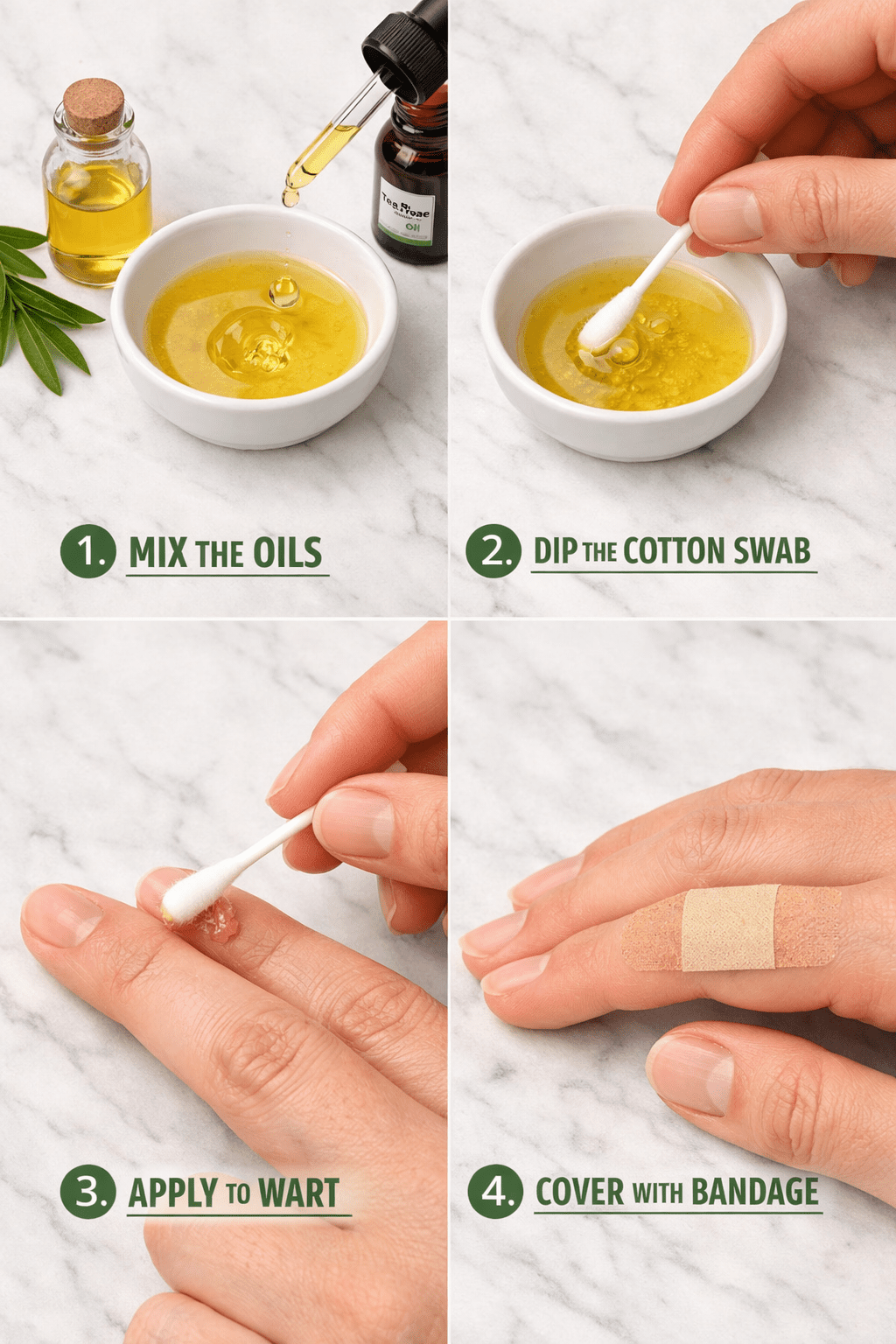
Mix 1–2 drops of tea tree oil with 1 teaspoon of carrier oil. Apply a small amount to your inner forearm and wait 24 hours. If you notice redness, swelling, or itching, tea tree oil may be too irritating for your skin [1].
Step 2: Dilute the Tea Tree Oil
Never apply undiluted tea tree oil directly to skin. A safe dilution ratio is:
- For most adults: 5% dilution (about 1 drop tea tree oil per 1 teaspoon carrier oil)
- For sensitive skin: 2–3% dilution (1 drop per 2 teaspoons carrier oil)
Step 3: Clean the Area
Wash the wart or skin tag with mild soap and warm water. Pat it dry completely before applying anything.
Step 4: Apply the Diluted Oil
Dip a clean cotton swab into your diluted tea tree oil mixture. Dab it directly onto the wart or skin tag. Try to avoid getting the oil on the surrounding healthy skin.
Step 5: Cover and Leave Overnight
Place a bandage or small piece of medical tape over the treated area. Leave it on overnight [1]. This helps the oil stay in contact with the growth longer.
Step 6: Repeat Daily
Remove the bandage in the morning, clean the area gently, and repeat each evening. Most people who see results do so after 2 to 6 weeks of consistent daily use [3].
Step 7: Watch for Progress (and Problems)
- A wart may gradually shrink, darken, or fall off over time
- If you notice increased pain, stop daily use and switch to every other day (as one case report participant did) [3]
- Stop entirely if you develop a rash, blistering, or signs of infection [1]
What to Expect: Timeline and Results
Results vary a lot from person to person, and that’s worth being upfront about.
Realistic timeline for warts:
- Week 1–2: Little visible change; the oil is working at the surface level
- Week 3: Some people begin to see the wart shrinking or changing texture (one case report showed full clearance at day 21) [3]
- Week 4–6: More significant reduction or full clearance for some users
- Beyond 6 weeks: If no change, it may be time to try a different approach or see a doctor
For skin tags: There’s no established timeline because there’s no clinical evidence to reference [5]. Some people report the tag drying out and falling off after 4–6 weeks of daily application, but this is based entirely on personal accounts.
Choose this approach if: You have a confirmed wart, you prefer to try natural options first, and you’re patient enough to stick with a daily routine for several weeks.
Skip this approach if: You need fast results, you have sensitive or reactive skin, or you’re dealing with a growth that hasn’t been identified by a professional.
Safety Tips and Precautions for Tea Tree Oil Use
Tea tree oil is generally safe when used correctly, but there are real risks if you skip the precautions.
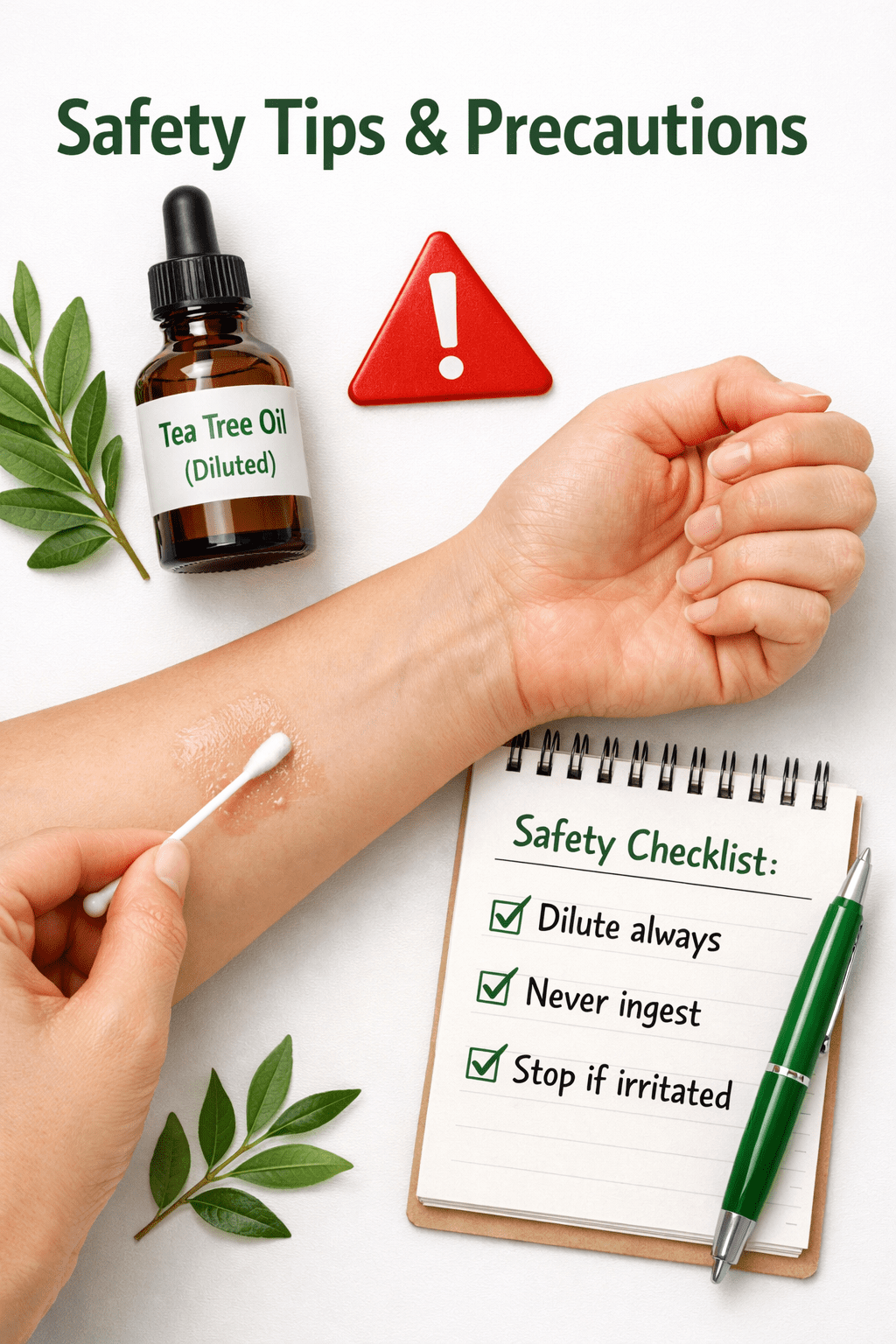
Key safety rules:
- 🚫 Never ingest tea tree oil — it is toxic when swallowed and can cause serious harm [7]
- 🚫 Never apply it undiluted — pure tea tree oil can cause chemical burns or severe skin irritation
- ✅ Always dilute with a carrier oil before applying to skin [1]
- ✅ Keep it away from eyes, nose, and mouth
- ✅ Store it in a cool, dark place — heat and light degrade the oil’s active compounds
- ✅ Keep out of reach of children and pets — tea tree oil is toxic to dogs and cats even in small amounts
Stop use and see a doctor if:
- The growth changes shape, color, or starts bleeding
- You develop signs of infection (warmth, pus, spreading redness)
- Skin irritation doesn’t improve after stopping use [6]
Improper application or skipping medical evaluation can delay diagnosis of something more serious. A skin tag and a melanoma can look similar to an untrained eye [6]. When in doubt, get it checked.
Alternatives to Tea Tree Oil for Warts and Skin Tags
If tea tree oil isn’t working or isn’t right for you, there are other options worth knowing about.
For warts:
- Salicylic acid (over-the-counter) — well-studied and widely recommended; comparable results to tea tree oil in at least one study [3]
- Cryotherapy — a doctor freezes the wart with liquid nitrogen; fast and effective
- Duct tape method — covering the wart with duct tape for weeks; limited evidence but low risk
- Prescription treatments — available from a dermatologist for stubborn warts
For skin tags:
- Cryotherapy — same as for warts; a common in-office option
- Ligation — a doctor ties off the blood supply to the tag with a small band
- Excision — a dermatologist cuts it off; quick and definitive
- Over-the-counter skin tag removal kits — vary in quality; check with a pharmacist first
For more ideas on natural skin care approaches, browse our DIY Skincare guides at The Herbal Handbook or explore our Guides & How-Tos section for step-by-step natural remedy tutorials.
You might also find our guide on 7 Calendula Recipes for Skin Care helpful if you’re looking for other plant-based options for skin health.
Frequently Asked Questions
Can I use tea tree oil directly on a wart without diluting it?
No. Undiluted tea tree oil can cause skin burns and severe irritation. Always mix it with a carrier oil like coconut or jojoba oil before applying it to skin [1].
How long does tea tree oil take to remove a wart?
Results vary. One case report documented full clearance by day 21 [3], but most people should expect 4–6 weeks of consistent daily use before seeing significant results.
Is there scientific proof that tea tree oil removes skin tags?
No. As of 2026, no clinical studies have examined tea tree oil specifically for skin tags. All reports of it working are anecdotal [5].
What carrier oil works best with tea tree oil for warts?
Coconut oil is a popular choice because it’s easy to find, absorbs well, and has mild antimicrobial properties of its own. Jojoba oil and olive oil also work well [1].
Can tea tree oil spread warts to other areas?
If you use the same cotton swab on multiple warts or touch other parts of your body after applying the oil, there’s a risk of spreading the HPV virus. Use a fresh swab for each wart and wash your hands after application.
Is tea tree oil safe to use on the face?
Yes, with caution. Use a lower dilution (2–3%) on facial skin, avoid the eye area, and do a patch test first. Facial skin tends to be more sensitive than skin on hands or feet.
What if the wart gets worse or more painful?
Reduce application frequency to every other day, as one case report participant did successfully [3]. If pain or irritation continues, stop use and consult a doctor.
Can children use tea tree oil for warts?
Use extra caution with children. Use a lower dilution, keep it away from their mouth and eyes, and consult a pediatrician before starting. Tea tree oil is toxic if ingested [7].
Should I see a doctor before trying tea tree oil?
If you’re unsure what the growth is, yes — always get it checked first. If you have a confirmed wart and no allergies to tea tree oil, you can try this approach at home [6].
Does tea tree oil work on plantar warts (foot warts)?
It may. The same method applies, though plantar warts can be more stubborn because of their depth and location. Keep the foot clean and dry between applications.
Conclusion
Using tea tree oil for warts and skin tags is a low-cost, low-risk option that many people try before turning to medical treatments — and for warts in particular, the early evidence is genuinely encouraging. The key is doing it correctly: always dilute, apply consistently, cover overnight, and give it at least 3–6 weeks before drawing conclusions.
For skin tags, go in with realistic expectations. The honest truth is that the science isn’t there yet, even if plenty of people swear by it.
Your next steps:
- Identify your growth — if you’re not sure what it is, see a dermatologist first
- Do a patch test before committing to daily use
- Mix your diluted oil (1 drop tea tree oil per 1 teaspoon carrier oil) and gather your supplies
- Apply nightly and cover with a bandage for best contact time
- Track your progress week by week, and stop if you notice irritation or worsening
- See a doctor if there’s no change after 6 weeks or if anything looks unusual
For more natural skin care ideas, explore our Natural Remedies section or check out our DIY Face Mask for Acne with Honey and Cinnamon for other plant-based approaches to common skin concerns.

References
[1] 8 Health Benefits Of Tea Tree Oil – https://resources.healthgrades.com/right-care/lifestyle-and-wellness/8-health-benefits-of-tea-tree-oil
[2] PMC10587812 – https://pmc.ncbi.nlm.nih.gov/articles/PMC10587812/
[3] Tea Tree Oil For Warts – https://www.healthline.com/health/tea-tree-oil-for-warts
[4] Tea Tree Oil For Removing Skin Tags – https://mobileskinscreening.com/tea-tree-oil-for-removing-skin-tags/
[5] Tea Tree Oil for Skin Tags – https://www.healthline.com/health/teatreeoil-skintags
[6] Does Tea Tree Oil Remove Skin Tags: Understanding Its Efficacy And Safety – https://cymbiotika.com/blogs/skin-health/does-tea-tree-oil-remove-skin-tags-understanding-its-efficacy-and-safety
[7] How Does Tea Tree Oil Get Rid of Skin Tags – https://www.medicinenet.com/how_does_tea_tree_oil_get_rid_of_skin_tags/article.htm