


Quick Answer: Several common kitchen and garden herbs, including garlic, turmeric, oregano, and ginger, contain natural compounds with documented antimicrobial activity against bacteria and other pathogens. While these herbs for homemade antibiotics cannot replace prescription medication for serious infections, they offer meaningful support for minor ailments, immune health, and everyday wellness, and many are already sitting in your spice rack right now.
Key Takeaways
- 🌿 Garlic is one of the most researched natural antimicrobials, with allicin showing activity against drug-resistant bacteria like MRSA [1][3]
- 🟡 Turmeric’s curcumin can enhance the effectiveness of conventional antibiotics in lab settings [3]
- 🌱 Oregano and thyme contain carvacrol and thymol, two compounds with strong antimicrobial properties [2]
- 🫚 Ginger demonstrates broad-spectrum activity against multiple bacterial strains, including Staphylococcus species [2]
- 🍯 Raw honey has been used in wound care for centuries and is still studied for topical applications today [3]
- ⚠️ Natural herbs are supportive tools, not substitutes for medical treatment in serious or systemic infections
- 🏡 Most of these herbs are inexpensive, widely available, and easy to use at home
- 📋 Combining herbs (like garlic with honey, or turmeric with black pepper) can increase their effectiveness
- 🔬 Scientists in 2026 are actively studying food-derived antimicrobials for wound dressings and food safety applications [3]
- 💊 Always consult a healthcare provider before using herbal remedies alongside prescription medications
What Makes an Herb Act Like a Natural Antibiotic?
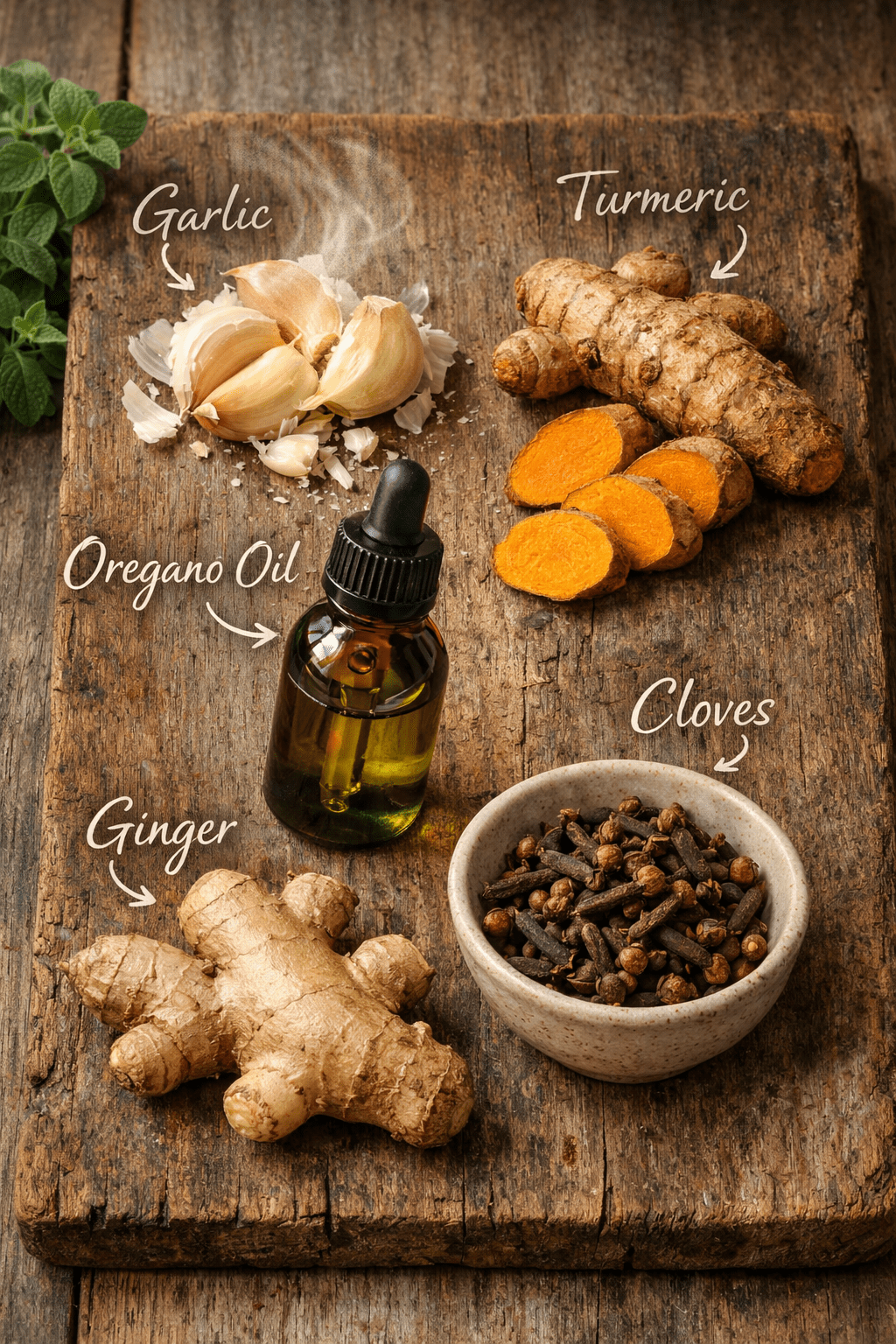
Certain plants produce chemical compounds, primarily to defend themselves against bacteria, fungi, and insects. When humans consume or apply these plants, those same compounds can work against harmful microbes in the body.
The key compounds to know:
| Compound | Found In | Primary Action |
|---|---|---|
| Allicin | Garlic | Disrupts bacterial cell membranes |
| Curcumin | Turmeric | Inhibits biofilm formation, synergizes with antibiotics |
| Carvacrol | Oregano, thyme | Damages bacterial cell walls |
| Thymol | Thyme | Broad antimicrobial activity |
| Gingerols | Ginger | Inhibits multiple bacterial species |
| Eugenol | Clove | Disrupts bacterial enzymes |
These are not folk tales. Peer-reviewed studies have confirmed antimicrobial activity for each of these compounds, though most research is still at the lab stage rather than large-scale clinical trials [2][5].
Important note: “Antimicrobial activity in a lab” does not always equal “cures infection in a human.” Use these herbs as supportive wellness tools, not as replacements for medical care.
The 15 Best Herbs for Homemade Antibiotics
Here are 15 herbs with the strongest evidence for antimicrobial properties, plus practical ways to use each one at home.
1. 🧄 Garlic
Garlic is the most studied natural antimicrobial on this list. When you crush or chop a garlic clove, an enzyme reaction creates allicin, a reactive sulfur compound with documented activity against MRSA (Methicillin-resistant Staphylococcus aureus) and VRE (Vancomycin-resistant Enterococcus) [1][3].
A 2021 review confirmed garlic contains allicin, ajoenes, and allyl sulfides effective against a wide range of bacteria, including multi-drug resistant strains [1][2].
How to use it: Crush 1–2 raw cloves and let them sit for 10 minutes before eating (this activates allicin). Add to honey for a simple immune-support syrup. You can also find step-by-step preparation methods in this guide on how to make homemade antibiotics with kitchen ingredients.
Best for: Immune support, minor skin infections (topical), cold and flu prevention.
2. 🟡 Turmeric
Turmeric’s active compound, curcumin, has shown the ability to reduce biofilm formation in bacteria, which is significant because biofilms shield bacteria from both the immune system and conventional antibiotics [3].
Between 2021 and 2023, studies showed curcumin’s effectiveness against Staphylococcus species (including MRSA), Streptococcus, and Enterococcus [3]. Lab research also shows curcumin can enhance the effectiveness of oxacillin, ampicillin, and ciprofloxacin [3].
How to use it: Mix 1 teaspoon of turmeric with a pinch of black pepper (which increases curcumin absorption by up to 20x) in warm milk or water. Try these DIY ginger and turmeric shots for an easy daily habit.
Best for: Anti-inflammatory support, immune health, minor wound care.
3. 🌿 Oregano
Oregano oil is rich in carvacrol and thymol, two phenolic compounds with strong antimicrobial activity. A 2022 study indicated oregano oil may be effective against Streptococcus mutans and other pathogens [2][3].
How to use it: Use food-grade oregano essential oil diluted in a carrier oil (1–2 drops per teaspoon of olive oil) for topical use. Dried oregano steeped as a tea also provides mild antimicrobial benefits.
Best for: Oral health, minor skin issues, respiratory support.
4. 🫚 Ginger
A 2022 study found that ginger could effectively inhibit Streptococcus mutans, Enterococcus faecalis, Staphylococcus species, and Lactobacillus species [2]. Ginger also has anti-inflammatory and antioxidant properties that support recovery.
How to use it: Fresh ginger root steeped in hot water makes a simple antimicrobial tea. Combine with honey and lemon for a soothing throat remedy, similar to these homemade honey lemon ginger cough drops.
Best for: Digestive infections, sore throats, nausea, cold and flu support.
5. 🌸 Echinacea
Echinacea has documented antibacterial effects on respiratory bacteria, and a 2022 article noted its potential antiviral properties as well [2]. Reducing viral infections means fewer unnecessary antibiotic prescriptions, which helps slow antibiotic resistance overall.
How to use it: Echinacea tincture or tea taken at the first sign of illness. Most herbalists recommend 7–10 day courses, not daily long-term use.
Best for: Upper respiratory infections, cold prevention, immune activation.
6. 🌼 Clove
A 2023 study noted that clove essential oil may have strong inhibitory effects against Staphylococcus aureus, and 2020 research indicated clove extract has potential as a new antibacterial agent [2]. The active compound is eugenol, which disrupts bacterial enzymes.
How to use it: Clove oil diluted in a carrier oil for topical application. Whole cloves steeped in hot water or added to herbal teas. Clove is also a classic remedy for tooth pain due to its numbing and antimicrobial properties.
Best for: Oral infections, minor skin wounds, tooth pain.
7. 🍯 Raw Honey (Manuka and Others)
Raw honey, especially Manuka honey, has been used in wound care for centuries. Scientists in 2026 are studying honey-based wound dressings for clinical applications [3]. Honey’s antimicrobial action comes from its low water content, hydrogen peroxide production, and high sugar concentration, which create a hostile environment for bacteria.
How to use it: Apply raw honey directly to minor cuts, burns, or skin infections. Take a spoonful internally for sore throats.
Best for: Wound care, sore throats, cough relief.
8. 🌿 Thyme
Like oregano, thyme contains thymol and carvacrol. These compounds have been used in commercial antiseptic products like Listerine for over a century, which tells you something about their effectiveness [2][4].
How to use it: Fresh or dried thyme steeped as a tea. Thyme essential oil diluted for topical use. Also works well as a natural mouthwash ingredient for oral bacteria.
Best for: Oral health, respiratory support, minor skin infections.
9. 🌱 Rosemary
Rosemary contains rosmarinic acid and carnosic acid, both of which have shown antimicrobial activity in lab studies. It’s also a strong antioxidant and anti-inflammatory herb [4][6].
How to use it: Fresh rosemary steeped in hot water as a tea or used in cooking. Rosemary-infused oil for topical skin applications.
Best for: Immune support, skin health, antioxidant protection.
10. 🌿 Sage
Sage has a long history in traditional medicine for treating sore throats and mouth infections. Its active compounds, including thujone and camphor, have demonstrated antimicrobial effects against oral bacteria [4][6].
How to use it: Sage tea as a gargle for sore throats. Fresh sage leaves added to cooking. Sage-infused honey for throat support.
Best for: Oral infections, sore throats, digestive support.
11. 🌻 Calendula
Calendula (pot marigold) is a go-to herb for topical antimicrobial use. Its flavonoids and triterpenoids show activity against bacteria and fungi, making it especially useful for skin infections and wound healing [4][8].
How to use it: Calendula-infused oil applied to minor wounds, rashes, or fungal skin issues. Calendula tea for internal immune support.
Best for: Skin infections, wound healing, fungal issues.
12. 🫐 Elderberry
Elderberry is better known for antiviral properties, but it also shows some antibacterial activity, particularly against respiratory pathogens [6][8]. Its anthocyanins are powerful antioxidants that support immune function.
How to use it: Elderberry syrup taken daily during cold and flu season. Elderberry tea or tincture at the first sign of illness.
Best for: Respiratory infections, immune support, cold and flu prevention.
13. 🌿 Goldenseal
Goldenseal contains berberine, a compound with well-documented antimicrobial activity against a range of bacteria and fungi [4][8]. It’s one of the more potent herbs on this list and should be used in short courses only.
How to use it: Goldenseal tincture or capsules for short-term use (no more than 2–3 weeks at a time). Not recommended during pregnancy.
Best for: Digestive infections, urinary tract support, respiratory infections.
14. 🌱 Licorice Root
Licorice root is recognized in scientific literature as one of eight medicinal plants with notable history in managing microbial diseases [5]. Its active compound, glycyrrhizin, has antimicrobial and anti-inflammatory properties.
How to use it: Licorice root tea or tincture. Often combined with other herbs in respiratory blends.
Best for: Sore throats, respiratory infections, digestive support.
⚠️ Caution: Long-term or high-dose licorice root use can raise blood pressure. Use sparingly.
15. 🌿 Neem
Neem has been used in Ayurvedic medicine for thousands of years. Its compounds, including nimbidin and azadirachtin, show broad-spectrum antimicrobial activity against bacteria, fungi, and parasites [6][8].
How to use it: Neem oil diluted in a carrier oil for topical skin and scalp applications. Neem leaf tea for internal use. Neem twigs have traditionally been used as natural toothbrushes.
Best for: Skin infections, oral health, fungal issues.
How to Use Herbs for Homemade Antibiotics Safely
Using herbs for homemade antibiotics effectively means knowing the right preparation method for each herb and understanding when not to use them.
The most common preparation methods:
- Tea/Infusion: Steep dried or fresh herbs in hot water for 10–15 minutes. Best for: ginger, thyme, sage, echinacea, elderberry.
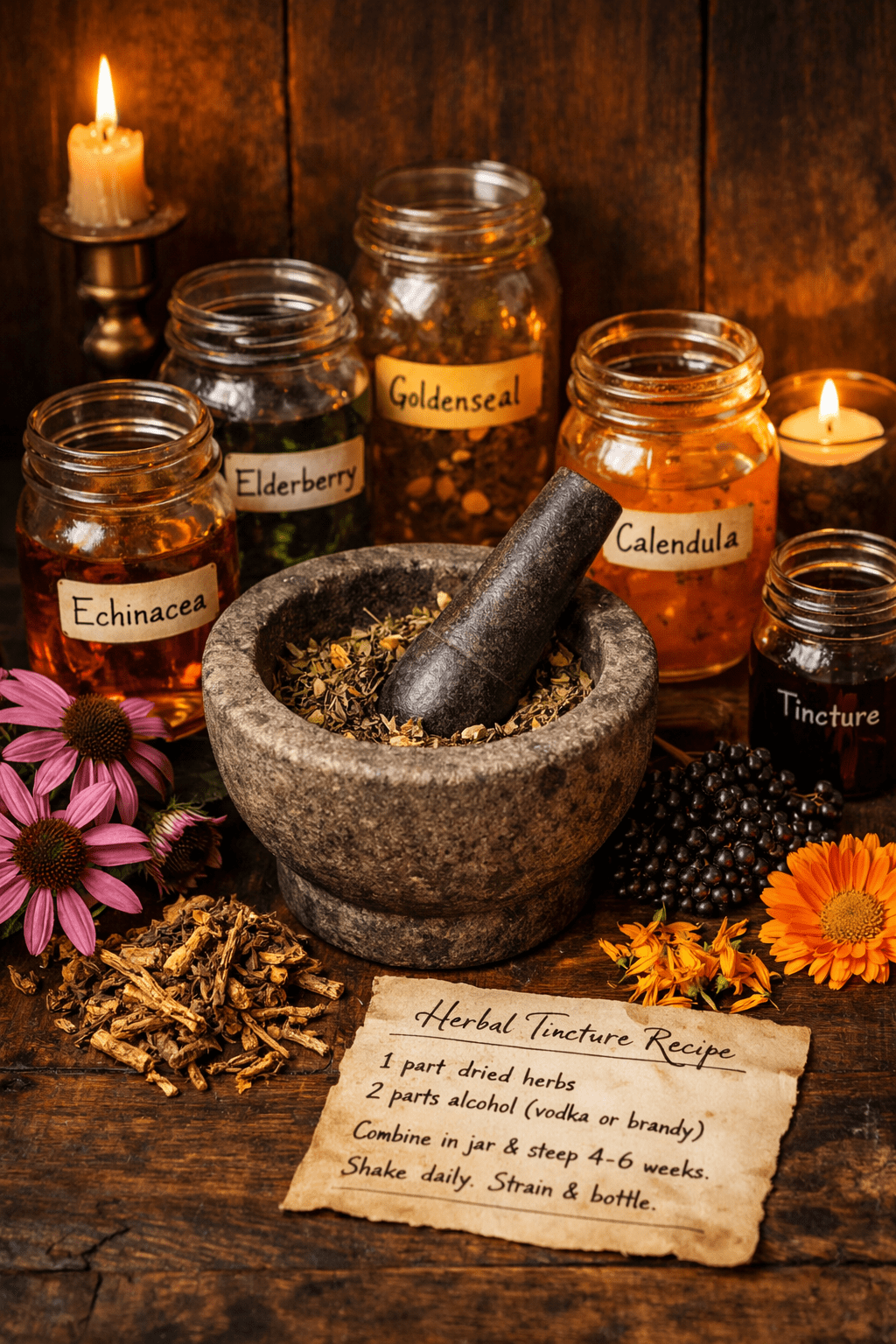
- Tincture: Herbs soaked in alcohol (usually vodka or apple cider vinegar) for 4–6 weeks. Best for: echinacea, goldenseal, calendula.
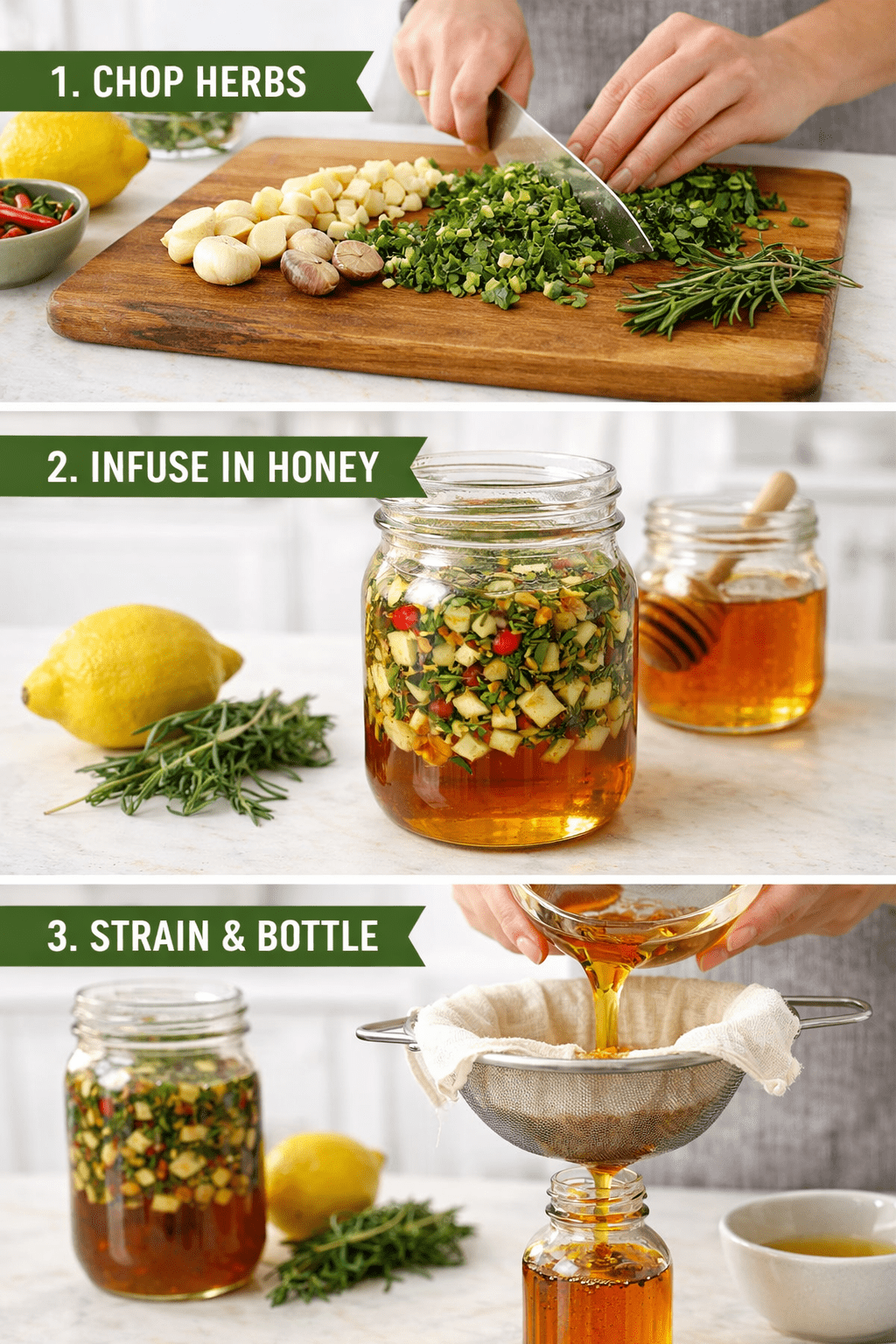
- Infused honey: Herbs steeped in raw honey for 1–4 weeks. Best for: garlic, ginger, thyme. See our guide on making herbal tea blends at home for similar techniques.
- Infused oil: Dried herbs in a carrier oil for topical use. Best for: calendula, rosemary, neem.
- Direct application: Raw garlic, raw honey, or diluted essential oils applied topically.
When NOT to rely on herbal remedies alone:
- Fever above 103°F (39.4°C) lasting more than 48 hours
- Signs of spreading infection (red streaks, significant swelling)
- Urinary tract infections that don’t improve within 24–48 hours
- Any infection in a child under 2 years old
- Suspected pneumonia, sepsis, or deep tissue infection
Herbs for Homemade Antibiotics vs. Conventional Antibiotics: What’s the Difference?
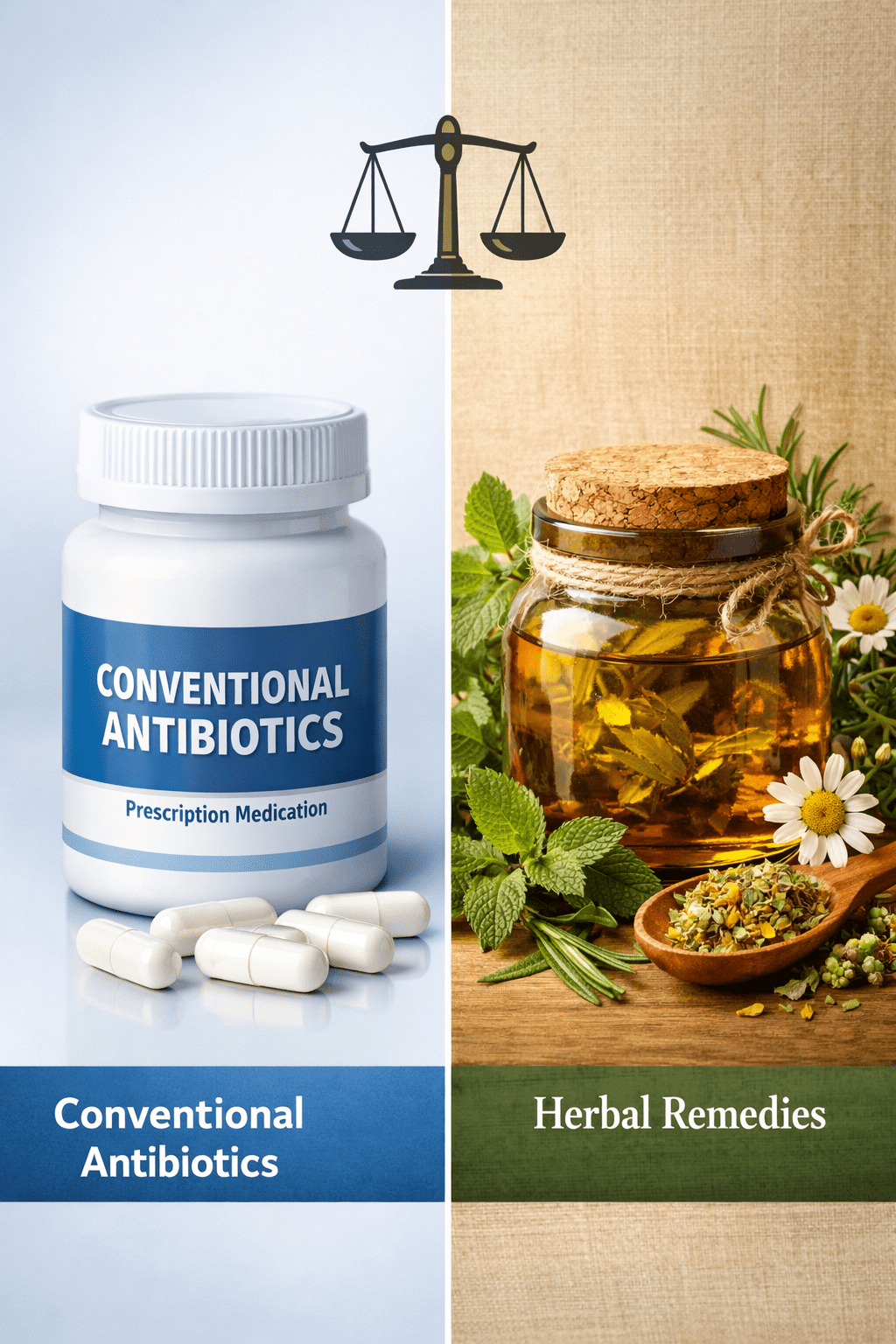
The honest answer: they work differently, and they’re not interchangeable for serious infections.
Natural antimicrobial herbs:
- Work through multiple mechanisms simultaneously (harder for bacteria to develop resistance)
- Generally have fewer side effects at typical doses
- Support the immune system alongside fighting bacteria
- Best suited for prevention, mild infections, and supportive care
- Slower acting than prescription antibiotics
Conventional antibiotics:
- Specifically target bacterial processes with high precision
- Clinically proven to eliminate serious infections
- Can cause gut microbiome disruption and side effects
- Essential for severe, systemic, or life-threatening infections
- Subject to antibiotic resistance when overused
“The goal isn’t to replace your doctor. It’s to build a home wellness toolkit that reduces your reliance on antibiotics for minor issues, which also helps slow antibiotic resistance globally.” [3][7]
Choose herbal support if: You have a mild cold, minor skin irritation, sore throat without fever, or you want immune support during cold season.
Choose conventional antibiotics if: You have a diagnosed bacterial infection, worsening symptoms, high fever, or any sign of systemic illness.
For more foundational guidance, the Natural Remedies for Beginners guide is a great starting point.
Common Mistakes to Avoid When Using Herbal Antimicrobials
Even well-intentioned herb use can go wrong. Here are the most common errors:
- Using essential oils undiluted: Oregano, clove, and thyme oils are potent. Always dilute in a carrier oil before skin contact (1–2 drops per teaspoon of carrier oil minimum).
- Stopping conventional antibiotics early: If a doctor has prescribed antibiotics, finish the course. Herbal remedies are not a replacement mid-treatment.
- Assuming “natural” means safe in any dose: Goldenseal, licorice root, and neem all have dosage limits and contraindications.
- Using old, oxidized herbs: Dried herbs lose potency over time. Replace dried herbs every 6–12 months and essential oils every 1–2 years.
- Ignoring drug interactions: Garlic, echinacea, and goldenseal can interact with blood thinners, immunosuppressants, and other medications. Check with a pharmacist or doctor if you take prescription drugs.
FAQ: Herbs for Homemade Antibiotics
Q: Can herbal antibiotics cure a bacterial infection on their own?
A: For mild, localized infections like a minor skin wound or early sore throat, some herbs may help. For confirmed bacterial infections, especially systemic ones, conventional antibiotics are necessary. Never rely solely on herbs for a serious infection.
Q: Which herb is the strongest natural antibiotic?
A: Garlic has the most research behind it, particularly for allicin’s activity against drug-resistant bacteria like MRSA [1][3]. Goldenseal (berberine) and oregano oil are also among the most potent options.
Q: Is garlic honey actually effective?
A: Raw garlic infused in honey combines allicin’s antimicrobial activity with honey’s own antibacterial properties. It’s a well-regarded traditional remedy for sore throats and immune support, though clinical trials in humans are still limited.
Q: How long does it take for herbal remedies to work?
A: Most herbal remedies work more slowly than prescription antibiotics. For immune support and mild symptoms, expect 2–5 days before noticing improvement. If symptoms worsen or don’t improve within 48–72 hours, see a doctor.
Q: Are these herbs safe for children?
A: Some are, in smaller doses. Ginger tea and raw honey (for children over 1 year) are generally safe. Goldenseal, oregano oil, and neem should not be used in young children without professional guidance. Always consult a pediatrician first.
Q: Can I use these herbs while pregnant?
A: Some herbs are contraindicated in pregnancy. Goldenseal, sage in large amounts, and neem should be avoided. Ginger and garlic in food amounts are generally considered safe. Always check with your OB or midwife.
Q: What’s the best herb for a sore throat?
A: Ginger, raw honey, thyme, and sage all have solid traditional and emerging scientific support for sore throat relief. A tea combining all four is a practical, soothing option.
Q: Does turmeric work better with black pepper?
A: Yes. Piperine in black pepper significantly increases curcumin absorption. Adding a small pinch of black pepper to turmeric preparations makes a real difference in bioavailability.
Q: Can I use dried herbs from my spice rack?
A: Yes, for teas and cooking-based preparations. For tinctures and infused oils, fresher is better. Check that your dried herbs still have a strong aroma, which indicates active compounds are still present.
Q: Are there herbs that fight fungal infections too?
A: Yes. Garlic, neem, calendula, and clove all show antifungal activity alongside their antibacterial properties. These are useful for minor skin fungal issues like athlete’s foot.
Q: How do I make a simple herbal antibiotic tincture at home?
A: Fill a clean glass jar halfway with dried herbs (or 3/4 full with fresh herbs). Cover completely with 80-proof vodka or apple cider vinegar. Seal and store in a cool, dark place for 4–6 weeks, shaking daily. Strain and store in amber dropper bottles.
Q: Where can I learn more about making herbal remedies at home?
A: The home wellness section of The Herbal Handbook has a wide range of practical guides, from herbal teas to natural remedies for everyday ailments.
Conclusion: Building Your Herbal Antimicrobial Toolkit
The 15 herbs covered here, from garlic and turmeric to echinacea and neem, represent some of the most well-researched natural antimicrobials available. Most of them are already in your kitchen or easy to find at any grocery store or health food shop.
Your actionable next steps:
- Start with garlic and ginger. These two are the most accessible, the most researched, and the easiest to incorporate daily through food and simple teas.
- Make a garlic honey infusion. Crush 6–8 garlic cloves, add to a jar of raw honey, and let it infuse for 1–2 weeks. Take a spoonful at the first sign of illness.
- Stock your herbal first aid kit. Keep dried thyme, sage, and oregano on hand. Add raw honey, turmeric, and fresh ginger to your regular grocery list.
- Learn one new preparation method per month. Start with teas, then try infused oils, then tinctures.
- Know your limits. If symptoms are severe, worsening, or involve a confirmed bacterial infection, see a doctor. Herbal remedies are powerful tools, but they work best as part of a broader wellness approach, not as a replacement for medical care.
The goal is a well-stocked, practical home wellness toolkit that supports your body before problems escalate. These herbs have been doing exactly that for thousands of years, and modern science is only beginning to confirm what traditional healers always knew.

References
[1] Natural Antibiotics – https://www.healthline.com/health/natural-antibiotics
[2] Medical News Today: Natural Antibiotics – https://www.medicalnewstoday.com/articles/321108
[3] 2026 List Of Food And Drink Derived Natural Antibiotics – https://dulwichhealth.co.uk/blogs/blog/2026-list-of-food-and-drink-derived-natural-antibiotics
[4] 5 Antimicrobial Herbs For Your Medicine Chest – https://chestnutherbs.com/5-antimicrobial-herbs-for-your-medicine-chest/
[5] PMC10490416 – https://pmc.ncbi.nlm.nih.gov/articles/PMC10490416/
[6] 11 All Natural Antibiotics – https://www.montereychirocare.com/healthy-lifestyle-tips/11-all-natural-antibiotics.php
[7] Natural Product Inspired Antibiotics 1943–2025 – https://amr.solutions/2025/12/16/natural-product-inspired-antibiotics-1943-2025/
[8] Herbal Antibiotic Alternatives – https://avivaromm.com/herbal-antibiotic-alternatives/