
Quick Answer: You can whiten teeth at home using a few well-researched natural methods, mainly baking soda paste, oil pulling, and diluted hydrogen peroxide rinses. These work by removing surface stains, not by bleaching deep into the enamel. Results take 2–4 weeks of consistent use. Some popular DIY tricks, like rubbing lemon juice on teeth, can actually damage your enamel permanently, so knowing what to skip matters just as much as knowing what to try.
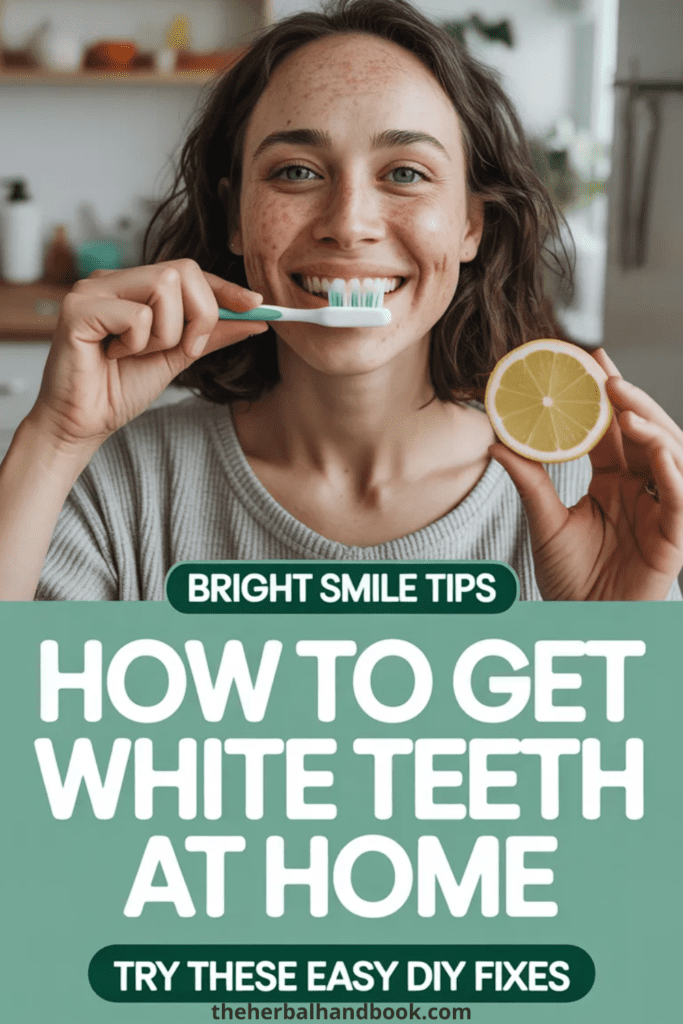
Key Takeaways 🦷
- Baking soda is one of the most evidence-backed natural whitening agents for surface stain removal.
- Oil pulling (swishing coconut oil) can reduce plaque and improve overall oral appearance, though it’s not a standalone whitener.
- Diluted hydrogen peroxide (1–1.5% concentration) is used in many commercial whiteners and is safe in low doses at home.
- Lemon juice, apple cider vinegar, and activated charcoal used aggressively can erode enamel over time — use with caution or avoid.
- Whitening works best on extrinsic (surface) stains from coffee, tea, and tobacco — not on intrinsic discoloration or caps and veneers.
- Consistency matters more than intensity. Gentle, regular use beats aggressive one-off treatments.
- Pair any whitening routine with good oral hygiene: brush twice daily, floss, and rinse.
- See a dentist if your teeth are gray, heavily stained, or sensitive — some discoloration needs professional care.
What Actually Causes Yellow Teeth? (And Why It Matters for DIY)
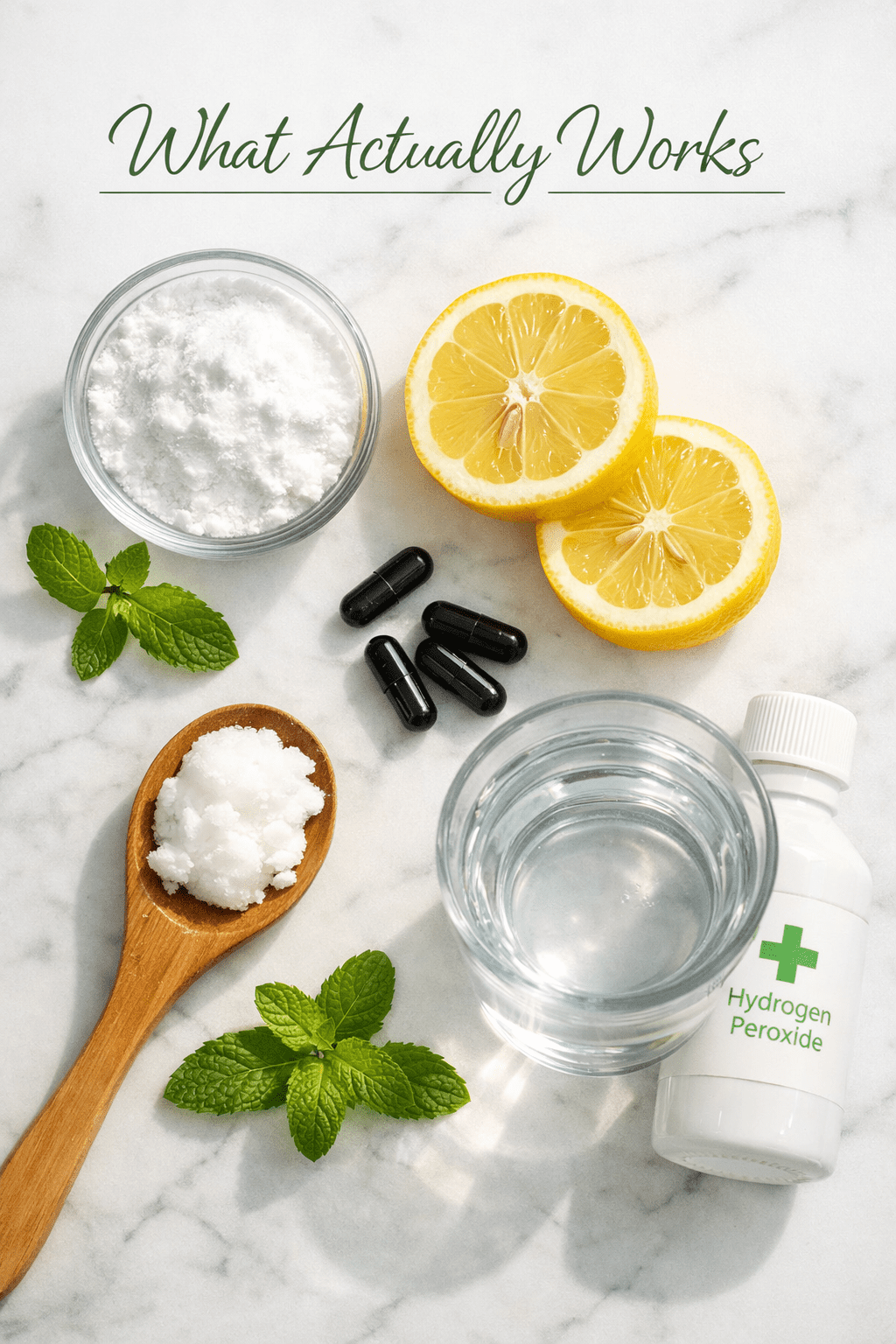
Before jumping into how to get white teeth at home DIY, it helps to know why teeth yellow in the first place. The cause determines whether a home remedy will actually work.
Two main types of staining:
| Type | What It Is | Can DIY Help? |
|---|---|---|
| Extrinsic | Surface stains from food, drink, tobacco | Yes, often |
| Intrinsic | Discoloration inside the tooth structure | Rarely, needs a dentist |
Common causes of extrinsic staining include:
- Coffee, tea, and red wine
- Tobacco (smoked or chewed)
- Dark-colored sauces and berries
- Poor brushing habits
Intrinsic discoloration can come from aging, certain antibiotics (like tetracycline taken in childhood), fluorosis, or trauma to a tooth. No DIY method will fix those. If your teeth look gray or have uneven patches, book a dental visit first.
How to Get White Teeth at Home DIY: Methods That Actually Work
These are the approaches with real evidence or long-standing safe use behind them. I’ve organized them from most supported to mildly supported.
1. Baking Soda Paste (Most Supported)
Baking soda (sodium bicarbonate) is a mild abrasive that physically buffs away surface stains. It also creates an alkaline environment in the mouth, which can slow bacteria growth. A 2017 review published in the Journal of the American Dental Association found that toothpastes containing baking soda were significantly more effective at removing stains than those without it (Valkenburg et al., 2017).
How to use it:
- Mix 1 teaspoon of baking soda with enough water to form a thin paste.
- Apply to your toothbrush and brush gently for 2 minutes.
- Rinse thoroughly.
- Use 2–3 times per week, not daily (it’s mildly abrasive).
Choose this if: You have surface stains from coffee or tea and want a low-cost, well-researched starting point.
Common mistake: Using it every day. Daily use can wear down enamel over time. Stick to 2–3 times per week.
2. Oil Pulling with Coconut Oil
Oil pulling is an ancient Ayurvedic practice that involves swishing oil around your mouth for 10–20 minutes. It won’t bleach your teeth, but it can reduce plaque and surface bacteria, which contributes to a cleaner, brighter appearance over time.
A small 2015 study in the Journal of Traditional and Complementary Medicine found that oil pulling with coconut oil reduced plaque and gingivitis scores (Shanbhag, 2015). The evidence is modest, but the practice is very safe.
How to use it:
- Take 1 tablespoon of coconut oil (melted or solid — it melts quickly in your mouth).
- Swish it gently around your mouth for 10–15 minutes.
- Spit into a trash can (not the sink — it can clog pipes).
- Rinse with water, then brush normally.
- Do this 3–5 times per week, ideally in the morning before eating.
While you’re building your natural oral care routine, you might also enjoy making your own homemade mouthwash for fresh breath — it pairs well with oil pulling.
3. Diluted Hydrogen Peroxide Rinse
Hydrogen peroxide is the active ingredient in most commercial whitening strips and gels. At low concentrations (1–1.5%), it’s generally considered safe for short-term home use. Most over-the-counter whitening products use 3–10% concentrations, so diluting drugstore 3% hydrogen peroxide in half with water brings it into a safer range.
How to use it:
- Mix equal parts 3% hydrogen peroxide and water.
- Swish for 60 seconds.
- Spit and rinse with plain water.
- Use no more than once daily, and not for longer than 2 weeks at a stretch.
Edge case: If you have sensitive teeth or gum recession, skip this one. Hydrogen peroxide can irritate exposed roots and sensitive gum tissue.
4. Activated Charcoal (Use With Caution)
Activated charcoal is trendy, but the evidence is mixed. It’s highly absorbent and can pull surface stains off teeth, but it’s also quite abrasive. The American Dental Association has not approved activated charcoal products for whitening, and some dental researchers worry about long-term enamel wear (Brooks et al., 2017).
If you use it: Limit to once per week, use a soft brush, and apply gently without scrubbing hard.
Skip it if: You already have thin enamel, sensitivity, or any dental work like crowns or veneers (it can scratch restorations).
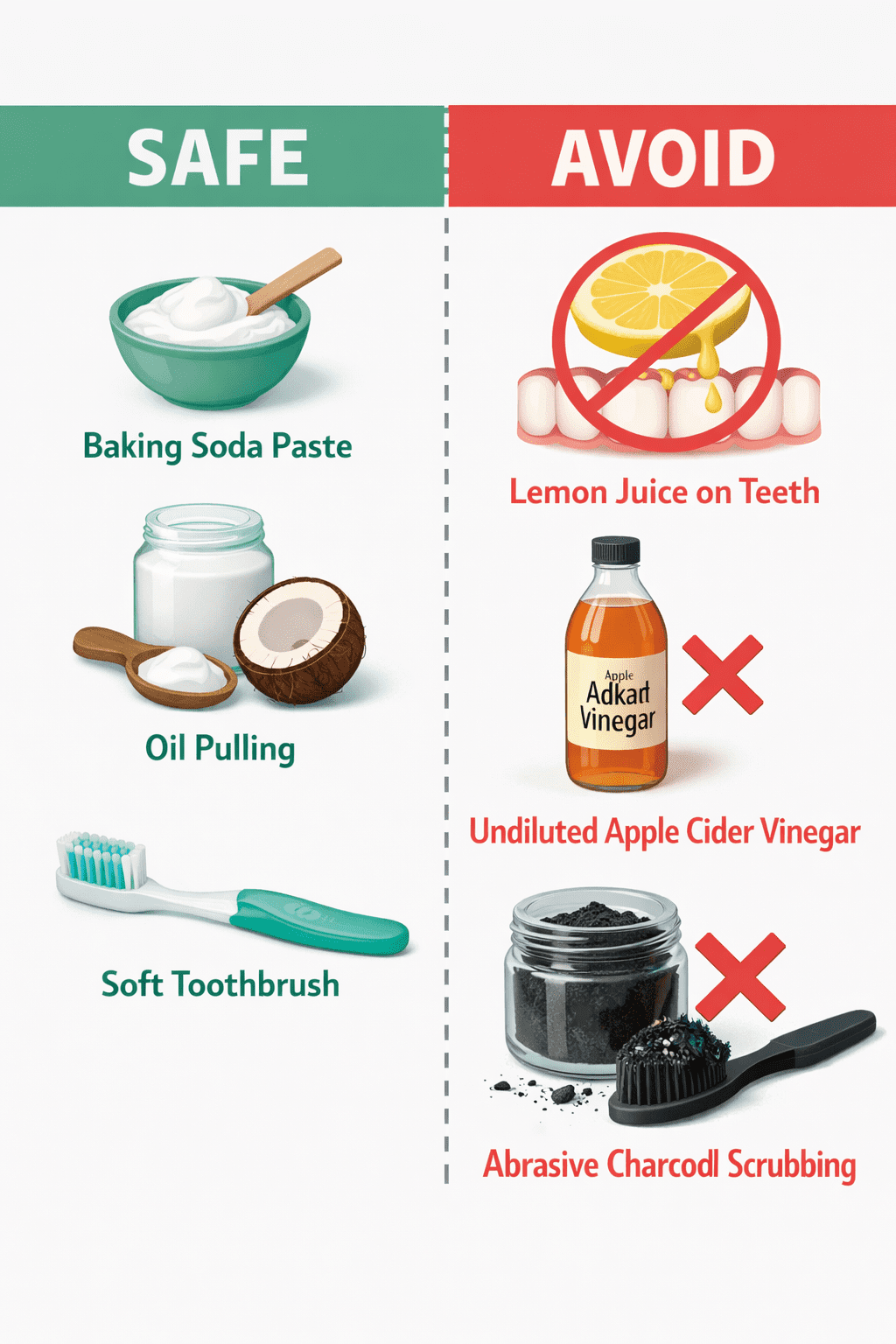
What to Avoid: DIY Teeth Whitening Mistakes That Cause Real Damage
Knowing how to get white teeth at home DIY also means knowing which “natural” hacks to leave alone. Some popular ones can cause irreversible harm.
❌ Lemon Juice or Orange Peel Rubbing
Citric acid is highly erosive to enamel. Rubbing lemon juice or citrus peels on your teeth repeatedly will wear away the protective outer layer, leading to sensitivity and a duller (not brighter) appearance over time. Enamel doesn’t grow back.
❌ Undiluted Apple Cider Vinegar
Apple cider vinegar (ACV) has a pH around 2–3, making it very acidic. Some people swish it neat or apply it directly to teeth. This can dissolve enamel quickly. If you want to use ACV for oral health, dilute it heavily (1 teaspoon in a full glass of water) and rinse with plain water immediately after.
❌ Strawberry and Baking Soda Paste
This one is popular on social media. Strawberries contain malic acid, which can temporarily make teeth look brighter by removing surface debris — but a 2015 study in Operative Dentistry found this mixture did not actually whiten teeth and left behind sugar that fed bacteria (Chakravarthy & Acharya, 2012).
❌ Brushing Too Hard or Too Often
More pressure does not equal more whitening. Hard brushing damages enamel and recedes gums. Use a soft-bristled toothbrush and gentle circular motions.
How Long Does It Take to See Results at Home?
Realistic timelines depend on the method and the severity of staining.
- Baking soda: Most people notice a difference in 2–4 weeks of consistent use.
- Oil pulling: Gradual improvement over 4–8 weeks; more of a maintenance tool.
- Hydrogen peroxide rinse: Some brightening in 1–2 weeks, but dramatic results aren’t typical without professional-grade concentrations.
Pull quote: “Natural whitening methods work best as a slow, steady habit — not a one-week fix. Think of them like skincare: consistency beats intensity.”
If you’re interested in other natural beauty routines that work the same way, check out this DIY lip lightening balm for softer, brighter lips — same principle of gentle, consistent care.
Your Simple Daily Routine for Whiter Teeth at Home
Here’s a practical weekly plan that combines the safest, most effective methods:
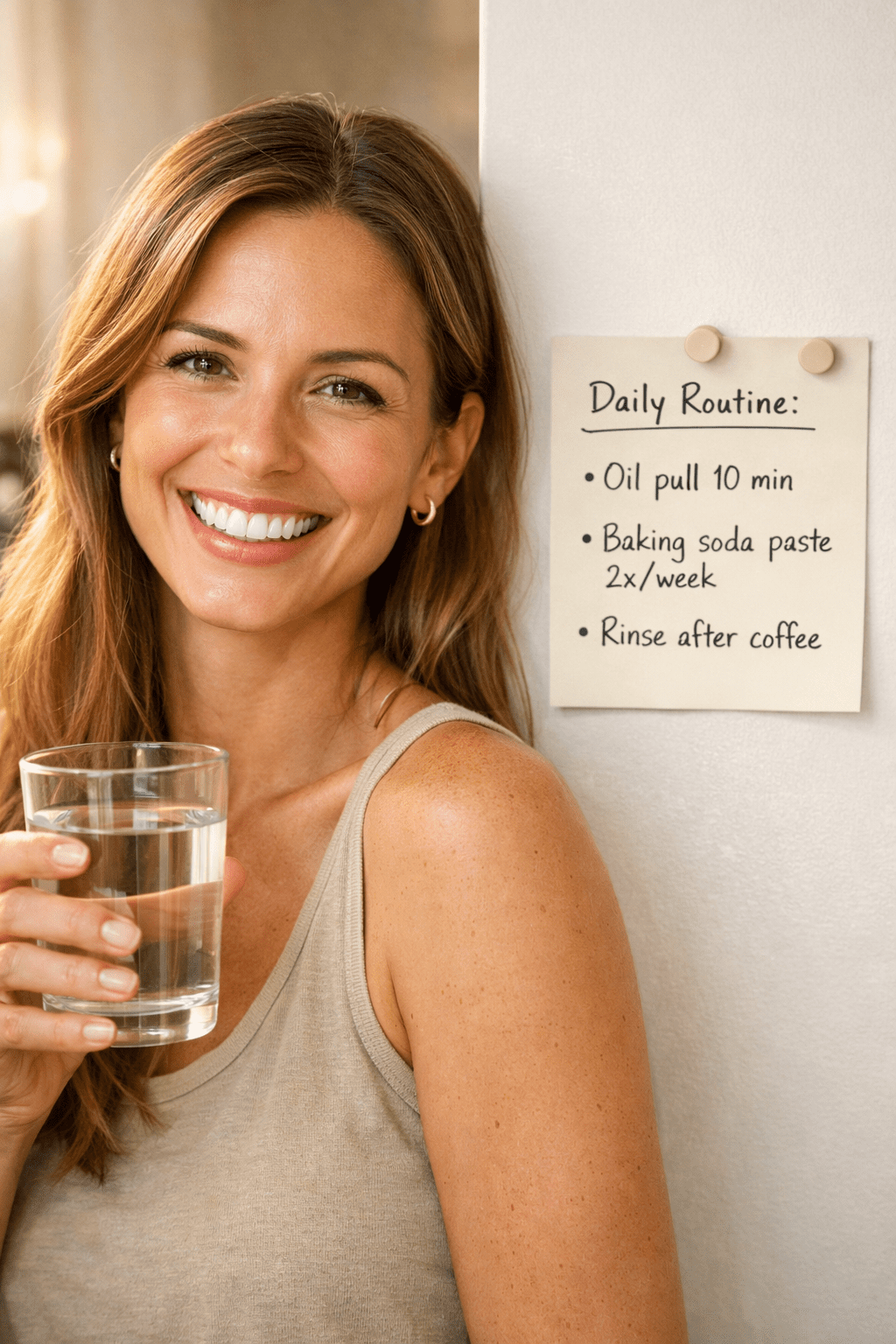
Daily habits:
- Brush twice with a fluoride toothpaste (soft brush, 2 minutes)
- Floss once
- Rinse with water after coffee, tea, or wine
- Drink staining beverages through a straw when possible
3x per week:
- Oil pull with 1 tablespoon of coconut oil for 10–15 minutes in the morning
2x per week:
- Brush with baking soda paste (instead of your regular toothpaste for that session)
Once per week (optional):
- Diluted hydrogen peroxide rinse (if no sensitivity)
Monthly check-in: Notice any increased sensitivity? Dial back frequency. Teeth looking brighter? Maintain the routine rather than escalating it.
For more inspiration on building a natural home wellness routine, browse the home wellness guides at The Herbal Handbook.
Does Diet Play a Role in Keeping Teeth White?
Yes — and it’s one of the most underrated parts of how to get white teeth at home DIY. What you eat and drink directly affects how quickly stains build up.
Foods and drinks that stain teeth:
- Coffee, black tea, red wine
- Soy sauce, balsamic vinegar, tomato sauce
- Blueberries, blackberries, pomegranate juice
- Cola and dark sodas
Foods that may help keep teeth cleaner:
- Crunchy vegetables like celery, carrots, and apples (natural scrubbing action)
- Dairy products — cheese and yogurt contain casein, which may help protect enamel (though the evidence is preliminary)
- Plenty of water, especially after meals
You don’t have to give up coffee or berries. Just rinse your mouth with water right after consuming them, and wait 30 minutes before brushing (brushing immediately after acidic foods can spread the acid further).
FAQ: How to Get White Teeth at Home DIY
Q: Can I whiten my teeth at home without baking soda?
Yes. Oil pulling and diluted hydrogen peroxide rinses are both effective alternatives. You can also focus on dietary habits and consistent brushing to prevent new staining.
Q: Is it safe to use baking soda every day?
No. Daily use is too abrasive for most people. Limit baking soda to 2–3 times per week to protect enamel.
Q: How long should I oil pull?
Aim for 10–15 minutes. Less than 5 minutes is unlikely to provide much benefit. You don’t need to go the full 20 minutes traditional texts suggest.
Q: Will DIY whitening work on crowns, veneers, or fillings?
No. Whitening agents only affect natural tooth enamel. Dental restorations won’t change color, which can create an uneven look if you whiten surrounding natural teeth.
Q: Can I use whitening toothpaste daily instead?
Most whitening toothpastes are safe for daily use because they’re formulated with controlled abrasive levels. Check for the ADA Seal of Acceptance on the label.
Q: Is activated charcoal toothpaste safe?
It can be used occasionally, but it’s not ADA-approved for whitening and may be too abrasive for regular use. Once a week maximum is a reasonable limit.
Q: Why are my teeth sensitive after whitening?
Sensitivity is common with hydrogen peroxide methods. Take a break for a week, use a sensitivity toothpaste, and reduce frequency when you restart.
Q: Does drinking more water actually help whiten teeth?
Water won’t whiten teeth, but rinsing with water after staining foods and drinks significantly slows new stain buildup. It’s one of the easiest habits to add.
Conclusion: Build the Habit, Skip the Hype
Getting whiter teeth at home is genuinely possible — but it requires patience and the right approach. The methods that work (baking soda, oil pulling, diluted hydrogen peroxide) are simple, affordable, and safe when used correctly. The ones to avoid (lemon juice, undiluted ACV, aggressive charcoal scrubbing) can cause lasting damage that no home remedy will fix.
Your action steps starting today:
- Pick one method to start — baking soda paste is the easiest entry point.
- Add oil pulling to your morning routine 3x per week.
- Rinse with water after every staining drink.
- Give it 4 weeks before judging results.
- If you notice sensitivity, back off and consult your dentist.
For more natural DIY beauty and wellness ideas, explore natural remedies for beginners or check out this guide on how to heal chapped lips naturally overnight — small, consistent habits add up.
References
- Valkenburg, C., et al. (2017). “The efficacy of baking soda dentifrice in controlling plaque and gingivitis.” Journal of the American Dental Association, 148(11), 843–852.
- Shanbhag, V. K. L. (2015). “Oil pulling for maintaining oral hygiene – A review.” Journal of Traditional and Complementary Medicine, 7(1), 106–109.
- Brooks, J. K., et al. (2017). “Charcoal and charcoal-based dentifrices: A literature review.” Journal of the American Dental Association, 148(9), 661–670.
- Chakravarthy, P., & Acharya, S. (2012). “Efficacy of extrinsic stain removal by novel dentifrice containing papain and bromelain extracts.” Journal of Young Pharmacists, 4(4), 245–249.