Quick Answer: Learning how to make your own herbal tea blends is easier than most people think. You need three things: dried herbs, a simple ratio formula, and a glass jar for storage. Start with a base herb like chamomile or lemon balm, add a functional “star” herb, and finish with a small accent for flavor. Steep one tablespoon of your blend per eight ounces of hot water for 15 to 20 minutes, and you’re done.
Key Takeaways
- Use the 3-part formula: base (4+ teaspoons) + star herb (1-2 teaspoons) + accent (½ teaspoon) for balanced blends [3]
- Measure 1 tablespoon of dried herbs per 8 oz of water, steeped 15-20 minutes [6]
- If using fresh herbs, use 5-6 leaves per cup instead of dried [10]
- Store blends in airtight glass jars in a cool, dry spot to keep them fresh [4]
- Great beginner herbs include chamomile, peppermint, lemon balm, lavender, and rose hips
- You can blend for a purpose: sleep, immunity, energy, or digestion
- Always taste your blend before committing to a large batch
- Homemade herbal teas make thoughtful, affordable gifts when packaged nicely
What Do You Actually Need to Start Making Herbal Tea Blends?
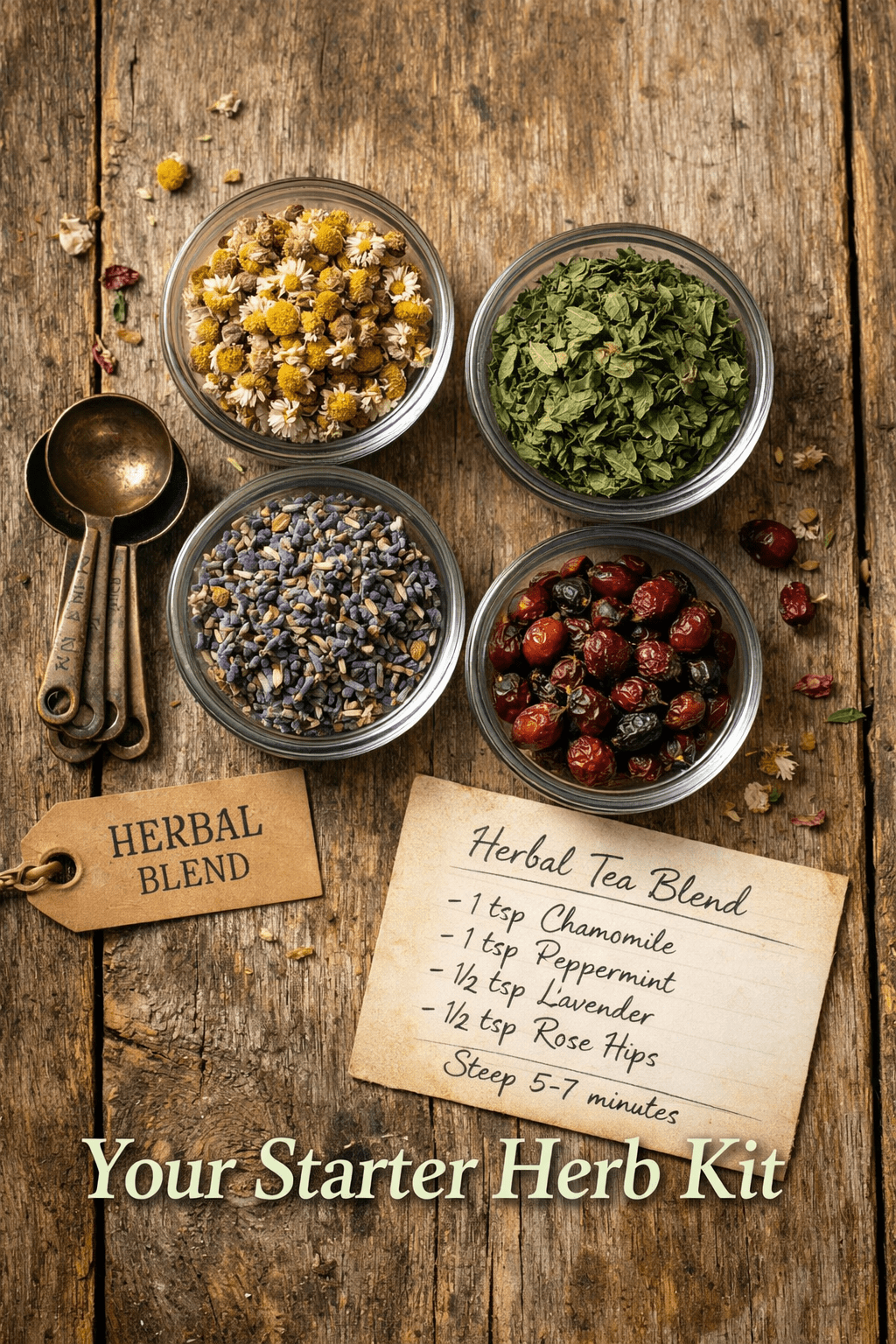
You don’t need much. A few dried herbs, a teaspoon, a mixing bowl, and a glass jar with a lid will get you started. That’s genuinely it for a first batch.
Here’s a simple starter shopping list:
Equipment:
- Measuring spoons (teaspoon and tablespoon)
- A small mixing bowl
- Airtight glass jars (4 oz or 8 oz mason jars work great)
- A fine mesh tea strainer or reusable tea bags
- Kraft paper labels and a pen for labeling
Starter herbs to keep on hand:
- Chamomile — gentle, floral, calming
- Peppermint — cooling, digestive, refreshing
- Lemon balm — uplifting, slightly citrusy, versatile
- Lavender — aromatic, relaxing (use sparingly — a little goes a long way)
- Rose hips — tart, vitamin C-rich, great for immune blends
- Ginger root (dried) — warming, spicy, digestive support
- Tulsi (holy basil) — earthy, grounding, adaptogenic
You can find most of these at health food stores, online herb suppliers, or even grow them yourself. If you’re just getting started with natural remedies in general, the Natural Remedies for Beginners: Complete Guide is a helpful place to build your foundational knowledge.
Choose dried herbs if: you want longer shelf life and consistent flavor. Choose fresh herbs if you’re making a single cup and have them growing nearby.
How to Make Your Own Herbal Tea Blends Using the 3-Part Formula
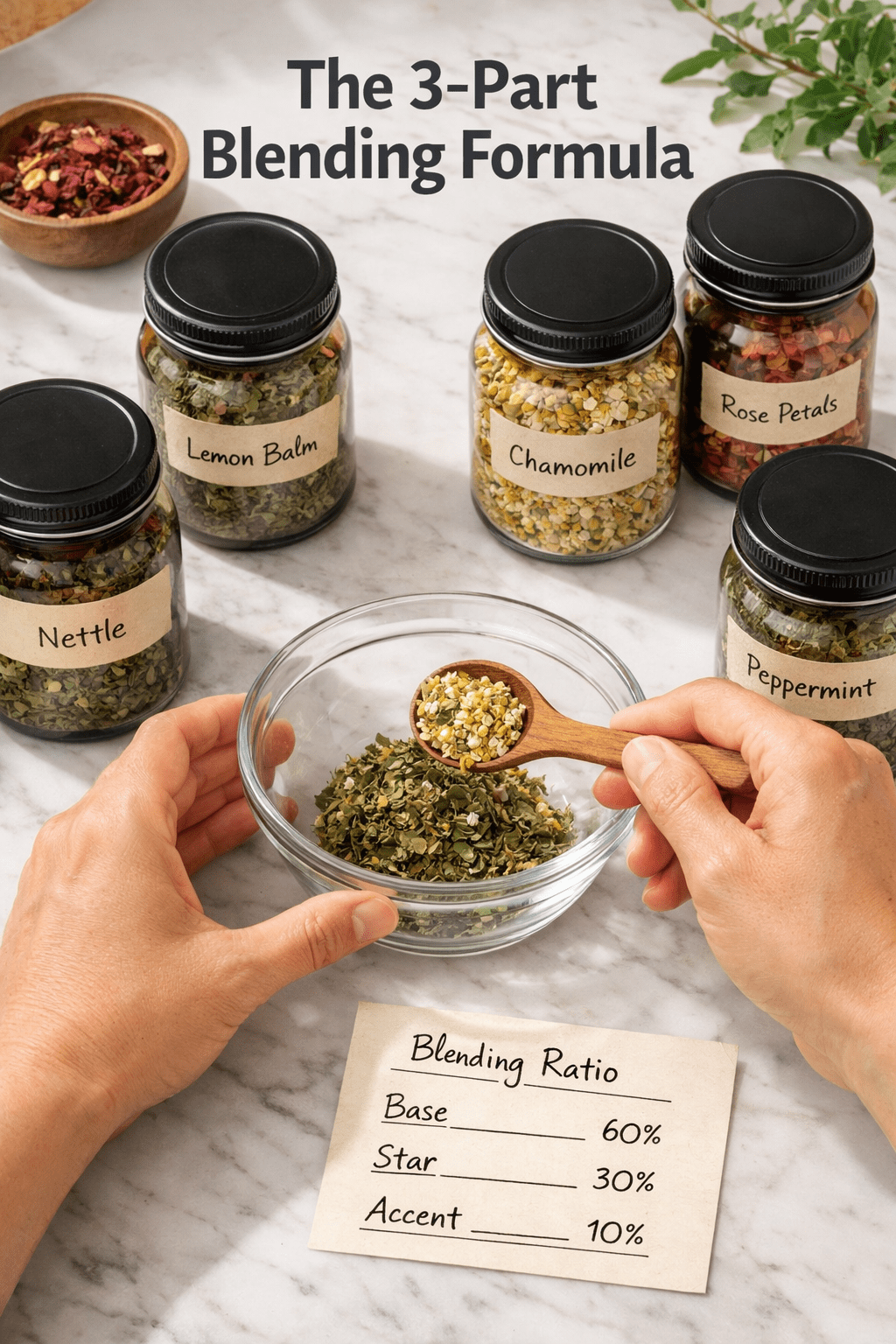
The simplest way to make your own herbal tea blends is to follow a three-part ratio: base, star, and accent. This structure keeps your blend balanced and prevents any single herb from overwhelming the cup [3].
The Formula Breakdown
| Layer | Role | Amount (per batch) | Example Herbs |
|---|---|---|---|
| Base | Bulk and mildness | 4+ teaspoons | Chamomile, lemon balm, rooibos |
| Star | Main flavor or function | 1-2 teaspoons | Valerian, peppermint, rose hips |
| Accent | Complexity or aroma | ½ teaspoon | Lavender, ginger, cinnamon |
Step-by-Step Blending Process
- Measure your base herb into a small bowl. This is the largest portion and the mellow backbone of your blend.
- Add your star herb. This is the ingredient doing the main job — whether that’s flavor, aroma, or a specific wellness purpose.
- Add your accent. Just a pinch or half teaspoon. This adds depth without taking over.
- Mix gently with a spoon until the herbs are evenly combined.
- Smell it. Does it smell good? Adjust if needed before making a full batch.
- Brew a test cup using 1 tablespoon of the blend per 8 oz of hot water, steeped for 15-20 minutes [6].
- Taste and tweak. Too floral? Reduce the lavender. Too bland? Add more star herb.
- Store the rest in an airtight glass jar, labeled with the blend name and date [4].
Common mistake: Adding too much lavender or licorice root on the first try. Both are strong. Start with ¼ teaspoon and adjust up from there.
3 Beginner Herbal Tea Blend Recipes Worth Making This Week
These three recipes are a great starting point because they cover different needs — sleep, energy, and immune support — and they use easy-to-find herbs.
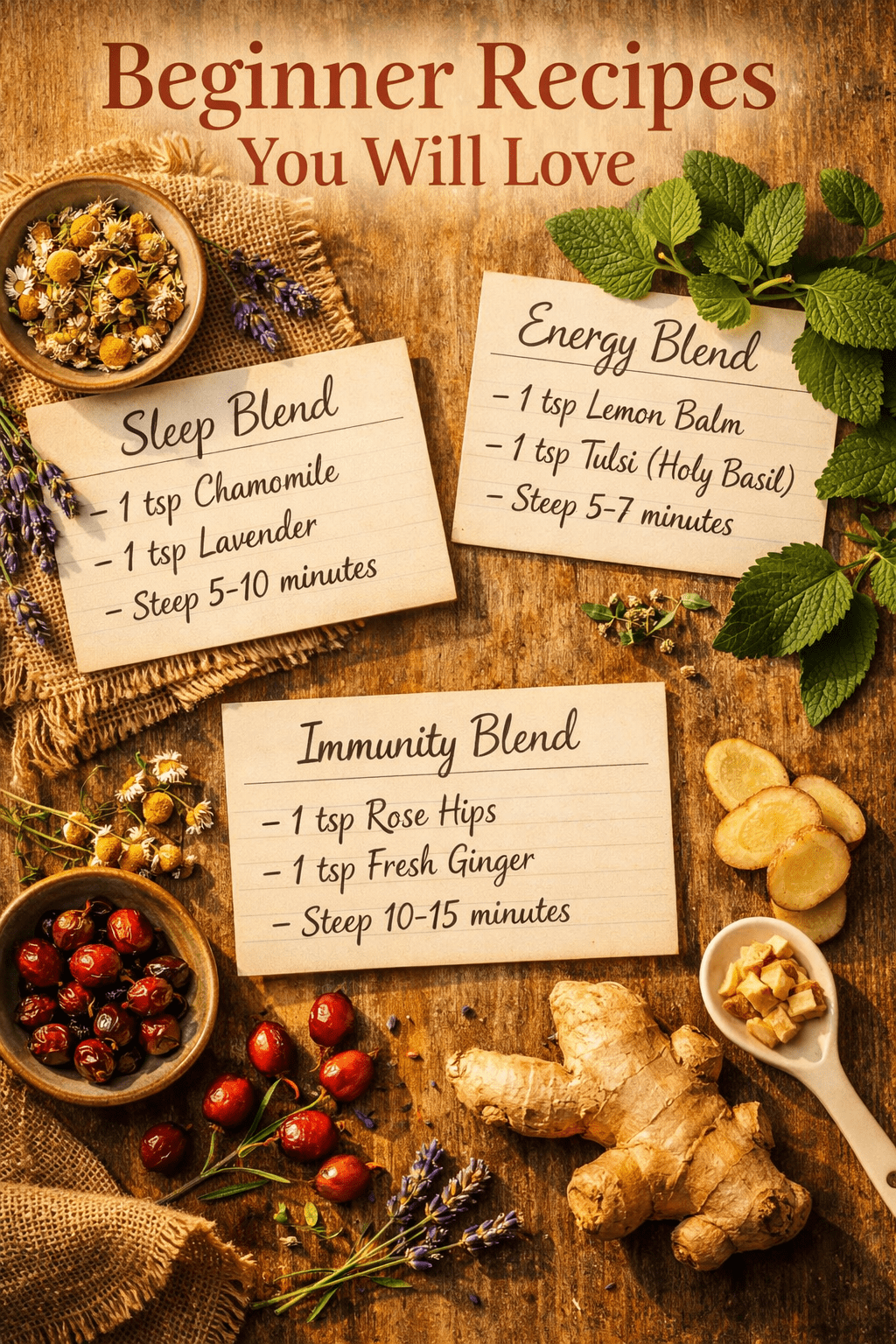
🌙 Sleepy Time Blend
This blend uses lemon balm and chamomile as the calming base, with valerian root as the star and lavender as the accent [3].
- 2 teaspoons dried lemon balm
- 2 teaspoons dried chamomile
- 1 teaspoon valerian root
- ½ teaspoon dried lavender
Brew 1 tablespoon per cup, steep 15-20 minutes before bed. The flavor is floral and earthy with a gentle herbal bitterness.
⚡ Caffeine-Free Energy Blend
Lemon balm provides a gentle uplifting quality while tulsi (holy basil) adds grounding, adaptogenic support — no coffee jitters [7].
- 3 teaspoons dried lemon balm
- 2 teaspoons dried tulsi
- 1 teaspoon peppermint
- ½ teaspoon dried ginger
This one tastes bright and minty with a warm finish. Great as a morning or mid-afternoon cup.
🌿 Immune Support Blend
For cold and flu season, combine lemon balm, chamomile, and rose hips as the base, with ginger as the warming star [2].
- 2 teaspoons dried lemon balm
- 1 teaspoon dried chamomile
- 2 teaspoons rose hips
- 1 teaspoon dried ginger
- ½ teaspoon lemon verbena (if available)
This blend is tart, warming, and genuinely pleasant. Rose hips add a natural vitamin C boost, and ginger helps with congestion. For more ideas on immune-supporting herbs, check out 5 Herbal Teas for Immunity and Wellness.
How Do You Store Homemade Herbal Tea Blends to Keep Them Fresh?
Store your blends in airtight glass jars, away from heat, light, and moisture. A kitchen cabinet or pantry shelf works well. Properly stored dried herb blends typically stay flavorful for 6 to 12 months, though potency can fade after that.
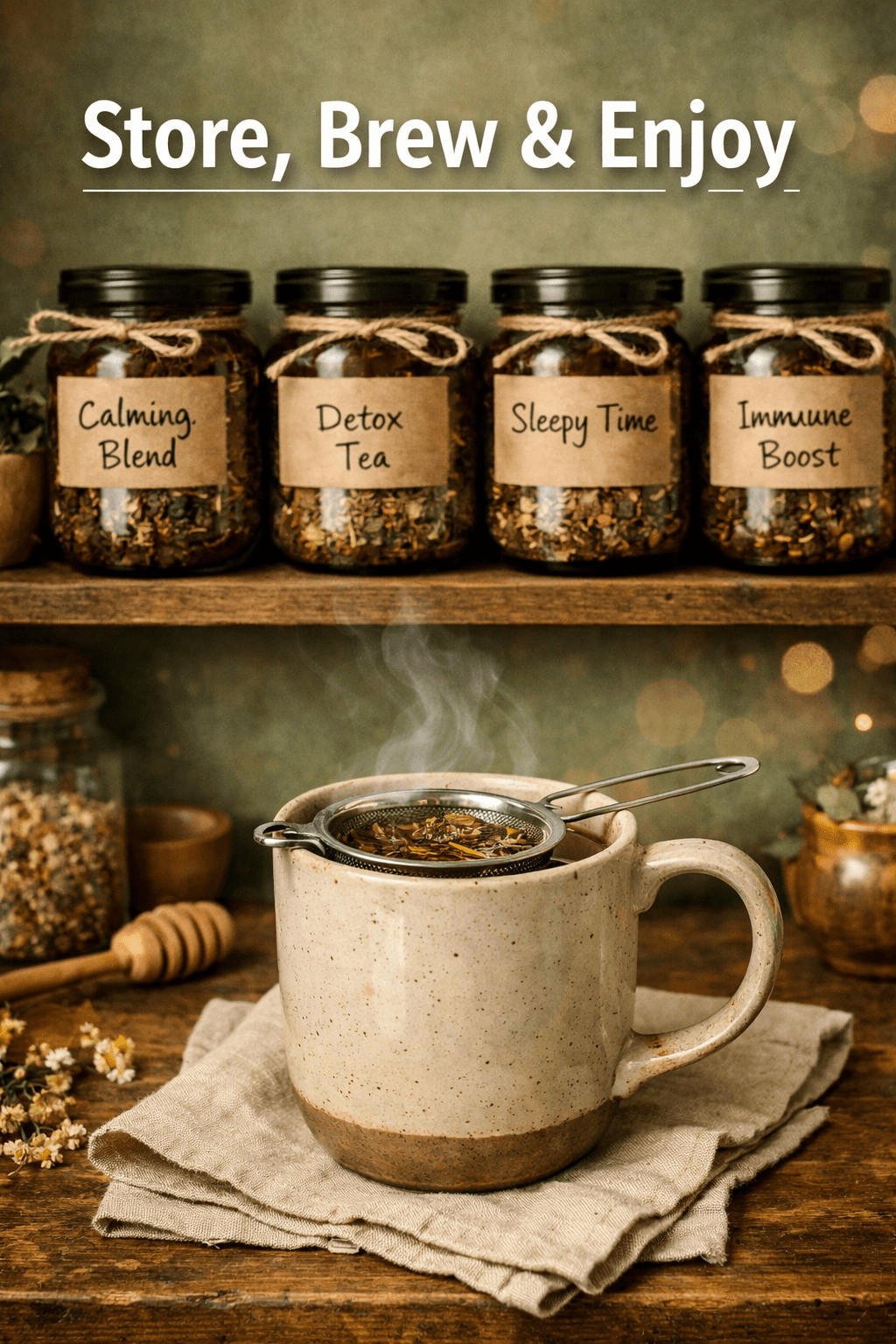
Storage tips:
- Label every jar with the blend name and the date you made it
- Avoid clear glass on a sunny windowsill — UV light degrades herbs faster
- Amber or dark glass jars offer the best protection
- Keep moisture out — always use a dry spoon when scooping
- Don’t store near the stove — heat is the enemy of dried herbs [4]
Edge case: If your blend smells dusty or flat when you open the jar, it’s past its prime. It won’t hurt you, but it won’t taste great either. Time for a fresh batch.
What Are the Most Common Mistakes Beginners Make When Blending Herbal Teas?
Most beginner mistakes come down to using too much of a strong herb, not tasting before storing, or skipping the test brew. Here’s what to watch for:
- Overloading strong herbs like valerian, licorice root, or lavender. These can make a blend taste medicinal or overwhelming.
- Skipping the test cup. Always brew a small test before making a full jar.
- Using herbs past their prime. Old dried herbs lose flavor and potency. Check for freshness before blending.
- Not labeling jars. Three jars of green-brown herbs all look the same after a week.
- Steeping too briefly. Herbal teas need 15-20 minutes to fully extract flavor and beneficial compounds — much longer than regular tea [6].
- Using boiling water on delicate herbs. For floral herbs like chamomile and lavender, water around 200°F (just off the boil) is gentler and prevents bitterness.
If you enjoy making natural remedies at home, you might also love this DIY Headache Balm Recipe or these Homemade Honey Lemon Ginger Cough Drops — both use simple kitchen herbs in creative ways.
Can You Use Fresh Herbs Instead of Dried for Homemade Tea Blends?
Yes, you can use fresh herbs, but the measurements change. Use 5 to 6 fresh leaves per cup of tea instead of 1 tablespoon of dried herbs [10]. Fresh herbs work best for single-cup brewing since they don’t store well once picked.
Choose fresh herbs if:
- You’re growing mint, lemon balm, or verbena in your garden
- You want a lighter, brighter flavor
- You’re making just one or two cups right now
Stick with dried herbs if:
- You want to make a batch blend to store for weeks
- You need consistent measurements each time
- You’re gifting the blend to someone
Fresh mint, lemon verbena, and lemon balm are the easiest fresh herbs to use in tea. Just rinse them, bruise the leaves slightly between your fingers to release the oils, and steep in hot water.
FAQ: How to Make Your Own Herbal Tea Blends
Q: How many herbs should I use in one blend?
A: Three to four herbs is ideal for beginners. More than five can muddy the flavor and make it hard to identify what’s working.
Q: Can I mix herbal tea with regular black or green tea?
A: Yes. Adding a base of black or green tea gives your blend a caffeine boost and a familiar flavor. Popular combos include chamomile with green tea or rose petals with Darjeeling [1].
Q: How long should I steep homemade herbal tea?
A: Steep for 15 to 20 minutes, covered, to get the full flavor and benefit from dried herbs [6]. Shorter steeping times leave a lot of goodness in the leaves.
Q: Are homemade herbal tea blends safe for everyone?
A: Most culinary herbs are safe for healthy adults. However, some herbs interact with medications or aren’t suitable during pregnancy. If you’re pregnant, nursing, or on medication, check with your healthcare provider before using medicinal herbs like valerian or licorice root.
Q: How much does it cost to make your own herbal tea blends?
A: A 2 oz bag of most dried herbs costs between $3 and $8, and one bag typically makes 15 to 30 cups of tea. Blending your own is almost always cheaper per cup than buying pre-made herbal teas.
Q: Can I make herbal tea blends as gifts?
A: Absolutely. Package them in small mason jars with a handwritten label and brewing instructions. They make thoughtful, personal gifts that cost very little to make.
Q: What’s the best herb for a beginner to start with?
A: Chamomile. It’s mild, widely available, pleasant-tasting, and pairs well with almost everything. It’s hard to go wrong with it.
Q: Do I need to grind or crush the herbs before blending?
A: No. Keep dried herbs whole or roughly broken — not powdered. Powdered herbs make a gritty, cloudy tea that’s harder to strain.
Conclusion: Start Simple, Experiment Often
Making your own herbal tea blends doesn’t require a herbalist’s certification or a specialty store. It just takes a few dried herbs, a teaspoon, and a little curiosity. Start with the 3-part formula — base, star, accent — brew a test cup, and adjust from there.
Your action steps for this week:
- Pick up three starter herbs (chamomile, peppermint, and lemon balm are perfect)
- Try the Caffeine-Free Energy Blend or the Sleepy Time Blend from this guide
- Brew a test cup before storing your blend
- Label your jar with the date so you know when you made it
- Once you’re comfortable, experiment with one new herb at a time
The more you blend, the more intuitive it becomes. And if you want to keep exploring natural remedies beyond the teacup, check out the Natural Remedies category at The Herbal Handbook for more beginner-friendly ideas.
References
[1] How To Make Your Own Tea Blends 10 Diy Recipes – https://simplelooseleaf.com/blogs/news/how-to-make-your-own-tea-blends-10-diy-recipes
[2] 6 Homemade Herbal Tea Blend Recipes – https://www.vegogarden.com/blogs/academy/6-homemade-herbal-tea-blend-recipes
[3] Herbal Tea Blending Guide – https://farmtojar.com/herbal-tea-blending-guide/
[4] Diy Looseleaf Tea Blends – https://www.cookingwithbooks.net/2016/05/diy-looseleaf-tea-blends.html
[6] How To Make Herbal Tea Blends – https://www.learningherbs.com/blog/how-to-make-herbal-tea-blends
[7] Herbal Tea Blend Recipes – https://wildfewherbfarm.com/blogs/recipes/herbal-tea-blend-recipes
[10] Herbal Tea – https://nwedible.com/herbal-tea/