


Quick Answer: A good DIY foot soak recipe combines warm water with ingredients like Epsom salt, apple cider vinegar, or essential oils to relieve soreness, soften skin, and reduce odor. Soak for 15 to 30 minutes, two to three times a week, for the best results. Most recipes cost just a few dollars and use pantry staples you likely already have at home.
Key Takeaways
- Epsom salt is the most versatile base ingredient, helping to ease muscle soreness and soften rough skin [1][4]
- Apple cider vinegar soaks balance skin pH, fight bacteria, and gently exfoliate calluses [2][5]
- Warm (not hot) water is the right temperature for every recipe; finish with a cool rinse [1][5]
- Soak time: 15 to 30 minutes per session, two to three times weekly [3][4]
- Essential oils like lavender, peppermint, and tea tree add targeted benefits including relaxation, cooling, and antifungal action [1][2]
- Moisturizing soaks using honey or coconut milk help heal dry, cracked heels [4][5]
- Herbal soaks with rosemary and sage are a natural, fragrance-free option for fighting foot odor [3]
- Always dry feet thoroughly after soaking, especially between toes, to prevent fungal growth
- People with diabetes or open wounds should consult a doctor before using foot soaks
Why DIY Foot Soaks Actually Work
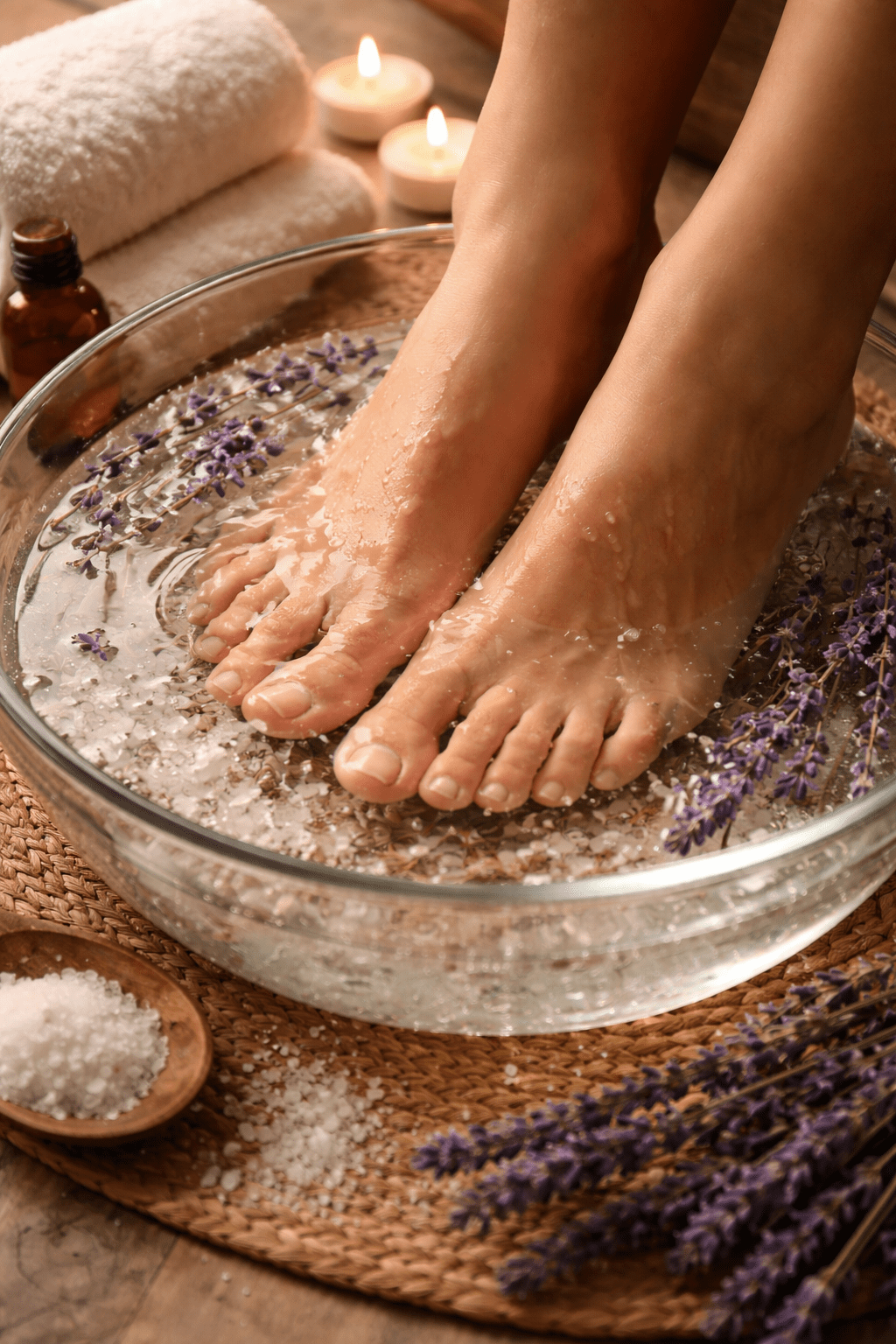
A DIY foot soak recipe works because warm water increases circulation and softens skin, while added ingredients target specific problems like soreness, odor, or dryness. The science is straightforward: magnesium in Epsom salt absorbs through the skin, and a 2005 study documented that participants who soaked in magnesium-rich water showed improved skin hydration and reduced roughness [4].
Beyond the chemistry, foot soaks are simply a practical, low-cost self-care habit. You don’t need a spa appointment or expensive products. A basin, some warm water, and a handful of ingredients from your kitchen or natural health store are all it takes.
Who benefits most:
- People who stand or walk for long hours at work
- Anyone dealing with dry, cracked heels
- Those with mild foot odor or athlete’s foot concerns
- Anyone who wants a simple wind-down ritual at the end of the day
What Ingredients Do You Need for a DIY Foot Soak Recipe?
The core ingredients for most homemade foot soaks fall into a few categories. You don’t need all of them at once — pick based on your goal.
| Ingredient | Best For | Amount Per Soak |
|---|---|---|
| Epsom salt | Soreness, softening skin | ½ to 1 cup |
| Apple cider vinegar | Odor, calluses, pH balance | 3 to 6 cups |
| Baking soda | Dry skin, odor neutralizing | 2 to 3 tablespoons |
| Tea tree oil | Antifungal, antibacterial | 8 to 10 drops |
| Lavender oil | Relaxation, mild antiseptic | 5 to 8 drops |
| Peppermint oil | Cooling, invigorating | 5 to 8 drops |
| Coconut oil | Moisturizing | 1 to 2 tablespoons |
| Honey | Softening, antibacterial | ¼ cup |
| Dried rosemary/sage | Odor control, antibacterial | 1 to 2 teaspoons each |
| Fresh ginger | Circulation, warming | ½ cup grated |
A note on essential oils: Always dilute them in a carrier oil (like coconut oil) before adding to water. Undiluted essential oils can irritate skin, especially if you have sensitive feet [1][2].
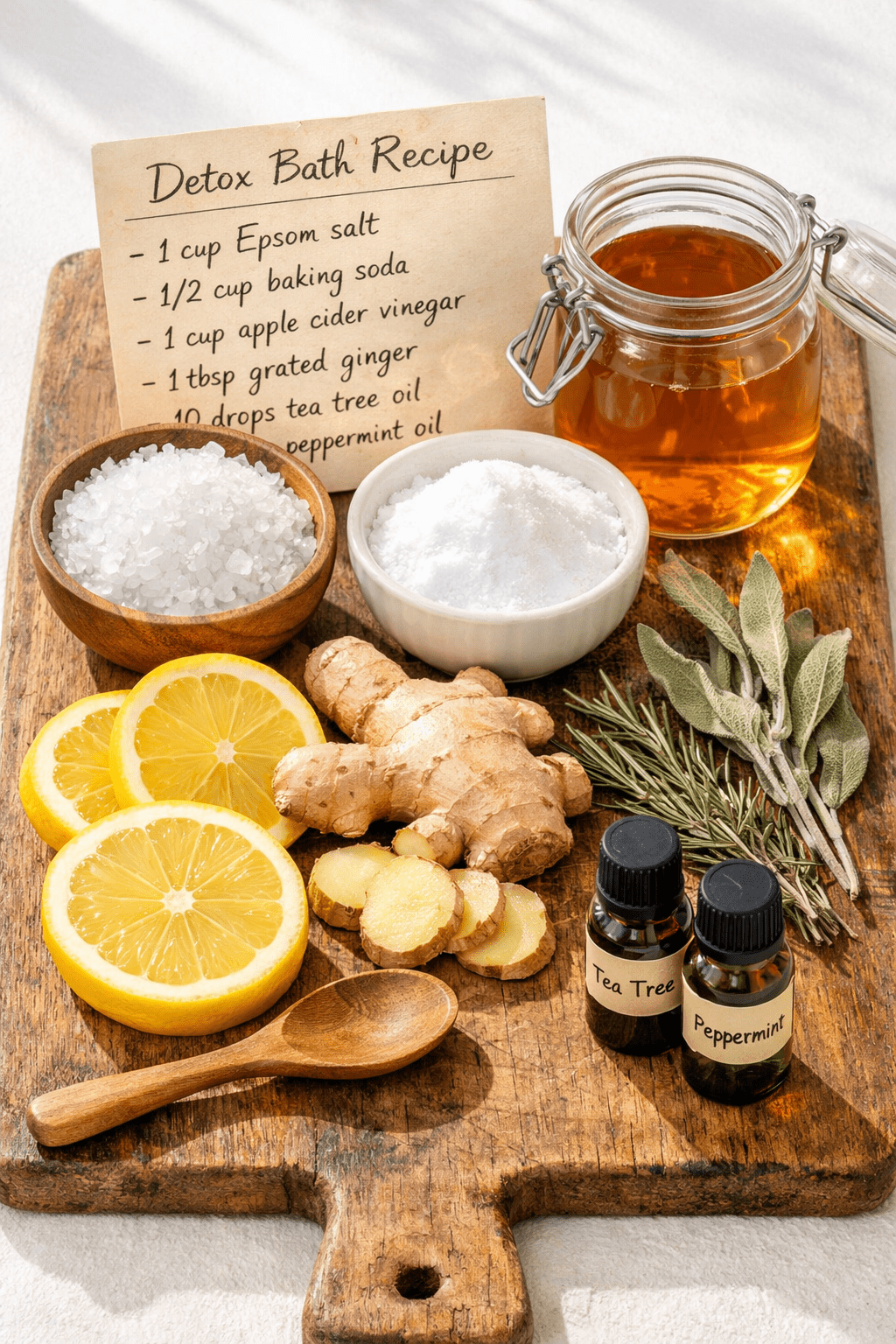
7 DIY Foot Soak Recipes to Try Right Now
Here are seven tested, practical recipes organized by goal. Each one uses simple ingredients and takes under five minutes to prepare.
1. 🧂 Classic Epsom Salt Soak (Best All-Rounder)
Best for: General soreness, post-workout fatigue, everyday tired feet.
Add ½ to 1 cup of Epsom salt to a basin of warm water and stir until dissolved. Soak for 15 to 30 minutes [1][4]. That’s it. This is the foundational DIY foot soak recipe that works for almost everyone.
Optional upgrade: Add 5 drops of lavender oil mixed into 1 teaspoon of coconut oil before adding to the water.
2. 🍎 Apple Cider Vinegar Soak (Best for Odor and Calluses)
Best for: Foot odor, callused skin, mild fungal concerns.
Mix 3 to 6 cups of raw apple cider vinegar with an equal amount of warm water in your basin [2][4][5]. Soak for 15 to 20 minutes. The acetic acid in the vinegar gently exfoliates dead skin and creates an environment where odor-causing bacteria struggle to survive.
Choose this if: Your main concern is smell or rough, thickened skin on your heels.
Common mistake: Using straight vinegar without diluting it. Always mix with equal parts water to avoid skin irritation.
3. 🌿 Antifungal Power Soak (Best for Athlete’s Foot Concerns)
Best for: Fungal issues, bacteria buildup, persistent odor.
Combine in a bowl to make a dry mix:
- 1¼ cups Epsom salt
- ¼ cup sea salt
- 1¼ tablespoons baking soda
- 8 drops each of peppermint, sweet orange, and tea tree essential oils (mixed into 1 tablespoon coconut oil first)
- 10 drops of olive leaf extract
Add ¼ cup of this dry mixture to warm water per soak [1]. Store the rest in a sealed jar for future use.
4. 🍯 Honey and Coconut Milk Soak (Best for Dry, Cracked Heels)
Best for: Severely dry skin, cracked heels, rough patches.
Dissolve 1 cup of honey and 1 cup of coconut milk in warm water, then stir in 1 teaspoon of cinnamon powder [4][5]. Soak for 20 minutes. Honey is naturally antibacterial and draws moisture into the skin, while coconut milk softens and soothes.
Edge case: If you’re allergic to tree nuts, skip the coconut milk and substitute with whole dairy milk or oat milk instead.
5. 🌱 Rosemary and Sage Herbal Soak (Best for Foot Odor)
Best for: Bacteria-caused foot odor, people who prefer fragrance-free synthetic-free options.
Bring 8 cups of water to a boil. Add 1 teaspoon of dried rosemary and 1 to 2 teaspoons of dried sage. Let it steep for 10 minutes, then strain and add to your basin with enough cool water to bring it to a comfortable temperature [3]. Use two to three times weekly for ongoing odor control.
6. 🍋 Lemon and Vinegar Exfoliating Soak (Best for Softening Tough Skin)
Best for: Thick calluses, rough soles, skin that needs a deeper refresh.
Add the juice of 1 to 3 fresh lemons, 1 to 3 cups of apple cider vinegar or white vinegar, and 3 cups of Epsom salt to warm water in your basin [5]. Soak for 15 to 20 minutes. The citric acid from the lemon and acetic acid from the vinegar work together to break down hardened skin cells.
Follow up: After drying your feet, use a pumice stone gently on softened calluses, then apply a natural moisturizer or try a DIY warming muscle rub on sore arches.
7. 🫚 Ginger and Peppermint Invigorating Soak (Best for Circulation and Energy)
Best for: Cold feet, sluggish circulation, that “heavy leg” feeling after a long day.
Grate ½ cup of fresh ginger (or use 2 tablespoons of ground ginger) and add it to warm water along with 5 to 8 drops of peppermint essential oil mixed into 1 teaspoon of coconut oil [4][5]. Stir well. Soak for 15 to 20 minutes. Ginger has warming properties that encourage circulation, while peppermint creates a cooling, tingling sensation that wakes up tired feet.
How to Get the Most Out of Your Homemade Foot Soak
Getting the recipe right is only half the job. How you soak matters just as much.
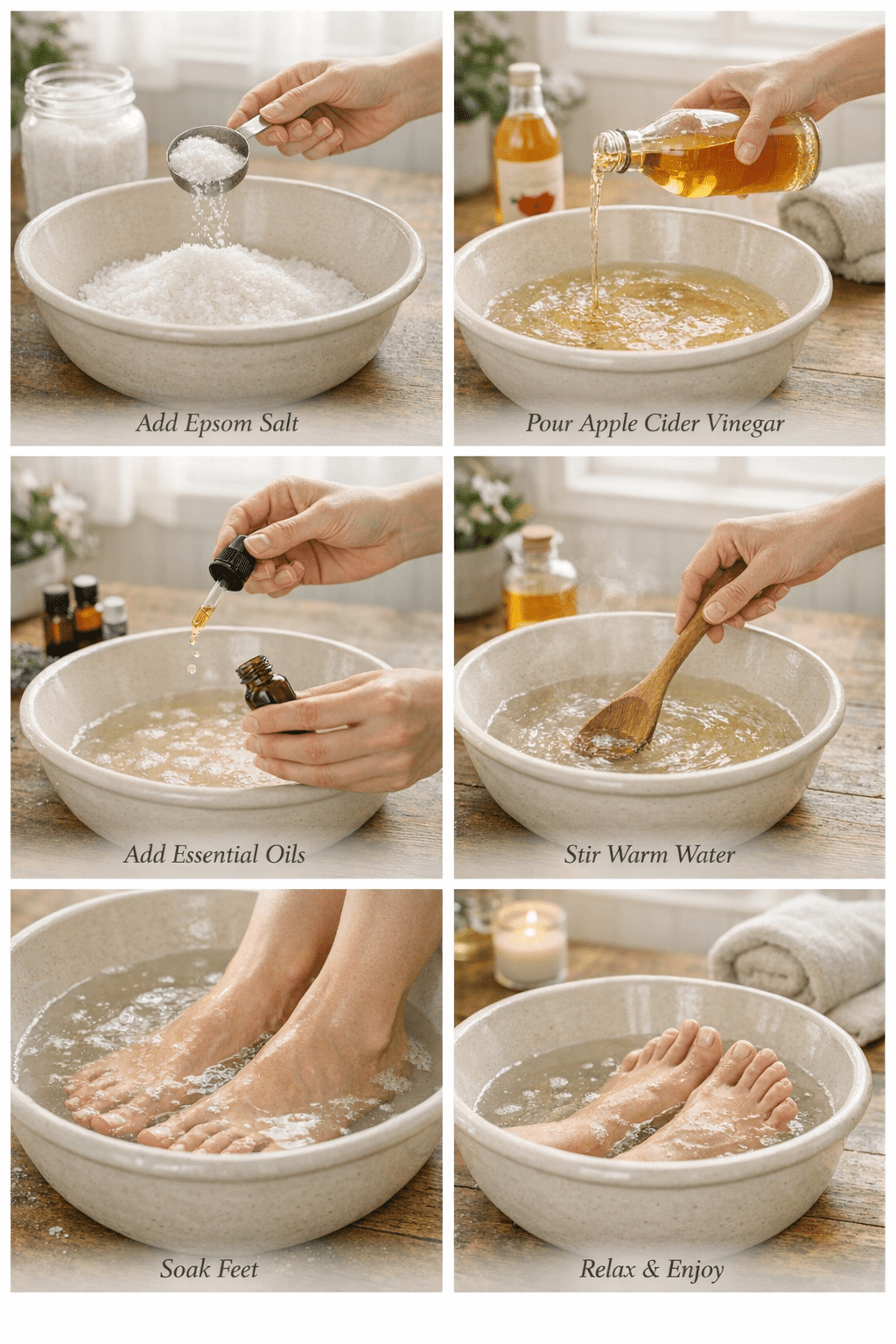
Step-by-step process:
- Prepare your basin. Use a dedicated foot basin, a large mixing bowl, or even a clean plastic storage container. Make sure it’s big enough for both feet.
- Fill with warm water. Aim for a comfortable, not scalding, temperature. Hot water can dry out skin and worsen inflammation [1][5].
- Add your ingredients. Follow the recipe, and always pre-mix essential oils into a carrier oil before adding them to water.
- Soak for 15 to 30 minutes. Set a timer. Less than 15 minutes won’t give ingredients time to work; more than 30 minutes can over-soften skin.
- Rinse with cool water. A cool rinse at the end helps close pores and refresh circulation [1][5].
- Dry thoroughly. Pat dry, especially between toes. Moisture trapped there encourages fungal growth.
- Moisturize immediately. Apply a natural oil or cream while skin is still slightly damp to lock in softness.
If you enjoy making natural remedies at home, you might also like this DIY headache balm recipe for those days when tired feet come with a tension headache, or this natural sinus chest rub recipe for full-body comfort.
Common Mistakes to Avoid With a DIY Foot Soak Recipe
Even simple recipes go wrong when a few key details are missed.
- Using water that’s too hot. It feels good in the moment but strips natural oils and can worsen swelling in already-inflamed feet.
- Skipping the carrier oil with essential oils. Drops of undiluted tea tree or peppermint oil floating in water can cause skin irritation [2].
- Soaking too long. Over 30 minutes can make skin waterlogged and actually harder to moisturize afterward.
- Not drying between toes. This is how fungal infections start.
- Using ACV soaks on broken skin. Apple cider vinegar will sting and can slow healing on open cuts or cracks. Wait until skin is intact.
For more natural self-care ideas, browse the full natural remedies collection or check out this beginner’s guide to natural remedies if you’re just getting started.
FAQ: DIY Foot Soak Recipes
Q: How often should I do a foot soak at home?
Two to three times per week is the standard recommendation for most foot soak recipes [3][4]. Daily soaking can over-soften skin and disrupt its natural barrier.
Q: Can I reuse foot soak water?
No. Always use fresh water for each session. Reused water can harbor bacteria, especially after antifungal or vinegar soaks.
Q: Is Epsom salt the same as regular table salt?
No. Epsom salt is magnesium sulfate, not sodium chloride. They behave differently in water and have different effects on skin and muscles [1][4].
Q: Can I use a DIY foot soak recipe if I have diabetes?
People with diabetes should consult a doctor first. Diabetic neuropathy can reduce foot sensitivity, making it hard to judge water temperature safely, which increases burn risk.
Q: What’s the best foot soak for cracked heels specifically?
The honey and coconut milk soak (Recipe 4) or the lemon and vinegar exfoliating soak (Recipe 6) work best for cracked heels. Follow up with a thick moisturizer immediately after drying [4][5].
Q: Do essential oils actually do anything in a foot soak?
Yes, but the effects are mild. Tea tree oil has documented antifungal properties. Lavender and peppermint provide aromatherapy benefits and a pleasant sensory experience [1][2]. Don’t expect essential oils alone to treat a serious infection.
Q: How long does a dry foot soak mix last in storage?
A dry mix (like the antifungal recipe) stored in a sealed glass jar away from heat and light will stay fresh for two to three months. Essential oils can degrade faster in heat.
Q: Can children use these foot soaks?
Most Epsom salt and herbal soaks are safe for older children. Avoid strong essential oil concentrations for young children, and always test a small area first. Check with a pediatrician if unsure.

Conclusion: Start With One Recipe Tonight
You don’t need to try all seven at once. Pick the recipe that matches your biggest foot complaint right now and give it a go tonight.
- Sore and tired? Start with the classic Epsom salt soak.
- Rough or cracked heels? Go for honey and coconut milk.
- Foot odor issues? Try apple cider vinegar or the rosemary and sage herbal soak.
- Cold feet or poor circulation? The ginger and peppermint soak is your best bet.
The whole process takes under 35 minutes from setup to dry-off, costs almost nothing, and the relief is real. Once you find your favorite combination, it’s easy to make it a regular part of your week.
If you enjoy DIY natural remedies like these, you’ll also love this DIY warming muscle rub for sore legs and this 7 calendula recipes for skin care guide for gentle, plant-based skin healing. And if aches and tension go beyond your feet, the DIY menstrual cramp salve recipes are worth bookmarking too.
Your feet carry you everywhere. Give them a little back. 🌿
References
[1] Foot Soak – https://draxe.com/beauty/foot-soak/
[2] DIY Recipe For Natural Foot Soaks Treatments – https://blog.anodyneshoes.com/diy-recipe-for-natural-foot-soaks-treatments
[3] 3 Homemade Foot Soak Recipes To Fight The Summer Stench – https://www.organicauthority.com/health/3-homemade-foot-soak-recipes-to-fight-the-summer-stench
[4] DIY Foot Soak Recipes – https://blog.homedics.com/relief/diy-foot-soak-recipes/
[5] DIY Foot Soak – https://www.healthline.com/health/diy-foot-soak