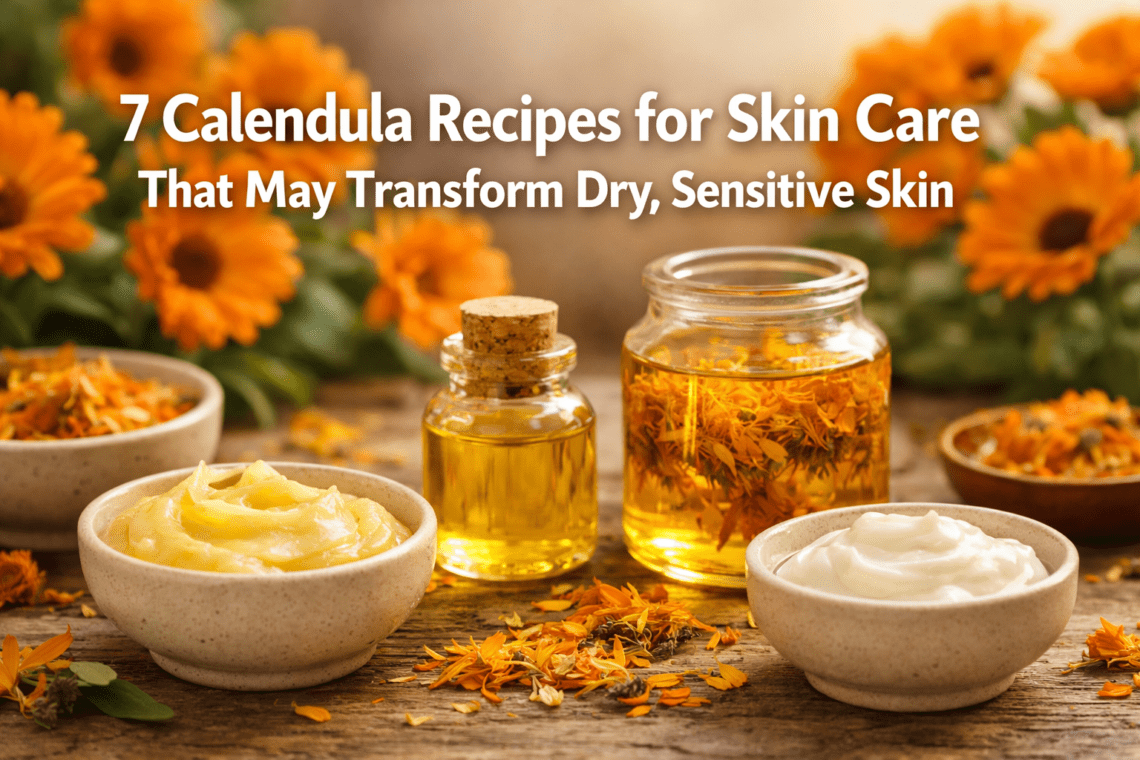
If your skin feels tight, irritated, or constantly dry, calendula might be the gentle botanical solution you’ve been searching for. These calendula recipes for skin care use the bright orange marigold flower to create soothing balms, creams, and oils that calm inflammation and support skin healing.
Key Takeaways
- Calendula-infused oil forms the base for most DIY calendula skincare recipes and takes 2-6 weeks to prepare
- Simple calendula salve requires just two ingredients: calendula oil and beeswax
- Calendula cream combines oil and water phases for a lighter, more absorbent texture than salve
- Face masks with calendula can be made fresh using dried flowers, honey, and yogurt
- Lip balms with calendula provide targeted relief for chapped, sensitive lips
- Always patch-test calendula products before full application, especially if you’re allergic to plants in the Asteraceae family
- Store calendula skincare products in cool, dark places to extend shelf life to 6-12 months
Quick Answer
Calendula recipes for skin care range from simple two-ingredient salves to more complex creams and lotions, all starting with calendula-infused oil. The most beginner-friendly options include calendula salve (oil + beeswax), calendula cream (oil + water + emulsifier), and fresh calendula face masks. These recipes work particularly well for dry, sensitive, or irritated skin because calendula contains compounds that may reduce inflammation and support skin barrier repair.
What Makes Calendula Effective for Dry and Sensitive Skin?
Calendula (Calendula officinalis) contains natural compounds that may help calm irritated skin and support moisture retention. The bright orange petals are rich in flavonoids and triterpenoids, which traditional herbalists have used for centuries to address skin concerns.
For dry skin, calendula works by creating a protective barrier that helps prevent moisture loss while potentially reducing inflammation that can worsen dryness. People with sensitive skin often turn to calendula because it’s generally gentler than many synthetic skincare ingredients.
Choose calendula if:
- You have reactive skin that gets red or irritated easily
- You prefer plant-based skincare ingredients
- Your skin is dry, flaky, or feels tight after cleansing
- You want alternatives to commercial products with long ingredient lists
Common mistake: Expecting immediate results. Calendula works gradually, and you’ll typically notice improvements after consistent use over 1-2 weeks rather than overnight.
How Do You Make Calendula-Infused Oil for Skin Care Recipes?
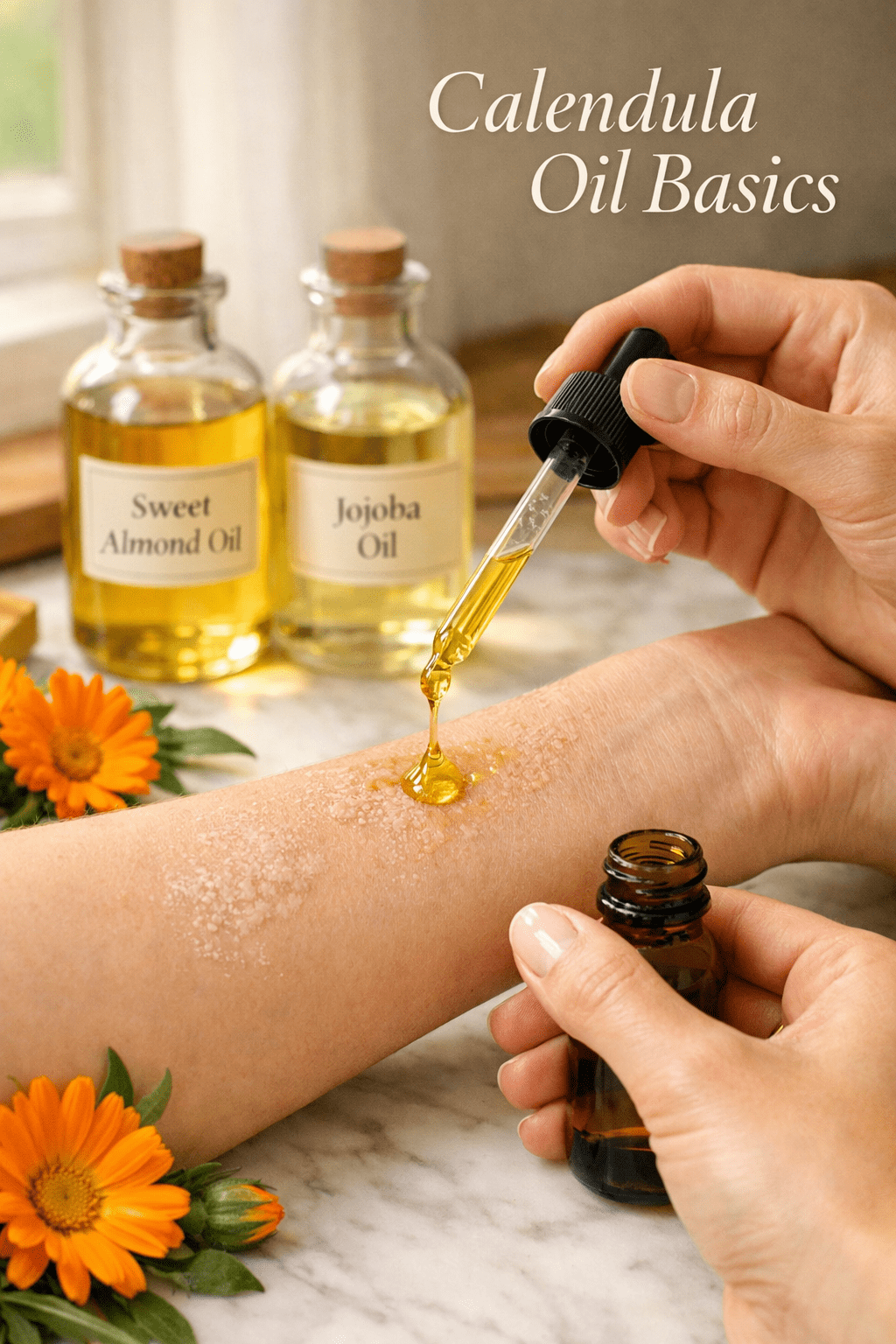
Calendula-infused oil is the foundation for nearly all calendula recipes for skin care. You’ll steep dried calendula flowers in a carrier oil to extract the beneficial compounds, creating a golden oil you can use alone or in other recipes.
Basic calendula oil method:
- Fill a clean, dry glass jar about halfway with dried calendula flowers [3]
- Pour your chosen carrier oil (sweet almond, jojoba, or olive oil) over the flowers until they’re completely covered
- Stir gently to release air bubbles
- Seal the jar and place it in a sunny windowsill for 2-6 weeks, shaking daily
- Strain through cheesecloth, squeezing flowers to extract all oil
- Store in a dark glass bottle away from heat and light
Quick method: Use a double boiler to gently heat the oil and flowers on low for 1-2 hours, then strain [1]. This produces usable oil the same day but may be slightly less potent than the traditional method.
The oil should turn a golden-yellow to amber color. If it stays pale, your flowers may have been old or the infusion time was too short.
Edge case: If you live in a humid climate, the traditional sunny windowsill method risks introducing moisture that can spoil your oil. In this case, use the gentle heat method instead or add a few grains of rice to the jar to absorb excess moisture.
For more DIY skincare techniques, check out our complete guide to DIY skincare.
What Are the Best Calendula Recipes for Skin Care Beginners?
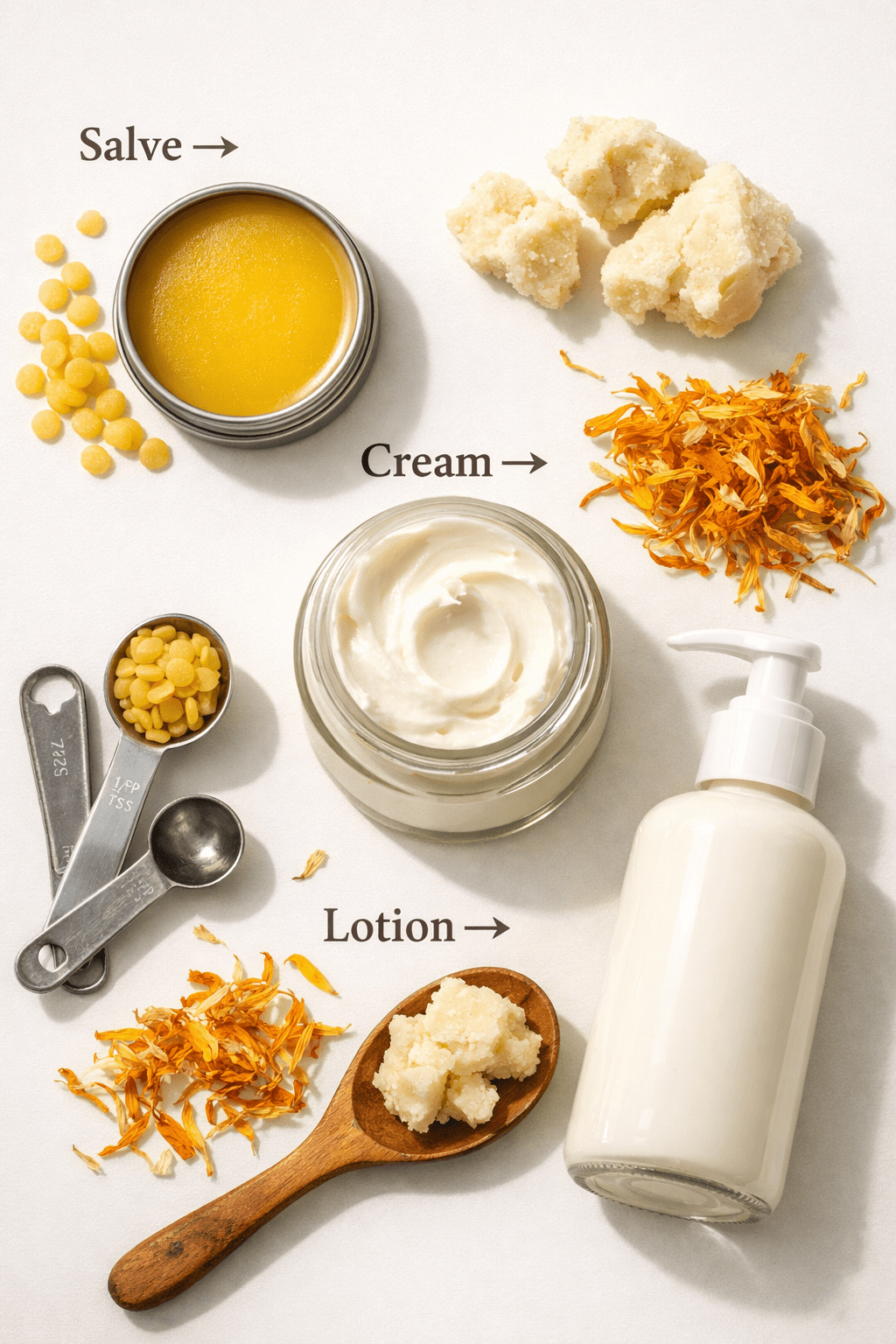
Starting with simple recipes helps you learn the basics before moving to more complex formulations. These three calendula recipes for skin care require minimal ingredients and equipment.
Calendula Salve (Two Ingredients)
The simplest calendula recipe combines infused oil with beeswax to create a protective balm [4].
Ingredients:
- 1 cup calendula-infused oil
- 2-3 tablespoons beeswax (use more for firmer salve, less for softer)
Instructions:
- Melt beeswax in a double boiler
- Add calendula oil and stir until combined
- Test consistency by placing a spoonful on a cold plate
- Pour into tins or jars before it hardens
- Let cool completely before capping
This salve works well for extremely dry patches, cracked heels, or as a protective barrier on wind-chapped skin.
Calendula Cream for Daily Use
Calendula cream has a lighter texture than salve because it incorporates water, making it absorb faster [2][5].
Ingredients:
- ½ cup calendula-infused oil
- ¼ cup coconut oil or shea butter
- 2 tablespoons beeswax
- ½ cup distilled water or hydrosol
- 1 tablespoon emulsifying wax
Instructions:
- Heat oil phase (calendula oil, coconut oil, beeswax, emulsifying wax) in double boiler until melted
- Heat water phase (distilled water) to same temperature (around 160°F)
- Slowly pour water into oils while blending with immersion blender
- Continue blending for 2-3 minutes until thick and creamy
- Pour into jars while still warm
The emulsifying wax helps oil and water combine into a stable cream. Without it, the mixture will separate.
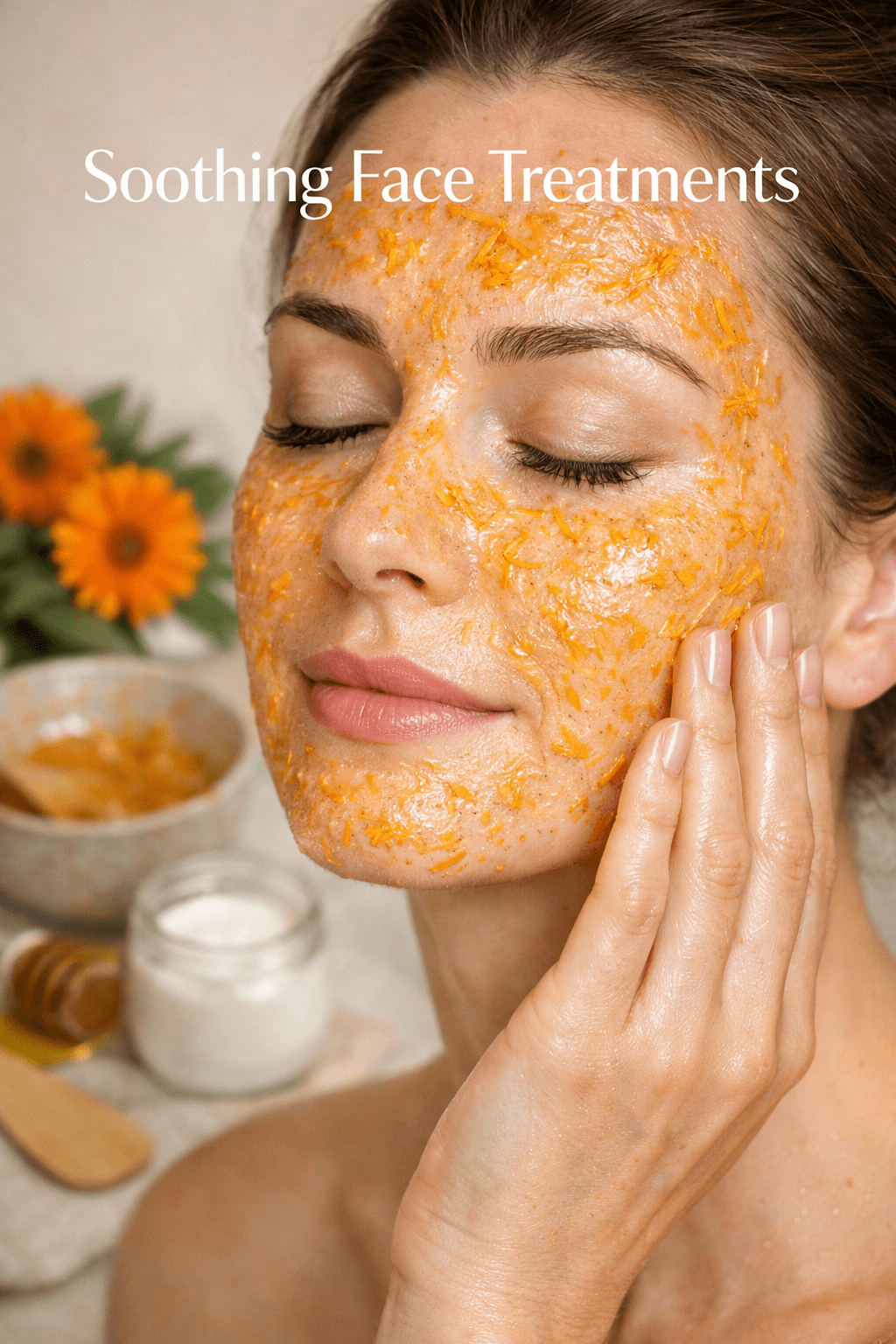
Calendula Face Mask (Fresh Recipe)
Unlike oils and creams, this mask is made fresh each time and used immediately [1].
Ingredients:
- 1 tablespoon finely ground dried calendula flowers
- 1 tablespoon plain yogurt
- 1 teaspoon raw honey
- Optional: ½ teaspoon calendula-infused oil
Instructions:
- Mix all ingredients in a small bowl
- Apply to clean, damp face
- Leave on for 15-20 minutes
- Rinse with lukewarm water
This works well for sensitive skin that needs gentle exfoliation and hydration. The yogurt provides lactic acid for mild exfoliation, honey adds moisture, and calendula soothes irritation.
You might also enjoy our DIY face masks for glowing skin for more recipe ideas.
How Do You Make Calendula Lotion for Sensitive Skin?
Calendula lotion has an even lighter texture than cream, making it ideal for daily all-over body use [6]. It absorbs quickly without leaving a greasy residue.
Ingredients:
- ¾ cup calendula-infused oil
- ¼ cup light carrier oil (like grapeseed or apricot kernel)
- 3 tablespoons emulsifying wax
- 1 cup distilled water or aloe vera juice
- Optional: 10-15 drops essential oil (lavender or chamomile work well)
- Optional: ½ teaspoon vitamin E oil as preservative
Instructions:
- Combine calendula oil, light carrier oil, and emulsifying wax in double boiler
- Heat until wax melts completely (around 160°F)
- Heat water phase separately to same temperature
- Remove both from heat
- Pour water into oils in slow, steady stream while blending
- Blend for 3-4 minutes until mixture thickens and cools slightly
- Add essential oils and vitamin E if using
- Pour into pump bottles or jars
The higher water content makes lotion less stable than salve, so it’s best stored in the refrigerator and used within 2-3 weeks unless you add a preservative.
Choose lotion over cream if: You want something that absorbs quickly, you’re making a product for warmer weather, or you prefer pump bottles over jars.
What’s the Best Calendula Recipe for Extremely Dry Skin?
For severely dry or cracked skin, calendula body butter provides intense moisture with a rich, whipped texture.
Calendula Body Butter Recipe:
Ingredients:
- ½ cup calendula-infused oil
- ½ cup shea butter
- ¼ cup cocoa butter or mango butter
- 2 tablespoons coconut oil
- Optional: 15 drops essential oil
Instructions:
- Melt all butters and oils together in double boiler
- Pour into mixing bowl and refrigerate until solid around edges but soft in center (about 1 hour)
- Whip with electric mixer for 5-7 minutes until fluffy and light
- Add essential oils in final minute of whipping
- Spoon into jars
This creates a thick, luxurious texture that melts on contact with skin. It’s especially good for elbows, knees, heels, and hands exposed to harsh weather or frequent washing.
Storage tip: Body butter can melt in warm temperatures. If it does, simply re-refrigerate and whip again.
For other natural approaches to skin care, explore our natural remedies guide for beginners.
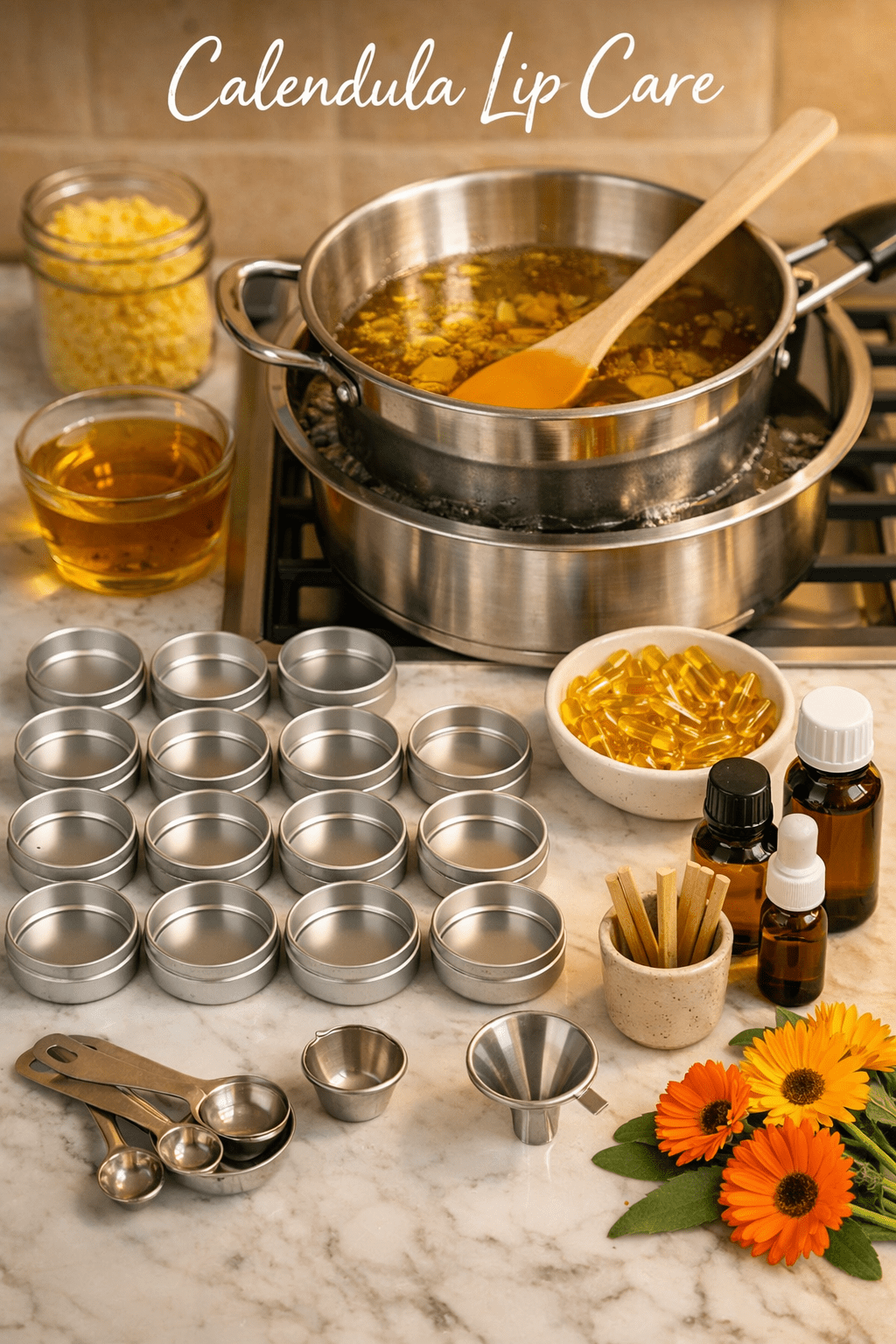
How Do You Make Calendula Lip Balm?
Calendula lip balm provides targeted relief for chapped, sensitive lips using a firmer version of the basic salve recipe [8][9].
Ingredients:
- ¼ cup calendula-infused oil
- 2 tablespoons beeswax (or candelilla wax for vegan option)
- 1 tablespoon cocoa butter or shea butter
- Optional: 5 drops peppermint or vanilla essential oil
Instructions:
- Melt beeswax and cocoa butter in double boiler
- Add calendula oil and stir well
- Remove from heat and add essential oil if using
- Quickly pour into lip balm tubes or small tins
- Let cool completely before capping (about 30 minutes)
The higher beeswax ratio creates a firmer product that won’t melt in your pocket. This recipe makes about 8-10 standard lip balm tubes.
Common mistake: Pouring too slowly. Lip balm mixture starts hardening quickly, so work fast when filling tubes. If it hardens before you finish, simply reheat gently.
What Ingredients Pair Well with Calendula in Skin Care Recipes?
Calendula works synergistically with other natural ingredients to enhance its skin-soothing properties.
Best ingredient combinations:
| Ingredient | Benefit | Best for |
|---|---|---|
| Chamomile | Additional anti-inflammatory support | Sensitive, reactive skin |
| Lavender | Calming scent, may support healing | Irritated skin, stress-related skin issues |
| Aloe vera | Extra hydration, cooling effect | Sunburn, dry patches |
| Honey | Antibacterial, humectant properties | Acne-prone dry skin |
| Oatmeal | Gentle exfoliation, itch relief | Eczema, very dry skin |
| Vitamin E | Antioxidant, extends shelf life | Mature skin, product preservation |
You can infuse oils with both calendula and chamomile together, or add aloe vera juice as the water phase in creams and lotions. Honey works beautifully in fresh face masks alongside calendula.
Avoid combining with: Harsh acids or retinoids in the same application, as these can overwhelm sensitive skin even when calendula is present.
If you’re interested in combining herbs, our anti-aging face mask guide offers additional ingredient ideas.
How Should You Store and Use Calendula Skin Care Products?
Proper storage extends the life of your calendula recipes for skin care and maintains their effectiveness.
Storage guidelines:
- Salves and balms: Store in cool, dark place for 12+ months [4]
- Creams and lotions: Refrigerate if no preservative; use within 2-3 weeks. With preservative, store in cool place for 3-6 months
- Fresh masks: Make only what you’ll use immediately; don’t store
- Infused oils: Dark glass bottles in cool, dark location for 6-12 months
- Lip balms: Room temperature in tubes or tins for 12+ months
Usage tips:
- Apply calendula salve to damp skin for better absorption
- Use creams and lotions within 5 minutes after showering when skin is most receptive
- Patch-test new recipes on inner forearm before applying to face
- Start with once-daily application and increase if skin responds well
Signs your product has gone bad:
- Rancid or off smell (should smell mildly herbal or like the carrier oil)
- Mold growth (especially in creams/lotions)
- Separation that won’t re-blend
- Color change to dark brown or gray
When in doubt, make fresh batches. The ingredients are inexpensive enough that it’s not worth risking skin irritation from spoiled products.
Who Should Avoid Calendula Skin Care?
While calendula is generally gentle, it’s not suitable for everyone.
Avoid calendula if you:
- Have known allergies to plants in the Asteraceae/Compositae family (ragweed, chrysanthemums, marigolds, daisies)
- Are pregnant or breastfeeding without consulting your healthcare provider first
- Have open wounds or deep cuts (surface scratches are usually fine)
- Are taking certain medications that may interact with topical herbs
Patch test protocol:
- Apply a small amount of your calendula product to inner forearm
- Cover with bandage
- Wait 24-48 hours
- Check for redness, itching, swelling, or irritation
- If any reaction occurs, don’t use the product
Most people tolerate calendula well, but individual reactions vary. If you notice any irritation during regular use, discontinue and consult a dermatologist.
Edge case: Some people react to the carrier oil rather than the calendula itself. If you have a reaction, try switching carrier oils (for example, from almond to jojoba) before abandoning calendula entirely.
FAQ
How long does it take to see results from calendula skin care?
Most people notice softer, calmer skin within 3-7 days of consistent use. For more significant improvements in chronic dryness or sensitivity, expect 2-4 weeks of daily application.
Can I use fresh calendula flowers instead of dried?
Fresh flowers contain moisture that can cause oil infusions to spoil and develop mold. Always use completely dried flowers for infused oils, salves, and creams. Fresh flowers work only in masks used immediately.
What’s the best carrier oil for calendula infusions?
Sweet almond oil and jojoba oil are excellent choices because they’re stable, absorb well, and suit most skin types. Olive oil works but has a stronger scent. Avoid oils that go rancid quickly like flaxseed oil.
Is calendula safe for babies and children?
Calendula is generally considered safe for children over 2 years old when properly diluted and patch-tested first. For babies under 2, consult a pediatrician before use. Never use essential oils in products for babies.
Can I add preservatives to extend shelf life?
Yes, natural preservatives like Leucidal Liquid or Optiphen can extend cream and lotion shelf life to 3-6 months. Follow manufacturer guidelines for proper usage rates (typically 0.5-1% of total recipe).
Why did my calendula cream separate?
Separation happens when oil and water phases aren’t the same temperature when combined, you didn’t use enough emulsifying wax, or you didn’t blend long enough. Reheat both phases to 160°F and try again.
Can calendula help with eczema or psoriasis?
Some people find calendula helpful for managing mild eczema symptoms, but it’s not a cure. For diagnosed skin conditions, use calendula as a complementary approach alongside medical treatment, not as a replacement.
How much calendula oil should I use on my face?
Start with 3-4 drops for your entire face and neck. Calendula oil is concentrated, so a little goes a long way. Apply to damp skin for better absorption.
Can I use calendula products with other skincare ingredients?
Yes, calendula generally works well with other gentle ingredients. Avoid using immediately before or after harsh exfoliants, retinoids, or acids, as your skin may be more sensitive.
Where can I buy dried calendula flowers?
Look for organic dried calendula at health food stores, herb shops, or online retailers specializing in bulk herbs. Make sure they’re bright orange and recently dried for best potency.
Do calendula products need to be refrigerated?
Oil-based products (salves, balms, body butter) don’t require refrigeration. Creams and lotions without preservatives should be refrigerated and used within 2-3 weeks to prevent bacterial growth.
Can I grow my own calendula for skin care?
Absolutely! Calendula is easy to grow from seed and thrives in most climates. Harvest flowers when fully open, dry them completely in a dark, well-ventilated space, then store in airtight containers until ready to use.
Conclusion
These seven calendula recipes for skin care offer natural, customizable options for addressing dry and sensitive skin. Starting with a simple calendula-infused oil, you can create everything from protective salves to lightweight lotions tailored to your specific needs.
The beauty of making your own calendula skincare products is complete control over ingredients. You know exactly what’s going onto your skin, and you can adjust recipes based on how your skin responds.
Your next steps:
- Start with calendula-infused oil using the method that fits your timeline
- Choose one simple recipe (salve or face mask) to test how your skin responds
- Patch-test before full application
- Keep notes on what works well for your skin type
- Gradually experiment with more complex recipes as you gain confidence
Remember that natural skincare works gradually. Give each recipe at least 2 weeks of consistent use before deciding if it’s right for you. Your skin will tell you what it needs.
For more natural skincare inspiration, explore our collection of DIY skincare recipes and discover other plant-based approaches to healthy skin.
References
[1] Calendula Infused Oil Skin Care Recipes – https://alifeadjacent.com/calendula-infused-oil-skin-care-recipes/
[2] How To Make Calendula Cream – https://www.growforagecookferment.com/how-to-make-calendula-cream/
[3] How To Make Calendula Oil – https://lovelygreens.com/how-to-make-calendula-oil/
[4] Homemade Calendula Salve Recipe – https://homesteadandchill.com/homemade-calendula-salve-recipe/
[5] Calendula Cream – https://www.outdoorapothecary.com/calendula-cream/
[6] Calendula Lotion – https://www.learningherbs.com/blog/calendula-lotion
[8] Calendula Lip Balm Recipe – https://woodlarkblog.com/calendula-lip-balm-recipe/
[9] Simple Calendula Salve And Lip Balm Recipe – https://blog.mountainroseherbs.com/simple-calendula-salve-and-lip-balm-recipe