
Quick Answer
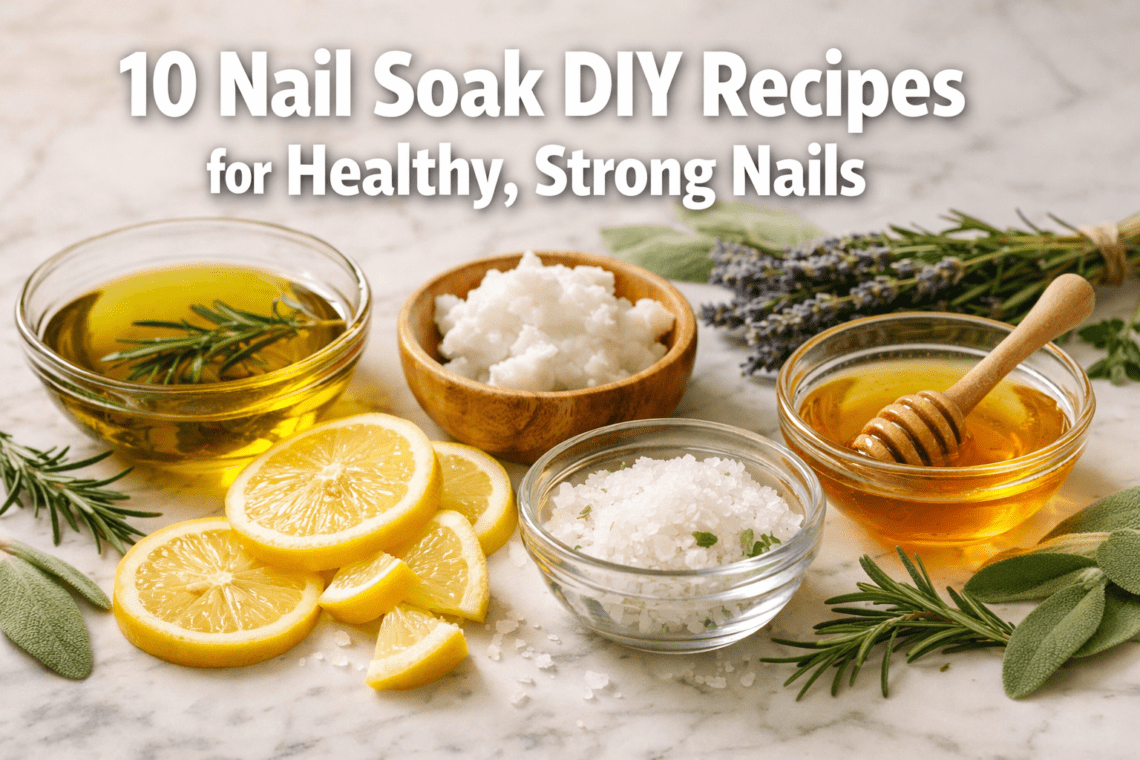
You can strengthen, brighten, and nourish your nails at home using simple kitchen ingredients like olive oil, lemon juice, honey, and coconut oil. The best nail soak DIY recipes take 10 to 20 minutes and cost a fraction of a salon treatment. Most people see noticeable improvement in nail texture and strength within two to four weeks of regular use.
Key Takeaways
- 10 to 20 minutes is the ideal soaking time to deliver nutrients to nails and cuticles [3]
- Olive oil and lemon juice is one of the simplest and most effective daily soak combos for nail growth [5]
- Baking soda and hydrogen peroxide soaks remove yellowing and stains without harsh chemicals [1]
- Coconut oil and honey soaks can double as an overnight treatment when worn with cotton gloves [5]
- Green tea soaks deliver antioxidants that support nail strength and healthy growth [4]
- Herbal soaks using lavender and rosemary combine antibacterial and moisturizing benefits [1]
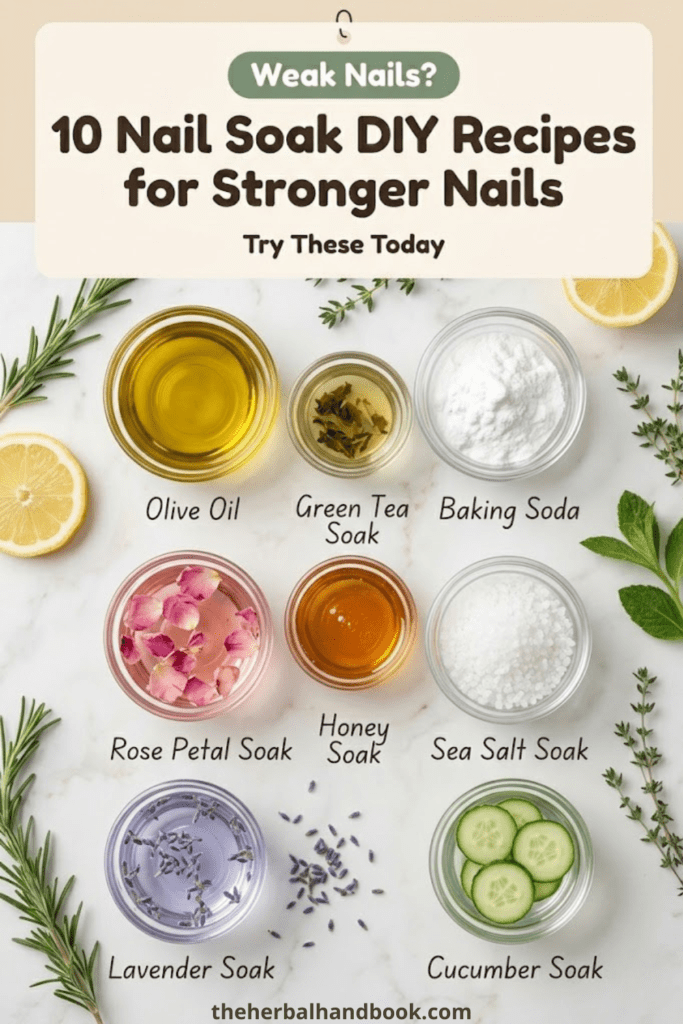
- Most DIY nail soak recipes use ingredients you likely already have at home
- Consistency matters more than any single recipe — aim for 2 to 3 soaks per week
- Always moisturize after soaking to lock in hydration
- Skip hydrogen peroxide soaks if your skin is sensitive or you have open cuts near the nails
Why Are DIY Nail Soaks Worth Trying in 2026?
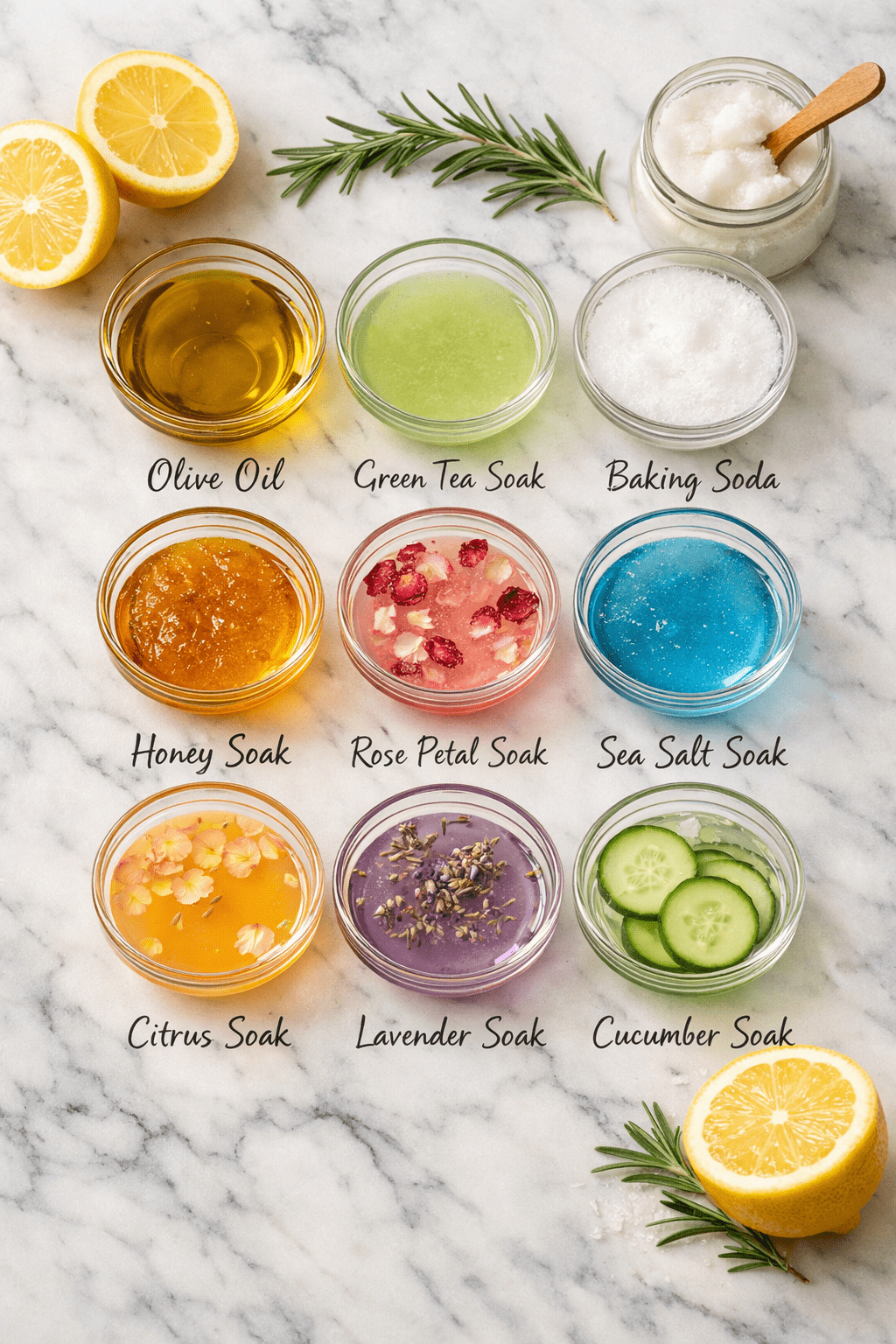
DIY nail soaks are a practical, affordable alternative to salon manicures for anyone who wants healthier nails without the cost or chemicals. A single salon nail treatment can run $30 to $80, while most nail soak DIY recipes cost under $2 per session using pantry staples.
Beyond cost, homemade soaks let you control exactly what goes on your skin. Many commercial nail products contain formaldehyde, toluene, and DBP (dibutyl phthalate), which some people prefer to avoid. Natural soaks made from oils, herbs, and food-grade ingredients are gentler and still genuinely effective for hydration, strengthening, and brightening.
Who benefits most:
- People with dry, brittle, or peeling nails
- Anyone recovering from gel or acrylic nail damage
- Those with sensitive skin who react to salon products
- Budget-conscious people who want a regular nail care routine
“Nail soaks are most effective when nails are submerged for 10 to 20 minutes — long enough to deliver essential nutrients and promote hydration.” [3]
The 10 Best Nail Soak DIY Recipes
Here are 10 tried-and-tested recipes, each targeting a specific nail concern. Choose based on what your nails need most right now.
Recipe 1: Nail Growth Soak (Olive Oil + Coconut Oil Blend)
Best for: Slow-growing, dull nails that need an overall boost.
Mix together:
- ½ cup warm olive oil
- 1 tablespoon coconut oil
- 1 teaspoon honey
- 1 teaspoon lemon juice
- 3 to 4 drops rosemary essential oil (optional)
Soak nails for 10 to 15 minutes. This blend hydrates, strengthens, and brightens nails while the rosemary provides mild antibacterial protection [1]. Massage any leftover oil into your cuticles before rinsing.
Recipe 2: Olive Oil and Lemon Daily Soak
Best for: People who want a simple, everyday strengthening routine.
Mix:
- 3 tablespoons olive oil
- 1 tablespoon fresh lemon juice
Soak for 10 minutes daily. Used consistently for about one month, this combination is linked to stronger nails and faster growth [5]. It’s the easiest recipe on this list and works well as a starting point if you’re new to nail soaks.
Recipe 3: Cuticle-Focused Hydration Soak
Best for: Dry, cracked cuticles and brittle nails prone to breakage.
Mix:
- ½ cup warm water
- 1 teaspoon olive oil
- 1 teaspoon honey
- A few drops of fresh lemon juice
Soak for 10 to 15 minutes. The warm water opens the nail bed, while honey and olive oil lock in moisture and help prevent infections [1]. This is a good weekly maintenance soak even when your nails are in decent shape.
Recipe 4: Herbal Strengthening Soak (Lavender and Rosemary)
Best for: Nails that are weak and prone to splitting, especially after gel removal.
Steep 1 teaspoon dried lavender buds and ½ teaspoon dried rosemary in 1 cup hot water for 15 to 20 minutes. Strain, then add:
- 1 teaspoon fresh lemon juice
- 1 teaspoon olive oil
- 4 drops vitamin E oil
Let the liquid cool to a comfortable temperature, then soak for 5 to 10 minutes [1]. Lavender is calming and antibacterial; rosemary stimulates circulation in the nail bed. If you enjoy herbal remedies, you might also like these DIY foot soak recipes for tired, achy feet that use similar ingredients.
Recipe 5: Nail Whitening Soak (Baking Soda + Hydrogen Peroxide)
Best for: Stained or yellowed nails from dark polish or smoking.
Mix:
- 1 cup warm water
- 2 tablespoons baking soda
- 1 tablespoon hydrogen peroxide (3% solution)
- 1 tablespoon fresh lemon juice
Soak for 10 to 15 minutes [1]. The baking soda gently exfoliates while the hydrogen peroxide lifts stains. Use this soak no more than once a week — overuse can dry out nails and surrounding skin.
⚠️ Skip this one if you have cuts, hangnails, or sensitive skin around your fingers.
Recipe 6: Protein-Rich Egg Yolk Soak
Best for: Severely damaged, fragile nails that need deep nourishment.
Mix:
- 1 teaspoon honey
- 1 teaspoon olive oil
- 1 egg yolk
Whisk together and soak nails for at least 30 minutes [2]. The egg yolk provides natural protein and biotin, while honey and olive oil add moisture. This is a richer, more intensive treatment — think of it as a deep conditioning mask for your nails.
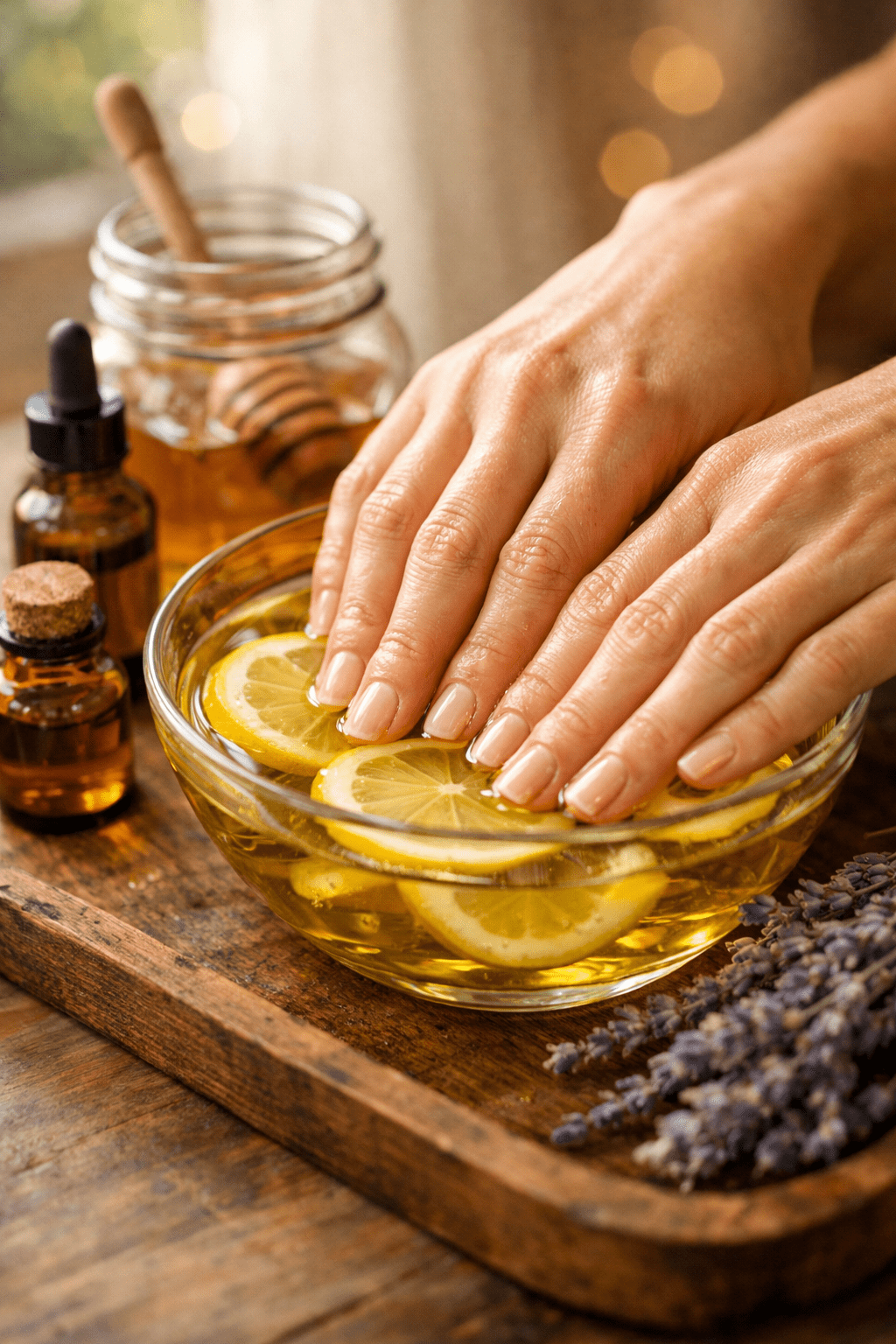
Recipe 7: Coconut Oil and Honey Overnight Treatment
Best for: Extremely dry nails and cuticles, especially in winter.
Warm together in the microwave for 20 seconds:
- 3 teaspoons coconut oil
- 1 teaspoon honey
Soak nails for 10 minutes, or apply generously and wear cotton gloves overnight for a deeper treatment [5]. Used daily for about one month, this is one of the most effective nail soak DIY recipes for restoring moisture to nails damaged by cold weather or harsh soaps.
Recipe 8: Green Tea Antioxidant Soak
Best for: Nails that need strengthening and protection from environmental damage.
Brew 2 green tea bags in 1 cup of hot water. Let cool to room temperature, then soak nails for 10 to 15 minutes [4]. Green tea contains antioxidants (especially EGCG) that may help protect nail cells from oxidative stress. This is one of the gentlest soaks on the list — suitable for daily use and sensitive skin.
Recipe 9: Nourishing Three-Oil Blend
Best for: General maintenance and anyone who wants a simple, no-fuss weekly soak.
Mix equal parts:
- Olive oil
- Coconut oil
- Honey
Combine in a small bowl and soak nails for 10 to 15 minutes, then massage the remaining blend into your nails and cuticles [4]. No water needed. This is a great weekend ritual soak — pair it with something relaxing while you wait.
Recipe 10: Ginger Ale Quick Soak
Best for: When you’re short on time or ingredients and want a quick strengthening fix.
Pour ginger ale into a small bowl and soak nails for 10 to 15 minutes [2]. The carbonation and natural ginger compounds may help strengthen nails temporarily. It sounds unusual, but it’s a surprisingly accessible option when your pantry is bare. Use it as a last-resort soak rather than a primary treatment.
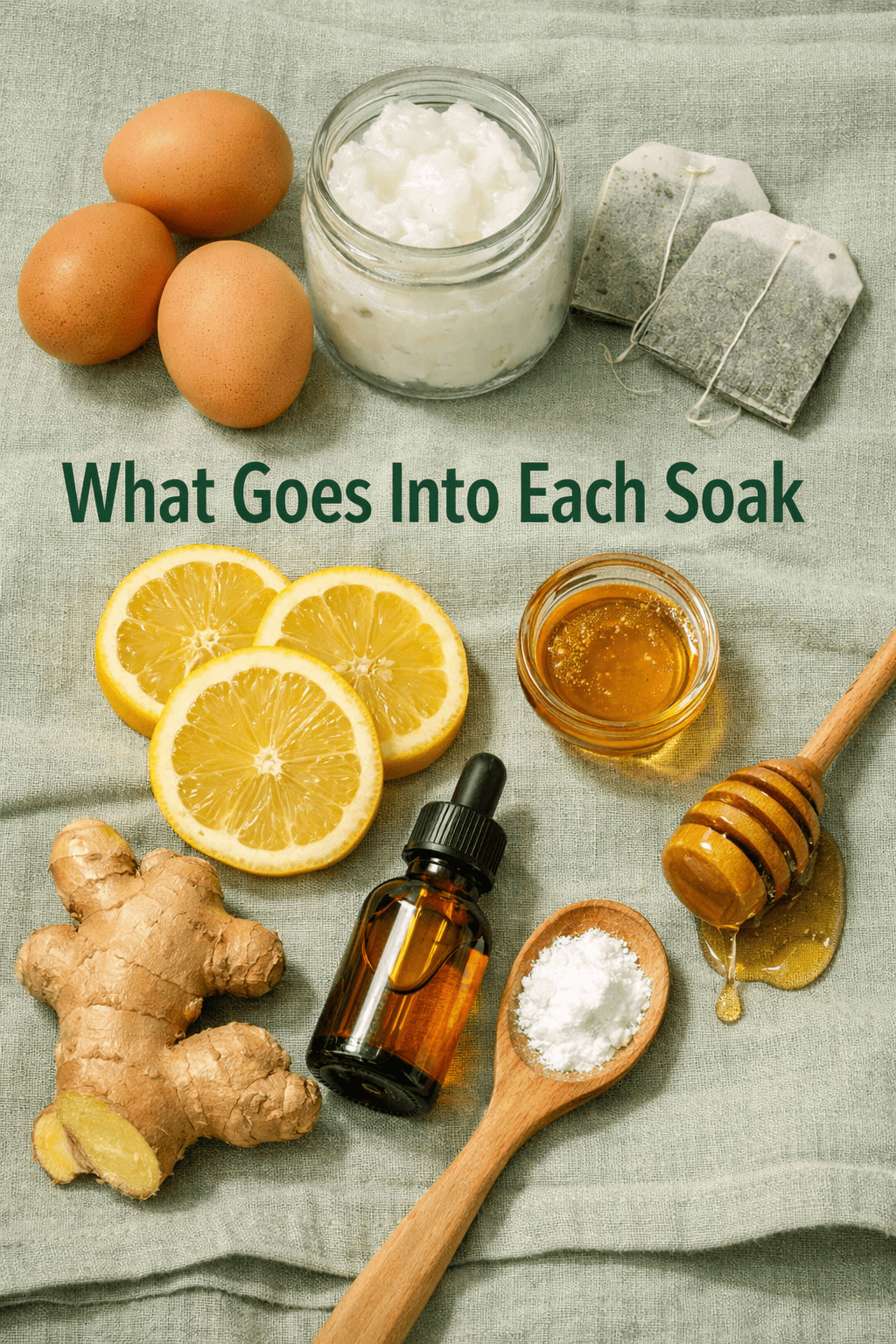
Quick Comparison: Which Nail Soak DIY Recipe Should You Use?
| Recipe | Best For | Time | Frequency |
|---|---|---|---|
| Olive Oil + Lemon | Daily strengthening | 10 min | Daily |
| Nail Growth Blend | Overall nail health | 10–15 min | 3x per week |
| Cuticle Hydration Soak | Dry cuticles | 10–15 min | Weekly |
| Herbal Lavender Soak | Weak, splitting nails | 5–10 min | 2x per week |
| Whitening Soak | Stained/yellow nails | 10–15 min | Once a week max |
| Egg Yolk Soak | Severely damaged nails | 30 min | Once a week |
| Coconut Oil Overnight | Extreme dryness | 10 min or overnight | Daily |
| Green Tea Soak | Sensitive nails | 10–15 min | Daily |
| Three-Oil Blend | General maintenance | 10–15 min | Weekly |
| Ginger Ale Soak | Quick fix | 10–15 min | As needed |
How Often Should You Do Nail Soak DIY Recipes?
Most people get the best results soaking 2 to 3 times per week. Daily soaks work well for gentle recipes like olive oil and lemon or green tea, but stronger soaks (especially the whitening recipe) should be limited to once a week to avoid over-drying.
General schedule that works for most people:
- Monday/Wednesday/Friday: Olive oil and lemon or green tea soak (10 minutes)
- Sunday: One intensive soak (egg yolk, herbal, or three-oil blend)
- As needed: Whitening soak when staining appears
Consistency matters more than which recipe you pick. Two to four weeks of regular soaking is usually when people notice real improvement in nail flexibility and strength [5].
Common Mistakes to Avoid With DIY Nail Soaks
Even simple recipes can backfire if you skip a few basics.
- Using water that’s too hot: Hot water can actually dry out nails by stripping natural oils. Aim for warm, comfortable — not scalding.
- Skipping moisturizer after soaking: Always apply a cuticle oil or hand cream immediately after patting dry. Soaking opens the nail bed, and moisturizer seals in the benefits.
- Overdoing the whitening soak: Hydrogen peroxide is effective but drying. Once a week is plenty [1].
- Expecting overnight results: Nails grow slowly (roughly 3mm per month on average). Give any routine at least 3 to 4 weeks before judging results.
- Soaking broken skin: If you have cuts, cracked cuticles, or hangnails, skip acidic or peroxide-based soaks until healed.
If you enjoy making your own natural care products, you might also want to explore this DIY hair mask with coconut milk for dry, frizzy hair — many of the same nourishing ingredients work beautifully for hair too. And for a complete skin-softening routine, this DIY vanilla sugar scrub recipe pairs well with your nail care days.
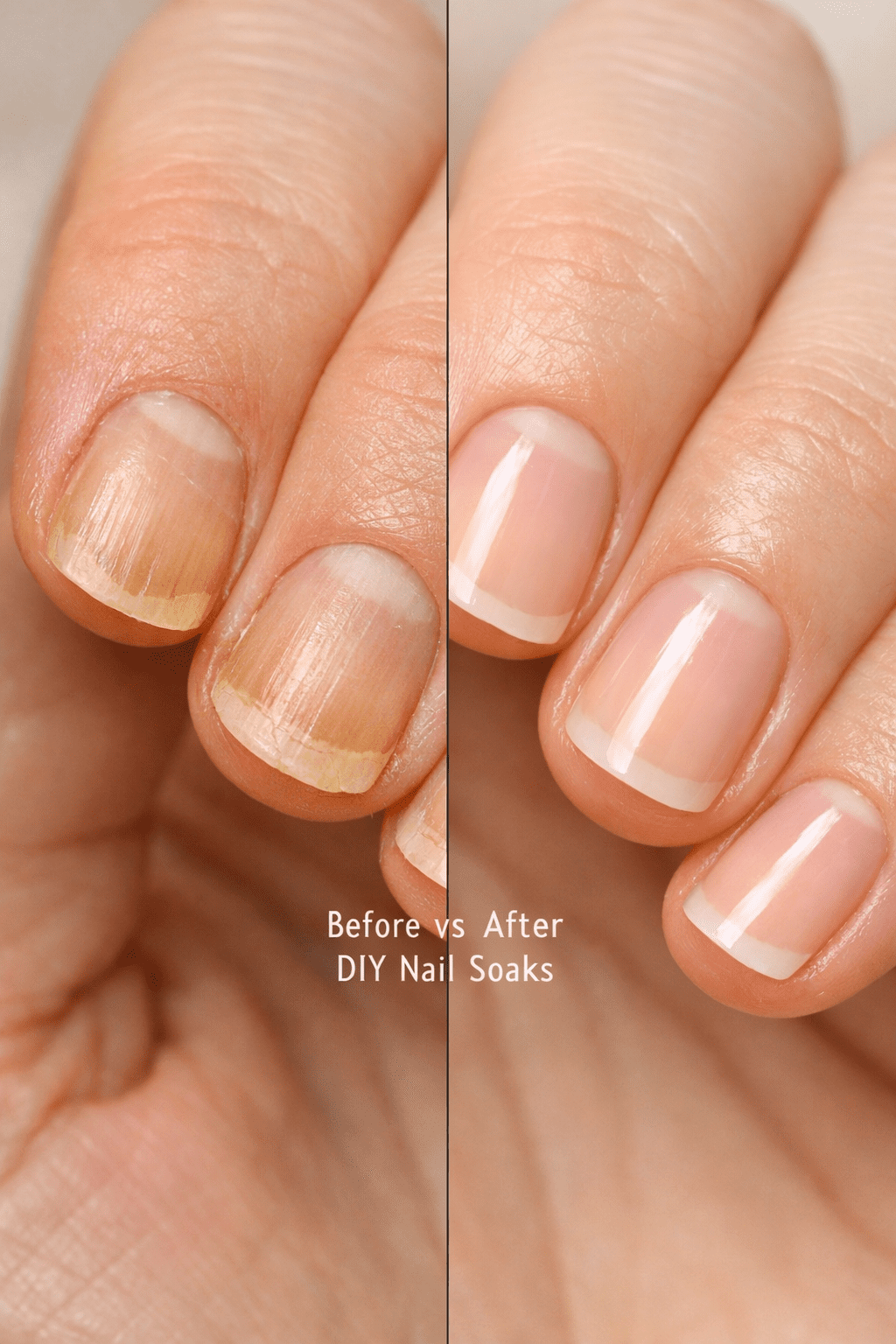
What Ingredients Actually Work for Nail Soaks?
The most effective nail soak ingredients share a few things in common: they penetrate the nail plate, they lock in moisture, or they gently exfoliate surface stains.
Ingredients backed by use and evidence:
| Ingredient | What It Does |
|---|---|
| Olive oil | Deep moisturizer; rich in vitamin E and squalene |
| Coconut oil | Antimicrobial; penetrates nail plate to reduce protein loss |
| Honey | Humectant; draws moisture in; antibacterial |
| Lemon juice | Brightens; mild acid that removes surface stains |
| Vitamin E oil | Antioxidant; supports nail bed health |
| Baking soda | Gentle exfoliant; lifts stains |
| Green tea | Antioxidants; supports cellular health |
| Rosemary | Stimulates circulation; antibacterial |
| Egg yolk | Natural protein and biotin source |
For more inspiration on using natural ingredients in your self-care routine, the 7 calendula recipes for skin care guide covers another powerful plant that works well for dry, irritated skin around the nails.
FAQ: Nail Soak DIY Recipes
Q: How long should I soak my nails?
A: 10 to 20 minutes is the sweet spot for most recipes. Longer isn’t always better — extended soaking in water can actually soften nails too much and cause peeling [3].
Q: Can I reuse a nail soak mixture?
A: Oil-based soaks (no egg, no peroxide) can be stored in a sealed jar for up to one week at room temperature. Discard any soak that contains egg yolk or hydrogen peroxide immediately after use.
Q: Do nail soaks actually make nails grow faster?
A: Soaks primarily improve nail strength and hydration, which reduces breakage — so nails appear to grow faster because they’re not snapping off. They don’t directly speed up the biological growth rate.
Q: Is it safe to soak nails every day?
A: Gentle oil-based soaks (olive oil, coconut oil, green tea) are safe daily. Soaks with baking soda, hydrogen peroxide, or lemon as the main ingredient should be limited to once or twice a week.
Q: What’s the best nail soak for yellow nails?
A: The baking soda, hydrogen peroxide, and lemon juice whitening soak (Recipe 5) is most effective for stained or yellowed nails [1]. Use it once a week and follow with a moisturizing oil soak.
Q: Can I use these soaks if I have acrylic or gel nails?
A: No. Soaking with oils or acidic ingredients can lift gel and acrylic nails prematurely. Wait until your natural nails have grown out before starting a soak routine.
Q: Do I need to use essential oils in these recipes?
A: No. Essential oils like rosemary are optional additions that provide extra benefits but aren’t required for the soak to work. Always dilute essential oils in a carrier oil before skin contact.
Q: What should I do right after a nail soak?
A: Pat nails dry gently, then immediately apply cuticle oil or a thick hand cream. This seals in the moisture from the soak and prevents the nail from drying out as water evaporates.
Q: How soon will I see results?
A: Most people notice softer cuticles and less brittleness within one to two weeks. Stronger, longer nails typically take three to four weeks of consistent soaking [5].
Q: Are these recipes safe for kids?
A: Oil and honey soaks are generally gentle enough for older children. Avoid hydrogen peroxide and lemon-heavy soaks for young children, and always supervise to prevent ingestion.
Conclusion: Start With One Recipe and Build From There
The best nail soak DIY recipe is the one you’ll actually use consistently. If you’re just starting out, the olive oil and lemon soak (Recipe 2) is the easiest entry point — two ingredients, 10 minutes, and results you can see within a few weeks.
Your next steps:
- Pick one recipe that matches your main nail concern (dryness, staining, weakness, or slow growth)
- Gather the ingredients — most are already in your kitchen
- Set a regular soak schedule: 2 to 3 times per week for oil-based soaks
- Always follow with a moisturizer to lock in benefits
- Give it at least 3 to 4 weeks before switching recipes
If you’re building a broader natural self-care routine, explore the 7 DIY foot soak recipes for tired, achy feet for a full-body pampering session, or check out the natural remedies for beginners guide to get comfortable with DIY wellness recipes across the board.
Your nails don’t need a salon to be healthy. They need consistency, the right ingredients, and a little patience.
References
[1] Diy Nail Soak Recipe – https://www.vedaoils.com/blogs/news/diy-nail-soak-recipe
[2] Restore Fragile Nails With These – https://www.beautycookskisses.com/2014/02/restore-fragile-nails-with-these.html
[3] Natural Nail Care Tips And Tricks For Strong Healthy Nails – https://essentiallynatural.co.za/blogs/the-essentially-natural-blog/natural-nail-care-tips-and-tricks-for-strong-healthy-nails
[4] Nail Care 101 Diy Treatments For Fabulous Fingertips – https://www.joabathandbody.com/blogs/be-good-to-yourself/nail-care-101-diy-treatments-for-fabulous-fingertips
[5] How To Grow Your Nails Faster And Make Them Stronger – https://us.womensbest.com/blogs/beauty/how-to-grow-your-nails-faster-and-make-them-stronger