Key Takeaways
- A natural sinus chest rub combines coconut oil or shea butter with eucalyptus, peppermint, and rosemary essential oils to open airways and relieve congestion
- The recipe takes less than 10 minutes to make and provides relief within minutes of application when rubbed on chest and neck
- Eucalyptus oil contains eucalyptol, which has antibacterial and antiviral properties that support respiratory health
- Store your homemade chest rub in an amber glass jar for up to six months at room temperature
- Children under 3 should not use eucalyptus or peppermint oils; adjust recipes for kids aged 3-10 by reducing essential oil amounts
- Application works by warming volatile oils on your skin, which release vapors that stimulate nasal receptors and open breathing passages
- This DIY alternative costs a fraction of commercial vapor rubs and contains no petroleum-based ingredients
Quick Answer
A natural sinus chest rub recipe combines 1/4 cup coconut oil with 2 tablespoons shea butter and 10-15 drops each of eucalyptus and peppermint essential oils. Melt the base oils together, stir in the essential oils, then pour into a clean jar to solidify. Apply to your chest and neck when congested—the warming effect releases aromatic compounds that open airways and help you breathe easier within minutes.
What Makes a Natural Sinus Chest Rub Recipe Work?
A natural sinus chest rub works by using volatile aromatic compounds from essential oils that stimulate receptors in your nose and throat when warmed by body heat. When you apply the rub to your chest and neck, your skin temperature activates menthol-like compounds that create a cooling sensation and trigger your body to perceive increased airflow[2].
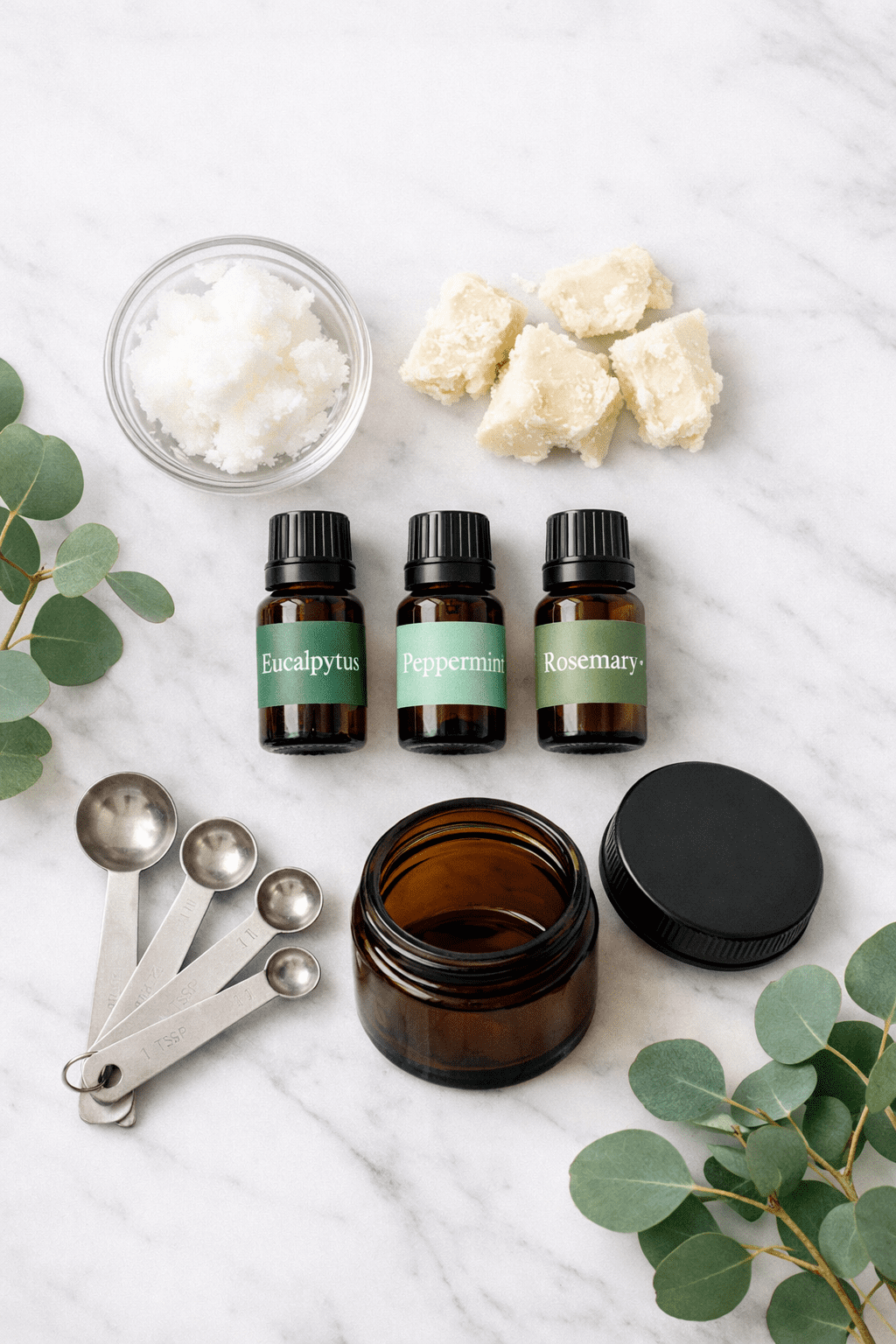
The mechanism is straightforward: eucalyptus oil contains eucalyptol, which has documented antibacterial and antiviral properties[3]. Peppermint provides menthol that creates the cooling effect, while rosemary adds anti-inflammatory compounds. The carrier oils (coconut oil or shea butter) deliver these active ingredients to your skin and allow slow, sustained release of vapors.
Key active ingredients:
- Eucalyptus oil – primary decongestant with eucalyptol compound[1][4]
- Peppermint oil – menthol for cooling sensation and airway opening
- Rosemary oil – anti-inflammatory support
- Coconut oil/shea butter – carrier base that melts at body temperature
Choose eucalyptus as your primary oil if you want maximum decongestant effect. Add peppermint if you prefer a stronger cooling sensation. Skip rosemary for children under 10, as it’s too strong for younger respiratory systems[1].
How Do I Make a Basic Natural Sinus Chest Rub Recipe?
To make a basic natural sinus chest rub, melt 1/4 cup coconut oil with 2 tablespoons shea butter using a double boiler or microwave, then stir in 10 drops eucalyptus oil and 10 drops peppermint oil before pouring into a clean jar to cool[1][2].
Step-by-step instructions:
- Melt your base – Combine 1/4 cup coconut oil and 2 tablespoons shea butter in a heat-safe bowl over simmering water (or microwave in 30-second bursts)
- Cool slightly – Let the melted mixture sit for 2-3 minutes so it’s warm but not hot
- Add essential oils – Stir in 10 drops eucalyptus oil and 10 drops peppermint oil
- Pour and set – Transfer to a clean 4-ounce amber glass jar and let solidify at room temperature (about 2 hours)
Common mistake: Adding essential oils while the base is too hot can cause the volatile compounds to evaporate, reducing effectiveness. Wait until you can comfortably touch the outside of the bowl.
For a firmer texture that’s easier to apply in warm climates, substitute 1 tablespoon of the coconut oil with beeswax[7]. If you have sensitive skin, reduce essential oils to 5 drops each and test on a small patch first.
This recipe yields about 4 ounces and costs roughly $3-5 to make, compared to $8-12 for commercial alternatives. For more natural approaches to cold symptoms, check out our guide to 10 natural remedies for cough.
What Ingredients Do I Need for a Natural Sinus Chest Rub Recipe?
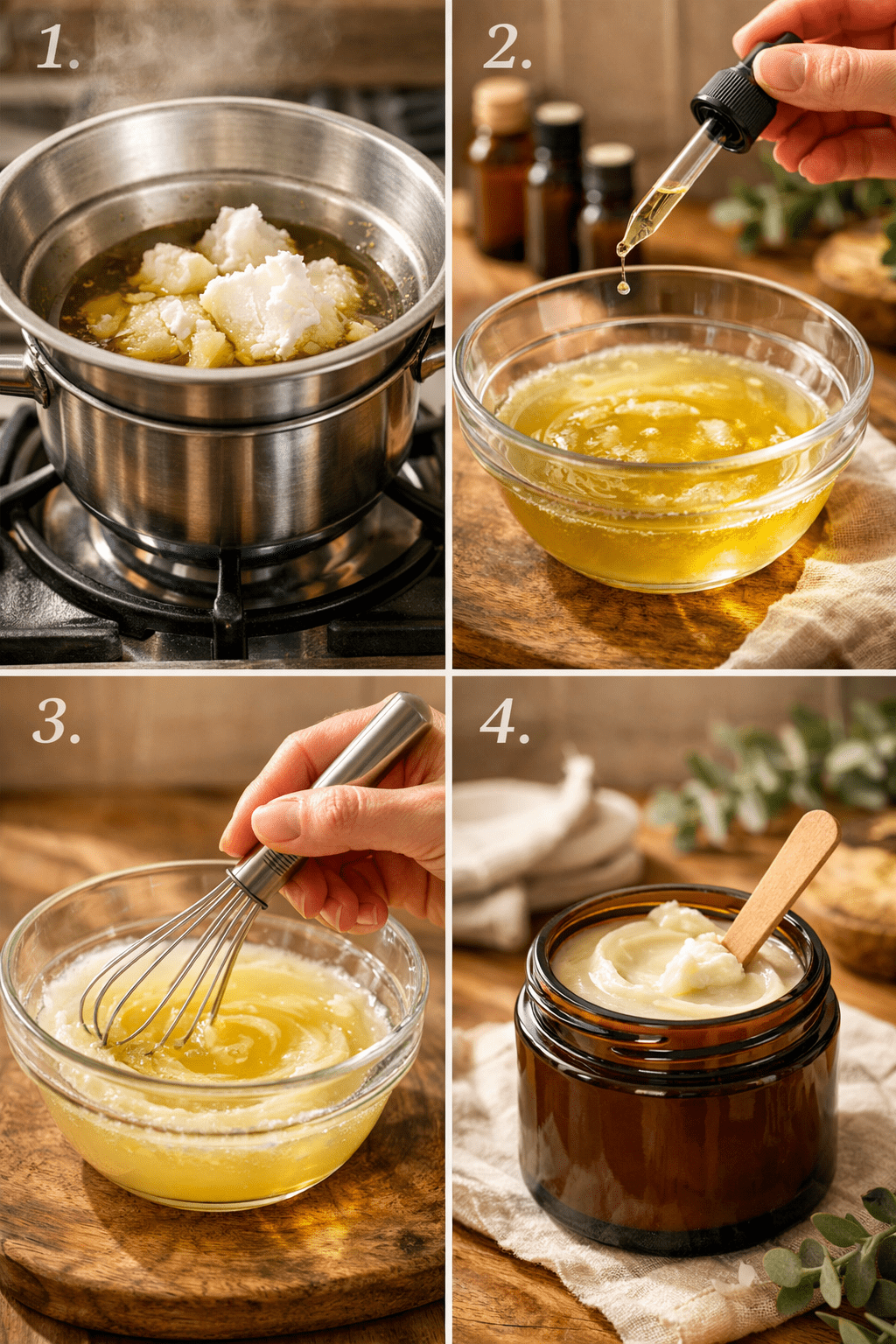
You need just two categories of ingredients: carrier oils that form the base and essential oils that provide the therapeutic effect. The most effective combination uses coconut oil or shea butter as carriers with eucalyptus and peppermint as the primary essential oils[1][2][7].
Carrier oil options (choose one or combine):
- Coconut oil – melts at body temperature, absorbs quickly
- Shea butter – creates firmer texture, moisturizing
- Sweet almond oil – lighter option for sensitive skin
- Olive oil – budget-friendly alternative
- Beeswax – adds firmness (use 10-20% of total base)
Essential oil blend (therapeutic amounts):
- Eucalyptus oil – 10-15 drops (primary decongestant)[4]
- Peppermint oil – 10-15 drops (cooling effect)
- Rosemary oil – 5-10 drops (anti-inflammatory, ages 10+ only)[1]
- Cinnamon leaf oil – 3-5 drops (warming, optional)
What you’ll also need:
- 4-ounce amber glass jar with lid
- Double boiler or microwave-safe bowl
- Measuring spoons
- Stirring utensil
Choose coconut oil if you want a softer balm that melts easily on contact. Pick shea butter if you prefer a firmer consistency that won’t melt in your medicine cabinet during summer. Combine both (as in the basic recipe above) for balanced texture.
If you’re new to working with essential oils and natural ingredients, our natural remedies for beginners guide covers safety basics and sourcing quality materials.
How Do I Apply Natural Sinus Chest Rub for Best Results?
Apply a dime-sized amount of chest rub to your upper chest and throat area, massaging gently in circular motions until absorbed. For maximum effect, apply before bed and again in the morning, or whenever congestion feels worst[2].
Application technique:
- Scoop a small amount (about 1/2 teaspoon) with clean fingers
- Warm between your palms for 5-10 seconds
- Massage onto chest, avoiding nipple area
- Apply to throat and upper back if someone can help
- Breathe deeply for 1-2 minutes after application
Where to apply for different symptoms:
- Chest congestion – center of chest and sides of ribcage
- Sinus pressure – upper chest and base of throat (not face)
- Cough – chest and upper back between shoulder blades
- General stuffiness – chest, throat, and a tiny amount under nose (test first)
Common mistake: Applying too much at once. A little goes a long way—excess won’t improve results and may irritate skin. Start with a dime-sized amount and add more only if needed.
The warming effect activates within 2-5 minutes as your body heat releases the volatile oils. You should feel a cooling sensation in your airways and easier breathing. Effects typically last 3-4 hours.
Avoid getting the rub in your eyes, and wash hands thoroughly after application. Don’t apply to broken skin, rashes, or irritated areas. Pair with a hot toddy for colds for comprehensive natural relief.
Is Natural Sinus Chest Rub Recipe Safe for Children?
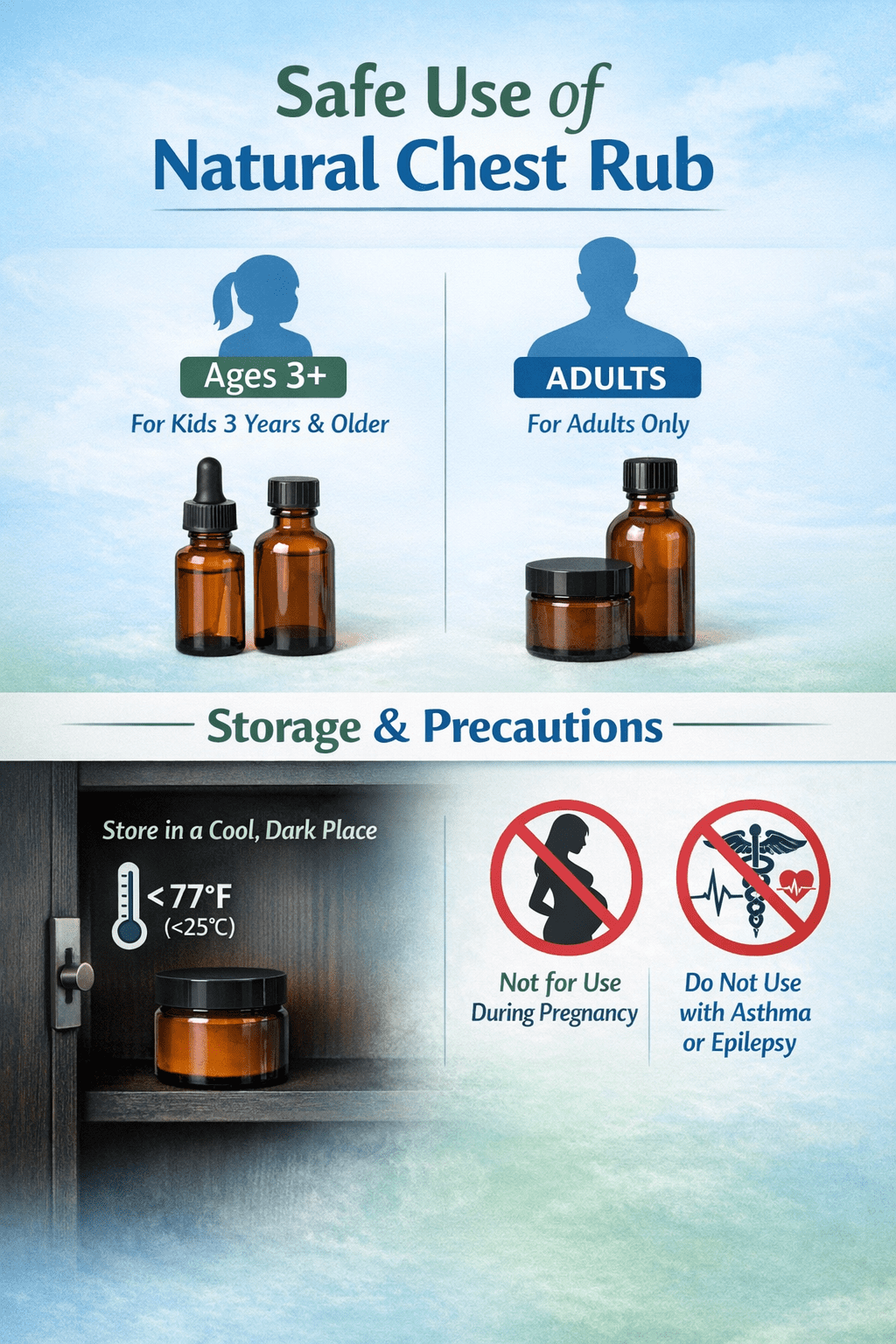
Natural sinus chest rub is safe for children aged 3 and older when you use age-appropriate essential oil dilutions, but eucalyptus and peppermint oils should never be used on children under 3 due to respiratory risks[1].
Age-specific guidelines:
| Age Group | Eucalyptus Drops | Peppermint Drops | Rosemary | Notes |
|---|---|---|---|---|
| Under 3 | ❌ Not safe | ❌ Not safe | ❌ Not safe | Use plain coconut oil only |
| Ages 3-6 | 2-3 drops max | 2-3 drops max | ❌ Avoid | Reduce by 75% from adult recipe |
| Ages 7-10 | 5-7 drops | 5-7 drops | ❌ Avoid | Reduce by 50% from adult recipe |
| Ages 10+ | 10-15 drops | 10-15 drops | 5-10 drops | Can use adult recipe |
Safety rules for kids:
- Always do a patch test on a small skin area first
- Never apply near or inside the nose
- Keep away from eyes and mouth
- Store out of children’s reach
- Supervise application for children under 10
For very young children (under 3), create a gentle version using only fractionated coconut oil with 1 drop of lavender essential oil per ounce of carrier. This provides mild comfort without respiratory risks.
When to skip chest rub entirely:
- Infants under 6 months (consult pediatrician for any topical treatments)
- Children with asthma (essential oils may trigger reactions)
- Kids with sensitive skin or eczema
- Anyone with known allergies to ingredients
If your child shows any signs of breathing difficulty, skin irritation, or unusual reaction after application, wash the area immediately with soap and water and discontinue use.
How Long Does Homemade Chest Rub Last and How Should I Store It?
Homemade natural sinus chest rub lasts 6 months when stored properly in an amber glass jar at room temperature away from direct sunlight and heat sources[5].
Storage best practices:
- Use amber or dark glass containers (clear glass degrades essential oils faster)
- Keep lid tightly sealed between uses to prevent oxidation
- Store in a cool, dry place like a bathroom cabinet or bedroom drawer
- Keep away from windows, radiators, and humid areas
- Label with creation date so you know when to replace
Signs your chest rub has gone bad:
- Rancid or off smell (should smell fresh and aromatic)
- Change in color or separation of ingredients
- Mold growth (appears as spots or fuzzy patches)
- Grainy or unusual texture
Coconut oil naturally solidifies below 76°F and liquefies above that temperature. This is normal and doesn’t affect quality—just scoop what you need regardless of consistency.
Extending shelf life:
- Add 1/4 teaspoon vitamin E oil as a natural preservative
- Always use clean, dry hands or a small spatula to scoop (no wet fingers)
- Make smaller batches if you won’t use it within 3 months
If you make multiple batches or want to create other natural remedies, consider exploring our collection of natural remedy guides for more DIY health solutions.
Can I Customize My Natural Sinus Chest Rub Recipe?
You can easily customize your natural sinus chest rub recipe by swapping carrier oils, adjusting essential oil ratios, or adding complementary therapeutic oils based on your specific symptoms and preferences.
Carrier oil substitutions:
- For firmer balm – increase shea butter to 3 tablespoons, reduce coconut oil to 3 tablespoons
- For softer salve – use all coconut oil (1/4 cup + 2 tablespoons)
- For sensitive skin – replace half the coconut oil with sweet almond oil
- For extra moisture – add 1 teaspoon jojoba oil
Essential oil variations by symptom:
For severe congestion:
- 15 drops eucalyptus
- 10 drops peppermint
- 5 drops rosemary (ages 10+)
For cough relief:
- 10 drops eucalyptus
- 8 drops peppermint
- 7 drops thyme (ages 6+)
For gentle/sensitive formula:
- 7 drops eucalyptus
- 5 drops lavender
- 3 drops chamomile
For warming effect:
- 10 drops eucalyptus
- 8 drops peppermint
- 5 drops cinnamon leaf (not cinnamon bark—too strong)[1]
Additional beneficial oils to consider:
- Tea tree oil (3-5 drops) – antibacterial support
- Frankincense (5 drops) – anti-inflammatory
- Lemon (5 drops) – uplifting, immune support
- Cedarwood (5 drops) – grounding, respiratory support
Keep total essential oil drops between 20-30 per 1/4 cup carrier oil. Going higher increases irritation risk without improving effectiveness.
FAQ
How quickly does natural chest rub work?
Most people feel relief within 2-5 minutes of application as body heat warms the essential oils and releases aromatic vapors that open airways. Maximum effect occurs around 10-15 minutes after application and lasts 3-4 hours.
Can I use natural chest rub while pregnant?
Consult your healthcare provider before using essential oils during pregnancy. Many practitioners recommend avoiding eucalyptus, rosemary, and peppermint during the first trimester. A plain coconut oil base with lavender may be safer, but always check first.
What’s the difference between this and store-bought vapor rub?
Commercial vapor rubs typically contain petroleum jelly as a base and synthetic menthol. Natural versions use plant-based carriers and pure essential oils, avoiding petroleum derivatives and artificial ingredients while providing similar decongestant effects[2].
Can I apply chest rub to my face or inside my nose?
Never apply essential oil chest rubs inside your nose or on facial mucous membranes. You can apply a tiny amount under your nose on the skin, but test for sensitivity first. Keep away from eyes completely.
Does natural chest rub actually kill cold viruses?
Chest rub provides symptom relief by opening airways and may have mild antimicrobial effects from eucalyptol[3], but it doesn’t cure colds or kill viruses systemically. It’s a comfort measure that helps you breathe easier while your immune system fights infection.
Can I use the chest rub on my feet?
Yes, applying chest rub to the soles of your feet and covering with socks is a traditional remedy. While scientific evidence is limited, many people report this method provides relief without the strong scent near your face.
How much does it cost to make natural chest rub?
A 4-ounce batch costs approximately $3-5 in materials, depending on essential oil quality. This is 40-60% less expensive than commercial alternatives and yields the same amount of product.
Can I make chest rub without shea butter?
Absolutely. Use all coconut oil for a softer consistency, or add 1-2 tablespoons of beeswax to coconut oil for firmness. Sweet almond oil, olive oil, or jojoba oil also work as carrier bases[7].
Is natural chest rub safe for pets?
No. Essential oils, especially eucalyptus and peppermint, can be toxic to cats and dogs. Keep your chest rub stored securely away from pets and don’t apply it if you’ll be in close contact with animals.
Can I use dried herbs instead of essential oils?
Dried herbs don’t provide the same concentrated aromatic effect. You could infuse carrier oils with dried eucalyptus or peppermint for weeks, but the result will be much milder than using essential oils.
What should I do if the chest rub irritates my skin?
Wash the area immediately with soap and warm water. Apply plain coconut oil or aloe vera to soothe irritation. Next time, reduce essential oil amounts by half or do a patch test on your inner arm 24 hours before full application.
Can I add the chest rub to a diffuser or humidifier?
No. This recipe is formulated for topical use only. The oil base will damage diffusers and humidifiers. Use pure essential oils (without carrier oils) in aromatherapy devices instead.
Conclusion
Creating your own natural sinus chest rub recipe gives you fast, effective congestion relief using simple ingredients you can feel good about. With just coconut oil, shea butter, and a few essential oils, you’ll have a powerful remedy that opens airways and helps you breathe easier within minutes—all for a fraction of the cost of commercial alternatives.
Your next steps:
- Gather your ingredients: coconut oil, shea butter, eucalyptus oil, and peppermint oil
- Make a small batch following the basic recipe above
- Test a small amount on your inner arm to check for sensitivity
- Apply to chest and throat at the first sign of congestion
- Store properly in an amber jar and use within six months
Remember to adjust essential oil amounts for children and always consult healthcare providers if you have underlying respiratory conditions or are pregnant. This natural remedy works beautifully alongside other approaches like staying hydrated, using a humidifier, and getting adequate rest.
Start with the basic recipe, then customize based on what works best for your body. You’ll have a go-to remedy ready whenever congestion strikes, and you’ll know exactly what’s in it.
References
[1] Homemade Vapor Rub – https://simplegreensmoothies.com/homemade-vapor-rub/
[2] Homemade Vapor Rub Natural Congestion Relief – https://www.coloradovoiceclinic.com/post/homemade-vapor-rub-natural-congestion-relief
[3] Homemade Clearing Chest Rub For Respiratory Support – https://willowandsage.com/homemade-clearing-chest-rub-for-respiratory-support/
[4] Homemade Vapor Rub – https://draxe.com/beauty/homemade-vapor-rub/
[5] Natural Chest Rub Balm Recipe – https://sagecosmetics.com.au/blogs/sage-articles/natural-chest-rub-balm-recipe
[7] Homemade Vapor Chest Rub – https://avivaromm.com/homemade-vapor-chest-rub/