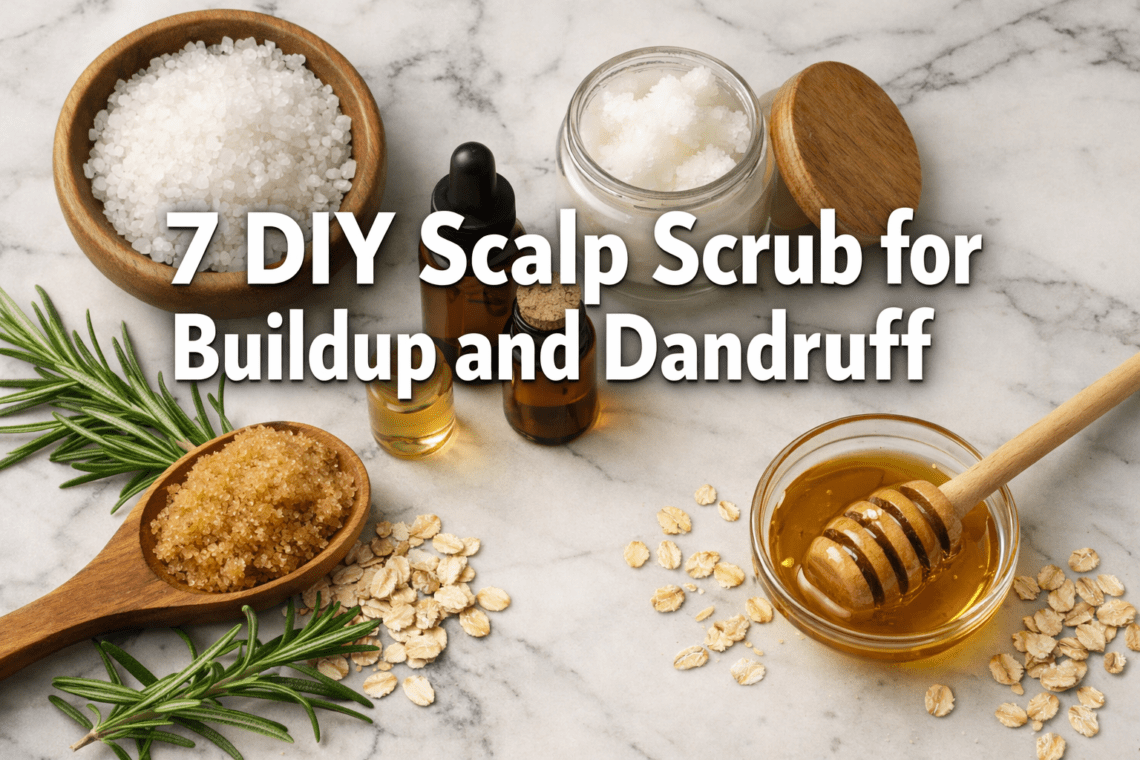
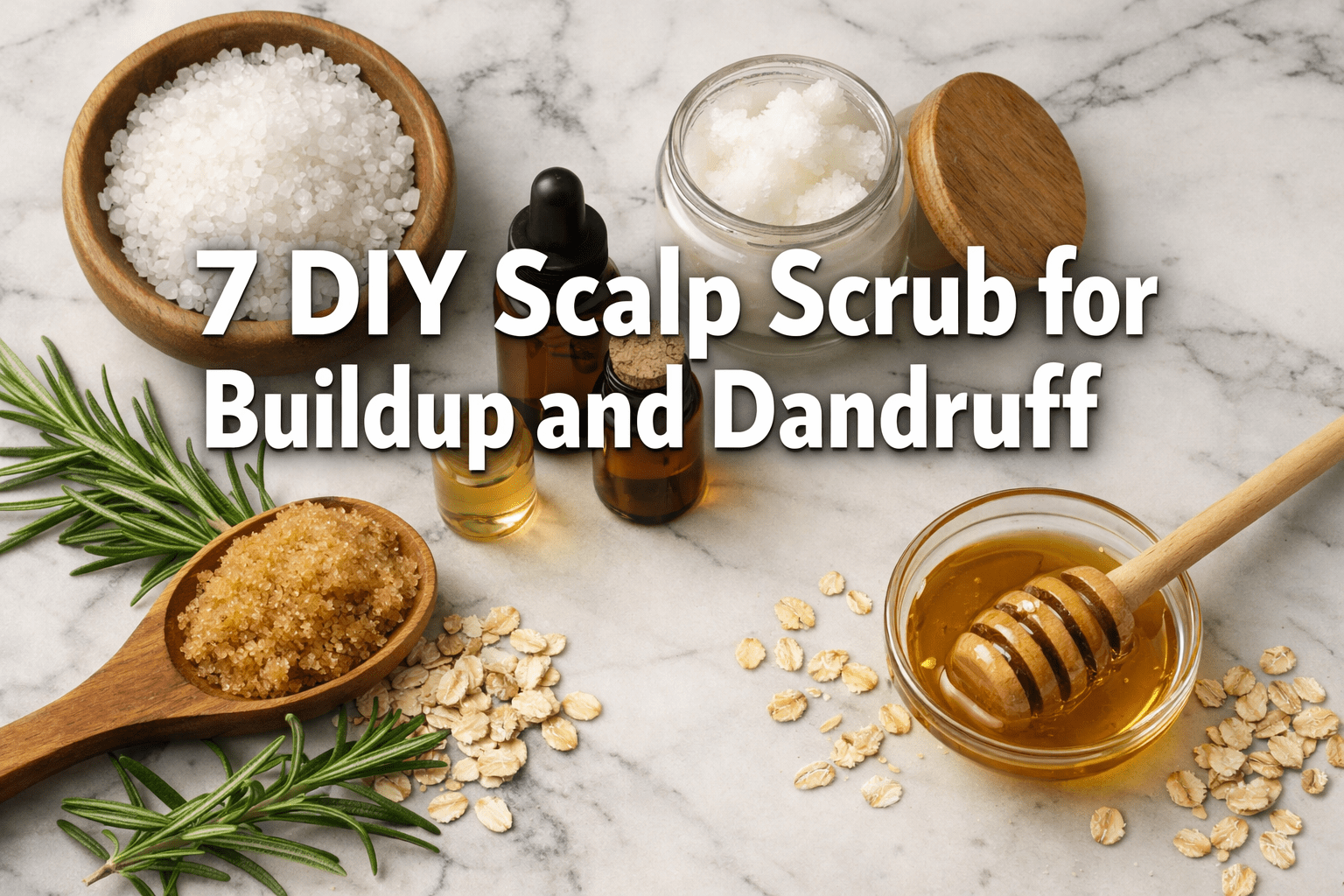
If you’ve ever dealt with an itchy, flaky scalp that just won’t quit, you know how frustrating it can be. I’ve been there—constantly brushing white flakes off my shoulders and feeling self-conscious about my hair. The good news? A DIY scalp scrub for buildup and dandruff can transform your scalp health using simple ingredients you probably already have in your kitchen. These homemade treatments exfoliate dead skin cells, remove product buildup, and soothe irritation without harsh chemicals or expensive salon visits.
Key Takeaways
- Salt scrubs work best for oily scalps by absorbing excess sebum and removing impurities
- Sugar scrubs provide gentle exfoliation while adding moisture, suitable for dry or sensitive scalps
- Apple cider vinegar lifts buildup and kills bacteria that contribute to dandruff
- Baking soda paste effectively reduces product buildup and absorbs excess moisture
- Oatmeal scrubs offer the gentlest option for sensitive or inflamed scalps
- Essential oils like tea tree, rosemary, and peppermint enhance scrub effectiveness and promote hair growth
- Apply scrubs to wet hair, massage for 3-5 minutes, then rinse and follow with shampoo
- Use scalp scrubs once or twice weekly for best results without over-exfoliating
Quick Answer
A DIY scalp scrub for buildup and dandruff combines an exfoliating base (salt, sugar, oatmeal, or baking soda) with moisturizing carrier oils and therapeutic ingredients like apple cider vinegar or essential oils. These scrubs physically remove dead skin cells, product residue, and excess oil while treating the underlying causes of dandruff. Apply to wet hair, massage gently for several minutes, rinse thoroughly, then shampoo and condition as usual for a clean, healthy scalp.
What Causes Scalp Buildup and Dandruff?
Scalp buildup and dandruff happen when dead skin cells, excess oil (sebum), styling products, and environmental pollutants accumulate on your scalp. This creates a breeding ground for yeast and bacteria, particularly Malassezia fungus, which feeds on scalp oils and triggers inflammation.
Several factors contribute to this condition:
- Product accumulation from shampoos, conditioners, dry shampoo, and styling products that don’t rinse completely
- Overactive sebaceous glands producing too much oil, especially in people with oily hair types
- Infrequent washing allowing dead skin cells and oils to build up over time
- Skin conditions like seborrheic dermatitis or psoriasis that cause excessive flaking
- Harsh water minerals that leave residue on hair and scalp
- Stress and hormonal changes that affect oil production and skin cell turnover
The result? An itchy, flaky scalp that feels uncomfortable and looks unhealthy. Regular exfoliation with a DIY scalp scrub for buildup and dandruff addresses these issues by physically removing the accumulated debris and creating a cleaner environment for healthy hair growth.
Common mistake: Many people increase washing frequency when they notice flakes, but using harsh shampoos too often can strip natural oils and worsen the problem. Exfoliating scrubs work better because they target the root cause.
Why Choose DIY Scalp Scrubs Over Store-Bought Products?
DIY scalp scrubs for buildup and dandruff give you complete control over ingredients, cost significantly less than commercial products, and can be customized to your specific scalp needs. You know exactly what you’re putting on your head—no mystery chemicals, sulfates, or artificial fragrances.
Benefits of making your own scrubs:
- Cost-effective: Most recipes cost under $5 to make versus $20-40 for store-bought scalp treatments
- Fresh ingredients: You create small batches that stay potent without preservatives
- Customizable: Adjust texture, scent, and therapeutic properties based on your scalp type
- Natural and gentle: Avoid harsh detergents and synthetic additives that can irritate sensitive skin
- Multi-purpose ingredients: Many components like coconut oil and honey benefit both scalp and hair
Choose DIY scrubs if you have sensitive skin that reacts to commercial products, want to avoid synthetic ingredients, or need a budget-friendly solution for regular scalp care. Store-bought options might be better if you need maximum convenience or prefer pre-formulated products with specific active ingredients like salicylic acid.
For more natural DIY skincare solutions, check out our complete guide to getting started with natural remedies.
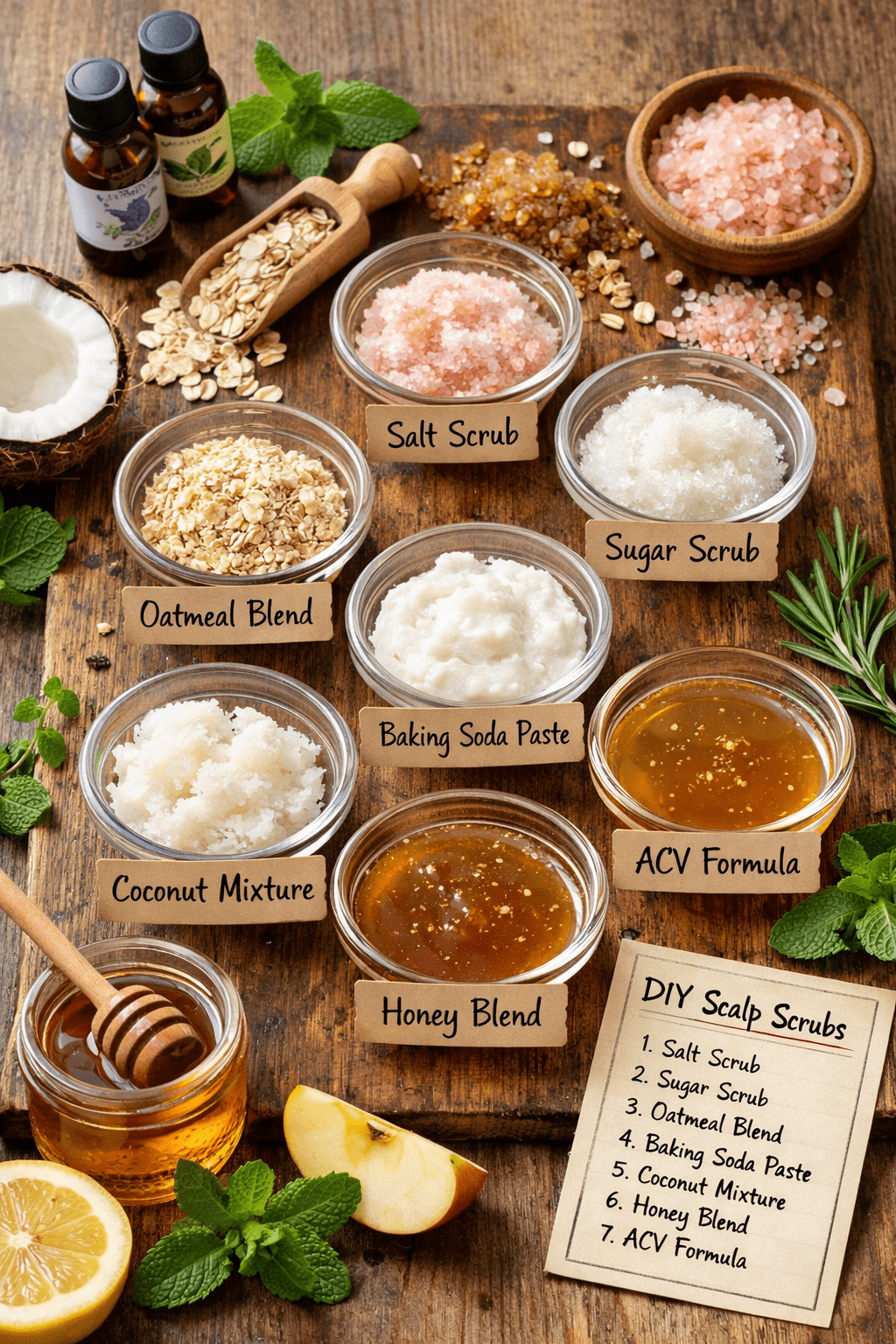
7 Effective DIY Scalp Scrub Recipes for Buildup and Dandruff
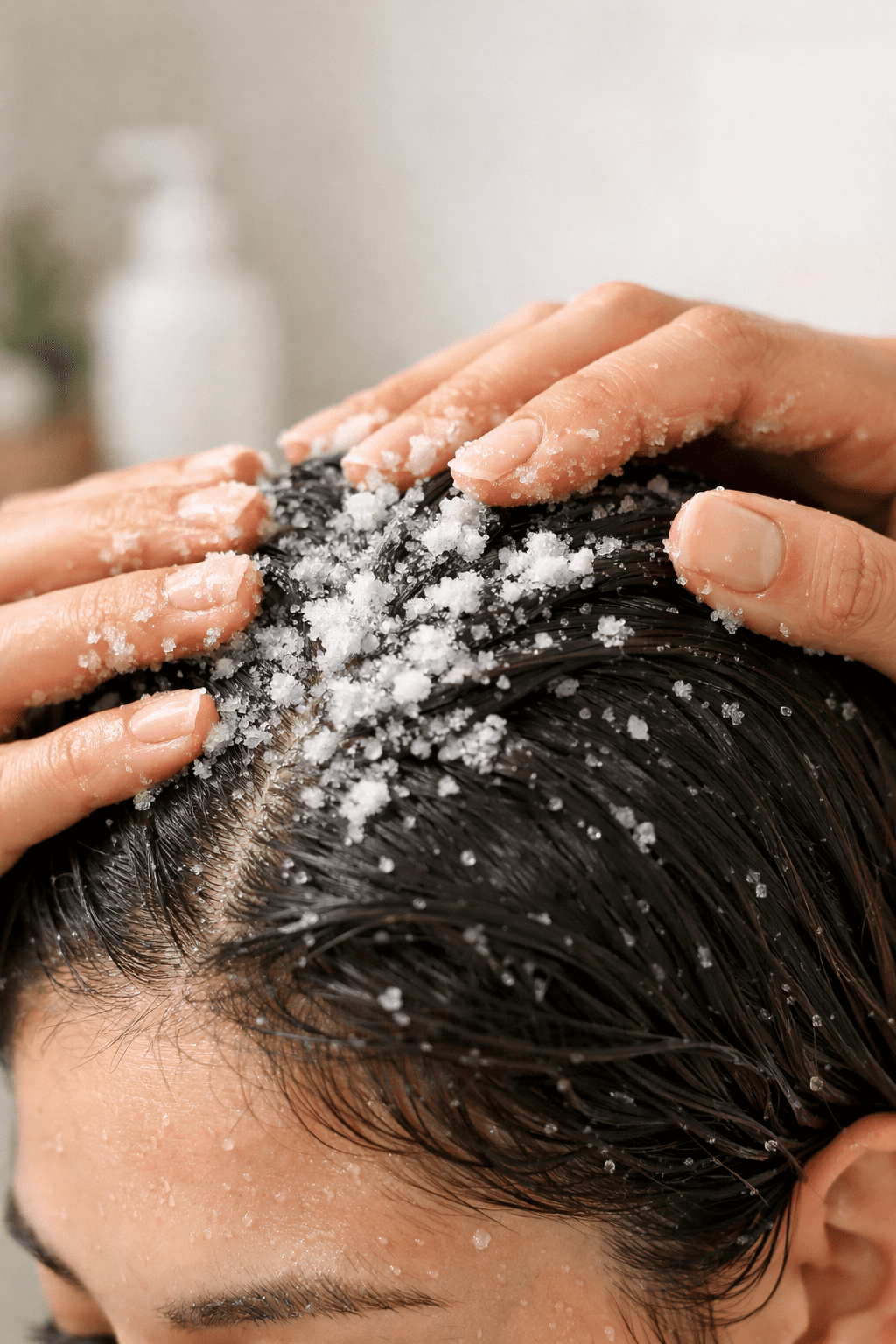
Here are seven proven recipes that tackle different scalp concerns. Each uses simple ingredients and takes less than 5 minutes to prepare.
1. Sea Salt Clarifying Scrub (For Oily Scalps)
Salt scrubs excel at removing impurities and reducing excess sebum, making them ideal for oily hair types.[1]
Ingredients:
- 2 tablespoons sea salt (fine or medium grain)
- 0.5 oz avocado oil or jojoba oil
- 0.5 oz apple cider vinegar
- 2-3 drops lavender essential oil
Instructions: Mix all ingredients in a small bowl until well combined. Apply to wet scalp, massage gently in circular motions for 3-5 minutes, then rinse thoroughly with warm water. Follow with your regular shampoo and conditioner.
Best for: People with oily scalps, heavy product buildup, or those who use styling products daily. The salt absorbs excess oil while the vinegar balances pH levels.
2. Brown Sugar Moisturizing Scrub (For Dry Scalps)
Sugar provides gentler exfoliation than salt while adding moisture, perfect for dry or sensitive scalps.[1]
Ingredients:
- 2 tablespoons brown sugar
- 1 tablespoon coconut oil (melted)
- 1 teaspoon raw honey
- 1 teaspoon apple cider vinegar
- 3 drops rosemary essential oil
Instructions: Combine all ingredients until you get a paste-like consistency. Apply to damp scalp, massage for 3-4 minutes, let sit for 2 minutes, then rinse and shampoo.[2]
Best for: Dry, flaky scalps that need moisture along with exfoliation. The honey adds antibacterial properties while coconut oil deeply conditions.
3. Oatmeal Soothing Scrub (For Sensitive Scalps)
Oatmeal offers the gentlest exfoliation option, ideal for irritated or inflamed scalps.[1]
Ingredients:
- 1 tablespoon ground oatmeal (pulse regular oats in a blender)
- 0.5 oz natural conditioner
- 0.5 oz white sugar (optional, for added exfoliation)
- 2-3 drops tea tree essential oil
Instructions: Mix ingredients to form a smooth paste. Apply to wet scalp, massage very gently for 2-3 minutes, then rinse thoroughly. The conditioner base makes this scrub extra gentle.
Best for: Sensitive scalps, people with eczema or psoriasis, or anyone experiencing scalp inflammation. Oatmeal naturally soothes irritation and reduces redness.
4. Baking Soda Deep Cleanse Paste (For Heavy Buildup)
Baking soda absorbs moisture and breaks down stubborn product residue effectively.[1]
Ingredients:
- 3 tablespoons baking soda
- 0.5 oz warm water
- 2-3 drops peppermint essential oil
Instructions: Mix to create a paste. Apply to wet scalp, focusing on areas with the most buildup. Massage for 2-3 minutes, then rinse very thoroughly. Use this scrub no more than once weekly.
Best for: Heavy product users, those with significant buildup from hard water, or anyone needing a deep reset. Peppermint oil provides a refreshing, tingly sensation.
Warning: Baking soda has a high pH and can be drying if overused. Always follow with a moisturizing conditioner and limit use to once per week.
5. Coconut Oil & Sugar Nourishing Scrub
This recipe combines exfoliation with deep conditioning for a balanced treatment.
Ingredients:
- 2 tablespoons white or brown sugar
- 2 tablespoons coconut oil (solid or melted)
- 1 teaspoon apple cider vinegar
- 3 drops tea tree or lavender essential oil
Instructions: Mix all ingredients. If coconut oil is solid, warm slightly to make mixing easier. Apply to damp scalp, massage for 4-5 minutes, then rinse and shampoo twice to remove all oil residue.
Best for: Normal to dry scalps that need both exfoliation and moisture. The coconut oil provides antimicrobial benefits while conditioning hair.
6. Apple Cider Vinegar Clarifying Scrub
Apple cider vinegar lifts impurities, kills bacteria, and balances scalp pH—making it a powerhouse ingredient for dandruff.[2]
Ingredients:
- 2 tablespoons fine sea salt or sugar
- 1 oz apple cider vinegar (raw, unfiltered)
- 0.5 oz aloe vera gel
- 2 drops rosemary essential oil
Instructions: Combine ingredients thoroughly. Apply to wet scalp, massage gently for 3-4 minutes, then rinse well. The aloe vera soothes while the vinegar clarifies.
Best for: Dandruff-prone scalps, fungal issues, or anyone needing pH balance restoration. This scrub also adds shine to hair.
7. Honey & Oat Anti-Dandruff Scrub
Honey’s antibacterial properties combined with oatmeal’s soothing effects create an excellent anti-dandruff treatment.
Ingredients:
- 1 tablespoon ground oatmeal
- 1 tablespoon raw honey
- 1 tablespoon brown sugar
- 2-3 drops tea tree essential oil
- 0.5 oz warm water (to thin if needed)
Instructions: Mix to form a spreadable paste. Apply to damp scalp, massage gently for 3-4 minutes, let sit for 2 minutes, then rinse thoroughly and shampoo.
Best for: Persistent dandruff, itchy scalps, or anyone wanting natural antimicrobial benefits. Honey also promotes healing of any scalp irritation.
If you enjoy making your own natural remedies, you might also like our DIY rosemary water for hair growth recipe.
How to Apply a DIY Scalp Scrub for Best Results
Proper application makes the difference between an effective treatment and a messy disappointment. Start with wet hair—this helps the scrub spread evenly and prevents excessive friction that could irritate your scalp.[2]
Step-by-step application:
- Wet your hair thoroughly in the shower with warm water
- Part your hair into sections (4-6 sections work well for even coverage)
- Apply scrub generously to your scalp, not your hair lengths
- Massage gently using circular motions with your fingertips (not nails) for 3-5 minutes
- Focus on problem areas like the crown, hairline, and behind ears where buildup accumulates
- Let it sit for 1-2 minutes if the recipe includes therapeutic ingredients like honey or tea tree oil
- Rinse thoroughly with warm water until all scrub particles are gone
- Shampoo to remove any remaining residue and oil
- Condition from mid-length to ends (avoid applying conditioner to your scalp)
- Final rinse with cool water to close hair cuticles and add shine
How often to use: Most people benefit from scalp scrubs 1-2 times per week. If you have very sensitive skin, start with once every two weeks and increase frequency as your scalp adjusts.
Common mistake: Scrubbing too hard or too long can irritate your scalp and cause micro-tears in the skin. Gentle, consistent pressure works better than aggressive scrubbing.
What Ingredients Work Best in DIY Scalp Scrubs for Buildup and Dandruff?
The most effective DIY scalp scrub for buildup and dandruff combines three types of ingredients: exfoliants, moisturizers, and therapeutic additives. Understanding each category helps you customize recipes for your specific needs.
Exfoliating bases:
| Ingredient | Texture | Best For | Notes |
|---|---|---|---|
| Sea salt | Coarse, drying | Oily scalps, heavy buildup | Most abrasive option[1] |
| White sugar | Medium, moisturizing | Normal to dry scalps | Dissolves easily |
| Brown sugar | Fine, moisturizing | Sensitive, dry scalps | Gentlest sugar option[1] |
| Baking soda | Fine powder | Deep cleansing, buildup | Use sparingly (high pH)[1] |
| Ground oatmeal | Very fine, soothing | Sensitive, inflamed scalps | Anti-inflammatory[1] |
Moisturizing carriers:
- Coconut oil: Antimicrobial, deeply conditioning, solid at room temperature
- Avocado oil: Rich in vitamins, lightweight, good for dry scalps
- Jojoba oil: Mimics natural sebum, balances oil production
- Aloe vera gel: Soothing, lightweight, anti-inflammatory
- Natural conditioner: Makes scrubs gentler, easier to rinse
Therapeutic additives:
- Apple cider vinegar: Balances pH, kills bacteria, removes buildup[2]
- Raw honey: Antibacterial, moisturizing, promotes healing
- Tea tree essential oil: Antifungal, treats dandruff, refreshing scent
- Rosemary essential oil: Stimulates circulation, promotes hair growth[1]
- Peppermint essential oil: Cooling sensation, increases blood flow[1]
- Lavender essential oil: Calming, antimicrobial, pleasant scent[1]
Edge case: If you have color-treated hair, avoid baking soda scrubs and limit essential oil concentration to prevent color fading. Stick with sugar-based scrubs and gentler ingredients.
For more DIY skincare recipes using natural ingredients, explore our DIY skincare collection.
How Do Scalp Scrubs Compare to Regular Shampoo?
Scalp scrubs and regular shampoo serve different purposes in your hair care routine. Shampoo cleans the surface by removing daily dirt and oil, while scrubs provide deep exfoliation that removes accumulated dead skin cells, product residue, and stubborn buildup that shampoo can’t tackle.[2]
Key differences:
- Cleaning depth: Shampoo works on the surface; scrubs penetrate and physically remove buildup
- Frequency: Shampoo is used 2-7 times weekly; scrubs work best 1-2 times weekly
- Mechanism: Shampoo uses surfactants to dissolve oils; scrubs use physical exfoliation
- Purpose: Shampoo maintains daily cleanliness; scrubs provide periodic deep cleaning and treatment
Think of it this way: if shampooing is like wiping your kitchen counter, scrubbing is like deep cleaning with a scouring pad. Both are necessary, but they accomplish different things.
Use scrubs when: You notice flakes, itchiness, dullness, or your hair feels heavy despite regular washing. These signs indicate buildup that regular shampoo can’t remove.
Stick with shampoo when: You’re maintaining daily cleanliness between scrub treatments or have an extremely sensitive scalp that can’t tolerate frequent exfoliation.
What Should You Do After Using a Scalp Scrub?
Post-scrub care determines how long your results last and how healthy your scalp remains. After thoroughly rinsing your DIY scalp scrub for buildup and dandruff, your scalp is clean but also more vulnerable—proper follow-up protects and nourishes it.
Immediate aftercare steps:
- Shampoo thoroughly to remove all scrub residue, especially if you used oil-based ingredients
- Apply conditioner from mid-length to ends only (skip the scalp to avoid new buildup)
- Rinse with cool water for the final rinse to close hair cuticles and add shine
- Pat dry gently with a microfiber towel instead of rubbing vigorously
- Avoid heat styling for at least 24 hours if possible to let your scalp recover
Ongoing maintenance:
- Use a gentle, sulfate-free shampoo between scrub treatments to avoid stripping natural oils
- Apply a scalp serum or oil 1-2 times weekly to maintain moisture balance
- Limit heavy styling products that contribute to buildup
- Wash hair regularly (every 2-3 days for most people) to prevent new accumulation
- Deep condition weekly to keep hair healthy and moisturized[1]
What to avoid: Don’t use harsh clarifying shampoos immediately after scrubbing—your scalp needs gentle care, not more aggressive treatment. Also avoid scratching if you feel any tingling; this is normal and should subside within a few hours.
Choose a follow-up routine based on your scalp type: if you used a salt scrub for oily scalp, you might not need additional oils. If you used a gentle oatmeal scrub for sensitive skin, a soothing aloe-based serum works well.
Can Everyone Use DIY Scalp Scrubs Safely?
Most people can safely use DIY scalp scrubs for buildup and dandruff, but certain conditions require extra caution or alternative approaches. Scalp scrubs work through physical exfoliation, which isn’t suitable for everyone.
Safe for:
- Normal, healthy scalps with occasional flaking or buildup
- Oily scalps with excess sebum production
- Dry scalps with flaking but no open wounds
- People with product buildup from styling products
- Those with mild to moderate dandruff
Use with caution if you have:
- Very sensitive skin: Start with oatmeal-based scrubs and test on a small area first
- Active scalp conditions: Consult a dermatologist before using scrubs if you have severe psoriasis, eczema, or dermatitis
- Color-treated hair: Avoid baking soda scrubs and use gentler sugar-based options
- Recent chemical treatments: Wait 2-3 weeks after perms, relaxers, or keratin treatments
- Thinning hair or hair loss: Use very gentle pressure to avoid additional stress on follicles
Avoid scrubs if you have:
- Open wounds, cuts, or sores on your scalp
- Severe scalp infections requiring medical treatment
- Extremely inflamed or bleeding scalp conditions
- Recent scalp surgery or procedures
Pregnancy and breastfeeding: Most DIY scrub ingredients are safe, but avoid essential oils without consulting your healthcare provider first. Stick with simple salt or sugar scrubs with carrier oils only.
Allergy testing: Before using any new scrub, apply a small amount to your inner wrist or behind your ear. Wait 24 hours to check for reactions like redness, itching, or swelling.
If you experience increased irritation, redness, or discomfort after using a scrub, discontinue use immediately and return to gentle cleansing until your scalp recovers.
How Long Before You See Results from Scalp Scrubs?
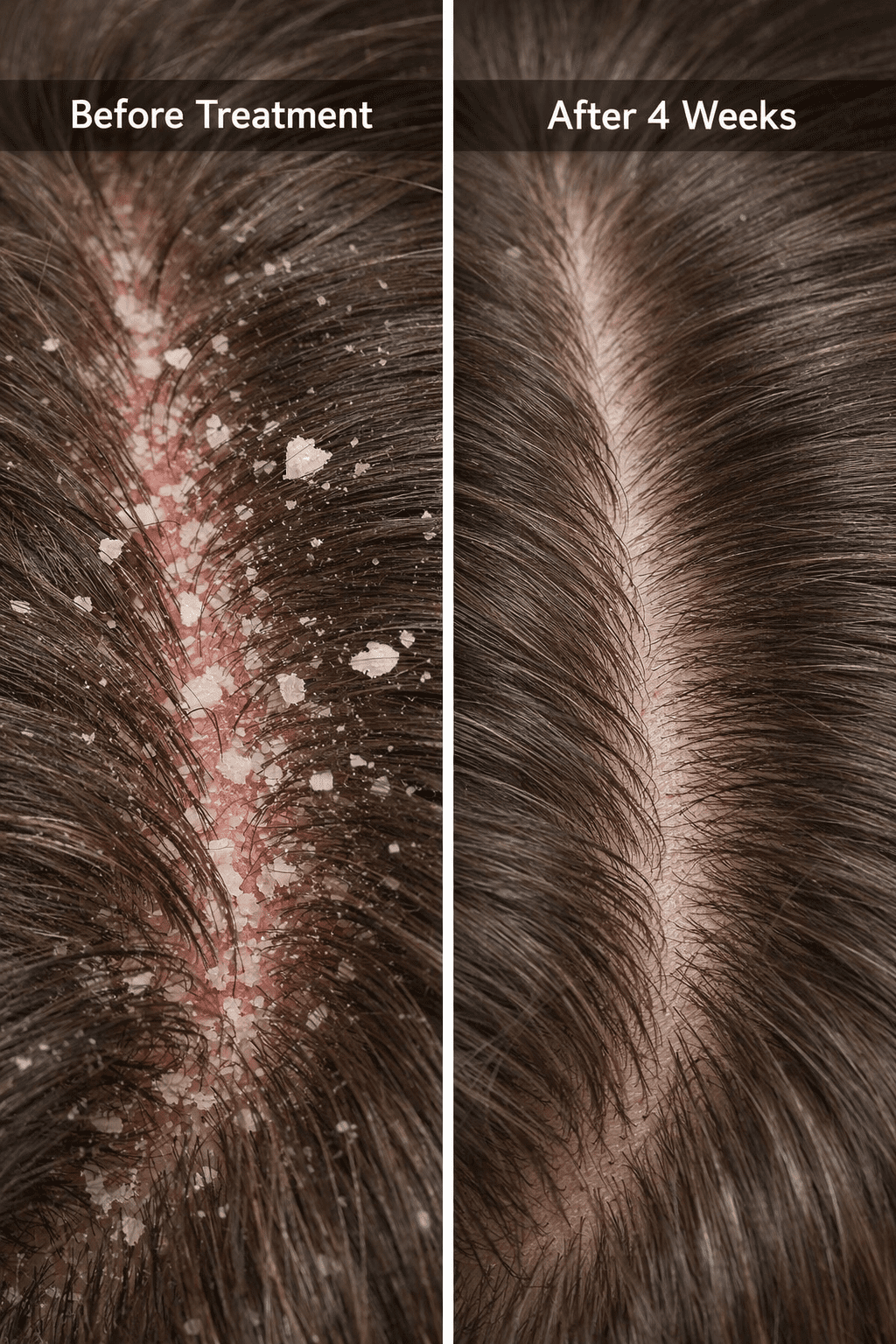
You’ll notice immediate improvements in how your scalp feels after your first DIY scalp scrub for buildup and dandruff treatment—less itchiness, a cleaner sensation, and often visible reduction in flakes. However, lasting results for chronic dandruff and buildup typically require consistent use over 2-4 weeks.
Timeline of results:
- Immediately after first use: Scalp feels cleaner, less oily, reduced itching
- Within 24-48 hours: Noticeable decrease in visible flakes, hair feels lighter
- After 1 week (2 treatments): Significant reduction in buildup, improved scalp comfort
- After 2-4 weeks (4-8 treatments): Dandruff substantially controlled, healthier scalp environment, possible improvement in hair texture and shine
- After 6-8 weeks: Optimized scalp health, minimal flaking, balanced oil production
Factors affecting results:
- Severity of buildup: Heavy, long-term buildup takes longer to resolve than recent accumulation
- Underlying causes: Fungal dandruff responds faster to tea tree or honey scrubs than buildup from hard water
- Consistency: Regular treatments (1-2 times weekly) work better than sporadic use
- Overall hair care routine: Results improve faster when combined with gentle shampoos and proper conditioning
What if you don’t see results? If you’ve used scrubs consistently for 4 weeks without improvement, you might be dealing with a medical condition like seborrheic dermatitis or scalp psoriasis that requires professional treatment. Consult a dermatologist for persistent issues.
Maintaining results: Once your scalp is healthy, reduce scrub frequency to once every 1-2 weeks for maintenance. Your scalp will tell you when it needs exfoliation—watch for returning itchiness or dullness.
FAQ
How often should I use a DIY scalp scrub for buildup and dandruff?
Use scalp scrubs 1-2 times per week for most scalp types. Oily scalps may benefit from twice weekly treatments, while sensitive or dry scalps should start with once every 7-10 days and adjust based on results.
Can I use a scalp scrub on wet or dry hair?
Always apply scalp scrubs to wet hair. The moisture helps the scrub spread evenly, prevents excessive friction, and makes the exfoliating particles gentler on your scalp.[2]
Will scalp scrubs help with hair growth?
Scalp scrubs can support hair growth by removing buildup that clogs follicles and improving circulation through massage. Essential oils like rosemary and peppermint in scrubs may further stimulate growth.[1] However, scrubs alone won’t treat medical causes of hair loss.
How long can I store homemade scalp scrubs?
Most DIY scrubs last 1-2 weeks when stored in an airtight container in a cool, dry place. Scrubs containing fresh ingredients like aloe vera or honey should be refrigerated and used within one week. Make small batches for best freshness.
Can I use regular table salt instead of sea salt?
Yes, regular table salt works in scalp scrubs, though sea salt or Himalayan pink salt contains additional minerals that benefit scalp health. Avoid iodized salt if you have iodine sensitivity.
What’s the difference between salt and sugar scrubs for scalp?
Salt scrubs are more drying and work best for oily scalps with heavy buildup, while sugar scrubs are gentler and more moisturizing, making them ideal for dry or sensitive scalps.[1] Sugar also dissolves more easily during rinsing.
Should I shampoo before or after using a scalp scrub?
Apply scrubs to wet but un-shampooed hair, then shampoo after rinsing the scrub. This removes any remaining scrub residue and oil while your scalp is already exfoliated and receptive to cleansing.[2]
Can I use a scalp scrub if I have color-treated hair?
Yes, but choose gentle sugar-based scrubs and avoid baking soda, which can strip color. Limit essential oils and always follow with color-safe conditioner to protect your treatment.
Why does my scalp tingle after using a scrub?
Mild tingling is normal, especially from scrubs containing peppermint, tea tree, or apple cider vinegar. This indicates increased circulation. However, burning or intense discomfort signals irritation—rinse immediately if this occurs.
Can scalp scrubs cause hair loss?
Gentle, proper use of scalp scrubs doesn’t cause hair loss. However, scrubbing too aggressively, using scrubs too frequently, or applying them to already damaged scalps can stress hair follicles. Always use gentle pressure and appropriate frequency.
What essential oils are best for dandruff in scalp scrubs?
Tea tree oil offers the strongest antifungal properties for dandruff. Rosemary, lavender, and peppermint also provide antimicrobial benefits while promoting scalp health.[1] Use 2-3 drops per recipe.
Do I need to use conditioner after a scalp scrub?
Yes, always condition your hair after using a scalp scrub, especially if the scrub contained salt or baking soda. Apply conditioner from mid-length to ends only, avoiding the freshly exfoliated scalp to prevent new buildup.
Conclusion
Creating your own DIY scalp scrub for buildup and dandruff gives you an effective, affordable solution for common scalp problems using ingredients you probably already have at home. Whether you choose a clarifying salt scrub for oily buildup, a moisturizing sugar blend for dry flakes, or a soothing oatmeal treatment for sensitive skin, regular exfoliation can transform your scalp health in just a few weeks.
The key to success is consistency and choosing the right recipe for your specific scalp type. Start with one scrub that matches your needs, use it 1-2 times weekly, and pay attention to how your scalp responds. Most people see noticeable improvement within the first week and significant results after a month of regular treatments.
Your next steps:
- Identify your primary scalp concern (oily buildup, dry flakes, sensitivity, or heavy product residue)
- Choose one recipe from this guide that matches your scalp type
- Gather ingredients and make a small batch (enough for 2-3 uses)
- Apply your first treatment following the proper technique
- Track your results over 2-4 weeks and adjust frequency as needed
- Maintain healthy scalp with regular treatments and gentle hair care products
Remember, scalp health is the foundation for beautiful, healthy hair. By investing a few minutes each week in proper exfoliation, you’re creating the optimal environment for your hair to thrive. If you don’t see improvement after consistent use, or if your symptoms worsen, consult a dermatologist to rule out underlying medical conditions.
Ready to start your journey to a healthier scalp? Pick your recipe, gather your ingredients, and give your scalp the care it deserves. Your hair will thank you.
For more natural wellness solutions, explore our collection of herbal remedies and DIY recipes.
References
[1] Diy Scalp Scrub For Dandruff – https://www.ouroilyhouse.com/diy-scalp-scrub-for-dandruff/
[2] Diy Scalp Scrub – https://www.lifenreflection.com/diy-scalp-scrub/
[3] Watch – https://www.youtube.com/watch?v=XWtcaTdkuDs