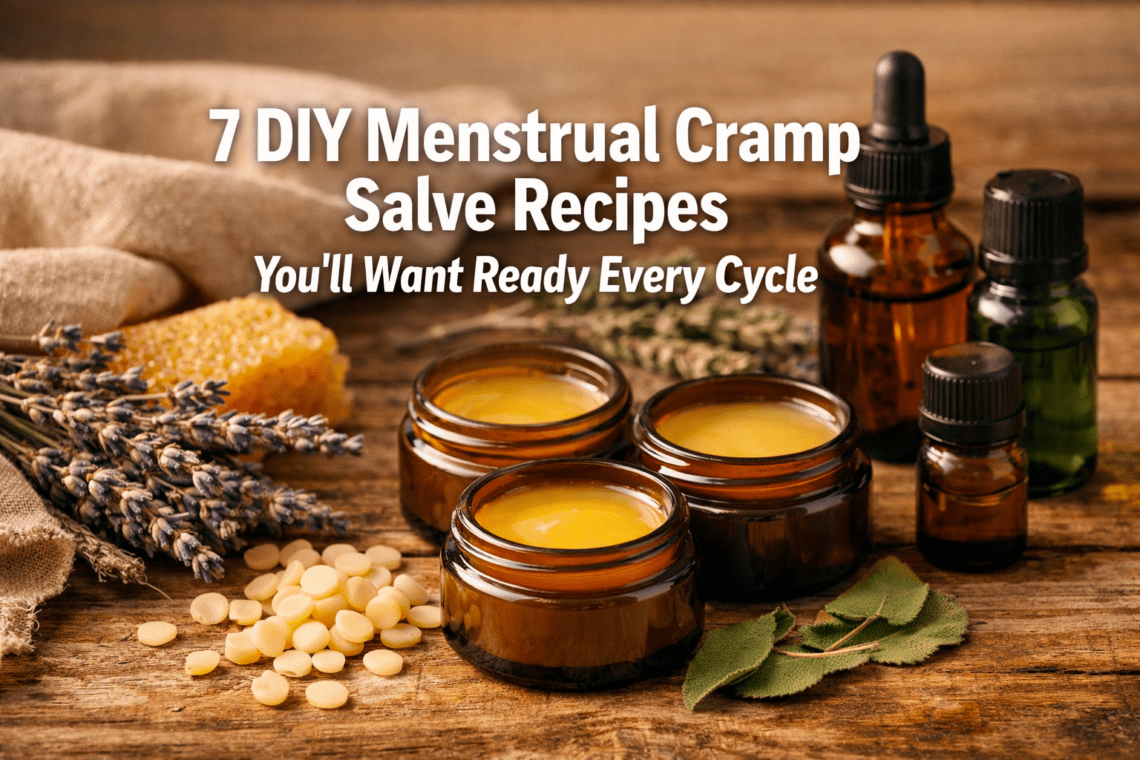
Quick Answer: DIY menstrual cramp salve recipes combine beeswax, a carrier oil, and anti-spasmodic essential oils like clary sage, lavender, or peppermint into a topical balm you apply directly to your lower abdomen. Most recipes take under 15 minutes of active prep, cost a fraction of store-bought options, and can be customized to your skin type and scent preferences.
Key Takeaways
- Core ingredients for any cramp salve: beeswax (or candelilla wax for vegan versions), a carrier oil, and 2–3 targeted essential oils.
- Clary sage, lavender, peppermint, thyme, ginger, chamomile, and bergamot are the most effective essential oils for menstrual discomfort.
- Active prep time is typically 10–15 minutes; allow 4+ hours for the salve to fully set.
- Shelf life is 3–6 months when stored in a cool, dark place. Adding vitamin E oil can extend freshness.
- Vegan swap: Replace beeswax with candelilla wax at roughly half the quantity (candelilla is a harder wax).
- Always do a patch test before applying a new salve to sensitive abdominal skin.
- These recipes work best as a complementary approach alongside warmth, hydration, and rest. They are not a substitute for medical care.
What Ingredients Do You Need for DIY Menstrual Cramp Salve Recipes?
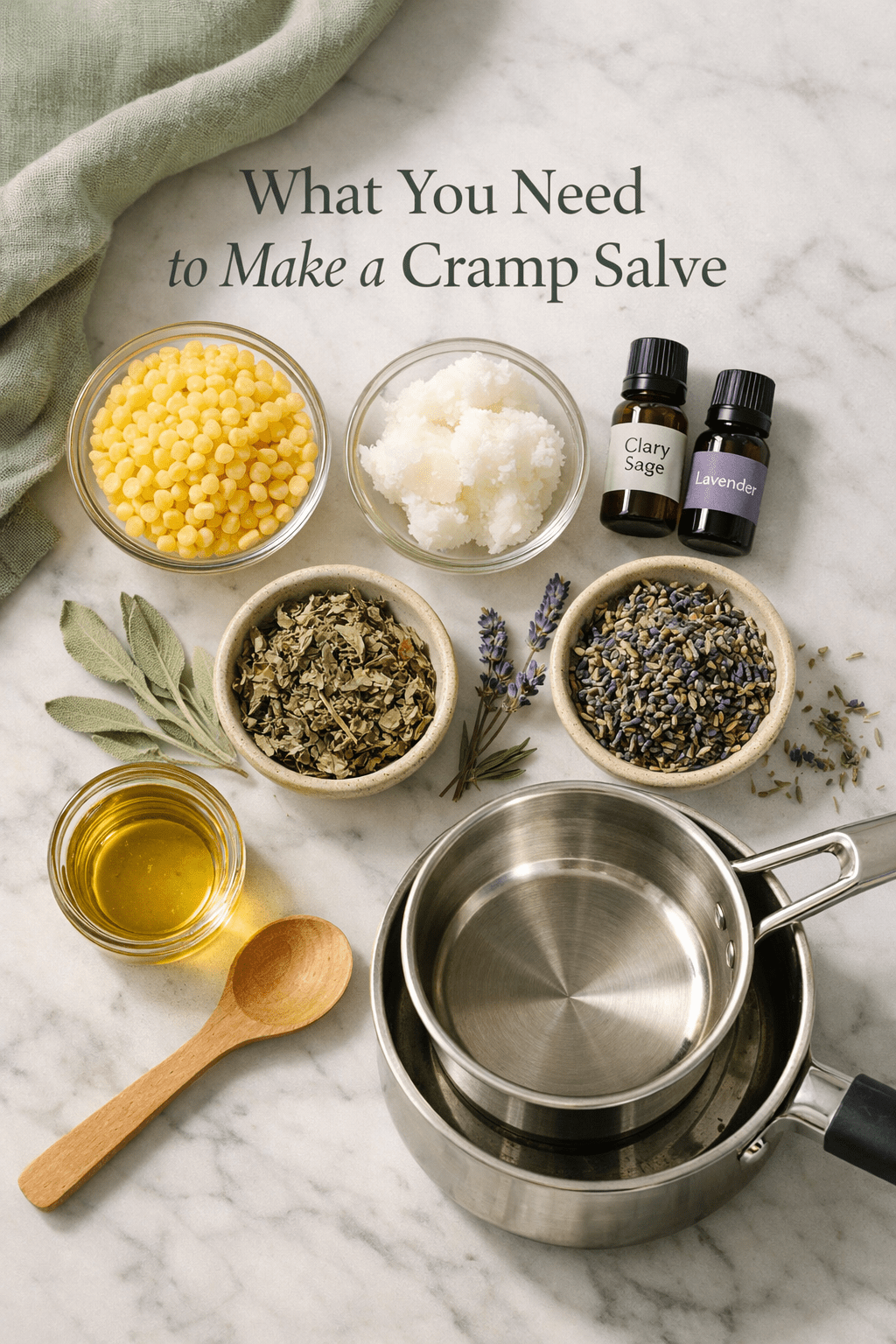
Every good cramp salve starts with three building blocks: a wax to give it body, a carrier oil to deliver the actives into your skin, and essential oils chosen for their muscle-relaxing or hormone-supportive properties.
The Base
| Ingredient | Amount (per 4 oz batch) | Notes |
|---|---|---|
| Beeswax pellets | 2 tbsp – ¼ cup | More wax = firmer salve |
| Candelilla wax (vegan) | 1 tbsp – 2 tbsp | Harder than beeswax; use less |
| Coconut oil | ¼ cup | Solid at room temp; moisturizing |
| Sweet almond oil | ¼ cup | Light texture; good for sensitive skin |
| Avocado oil | ¼ cup | Rich, nourishing; slow to absorb |
| Jojoba oil | ¼ cup | Technically a wax; very stable |
Essential Oils to Choose From
- Clary sage — often cited for hormone-balancing properties; pairs well with lavender
- Lavender — calming and mildly antispasmodic
- Peppermint — cooling sensation that can distract from cramping pain
- Thyme — some herbalists note its progesterone-supportive properties
- Ginger — warming and circulation-boosting
- Chamomile (Roman) — gentle, anti-inflammatory, good for sensitive skin
- Bergamot — uplifting and analgesic
General rule: Use 20–30 drops of essential oil total per 4-ounce batch (about 1–1.5% dilution), which is safe for adult abdominal skin.
“A good cramp salve isn’t about using every essential oil at once. Pick 2–3 that address your specific symptoms and let them work together.”
How Do You Make a Basic Cramp Salve? (The Foundation Recipe)
This is your starting point. Once you master this base, all seven recipes below are just variations on the same simple process.
Basic Equipment
- Double boiler (or a glass bowl over a saucepan)
- Small amber or glass tins (2 oz or 4 oz)
- Wooden spoon or silicone spatula
- Measuring spoons
Step-by-Step Process
- Melt beeswax pellets in your double boiler over low heat.
- Add your carrier oil and stir until fully combined.
- Remove from heat and let cool for 2–3 minutes (so the heat doesn’t evaporate your essential oils).
- Add essential oils and stir well.
- Pour into tins immediately before the mixture starts to set.
- Let sit undisturbed for at least 4 hours at room temperature.
Common mistake: Pouring essential oils in while the mixture is still very hot. You’ll lose much of the therapeutic benefit as the volatile compounds evaporate.
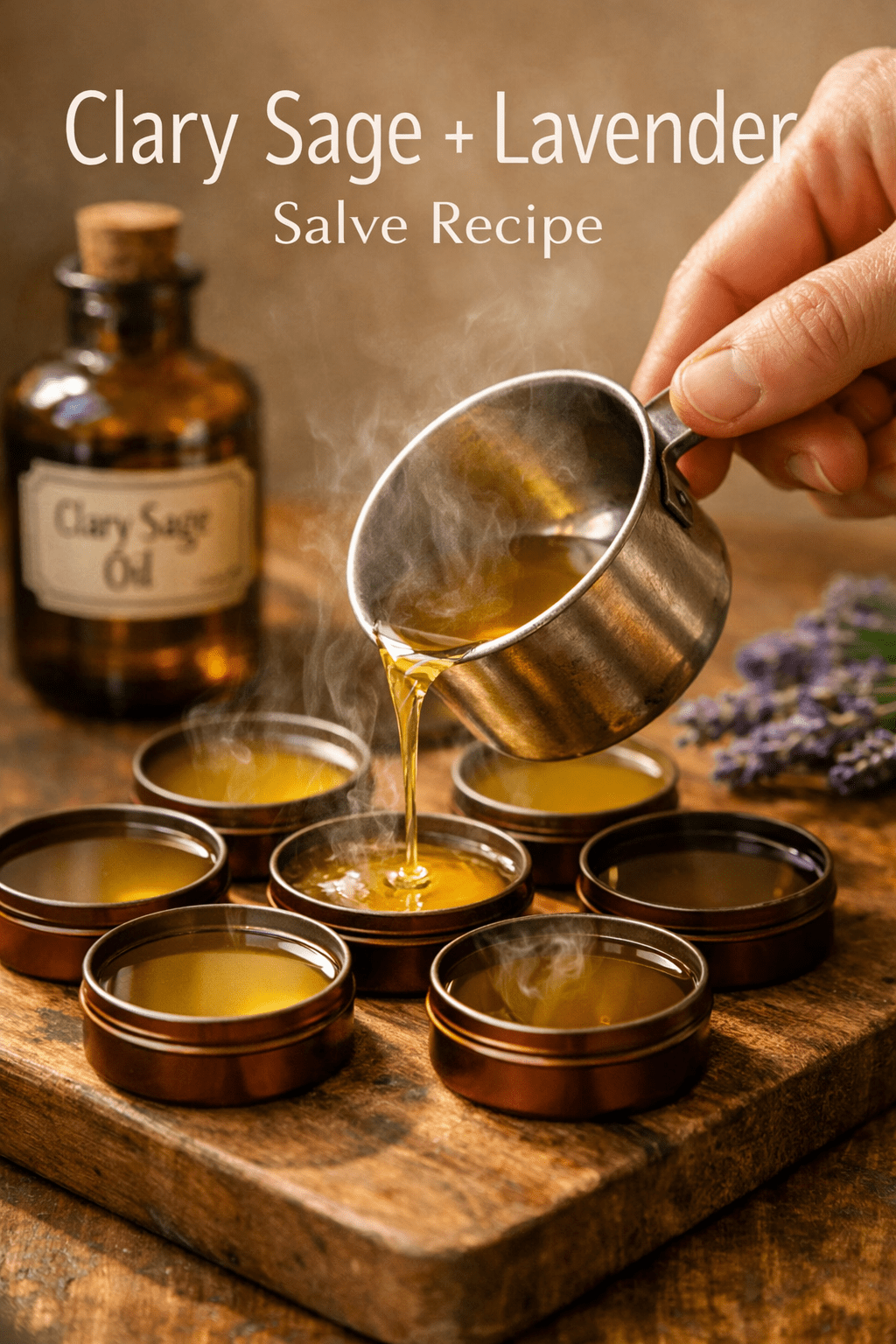
The 7 DIY Menstrual Cramp Salve Recipes
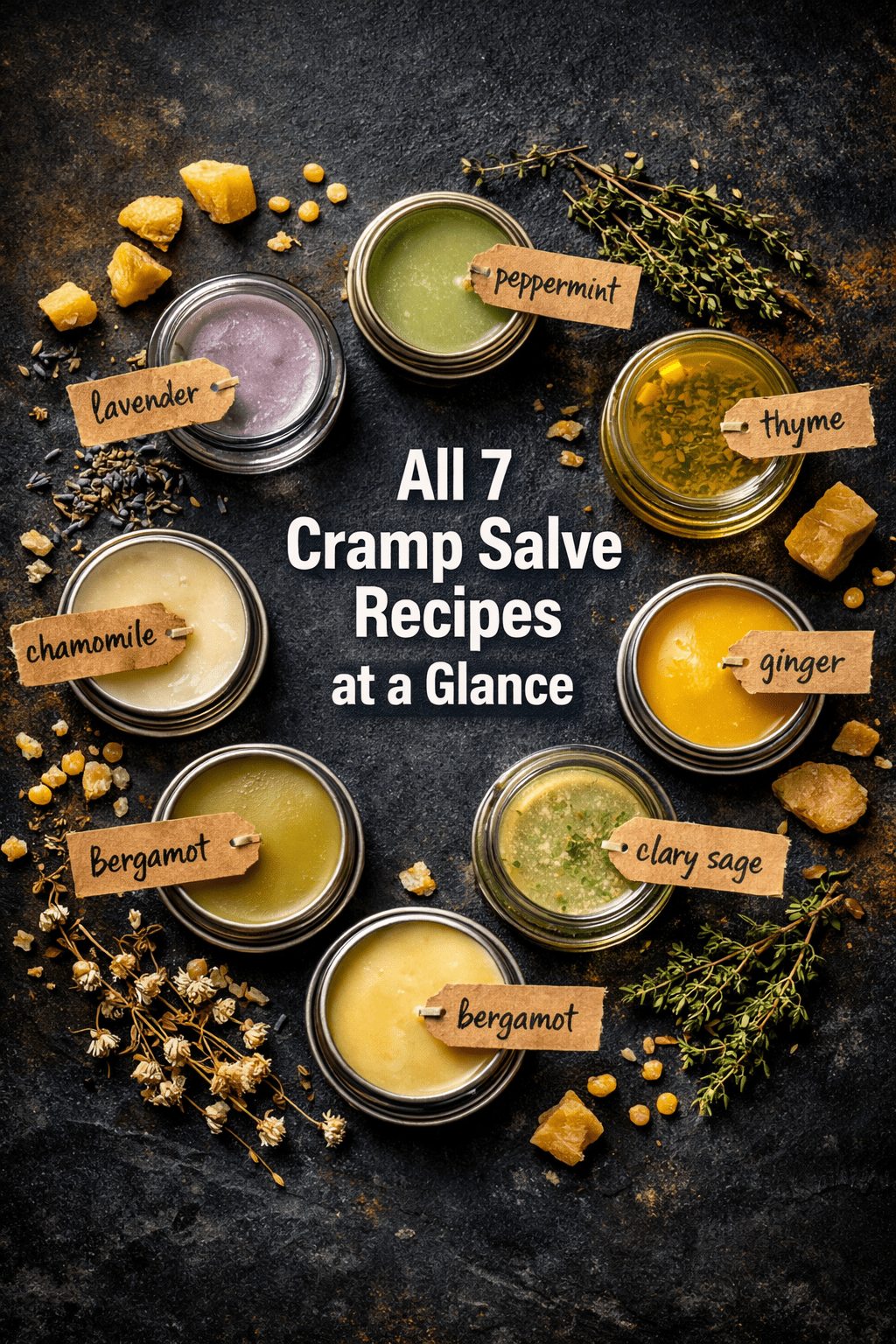
Here are seven tried-and-tested formulations, each targeting a slightly different symptom profile. All use the basic process above.
1. 🌿 Classic Clary Sage & Lavender Salve
Best for: General cramping and tension
- ¼ cup coconut oil
- 2 tbsp beeswax pellets
- 15 drops clary sage essential oil
- 10 drops lavender essential oil
- 5 drops chamomile essential oil
This is the go-to recipe for most people. Clary sage and lavender together create a calming, muscle-relaxing combination that smells genuinely lovely.
2. 🌶️ Warming Ginger & Black Pepper Salve
Best for: Cramping with a cold, heavy feeling in the lower abdomen
- ¼ cup avocado oil
- 2 tbsp beeswax pellets
- 15 drops ginger essential oil
- 10 drops black pepper essential oil
- 5 drops clary sage essential oil
The warmth from ginger and black pepper increases local circulation. If you already run warm, this one may feel too intense. Try it on your wrist first. For more warming DIY pain relief ideas, check out this DIY warming muscle rub recipe.
3. ❄️ Peppermint & Eucalyptus Cooling Salve
Best for: Cramping with a hot, inflamed sensation; headaches during your cycle
- ¼ cup jojoba oil
- 2 tbsp beeswax pellets
- 15 drops peppermint essential oil
- 10 drops eucalyptus essential oil
- 5 drops lavender essential oil
The cooling sensation from peppermint can interrupt pain signals quickly. This one also works well on temples for cycle-related headaches. It’s a similar approach to our natural sinus chest rub recipe for fast topical relief.
4. 🌼 Chamomile & Bergamot Mood-Support Salve
Best for: Cramping combined with mood dips, irritability, or anxiety
- ¼ cup sweet almond oil
- 2 tbsp beeswax pellets
- 15 drops Roman chamomile essential oil
- 10 drops bergamot essential oil
- 5 drops clary sage essential oil
Bergamot has a bright, citrusy scent that many people find mood-lifting. Roman chamomile is exceptionally gentle, making this a good choice for sensitive skin types.
5. 🌱 Thyme & Rosemary Hormone-Support Salve
Best for: Cycles with significant hormonal fluctuation or irregularity
- ¼ cup almond oil
- 2 tbsp beeswax pellets
- 15 drops thyme essential oil
- 10 drops rosemary essential oil
- 5 drops lavender essential oil
- 400 IU vitamin E oil (helps preserve the salve)
Thyme is one of the more interesting essential oils in this space. Some herbalists reference its progesterone-supportive properties, though more research is needed. Adding vitamin E oil here also extends your salve’s shelf life.
6. 🧈 Vegan Shea & Candelilla Salve
Best for: Anyone avoiding animal products; also great for very dry skin
- 3 tbsp shea butter
- 1 tbsp candelilla wax
- 3 tbsp coconut oil
- 15 drops clary sage essential oil
- 10 drops lavender essential oil
- 5 drops peppermint essential oil
Candelilla wax is plant-derived and harder than beeswax, so you need less of it. Shea butter adds a rich, skin-softening quality. If you enjoy working with butters and botanicals, our guide to calendula recipes for skin care has more inspiration.
7. 🫚 Infused Herb Salve (Slow or Quick Method)
Best for: Those who want maximum herbal potency from whole plant material
Oil infusion options:
- Quick method: Simmer dried herbs (calendula, chamomile, or ginger root) in carrier oil on very low heat for 1 hour, then strain.
- Slow method: Place herbs in a sealed jar of carrier oil and leave in a cool, dark spot for 4–6 weeks, then strain.
Once you have your infused oil:
- ¼ cup herbal-infused oil (use any carrier oil base)
- 2 tbsp beeswax pellets
- 15 drops clary sage essential oil
- 10 drops lavender essential oil
The infused oil adds a deeper layer of plant compounds compared to essential oils alone. This is the most time-intensive recipe but also the most satisfying to make from scratch. New to herbal DIY? Our beginner’s guide to natural remedies is a great place to start.
How Do You Use and Store Your Cramp Salve?
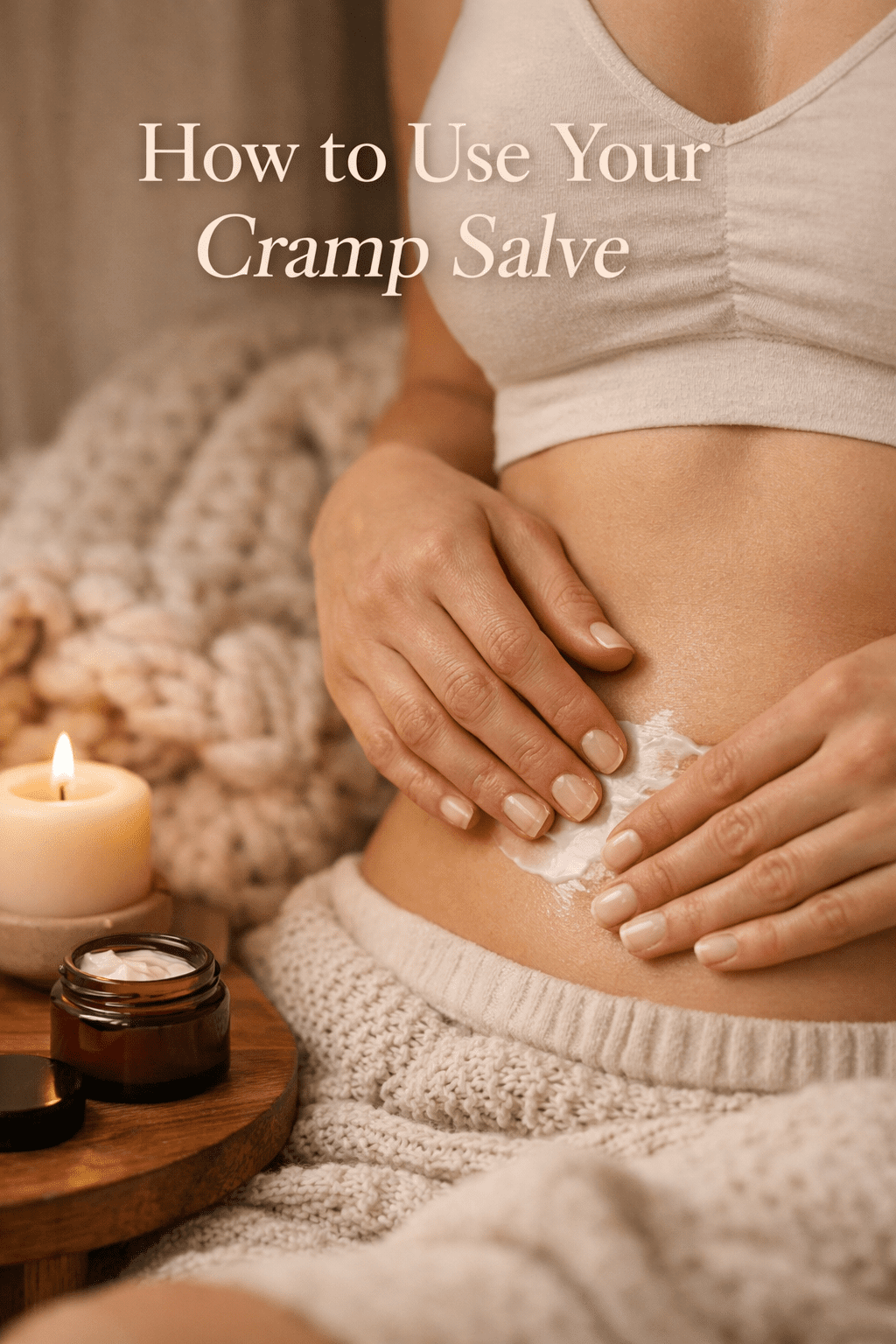
Apply a small amount (about the size of a dime) to your lower abdomen and massage in slow, circular motions. Reapply every 2–4 hours as needed. For best results, follow with a warm compress or heating pad to help the oils absorb.
Storage Tips
- Store in amber or dark glass tins away from direct sunlight.
- Keep in a cool, dry place (a bathroom cabinet works, but avoid areas that get very steamy).
- Shelf life: 3–6 months for most recipes. Recipes with vitamin E oil or rosemary antioxidant extract tend to last closer to 6 months.
- If the salve smells rancid or the color changes significantly, discard it.
Who Should Be Careful With These Recipes?
Most adults can use these salves safely, but there are a few situations worth knowing about.
- Pregnancy: Clary sage, rosemary, and thyme essential oils are generally avoided during pregnancy due to their potential to stimulate uterine contractions. Check with your midwife or doctor first.
- Sensitive skin: Always do a patch test on your inner forearm 24 hours before applying to your abdomen.
- Essential oil allergies: If you react to any botanical (for example, ragweed and chamomile are in the same plant family), avoid that oil.
- Children and teens: Peppermint and eucalyptus oils are not recommended for children under 10. For younger teens, reduce essential oil amounts to 10–15 drops per 4-ounce batch.
These salves are a complementary comfort tool, not a treatment for conditions like endometriosis or fibroids. If your cramps are severe or worsening, please see a healthcare provider.
Frequently Asked Questions
Q: How long does it take to make a cramp salve?
Active prep is 10–15 minutes. Add 4+ hours of setting time before use. The infused herb version (Recipe 7) requires additional time for oil infusion.
Q: Can I use olive oil as the carrier oil?
Yes, but olive oil has a strong scent that can compete with your essential oils. It also has a shorter shelf life than jojoba or almond oil. It works in a pinch.
Q: How much essential oil is safe to use?
For adult abdominal skin, 20–30 drops per 4-ounce batch (roughly 1–1.5% dilution) is a safe, effective range. Don’t exceed 30 drops thinking more is better.
Q: Can I add cocoa butter or mango butter to these recipes?
Absolutely. Replace up to half your carrier oil with melted cocoa butter, shea butter, or mango butter for a richer, creamier texture.
Q: My salve turned grainy. What happened?
Graininess usually happens when the mixture cools too quickly or unevenly. Next time, pour into tins in a warm room and avoid moving them while they set. Gently remelting and re-pouring can fix an already-grainy batch.
Q: Do these salves actually work?
Many people find topical application of warming or antispasmodic essential oils genuinely helpful for mild to moderate cramping. The evidence is mostly anecdotal or from small studies, so results vary. They work best as part of a broader self-care approach that includes heat, hydration, and rest.
Q: Is candelilla wax a 1:1 swap for beeswax?
No. Candelilla wax is harder, so use roughly half the amount called for in the beeswax version. Start with 1 tablespoon of candelilla wax where the recipe calls for 2 tablespoons of beeswax, then adjust.
Q: Can I use these salves for other types of muscle pain?
Yes. The warming and cooling recipes (Recipes 2 and 3) work well on lower back tension and general muscle soreness too. They’re essentially the same concept as a DIY warming muscle rub.
Conclusion
Making your own cramp salve is genuinely simple, affordable, and satisfying. With a few core ingredients and 15 minutes of your time, you can have a personalized remedy ready before your next cycle begins.
Your next steps:
- Pick one recipe that matches your main symptom (cramping, mood, heat vs. cold sensation).
- Gather your ingredients — beeswax pellets, a carrier oil, and 2–3 essential oils are all you need to start.
- Make a small test batch (halve the recipe) before committing to a full 4-ounce jar.
- Do a patch test 24 hours before applying to your abdomen.
- Store it properly and note the date you made it so you know when to refresh your supply.
If you enjoy making your own body care products, you’ll find plenty more ideas in our DIY skincare collection and our guide to natural remedies for beginners.
Disclaimer: The information in this article is for educational purposes only and does not constitute medical advice. Please read our full medical disclaimer before trying any new remedy.